Rankings
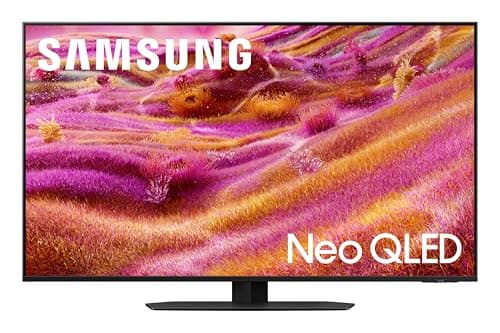
The Samsung 65-inch QN90F Neo QLED offers a Mini-LED panel with 720 dimming zones, a 165 Hz refresh rate and Dolby Atmos sound, delivering premium picture and gaming performance. Its higher power draw and lack of Dolby Vision, plus a premium price tag, are the main trade-offs. Best suited for gamers, sports fans and bright-room viewers who want top-tier visuals and audio.
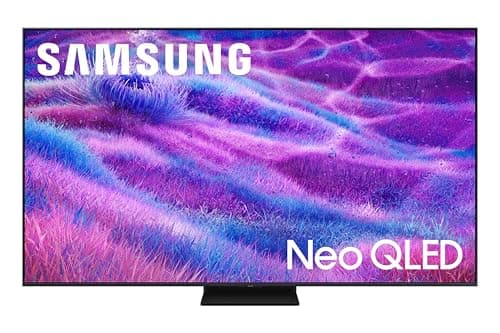
The Samsung 65-inch Neo QLED QN80F is a 2025 Mini-LED TV delivering brilliant 4K visuals, AI-driven picture enhancements, and strong gaming performance. Its main trade-off is the lack of a glare-free screen and OLED-level black depth. Best suited for bright-room viewing, high-intensity gaming, and smart-home integration.
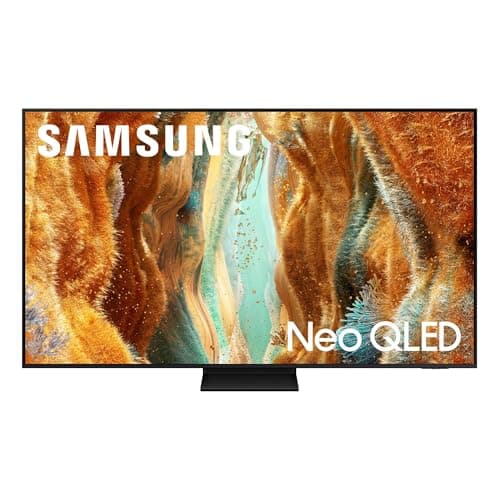
The Samsung 65-inch Neo QLED QN70F delivers premium 4K Mini-LED performance with vibrant colors, deep blacks and up to 144 Hz gaming support. Its high power draw, heavy weight and occasional UI quirks keep it from being a flawless choice, making it ideal for gamers and bright-room viewers who value top-tier picture quality and smart-home integration.
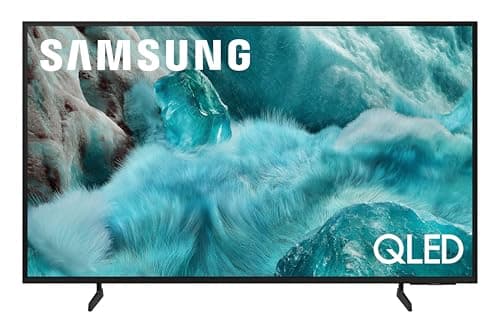
The Samsung 55-inch Q7F is a QLED TV that shines with vivid colors, Vision AI processing and ultra-low gaming latency. Its edge-lit backlight and moderate power draw limit contrast depth and energy efficiency. Ideal for gamers and streaming fans who value AI-enhanced picture and built-in voice assistants.
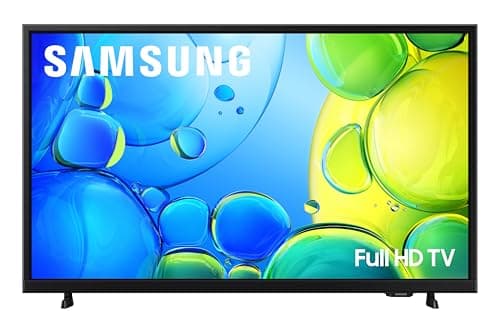
The Samsung 32-inch F6000 is an entry-level Full HD Smart TV that offers HDR10+ and PurColor for vibrant picture quality in a sleek, three-bezel-less design. Its modest resolution, limited refresh rate and modest audio output keep it from appealing to power users, making it best suited for budget-conscious buyers needing a compact TV for small rooms.
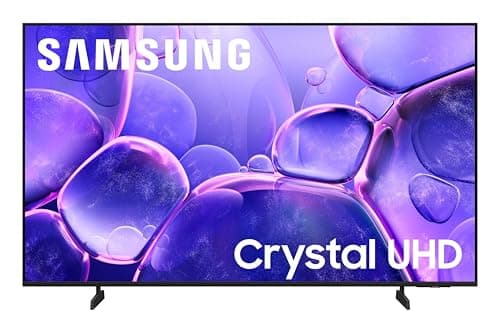
The Samsung U8000F is a budget-friendly 55-inch 4K LED TV that delivers solid HDR10+ performance and convenient SmartThings integration. Its lack of local dimming, limited upscaling, and 60 Hz refresh rate keep it from competing with higher-end models, making it ideal for cost-conscious viewers who prioritize basic 4K streaming and smart-home connectivity.
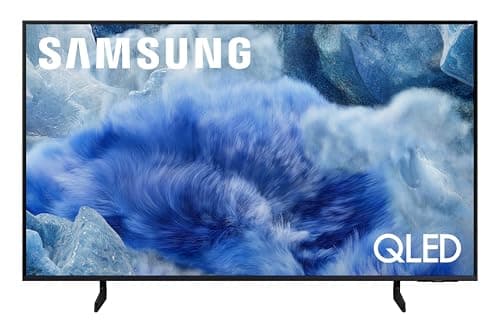
The Samsung 43-inch Q8F is an entry-level QLED TV that offers vivid colors, Dual-LED contrast and a glare-free screen, making it great for bright-room viewing and casual 1080p gaming. Its 60 Hz panel, limited HDMI ports and lack of HDMI 2.1 gaming features restrict high-performance use. Best suited for small rooms, secondary setups and users who value smart-home integration over top-tier gaming specs.
| Attribute | | | | | | | |
|---|---|---|---|---|---|---|---|
65 inchesbest | 55 inches | 42.5 inches | 65 inchesbest | 31.5 inches | 64.5 inches | 55 inches | |
144 Hz | 200 Hzbest | 60 Hz | 165 Hz | 60 Hz | 120 Hz | 60 Hz | |
— | — | 3 | 4best | 2 | — | 3 | |
— | — | — | 60 Wbest | 10 W | — | — | |
| ↓ lower better | — | 6.8 msbest | — | — | — | — | — |
| ↓ lower better | 141 W | — | 94 W | 137 W | 18 Wbest | 159 W | — |
| ↓ lower better | 21.8 kg | 11.113 kg | 8.2 kg | 27.5 kg | 3.86 kgbest | 23.68 kg | 11.6 kg |
— | — | — | — | — | — | 1best |
Click an attribute name to sort · Green = best, red = worst (relative to this comparison)
| Attribute | | | | | | | |
|---|---|---|---|---|---|---|---|
Features(1) | |||||||
Smart Platform | Tizen | Tizen OS | Tizen OS | Tizen OS | Tizen | Tizen OS | Tizen |
Display(4) | |||||||
Resolution | 3840x2160 | 3840x2160 | 3840x2160 | 3840x2160 | 1920x1080 | 3840x2160 | 3840x2160 |
Screen Size (inches) | 65 inches | 55 inches | 42.5 inches | 65 inches | 31.5 inches | 64.5 inches | 55 inches |
Refresh Rate (Hz) | 144 Hz | 200 Hz | 60 Hz | 165 Hz | 60 Hz | 120 Hz | 60 Hz |
Panel Type | Neo QLED | QLED | QLED | Neo QLED | LED LCD | Neo QLED Mini LED | LED |
Performance(1) | |||||||
Processor | NQ4 AI Gen2 Processor | Quad-core Q4 AI | Q4 AI Processor | NQ4 AI Gen3 | — | NQ4 AI Gen2 Processor | Crystal Processor 4K |
Audio(2) | |||||||
Speaker Power (W) | — | — | — | 60 W | 10 W | — | — |
Audio Technology | — | — | — | Object Tracking Sound+ with Dolby Atmos | — | Dolby Atmos; Object Tracking Sound Lite; Multi-dimensional sound | — |
Connectivity(1) | |||||||
HDMI Ports | — | — | 3 | 4 | 2 | — | 3 |
Power & Design(4) | |||||||
Power Consumption (W) | 141 W | — | 94 W | 137 W | 18 W | 159 W | — |
Weight (kg) | 21.8 kg | 11.113 kg | 8.2 kg | 27.5 kg | 3.86 kg | 23.68 kg | 11.6 kg |
Width (with stand) (mm) | 1451.7 mm | 1234 mm | 965.2 mm | 1446 mm | 734 mm | 1445 mm | 1224 mm |
Height (with stand) (mm) | 890.4 mm | 792 mm | 614.7 mm | 891 mm | 452 mm | 886 mm | 759 mm |
Products in the top-left offer the best value (high score, low price).
Professional reviewers highlight the QN70F's precise Mini LED backlight, AI-driven Vision AI personalization, and powerful 4K upscaling as standout features, noting its high brightness, Pantone-validated colors and strong HDR performance. They also point out UI navigation shortcomings and mixed reports on the backlight architecture, but overall position it as a premium 2025 offering in Samsung's lineup.
Everyday users consistently praise the TV's vivid colors, deep blacks, high brightness and smooth gaming experience, as well as the convenience of the battery-free solar remote and the sleek, thin design.
“Vibrant colors, deep blacks, outstanding sharpness for movies/sports, high brightness/contrast, easy smart features, quick app loading, premium home theater feel, and battery-free solar remote”
“Super sharp/responsive image like images coming out of the TV”
“breathtaking 4K visuals, jaw-dropping contrast (bright highlights/deep blacks even in sports/daytime)”
Opt for Q8F when size, price and basic QLED quality are priorities; upgrade to QN90F for top-tier brightness, gaming performance and premium features.
Professional editors commend the Q7F for its vivid Quantum Dot color reproduction, AI-driven picture optimization, and impressive low-latency gaming features, but they caution that the edge-lit backlight and lack of ENERGY STAR certification limit its contrast performance and energy efficiency compared to higher-end mini-LED rivals.
Everyday users praise the abundant free streaming content, integrated voice assistants, and sleek design, while recurring concerns focus on backlight uniformity, inconsistent weight information, and the TV's moderate power consumption.
Professional reviewers praise the Q8F for its vivid QLED colors, Dual LED contrast, Glare-Free screen and AI-driven picture optimization, noting that it delivers premium visual performance in a compact form. However, they point out the 43-inch model's limitations: a 60 Hz panel, only three HDMI ports and the absence of HDMI 2.1 gaming features, which keep it from competing with higher-end Samsung QLEDs for serious gamers.
Everyday users consistently highlight the TV's razor-sharp, responsive image, vibrant colors and glare-free viewing, calling it perfect for movies, sports and 1080p gaming in small rooms. Setup is described as straightforward, and the compact, lightweight design is appreciated, with no notable complaints surfacing in the March 2026 reviews.
Professional reviewers praise the QN90F for its outstanding picture quality, matte Glare Free screen, and robust gaming capabilities, noting the improved NQ4 AI Gen3 processor and 720-zone Mini LED dimming as key upgrades over the QN90D. They highlight the high refresh rate, HDMI 2.1 support, and precise contrast, while pointing out the lack of Dolby Vision and higher power consumption as drawbacks.
Everyday users consistently commend the QN90F for its breathtaking 4K visuals, deep contrast, and smooth AI-enhanced motion, often stating that the built-in speakers are sufficient and the TV is easy to set up. Overall sentiment is highly positive with no major complaints reported.
Professional reviewers note that the F6000 delivers a surprisingly rich picture for its price thanks to HDR10+ and PurColor, while the minimalist three-bezel-less chassis fits well in compact rooms. The inclusion of Knox security and guaranteed software updates through 2030 adds confidence for budget buyers, though critics point out the lack of 4K, limited HDMI ports and modest 10 W audio as trade-offs.
While direct consumer reviews are scarce, the specifications suggest users appreciate the TV’s vibrant FHD picture, easy‑to‑use Tizen interface and space‑saving design, especially in bedrooms or kitchens. Potential complaints revolve around the thin audio output, limited connectivity and the absence of 4K or higher refresh rates.
Editors consider the QN80F an excellent bright-room TV with standout AI-driven picture enhancements, high refresh rates and HDR10+ Gaming, but acknowledge it falls short of OLEDs like the S95F in black-level performance and glare handling.
Everyday users consistently praise the vivid colors, sharp 4K resolution, robust AI features, and lightweight feel, while only noting a minor lack of a fully glare-free screen in very bright environments.
Professional reviewers view the U8000F as a solid, budget-friendly 4K TV that excels in HDR accuracy and smart-home integration, but its lack of local dimming, limited upscaling capability, and 60 Hz refresh rate keep it from competing with higher-end models. It is praised for its color fidelity and value, yet criticized for its basic picture processing and limited connectivity.
Professional reviewers view the U8000F as a solid, budget-friendly 4K TV that excels in HDR accuracy and smart-home integration, but its lack of local dimming, limited upscaling capability, and 60 Hz refresh rate keep it from competing with higher-end models.
