Rankings
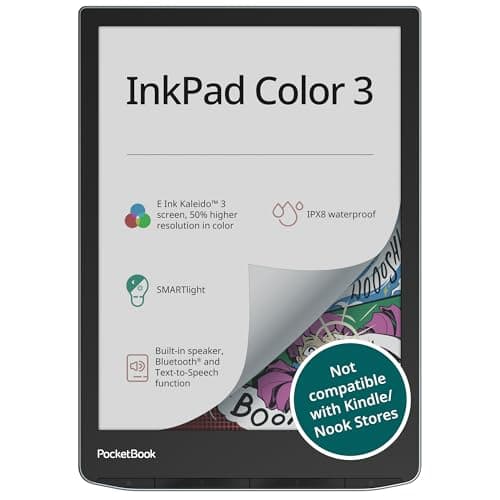
The PocketBook InkPad Color 3 offers a 7.8-inch 4096-color E Ink Kaleido 3 screen with SMARTlight and 32 GB of internal storage, ideal for comics and manga. It lacks expandable storage and has modest performance, which may limit power users. It shines for users seeking vibrant color reading in a waterproof package.
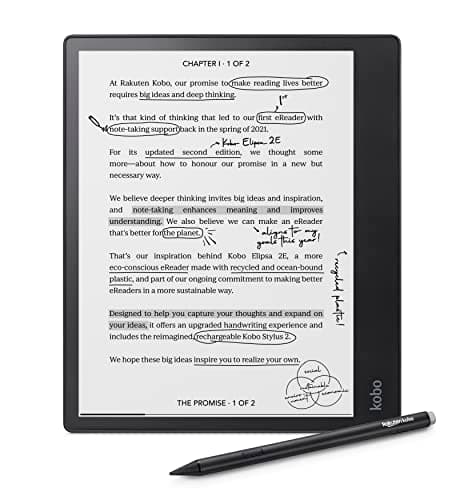
The Kobo Elipsa 2E is a 10.3-inch E Ink e-reader and digital notepad that combines a large glare-free screen with a lightweight stylus for note-taking. Its drawbacks are a heavy chassis, limited audiobook ecosystem, and modest 1 GB of RAM that can feel restrictive. It excels for students, professionals, and anyone who needs a big canvas for PDFs and annotations.
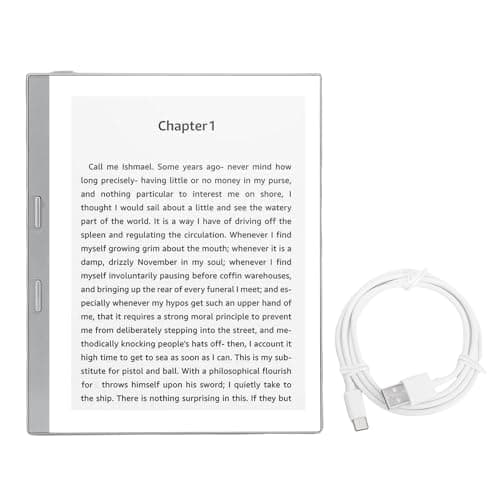
The Gowenic 5.76-inch ePaper tablet offers a 24-level adjustable front light and IPX8 waterproof protection, making it robust for reading anywhere. However, it lacks wireless charging and native stylus support, limiting annotation capabilities. Best suited for readers who prioritize durability and note-taking over premium charging features.
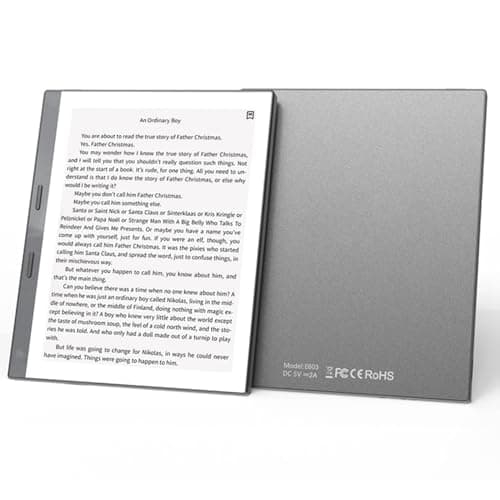
The Wisoqu 5.76-inch Android eReader provides a 24-level adjustable front light and up to 1 TB expandable storage in a lightweight package. Its lower 198 PPI resolution and plastic build, plus the absence of waterproofing, are notable trade-offs. Ideal for travelers seeking a customizable, budget-friendly eReader.
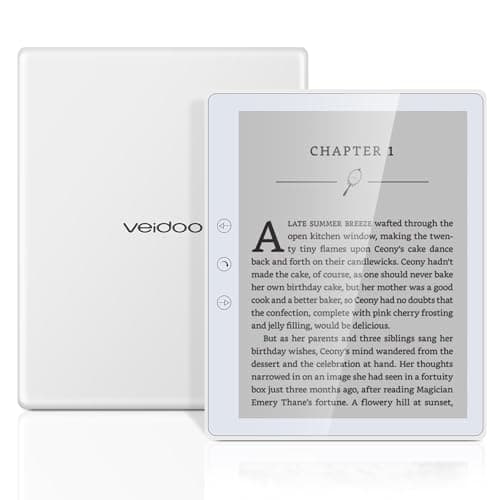
The Veidoo 5.8-inch e-reader runs Android, providing Google Play access, 32 GB storage expandable to 64 GB, and a built-in speaker in a very lightweight design. Its low-resolution screen, lack of front-light, and modest performance are notable drawbacks. Suited for users who prioritize Android app flexibility and portability over premium reading quality.
| Attribute | | | | | |
|---|---|---|---|---|---|
7.8 inches | 10.3 inchesbest | 5.8 inches | 5.76 inches | 5.76 inches | |
720 hoursbest | 504 hours | — | — | — | |
— | 2,628,288 pixelsbest | — | — | — | |
| ↓ lower better | 420 g | 386 g | 165 gbest | 420 g | 420 g |
150 ppi | 227 ppibest | 139 ppi | 198 ppi | 198 ppi | |
32 GBbest | 32 GBbest | 32 GBbest | 32 GBbest | 32 GBbest | |
1 GBbest | 1 GBbest | 1 GBbest | 1 GBbest | 1 GBbest | |
2,900 mAhbest | 2,400 mAh | 1,500 mAh | 1,500 mAh | — |
Click an attribute name to sort · Green = best, red = worst (relative to this comparison)
| Attribute | | | | | |
|---|---|---|---|---|---|
Battery & Power(2) | |||||
Battery Life (hours) | 720 hours | 504 hours | — | — | — |
Battery Capacity (mAh) | 2900 mAh | 2400 mAh | 1500 mAh | 1500 mAh | — |
Performance(1) | |||||
Processor | Quad-core 1.8 GHz | Dual-core 2.0GHz MediaTek RM53 | Quad-core | Quad-core | — |
Display(5) | |||||
Screen Size (inches) | 7.8 inches | 10.3 inches | 5.8 inches | 5.76 inches | 5.76 inches |
Resolution (pixels) | 1404x1872 pixels | 1404x1872 pixels | 648x480 pixels | 680x920 pixels | 920x680 pixels |
Pixel Density (ppi) | 150 ppi | 227 ppi | 139 ppi | 198 ppi | 198 ppi |
Panel Type | E Ink Kaleido 3 | E Ink Carta 1200 touchscreen | E Ink Carta HD | E Ink HD | E Ink |
Front Light Type | SMARTlight | ComfortLight PRO | — | adjustable | adjustable |
Storage(1) | |||||
Expandable Storage (GB) | — | — | 64 GB | 1024 GB | 1024 GB |
Connectivity(1) | |||||
Bluetooth Version | true | Supported | true | Supported | Supported |
Build & Design(2) | |||||
Weight (g) | 420 g | 386 g | 165 g | 420 g | 420 g |
Dimensions (H×W×D) (mm) | 213×28×159 mm mm | 192.8x227.3x7.9 mm mm | 48×148×10 mm mm | 136x110x7 mm mm | — |
General(1) | |||||
Warranty (years) | 2 years | — | 1 years | 0.25 years | 0.25 years |
Products in the top-left offer the best value (high score, low price).
Professional reviewers consider the InkPad Color 3 a solid, reading-focused device that excels in color accuracy and screen size, offering a practical compromise between basic e-readers and full-blown tablets, though they note its modest processor and lack of storage expansion as limitations for power users.
Everyday users praise the large, colorful display, waterproof build, and straightforward USB-C charging, while repeatedly expressing frustration over the inability to add a microSD card and the recessed screen design, which together limit library size and ergonomic preference.
“If you only use the ereader to read books, comics or manga, then I think this is a better buy”
“massive upgrade”
“solid iteration over its predecessor in the plus-sized eReader segment”
Professional reviewers praise the Elipsa 2E for its faster processor, lighter stylus, sustainable materials, and robust cloud integration, noting it as a solid upgrade over its predecessor that bridges reading and productivity effectively.
Everyday users are split; many appreciate the large screen, long battery, and stylus comfort, while others criticize the limited feature set, perceived speed constraints, and value for money.
Professional reviewers acknowledge the Veidoo’s impressive portability and Android flexibility, but they uniformly condemn its 139 PPI display and lack of front‑light, calling the screen quality “paltry” and “evil.” Performance is described as sluggish, and the device is suspected to be a clone of cheaper Haxmini/Topjoy models, which undermines confidence in long‑term support.
Everyday users mainly mention the device’s light weight and the convenience of the included protective case, but there is little positive chatter beyond those points. The absence of a front‑light and the low‑resolution screen are implicitly understood as drawbacks, aligning with expert criticism.
Launch coverage praises the Wisoqu for defying the shrinking small-e-reader market with its ultra-light weight, eye-friendly 24-temperature front-light, and long battery life. Reviewers also value the Android ecosystem that enables third-party apps and the tactile vibration keys for one-handed use, while noting the trade-offs of lower resolution and modest RAM compared with higher-end competitors.
Although formal user reviews are scarce, the limited feedback mirrors the professional view: users appreciate the pocketable size, weeks-long battery, and adjustable lighting for day-to-night reading. Common concerns revolve around occasional app sluggishness, uncertainty about the exact internal storage size, and the plastic build feeling less premium.
Professional reviewers commend the Paperwhite 6.8 for its brighter, higher-contrast display, smoother navigation and modern USB-C port, but they criticize the lack of wireless charging and any stylus capability, noting that these omissions limit its appeal to power users who want annotation features.
Typical users love the waterproof design, long battery life and warm-light customization, yet many express disappointment over the gray screen when the light is off and the inability to take handwritten notes.
