EMAX Tinyhawk II
Score: 79/100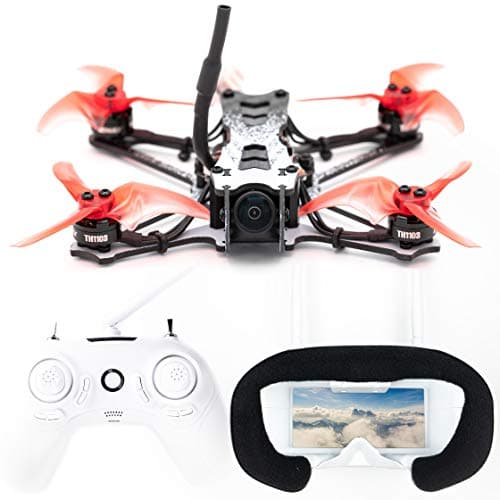
Tiny Hawk Micro Drone Free Style 2
Score: 67/100Rankings
The EMAX Tinyhawk II Freestyle BNF is a micro FPV racing drone delivering 120 km/h top speed and a carbon-fiber frame for aggressive freestyle flying. Its drawbacks are the need for a specific FrSky D8 transmitter, a ham-radio license, and relatively short flight endurance. Ideal for experienced acro pilots seeking high performance in a sub-250 g package.
The Tiny Hawk Micro Drone Free Style 2 is a 75 mm indoor FPV quad weighing just 29 g dry, offering high-speed agility and protective guards. Its main limitations are a weak 25 mW VTX and short flight endurance. Best for beginners seeking a feather-light indoor racer with crash protection.
| Attribute | EMAX Tinyhawk II | |
|---|---|---|
450 mAhbest | 450 mAhbest | |
| ↓ lower better | 81 g | 29 gbest |
— | 4 minutesbest | |
120 km/hbest | 56 km/h | |
7,000 KV | 15,000 KVbest | |
0.5 MPbest | 0.35 MP | |
— | 25 mWbest | |
5.8 GHzbest | 5.8 GHzbest |
Click an attribute name to sort · Green = best, red = worst (relative to this comparison)
| Attribute | EMAX Tinyhawk II | |
|---|---|---|
Battery & Power(1) | ||
VTX Power (mW) | 25-200 mW | 25 mW |
Camera(1) | ||
Camera Resolution (MP) | 0.5 MP | 0.35 MP |
Build & Design(3) | ||
Dry Weight (g) | 81 g | 29 g |
Frame Material | Carbon Fiber | Polypropylene |
Propeller Diameter (in) | 2.5 in | 1.57 in |
Performance(3) | ||
Motor KV (KV) | 7000 KV | 15000 KV |
Top Speed (km/h) | 120 km/h | 56 km/h |
ESC Continuous Current (A) | 5 A | 3 A |
Products in the top-left offer the best value (high score, low price).
Professional reviewers highlight the Tinyhawk II Freestyle's natural handling and power-to-weight ratio, noting it feels like flying a full-size 5-inch quad while staying sub-250 g. The upgraded VTX and higher-quality camera are praised for delivering a clearer FPV experience, and the drone's quiet operation is seen as a bonus for indoor use. However, experts caution that the platform is geared toward acro pilots, lacks angle-mode friendliness, and requires specific FrSky D8 compatibility and a ham radio license in North America.
Everyday users consistently commend the drone's aggressive performance, durable build, and the included Avan Rush propellers that provide excellent grip for freestyle tricks. Common praise centers on its power, responsiveness, and quiet operation. Recurring complaints focus on limited flight time, the need for a ham radio license, and incompatibility with newer FrSky ACCESS transmitters, making it less suitable for beginners or those without the required hardware.
Professional reviewers acknowledge the TinyHawk's impressive agility and durability for indoor FPV, but they consistently flag its limited VTX power and brief flight time as drawbacks that keep it from competing with newer micro-drones that offer higher transmission power and longer endurance.
Typical users celebrate the drone's feather-light build, crash-resistant design, and the handy beeper, while repeatedly mentioning the need for frequent battery changes and the weak video link as the main pain points.
Choose TinyHawk II if you need better video quality and stronger transmission while still wanting a micro-size frame.
