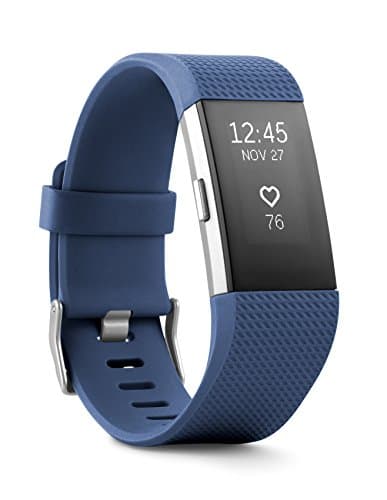
Fitbit Charge 2
Score: 78/100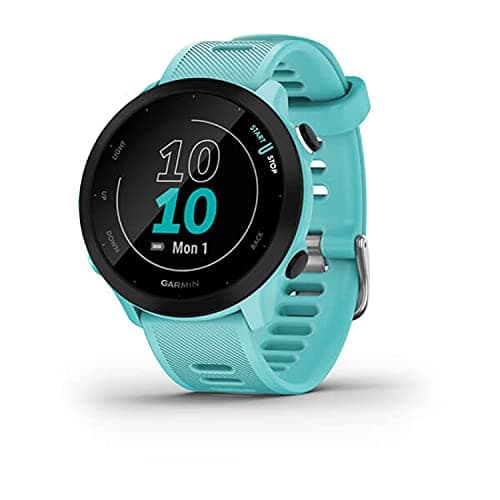
Garmin Forerunner 55
Score: 80/100Rankings
The Garmin Forerunner 55 is an entry-level GPS running smartwatch offering up to two weeks of battery life and a lightweight 37 g design. It lacks advanced sensors such as SpO₂ and music playback, focusing on core running features. Best for beginner and recreational runners who prioritize simplicity and endurance.
The Fitbit Charge 2 delivers continuous PurePulse heart-rate monitoring, 4-day battery life, and water resistance up to 50 m, complemented by phone-connected GPS. Its limitations include a small tap-activated OLED display and lack of built-in GPS or SpO₂ monitoring. Ideal for users seeking a reliable, brand-trusted tracker for basic fitness and sleep tracking.
| Attribute | | |
|---|---|---|
— | 336 hoursbest | |
| ↓ lower better | 31.8 gbest | 37 g |
0.72 in | 1.04 inbest |
Click an attribute name to sort · Green = best, red = worst (relative to this comparison)
| Attribute | | |
|---|---|---|
Battery & Power(2) | ||
Battery Life (hours) | 4 days hours | 336 hours |
Battery Type | Lithium-polymer | Lithium-ion |
Build & Design(2) | ||
Weight (g) | 31.8 g | 37 g |
Strap Material | Elastomer | Silicone |
Display(3) | ||
Screen Size (in) | 0.72 in | 1.04 in |
Display Type | OLED | MIP |
Resolution (px) | 128x72 px | 208x208 px |
Connectivity(1) | ||
Built‑in GPS | false | true |
Products in the top-left offer the best value (high score, low price).
Professional reviewers commend the Charge 2 for its surprisingly accurate heart-rate tracking that aligns with chest-strap references, its comprehensive suite of fitness and sleep features, and its solid 4-day battery life.
Everyday users value the 24/7 heart-rate monitoring, comfortable small blue band, auto-sleep and exercise detection, and the long battery that minimizes charging.
Professional reviewers consider the Forerunner 55 a well-rounded, budget-friendly entry-level running watch. They commend its long battery life, clear display, and reliable wrist-based heart-rate monitoring, while noting the lack of advanced sensors and limited data customization as trade-offs for its price point.
