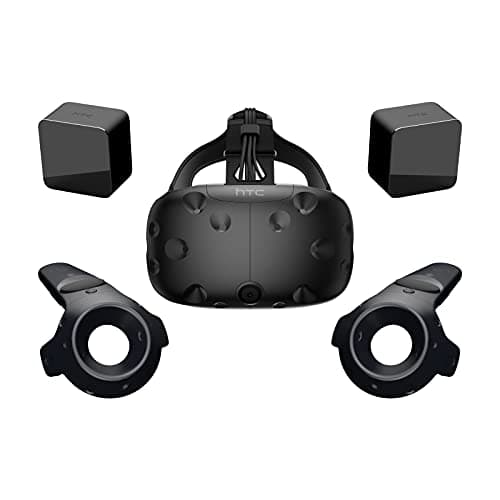
HTC Vive
Score: 72/100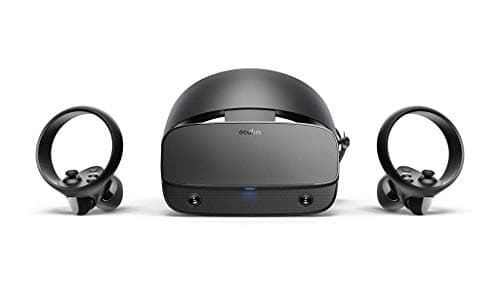
Oculus Rift S
Score: 66/100Rankings
The HTC Vive (original 2016) is a PC-tethered, room-scale headset with precise Lighthouse tracking and a wide 110° field of view. Its front-heavy design and cable tether limit comfort and mobility. Best suited for enthusiasts who prioritize accurate tracking over portability.
The Oculus Rift S is a PC-powered VR headset featuring OLED panels and external IR tracking for precise 6DoF immersion. Its requirement for a high-end PC, heavier weight, and lack of built-in passthrough limit portability. Best for PC gamers seeking high-fidelity room-scale VR.
| Attribute | | |
|---|---|---|
| ↓ lower better | 470 gbest | — |
110 °best | 110 °best | |
— | 1,080 pixelsbest | |
90 Hzbest | 90 Hzbest | |
6best | 6best | |
0.08 yearsbest | — |
Click an attribute name to sort · Green = best, red = worst (relative to this comparison)
| Attribute | | |
|---|---|---|
Fit & Comfort(1) | ||
IPD Adjustment Range (mm) | 57-70 mm | 58-72 mm |
Build & Design(2) | ||
Weight (g) | 470 g | 440-470 g |
Lens Type | adjustable | Hybrid Fresnel |
Sensors & Tracking(1) | ||
Tracking System | SteamVR Lighthouse 1.0 | Constellation external IR sensors |
Audio(2) | ||
Spatial Audio Support | false | true |
Audio Type | none | 3D headphones |
Connectivity(1) | ||
Connectivity Type | wired | PC |
Products in the top-left offer the best value (high score, low price).
Reviewers praise the Vive's precise Lighthouse tracking, wide 110° field of view and the pioneering Chaperone system, noting the 15% weight reduction and slimmer cabling as comfort wins. However, they criticize the front-heavy ergonomics, the tethered cable that restricts movement, and the relatively low 1080×1200 resolution which shows a screen-door effect compared with newer headsets.
Users echo the experts, lauding the accurate room-scale tracking and the immersive experience in spacious play areas. Common complaints focus on the headset's front-heavy feel, cable drag, and the absence of built-in audio, with many mentioning neck strain after half an hour of play.
Professional reviewers praised the Rift's ergonomic strap, bright OLED panels, and premium build, noting that these hardware strengths deliver a comfortable and immersive experience. However, they also highlighted drawbacks such as the need for multiple external sensors, a heavy headset weight, and a limited launch library that reduced its immediate appeal.
Everyday users commonly commend the headset's comfort, immersive visuals, and built-in 3D audio, but they frequently lament the complex sensor setup, occasional tracking hiccups, visible pixel gaps, and the overall heft of the device, especially for extended use.
“The tracking is spot on, but after an hour the front-heavy headset starts to hurt my neck.”
“I love the 110° FOV, but the cable really drags me around the room.”
Choose Vive for precise room-scale experiences; choose Rift for a simpler, less bulky tethered setup.
