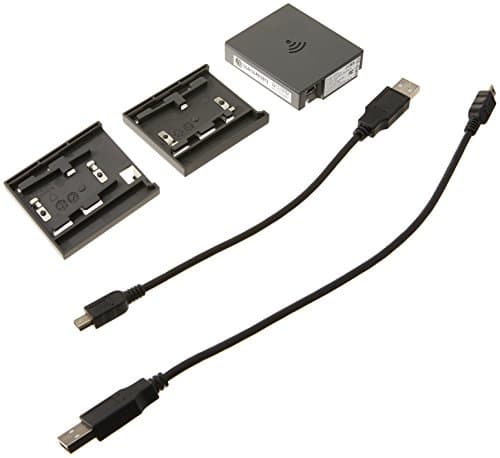
Lexmark N8352
Score: 71/100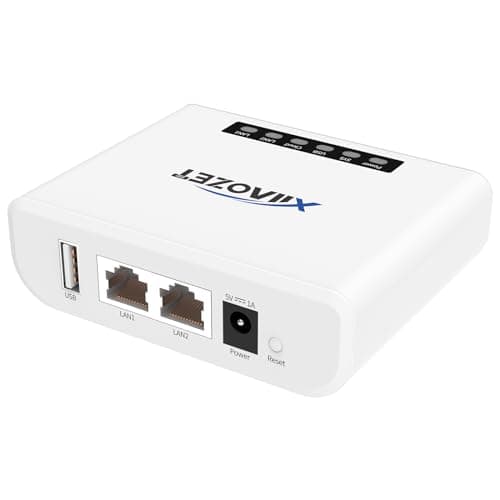
Xiiaozet Wireless Print Server
Score: 80/100Rankings
The Xiiaozet LK100W converts a USB printer to a network device with 300 Mbps Wi-Fi, Ethernet, and unlimited Windows users, offering strong security and low power draw. It is limited to Windows OS, provides only one USB port, and lacks 5 GHz Wi-Fi or scanner support. Best for home offices or small businesses that need simple, reliable Windows-only printer sharing.
The Lexmark N8352 Wireless Print Server adds 802.11b/g/n Wi-Fi and NFC to compatible Lexmark printers, delivering secure wireless printing and tap-to-print features. Its lack of warranty and restriction to certain models limit broader appeal. Best for Lexmark users needing secure, NFC-enabled wireless printing.
| Attribute | | |
|---|---|---|
72 Mbps | 300 Mbpsbest | |
— | 1best | |
— | 100 Mbpsbest | |
1best | 1best | |
— | 5 Vbest | |
| ↓ lower better | — | 5 Wbest |
0 years | 1 yearsbest | |
| ↓ lower better | 0.227 kgbest | 0.24 kg |
Click an attribute name to sort · Green = best, red = worst (relative to this comparison)
| Attribute | | |
|---|---|---|
Connectivity(2) | ||
Frequency Band | 2.40 GHz | 2.4 GHz |
Wireless Speed (Mbps) | 72 Mbps | 300 Mbps |
Features(1) | ||
Security Features | 64-bit WEP, 128-bit WEP, LEAP, MD5, PEAP, TLS, TTLS, WPA2, WPA2-Enterprise, IPsec | WEP 64/128-bit, WPA-PSK, WPA2-PSK, TKIP, CCMP, AES |
General(2) | ||
Printer Compatibility | Lexmark C2425, C2535, CS421, CS521, CS622, CX410, CX421, CX510, CX522, CX622, CX625, MS510 | 95% of USB printers (inkjet, laser, thermal, label, dot matrix, all-in-one, barcode, multi-function) |
Warranty (years) | 0 years | 1 years |
Design & Build(2) | ||
Weight (kg) | 0.2268 kg | 0.24 kg |
Dimensions (L×W×H) (mm) | 9.0×1.75×6.25 inches mm | 100×70×30 mm mm |
Products in the top-left offer the best value (high score, low price).
Professional reviewers, primarily tech-focused YouTubers, commend the LK100W for its straightforward print-only functionality, low power draw, and the virtual USB tool that expands compatibility. However, they criticize the cumbersome initial configuration, the absence of scanning, and the limited operating-system support, suggesting it is best suited for simple Windows-only environments.
Everyday users generally appreciate the device's reliability for shared printing and its ease of installing legacy printers, but they frequently encounter setup frustrations, network re-configuration needs, and wish for broader OS and mobile support.
“Priceless cuz it beats up to have some cabling run... you can put a network device anywhere.”
“Prints beautiful.”
