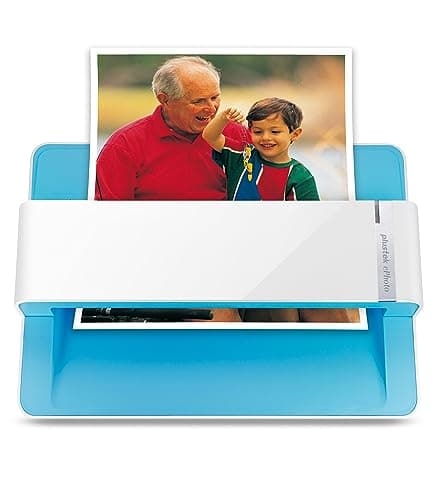
Plustek ePhoto Z300
Score: 73/100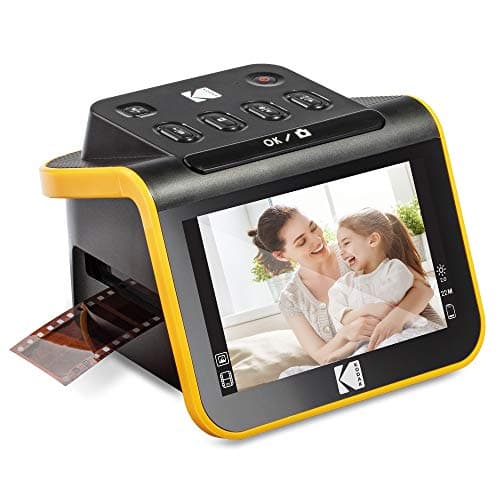
Kodak Slide N SCAN
Score: 60/100Rankings
The Plustek ePhoto Z300 is a compact sheet-fed photo scanner that digitizes 4×6 in photos in about 2 seconds with automatic crop and deskew. Its single-sheet feeder, USB 2.0 connection, and limited duty cycle make it less suitable for high-volume or wireless workflows. Best for home users and families digitizing photo collections.
The Kodak Slide N Scan (RODFS50) is a portable, standalone film digitizer with a 5-inch LCD and HDMI output, ideal for hobbyists converting 35 mm slides. Its 14 MP native sensor limits high-detail work and manual loading slows workflow. Best suited for casual users who need quick, on-the-go digitization of common film formats.
| Attribute | | |
|---|---|---|
600 dpibest | — | |
— | 50 mmbest | |
| ↓ lower better | 1.5 kg | 0.454 kgbest |
Click an attribute name to sort · Green = best, red = worst (relative to this comparison)
| Attribute | | |
|---|---|---|
Design & Build(2) | ||
Weight (kg) | 1.5 kg | 0.454 kg |
Dimensions (W×D×H) | 19.685×19.685×11.024 inches | 136x134x95 |
Sensors(1) | ||
Image Sensor Type | CCD | CMOS |
Products in the top-left offer the best value (high score, low price).
Professional editors commend the Z300 for its speed, gentle handling of photos, and solid CCD image quality, positioning it as an efficient alternative to flat-bed scanners for home and small-office environments. The main criticism from experts is the absence of wireless connectivity and the limited duty cycle, which keep it out of the high-volume professional market.
Everyday users consistently highlight the scanner's rapid 2-second photo scans, easy auto-crop/deskew, and reliable color reproduction, making it a favorite for digitizing family photo archives.
Professional reviewers commend the Kodak RODFS50 for its user-friendly, standalone design and versatile film adapters, making it a solid choice for hobbyists who need quick, on-the-go digitization.
Everyday users generally praise the scanner's simplicity, portability, and ability to produce ready-viewable JPEGs on a TV, especially for family photo preservation. Common complaints revolve around the manual film loading process, limited resolution for large prints, and the restriction to certain film formats and SD card capacity.
