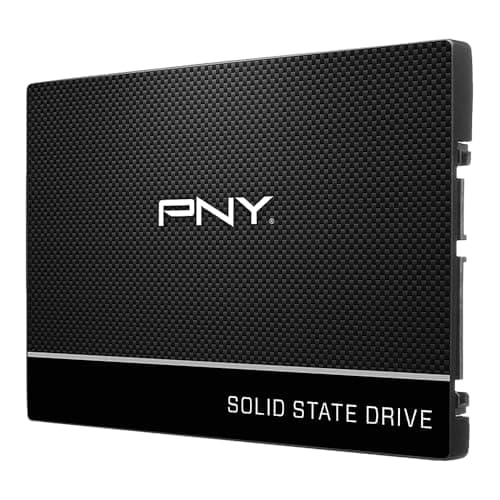
PNY CS900
Score: 67/100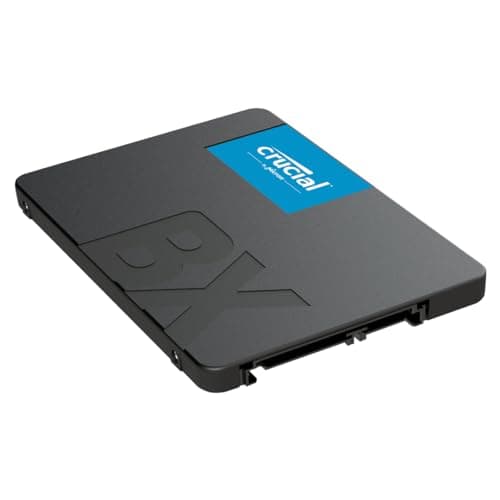
Crucial BX500 1TB
Score: 67/100Rankings
The PNY CS900 1TB is a budget-friendly 2.5-inch SATA III SSD delivering solid sequential speeds and low power draw. Its main trade-offs are limited SATA bandwidth, lack of endurance data and advanced features. Best suited for users upgrading older laptops or desktops where cost and basic performance matter.
The Crucial BX500 1TB SATA SSD offers an affordable upgrade with decent sequential speeds and reliable TLC NAND. Its DRAM-less architecture leads to throttled sustained writes and limited random performance, making it suited for budget-conscious users upgrading from HDDs.
| Attribute | | |
|---|---|---|
1,000 GBbest | 1,000 GBbest | |
535 MB/s | 540 MB/sbest | |
515 MB/sbest | 500 MB/s | |
— | 240 TBbest | |
2,000,000 hoursbest | 1,500,000 hours | |
— | 0 MBbest | |
3 yearsbest | 3 yearsbest | |
| ↓ lower better | 45 g | 34.9 gbest |
Click an attribute name to sort · Green = best, red = worst (relative to this comparison)
| Attribute | | |
|---|---|---|
Connectivity(1) | ||
Interface | SATA-III | SATA III |
Performance(2) | ||
Sequential Read Speed (MB/s) | 535 MB/s | 540 MB/s |
Sequential Write Speed (MB/s) | 515 MB/s | 500 MB/s |
Storage(1) | ||
NAND Type | 3D TLC | TLC |
Reliability(1) | ||
Mean Time Between Failures (hours) | 2000000 hours | 1500000 hours |
Design & Build(2) | ||
Weight (g) | 45 g | 34.9 g |
Dimensions (L×W×H) (mm) | 100x70x7 mm mm | 69.85x6.86x100.33 mm |
Products in the top-left offer the best value (high score, low price).
Professional reviewers and editors are scarce for this model; vendor and spec-sheet commentary positions the CS900 as a reliable, value-oriented HDD replacement, emphasizing its solid sequential performance and low power draw while noting the lack of advanced features found in higher-end SSDs.
Everyday users appreciate the noticeable speed boost over HDDs, especially faster boot and application launch times, and the quiet, low-heat operation. However, the limited amount of user feedback and absence of detailed endurance specs generate some uncertainty about long-term durability.
Professional reviewers acknowledge that the BX500 meets its advertised sequential speeds and offers a solid entry-level SSD experience, but they criticize the DRAM-less architecture for causing sustained write speeds to drop to roughly 100 MB/s and for delivering weak random IOPS, making it unsuitable for demanding workloads.
Everyday users generally praise the noticeable boost in boot times, file access, and battery life after upgrading from a hard drive, while recurring complaints focus on performance throttling during prolonged writes and the lack of high-end features.
