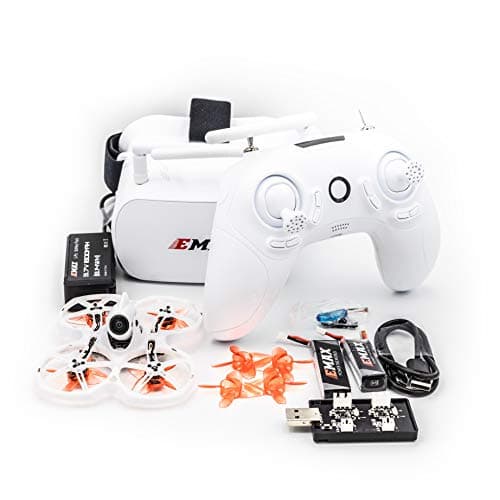
Tiny Hawk Tinyhawk 2 II
Score: 73/100Diatone Roma F7
Score: 75/100Rankings
The Diatone Roma F7 is a 290 mm carbon-fiber racing frame designed for 7-inch props and 6S batteries, delivering efficient long-range cruising and freestyle capability. Its heavier build and taller stack can affect agility and antenna placement, making it less ideal for ultra-light racing. Targeted at intermediate to advanced pilots seeking a versatile, durable platform.
The Tinyhawk 2 II RTF Kit provides a complete micro FPV racing setup with adjustable camera tilt and switchable VTX power levels, supporting both indoor and limited outdoor flights. Its default low VTX power and requirement for a ham radio license for D8 mode may restrict some users, and flight time is modest. Suited for beginners and indoor racers who want an all-in-one package with upgrade potential.
| Attribute | | Diatone Roma F7 |
|---|---|---|
450 mAhbest | — | |
| ↓ lower better | 141.7 gbest | 200 g |
75 mm | 290 mmbest | |
— | 7 inbest | |
16,000 KVbest | 1,100 KV | |
3best | — |
Click an attribute name to sort · Green = best, red = worst (relative to this comparison)
| Attribute | | Diatone Roma F7 |
|---|---|---|
Build & Design(3) | ||
Weight (net) (g) | 141.7 g | 200 g |
Frame Size (diagonal) (mm) | 75 mm | 290 mm |
Frame Material | Polypropylene | 3K carbon fiber |
Performance(1) | ||
Recommended Motor KV (KV) | 16000 KV | 1100 KV |
Products in the top-left offer the best value (high score, low price).
Professional reviewers highlight the EMAX Tinyhawk II's complete RTF package eliminates compatibility concerns and guesswork for beginners, providing drone, goggles, and transmitter in one box. They note the adjustable camera mount, switchable VTX power, and modern F4 controller, but mention default VTX power limits and ham license requirement.
Professional reviewers highlight the Roma F7's robust 4 mm arms and 3 mm bottom plate, noting its high crash resistance and efficient setup for 1800 mAh 6S flights. They commend its craftsmanship, modularity, and balanced performance for both freestyle and long-range cruising, while pointing out that it is not a punchy freestyle quadcopter and its taller stack can cause antenna challenges.
Everyday users consistently praise the frame’s durability and the ease of customizing it to their needs, often mentioning the long flight times achieved with 6S batteries. Common criticisms focus on its cruiser‑oriented nature, antenna interference with larger batteries, and the need for extra tuning to reach optimal performance.
