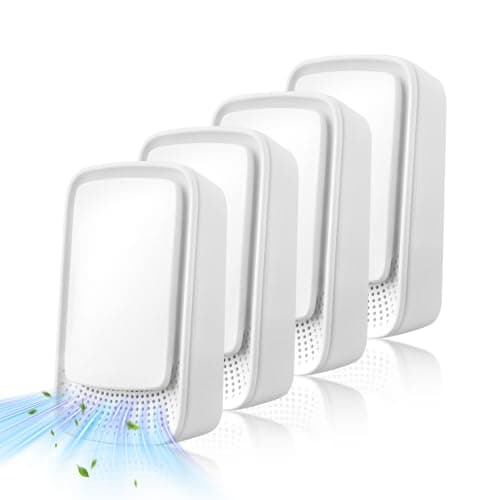
Trpyd Plug-In Air Purifier
Score: 71/100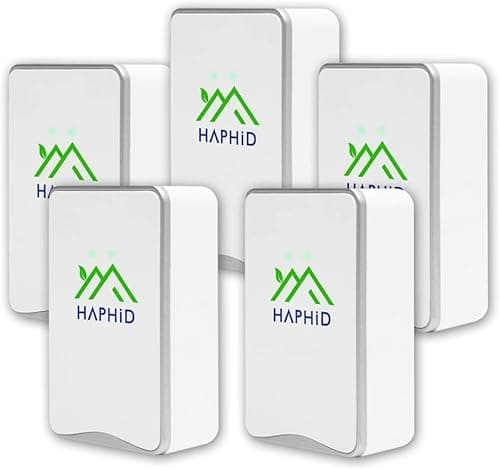
Haphid Plug-In Air Purifier
Score: 68/100Rankings
The Trpyd Plug-In Ionic Air Purifier provides silent operation, a CADR of 80 m³/h and coverage of about 23 m², making it suitable for small rooms. Its limitations include modest airflow, potential ozone generation, and the need to clean collector plates. Best for users who want a low-maintenance, quiet solution for bedrooms or dorms.
The HAPHID 5-Pack Plug-In Ionizer delivers silent operation and a high anion output while consuming less than 2 W of power. Its drawbacks include a lack of performance metrics such as CADR and limited suitability for larger spaces. Ideal for users seeking ultra-quiet, low-maintenance ionization in small rooms.
| Attribute | | |
|---|---|---|
23.23 sq mbest | — | |
| ↓ lower better | 0 dBbest | 0 dBbest |
| ↓ lower better | — | 2 Wbest |
| ↓ lower better | 0.272 kgbest | 0.363 kg |
80 m³/hbest | — | |
1 yearsbest | — |
Click an attribute name to sort · Green = best, red = worst (relative to this comparison)
| Attribute | | |
|---|---|---|
Battery & Power(1) | ||
Power Consumption (W) | Low W | 2 W |
Build & Design(2) | ||
Weight (kg) | 0.272 kg | 0.363 kg |
Dimensions (H × W × D) | 1.0 x 1.0 x 1.0 inches | 2.2 x 3.8 x 2.2 inches |
Features(1) | ||
Ion Technology | Advanced negative ion function | Negative Ion Generation |
Products in the top-left offer the best value (high score, low price).
Professional reviewers position the Trpyd ionic purifier as a silent, low-maintenance solution for small rooms, commending its plug-in convenience and lack of filter upkeep. However, they caution about the inherent ozone generation of ionic technology and the modest CADR, noting that it cannot replace higher-capacity HEPA units for larger spaces or for users with strict air-quality requirements.
Everyday users love the whisper-quiet operation and portability, often highlighting its ease of use at night and the cost savings from not buying filters. Recurring frustrations center on limited cleaning power for anything beyond a bedroom, the need to clean collector plates, and uncertainty about its electricity usage and ozone output.
