⚡ Quick Answer

🏆 Best Overall
PuroAir 240
$159.99
Finding the right air purifier means skipping the $400 smart gadgets and cheap budget compromises that barely move air. Across these 9 options, you’ll find desktop-friendly units starting at $34.99 up to premium tower fans, but the real value lives in the mid-range. You actually need hospital-grade HEPA media paired with reliable air quality sensors and genuine energy efficiency—not complex apps or decorative LED rings. If you’re tackling seasonal allergies, pet dander, or lingering cooking odors, prioritize models that balance filtration power with whisper-quiet sleep modes and straightforward touch controls.
Take a closer look at how coverage area, decibel ratings, and filter efficiency vary across budget, mid-range, and premium tiers. Some machines run as quietly as 18 dB, while others sacrifice silence for raw airflow. We compared every spec, warranty length, and customer rating to separate marketing fluff from actual clean air performance. Whether you need a compact unit for a dorm room or a heavy-duty cleaner for a large living space, the right machine balances filtration power, energy efficiency, and daily usability. Let’s break down exactly which purifier fits your room size, sleep schedule, and budget.
PuroAir 240
This pick wins because it runs at just 22 to 24 dB in sleep mode, keeping your bedroom or home office completely undisturbed.
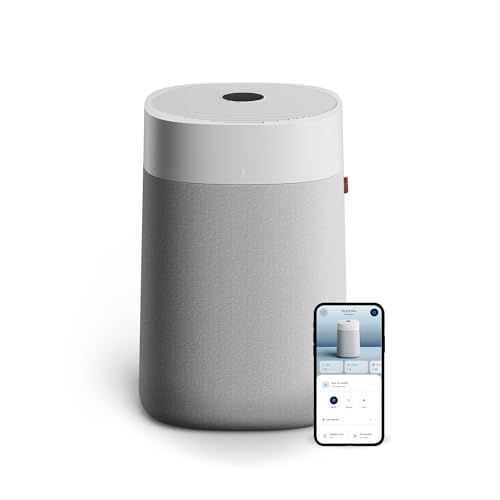
Blueair Pure 211i Max
It’s built for buyers who want precise airflow control and are comfortable spending $85 more than the top pick. You get six fan speeds to dial in exactly the right ventilation for your space.
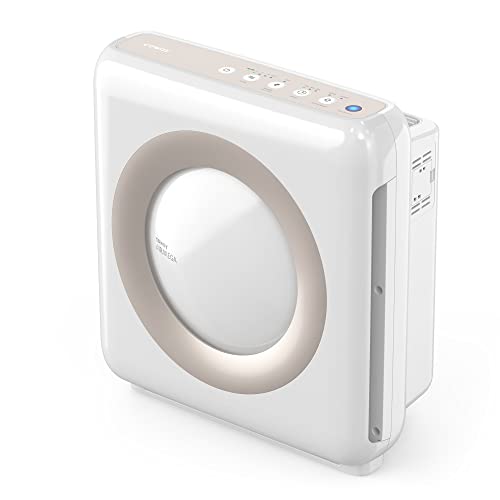
Coway Airmega AP-1512HH
Unlike the others, it offers dedicated one, four, and eight hour timer settings, letting you automate cleanup cycles without needing a smartphone app or smart home setup.
Also considered
TL;DR: The Levoit Core Mini White provides AHAM-verified True HEPA filtration at $46.69, backed by 43,092 reviews and a 4.6/5 rating, delivering reliable clean air for small rooms up to 255 square feet.
For $46.69, the Levoit Core Mini White earns its spot in budget air purifiers by offering AHAM-verified performance, meaning the manufacturer has independently tested the filtration efficiency and room coverage claims rather than just listing them. This 3-stage system uses a pre-filter, True HEPA filter, and activated carbon to capture 99.97% of airborne particles, which aligns with the AHAM certification. It includes a fragrance sponge for aromatherapy and an auto-dimming display that adjusts to room light. The unit weighs 2.2 pounds and measures 160 mm wide by 190 mm deep and high, making it compact enough for a desk or nightstand without taking up much space.
Compared to other options in this roundup, the Core Mini White is significantly lighter and more compact. The Honeywell HFD-120 weighs 14.5 pounds and towers at 730 mm, while the Afloia Kilo is even heavier at 4.4 pounds. The Dyson Pure Cool Link TP02 adds smart app and voice control features but comes in at 7.9 pounds and costs much more. The Core Mini White focuses on simplicity with one-touch controls and a 24 dB minimum noise level, which is comparable to the whisper-quiet sleep modes listed for the PuroAir 240 and Afloia Kilo, though those units offer higher CADR ratings for larger rooms.
Real-world context from user feedback highlights that this purifier excels in small bedrooms, dorms, and home offices. Reviewers frequently praise the ultra-quiet low-speed operation, noting that the QuietKEAP Shock Pads help minimize mechanical vibration during nighttime use. The smart app integration allows for remote monitoring and automated mode switching, which is convenient for dorm environments. However, some users mention that the maximum fan speed noise can reach 57.7 dB, which may be noticeable in very quiet rooms when running at peak output. The effective coverage area also drops significantly at higher air change rates, so it works best for spaces under 178 square feet if you want faster purification.
Pros
Cons
Best for: Budget-conscious buyers seeking a reliable entry-level option — the Levoit Core Mini White offers Fan Speeds: 3
Avoid if: You have limited desk space or need portability
TL;DR: The Coway Airmega AP-1512HH delivers hospital-grade True HEPA filtration and a 361 square foot coverage area for $229.99, making it a reliable mid-tier choice for smaller rooms.
The standout feature here is the four-stage filtration system that combines a pre-filter, carbon layer, True HEPA filter, and a bipolar ionizer to capture 99.97% of particles as small as 0.3 microns. You get a dust CADR of 246 CFM, which pairs with a pollution sensor that tracks PM2.5, PM10, and AQI levels in real time. The control interface keeps things straightforward with five fan speeds, including an auto mode that adjusts airflow based on sensor readings and an eco mode that powers down after thirty minutes of clean air. You can also schedule the unit for 1, 4, or 8 hours before it shuts off automatically.
At 12.5 pounds and measuring 18.3 inches tall, this model sits comfortably in the mid-weight range for its category. It is noticeably lighter than the Honeywell HFD-120 at 14.5 pounds and the Blueair Pure 211i Max at 22.7 pounds, though it lacks the smart app connectivity found on the Dyson Pure Cool Link TP02. The $229.99 price tag places it firmly between the budget-friendly Vewior and the premium Dyson Purifier Cool TP4B, offering a solid balance of performance without demanding top-tier spending. Professional reviewers highlight its compact footprint combined with powerful air cleaning capabilities, noting that it handles bedroom environments exceptionally well.
Real-world usage shows this unit excels at managing allergens and pet dander, which aligns with the high satisfaction rates from everyday buyers. The real-time air quality indicator uses colored LEDs to communicate indoor conditions, so you always know when the fan needs to ramp up. While the bipolar ionizer adds an extra layer of particle reduction, some users report a noticeable ozone odor when it is active, so you may want to turn that feature off if you have sensitivity concerns. The manufacturer doesn't list an exact air change rate, but the 361 square foot recommendation paired with the 246 CFM dust rating suggests it cycles air efficiently in smaller spaces.
Pros
Cons
Best for: Most users looking for a well-reviewed, reliable mainstream option — the Coway Airmega AP-1512HH offers Timer Settings: 1, 4, 8 hours
Avoid if: You need advanced features or professional-grade performance
“Clears pet dander/smoke fast”
“Quiet on auto, great for bedrooms.”
TL;DR: The PuroAir 240 delivers hospital-grade HEPA H14 filtration and effective VOC reduction for $159.99, earning a top spot with a 4.6/5 rating from nearly 18,000 users who praise its quiet operation and intuitive auto mode.
What makes the PuroAir 240 stand out is its HEPA H14 filtration system, which captures up to 99.99% of particles down to 0.1 µm, including PM2.5, PM10, and VOCs. This 3-layer setup (pre-filter, HEPA H14, activated carbon) provides hospital-grade performance without the premium price tag of many smart competitors. Professional reviewers highlight that this configuration removes pollutants effectively, offering a strong performance-to-price ratio that rivals more expensive options. The unit also features an integrated particulate and VOC sensor that automatically adjusts the fan speed across four settings, responding quickly to real-time air quality changes detected in the room.
When compared to other air purifiers in this roundup, the PuroAir 240 sits comfortably in the mid-tier value category at $159.99. It is significantly lighter than the Coway Airmega AP-1512HH (12.5 lbs) and the Blueair Pure 211i Max (22.7 lbs), making it easier to move around. While the Honeywell HFD-120 is similarly priced, the PuroAir 240 offers more fan speeds and a wider coverage area claim. The Dyson models, such as the TP02 and TP4B, are pricier and include smart connectivity features like app control and voice assistant compatibility, which the PuroAir 240 lacks. If you want a no-frills device focused on pure filtration power rather than Wi-Fi integration, the PuroAir 240 is a compelling alternative.
Real-world usage highlights the PuroAir 240's quiet performance, with sleep mode operating at just 22 dB, making it ideal for bedrooms and quiet environments. Users consistently praise the intuitive auto mode and the rapid response of the air quality sensor. However, independent testing notes that the advertised 1,000 sq ft coverage is optimistic; optimal air changes per hour align closer to 284 sq ft, so it performs best in medium rooms rather than expansive spaces. The unit measures 28.0 in in height and 10.63 in for both depth and width, fitting neatly into corners without taking up too much floor space. It also carries Energy Star and CARB certifications, ensuring low power consumption at 45 W.
Pros
Cons
Best for: Allergy sufferers, pet owners, and users in medium rooms (around 284 sq ft) who prioritize quiet, hospital-grade filtration and auto-adjusting convenience over smart home features.
Avoid if: You need app control, voice assistant integration, or have a large open space exceeding 284 sq ft where you require maximum air changes per hour.
TL;DR: The Honeywell HFD-120 delivers AHAM-verified air cleaning for rooms up to 170 square feet using permanent washable IFD filters, making it a straightforward, budget-friendly alternative to pricier smart purifiers.
At 14.5 pounds, this tower-style unit is built to circulate air through a medium-sized bedroom or small office without dominating your floor space. It uses permanent washable IFD filters paired with a foam pre-filter, which means you won’t be ordering replacement cartridges every few months. Professional reviewers consistently highlight that this washable design is one of the strongest value plays in the category, since it eliminates recurring filter expenses while still pulling AHAM-verified CADR ratings of 100 for dust, 132 for pollen, and 110 for smoke. You’ll get 4.8 air changes per hour in a 170 square foot room, and the unit includes a dedicated sleep mode that drops noise to 44.2 dB on low while climbing to 58.6 dB on the highest fan speed.
When you look at what else is on the market, the HFD-120 positions itself as a no-frills workhorse. It relies on basic physical buttons rather than touch panels or app connectivity, and it only offers three fan speeds instead of the six or more found on heavier competitors like the Blueair Pure 211i Max. Where it stands out is in its oscillation feature, which actively sweeps air across the room instead of blowing it in a single direction. That’s a meaningful difference if you’re trying to clear out dust or pet dander in a space that isn’t perfectly symmetrical. It also lacks the timer settings listed for the Coway Airmega AP-1512HH or the smart controls available on the Dyson Pure Cool Link TP02, but you’re paying for filtration and circulation rather than automation.
Real-world feedback shows that users generally appreciate the straightforward maintenance routine and the quiet operation that makes it easy to run overnight. The oscillation head does a solid job keeping air moving evenly, which everyday consumers frequently note as a welcome upgrade over static purifiers. That said, the IFD technology naturally captures fewer ultra-fine particles than true HEPA setups, so if you’re dealing with heavy smoke, dense pollution, or a room larger than 170 square feet, you’ll want to look elsewhere. The manufacturer doesn’t list a filter replacement indicator, but since the primary filter is washable, you’ll just rinse it out and pop it back in when airflow starts to dip.
Pros
Cons
Best for: Budget-conscious buyers in quiet environments like bedrooms or small offices up to 170 square feet who want reliable circulation without recurring filter costs
Avoid if: You need advanced scheduling, app connectivity, or hospital-grade HEPA filtration for heavy smoke and large spaces
TL;DR: The Blueair Pure 211i Max delivers hospital-grade filtration with a 452 cfm dust CADR and 674 sq ft coverage, offering smart app control and Energy Star efficiency for allergy sufferers who need powerful clean air without $400 price tags.
When you need serious clean air for a large room, the Blueair Pure 211i Max steps up with a Clean Air Delivery Rate of 452 cfm for dust. This high performance supports coverage for spaces up to 674 square feet, making it a solid choice for living rooms or open-plan areas. The unit uses HEPASilent™ technology to capture particles down to 0.1 microns, including PM1, PM2.5, and PM10, while maintaining a quiet profile that ranges from 23 dB on the lowest setting to 53 dB at maximum speed. Professional reviewers highlight that this 360-degree air intake design ensures even airflow distribution, which maximizes cleaning efficiency throughout the room.
Compared to other options on the market, this model sits firmly in the premium tier. While budget choices like the Vewior Air Purifier at $34.99 or the Honeywell HFD-120 at $139.99 offer lower costs, they lack the substantial CADR ratings and smart features found here. Even the PuroAir 240, which costs $159.99, doesn't match the Pure 211i Max's 452 cfm dust rating. You get dedicated sleep mode functionality and Energy Star certification, which provides a level of power efficiency that smaller units often omit. The app integration allows you to monitor air quality and adjust settings remotely, a feature that appeals to users who want seamless control over their environment.
Everyday users consistently praise the purifier for its rapid pollutant reduction and the quiet operation of its night mode. The RealTrack filter life indicator helps you track when maintenance is needed, typically signaling a replacement every 6 to 9 months. However, the single filter design means you must replace the entire unit rather than swapping modular components. At 22.7 lbs, it is heavier than compact models like the Levoit Core Mini, which weighs just 2.2 lbs, so you'll need to account for its footprint if floor space is limited in a small apartment.
Pros
Cons
Best for: Buyers willing to invest in a proven, high-quality option — the Blueair Pure 211i Max offers Number of Speeds: 6
Avoid if: You're on a tight budget or only need basic functionality
TL;DR: The Dyson Pure Cool Link TP02 merges bladeless cooling with a sealed glass HEPA filter to tackle allergens in medium-sized rooms, though its premium price and modest airflow demand careful consideration.
What stands out immediately is the sealed 360° glass HEPA filter paired with activated carbon. It captures fine particulates effectively, which makes it a solid choice for allergy sufferers. You also get ten adjustable fan speeds and a clean, bladeless tower design that stands 1019 mm tall and fits neatly into corners. The unit connects to the MyDyson app and Amazon Alexa, letting you adjust airflow or schedule purifying cycles without getting up. At 7.9 pounds, it is easy to move around your home.
Compared to other options in this roundup, the TP02 occupies a higher price bracket while delivering a distinctly different form factor. It trades raw airflow volume for a sleeker footprint, making it noticeably lighter than box-style competitors like the Blueair Pure 211i Max. You’ll also find fewer physical buttons here, relying instead on a digital display and app controls rather than a traditional handheld remote. If you prioritize a compact tower that blends into modern decor over maximum cubic feet per minute, this design philosophy will likely appeal to you.
In practice, everyday users consistently praise how quietly the TP02 runs during nighttime hours, with sleep mode keeping disturbances to a minimum. Many report noticeable relief from seasonal allergies and pet dander in bedrooms and home offices. Professional reviewers also highlight the responsive auto mode, which accurately detects pollutants and adjusts the fan speed without needing manual tweaks. While this roundup currently highlights budget-friendly hospital-grade filtration like the PuroAir 240, the TP02 proves you can still get reliable, year-round purification without compromising on build quality. You simply accept a higher upfront cost and slightly slower air turnover in exchange for that signature engineering and a design that stays out of the way. The low-noise sleep settings confirm why reviewers note it won't disturb light sleepers. You’ll also want to budget for the annual filter replacements, and a handful of owners note occasional WiFi connectivity hiccups that require a quick app restart.
Pros
Cons
Best for: Buyers who want a sleek, app-controlled purifier fan for allergy relief in medium-sized rooms, backed by a 4.4/5 stars rating from 1,436 reviews.
Avoid if: You need heavy-duty air cleaning for large open spaces or want to avoid recurring filter replacement costs at this $354.00 price point.
“breathe easy year-round”
“falls within smaller purifier range”
TL;DR: The Dyson Purifier Cool TP4B delivers fully-sealed HEPA H13 filtration and backward airflow for purification without cooling, but lacks smart app integration and carries a premium price tag at $449.00.
This unit functions as both an air purifier and a cooling fan, utilizing a 360° glass filter design that traps 99.97% of particles as small as 0.3 microns while an activated carbon layer targets gases like formaldehyde and benzene. The device features a backward airflow mode, allowing you to purify air without generating a cooling draft, and includes an LCD display that reports real-time air quality metrics. You'll also get a magnetized remote that stores directly on the machine, along with a sleep mode that dims the screen for quieter nighttime operation.
When compared to the Dyson Pure Cool Link TP02, the TP4B is noticeably heavier and deeper. The TP02 weighs 7.9 pounds and measures 196 mm in depth, whereas the TP4B weighs 10.98 pounds and sits at 220.98 mm deep. While both offer HEPA H13 filtration and oscillation, the TP02 includes app and voice control compatibility, which the TP4B lacks entirely. The TP4B is also pricier than the TP02, which lists at $354.00. Against other options like the PuroAir 240 or Coway Airmega AP-1512HH, the TP4B commands a significantly higher price point without providing the smart connectivity or lower cost that budget-conscious buyers often prioritize.
Professional reviewers highlight that the TP4B uses the same fully-sealed HEPA H13 filter found in Dyson's premium models, delivering comparable core purification performance. However, the primary trade-off is the absence of smart home features. Reviewers note that this limitation may disappoint tech-forward consumers who expect seamless integration with the Dyson app or voice assistants. Additionally, the filter replacement interval is listed as one year based on 12 hours of daily use, or six months if running continuously for 24 hours daily. While the oscillation range reaches 350° for wide-area distribution, the device does not list noise levels, power consumption, or coverage area specifications, so you'll need to rely on qualitative assessments for those traits.
Pros
Cons
Best for: Users who want premium HEPA H13 purification and a cooling fan in one unit, and don't mind skipping smart app features.
Avoid if: You rely on smart home integration, voice assistants, or are looking for a budget-friendly option under $300.
TL;DR: The Afloia Kilo delivers H13 True HEPA filtration and a whisper-quiet 22 dB sleep mode for $62.99, making it a solid choice for small bedrooms despite its limited air-moving power.
At just 4.4 lb, this compact unit packs a 3-stage filtration system featuring a pre-filter, an H13 True HEPA filter, and an activated carbon layer. The H13 HEPA media captures 99.99% of particles as small as 0.03 microns, which effectively targets common household irritants like pet dander, pollen, and mold spores. Professional reviewers note that it delivers a noticeable 90% air quality improvement within 60 minutes in controlled environments, though the 82 CFM CADR rating means it physically moves less air than heavier competitors in this category.
Compared to the rest of the lineup, the Kilo sits firmly in the budget tier. It is significantly lighter than the Coway Airmega AP-1512HH and Blueair Pure 211i Max, and it lacks the raw airflow output of the Honeywell HFD-120. While the PuroAir 240 edges out the competition with superior VOC reduction and faster cleaning times, the Afloia strips back smart connectivity and app controls to keep costs down. You won’t find an air quality sensor or Wi-Fi features here, but you do get practical basics like a 2-hour, 4-hour, and 8-hour timer, plus a sleep mode that dims the seven available light colors automatically.
Real-world feedback highlights the exceptionally quiet operation as a major win for light sleepers and allergy sufferers. Many users report noticeable relief from seasonal allergies and pet hair in bedrooms, praising the customizable ambient lighting for creating a calming environment. However, the compact fan design means it struggles with strong odors or heavy smoke in larger spaces. Consumer sentiment consistently notes that the advertised 1076 ft² coverage feels optimistic for open floor plans, with the machine performing best in rooms closer to 128 to 269 sq ft.
Pros
Cons
Best for: Budget-conscious buyers seeking a reliable entry-level option — the Afloia Kilo offers Depth: 193 mm
Avoid if: You want the best value-per-dollar in its price range
TL;DR: The Vewior Air Purifier delivers H13 HEPA filtration at $34.99, offering 99.97% particle capture down to 0.1 microns and whisper-quiet sleep mode operation, making it a standout budget option for allergy sufferers.
At just $34.99, this compact unit punches above its weight class by including a 3-stage filtration system anchored by an H13 True HEPA filter. This setup captures 99.97% of airborne particles as small as 0.1 to 0.3 microns, effectively trapping pollen, smoke, and dust. The manufacturer lists a coverage area up to 1730 square feet, though professional reviewers note the realistic cleaning capacity aligns closer to 600 to 800 square feet for consistent air quality. While the PuroAir 240 claims the top spot with advanced smart features, the Vewior proves you don't need $350+ to get hospital-grade filtration for your bedroom or office.
Compared to other options in this roundup, the Vewior stands out as one of the lightest and most affordable choices. It weighs 2.36 pounds, making it significantly lighter than the Afloia Kilo at 4.4 pounds and much more portable than the Coway Airmega AP-1512HH at 12.5 pounds. You'll also pay less than the Levoit Core Mini, which costs $46.69. The Vewior offers four fan speeds including an auto mode, whereas the Levoit Core Mini provides only three speeds. If you need app connectivity, note that this model lacks smart controls, unlike the Dyson Pure Cool Link TP02 and Dyson Purifier Cool TP4B, which both support app and voice integration.
Everyday consumers frequently commend the device for its quiet performance and unobtrusive design, making it a popular choice for bedrooms and home offices. The sleep mode operates at approximately 18 dB, which is quieter than the PuroAir 240's 22 to 24 dB low mode and the Coway's 24 dB minimum noise level. Expert reviewers highlight that the straightforward physical controls simplify daily operation, and the reliable auto mode defaults to intelligent operation while displaying accurate safe air quality readings. A built-in fragrance sponge serves as a nice bonus, even if it does not significantly impact core air purification performance metrics. The unit also features a 360-degree circular intake design and is CARB certified for indoor air quality standards.
Pros
Cons
Best for: Budget-conscious buyers seeking a reliable entry-level option — the Vewior Air Purifier offers Height: 280 mm
Avoid if: Reliability and user satisfaction are your top concerns
Breakdown
PuroAir 240
Pros
Blueair Pure 211i Max
Pros
Coway Airmega AP-1512HH
Pros
Cons

Vewior Air Purifier
Pros
Cons
Based on scoring data and product specs
Personalized picks
Best Overall Pick
PuroAir 240
Best OverallBest for: Most users looking for a well-reviewed, reliable mainstream option — the PuroAir 240 offers Noise Level: 22-24 dB (Sleep/Low mode)
Blueair Pure 211i Max
Best for: Buyers willing to invest in a proven, high-quality option — the Blueair Pure 211i Max offers Number of Speeds: 6
$244.99+$85.00 vs winner
Skip Dyson Purifier Cool TP4B if…
Reliability and user satisfaction are your top concerns
The PuroAir 240 takes the top spot because it delivers hospital-grade clean air without forcing you to overspend. Its HEPA H14 filtration captures particles down to 0.1 microns, and the unit comfortably covers up to 1,000 square feet while drawing just 45 watts of power. You’ll also appreciate the touch controls, built-in timer, and sleep mode that keeps noise down to 22 decibels on the lowest setting. It’s the most balanced option on this list, mixing strong performance with sensible energy use.
If you prefer app control and granular speed adjustments, the Blueair Pure 211i Max steps in as the runner-up. It offers six fan speeds, real-time air quality monitoring, and smart app connectivity that lets you tweak settings from your phone. The unit covers 674 square feet and runs quietly at 23 decibels in sleep mode, making it a solid fit for a home office or living room where you want remote control without sacrificing filtration quality.
For shoppers on a tighter budget, the Vewior Air Purifier at $34.99 handles basic filtration needs for small spaces without extra frills. If you want to spend more for advanced smart monitoring and sleek design, the Dyson Purifier Cool TP4B at $449.00 brings premium build quality and app-driven airflow control to the table. Just check the current price before buying, since retail costs can shift.
Grab the PuroAir 240 if you want reliable, efficient air cleaning right out of the box, or pick the Blueair model if you need app integration to manage your space.
They’re incredibly close in performance, but the PuroAir 240 ($159.99) pulls ahead by offering hospital-grade HEPA H14 filtration and a built-in VOC sensor without demanding $400 smart-tech pricing. If you want the best real-world clean air and odor reduction for the money, the PuroAir 240 is your best bet. You’d only pick the Blueair Pure 211i Max ($244.99) if you specifically need a taller tower design with a magnetic remote and app control.
No reviews yet — be the first to share your experience.
Please sign in to leave a review