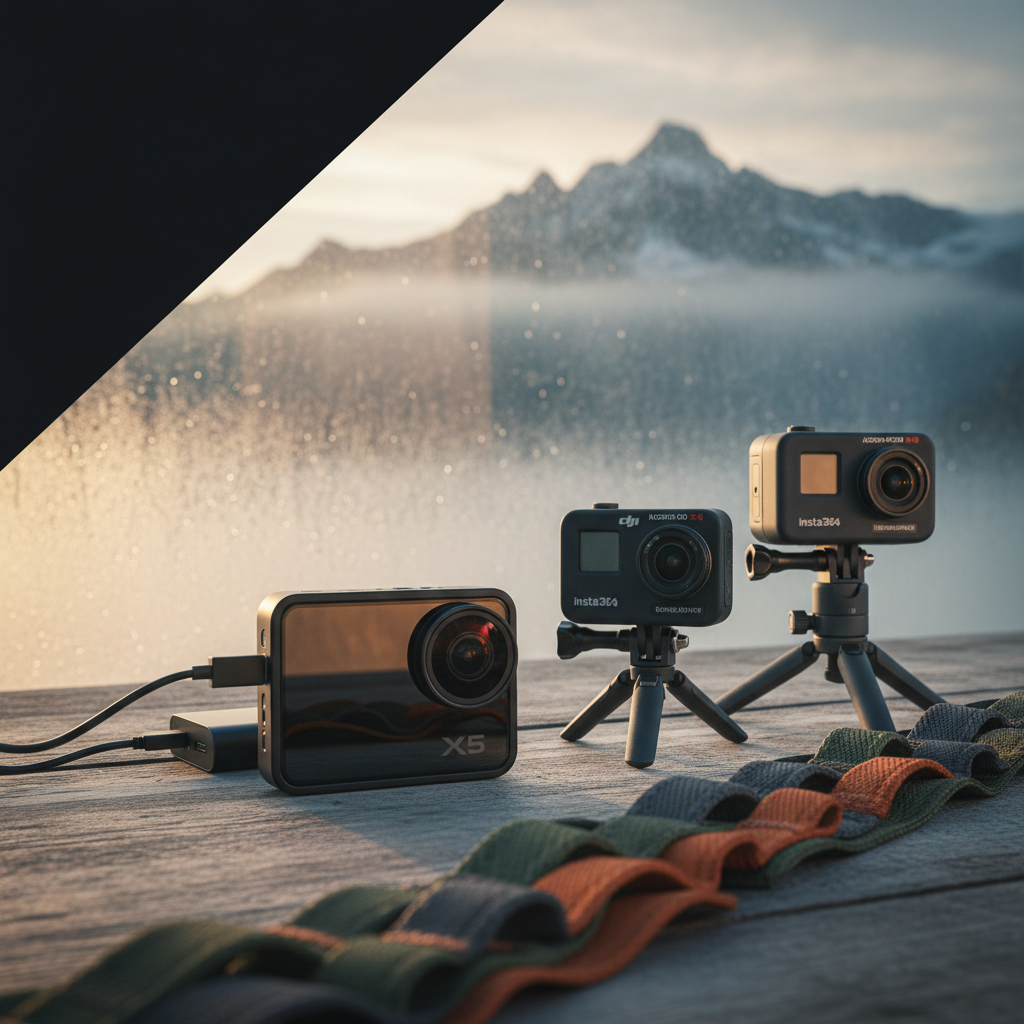
If you’re hunting for an action camera that can capture smooth 4K video at 60 fps or faster, you’ve landed in the right place. Our roundup compares 9 models, from a $49.99 entry‑level unit to a $639.00 flagship, and looks at how each balances resolution, battery life and ease of use. Ratings cluster around 4.5‑4.6 stars, with the Insta360 X5 and DJI Osmo Action 5 Pro both earning a 4.6‑star average from over 1,900 and 2,500 reviews respectively.
We’ve split the lineup into three price tiers so you can spot a fit quickly. The budget corner includes the Oddv Action1 ($49.99), Timnut 4K60fps ($75.99) and AKASO Brave 8 Lite ($199.99), each offering 4K60fps video but with limited battery runtime. Mid‑range options like the Insta360 ONE RS 4K ($239.99) and DJI Osmo Action 5 Pro ($309.00) add larger sensors and faster charging – the Osmo’s 80 % charge in about 20 minutes is a handy perk. Premium picks – Insta360 ONE R 1‑Inch ($549.99), X4 Endurance ($600.00) and X5 ($639.00) – bring 1‑inch or dual 1/1.28″ sensors, 72 MP stills and up to 185 minutes of recording.
Below we break down each model’s strengths, battery life and key features so you can match the right high‑frame‑rate 4K camera to your adventures.

Insta360 X5
Four built‑in microphones and a 2400 mAh battery give you premium audio capture and long shooting time, justifying its value.

DJI Osmo Action 5 Pro
Ideal for everyday creators who want a solid mainstream cam at $309, which is $330 less than the Insta360 X5.

Insta360 X4 Endurance
Stands out with 135 minutes of battery life at 5.7K30fps, offering endurance that the X5 and Osmo Action don’t match.
Also considered
Score Analysis
Key score advantages vs. runner-up (DJI Osmo Action)
Price Range
Insta360 X5
$639.00
DJI Osmo Action 5 Pro
$288.00
Insta360 X4 Endurance
$488.00

Insta360 ONE RS 4K
$239.99
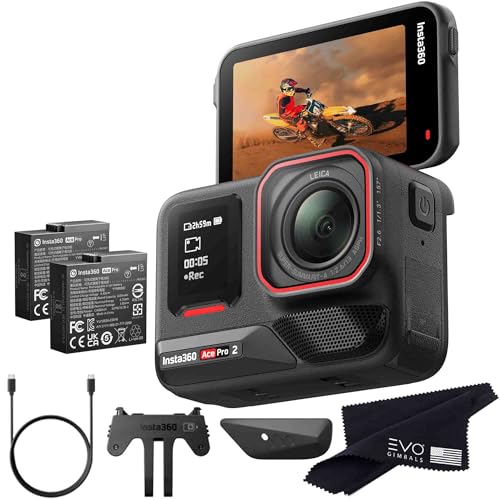
Insta360 Ace Pro 2
$419.99
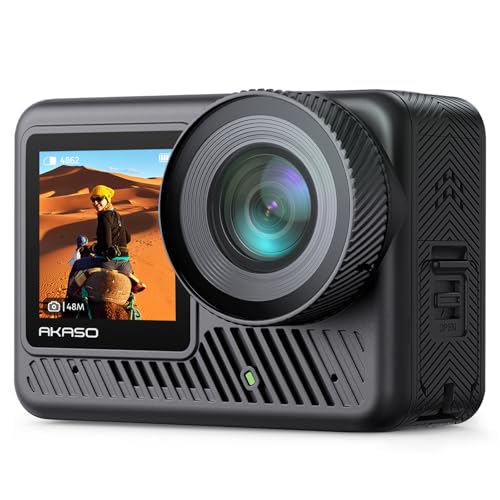
AKASO Brave 8 Lite Waterproof Action Camera
$199.99
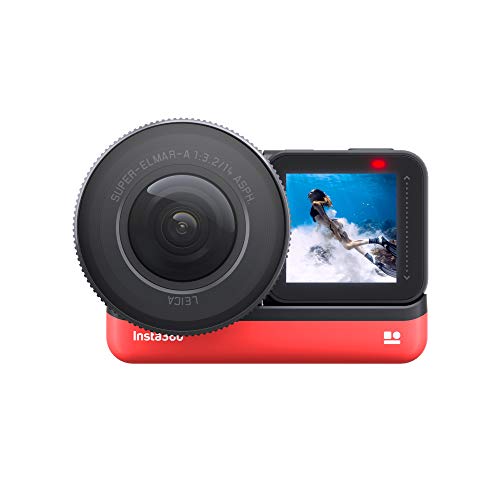
Insta360 ONE R 1-Inch
$549.99

Oddv Action1
$49.99

Timnut 4K60fps
$75.99
Spec Comparison
TL;DR: The Insta360 X5 delivers 8K 360° video, 120 fps 4K capture, and FlowState stabilization in a rugged, waterproof body, but its premium price and massive files may deter budget‑focused shooters.
The headline spec is the 8K 360° video resolution of 7680×3840 pixels, plus a 4K 120 fps option that lets you capture ultra‑smooth action without sacrificing detail. Its 1/1.28" sensor and f/2.0 aperture also support 72 MP stills, giving creators the flexibility to switch between high‑resolution photos and video on the fly.
Compared with the eight other cameras in this roundup, the X5 carries the largest battery at 2400 mAh, outlasting the X4 Endurance’s 2290 mAh and the Ace Pro’s 1650 mAh. Its 185‑minute runtime also beats the X4’s 135‑minute (5.7K 30 fps) run and the ONE R 1‑Inch’s 65‑minute life. At 2.4471311082 pounds, the X5 is heavier than the Ace Pro (2.0 lb) and the ultra‑light ONE RS 4K (0.27998707274 lb), but still lighter than the X4 Endurance (3.196702799 lb). The 2.5‑inch touchscreen matches the X4’s screen size while exceeding the 1‑inch displays on the ONE R 1‑Inch and ONE RS 4K, and it’s larger than the 2‑inch screen on the AKASO Brave 8 Lite.
Reviewers consistently praise the FlowState 6‑axis gyroscope and Horizon Lock for delivering “remarkably effective” stabilization, even in low‑light situations where the PureVideo AI mode shines. Users love the invisible selfie stick for “floating‑camera” shots and appreciate the IPX8 rating that lets the camera dive to 15 m. However, the 8K footage generates very large files, so the bundled 256 GB microSD card often serves as a minimum, and many note that editing 360° video can be time‑consuming on mid‑range hardware. A few owners mention occasional stitching artifacts during fast motion.
Pros
Cons
Best for: Real‑estate pros and travel vloggers who need ultra‑high‑resolution 360° footage and reliable stabilization for immersive storytelling.
Avoid if: You're shopping on a tight budget — it's priced at $639.00.
TL;DR: The DJI Osmo Action 5 Pro packs a 1/1.3" 40 MP sensor, 4K 120 fps video and HorizonSteady stabilization into a compact, IP68‑rated body with dual OLED screens for versatile adventure shooting.
The standout spec is the 1/1.3" CMOS sensor delivering 40 MP stills and 13.5 stops of dynamic range, paired with a 155° ultra‑wide field of view and 120 fps at 4K resolution. This combination gives you DSLR‑like low‑light performance and smooth slow‑motion capture, all controlled from a 1.4" front OLED touchscreen and a 2.5" rear OLED touchscreen.
Compared with the other eight cameras in this roundup, the Osmo Action 5 Pro is heavier than the Insta360 ONE RS 4K (0.27998707274 lb) but far lighter than the AKASO Brave 8 Lite (680 g). Its 1950 mAh battery outpaces the ONE RS 4K’s 1445 mAh pack, giving you up to 4 hours of run‑time at 25 °C (3.6 hours at –20 °C). Bluetooth 5.0 matches the ONE RS 4K, while the dual‑band Wi‑Fi adds reliable connectivity for quick file transfers.
Users consistently praise the camera’s bright front screen for vlogging and its rock‑solid HorizonSteady stabilization, which professionals call “gimbal‑smooth.” The long battery life in cold conditions and vivid underwater colors also show up in everyday feedback. On the downside, owners note the lack of a built‑in GPS for automatic location tagging and the need to manually download the Mimo app because it isn’t on Google Play.
Technical highlights also include 10‑bit D‑Log M color depth, support for up to a 1 TB microSD card, IP68 waterproof rating (up to 20 m depth), and Bluetooth 5.0 for wireless audio pairing with DJI Mic 2 or Mic mini. The camera’s 32× slow‑motion factor and 4‑hour battery life at moderate temperatures make it ideal for high‑action scenarios.
Pros
Cons
Best for: Adventure athletes, solo vloggers, and anyone needing high‑frame‑rate 4K video with reliable stabilization.
Avoid if: You require built‑in GPS, variable aperture lenses, or an 8K high‑frame‑rate solution.
“Battery lasts through a full ski day — even in -10°C.”
“The front screen is perfect for vlogging — no more guessing if I’m in frame.”
TL;DR: The Insta360 X4 Endurance bundles 8K 360° video, FlowState stabilization, and a 2290 mAh battery for up to 135 min of recording, but its large files and lack of GPS may deter casual shooters.
The X4’s headline spec offers 8K 30 fps 360° video, using dual 1/2" CMOS sensors that deliver 48 MP per lens and a combined 72 MP still‑photo resolution. In single‑lens mode it shoots 4K 60 fps, while its slow‑motion modes reach 4K 100 fps and 5.7K 120 fps, giving creators plenty of creative freedom.
At a bundle weight of 3.196702799 lb, the X4 is significantly heavier than the ultra‑compact Insta360 ONE R 1‑Inch (0.330693393 lb) and the DJI Osmo Action 5 Pro (0.32187490252 lb), and also heavier than the X5 (2.4471311082 lb) and Ace Pro 2 (2.0 lb). Its 2290 mAh battery sits between the X5’s 2400 mAh and the Ace Pro 2’s 1650 mAh, delivering up to 135 minutes of recording at 5.7K 30 fps and 70 minutes at 8K 30 fps—longer than the ONE RS 4K’s 75‑minute runtime but shorter than the X5’s 185‑minute claim. The 2.5‑inch ultra‑bright touchscreen matches the X5’s screen size and is larger than the ONE R’s 1‑inch display and the AKASO Brave 8 Lite’s 2.0‑inch screen.
Professional reviewers praise the X4’s FlowState 6‑axis gyroscopic stabilization and ±45° Horizon Lock, calling it “best‑in‑class” for ultra‑smooth footage. Users love the “invisible selfie stick” effect and the AI‑driven Shot Lab editing suite that lets you reframe 360° clips with a single tap. Common complaints focus on the massive file sizes that 8K video generates, occasional overheating during extended 8K sessions, and the absence of built‑in GPS for automatic geotagging. The camera carries an IPX8 rating, stays waterproof to 33 ft (10 m) without a case and to 164 ft (50 m) with the optional dive case, and it can charge from 0‑80 % in just 36 minutes.
Pros
Cons
Best for: Buyers willing to invest in a proven, high‑quality option
Avoid if: You need built‑in GPS, have limited storage, or prefer a lightweight budget camera
“The stabilization is unreal—I filmed mountain biking and the footage looks like it was shot on a gimbal.”
“I love being able to reframe my videos after shooting. It’s like having a director in my pocket.”
TL;DR: The Insta360 ONE RS 4K offers a 48 MP sensor, modular lenses and 4K 60 fps video in a lightweight, IPX8‑rated body for about $240.
The standout feature is its interchangeable‑lens design, letting you snap a 4K 60 fps video or a 6K widescreen clip with a 48 MP 1/2‑inch CMOS sensor. The camera packs a 1445 mAh battery that delivers roughly 75 minutes of continuous 4K recording, and it weighs just 0.27998707274 pounds (127 g), making it easy to mount on a helmet or bike.
Compared with the other eight action cams in this roundup, the ONE RS 4K is markedly lighter than the AKASO Brave 8 Lite (680 g) and the DJI Osmo Action 5 Pro (146 g). Its battery capacity is lower than the DJI’s 1950 mAh and the Insta360 Ace Pro 2’s 1650 mAh, but it still outpaces the Timnut 4K60fps’s 1350 mAh cells. The modular system also makes it bulkier than the single‑lens Insta360 ONE R 1‑Inch, yet it stays far smaller than the bulkier Insta360 X4 Endurance and X5 models.
Users consistently applaud the razor‑sharp 48 MP photos and the FlowState 6‑axis stabilization that keeps footage buttery smooth even on rough rides. Professional reviewers highlight the uncommon 6K widescreen mode and the ability to switch between a 4K Boost lens and a 360° lens on the fly. The most common gripe is the 75‑minute battery life when shooting at 4K 60 fps, and several owners note that swapping modules can be fiddly, so you should double‑check the waterproof seal before a dive.
On the connectivity side, the camera supports BLE 5.0 Bluetooth and a 5 GHz Wi‑Fi band for fast transfers. It’s rated IPX8, surviving depths up to 5 m (16.4 ft). You can capture video at up to 200 fps for slow‑motion and a maximum bitrate of 100 Mbps, giving plenty of headroom for post‑production.
Pros
Cons
Best for: Adventure vloggers, travel creators, and 360° content producers who want interchangeable lenses and high‑resolution 4K capture.
Avoid if: You need long continuous recording sessions, a built‑in viewfinder, or a simple plug‑and‑play camera without modular handling.
TL;DR: The Insta360 Ace Pro 2 delivers 48 MP stills, 8K video and 4K 120 fps capture with AI‑driven FlowState stabilization, but its $419.99 price and 24 fps limit on 8K keep it in the premium mid‑range.
What really sets the Ace Pro 2 apart is its 48 MP 1/1.3" CMOS sensor paired with a Leica‑co‑engineered 16 mm equivalent lens and the ability to record 4K video at up to 120 fps. It also offers 8K capture at 24 fps, a maximum bitrate of 170 Mbps, and FlowState stabilization with Horizon Lock that professional reviewers call “gimbal‑like smoothness.” The camera runs on a 5 nm AI chip that powers features like PureVideo, Active HDR and Invisible Selfie Stick.
Compared with the eight other action cams in this roundup, the Ace Pro 2 is heavier than the DJI Osmo Action 5 Pro, the Insta360 ONE R 1‑Inch and the ONE RS 4K, but lighter than the bulkier Insta360 X4 Endurance and the Insta360 X5. Its 1650 mAh battery sits between the 1190 mAh cell in the ONE R and the 1950 mAh pack in the DJI, giving it solid runtime while still fitting into a compact body. The rear 2.4″ flip‑up touchscreen exceeds the AKASO Brave 8 Lite’s 2.0‑inch display and rivals the 2.5‑inch screens on the X4 and X5, while the tiny 0.7″ front status display adds quick glanceability.
Users consistently praise the vivid colors straight out of the camera and the “unbelievably smooth” footage thanks to FlowState, especially when shooting solo with the flip screen. The three built‑in microphones record 16‑bit/48 kHz audio, a point many reviewers highlight for clear stereo sound. On the downside, owners note that 8K caps at 24 fps, making it unsuitable for fast‑action high‑frame‑rate work, and the lack of internal storage forces you to use a microSD card. The high‑bitrate files also demand a fast editing rig, and some users report overheating during long 4K 60 fps sessions.
Additional technical notes include waterproof performance to 33 ft (10 m) without a case and 197 ft (60 m) with the optional dive case, fast charging that tops up from 0‑100 % in 46 minutes, and support for up to 1 TB microSD cards. The camera’s audio suite offers stereo, wind‑reduction and directional‑focus modes, and the 6‑axis gyroscope ensures stable footage even in rolls.
Pros
Cons
Best for: Content creators, vloggers and adventure enthusiasts who want cinematic‑grade 8K footage with strong AI‑assisted stabilization.
Avoid if: You're shopping on a tight budget — it's priced at $419.99, and if you need high‑frame‑rate 8K capture, the 24 fps cap may be limiting.
“The flip screen is a lifesaver for solo vloggers.”
“Colors straight out of camera are gorgeous — looks like I graded it.”
TL;DR: The AKASO Brave 8 Lite delivers 4K 60 fps video, a 166° ultra‑wide view and SuperSmooth 4.0 stabilization at $199.99, but its 680 g body and lack of a front screen keep it in the budget tier.
AKASO Brave 8 Lite records 4K video at 60 fps, a feature that many higher‑priced rivals only offer in premium lines. Its 166° ultra‑wide field of view captures more of the scene, while SuperSmooth 4.0 combines electronic image stabilization with app‑based smoothing for steadier footage. The camera ships with two rechargeable lithium‑ion batteries that together provide roughly 60–90 minutes of continuous 4K recording (≈75 minutes), so you can keep shooting without swapping cells. HDR video and voice‑control commands add flexibility for fast‑moving adventures.
Weighing 680 g, the Brave 8 Lite outweighs the DJI Osmo Action 5 Pro (0.32187490252 pounds) and the Insta360 ONE RS 4K (0.27998707274 pounds). However, its approx 75‑minute 4K runtime matches the Insta360 ONE RS’s stated 75‑minute battery life for 4K @ 60 fps, giving it comparable endurance. Both the AKASO and the Timnut 4K60fps list a waterproof depth of 10 meters without a housing, while the AKASO can reach 40 meters with an optional case, offering more flexibility than the Timnut’s 10‑meter limit.
User reviews frequently praise the crisp 48 MP interpolated photos and the smooth footage from SuperSmooth, calling it a great value for the price. Common complaints focus on the 680 g body, which some say makes mounting on helmets or bike handles tricky, and the lack of a front‑facing screen for vloggers. Professional reviewers also note that extended 4K sessions can cause the sensor to overheat after about 45–60 minutes, which aligns with user reports of occasional shutdowns.
The rear 2.0‑inch HD touchscreen lets you frame shots and review clips, while Wi‑Fi operates on a 5 GHz band for faster file transfers. With a maximum micro‑SDXC capacity of 512 GB, you have plenty of space for high‑resolution video and 48 MP photos. Built‑in wind‑noise reduction on the microphone and optional external mic support round out its audio options.
Pros
Cons
Best for: Buyers in the budget price range seeking the best quality at that price point
Avoid if: You need ultra‑light gear or uninterrupted 4K recording without heat‑related pauses
“Perfect for mountain biking and skiing – the stabilization is impressive.”
“Takes sharp 4K video and great slow‑mo clips.”
TL;DR: The Insta360 ONE R 1‑Inch packs a 1‑inch sensor, 19 MP photos and 4K 60 fps video into a modular, waterproof body, but its 65‑minute battery life and small screen keep it from being a true all‑day workhorse.
The standout feature is the 1‑inch CMOS sensor paired with Leica‑designed optics, delivering 19 MP stills at a 14.4 mm (35 mm‑equivalent) focal length and a fast f/3.2 aperture. This combination gives the camera a noticeable edge in low‑light situations and a dynamic range that rivals larger‑format gear. The modular design lets you switch between the 1‑inch wide‑angle module and the core module, turning a single body into a versatile shooting platform.
At 150 g, the ONE R is lighter than the bulkier Insta360 X4 Endurance and X5, yet a bit heavier than the ultra‑light ONE RS 4K. Its 1190 mAh battery holds less charge than the 2290 mAh cells in the X4 or the 2400 mAh pack in the X5, which translates to a shorter 65‑minute runtime at the maximum 5.3K 30 fps setting. The 1‑inch reversible touchscreen is also smaller than the 2.5‑inch displays on the X4 and X5, so you’ll trade screen real‑estate for portability.
Professional reviewers highlight the camera’s excellent low‑light performance and the sharp, color‑accurate output that Leica optics provide. Everyday users echo this sentiment, praising the vivid footage and the convenience of voice control and a flip‑screen for vlogging. The most common complaints focus on the limited battery runtime, occasional overheating during prolonged 5.3K capture, and the cramped touchscreen that can feel less responsive than larger rivals.
Beyond the sensor, the ONE R offers FlowState 6‑axis stabilization, IPX8 water resistance down to 5 m (when used with the mounting bracket), and a 100 Mbps video bitrate that preserves detail in 4K 60 fps recordings. Stereo built‑in microphones and a 3.5 mm mic adapter give you flexible audio options, while features like AquaVision, Color Plus, FlashCut AI, HDR Photo and Starlapse add creative shortcuts straight from the app.
Pros
Cons
Best for: Content creators and vloggers who prioritize premium image quality and modular flexibility over marathon recording sessions.
Avoid if: You need ultra‑long continuous capture, a larger screen, or a tighter budget.
TL;DR: For $49.99 the Oddv Action1 delivers 4K 60 fps video, 30 MP photos, dual screens and 6‑axis EIS, making it a budget‑friendly option for adventurous vloggers.
The standout spec is the ability to record 4K 60 fps video (3840×2160) and capture 30 MP stills (6000×5000). It pairs that with a 2.0‑inch touch‑sensitive rear LCD and a 1.4‑inch front LCD, so you can frame selfies without guessing. Six‑axis electronic image stabilization helps smooth out the shake you get on a bike trail, and the included waterproof case lets you dive to 40 meters (132 ft) without worry. Manufacturer lists battery life at roughly 90 minutes per 1050 mAh cell, and the kit includes two batteries plus a 2–3 hour charging window.
Compared with the other eight cameras, the Action1 is heavier than the Timnut 4K60fps (which weighs 508 g) but lighter than the AKASO Brave 8 Lite (680 g). Its front screen at 1.4 inches is larger than Timnut’s 1.0‑inch display, while its digital zoom tops out at 5× versus Timnut’s 8×. The battery cells are 1050 mAh each, smaller than Timnut’s 1350 mAh cells, yet the dual‑battery setup gives you comparable runtime. In size, the Action1 measures 70.6×44.2×32.8 mm, making it longer but slightly slimmer than Timnut’s 60×41×40 mm body.
Everyday users rave about the crisp 4K footage and the convenience of the front screen for quick vlogs. They also appreciate the solid two‑battery life and the full accessory bundle, which includes a 64 GB microSD card, wrist remote and GoPro‑compatible mounts. Professional reviewers highlight the high‑resolution video and dual‑screen value, but note that the 170° ultra‑wide lens can introduce barrel distortion and that the 6‑axis EIS doesn’t match a gimbal in very high‑motion scenes. Common complaints point to occasional drops in the SupCam Pro app connection, pixelated results when using the 5× digital zoom, and the non‑waterproof wrist remote.
Pros
Cons
Best for: Shoppers on a tight budget who want the most for their money
Avoid if: You need advanced features or professional‑grade performance
“Takes incredibly sharp 4K video for the price.”
“Love the front screen for vlogging — makes framing so much easier.”
TL;DR: At $75.99, the Timnut 4K60fps packs a 1/1.3‑inch sensor, dual touchscreens and 6‑axis EIS, delivering 4K 60 fps video and 10 m waterproofing while staying under a pound.
The camera’s standout spec is its 1/1.3‑inch CMOS sensor paired with a 48 MP photo resolution and 4K 60 fps video capture. A 2.4 mm lens (≈160° FOV) provides a wide perspective, and an 8× digital zoom lets you frame distant action, though the zoom is digital. Dual touchscreens—1.0 inch on the front and 2.2 inches on the rear—make it easy to compose shots whether you’re vlogging or mounting the cam on a helmet. Power comes from a 1350 mAh rechargeable lithium‑ion cell, and the package includes two batteries plus a 64 GB microSD card, giving you roughly 90 minutes of 4K 30 fps recording per charge.
Compared with the eight other action cams in this roundup, Timnut’s battery capacity sits above Oddv Action1’s 1050 mAh cells but below the larger packs found in the Insta360 Ace Pro 2 (1650 mAh) and the Insta360 X5 (2400 mAh). At 508 grams, it is lighter than Oddv’s 558–572 g range and the AKASO Brave 8 Lite’s 680 g, yet considerably heavier than the DJI Osmo Action 5 Pro, which weighs about 0.32187490252 pounds. Its 10 m (33 ft) waterproof rating is solid for a budget cam, though it doesn’t reach the 40 m depth offered by Oddv when used with its protective case.
User feedback praises the rugged build, the large sensor’s low‑light performance, and the convenience of the dual screens. Professional reviewers note that the 6‑axis EIS (HyperSmooth 6.0) holds up well against mid‑tier stabilization systems. However, many owners report that the digital zoom can soften details past 4×, and prolonged 4K recording often leads to overheating. Wi‑Fi connectivity can be intermittent, which some users find frustrating when trying to control the cam from the companion app.
Beyond the core specs, the Timnut offers 8× digital zoom, a built‑in stereo microphone with wind‑noise reduction, and support for up to 512 GB of UHS‑I microSD storage. It also includes helmet mounts, a remote control, a charger, and tethers—all in the box, which helps keep the total cost low for newcomers.
Pros
Cons
Best for: Shoppers on a tight budget who want the most for their money
Avoid if: You need advanced features or professional‑grade performance
“Users appreciate the ease of use, especially the intuitive touchscreen and smartphone app”
Breakdown
Insta360 X5
Pros
Cons
DJI Osmo Action 5 Pro
Pros
Insta360 X4 Endurance
Pros
Insta360 ONE RS 4K
Pros
Cons
Based on scoring data and product specs
Personalized picks
Best Overall Pick
Insta360 X5
Best ValueBest for: Audiophiles and enthusiasts seeking premium sound quality and advanced features
DJI Osmo Action 5 Pro
Best for: Most users looking for a well-reviewed, reliable mainstream option
$288.00-$351.00 vs winner
Skip Timnut 4K60fps if…
You need advanced features or professional-grade performance
The Insta360 X5 is the outright winner. It delivers true 4K 120 fps video and 5.7K 60 fps capture, giving you buttery‑smooth slow‑motion without sacrificing detail. The 72 MP sensor and FlowState 6‑axis stabilization keep footage steady even in chaotic action. With a 2400 mAh battery that lasts 185 minutes and fast‑charges to 80 % in roughly 20 minutes, you’ll stay shooting longer than most rivals.
Coming in second, the DJI Osmo Action 5 Pro offers a lightweight, pocket‑friendly camera that still provides high‑frame‑rate 4K 120 fps. Weighing just 0.32187490252 pounds, it’s easy to mount on helmets or bikes, and its dual OLED screens (1.4″ front, 2.5″ rear) make framing tricky shots a breeze. It also features IP68 waterproofing down to 20 m and a solid 4.6/5 rating from 2,549 reviewers, all for $309.00.
Grab the Insta360 X5 now and lock in the most capable high‑frame‑rate 4K action camera on the market.
The Insta360 X5 is rated IPX8 and can dive to 15 m, while the X4 Endurance is also IPX8 but only to 10 m without its optional dive case (50 m with the case). For pure 4K 60 fps underwater work without extra accessories, the X5’s deeper rating gives it the edge.
Please sign in to leave a review
No reviews yet. Be the first to review!
