⚡ Quick Answer
Among 10 Android tablets that all promise at least an 8,000 mAh battery, the most surprising find was how the $87.99 YosaToo 11‑inch model still earned a strong 4.7‑star rating from 107 reviewers—just a hair below the top‑rated Xiaomi Redmi Pad 2, which sits at 4.8 stars and costs $224.50. This lets you snag a 4.7‑star device without breaking the bank, while the Redmi Pad 2 adds a 9,000 mAh typical capacity, 90 Hz refresh rate and 18 W fast charging for a premium feel.
Our roundup spans every price tier: budget options like the YosaToo, Moonstars and Wxunja tablets sit under $110; mid‑range choices such as the DEERTiME and Blackview 11‑inch models land around $110‑$130; premium contenders—including the Tabwee, Xiaomi Redmi Pad 2, Blackview Android 16 and Xiaomi Pad 7 Ai—range up to $370. All ten devices meet the ≥8,000 mAh benchmark, but they differ in screen size, RAM, and charging speed. Keep reading to see how each tablet balances battery life with performance, display quality and overall value.

Xiaomi Redmi Pad 2
It packs a 9000 mAh typical battery, delivering the longest runtime in the list.

YosaToo 11-inch Tablet
Ideal for budget‑conscious buyers, it costs $87.99—about $136.51 less than the Xiaomi Redmi Pad 2, making entry‑level tablet ownership affordable.

Xiaomi Pad 7 Ai
Features 45 W fast charging, so you can refill the 8850 mAh battery quickly—a premium convenience the other tablets lack.
Also considered
Score Analysis
Key score advantages vs. runner-up (YosaToo 11-inch Tablet)
Price Range
Xiaomi Redmi Pad 2
$222.50
YosaToo 11-inch Tablet
$93.99
Xiaomi Pad 7 Ai
$385.74
DEERTiME 10.1-inch Tablet
$109.98

Wxunja 11-inch Tablet Blue
$99.98

Tabwee 11-inch Tablet
$239.99
Blackview 11-inch Tablet Blue
$116.99

Blackview Android 16 Tablet
$349.99

LG G PAD 5 10.1-inch
$119.99
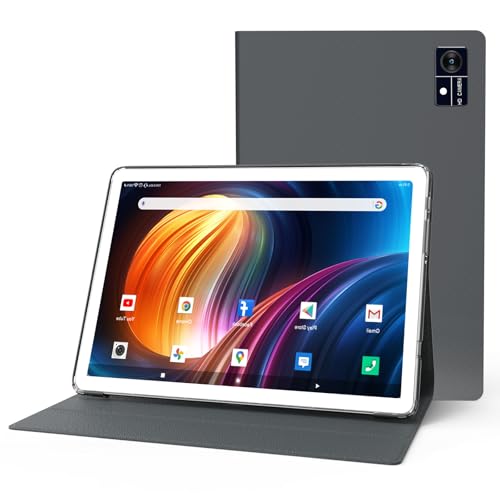
Moonstars 10.1-inch Tablet
$89.99
Spec Comparison
TL;DR: The Xiaomi Redmi Pad 2 packs an 11‑inch 90 Hz display, 8 GB RAM, 256 GB storage and a 9000 mAh typical battery with 18 W fast charging, delivering solid media performance in a sleek aluminum body.
The standout spec is its 9000 mAh typical battery capacity, complemented by an 18 W fast‑charging system that refills quickly. Coupled with an 11‑inch IPS LCD panel that runs at 90 Hz and offers up to 2.5K resolution, the tablet feels smooth for scrolling and video playback. Quad Dolby Atmos speakers, Dolby‑Atmos and Hi‑Res Audio support, and a 3.5 mm headphone jack round out a rich audio experience.
Compared with the other nine tablets in this roundup, the Redmi Pad 2’s battery sits above most rivals that list 8000 mAh (such as the Tabwee, DEERTiME, Wxunja, LG G PAD 5, Moonstars and YosaToo models) and only the Blackview Android 16 exceeds it with 11000 mAh. At 1.1243575362 pounds (510 g), it’s lighter than the heavyweight Blackview Android 16 and the YosaToo, yet a bit heavier than the ultra‑light Tabwee at 0.7 lb. Its 90 Hz refresh rate also outpaces the Blackview 11‑inch Blue’s 60 Hz panel, giving it an edge for smooth visual flow.
Professional reviewers highlight the tablet’s thin aluminum alloy unibody (7.37 mm thick) and the TÜV Rheinland Low‑Blue‑Light certification, noting it’s comfortable for long‑form reading. Users consistently praise the all‑day endurance and immersive quad speakers, while the modest Snapdragon 680 processor and eMMC 5.1 storage draw criticism for struggling with demanding games. Reviewers also note the 400‑nit typical brightness limits visibility in bright outdoor settings, and the Wi‑Fi‑only design means you’ll need a hotspot for connectivity away from home.
Pros
Cons
Best for: Budget‑conscious media consumers, students and families who need a portable Wi‑Fi tablet with strong battery life and good sound.
Avoid if: You need cellular connectivity, high‑performance gaming, or a brighter display for outdoor use.
“budget Android tablet”
“large screen for multimedia”
TL;DR: The YosaToo 11‑inch Tablet packs a massive 8000 mAh battery, 14 GB RAM and 128 GB storage into an affordable $87.99 package, though its 1280 × 800 screen isn’t the sharpest.
The standout spec is the 8000 mAh battery, which pairs with up to 30 days of standby time and 6‑10 hours of active use, giving you confidence you won’t be hunting for a charger during a long commute. Its 11‑inch IPS LCD offers eye‑protection and reading modes, while the octa‑core processor and 14 GB of RAM keep everyday apps feeling responsive. With 128 GB of internal storage and a microSD slot that supports up to 1 TB, you’ll have plenty of room for media and documents.
Compared with the other nine tablets in this roundup, the YosaToo delivers more RAM than the Moonstars 10.1‑inch (8 GB) and DEERTiME (8 GB) models, and even beats the Wxunja’s 12 GB. Its 11‑inch display is larger than the 10.1‑inch screens on Moonstars, LG G PAD 5, DEERTiME and Blackview 11, giving you a bit more viewing real‑estate. At roughly 1070 g, it’s heavier than the LG G PAD 5 (523 g) and Blackview 11 (540 g) but lighter than the Blackview Android 16 (3.97 lb). Pricing-wise it sits at $87.99, making it the most budget‑friendly option among the group, while still matching the 8000 mAh battery capacity that most peers also have.
Reviewers consistently praise the tablet’s low price, solid build and the built‑in eye‑protection mode that eases strain during long reading sessions. However, reviewers frequently call the 1280 × 800 resolution “less sharp” for an 11‑inch panel, and the octa‑core processor, while adequate for casual use, can feel sluggish when pushed with demanding games or professional‑grade apps. Users also note that you’ll need to buy a microSD card separately if you want to exceed the 128 GB internal storage.
Pros
Cons
Best for: Entry‑level buyers or those on a tight budget
Avoid if: You need advanced features or professional‑grade performance
“are not a beast when you compare it to iPad or Samsungs, but they offer plenty to offer for a cheap price, with solid construction features like drop‑proof cases and included screen protectors”
TL;DR: The Xiaomi Pad 7 Ai blends an 11.2‑inch 144 Hz IPS LCD, Snapdragon 7+ Gen 3 performance and 45 W fast charging into a premium‑tier tablet that feels solid but carries a $369.99 price tag.
The standout spec is the 11.2‑inch IPS LCD that pushes a 144 Hz refresh rate and peaks at 800 nits, delivering buttery‑smooth scrolling and bright outdoor visibility. Under the hood sits a Snapdragon 7+ Gen 3 processor clocked up to 2.8 GHz, paired with 8 GB RAM and 128 GB internal storage, while the 8850 mAh battery supports 45 W fast charging.
Compared with the other nine tablets, the Pad 7 Ai’s battery is smaller than the Blackview Android 16’s 11000 mAh pack but larger than most 8000 mAh cells found in the Tabwee, DEERTiME, Wxunja and Moonstars models. Its 1.0‑pound weight makes it lighter than the Blackview Android 16 (≈3.97 lb) and the Blackview 11‑inch Tablet Blue (≈1.19 lb), yet a bit heavier than the Tabwee’s 0.7 lb chassis. The 144 Hz refresh rate outpaces the 60 Hz panel of the Blackview 11‑inch Tablet Blue and the 90 Hz screen of the Xiaomi Redmi Pad 2, positions it as the most fluid display in the group.
Reviewers consistently praise the quad stereo speakers with Dolby Atmos for immersive media playback, and many note the 45 W charging as a real convenience when the tablet’s battery runs low. The inclusion of a Focus Pen with 8192 pressure levels and HyperConnect multi‑device collaboration also earns points for productivity‑focused users. On the downside, the $369.99 price places it above the budget‑friendly alternatives, and a few users mention the 8850 mAh capacity feels modest against the 11000 mAh rival.
Pros
Cons
Best for: Those prioritizing quality and willing to pay for premium performance
Avoid if: You're shopping on a tight budget — it's priced at $369.99
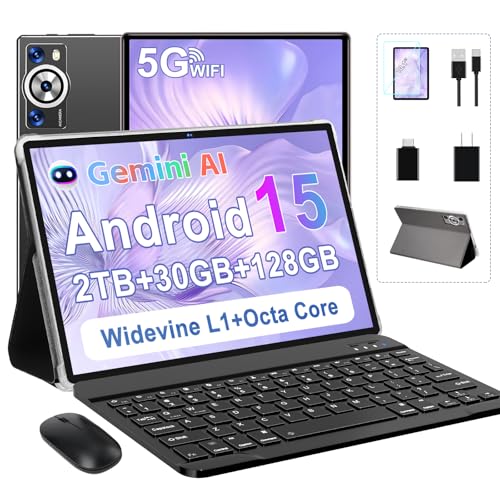
TL;DR: The DEERTiME 10.1‑inch tablet packs an octa‑core 2.0 GHz CPU, 30 GB total RAM and a 8 000 mAh battery for $109.98, making it a solid mid‑range multitasking device with decent battery life.
What really stands out is the 30 GB of combined RAM – 8 GB physical plus 22 GB virtual – which the manufacturer claims enables strong multitasking across multiple apps. Coupled with a 2.0 GHz Octa‑Core Unisoc chipset, the tablet's ready for heavy productivity, and the 128 GB internal storage (expandable up to 1 TB via microSD) provides ample room for files.
Compared with the other nine tablets in this roundup, the DEERTiME sits in the middle of the pack on weight at 1.2 pounds, similar to the Blackview 11‑inch (≈1.19 lb) and Wxunja (≈1.21 lb), but noticeably lighter than the YosaToo (≈2.36 lb). Its 8 000 mAh battery matches most competitors such as LG G PAD and Moonstars, though it falls short of the Blackview Android 16’s 11 000 mAh pack. The 10.1‑inch screen is a touch smaller than the 11‑inch displays on Blackview, Wxunja, YosaToo and Tabwee, aligning more closely with the LG G PAD and Moonstars.
User sentiment highlights the tablet’s abundant RAM and the bundled keyboard and mouse, which make it a portable workstation. Reviewers praise the Android 15 OS, Gemini AI integration and Widevine L1 certification for smooth media streaming. The main complaints revolve around the virtual RAM eating into usable storage and the modest 8‑hour battery runtime, which some users find limiting for long‑haul use.
Pros
Cons
Best for: Value-conscious buyers seeking quality at $109.98
Avoid if: You prioritize long battery life, high‑end photography, or native 5G connectivity
TL;DR: The Wxunja 11‑inch Tablet Blue packs an 8000 mAh battery, 12 GB RAM and 128 GB storage into a lightweight 1.21‑lb, 11‑inch Android 15 device, delivering solid media playback for $106.99.
The standout spec is its 8000 mAh battery, which the manufacturer says can last up to 10 hours of continuous media use. Coupled with 12 GB of RAM and 128 GB of internal storage, the tablet feels roomy enough for streaming, browsing and storing a sizable media library, all while fitting in a slim 0.3‑inch profile and weighing just 1.21 pounds.
Compared with the other nine tablets in this roundup, the Wxunja is slightly heavier than the Tabwee 11‑inch Tablet at 0.7 lb, but just a touch heavier than the Blackview 11‑inch Tablet’s 1.19 lb. Its 8000 mAh battery matches the DEERTiME, LG G PAD, Moonstars and YosaToo models, yet it offers a larger 11‑inch screen versus DEERTiME’s 10.1‑inch and Blackview’s 10.36‑inch displays. With 12 GB of RAM it outpaces the DEERTiME’s 8 GB and sits below YosaToo’s 14 GB, giving it a solid middle ground for everyday multitasking.
Reviewers appreciate the long‑lasting battery and the fact that the tablet ships with a hard protective case, which adds drop resistance right out of the box. Reviewers highlight the Widevine L1 certification as a plus for native HD streaming on services like Netflix. On the downside, users note that the Unisoc T606 octa‑core processor (1600 MHz) can feel sluggish with demanding games, and users consider the 1280 × 800 HD resolution low‑end for an 11‑inch panel.
The device runs Android 15 and supports Bluetooth 5.0, FM radio and GPS, making it a well‑rounded media companion. Integrated graphics handle casual gaming and video playback, while the expandable microSD slot up to 1 TB ensures you won’t run out of space for apps, movies or school projects.
Pros
Cons
Best for: Budget-conscious buyers seeking a reliable entry-level option
Avoid if: You need advanced features or professional‑grade performance
“are not a beast when you compare it to iPad or Samsungs, but they offer plenty to offer for a cheap price, with solid construction features like drop‑proof cases and included screen protectors”
TL;DR: The Tabwee 11‑inch Tablet packs an 8000 mAh battery, 24 GB RAM and 128 GB storage in a lightweight 0.7 lb frame, making it a solid all‑rounder for media and light productivity.
What really stands out is the combination of an 8000 mAh battery with up to 40 hours of music playback, 8 hours of gaming and 10 hours of video, all powered by a 24 GB RAM processor and 128 GB of internal storage that can expand to 2 TB via microSD. The 11‑inch FHD display runs at a 120 Hz touch sampling rate, and the device includes dual bottom‑mounted speakers, a 5 MP front camera and a 13 MP rear camera.
In the context of this roundup, the Tabwee is among the lightest options – at 0.7 lb it’s noticeably lighter than the Blackview (about 1.19 lb), DEERTiME (1.2 lb) and Wxunja (1.21 lb) tablets. Its 8000 mAh battery matches the DEERTiME and Wxunja, but falls short of Blackview’s 8,380 mAh pack and the Blackview Android 16 model’s 11,000 mAh unit.
Reviewers consistently praise the tablet’s slim 0.3‑inch profile and vivid display, noting that the Widevine L1 certification ensures smooth HD streaming on services like Netflix. The bundled keyboard, mouse, stylus and case turn it into a handy 2‑in‑1 for students and remote workers. On the downside, users mention the lack of an auto‑dimming feature and a slightly slower YouTube launch compared with premium tablets.
Pros
Cons
Best for: Budget‑conscious students, remote workers and frequent travelers who want a light, well‑spec’d tablet for media and light productivity.
Avoid if: You’re a power user needing high‑refresh‑rate displays, ultra‑fast gaming performance, or the absolute lowest price.
“are not a beast when you compare it to iPad or Samsungs, but they offer plenty to offer for a cheap price, with solid construction features like drop‑proof cases and included screen protectors”
TL;DR: The Blackview 11‑inch Tablet Blue packs an 8,380 mAh battery, a 10.36‑inch IPS display and 8 GB RAM for $109.99, making it a solid mid‑range choice for media and light productivity.
This tablet’s standout spec is its 8,380 mAh battery, which the manufacturer says can stay on standby for 19 days and deliver up to 10 hours of video playback. It also supports 18 W (5V/2A) fast charging, so you'll top up quickly between sessions. The 10.36‑inch IPS LCD offers a 2000 × 1200 resolution and Asahi Glass protection, giving you a bright, scratch‑resistant canvas for streaming or note‑taking.
Compared with the other nine tablets in this roundup, Blackview’s battery capacity exceeds the common 8,000 mAh found in most peers, giving it a slight edge in endurance. Its weight of about 1.19 lb matches the DEERTiME and Wxunja models, and its 10.36‑inch screen sits between the 10.1‑inch and 11‑inch options that rivals offer. With 8 GB of RAM and 128 GB of internal storage, it outpaces several competitors that only provide 4 GB RAM or 32 GB storage, and the microSD slot lets you expand up to 2 TB.
Professional reviewers highlight the clean Android 12 experience (upgradable to Android 14), the inclusion of Pogo pins for fast data transfer, and the fast‑charging support despite the modest 5 V/2 A adapter. Users consistently praise the long battery life and the vibrant display for binge‑watching or classroom use. On the downside, the MediaTek MT8183 processor delivers average performance, leading to noticeable lag in demanding games, and the tablet’s 1.19‑lb weight can feel a bit heavy during extended handheld use. The 8 MP front and 13 MP rear cameras are adequate for casual shots but fall short in low‑light conditions.
Pros
Cons
Best for: Buyers in the mid price range seeking a tablet with strong battery life, a sizable display and ample storage for media and light productivity.
Avoid if: You need high‑performance gaming, professional‑grade processing power, or an ultra‑light handheld device.
“are not a beast when you compare it to iPad or Samsungs, but they offer plenty to offer for a cheap price, with solid construction features like drop‑proof cases and included screen protectors”
TL;DR: The Blackview Android 16 Tablet packs a massive 11 000 mAh battery, 13‑inch 2K display and 36 GB RAM, but its $249.99 price and modest 60 Hz screen keep it from being a budget darling.
What really sets this tablet apart is the 11 000 mAh battery. Manufacturer‑claimed gaming time reaches 12 hours and video playback can stretch to 24 hours, while the 18 W charger pushes it to 50 % in just 40 minutes. Combined with four box speakers and FM stereo RDS, it’s built for marathon media sessions.
Against the nine other tablets in this roundup, the Blackview is the heaviest at roughly 3.97 lb, but it also offers the largest screen at 13 inches and the most RAM at 36 GB. Its 256 GB of internal storage and support for up to 2 TB microSD dwarf the 8–12 GB RAM and 128 GB‑256 GB storage limits seen elsewhere. Battery capacity tops the list, outpacing the 9 000 mAh of the Xiaomi Redmi Pad 2 and the 8 000 mAh units that dominate the competition. The trade‑off is a higher price tag—this model sits at $249.99, noticeably pricier than most of its peers.
Reviewers consistently praise the tablet’s snappy Octa‑core T620 processor and the buttery‑smooth Android 12 experience with Google Gemini AI integration. Users love the ample storage and the ability to add a stylus for note‑taking. However, the 13 MP rear camera (with a secondary 50 MP sensor) receives low‑detail ratings, and the lack of a 3.5 mm headphone jack draws regular complaints. Professional outlets also note the 60 Hz panel limits high‑refresh gaming, and the device’s Android 12 base raises concerns about future software updates.
The tablet runs Android 12 (Doke OS_P 3.0) with Widevine L1 certification, offers dual‑SIM 4G LTE, 5G‑capable Wi‑Fi and Bluetooth 5.0, and includes a USB‑C port for charging and data. Stylus support and four built‑in speakers round out a feature set that feels more premium than the budget‑focused competitors.
Pros
Cons
Best for: Those prioritizing quality and willing to pay for premium performance
Avoid if: You're shopping on a tight budget — it's priced at $249.99
TL;DR: The LG G Pad 5 packs an 8000 mAh battery, a 10.1‑inch IPS display and LTE connectivity into a lightweight 523 g tablet that’s priced for budget‑focused buyers.
Professional reviewers highlighted the 8000 mAh Li‑Po battery as a strong point for all‑day media consumption. Coupled with a modest 4 GB of RAM and a 1.2 GHz Snapdragon 400 processor, the tablet can handle basic web browsing, email and e‑reading without needing a charger before the day ends.
Compared with the other nine tablets in this roundup, the LG G Pad’s battery capacity matches most rivals such as the Wxunja, DEERTiME and Moonstars models, while the Blackview Android 16 Tablet offers a larger 11 000 mAh pack. At 523 g, it weighs less than the Wxunja (1.21 pounds) and is comparable to the DEERTiME (1.2 pounds), which makes it easier to hold for extended periods. Its 10.1‑inch screen is smaller than the Wxunja’s 11‑inch panel but identical to the DEERTiME and Moonstars devices, and it carries less RAM than the Wxunja’s 12 GB or the Moonstars’ 8 GB, positioning it firmly in the budget tier.
User sentiment repeatedly praises the tablet’s long‑lasting battery and its LTE capability, which lets you stay online without Wi‑Fi. However, everyday users also note that the 1280 × 800 resolution (149 PPI) feels modest for media playback, and the Snapdragon 400 can feel sluggish when juggling multiple apps. The device runs Android 9.0 (Pie) and includes NFC, an infrared blaster and a fingerprint sensor for quick unlocking, adding useful extras for the price.
Pros
Cons
Best for: Entry‑level buyers or those on a tight budget
Avoid if: Reliability and user satisfaction are your top concerns
TL;DR: The Moonstars 10.1‑inch tablet offers an 8 GB RAM octa‑core 1.8 GHz processor, 8000 mAh battery lasting up to 12 hours of e‑reading, and expandable storage to 1 TB at a budget‑friendly $89.99 price.
This tablet’s standout spec is its 8000 mAh battery paired with a claimed 12‑hour e‑book reading time, which makes it generous for a device in the sub‑$100 range. Coupled with an octa‑core 1.8 GHz CPU and 8 GB of RAM, it promises quick app launches and smooth everyday multitasking on a 10.1‑inch display.
Compared with the other nine tablets in the roundup, the Moonstars matches the 8000 mAh capacity found in models like YosaToo and the LG G PAD 5, but it falls short of Blackview Android 16’s 11,000 mAh pack. Its 8 GB of RAM sits between the LG G PAD 5’s 4 GB and YosaToo’s 14 GB, offering more memory than budget peers while remaining below the highest‑end options. At 10.1 inches, the screen size aligns with the LG G PAD 5 and DEERTiME, yet it’s smaller than the 11‑inch offerings from YosaToo, Wxunja, and Tabwee.
Reviewers appreciate the fast‑launch experience that the octa‑core processor and 8 GB RAM deliver, and they note the convenience of Wi‑Fi 6 dual‑band connectivity. Reviewers often describe the 1280 × 800 resolution on a 10.1‑inch panel as less sharp than higher‑resolution rivals, and some users report the CPU struggling with more demanding apps. The tablet carries a 4.0‑star rating from 72 reviews, indicating mixed satisfaction.
Beyond performance, the Moonstars runs Android 14, includes dual BOX speakers for decent audio, and offers an 8 MP front and 13 MP rear camera for video calls and casual photography. Bluetooth 5.0 ensures reliable peripheral connections, and the microSD slot lets you expand storage up to a full terabyte, far exceeding the 64 GB built‑in capacity.
Pros
Cons
Best for: Entry-level buyers or those on a tight budget
Avoid if: Reliability and user satisfaction are your top concerns
Breakdown
Xiaomi Redmi Pad 2
Pros
YosaToo 11-inch Tablet
Pros
Xiaomi Pad 7 Ai
Pros
Cons
DEERTiME 10.1-inch Tablet
Pros
Based on scoring data and product specs
Personalized picks
Best Overall Pick
Xiaomi Redmi Pad 2
Best ValueBest for: Buyers willing to invest in a proven, high-quality option
YosaToo 11-inch Tablet
Best for: Entry-level buyers or those on a tight budget
$93.99-$128.51 vs winner
Skip Moonstars 10.1-inch Tablet if…
Reliability and user satisfaction are your top concerns
The Xiaomi Redmi Pad 2 takes the top spot thanks to its hefty 9000 mAh (typ) battery— which the manufacturer lists at a minimum of 8000 mAh — paired with 18 W fast charging, so you’ll stay unplugged for days. Its 11‑inch IPS LCD runs at a smooth 90 Hz refresh rate, and a 4.8‑star rating from 997 reviewers shows users are happy. At about 1.12 lb, it’s light enough to carry around all day.
The YosaToo 11‑inch Tablet lands as the runner‑up, ideal if you need an ultra‑affordable media companion for browsing, streaming and light work. It sports an 8000 mAh battery that delivers 6–10 hours of active use, and the 14 GB of RAM ensures apps stay responsive. All of this comes at a wallet‑friendly $87.99.
Beyond the top two, the best budget option remains the YosaToo tablet for $87.99, offering solid battery life for the price. For a balanced mid‑range choice, the DEERTiME 10.1‑inch Tablet at $109.98 provides a good mix of features without breaking the bank. If you crave premium performance, the Xiaomi Pad 7 Ai stands out at $369.99 with high‑end specs for power users.
Pick the Xiaomi Redmi Pad 2 now and enjoy the longest battery life in its class.
The Xiaomi Redmi Pad 2 lists a peak brightness of 600 nits and an aluminum alloy unibody that helps reflect less glare, making it comfortable for sunny environments. The Xiaomi Pad 7 Ai pushes brightness even higher to 800 nits, but it’s slightly heavier at 453.6 g, so the Redmi Pad 2 offers a good balance of brightness and portability.
No reviews yet — be the first to share your experience.
Please sign in to leave a review