Rankings
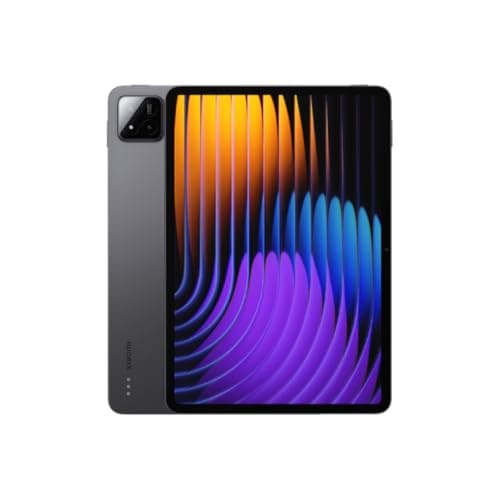
The Xiaomi Pad 7 AI Wi-Fi version is a mid-range Android tablet featuring a premium 11.2-inch 3.2K 144 Hz display, Snapdragon 7+ Gen 3 processor and 8 GB RAM, delivering top-tier performance and visual quality. Its large battery and fast charging are offset by the lack of cellular connectivity and a higher price tag. Best suited for power users and media enthusiasts who value a high-refresh, high-resolution screen.
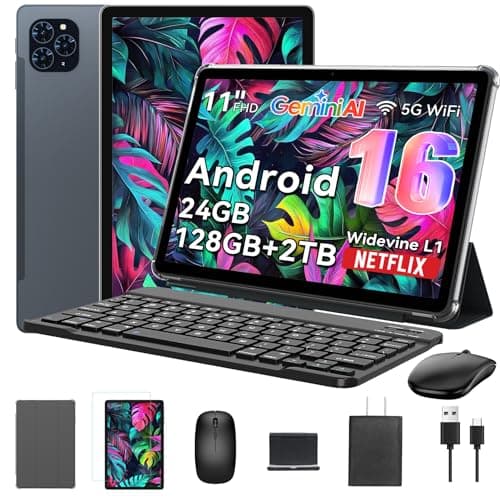
The Tabwee T90 11-inch tablet runs Android 16 with Gemini AI, packing 24 GB RAM, an FHD display, and an 8000 mAh battery, plus a keyboard, mouse, and stylus for productivity. While feature-rich, it lacks auto-dimming and has some OS version confusion. Perfect for students and remote workers needing a versatile 2-in-1 device.
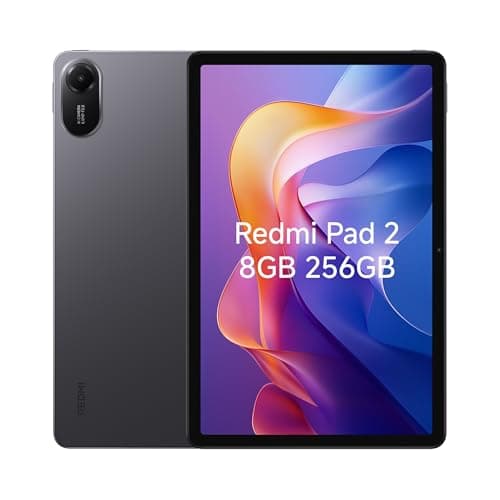
The Xiaomi Redmi Pad 2 is an 11-inch Wi-Fi-only tablet that offers a smooth 90 Hz display, long-lasting 8000 mAh battery and premium quad-speaker audio. Its mid-range Snapdragon 680 processor, eMMC storage and only 400 nit brightness keep it from competing with higher-end tablets. Ideal for budget-focused media consumers and students who prioritize battery life and sound over top performance.
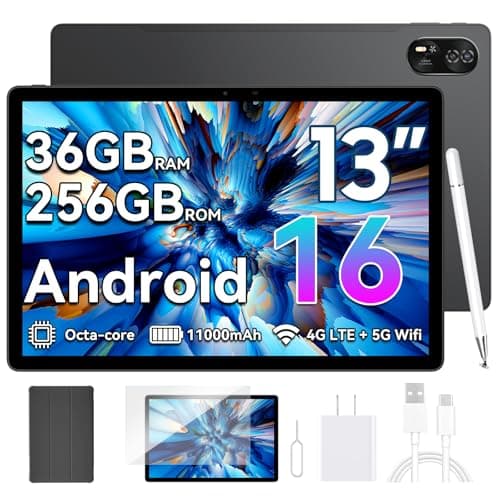
The Blackview Tab 16 is a 13-inch tablet packed with 36 GB RAM, 256 GB storage and an 11 000 mAh battery, plus LTE and stylus support for on-the-go productivity. Its 60 Hz display, heavyweight build and older Android version limit its appeal for power users. Suited for users needing extensive RAM and connectivity while accepting a bulkier device.
The Blackview Tab 90WiFi is a 10.36-inch Android tablet offering a sharp 2.4K display, long-lasting 8,380 mAh battery, and an included stylus for productivity. It lacks cellular connectivity and its MediaTek processor can lag under heavy loads. Suited for students and casual users who prioritize screen size and stylus support.
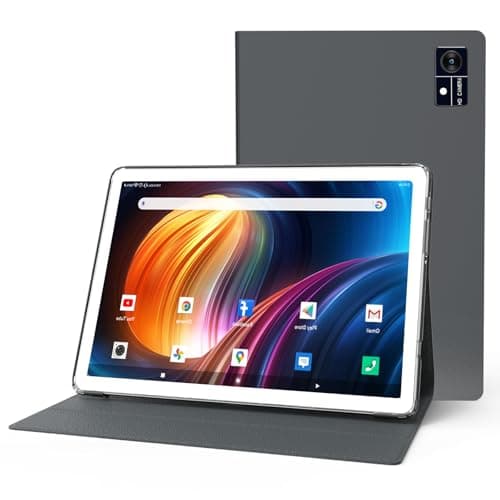
The MoonStars 10.1-inch tablet features an octa-core 1.8 GHz CPU, 8 GB RAM and Android 14, delivering solid performance for everyday use. Its low-resolution screen and lack of detailed battery endurance data are trade-offs. Suited for budget-conscious users who prioritize connectivity and storage.
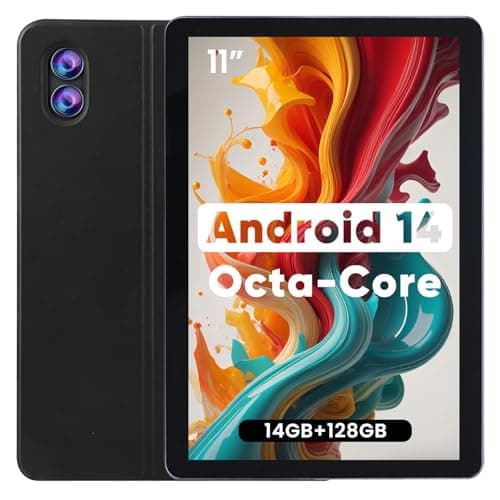
The YosaToo P13 is an 11-inch Android 14 tablet featuring a generous 14 GB of RAM and a large 8000 mAh battery for extended use. Its modest 1280 × 800 display and mid-range performance may fall short for power users. Ideal for casual streaming, reading, and students seeking ample storage at a budget price.
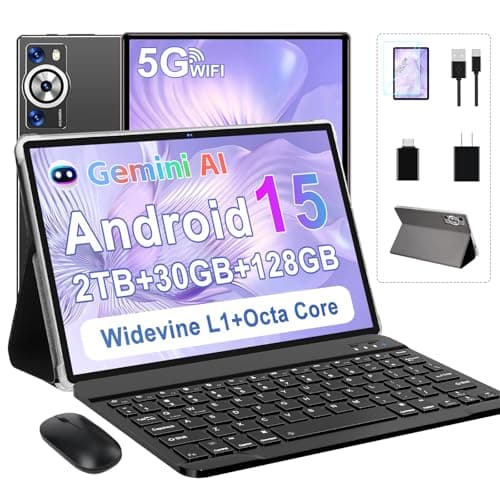
DEERTiME's E9 tablet packs a metal body, 30 GB of total RAM and a keyboard-mouse combo, targeting mobile professionals. The modest 1280×800 display and 8-hour battery are trade-offs for its performance focus. Suited for heavy multitaskers who prioritize productivity over endurance.
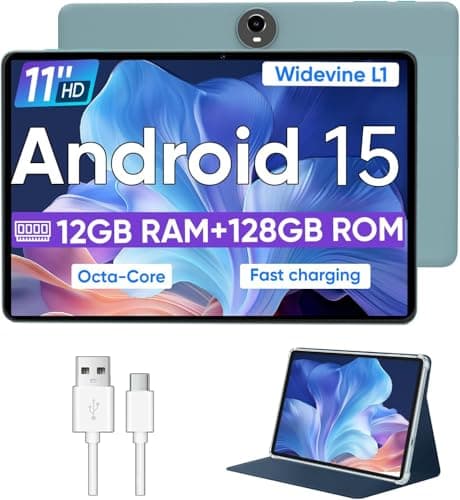
The WXUNJA 11-inch tablet features Android 15, 12 GB RAM, and an 8000 mAh battery, delivering solid multitasking and long media sessions. Its entry-level processor and low-resolution screen limit performance for demanding tasks. Ideal for budget-focused media streaming and travel.
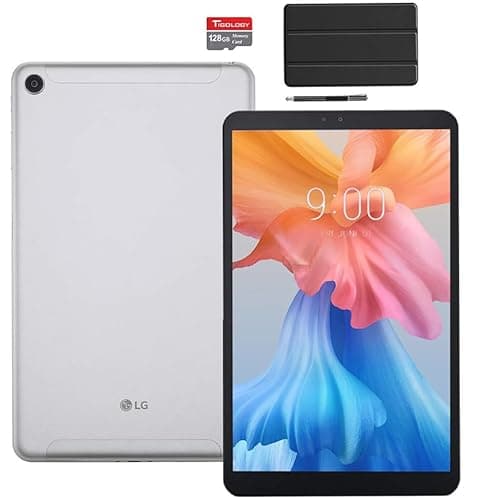
LG's G Pad 10.1 inch LTE tablet runs Android 9, offers 4 GB RAM, an 8000 mAh battery and built-in LTE for on-the-go connectivity. Its outdated OS, low RAM and legacy Wi-Fi reduce its competitiveness. Targeted at budget users needing basic LTE tablet functionality.
| Attribute | | | | | | | Blackview 11-inch Tablet Blue | | | |
|---|---|---|---|---|---|---|---|---|---|---|
11 inches | 11 inches | 11.2 inches | 10.1 inches | 11 inches | 11 inches | 10.36 inches | 13 inchesbest | 10.1 inches | 10.1 inches | |
— | 8 hours | — | 8 hours | — | 10 hours | 9 hours | 24 hoursbest | — | 12 hours | |
8 GB | 14 GB | 8 GB | 30 GB | 12 GB | 24 GB | 8 GB | 36 GBbest | 4 GB | 8 GB | |
| ↓ lower better | 510 g | 1,070 g | 453.6 g | 544 g | 548.9 g | 317.5 gbest | 540 g | 1,801 g | 523 g | — |
256 GBbest | 128 GB | 128 GB | 128 GB | 128 GB | 128 GB | 128 GB | 256 GBbest | 32 GB | 64 GB | |
8,000 mAh | 8,000 mAh | 8,850 mAh | 8,000 mAh | 8,000 mAh | 8,000 mAh | 8,380 mAh | 11,000 mAhbest | 8,000 mAh | 8,000 mAh | |
90 Hz | — | 144 Hzbest | — | — | — | 60 Hz | 60 Hz | — | — | |
400 nits | — | 800 nitsbest | — | — | — | — | — | — | — |
Click an attribute name to sort · Green = best, red = worst (relative to this comparison)
| Attribute | | | | | | | Blackview 11-inch Tablet Blue | | | |
|---|---|---|---|---|---|---|---|---|---|---|
Software(1) | ||||||||||
Operating System | Android 13 | Android 14 | Android 15 with HyperOS 2 | Android 15 | Android 15 | Android 16 | Android 12 (DokeOS) | Android 12 | Android 9.0 (Pie) | Android 14 |
Battery & Power(2) | ||||||||||
Battery Capacity (mAh) | 8000 mAh | 8000 mAh | 8850 mAh | 8000 mAh | 8000 mAh | 8000 mAh | 8380 mAh | 11000 mAh | 8000 mAh | 8000 mAh |
Battery Life (hours) | — | 8 hours | — | 8 hours | 8-10 hours | 10 hours | 9 hours | 24 hours | — | 12 hours |
Display(4) | ||||||||||
Screen Size (inches) | 11 inches | 11 inches | 11.2 inches | 10.1 inches | 11 inches | 11 inches | 10.36 inches | 13 inches | 10.1 inches | 10.1 inches |
Resolution (pixels) | 2560x1600 pixels | 1280x800 pixels | 2136x3200 pixels | 1280x800 pixels | 1280x800 pixels | 1200x1920 pixels | 2000x1200 pixels | 2K FHD pixels | 1280x800 pixels | 1280x800 pixels |
Refresh Rate (Hz) | 90 Hz | — | 144 Hz | — | — | — | 60 Hz | 60 Hz | — | — |
Brightness (nits) | 400 nits | — | 800 nits | — | — | — | — | — | — | — |
Connectivity(3) | ||||||||||
Wi‑Fi Standard | 802.11ac | Wi‑Fi 6 | Wi‑Fi 6E | Wi-Fi 5 | 802.11ac | 5G WiFi | Wi‑Fi 5 | 802.11ac | 802.11 a/b/g/n | WiFi 6 |
Bluetooth Version | 5.3 | — | 5.4 | 5.0 | 5.0 | 5.0 | 5.0 | 5.0 | 4.0 | 5.0 |
Cellular Support | false | false | — | — | — | — | false | true | true | — |
Build & Design(2) | ||||||||||
Weight (g) | 510 g | 1070 g | 453.6 g | 544 g | 548.9 g | 317.5 g | 540 g | 1801 g | 523 g | — |
Thickness (mm) | 7.37 mm | 10.16 mm | 6.1 mm | 10.16 mm | 7.62 mm | 7.62 mm | 9.5 mm | 55 mm | 7.9 mm | 7.62 mm |
Performance(4) | ||||||||||
Processor | Snapdragon 680 | Octa-core | Snapdragon 7+ Gen 3 | Unisoc Octa-Core | Unisoc T606 | T7280 | MediaTek MT8183 | T620 | Qualcomm Snapdragon 400 MSM8926 (4x 1.2 GHz Cortex-A7) | Octa-core |
RAM (GB) | 8 GB | 14 GB | 8 GB | 30 GB | 12 GB | 24 GB | 8 GB | 36 GB | 4 GB | 8 GB |
Internal Storage (GB) | 256 GB | 128 GB | 128 GB | 128 GB | 128 GB | 128 GB | 128 GB | 256 GB | 32 GB | 64 GB |
Expandable Storage (GB) | 1024 GB | 1024 GB | — | 1024 GB | 1024 GB | 2048 GB | 2000 GB | 2048 GB | 128 GB | 1024 GB |
Camera(2) | ||||||||||
Front Camera (MP) | 5 MP | 2 MP | 8 MP | 5 MP | 5 MP | 5 MP | 8 MP | 8 MP | 1.3 MP | 8 MP |
Rear Camera (MP) | — | 8 MP | 13 MP | 8 MP | 8 MP | 13 MP | 13 MP | 13 MP | 5 MP | 13 MP |
Audio(1) | ||||||||||
Speakers | 4 | — | 4 | — | — | 2 | 2 | 4 | — | 2 |
Products in the top-left offer the best value (high score, low price).
Professional reviewers describe the Redmi Pad SE as a solid entry-level tablet that balances a large, smooth 90 Hz display, robust 8000 mAh battery and premium quad-speaker audio with an affordable price, but they caution that its mid-range Snapdragon 680 and eMMC storage limit heavy gaming and multitasking, and the modest 400-nit screen falls short of higher-end rivals.
Everyday users consistently praise the tablet's endurance, fluid display and immersive sound, noting it handles streaming, video calls and casual gaming well. Recurring complaints focus on the limited brightness for outdoor use, occasional sluggishness under load, and the absence of cellular connectivity.
“budget Android tablet”
“large screen for multimedia”
“are not a beast when you compare it to iPad or Samsungs, but they offer plenty to offer for a cheap price, with solid construction features like drop-proof cases and included screen protectors”
Everyday users appreciate the low price, solid build, and eye-friendly display, but they also acknowledge that the device does not match the performance or screen sharpness of higher-end tablets from Apple or Samsung.
The Xiaomi Pad 7 AI WiFi Version is a mid-range Android tablet featuring an 11.2-inch 3.2K 144 Hz IPS LCD display and a Snapdragon 7+ Gen 3 processor with 8 GB RAM and 256 GB storage. It runs Android 15 with HyperOS 2, offers 45 W fast charging, quad stereo speakers with Dolby Atmos, HDR10 and Dolby Vision video support, and compatibility with the Xiaomi Focus Pen and magnetic keyboard accessories.
Professional reviewers commend the DEERTiME E9 for its powerful octa-core processor, massive 30 GB RAM (including virtual RAM) and the productivity-focused keyboard/mouse bundle, describing it as a capable mobile workstation. They also highlight Android 15's modern features, Gemini AI integration, and Widevine L1 streaming support, while noting the modest 8-hour battery life and the trade-off of virtual RAM consuming internal storage.
Everyday users praise the tablet's abundant RAM and storage, the value of the bundled keyboard and mouse, and the reliable connectivity for on-the-go use. Common criticisms focus on the limited battery endurance, the reduction of usable storage due to virtual RAM, and the modest camera quality, which is acceptable only for casual scenarios.
No professional reviews from major tech outlets were found; the only editorial mention is a promotional YouTube overview that highlights the tablet's smooth performance and family‑friendly features but does not provide hands‑on testing.
There are no direct consumer reviews or ratings in the available data, so everyday user sentiment cannot be quantified. General expectations for similar budget tablets suggest praise for battery life and value, with occasional complaints about software bloat and update frequency.
Professional reviewers commend the lightweight chassis, vivid FHD display, near-iPad level performance and accessory bundle, noting minor issues like lack of auto-dimming and slower YouTube launches.
Everyday users appreciate the smooth Android experience, Gemini AI usefulness, and generous storage, with no major complaints.
Professional reviewers describe the Blackview Tab 11 as a solid all-rounder for its price, highlighting its large battery, clean Android experience, and useful productivity features like PC Mode and a stylus. While the display and cameras are deemed decent for a budget device, the processor is seen as a bottleneck for gaming, and the lack of a fast charger and cellular connectivity are noted drawbacks.
Everyday users love the tablet's long battery life, expandable storage, and vibrant screen, finding it great for streaming, note-taking, and casual browsing. Common complaints revolve around occasional lag, slower charging with the stock adapter, and the tablet's weight making one-handed use less comfortable.
Professional reviewers consider the Blackview Tab 16 a strong value proposition in the budget tablet segment, emphasizing its smooth performance, crisp 2K screen, robust battery life, and LTE dual-SIM support, while noting drawbacks such as the modest camera, 60 Hz display, and limited software roadmap.
Everyday users generally praise the tablet for its fast responsiveness, abundant storage, long battery life, and solid audio output, but they consistently criticize the weak camera, missing headphone jack, and occasional performance hiccups during demanding games.
Professional reviewers described the LG G Pad 10.1 LTE as a budget-friendly media tablet with a commendable 8000 mAh battery and LTE support, but they consistently pointed out its low-resolution screen, limited 1 GB RAM, and outdated Android version as significant drawbacks that hinder performance and future-proofing.
Everyday users value the long battery life and affordable price, often using the tablet for basic web browsing, email, and offline video playback, while repeatedly expressing frustration over sluggish performance, fuzzy display quality, and the inability to run newer apps due to the outdated operating system.
No professional reviews or editor analyses were found for the MoonStars D105 tablet. A YouTube hands‑on video labels it as a potential “best budget tablet,” but it provides no detailed pros or cons, leaving the assessment largely anecdotal.
