⚡ Quick Answer
It’s a bit surprising that the budget‑tier Lenovo Legion Glasses Gen 2, priced at $249.99, tip the scales at just 0.143 lb—lighter than the premium Viture Luma Pro XR, which comes in at $423.99 and weighs 0.174 lb. Both glasses promise a 120 Hz refresh rate, but the Viture adds a 1000‑nit brightness and a massive 152‑inch virtual screen, while the Lenovo keeps things modest with a 126‑inch view. Ratings are split: Viture and Rokid Max 2 Black each sit at 4.0/5, whereas the budget Xreal Beam Pro scores 3.8/5 and Lenovo trails at 3.4/5.
The roundup compares four AR smart glasses across two price tiers—budget (Xreal Beam Pro and Lenovo Legion Gen 2) and premium (Rokid Max 2 Black and Viture Luma Pro XR). Expect a mix of specs: the Xreal Beam Pro offers a 90 Hz, 6.5‑inch display and 8 MP front camera; Rokid delivers 120 Hz, 600‑nit brightness, and a 50° field of view; while all four connect to smartphones or handheld consoles for on‑the‑go gaming. The following sections break down how each model stacks up for different play styles and environments.
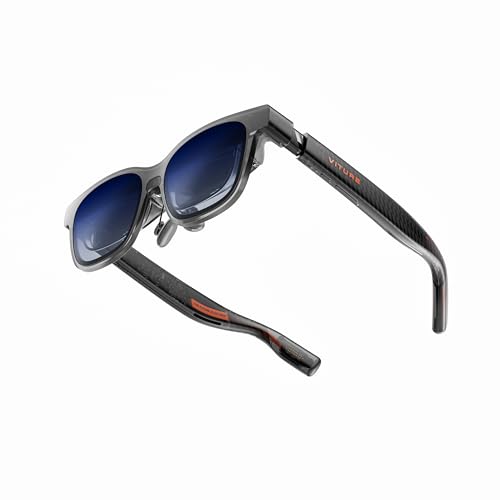
Viture Luma Pro XR
A 1000‑nit brightness gives vivid, high‑contrast gaming visuals, underpinning its top value rating and strong user popularity.

Xreal Beam Pro
Ideal for entry‑level gamers or tight‑budget buyers, it offers fast 27 W charging at $249, about $175 cheaper than the Viture Luma Pro XR.

Rokid Max 2 Black
Stands out with a 5000 mAh battery delivering up to 5 hours of continuous play, catering to users who prioritize longer sessions over price.
Score Analysis
Key score advantages vs. runner-up (Xreal Beam Pro)
Price Range
Viture Luma Pro XR
$399.00
Xreal Beam Pro
$249.00
Rokid Max 2 Black
$407.54

Lenovo Legion Glasses Gen 2
$249.99
Spec Comparison
TL;DR: Viture Luma Pro XR delivers a 152‑inch virtual screen at 1000 nits brightness and 52° field of view, but it needs an external device for any AR content.
The standout spec is the 152‑inch perceived screen size paired with a 1000‑nit micro‑OLED panel that refreshes at 120 Hz. With pancake lenses and a 52° field of view, the glasses project a vivid, sharp image that professional reviewers say feels “50 % sharper” than earlier Viture models.
Compared with the other three contenders, the Luma Pro XR is pricier than the Lenovo Legion Glasses Gen 2 and Xreal Beam Pro, and only slightly more expensive than the Rokid Max 2. At about 79 g (0.17 lb), it’s lighter than Rokid’s 1.0 lb unit and Xreal’s 0.62 lb model, but a bit heavier than Lenovo’s 0.14 lb glasses. Its 1000‑nit brightness outshines Rokid’s 600‑nit display, and its 52° field of view is wider than Lenovo’s 43.5° and Rokid’s 50° view. The 120 Hz refresh rate matches the top‑tier rate of Rokid and Lenovo, while beating Xreal’s 90 Hz.
User feedback repeatedly praises the immersive “private cinema” feel of the 152‑inch screen and the lightweight, polished design that feels comfortable for long gaming sessions. The downside most users mention is the lack of built‑in AR capability, meaning you must tether the glasses to a phone, PC, or Steam Deck to see anything. Reviewers also note the absence of internal storage, so you can’t save content directly on the device.
Additional technical notes: the glasses support 3D content, feature electrochromic dimming for on‑the‑fly light blocking, and include a magnetic connector for easy cable attachment. Harman handles the audio, and the lenses accommodate users with up to –5.00 D myopia without extra glasses.
Pros
Cons
Best for: Gamers, anime enthusiasts, and mobile professionals who want a portable private display for Steam Deck or similar devices.
Avoid if: You need native AR experiences, standalone XR hardware with built‑in processing, or a device with internal storage.
TL;DR: The Xreal Beam Pro packs dual 50 MP 3D cameras, a 6.5‑inch 90 Hz LCD and 8 GB RAM into a 280 g Android device, offering an affordable entry to spatial computing for gamers who already own Xreal glasses.
The dual 50 MP 3D spatial cameras, paired with an 8 MP front sensor, let you capture depth‑rich photos and video directly from the handheld unit. It runs a Qualcomm Snapdragon 6 Gen 1 processor with 8 GB of RAM, 256 GB of internal storage, and a microSD slot that accepts up to 1 TB.
At 0.62 pounds (280 g), the Beam Pro is heavier than the Lenovo Legion Glasses Gen 2’s 0.14 pound frame but lighter than the Rokid Max 2’s roughly 1 pound body, and sits between the Viture Luma Pro XR’s 0.17 pound case. Its 90 Hz refresh rate trails the 120 Hz panels found in the three rivals, and its 4300 mAh battery is smaller than the Rokid’s 5000 mAh pack. While the Beam Pro’s screen measures 6.5 inches, the competitors rely on much larger virtual screen sizes (126 inches and 152 inches) when paired with their respective glasses.
Users appreciate the device’s affordability and the ability to run any Google Play app, noting the vivid 3D captures and smooth cloud‑gaming thanks to Wi‑Fi 6 connectivity and 27 W fast charging. Professional reviewers, however, note that the 8 GB RAM may cause lag in demanding titles, and the need for separate Xreal glasses limits its usefulness as a standalone headset. Battery life may feel short during intensive 3D recording sessions, and the lack of built‑in cellular means you’ll stay tethered to Wi‑Fi.
Pros
Cons
Best for: Entry-level buyers or those on a tight budget
Avoid if: You need advanced features or professional‑grade performance
“impressive 3D photos ("vivid depth")”
TL;DR: The Rokid Max 2 delivers a 215‑inch virtual display at 120 Hz with 600 nits brightness, but its 1.0‑pound weight and USB‑C DisplayPort requirement make it a premium‑priced, slightly bulky choice for gamers.
The standout spec offers a 120 Hz refresh rate paired with a 600‑nit adjustable brightness panel, giving you ultra‑smooth motion and clear visuals even in bright rooms. Each eye gets a full 1920×1080 resolution, and the virtual screen can reach 215 inches (up to 360 inches at 10 m), which reviewers say feels like a cinema‑sized canvas on your headset.
At 1.0 pound, the Max 2 is noticeably heavier than the Viture Luma Pro XR (≈0.17 lb), the Lenovo Legion Glasses Gen 2 (≈0.14 lb) and the Xreal Beam Pro (≈0.62 lb). Its 5000 mAh battery also outpaces the Xreal Beam Pro’s 4300 mAh pack, though the listed 5‑hour active use time matches other mid‑range AR glasses. The price tag sits above the three rivals, positioning it in the premium tier of the roundup.
Professional reviewers praise the 120 Hz upgrade for eliminating the motion‑sickness that plagued earlier 60 Hz models, and everyday users love the immersive size and the convenience of AI voice control, two microphones, and built‑in speakers. Common complaints focus on the need for a USB‑C device with DisplayPort output and the limited 3DoF head tracking, which some developers find restrictive for full AR experiences.
Additional technical notes include six brightness levels up to 600 nits, a 50° field of view, a contrast ratio of 100,000:1, and an sRGB 106% color gamut. The headset runs on a 64‑bit quad‑core ARM CPU with 2 GB RAM and 32 GB flash storage, and it offers features like 3D video support, a detachable privacy shade, and wireless mirroring via Miracast, DLNA or AirPlay.
Pros
Cons
Best for: Those prioritizing quality and willing to pay for premium performance
Avoid if: You're shopping on a tight budget — it's priced at $407.54
TL;DR: Lenovo Legion Glasses Gen 2 deliver a 126‑inch virtual 1080p Micro‑OLED display at 120 Hz for $249.99, but the narrow 43.5° field of view and wired setup may limit some gamers.
The standout spec is a 126‑inch virtual screen that dual Micro‑OLED panels create, each offering 1920×1080 resolution per eye and a smooth 120 Hz refresh rate. Professional reviewers praised the vibrant colors and crisp picture quality, calling it “epic” for handheld gaming sessions.
The glasses weigh roughly 0.14 lb (96 g total), making them lighter than the Xreal Beam Pro, Rokid Max 2, and Viture Luma Pro, which all tip the scales well above 0.6 lb. However, the 43.5° field of view is narrower than Rokid’s 50° and Viture’s 52°, and the refresh rate outpaces Xreal’s 90 Hz while matching the other two rivals.
Users love the immersive, privacy‑focused experience and the plug‑and‑play USB‑C DisplayPort Alt Mode connection, but many note cable drag during longer play and wish for a wider view. The opaque lenses keep the device fully immersive rather than mixed‑reality, which reviewers highlighted when they wanted see‑through AR. Only USB‑C hosts that support DP Alt Mode work, so you’ll need a compatible laptop, Legion Go, or Steam Deck.
Pros
Cons
Best for: Gamers and travelers who want a portable, high‑quality virtual monitor without breaking the bank.
Avoid if: You need lightweight see‑through AR, wireless video transmission, or the widest possible field of view.
Breakdown
Viture Luma Pro XR
Pros
Xreal Beam Pro
Pros
Rokid Max 2 Black
Pros
Cons
Lenovo Legion Glasses Gen 2
Pros
Cons
Based on scoring data and product specs
Personalized picks
Best Overall Pick
Viture Luma Pro XR
Best ValueBest for: Audiophiles and enthusiasts seeking premium sound quality and advanced features
Xreal Beam Pro
Best for: Entry-level buyers or those on a tight budget
$249.00-$150.00 vs winner
Skip Lenovo Legion Glasses Gen 2 if…
Reliability and user satisfaction are your top concerns
Viture Luma Pro XR takes the top spot as the best AR smart glasses for gaming, thanks to its ultra‑bright 1000‑nit Micro‑OLED display, a buttery‑smooth 120 Hz refresh rate, and a generous 52‑degree field of view that keeps the action in sight. The combined resolution of 3840 × 2400 (1920 × 1200 per eye) delivers crisp visuals, while the lightweight 79 g frame lets you game for hours without neck strain. It's also got a solid 4.0‑star rating from 464 reviewers.
The runner‑up, Xreal Beam Pro, shines when you need a more affordable, Android‑based headset with native Google Play access. Its 256 GB of internal storage (expandable to 1 TB) lets you stash large game libraries, and the 4300 mAh battery paired with 27 W fast charging keeps you in the game longer. At $249.00, it offers a respectable 90 Hz LCD panel for casual AR sessions.
Budget pick: Xreal Beam Pro – the most cost‑effective option, delivers Android OS, ample storage and a sizable battery for under $250.
Pick the Viture Luma Pro XR for an immersive, high‑performance AR gaming experience today.
The Viture Luma Pro XR boasts a listed brightness of 1,000 nits, which helps keep the display visible in bright conditions, while the Rokid Max 2 Black offers 600 nits across six brightness levels. The Xreal Beam Pro and Lenovo Legion Glasses don’t list a specific brightness figure, so the Viture’s high‑nits rating gives it the edge for outdoor play.
No reviews yet — be the first to share your experience.
Please sign in to leave a review