Rankings
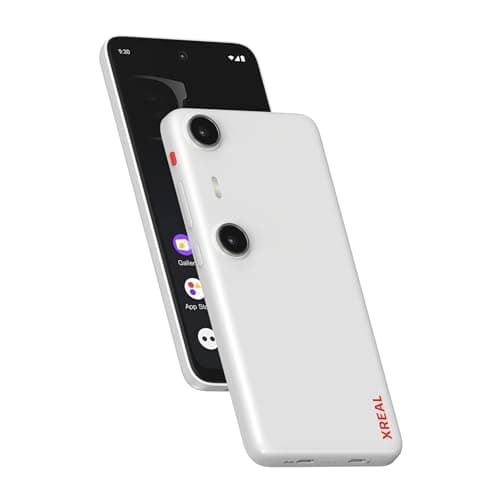
The XREAL Beam Pro is an Android-powered companion device featuring dual 50 MP 3D cameras and a 90 Hz LCD, delivering high-resolution spatial capture and smooth visuals. Its battery capacity and limited RAM can lead to short usage times and occasional lag, and it relies on separate AR glasses for a complete experience. Best suited for AR enthusiasts who already own XREAL glasses and need a portable 3D capture tool.
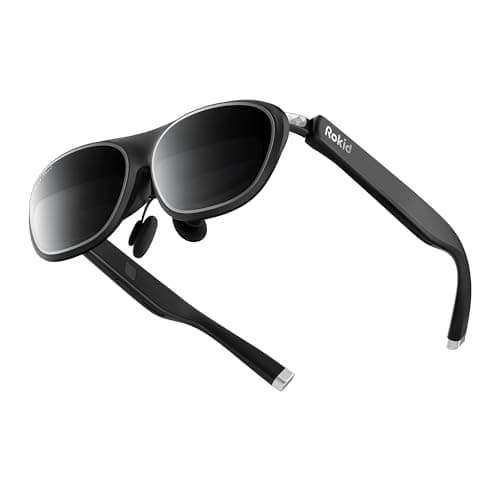
Rokid Max 2 AR Glasses provide a 215-inch virtual display at 120 Hz with built-in speakers and voice control in a lightweight form factor. Dependence on an external USB-C source and lack of a standalone battery limit portability. Suited for gamers and media consumers who prioritize immersive display over standalone operation.
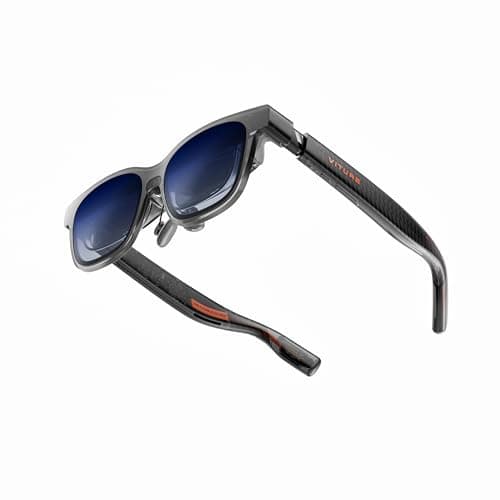
VITURE Luma Pro XR offers a 152-inch virtual display with 1000-nit brightness and a 52° field of view, packaged in a lightweight 79 g design with pancake optics and a magnetic connector. It lacks built-in processing and any internal storage, requiring an external device for content. Best suited for gamers and mobile professionals wanting a large, sharp XR screen on the go.
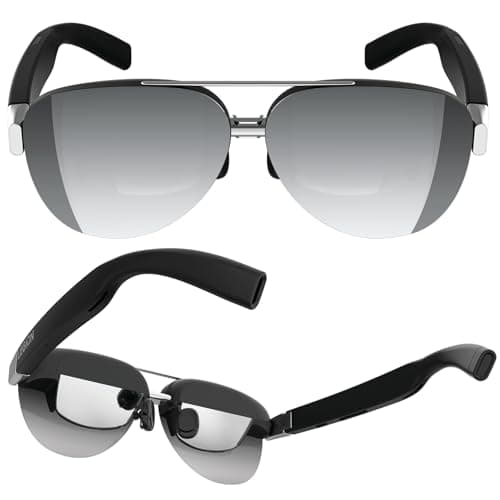
The Lenovo Legion Glasses Gen 2 are dual-Micro-OLED smart glasses delivering a 1920×1080 per-eye display at 120 Hz and a 126-inch virtual screen. Their heavier build and limited 43.5° field of view trade off some comfort and immersion. Ideal for gamers seeking high-refresh portable monitors.
| Attribute | | | | |
|---|---|---|---|---|
— | — | 5 hoursbest | — | |
| ↓ lower better | 79 gramsbest | 280 grams | 453.6 grams | 96 grams |
52 degreesbest | — | 50 degrees | 43.5 degrees | |
— | 4,300 mAh | 5,000 mAhbest | — | |
— | 50 MPbest | — | — | |
120 Hzbest | 90 Hz | 120 Hzbest | 120 Hzbest | |
0 GB | 256 GBbest | 32 GB | — |
Click an attribute name to sort · Green = best, red = worst (relative to this comparison)
| Attribute | | | | |
|---|---|---|---|---|
Build & Design(1) | ||||
Weight (grams) | 79 grams | 280 grams | 453.6 grams | 96 grams |
Battery & Power(1) | ||||
Battery Capacity (mAh) | — | 4300 mAh | 5000 mAh | — |
Performance(1) | ||||
Processor | — | Qualcomm Snapdragon 6 Gen 1 (8-core) | 64-bit quad-core ARM | — |
Display(3) | ||||
Display Resolution (pixels) | 1920x1200 pixels | — | 1920x1080 pixels | 1920x1080 pixels |
Field of View (degrees) | 52 degrees | — | 50 degrees | 43.5 degrees |
Refresh Rate (Hz) | 120 Hz | 90 Hz | 120 Hz | 120 Hz |
Storage(1) | ||||
Internal Storage (GB) | 0 GB | 256 GB | 32 GB | — |
Connectivity(2) | ||||
Bluetooth Version | — | 5.2 | 5.0 | — |
Wi‑Fi Standard | — | Wi‑Fi 6 | Wi‑Fi 5 | — |
Products in the top-left offer the best value (high score, low price).
Professional reviewers consider the Luma Pro a full step forward over its predecessor, emphasizing the larger perceived screen, wider field of view, brighter 1000-nit display, and sharper micro-OLED optics. They commend the polished, Apple-like design, the retained myopia and 3D features, and the magnetic connector, while noting the lack of built-in AR and standalone compute as the main drawbacks.
Consumers who have encountered the product echo the professional praise, highlighting the immersive 152-inch virtual display and the comfortable, lightweight glasses form factor. No significant recurring complaints appear in the available data beyond the expected need for an external device.
“impressive 3D photos ("vivid depth")”
Beam Pro is better for creators needing high-quality 3D capture; Rokid Max suits users who prefer an all-in-one headset with a superior display.
Professional reviewers commend the Beam Pro for its affordability, full Google Play access, and impressive dual 50 MP 3D cameras that enable vivid spatial capture. They also praise the 90 Hz LCD and Wi-Fi 6 for smooth cloud-gaming and streaming, while noting the Snapdragon 6 Gen 1 delivers solid performance. However, they caution that limited RAM, reliance on separate AR glasses, lack of cellular, and only 3DoF tracking keep it from competing with standalone headsets.
Everyday users love the easy integration with Google Play, the vivid 3D photos, and the device's portability and expandable storage. Common frustrations revolve around occasional app lag, short battery life during heavy use, the necessity of owning separate AR glasses, and the desire for built-in cellular connectivity.
Professional reviewers and editors commend the Rokid Max 2 for its high-refresh 120 Hz display, expansive 215-inch virtual screen, and feather-light 75 g chassis, calling it a slick portable monitor for gamers and media lovers. However, they note its dependence on USB-C DisplayPort sources, basic 3DoF tracking, and occasional lens alignment challenges limit its appeal for full-featured AR use cases.
Everyday users rave about the immersive size and smooth performance, highlighting comfort and the convenience of built-in speakers and voice control. Recurring complaints focus on the need for precise fit adjustments, limited compatibility with non-USB-C devices, and audio leakage, while the lack of an internal battery is a common pain point.
Professional reviewers commend the Legion Glasses Gen 2 for their stunning 120 Hz Micro-OLED visuals, premium build quality, and the impressive 126-inch virtual screen that delivers a true handheld gaming experience. However, they criticize the heavier overall weight, the relatively narrow 43.5° field of view, and the reliance on a USB-C DisplayPort Alt Mode connection, which limits compatibility and offers no wireless option.
Everyday users love the immersive, privacy-focused big-screen experience and the ease of USB-C setup, noting the sharp OLED picture as a major plus. Recurring complaints focus on the glasses feeling heavy during long sessions, the narrower field of view than expected, fit challenges for larger heads, and occasional connectivity glitches with devices that lack proper DisplayPort Alt Mode support.
