
⚡ Quick Answer
We’ve lined up seven open‑back, over‑ear headphones to help you sort through the noise. The selection spans three price tiers: budget choices like the $19.99 Philips Wired Over‑Ear model, a mid‑range option at $169.00 from Audio‑Technica, and premium contenders topping out at $419.43 with the Sennheiser HD 660S2. All of them carry solid user feedback, with ratings ranging from 4.1 to 4.6 stars across thousands of reviews.
One model catches the eye for its studio‑grade comfort and analytical soundstage, priced at $199.99 and has a 4.6/5 rating from 19,900 reviewers; its 80 Ω impedance and 96 dB sensitivity suggest a design aimed at professionals and gamers alike. Meanwhile, the Philips SHP9600 offers a lightweight 0.73‑pound build, 32 Ω impedance and a high 101 dB sensitivity for just $79.99, making it a strong budget pick. The AKG K702 and Sennheiser HD 560 S fill the premium and mid‑range gaps with 62 Ω and 120 Ω impedances respectively, each promising detailed, neutral reproduction.
Read on to see how each pair stacks up on comfort, soundstage, and drive requirements so you can match the right headphones to your listening space.

Beyerdynamic DT 990 Pro Black
Its 80 Ω impedance delivers the detailed, balanced sound audiophiles crave, backed by a 96 dB sensitivity that ensures clear dynamics.

Audio-Technica ATH-R50X
Ideal for home or office listening, the ATH‑R50X balances performance and price, coming in at $169 versus $199.99 for the top pick—a $30.99 saving.

Philips SHP9600
With a 50 mm driver and low 32 Ω impedance, the SHP9600 pairs well with portable devices and sits at $79.99, far cheaper than the $169 and $199.99 competitors.
Also considered
Score Analysis
Key score advantages vs. runner-up (Audio-Technica ATH-R50X)
Price Range
Beyerdynamic DT 990 Pro Black
$199.99
Audio-Technica ATH-R50X
$169.00
Philips SHP9600
$67.99
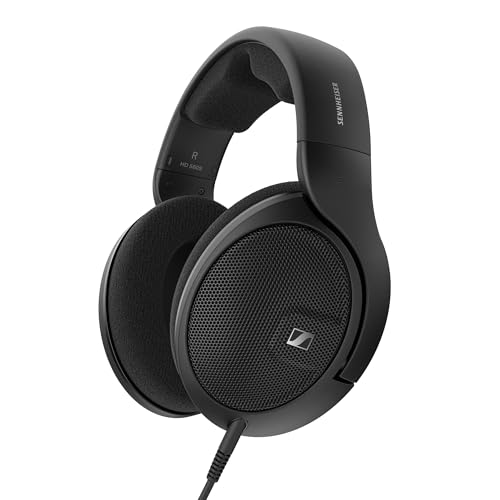
Sennheiser HD 560 S
$149.95

AKG K702
$179.95

Sennheiser HD 660S2
$419.99
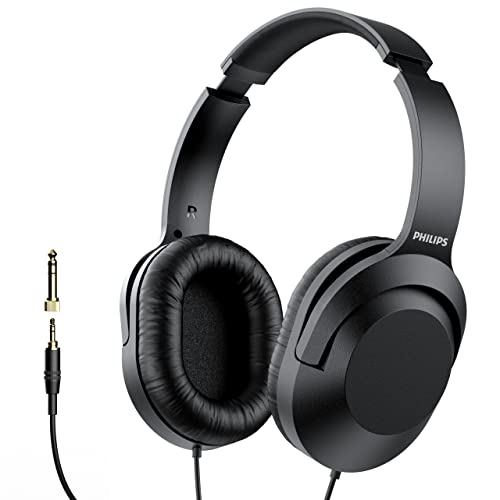
Philips Wired Over-Ear Headphones
$18.99
Spec Comparison
TL;DR: The Beyerdynamic DT 990 Pro Black offers an 80 Ω open‑back design, 96 dB sensitivity and a 3 m cable in a sturdy, comfortable package that shines with a suitable amp but leaks sound.
At the core of the DT 990 Pro is its 80 Ω impedance paired with 96 dB sensitivity, giving it a balanced drive requirement that sits between low‑impedance studio headphones and high‑impedance audiophile models. The 3 m single‑sided cable lets you move freely around a mixing desk, and the spring‑steel headband applies 3.5 N of pressure, which the manufacturer says it feels secure without being oppressive.
Compared with the six other headphones in this roundup, the DT 990 Pro is heavier than the Audio‑Technica ATH‑R50X, Sennheiser HD 560 S, Philips SHP9600, Philips Wired Over‑Ear and Sennheiser HD 660S2, yet it remains lighter than the AKG K702. Its impedance is higher than the AKG (62 Ω) and Audio‑Technica (50 Ω) but lower than the HD 660S2 (300 Ω) and HD 560 S (120 Ω). The 3 m cable is longer than the HD 560 S’s 1.8 m lead and the Philips Wired’s 2 m cable, matching the length of the AKG, Audio‑Technica and SHP9600.
Professional reviewers praise the DT 990 Pro’s plush velour ear pads and the 3.5 N headband pressure for marathon‑length comfort, while users consistently note the expansive, open soundstage that makes mixing and gaming feel immersive. The open‑back design, however, means sound leaks outward and ambient noise leaks in, which can be a drawback in shared spaces. Because the 80 Ω impedance can be demanding, many reviewers recommend pairing the headphones with a dedicated headphone amp to unlock their full detail.
Beyond comfort, the DT 990 Pro handles up to 100 mW of power and features replaceable velour pads, adding longevity for studio use. Its solid construction—spring‑steel headband and a solid 340 g chassis—contributes to the durability that Beyerdynamic is known for, making it a long‑term investment for serious listeners.
Pros
Cons
Best for: Audiophiles and enthusiasts seeking premium sound quality and advanced features
Avoid if: You're on a tight budget, rely on portable devices without an amp, or need strong isolation from surrounding noise
TL;DR: The Audio‑Technica ATH‑R50x offers a 45 mm driver, 50 Ω impedance and ultra‑light 0.46 lb build, delivering a spacious soundstage with professional‑grade comfort at a mid‑tier price.
What really sets the ATH‑R50x apart is its 45 mm driver paired with a 130 dB maximum SPL and a sensitivity of 93.3 dB/mW. At just 207 g (0.46 lb) and a low 1.5 N clamping force, the headphones stay comfortable even during marathon mixing sessions. The 5–40,000 Hz frequency response and 50 Ω impedance make them easy to drive from most consumer sources.
Compared with the six other open‑back contenders, the ATH‑R50x is noticeably lighter than the Philips SHP9600 (0.73 lb) and the Beyerdynamic DT 990 Pro (0.75 lb), and far lighter than the AKG K702 (1.8 lb). Its driver size matches the AKG’s 45 mm but exceeds the 38 mm drivers in the Sennheiser HD 560 S. With a 50 Ω impedance it’s easier on source equipment than the AKG’s 62 Ω or Sennheiser’s 120 Ω, while its 93.3 dB/mW sensitivity sits between the AKG’s 105 dB and the Beyerdynamic’s 96 dB.
Professional reviewers praise the headphone’s lightweight comfort and the controlled bass depth that an open‑back design rarely provides. Users echo this, noting the spacious mids and clear vocal reproduction. The most common criticism points to a pronounced 10 dB treble peak between 6 kHz and 10 kHz, which can introduce harshness on bright recordings. The open‑back architecture leaks sound outward and lets ambient noise in, making them unsuitable for noisy environments.
From a technical standpoint, the ATH‑R50x can handle up to 1,600 mW of input power, 170 mA of current and 9 V of voltage, giving plenty of headroom for dynamic passages. The ear‑pad dimensions (24 mm depth, 52 mm diameter) and a headband adjustment range of 40 mm contribute to the low clamping force, while the overall height of 199.9 mm, length of 101.6 mm and width of 169.9 mm keep the design compact for studio desks.
Pros
Cons
Best for: Audio professionals, mixers, mastering engineers, and critical listeners who need a neutral, reference‑grade headphone with comfortable long‑term wear.
Avoid if: You need strong isolation for commuting, gaming, or noisy environments, as the open‑back design leaks sound.
“good clarity from the 4 kHz peak but criticizes the 6–10 kHz 10 dB peak for sharpness”
“lightweight comfort during long wear”
TL;DR: The Philips SHP9600 packs 50 mm neodymium drivers, a low 32 Ω impedance and a detachable 3 m gold‑plated cable into a 330 g open‑back design that’s comfortable for long sessions but leaks sound.
What really sets the SHP9600 apart is its 50 mm neodymium dynamic drivers paired with a 32 Ω impedance. The low impedance means you can drive them straight from a phone or laptop without a dedicated amp, while the 101–102 dB sensitivity and < 0.1 % THD keep the audio clean and detailed.
Compared with the other six headphones in this roundup, the SHP9600’s driver is larger than the 38 mm drivers in the Sennheiser HD 560 S and the 45 mm drivers in the Audio‑Technica ATH‑R50X. At 0.728 lb (330 g) it is heavier than the Sennheiser (0.529 lb) but considerably lighter than the AKG K702 (1.8 lb). Its 3 m detachable cable matches the length of the Beyerdynamic DT 990 Pro and AKG K702, and it’s longer than the 1.8 m lead on the Sennheiser HD 560 S.
Professional reviewers praise the SHP9600’s comfort – the breathable fabric‑polyurethane ear cushions and adjustable steel headband keep fatigue at bay during marathon listening. Users echo this, calling the headphones “super comfy” and lauding the spacious, airy soundstage that open‑back designs provide. The trade‑off most hear is the inevitable sound leakage and a bass response that’s defined but not emphasized, which many note makes the pair less suited for noisy rooms or bass‑hungry genres.
The specs back those impressions: a maximum power input of 200 mW gives you headroom for dynamic peaks, while the gold‑plated 3 m cable ensures a solid connection. Sweat‑resistant ear pads add a bit of durability for long‑term use, and the detachable cable design lets you replace it if needed.
Pros
Cons
Best for: Budget‑conscious buyers seeking a reliable entry‑level option
Avoid if: You want the best value‑per‑dollar in its price range
“superb for hours of listening”
TL;DR: The Sennheiser HD 560S delivers a neutral, detail‑rich soundstage with a 38 mm driver, 120 Ω impedance and 110 dB sensitivity, all for $139.99, though its open‑back design leaks sound and needs an amp for full volume.
Equipped with a 38 mm dynamic open‑back driver, the HD 560S presents a relatively high 120 Ω impedance. Its sensitivity of 110 dB (1 kHz / 1 Vrms) and total harmonic distortion below 0.05 % make the headphones easy to drive while keeping distortion low. A medium‑high clamping force of 2.5‑3 N holds the lightweight chassis (240 g without cable, 283 g with cable) firmly in place without feeling overly tight.
Compared with the other six models, the HD 560S sits in the middle of the weight range: it’s lighter than the Beyerdynamic DT 990 Pro (0.75 lb) and Philips SHP9600 (0.73 lb) but a bit heavier than the Audio‑Technica ATH‑R50X (0.46 lb). Its 38 mm driver is smaller than the 45 mm drivers of the Audio‑Technica ATH‑R50X and AKG K702, and also smaller than the 50 mm driver in the Philips SHP9600. At 120 Ω, its impedance is higher than the Audio‑Technica (50 Ω), AKG (62 Ω), Beyerdynamic (80 Ω) and Philips SHP9600 (32 Ω) models, but lower than the premium Sennheiser HD 660S2 (300 Ω). The 1.8 m detachable cable is shorter than the 3 m cables most peers use, which can be a benefit for desk setups but may require a longer extension for larger listening spaces.
Professional reviewers praise the HD 560S for its linear, neutral tuning that shines in A/B comparisons and critical listening sessions. Users echo this sentiment, noting the spacious soundstage and fatigue‑free comfort that the velour ear pads and lightweight plastic frame provide. The open‑back construction, however, is a common complaint: sound leaks out and external noise leaks in, making the headphones unsuitable for noisy rooms or commuting. Because of the 120 Ω impedance, many listeners report needing a dedicated headphone amplifier to reach full volume, especially on low‑power devices. The non‑folding frame adds bulk, so a larger case is required for transport.
Pros
Cons
Best for: Budget-conscious buyers seeking a reliable entry-level option
Avoid if: You want the best value-per-dollar in its price range
“Extremely comfortable/lightweight, neutral sound without bass bloat or distortion, spacious open sound, works well with amps (e.g., JM6 portable).”
“Needs amp for sufficient volume from phones.”
TL;DR: The AKG K702 pairs a 45 mm driver and 62 Ω impedance with a detachable 3 m cable, delivering a spacious, neutral soundstage, but its open‑back design and 1.8 lb weight limit use in noisy or mobile settings.
The standout spec is the 45 mm dynamic driver combined with a 62 Ω impedance and 105 dB SPL/V sensitivity measured at 1 kHz. Together with a frequency response of 10 Hz – 39 800 Hz, these numbers promise detailed, linear reproduction across the audible range. The flat‑wire voice coil and AKG’s patented Varimotion two‑layer diaphragm further reinforce the headphone’s reference‑grade accuracy.
Compared with the six other models in this roundup, the K702’s driver size matches the Audio‑Technica ATH‑R50X’s 45 mm but is smaller than the Philips SHP9600’s 50 mm unit. Its 62 Ω impedance sits between the 50 Ω of the ATH‑R50X and the 80 Ω of the Beyerdynamic DT 990 Pro, while the HD 560 S and HD 660 S2 carry much higher impedances of 120 Ω and 300 Ω respectively. Sensitivity at 105 dB lands above the DT 990 Pro’s 96 dB but below the HD 560 S’s 110 dB and the HD 660 S2’s 104 dB. The 3 m detachable cable matches the length offered by the DT 990 Pro and Philips SHP9600, and exceeds the 1.8 m cable of the HD 560 S. At 1.8 Pounds, the K702 is noticeably heavier than the 0.46‑Pound ATH‑R50X, the 0.75‑Pound DT 990 Pro, the 0.53‑Pound HD 560 S, the 0.73‑Pound Philips SHP9600, and the 0.55‑Pound budget Philips model.
Reviewers consistently praise the K702’s comfort: the replaceable 3D‑foam ear pads and genuine‑leather headband let you wear them for hours without fatigue. Professional reviewers note the flat‑wire voice coil’s linear response and the airy soundstage that makes critical listening enjoyable. However, users also flag the open‑back architecture for sound leakage and the actual weight—often perceived as higher than the listed 235 g net weight—making them less suited for noisy environments or on‑the‑go use. The 4.1/5 star rating from over 4,000 reviews reflects a mix of admiration for audio fidelity and disappointment with isolation.
Pros
Cons
Best for: Audiophiles and audio professionals who need a neutral, spacious soundstage and are comfortable using headphones in a quiet studio or home environment.
Avoid if: You require strong noise isolation, plan to use them while commuting, or need a lightweight, on‑the‑go solution.
“Open‑back leakage and zero isolation frustrate users in shared spaces”
“Actual weight often exceeds official 235 g spec (up to 300 g without cable)”
TL;DR: The Sennheiser HD 660S2 pairs a 38 mm driver and 2.5 mT magnetic field with a 300 Ω impedance for audiophile‑grade detail, but its 6 N clamping force and premium $419.43 price make it a dedicated‑listening choice.
The standout spec is the 300 Ω impedance combined with a 2.5 mT magnetic field and a low resonant frequency of 70 Hz, which the manufacturer says improves bass precision and impulse response. Sensitivity sits at 104 dB (1 kHz, 1 Vrms) and total harmonic distortion lists <0.04 % (1 kHz, 100 dB), indicating a clean signal path. The headphones weigh 0.66 lb (260 g without cable) and feature a clamping force of 6 N.
Compared with the six other models in this roundup, the HD 660S2 is lighter than the Beyerdynamic DT 990 Pro (0.75 lb) but heavier than the Audio‑Technica ATH‑R50X (0.46 lb). Its 300 Ω impedance far exceeds the 80 Ω of the DT 990 Pro, the 62 Ω of the AKG K702, the 50 Ω of the ATH‑R50X, the 120 Ω of the Sennheiser HD 560 S, and the 32 Ω of the Philips SHP9600, positioning it as the most demanding on a source. Sensitivity is lower than the HD 560 S’s 110 dB but comparable to the AKG K702’s 105 dB. The 6 N clamping force is higher than the 3.5 N of the DT 990 Pro and the 1.5 N of the ATH‑R50X, which explains the comfort trade‑off many users note.
Reviewers consistently praise the redesigned voice coil’s higher magnetic force for delivering “cleaner impulse response” and “deeper, more accurate sub‑bass.” The more compliant surround that drops the resonant frequency to 70 Hz highlights the double‑low‑frequency pressure. On the downside, the same high clamping force often causes discomfort during long sessions, and the 300 Ω load often requires a dedicated headphone amplifier, limiting mobile use. The open‑back design also leaks sound, making it unsuitable for noisy environments. The package includes two 1.8 m cables (6.3 mm and 4.4 mm), a 6.3 mm‑to‑3.5 mm adapter, and a soft carrying pouch.
Pros
Cons
Best for: Buyers willing to invest in a proven, high-quality option
Avoid if: You're shopping on a tight budget — it's priced at $419.43
“Extremely comfortable/lightweight, neutral sound without bass bloat or distortion, spacious open sound, works well with amps (e.g., JM6 portable).”
“Needs amp for sufficient volume from phones.”
TL;DR: Philips’ budget‑friendly over‑ear headphones pack 40 mm open‑back neodymium drivers, a 2 m cable and lightweight comfort for under $20.
At the heart of these headphones is a 40 mm open‑back neodymium driver paired with a 20 Hz–20 kHz frequency response, delivering a balanced soundstage that reviewers describe as “punchy bass and clear mids/highs.” The unit weighs just 0.55 lb and folds for easy storage, while the 2 m cable ends in a 3.5 mm jack with a snap‑on 6.3 mm adapter for flexible device compatibility.
Compared with the other six models in the roundup, the Philips headphones sit on the lighter side of the spectrum—heavier than the Audio‑Technica ATH‑R50X at 0.46 lb but noticeably lighter than the AKG K702 at 1.8 lb and the Beyerdynamic DT 990 Pro at 0.75 lb. Their driver size is smaller than the Philips SHP9600’s 50 mm units, yet larger than the Sennheiser HD 560 S’s 38 mm drivers, placing them in the middle ground for driver‑size performance. The 2 m cable is shorter than the 3 m cables found on the SHP9600, AKG K702 and Beyerdynamic DT 990 Pro, which can be a plus for desk setups where excess length leads to tangles.
User feedback repeatedly highlights the comfort of the padded headband and leatherette ear cushions, with many noting they're able to wear the headphones for hours without fatigue. Professional reviewers praise the “mind‑blowing sound” and the ability to swivel the ear cups 90° for one‑ear monitoring during podcasts or DJ sessions. The open‑back architecture, however, does leak sound, so users in noisy rooms or public spaces report reduced isolation. The lack of a built‑in microphone or active noise‑cancelling also limits hands‑free use, a point frequently mentioned in consumer comments.
Additional technical details include passive noise isolation, a height of 3.1 in, length of 7.1 in and width of 6.1 in, and a shipping weight of 0.57 lb. The adjustable padded headband and 90° rotating ear cups add versatility for studio work, while the foldable design makes them easy to stash when not in use.
Pros
Cons
Best for: Shoppers on a tight budget who want the most for their money
Avoid if: You have limited desk space or need portability
“mind‑blowingly great sound”
“comfortable fit for extended wear”
Breakdown
Beyerdynamic DT 990 Pro Black
Pros
Audio-Technica ATH-R50X
Pros
Philips SHP9600
Pros
Cons
Sennheiser HD 560 S
Pros
Cons
Based on scoring data and product specs
Personalized picks
Best Overall Pick
Beyerdynamic DT 990 Pro Black
Best OverallBest for: Audiophiles and enthusiasts seeking premium sound quality and advanced features
Audio-Technica ATH-R50X
Best for: Home and office users seeking a balance of features and value
$169.00-$30.99 vs winner
Skip Philips Wired Over-Ear Headphones if…
You have limited desk space or need portability
The Beyerdynamic DT 990 Pro Black takes the top spot thanks to its solid 80 Ω impedance, 96 dB sensitivity and a 3 m single‑sided cable that keeps your setup tidy. Its 0.75‑pound weight and 3.5 N headband pressure strike a comfortable balance for long listening sessions, while a 4.6‑star rating from 19,900 reviewers shows broad user approval. At $199.99 it offers premium open‑back performance without breaking the bank.
The runner‑up, Audio‑Technica ATH‑R50X, shines when you need a lightweight, low‑clamping‑force pair for studio work or marathon mixing. Weighing just 0.46 pounds and exerting 1.5 N of clamping force, it stays comfortable even after hours on the head. Its 50 Ω impedance and 93.3 dB/mW sensitivity pair well with portable gear, and the $169.00 price makes it a solid mid‑range choice.
For tighter budgets, the Philips Wired Over‑Ear Headphones deliver basic open‑back sound at just $19.99, making them the go‑to entry point. If you want a comfortable mid‑range option, the Audio‑Technica ATH‑R50X (already highlighted) offers lightweight design and low clamping force. For the premium audiophile willing to invest, the Sennheiser HD 660S2 provides high‑end performance at $419.43.
Pick the Beyerdynamic DT 990 Pro Black for the top open‑back experience and enjoy your music with confidence.
Both the Beyerdynamic DT 990 Pro and the Audio‑Technica ATH‑R50X are open‑back, over‑ear designs favored by engineers. The DT 990 Pro’s 80 Ω impedance and 96 dB sensitivity pair well with studio mixers, while the ATH‑R50X’s lighter 207 g weight and 50 Ω impedance make it easier to drive from a range of gear.
No reviews yet — be the first to share your experience.
Please sign in to leave a review