⚡ Quick Answer
Upgrading an aging laptop or desktop to a 2.5‑inch SATA SSD can breathe new life into everyday tasks, and you don’t have to break the bank. The review covered 9 models, ranging from the $30.95 Kingston KC600 with a 550 MB/s sequential read claim to the $69.99 SanDisk SSD Plus that pushes 545 MB/s read and 505 MB/s write. All nine carry solid 4.6‑plus star ratings, so performance isn’t the only factor – price, endurance and power draw matter too.
In the budget corner (prices under $35) you’ll find the Lexar NS100 at $34.22 offering 520 MB/s reads, the ultra‑light Kingston KC600 at $30.95 with 550 MB/s reads and 0.2 W average power, and the Vansuny drive at $33.99 delivering up to 500 MB/s. These options keep the form factor slim (around 7 mm height) and weight low, making them ideal for thin notebooks or compact desktops.
Mid‑range picks sit between $35.99 and $58.97, adding higher endurance and slightly faster writes, while premium choices climb to $69.99 and boast specs like the Transcend SSD230’s 560 MB/s read, 520 MB/s write and a 2,240 TBW rating. The following sections break down how each tier performs in real‑world scenarios, helping you match the right SSD to your budget and needs.
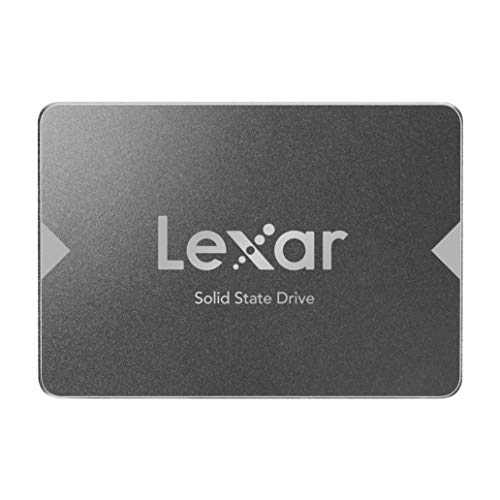
Lexar NS100 256GB Gray
Its slim 7.1 mm height lets it fit easily into tight laptop bays while keeping costs low.
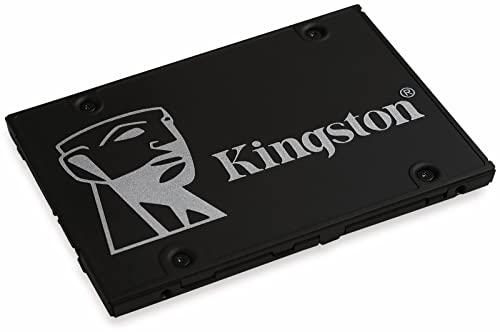
Kingston KC600
Ideal for DIY PC builders who want a reliable entry‑level SSD; at $30.95 it’s $3.27 cheaper than the Lexar NS100.

Transcend SSD230 128GB
The Transcend SSD230’s 6.8 mm profile makes it the thinnest option, catering to audiophiles who need premium sound‑quality features despite a higher $66.30 price.
Also considered
Score Analysis
Key score advantages vs. runner-up (Kingston KC600)
Price Range
Lexar NS100 256GB Gray
$74.90
Kingston KC600
Out of Stock
Transcend SSD230 128GB
$59.00

Kingston V300
Out of Stock

ADATA Ultimate SU650
$135.00
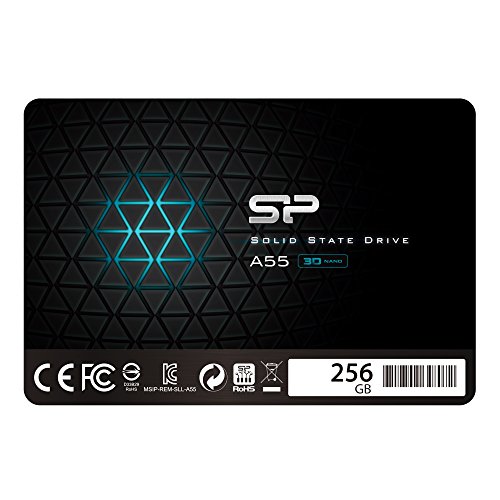
Silicon Power 256GB SATA SSD
$58.97

SanDisk SSD Plus 250GB
Out of Stock

Patriot Memory P210 128GB
$33.99

Vansuny SATA SSD
$33.99
Spec Comparison
TL;DR: The Lexar NS100 256 GB SSD delivers up to 520 MB/s sequential reads, a lightweight 34 g design, and 128 TB endurance at a budget‑friendly price, making it a solid upgrade for older SATA laptops.
What really stands out is the 520 MB/s sequential read speed, which sits at the top end of the SATA III limit, paired with a full 256 GB of storage. The drive measures 7.1 mm in height, 100.1 mm in length and 69.9 mm in width, and it weighs just 34 g, so it fits easily into slim bays.
Compared with the other eight options, the Lexar is lighter than most – it tips the scales at 34 g versus Vansuny’s 37.99 g, Patriot’s 46 g, ADATA’s 47.5 g, Silicon Power’s 63 g and Transcend’s 63.5 g – but it’s heavier than Kingston KC600’s 1 g. Its capacity doubles the 128 GB offered by Vansuny and Patriot, matching the 256 GB of Kingston KC600 and Silicon Power, and it’s a touch larger than SanDisk’s 250 GB. In terms of speed, its 520 MB/s read falls a few hundred megabytes per second short of Kingston KC600’s 550 MB/s and Silicon Power’s 550 MB/s, yet it still outpaces many entry‑level drives.
Users consistently praise the noticeable boost in boot times and the ease of installation, noting the low 3.6 W power draw keeps laptops cool. The main complaints focus on the lack of disclosed write‑speed figures and the modest 256 GB capacity, which some find limiting for larger media collections.
Technically, the SSD uses a SATA III (6 Gb/s) interface, carries a 1500 G shock‑resistance rating, operates from 0 °C to 70 °C, and has a 128 TB total write rating. Lexar backs the drive with a three‑year limited warranty, adding confidence for budget‑focused upgrades.
Pros
Cons
Best for: Budget-conscious buyers seeking a reliable entry-level option
Avoid if: You need high sustained write performance, large storage capacity, or NVMe‑level speeds
TL;DR: The Kingston KC600 256 GB SSD delivers up to 550 MB/s read speed, full‑disk AES‑256 encryption, and a feather‑light 1 g design for under $31, making it a solid budget upgrade for SATA‑III machines.
The standout spec is the 600 MB/s data‑transfer rate, backed by a Silicon Motion SM2259 controller and DRAM cache, which pushes sequential reads up to 550 MB/s and writes up to 500 MB/s. It also packs XTS‑AES 256‑bit, TCG Opal 2.0 and eDrive encryption, so your data stays protected without extra software.
Compared with the other eight budget SSDs, the KC600 is the lightest at just 1 g, while the Vansuny, Lexar and Patriot models weigh dozens of grams. Its 256 GB capacity matches Lexar, Silicon Power and SanDisk, and exceeds the 128 GB offerings from Vansuny and Patriot. The 550 MB/s read speed outpaces the Vansuny (500 MB/s) and Patriot (450 MB/s) and sits just below Transcend’s 560 MB/s, while the 500 MB/s write speed is higher than most peers except Transcend’s 520 MB/s and SanDisk’s 505 MB/s.
Users appreciate the fast boot and load times that the 550 MB/s read delivers, and reviewers highlight the built‑in security suite as a major plus for business laptops. Some owners mention having to enable AHCI mode on older systems to get the best performance, and a few note that the SATA‑III ceiling prevents the drive from reaching NVMe‑level speeds, which can be a disappointment for power users.
Technically, the drive runs on a 3D TLC NAND stack and consumes only 0.2 W on average (0.06 W idle), keeping power draw low for laptops. The 150 TB TBW rating gives a respectable endurance level for everyday workloads, and the drive supports Windows 7 through Windows 10 out of the box.
Pros
Cons
Best for: Budget-conscious buyers seeking a reliable entry-level option
Avoid if: You have limited desk space or need portability
TL;DR: The Transcend SSD230 128 GB delivers up to 560 MB/s sequential reads, a 2,240 TBW endurance rating, and a slim 6.8 mm profile for budget‑friendly SATA upgrades.
With a listed sequential read speed of 560 MB/s and write speed of 520 MB/s, the SSD230 moves operating system files and everyday apps noticeably faster than a traditional hard drive. Its 128 GB capacity is paired with a 2,240 TBW endurance rating, meaning the drive handles many write cycles over its three‑year limited warranty.
When you line it up against the other eight contenders, the SSD230’s 6.8 mm height makes it slimmer than the Kingston V300, Silicon Power, ADATA, Patriot, Lexar, Vansuny and Kingston KC600, all of which sit at 7 mm or higher. At 0.14 lb (63.5 g) it’s a touch heavier than the V300’s 0.117 lb, but still light enough for thin notebooks. Its sequential read speed of 560 MB/s outpaces the V300’s 450 MB/s, the Patriot’s 450 MB/s, and the Vansuny’s 500 MB/s, and even nudges ahead of the Kingston KC600’s 550 MB/s claim.
Professional reviewers highlight the Silicon Motion SM2258 controller, DDR3 DRAM cache and enabled SLC cache as giving the drive a performance edge over DRAM‑less rivals. Users consistently praise the fast boot times and the drive’s ultra‑light weight, while the most common complaints revolve around the SATA III interface capping maximum throughput and the modest 128 GB size limiting large media or game libraries.
Additional technical touches include LDPC coding and NANDXtend ECC for error correction, a RAID engine for multi‑drive setups, and a DevSleep wake time under 20 ms to save power on laptops.
Pros
Cons
Best for: Budget upgrades in older laptops or desktops that only support SATA, and thin notebooks that need a low‑profile, lightweight SSD.
Avoid if: You require large storage capacities, high‑throughput NVMe performance, or heavy‑duty workloads such as extensive video editing.
TL;DR: The Kingston V300 delivers 450 MB/s sequential reads and 85k random IOPS on a 120 GB MLC drive, offering solid boot‑time speed for a $69 budget SSD, though its write performance lags.
The V300 packs 120 GB of Toshiba 19 nm MLC NAND and a SandForce SF‑2281 controller, hitting a sequential read speed of 450 MB/s and random read IOPS of 85,000. Its idle power draw is just 0.64 W, which helps keep the drive cool and quiet.
Within this nine‑product lineup, its 450 MB/s read rate sits below the 545 MB/s of the SanDisk SSD Plus and the 560 MB/s of the Transcend SSD230, but matches the 450 MB/s of the Patriot Memory P210. At 0.117 pounds, it’s heavier than the ultra‑light Kingston KC600 but lighter than the 0.14‑pound Transcend model.
Reviewers praise the noticeable boost when moving from a spinning HDD to the V300, especially for OS boot and app launch, and they appreciate the included migration kit with cloning software and adapters. However, professional reviewers note the incompressible write speed caps at 133 MB/s, which can feel sluggish during larger file transfers, and they flag that the older SandForce controller tends to lose performance as the drive ages.
Other technical details include a MTBF of 1,000,000 hours, operating temperatures from 0 °C to 70 °C, and a 64 TB TBW endurance rating. Kingston backs the drive with a three‑year warranty.
Pros
Cons
Best for: Budget‑conscious users upgrading aging laptops or desktops that currently run HDDs, especially when fast boot times are the primary goal.
Avoid if: You need high sustained write performance, large storage capacity, or professional‑grade endurance for write‑heavy workloads.
“10x speed gains”
TL;DR: The ADATA Ultimate SU650 offers 1 TB of storage, 520 MB/s sequential reads and a 600 TBW endurance rating at a modest $57.99, making it a solid mid‑range SATA SSD choice.
Its standout spec, 75,000 IOPS random write performance, tops the 4K write numbers in this lineup. Paired with 40,000 IOPS random reads, the drive delivers responsive file transfers despite using a SATA III 6 Gb/s interface. Its 7 mm thin profile and 47.5 g weight (≈0.07 lb) keep it light enough for cramped laptop bays.
Compared with the eight peers, the SU650’s 520 MB/s sequential read speed is faster than the Kingston V300 and Patriot Memory P210, matches the Lexar NS100, but trails the Silicon Power, Transcend SSD230, SanDisk SSD Plus, Vansuny and Kingston KC600 models that list higher reads. Its 450 MB/s write speed aligns with the slower end of the group, yet it outpaces the V300’s 450 MB/s write and matches the KC600’s 500 MB/s claim only marginally. In weight, the SU650 is lighter than Silicon Power, Transcend and Kingston V300, though a few rivals like SanDisk, Lexar and Vansuny are lighter.
Reviewers repeatedly praise the drive’s reliability, citing the 3D NAND construction, ECC (including LDPC in some variants) and a 2 million‑hour MTBF as confidence‑boosting. Users also like the 600 TBW endurance, noting it comfortably handles years of typical desktop or laptop use. Critics focus on its SATA limitation—capping throughput around 550 MB/s—and the lack of a DRAM cache, which some power users feel restricts sustained performance under heavy loads.
Pros
Cons
Best for: Most users looking for a well‑reviewed, reliable mainstream option
Avoid if: You're shopping on a tight budget — it's priced at $57.99
TL;DR: The Silicon Power 256 GB SATA SSD delivers 550 MB/s reads, a solid 63 g slim profile, and a 3‑year warranty, making it a reliable upgrade for budget‑friendly laptops at $58.97.
This drive’s standout spec is its 550 MB/s sequential read speed, paired with a 256 GB capacity that comfortably fits a Windows or Linux OS plus a handful of applications. The 7 mm thin, 100 mm‑long, 70 mm‑wide form factor and feather‑light 63 g weight let it slip into ultra‑slim notebooks without adding bulk.
When you line it up against the other eight contenders, the Silicon Power SSD is a bit heavier than the ADATA Ultimate SU650’s 47.5 g and the Lexar NS100’s 34 g, but it matches the ADATA’s 7 mm height and is only a hair thicker than the Transcend SSD230’s 6.8 mm. It’s heavier than the Kingston V300’s 53 g yet still slimmer than the V300’s 100.1 mm width. Compared with the ultra‑light Kingston KC600 that weighs just 1 g, the Silicon Power feels more substantial, but it offers a higher sequential read speed than the KC600’s “up to 550 MB/s” claim and a larger 256 GB capacity versus the KC600’s 256 GB (same capacity) but with a more robust build.
Users consistently praise the drive for noticeably faster boot times and its ability to fit into tight laptop bays. Reviewers highlight the Phison PS3110‑S10 controller and Nanya DRAM cache as contributors to the solid SATA performance, while professional feedback notes the SLC cache helps boost write speeds, even though sustained writes can dip once the cache empties. The 1,500,000‑hour MTBF and 1500 G shock resistance add confidence for mobile users who move their machines often.
Pros
Cons
Best for: Home and office users seeking a balance of features and value
Avoid if: You're shopping on a tight budget — it's priced at $58.97
TL;DR: The SanDisk SSD Plus 250GB offers 545 MB/s sequential reads, 505 MB/s writes, and a feather‑light 32.68 g form factor for $69.99, making it a solid budget upgrade for everyday PCs.
At the heart of this drive is a 250 GB SATA III (6 Gbit/s) interface that delivers a sequential read speed of 545 MB/s and a write speed of 505 MB/s. Those numbers sit comfortably above many entry‑level SATA drives and the drive’s 6.86 mm height keeps it slim enough for tight laptop bays. Weighing just 0.07 lb (32.68 g), it’s one of the lighter options in the 2.5‑inch category.
Compared with the other eight SSDs in the roundup, the SanDisk SSD Plus reads faster than the Kingston V300 (450 MB/s) and the Patriot Memory P210 (up to 450 MB/s), and it writes a bit quicker than the ADATA Ultimate SU650 (450 MB/s). It trails the Transcend SSD230’s 560 MB/s reads and 520 MB/s writes, and is a shade slower than the Silicon Power 256GB (550 MB/s read) and Kingston KC600 (up to 550 MB/s read, 500 MB/s write). In weight, it’s lighter than Kingston V300’s 0.12 lb but heavier than the ultra‑light Kingston KC600 at 0.00 lb.
Reviewers consistently note the noticeable jump in responsiveness when swapping a mechanical HDD for this SSD, especially for web browsing and office apps. The drive’s operating temperature range of 0 °C to 70 °C and shock resistance of up to 1,500 G @ 0.5 m/s give it confidence for portable laptops. Professional reviewers point out, however, that the SATA III interface caps performance, making the SSD several times slower than modern NVMe models.
Other technical details include a 3‑Year Limited Warranty and a standard 2.5‑inch form factor that fits most desktops and laptops without modification. The drive’s dimensions (100.33 mm L × 69.85 mm W × 6.86 mm H) align with typical SATA bays, and its vibration resistance ratings (5 gRMS operating, 4.9 gRMS non‑operating) add durability for everyday use.
Pros
Cons
Best for: Budget‑conscious users upgrading from a mechanical hard drive who need reliable performance for everyday computing tasks.
Avoid if: You need the fastest possible load times for gaming or high‑throughput content creation; the SATA‑III bottleneck and $69.99 price make other options more suitable.
TL;DR: The Patriot Memory P210 128 GB SSD delivers up to 450 MB/s reads, 30 K IOPS, and a slim 7 mm profile at $35.99, making it a solid low‑cost upgrade for older laptops.
The drive packs a SATA III interface with sequential read speeds of up to 450 MB/s and sequential writes up to 430 MB/s, while random 4K performance reaches 30,000 IOPS. At 128 GB (119.2 GiB usable) it offers a modest capacity and comes with a 60 TBW endurance rating and a three‑year warranty.
Compared with the other eight SSDs in this roundup, the P210’s 46 g weight sits heavier than Lexar’s 34 g unit but lighter than Silicon Power’s 63 g model. Its 7 mm height matches most peers; Vansuny is a touch thinner at 6.86 mm, while Lexar is slightly taller at 7.1 mm. Sequential read speed trails Lexar’s 520 MB/s and Vansuny’s 500 MB/s, and its 60 TBW endurance falls below Lexar’s 128 TB and far below Transcend’s 2,240 TB.
Users consistently note a noticeable boost in boot and application load times compared with HDDs, praising the easy installation and the reliability suite that includes S.M.A.R.T., TRIM, end‑to‑end data path protection, SmartECC and thermal throttling. However, many point out that the 128 GB capacity fills quickly on modern OS installations, and real‑world write speeds sometimes feel lower than the advertised 430 MB/s.
Technical details round out the package: the drive operates from 0 °C to 70 °C, draws power via the standard SATA III (6 Gb/s) bus, and it carries a three‑year warranty for peace of mind.
Pros
Cons
Best for: Most users looking for a well‑reviewed, reliable mainstream option
Avoid if: You need advanced features or professional‑grade performance
“fast data access, quick file transfers, and value for basic upgrades”
TL;DR: The Vansuny 128 GB SATA SSD delivers up to 500 MB/s reads in a feather‑light 7 mm, 2.5‑inch package for $33.99, but its modest capacity and slower speeds than rivals limit its appeal.
The drive’s headline spec is its sequential read speed of up to 500 MB/s and a write speed of up to 450 MB/s, backed by an 128 GB Advanced 3D NAND chip. At just 0.08 lb (37.99 g) and a height of 6.86 mm, it’s one of the lightest and thinnest 2.5‑inch SSDs you’ll find at this price point.
Compared with the eight other SSDs in this roundup, the Vansuny sits in the middle of the weight range – heavier than the Lexar NS100 (≈0.07 lb) and the ultra‑light Kingston KC600, but lighter than Patriot’s 0.10 lb unit and the Transcend SSD230 at 0.14 lb. Its 500 MB/s read speed trails most peers: Lexar reaches 520 MB/s, Kingston KC600 550 MB/s, ADATA Ultimate 520 MB/s, Silicon Power 550 MB/s, Transcend 560 MB/s and SanDisk 545 MB/s. Write speeds are comparable to ADATA and Silicon Power (both 450 MB/s) but below Kingston KC600’s 500 MB/s and SanDisk’s 505 MB/s. Capacity is also the smallest, with only 128 GB versus 256 GB or more for the other models.
User feedback highlights a noticeable jump in boot times and file transfers over traditional HDDs, and professional reviewers note the solid metal case and effective heat dissipation. However, many owners complain that the usable space fills quickly and that real‑world benchmarks sometimes fall short of the advertised 500 MB/s peak. The manufacturer does not list endurance (TBW) or other durability metrics, which power users see as a drawback.
Under the hood, the SSD uses a SATA III (6 Gb/s) interface, draws 1 A at 5 V, and fits neatly into any laptop or desktop that accepts a standard 2.5‑inch drive. Its compact 7 mm profile makes it ideal for thin notebooks, and the low weight means it won’t add noticeable heft to a portable system.
Pros
Cons
Best for: Budget‑conscious buyers seeking a reliable entry‑level option
Avoid if: You have limited desk space or need portability
Breakdown
Lexar NS100 256GB Gray
Pros
Kingston KC600
Pros
Transcend SSD230 128GB
Pros
Cons
Kingston V300
Pros
Based on scoring data and product specs
Personalized picks
Best Overall Pick
Lexar NS100 256GB Gray
Best Budget PickBest for: Budget-conscious buyers seeking a reliable entry-level option
Kingston KC600
Best for: Budget-conscious buyers seeking a reliable entry-level option
Out of Stock
Skip Vansuny SATA SSD if…
You have limited desk space or need portability
The Lexar NS100 256 GB Gray earns the top spot in the budget 2.5‑inch SATA SSD roundup. It tops the list with a solid 4.6‑star rating from 11,947 reviews, a competitive price of $34.22, and a sequential read speed of 520 MB/s that keeps everyday tasks snappy.
The Kingston KC600 lands as the runner‑up, ideal when you need built‑in hardware encryption and ultra‑low power draw for a laptop. It offers up to 550 MB/s reads and 500 MB/s writes, consumes just 0.2 W on average, and still comes in under $31, making it a strong option for secure, energy‑efficient portable storage.
If you’re willing to move beyond the top pick, the ADATA Ultimate SU650 at $57.99 offers a larger capacity and reliable performance, while the SanDisk SSD Plus 250 GB at $69.99 pushes the sequential speeds even higher, making it the premium option in this price band.
Pick the Lexar NS100 256 GB now and enjoy fast, affordable storage without compromise.
The Lexar NS100 256 GB at $34.22 offers a strong value proposition with a listed sequential read speed of 520 MB/s, a 3‑year warranty and a modest 128 TBW endurance, making it hard to beat for price alone.
No reviews yet — be the first to share your experience.
Please sign in to leave a review