Rankings
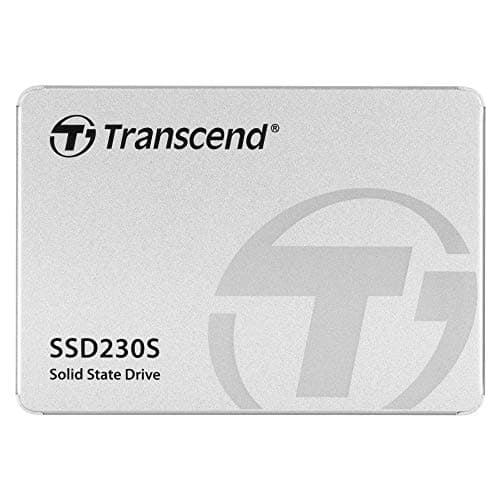
The Transcend SSD230 is a 128 GB 2.5-inch SATA SSD that delivers strong sequential performance and includes DRAM cache and SLC caching. Its limited capacity and SATA interface ceiling restrict it for power-users. Ideal for budget upgrades in older laptops or thin notebooks that need a low-power, high-read drive.
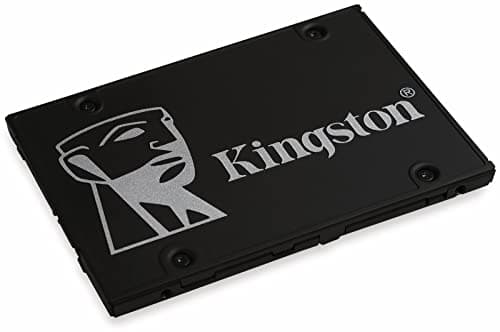
The Kingston KC600 256 GB SSD combines SATA III speeds up to 550 MB/s with built-in AES-256 hardware encryption and a DRAM cache. Its SATA interface limits peak performance and the capacity may be insufficient for larger datasets. Targeted at security-focused users upgrading legacy systems.
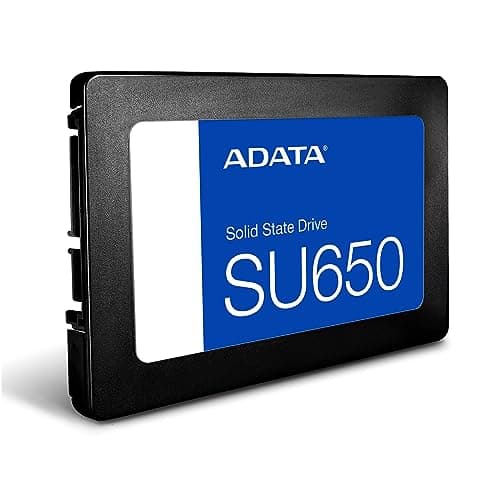
The ADATA Ultimate SU650 1TB is a budget-oriented 2.5-inch SATA SSD with strong endurance and a lightweight chassis. Its performance is capped by the SATA III interface and the lack of DRAM cache limits random I/O speed. Best suited for users upgrading older laptops or desktops where cost and reliability matter more than top-tier speed.
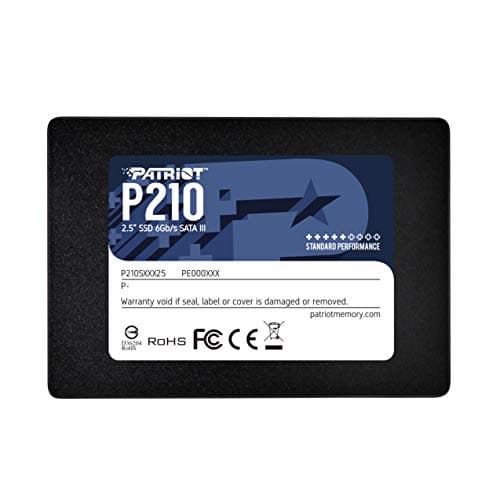
Patriot's P210 128 GB SSD offers SATA III read speeds of up to 450 MB/s and includes SmartECC and end-to-end data protection, targeting entry-level upgrades. Its small capacity and modest endurance of 60 TB limit its usefulness for larger workloads, positioning it for budget-conscious users needing a fast OS drive.
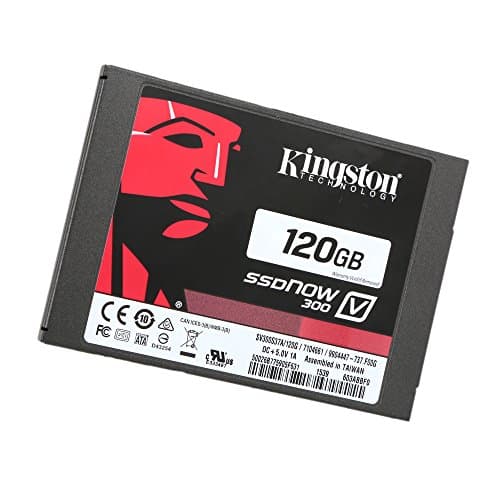
The Kingston SSDNow V300 120 GB is a budget-focused 2.5-inch SATA SSD that uses Toshiba MLC NAND and a SandForce controller to deliver up to 450 MB/s reads and high random IOPS, targeting users upgrading from HDDs. Its write performance suffers on incompressible data and the 64 TB endurance limit restricts longevity for write-heavy scenarios. It is best for budget-conscious users upgrading aging laptops or desktops that need a fast, low-power boot drive.
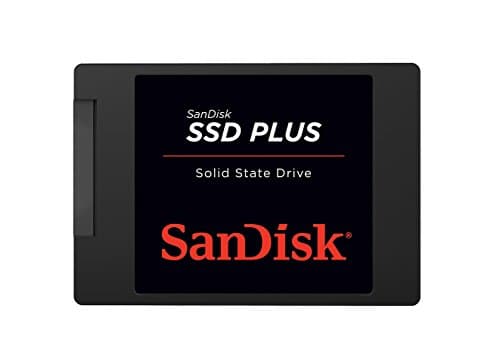
The SanDisk SSD Plus 250 GB is an inexpensive 2.5-inch SATA SSD that offers solid performance for everyday computing and improves over mechanical drives. Its limited features, lower endurance and short warranty make it less suitable for demanding or enterprise environments. Ideal for budget-conscious users upgrading from HDDs or for laptops that need a standard SATA drive.
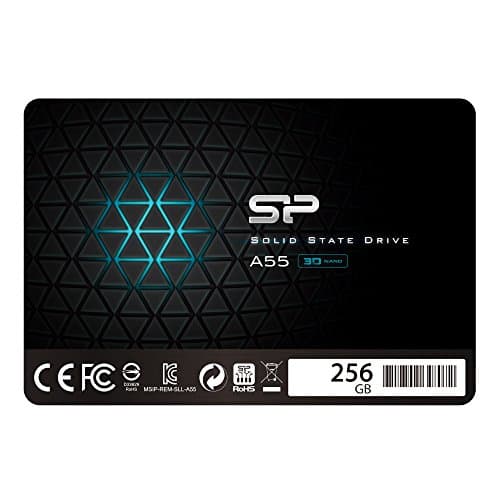
The Silicon Power Ace A55 256 GB is a slim 2.5-inch SATA III SSD delivering up to 550 MB/s read and 450 MB/s write speeds. Its SATA interface caps throughput and sustained writes fall after the SLC cache depletes. Best suited for thin laptops and budget upgrades where SATA is the only option.
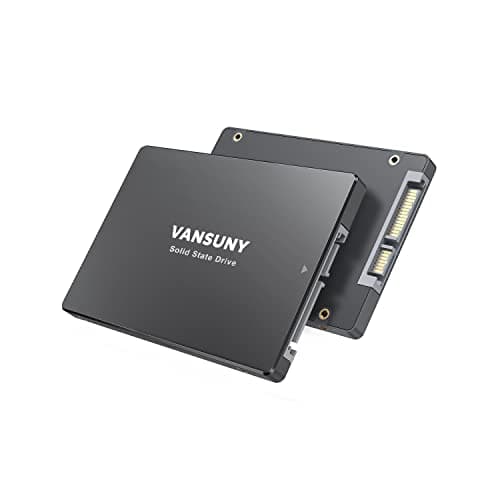
The Vansuny 128 GB SSD offers an affordable upgrade with SATA III speeds up to 500 MB/s in a tiny 2.5-inch form factor. Its limited capacity, lack of endurance specifications, and missing advanced features make it less suitable for power users. Best for budget-conscious users upgrading older laptops or desktops that need a quick OS boost.
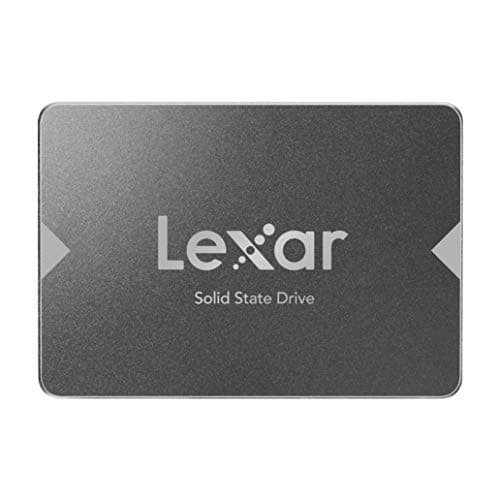
The Lexar NS100 256 GB is a budget-friendly 2.5-inch SATA III SSD offering up to 520 MB/s reads and low power draw. Its limitations include lack of write speed data and lower endurance compared with higher-end drives. It is best for users upgrading older laptops or desktops that only support SATA and need a cost-effective OS drive.
| Attribute | | | | | | | | | |
|---|---|---|---|---|---|---|---|---|---|
256 GBbest | 256 GBbest | 128 GB | 120 GB | 1 GB | 256 GBbest | 250 GB | 128 GB | 128 GB | |
520 MB/s | 550 MB/s | 560 MB/sbest | 450 MB/s | 520 MB/s | 550 MB/s | 545 MB/s | 450 MB/s | 500 MB/s | |
— | 500 MB/s | 520 MB/sbest | 450 MB/s | 450 MB/s | 450 MB/s | 505 MB/s | 430 MB/s | 450 MB/s | |
— | — | 35,000 IOPS | 85,000 IOPSbest | 40,000 IOPS | — | — | 30,000 IOPS | — | |
— | — | 85,000 IOPSbest | 55,000 IOPS | 75,000 IOPS | — | — | 30,000 IOPS | — | |
128 TB | 150 TB | 2,240 TBbest | 64 TB | 600 TB | — | — | 60 TB | — | |
— | — | — | 1,000,000 hours | 2,000,000 hoursbest | 1,500,000 hours | — | — | — | |
| ↓ lower better | 3.6 W | 0.2 Wbest | — | 1.42 W | — | — | — | — | 5 W |
Click an attribute name to sort · Green = best, red = worst (relative to this comparison)
| Attribute | | | | | | | | | |
|---|---|---|---|---|---|---|---|---|---|
Connectivity(1) | |||||||||
Interface | SATA III | SATA III | SATA III | SATA III | SATA III 6Gb/s | SATA III | SATA III | SATA III | SATA III |
Performance(4) | |||||||||
Sequential Read Speed (MB/s) | 520 MB/s | 550 MB/s | 560 MB/s | 450 MB/s | 520 MB/s | 550 MB/s | 545 MB/s | 450 MB/s | 500 MB/s |
Sequential Write Speed (MB/s) | — | 500 MB/s | 520 MB/s | 450 MB/s | 450 MB/s | 450 MB/s | 505 MB/s | 430 MB/s | 450 MB/s |
Random Read IOPS (4K) (IOPS) | — | — | 35000 IOPS | 85000 IOPS | 40000 IOPS | — | — | 30000 IOPS | — |
Random Write IOPS (4K) (IOPS) | — | — | 85000 IOPS | 55000 IOPS | 75000 IOPS | — | — | 30000 IOPS | — |
Storage(2) | |||||||||
Storage Capacity (GB) | 256 GB | 256 GB | 128 GB | 120 GB | 1 GB | 256 GB | 250 GB | 128 GB | 128 GB |
NAND Type | — | 3D TLC | 3D TLC | MLC | 3D NAND | 3D TLC | — | — | 3D NAND |
Features(1) | |||||||||
Hardware Encryption | — | true | — | — | — | false | — | — | — |
General(1) | |||||||||
Warranty (years) | 3 years | — | 3 years | 3 years | 3 years | 3 years | 3 years | 3 years | 1 years |
Reliability(2) | |||||||||
Total Bytes Written (Endurance) (TB) | 128 TB | 150 TB | 2240 TB | 64 TB | 600 TB | — | — | 60 TB | — |
Mean Time Between Failures (hours) | — | — | — | 1000000 hours | 2000000 hours | 1500000 hours | — | — | — |
Power & Reliability(2) | |||||||||
Active Power Consumption (W) | 3.6 W | 0.2 W | — | 1.42 W | — | — | — | — | 5 W |
Idle Power Consumption (W) | — | 0.06 W | — | 0.64 W | — | — | — | — | — |
Design & Build(3) | |||||||||
Form Factor | 2.5-inch | 2.5 inch | 2.5-inch | 2.5-inch | 2.5" | 2.5" 7mm | 2.5-inch | 2.5-inch | 2.5-inch |
Weight (g) | 34 g | 1 g | 63.5 g | 53 g | 47.5 g | 63 g | 32.68 g | 46 g | 37.99 g |
Dimensions (L×W×H) (mm) | 100.1x69.9x7.1 mm | 69.9 x 7 x 100 mm mm | 99.06×68.58×6.8 mm mm | 100.1×69.8×7 mm mm | 100.45×69.85×7 mm mm | 100×70×7 mm mm | 69.85x100.33x6.86 mm | 100x69.6x7 mm | 70.1x6.86x100.1 mm mm |
Products in the top-left offer the best value (high score, low price).
Professional reviewers are scarce, but product pages position the Lexar NS100 as a reliable, entry‑level SATA SSD for older systems, emphasizing its adequate read speed, shock resistance, and efficiency over HDDs while noting the lack of NVMe support and limited warranty compared with some rivals.
Everyday users appreciate the noticeable speed boost over HDDs, the easy installation, and the low power draw, but they often mention the missing write-speed details and the modest 256 GB capacity as drawbacks for modern workloads.
“10x speed gains”
“fast data access, quick file transfers, and value for basic upgrades”
Professional reviewers are not directly quoted in the available sources; product pages emphasize Kingston's own claims of "remarkable performance" and a robust security suite, but independent editorial assessments are absent.
Everyday users are not represented in the gathered data, though technical support notes stress using AHCI mode for optimal performance, suggesting some users encounter setup questions on older systems.
Professional reviewers consider the Transcend SSD230S a solid value proposition for budget-oriented SATA upgrades, praising its DRAM cache, SLC caching and robust error-correction features while noting the inherent speed ceiling of the SATA interface and the modest 128 GB capacity as limiting factors for power users.
Professional reviewers described the V300 as a solid, budget-oriented upgrade that combines inexpensive Toshiba MLC NAND with a SandForce controller to achieve respectable peak reads and high random IOPS. They praised the low idle power draw and the value-added migration kit, but consistently warned that the drive's incompressible write speed and modest endurance make it unsuitable for write-heavy or future-proof scenarios.
Everyday users love the noticeable speed boost for booting and everyday tasks, the quiet operation, and the ease of installation thanks to the included kit. However, many express frustration with slow sustained writes, performance drops after the drive fills partially, and concerns about the limited 120 GB capacity and occasional early failures.
Professional reviewers and editors highlight the SU650 as an excellent cost-performance option for budget upgrades, emphasizing its 3-year warranty, 3D NAND durability, and SLC caching that delivers smoother boot-up and file-transfer experiences compared to older HDDs.
Professional reviewers commend the Ace A55 for its solid SATA performance, thanks to the Phison controller, Nanya DRAM, and SLC Cache, while noting that its 3D NAND and robust PCB design enhance reliability. However, they also stress that the SATA III interface inherently limits peak speeds and that sustained writes can decline once the cache is exhausted.
Everyday users generally praise the drive for faster boot times and its slim, lightweight design that fits well in thin laptops, with no major complaints recorded in the available listings.
Professional reviewers note that the SSD Plus 250 GB is positioned as a budget-friendly upgrade for users moving from mechanical drives, emphasizing its reliable SATA performance while acknowledging its slower speeds compared to NVMe alternatives.
Professional reviewers note that the SSD Plus 250 GB is positioned as a budget-friendly upgrade for users moving from mechanical drives, emphasizing its reliable SATA performance while acknowledging its slower speeds compared to NVMe alternatives.
Professional reviewers and editors present the P210 as a cost-effective SATA III SSD that delivers respectable read speeds and solid random IOPS for entry-level upgrades, emphasizing its slim profile and reliability features while noting its limited capacity and the inherent speed ceiling of the SATA interface compared to modern NVMe solutions.
Everyday users consistently highlight the noticeable speed boost over HDDs, easy installation, and good value for basic tasks, but they also frequently mention the 128 GB size filling up quickly and occasional real-world write speeds that don't match the advertised peaks.
Professional reviewers such as iFix Tech acknowledge the Vansuny SSD's plug-and-play ease and solid build, but they caution that real-world performance often falls short of the headline 500 MB/s read figure and that usable capacity can be lower than the advertised 128 GB due to over-provisioning. The lack of disclosed endurance metrics is also highlighted as a concern for demanding users.
Everyday consumers generally praise the SSD for delivering a clear speed improvement over HDDs and for its low price, but many express frustration with the limited 128 GB capacity and note that the advertised speeds feel optimistic after practical testing. The absence of clear warranty or endurance details adds to the hesitation for long-term reliance.
