Finding a reliable flash under $49.99 can feel like hunting for a needle in a haystack, but a review of 15 options reveals several solid choices. The Neewer Z120 SE leads the pack with a manufacturer‑claimed 500 full‑power flashes per charge and a rapid 0.1‑second recycle, all for $29.99, and it has a 4.4/5 rating from more than 14,359 reviewers.
The lineup falls into three price tiers. Budget‑friendly picks such as the Hersmay CY‑20 ($18.59, 3.8/5), Leekai S12 ($19.19, 5.0/5), Ulanzi SL01 ($19.84, 4.3/5) and Ulanzi SL03 ($24.99, 4.4/5) keep costs low while delivering usable power. Mid‑range options include the Neewer Z120 SE ($29.99, 4.4/5) and Godox iM30 ($30.90, 4.3/5), offering longer battery life and higher guide numbers. Premium contenders like the Powerextra DF‑400 ($35.99, 4.3/5), Photoolex FK310 ($41.39, 4.6/5), Godox TT520II ($48.60, 4.5/5) and Altura Photo Flash ($49.98, 4.2/5) bring stronger guide numbers and extra features for more demanding shoots.
Below you’ll see how each model stacks up on performance, ergonomics and value, so you can pick the flash that fits your kit and budget.
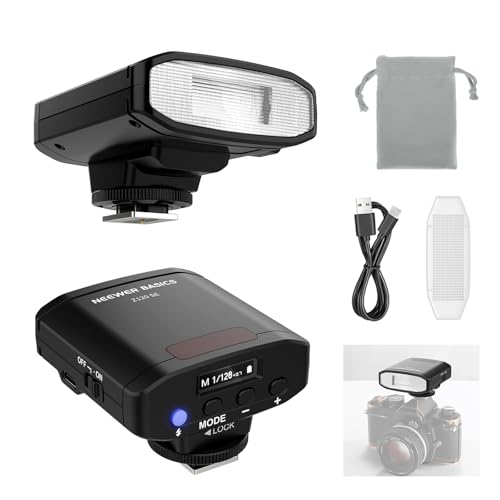
Neewer Z120 SE
Its 2000 mAh battery gives you long shooting sessions without frequent recharges, supporting the value and reliability reviewers highlighted.

Godox TT520II
Ideal for enthusiasts willing to spend about $18 more than the Neewer to get a proven, high‑quality flash that many trust.

Powerextra DF-400
Stands out with a compact 55 mm depth, keeping your setup tight when space is at a premium, while still matching the height of its rivals.
Also considered
Score Analysis
Key score advantages vs. runner-up (Godox TT520II)
Price Range
Neewer Z120 SE
$39.99
Godox TT520II
$48.60
Powerextra DF-400
$35.99

Godox iM30
$30.90

Photoolex FK310
$41.39

Altura Photo Flash
$49.98

Ulanzi SL01
$19.99

Hersmay CY-20
$18.59

Ulanzi SL03
$24.99

Leekai S12
$23.99

Godox iT20 F
$39.90

Meike FC-100
$29.19
Photoolex Camera Flash
$40.99
Godox TT520 II
$46.99
Camedaflx CF3
$29.99
Spec Comparison
TL;DR: The Neewer Z120 SE packs a 2000 mAh battery, 500‑flash capacity and 0.1 s recycle time into a lightweight 0.31 lb body for under $30, making it a solid manual flash for beginners.
This flash’s standout spec is its built‑in 2000 mAh lithium‑ion cell, which the manufacturer says can fire up to 500 full‑power flashes on a single charge. Recycling speeds range from 0.1 seconds at low power to 1.8 seconds at full output, and the 12‑meter guide number at ISO 100 (5600 K daylight balance) gives reliable illumination for small‑to‑medium subjects. Its compact dimensions—71.1 mm wide, 46.7 mm deep and high—keep the unit under 0.3125 Pounds (142 g), so it fits easily in a camera bag.
Compared with the other 14 entries, the Z120 SE is heavier than the ultra‑light Camedaflx CF3 (≈0.055 lb) but considerably lighter than the Meike FC‑100 (≈0.73 lb) and Godox iM30 (≈0.17 lb). Its 2000 mAh battery dwarfs the 190 mAh cell found in the Camedaflx, offering far more shooting endurance. In terms of light output, the Z120 SE’s GN 12 sits below the Meike’s GN 15 and well under the Powerextra DF‑400’s GN 33, but it still outperforms many entry‑level units that lack a listed guide number.
Reviewers consistently applaud the flash’s rapid recycle and the inclusion of a translucent diffuser, USB‑C charging cable and storage bag—all for the price point. Users also note the solid build quality and the usefulness of the manual (M) and two slave modes (S1, S2). The most common criticism is the absence of TTL and high‑speed sync, which forces manual power adjustments and caps the fastest shutter speed at 1/250 s. A fixed head orientation also draws complaints from photographers who prefer tilt‑or‑swivel heads.
Technically, the Z120 SE offers eight power levels from 1/128 to full output, a single‑contact hot shoe (no TTL pin), and compatibility with Canon, Nikon, Sony, Fujifilm and other major brands. While it lacks high‑speed sync, its manual controls and reliable battery life make it a practical tool for controlled lighting situations, especially when you can rely on the included diffuser for softer fill.
Pros
Cons
Best for: Content creators, vloggers, beginner photographers and travel shooters who need a lightweight, manually controlled flash with solid battery life.
Avoid if: You need TTL, high‑speed sync, a tilt/swivel head, or are a professional event or sports photographer.
“Perfect for vlogging and YouTube — small, bright, and lasts all day.”
“The S2 mode works great with my Canon DSLR’s pop‑up flash as master.”
TL;DR: The Godox TT520II offers a 33 m guide number, built‑in 433 MHz wireless with a 15 m indoor range, and a compact 191 mm body for just $48.60, making it a solid entry‑level flash.
Its integrated 433 MHz wireless system sets this speedlite apart. With 16 channels and an effective indoor range of 15 meters, the included RT transmitter lets you fire the flash off‑camera without extra gear. The guide number of 33 meters (ISO 100) and eight power steps from 1/128 to full power give you enough reach for most indoor portraits, all for a list price of $48.60.
The TT520II weighs less than the Altura Photo Flash’s 440 g and a touch less than the Powerextra DF‑400’s 315 g, and its 191 mm height is shorter than Altura’s 215.9 mm. Its guide number of 33 m sits below Altura’s 38 m but matches the Photoolex FK310 and Powerextra models. Unlike the Godox iT20 F, which weighs only 45 g but reaches a guide number of 15 m, the TT520II balances power and portability.
Users consistently praise the reliable wireless trigger and the soft output from the built‑in diffuser and bounce card. Reviewers note that the flash operates intuitively right out of the box and suits portrait or event work. The main complaints revolve around its manual‑only mode—there’s no TTL or High‑Speed Sync—and the lack of an LCD screen, which can make setting adjustments less visual. Some also mention that recycle time can stretch to 5 seconds on alkaline batteries, slowing down burst shooting.
Pros
Cons
Best for: Photography students, beginners, and budget‑conscious creators who need a reliable manual flash for indoor portraits or small events.
Avoid if: You need TTL, High‑Speed Sync, or fast recycle for sports, wildlife, or video work.
“Worked perfectly with my Sony A7III—reliable triggering and great bounce lighting.”
“Used it on my Nikon Z50 with no issues; the diffuser makes light very soft.”
TL;DR: The Powerextra DF-400 offers a 33 m guide‑number flash with a rotating head, runs on four AA batteries, and costs $35.99, making it a solid entry‑level option for budget‑focused shooters.
The standout spec is its 33 m guide number (ISO 100, 1 m, 50 mm), which gives good reach for indoor shoots. The head pivots from 0° to 270° horizontally and 0° to 90° vertically, and eight LED indicator lamps let you see the flash status at a glance. It delivers eight power‑output levels from 1/128 to full power, and the flash duration ranges from 1/200 s to 1/20 000 s.
Compared with other flashes in this roundup, the DF‑400 is larger and heavier than the Godox iT20 F (32 mm deep, 41 mm high, 45 g) but still more compact than the Godox iM30 (206 mm deep, 76 mm high). Its 3.0‑second recycle time is a touch slower than the 2.8‑second recycle of the Godox iT20 F and the Photoolex units, while the 33 guide number matches the Photoolex Camera Flash and FK310, offering better reach than the Godox iT20 F’s 15 m guide number.
Reviewers appreciate the very low price and the ability to bounce light thanks to the rotating head. Professional reviewers note the flash provides essential manual functionality for beginners. Common complaints focus on the lack of TTL or high‑speed sync, a plastic housing that feels fragile, and incompatibility with several Canon Rebel and Sony A‑series bodies. Battery life varies from 110 to 1500 flashes per set depending on the power level, and the unit uses four AA batteries (not included).
Pros
Cons
Best for: Beginner photographers, budget‑conscious hobbyists, and travelers who need a lightweight secondary flash.
Avoid if: You require TTL, high‑speed sync, or have a Canon Rebel or Sony A‑series body that the unit does not support.
TL;DR: The Godox iM30 offers a vintage‑styled, pocket‑size flash with a 15 m guide number, 230 full‑power shots on two AAA cells, and a 3.6 s recycle, all for under $35.
The iM30’s most eye‑catching spec is its 15 m (49.2 ft) guide number at ISO 100, paired with a compact 0.17196056436 lb body that weighs just 78 g without batteries. Its depth of 206 mm, height of 76 mm and width of 71.5 mm keep it truly pocket‑sized, while the built‑in 2 AAA battery pack delivers roughly 230 full‑power flashes before needing a swap.
Compared with other budget flashes in this roundup, the iM30 is lighter than the Neewer Z120 SE (0.3125 lb) and the Powerextra DF‑400 (315 g), but a bit heavier than the Camedaflx CF3 (0.0551155655 lb) and the Ulanzi SL03 (0.09479877266 lb). Its battery life of 230 flashes sits between the Neewer’s 500‑flash claim and the Camedaflx’s smaller 190 mAh cell, while its 3.6 s recycle is slower than Neewer’s sub‑second recycle and the Powerextra’s 3.0 s, reflecting its fully manual design.
Users love the iM30’s retro aesthetic and the tactile power dial that makes manual control feel nostalgic. Professional reviewers praise its “perfect reincarnation of 70s and 80s flashes” and note the universal hot‑shoe fit for DSLR, mirrorless and film cameras. However, the lack of TTL, high‑speed sync and a bounce/swivel head means the light's harsh and less flexible for creative lighting, a point that consumers echo in complaints about the fixed head.
Technically, the flash delivers a fast 1/2000 s duration at low power up to 1/300 s at full power, with seven manual power steps (1/64 to 1/1). It sets its color temperature at 6500 K ± 200 K, and it supports optical slave modes S1 and S2 for off‑camera triggering, though it doesn't have a built‑in battery indicator.
Pros
Cons
Best for: Film photographers, mirrorless users with compact bodies, and beginners who want a well‑reviewed, manual flash that’s easy to carry.
Avoid if: You need high power, fast recycle, TTL/HSS features, or a bounce/swivel head for studio or event work.
“perfect reincarnation of 70s and 80s flashes”
“doesn’t ruin the camera’s profile”
TL;DR: The Photoolex FK310 offers a GN33 guide number, 22 power levels, and an LCD interface for $41.39, making it a solid manual flash for hobbyists and small studios.
The standout spec is its GN33 guide number at ISO 100 with a 35 mm coverage angle, paired with 22 discrete power steps from 1/128 to full output. An LCD panel lets you see and adjust settings instantly, and the unit recycles in 2.8 seconds, which is faster than many entry‑level flashes.
Compared with other budget options, the FK310’s guide number more than doubles the 15 m GN of the Godox iT20 F, while its 22 power levels exceed the eight levels found on the Powerextra DF‑400. Physically, the FK310 stands at 83.058 mm tall—roughly twice the height of the iT20 F’s 41 mm—yet remains compact enough for a standard hot shoe. The Powerextra and Godox TT520II both list a GN33 as well, but the Powerextra offers fewer power steps and a slower 3.0‑second recycle, and the TT520II’s dimensions (191 mm height) make it noticeably larger.
Users consistently praise the strong output and the intuitive LCD, noting that the included 12 color filters and stand add immediate versatility for creative lighting. The 4.6‑star rating from 689 reviewers underscores general satisfaction. Professional reviewers highlight the high guide number and multi‑flash mode as useful for studio work, while recurring complaints focus on the lack of TTL metering, the 1/200 s maximum sync speed (no high‑speed sync), and the absence of a built‑in radio wireless trigger, which can limit reliability in bright environments.
Technical details round out the package: the flash runs on four AA batteries (alkaline or Ni‑MH) and can also accept an external EN‑EL18PS power supply. It maintains a consistent 5600 K ± 200 K color temperature and supports manual, multi‑flash, and optical slave (S1/S2) modes. The 24‑month warranty and the protective pouch, stand, diffuser, and instruction manual complete the offering.
Pros
Cons
Best for: Photography students, hobbyists and studio shooters who want manual control and multi‑flash capability.
Avoid if: You need automatic TTL exposure, high‑speed sync for fast action, or a built‑in radio wireless system.
TL;DR: The Altura Photo Flash offers a 38 m guide number, fine 1/128 power steps and a swivel head for under $50, making it a solid manual flash for entry‑level shooters.
The standout spec is its 38 m (125 ft) guide number at ISO 100, paired with a power output range that spans from full strength (1/1) down to 1/128. That granularity lets you dial in just the right amount of light without relying on automatic modes. The unit measures 8.5 in tall, 3.0 in wide and deep, and weighs 440 g, giving it a sturdy feel on the hot shoe.
Compared with other flashes in this $50‑budget roundup, the Altura’s guide number exceeds the 33 m listed for the Godox TT520 II, while its 2.9 s recycle time is on par with the 2.8 s recycle of the Photoolex FK310. At 440 g it is heavier than the roughly 312 g Godox TT520 II, but it ships with a wide‑angle diffuser, bounce card and protective pouch—accessories that many peers don’t include.
User feedback highlights the precise manual control and the useful optical slave modes (S1 and S2) for multi‑flash setups. Reviewers consistently note that the flash lacks TTL and high‑speed sync, and a few mention the LCD screen can be dim or slow to respond. The battery compartment holds four AA cells; the manufacturer estimates they’ll last about a month under typical use, though frequent swaps are a common complaint.
The flash also offers a bounce angle up to 90°, a 180° left/right swivel, and a zoom head that covers 18 mm to 180 mm, making it adaptable for both tight indoor spaces and broader outdoor scenes. An automatic sleep mode kicks in after 30 seconds of inactivity, and an overheat protection system shuts the unit down if it’s too hot.
Pros
Cons
Best for: Beginner to intermediate photographers who want manual flash control, bounce flexibility and solid power without spending a lot.
Avoid if: You need TTL, high‑speed sync, or ultra‑fast recycling for fast‑action or professional event work.
TL;DR: The Ulanzi SL01 Mini Flash offers a GN8 output, ≥97 CRI, and over 500 flashes per charge for just $19.84, making it a feather‑light, budget‑friendly fill light for travel and street shooters.
This flash weighs only 0.07 pounds (33 g) and measures just 29.21 mm × 35.56 mm × 43.94 mm, so it barely adds bulk to a camera rig. Its 250 mAh battery delivers at least 500 full‑power flashes on a single charge, and a 60‑minute USB‑C charge gets you back in action quickly. The guide number of GN8 at ISO 100 and a CRI of ≥97 give reliable daylight‑balanced illumination (6500K ± 300K).
Compared with other budget flashes, the SL01 is significantly lighter than the Leekai S12 (0.23 lb) and Hersmay CY‑20 (≈0.22 lb), though a bit heavier than the Camedaflx CF3 (≈0.055 lb). Its battery capacity of 250 mAh is smaller than the Leekai’s 1200 mAh and the Neewer Z120 SE’s 2000 mAh, so it stores less energy than those models. The GN8 output is lower than the Leekai’s GN12 and Hersmay’s GN20, placing it in the modest‑power tier, but its price under $20 keeps it competitive against the higher‑priced peers.
Users consistently praise the flash’s tiny footprint and the natural 6500 K light that reproduces colors accurately, thanks to the high CRI. Reviewers note the convenience of USB‑C fast charging and the long‑lasting battery life for casual shooting. The main complaints revolve around its manual‑only operation—there’s no TTL or high‑speed sync—and occasional misfires on silent or electronic shutters, especially on cameras listed as incompatible.
Technically, the SL01 covers up to 4 m of subject area, offers four power levels (1/8, 1/4, 1/2, 1/1), and recycles in about 5 seconds at full power, 3 seconds at half power, and 2 seconds at quarter power, with instant recycle at the lowest setting. The single‑contact hot shoe limits the maximum sync speed to 1/250 s, which is typical for entry‑level flashes.
Pros
Cons
Best for: Entry‑level buyers or those on a tight budget
Avoid if: You need advanced features or professional‑grade performance
TL;DR: At $18.59, the Hersmay CY‑20 delivers a GN 20 m manual flash, 7‑second recycle, and a 0‑45‑60‑75‑90° tilt head in an ultra‑light 100 g package.
The standout spec is its GN 20 m guide number at ISO 100, giving you a respectable reach for a flash under $20. It offers a full range of tilt angles—0°, 45°, 60°, 75°, and 90°—so you can bounce light easily, and the flash duration lists 1/1000 s for crisp freeze‑action.
Compared with the other 14 flashes in this roundup, the CY‑20 is heavier than the Ulanzi SL01 and SL03 (both under 0.1 lb) but lighter than the Meike FC‑100 and Neewer Z120 SE (both above 0.3 lb). Its guide number outperforms the Leekai S12’s GN12 and the Meike FC‑100’s GN15, giving it more power than several budget rivals.
Everyday users praise its ultra‑light 100 g build and the convenience of a 2.5 mm PC sync port for off‑camera setups. Professional reviewers note the manual‑only operation as a good learning tool but warn that the lack of TTL, high‑speed sync, and a 7‑second recycle time can hinder fast‑paced shooting. Users also complain about the plastic housing and Sony shoe incompatibility.
Pros
Cons
Best for: Beginners learning manual flash exposure and travelers who need a lightweight, affordable fill flash with tilt flexibility.
Avoid if: You require TTL, high‑speed sync, fast recycle, robust construction, or Sony camera compatibility.
“Great for the price — does exactly what I need for indoor portraits.”
“Lightweight and easy to carry — perfect for travel.”
TL;DR: The Ulanzi SL03 packs a 90°‑tilt flash, 8 GN (ISO 100) output and a 130‑lux continuous LED into a 43 g, 23 mm‑deep body for $24.99, making it one of the lightest dual‑mode lights under $50.
What really sets the SL03 apart is its 90° adjustable flash head combined with a fixed‑output LED that delivers 130 lux at 0.5 m. At just 43 g (0.09479877266 lb) and measuring 68.6 mm × 43.2 mm × 23 mm, it’s small enough to slip onto a mirrorless hot shoe without throwing off balance.
Compared with the other 14 entries, the SL03 is considerably lighter than the Meike FC‑100 (0.7275 lb) and the Neewer Z120 SE (0.3125 lb), and only a shade heavier than the Ulanzi SL01 (0.07 lb). Its 300 mAh battery sits between the 190 mAh cell in the Camedaflx CF3 and the 2000 mAh pack in the Neewer Z120 SE, giving it a respectable 47‑minute continuous‑light runtime while staying far more compact than the bulkier Meike unit (80 mm height, 120 mm length).
Users repeatedly praise the ultra‑compact footprint, the USB‑C charging convenience, and the high colour fidelity (CRI 97) of both flash and fill light. Professional reviewers highlight the bounce‑tilt head as a rare feature in a flash this small. The main complaints focus on the lack of TTL or automatic exposure modes and the modest 8 GN output, which can feel under‑powered in bright outdoor settings. Recycling at 2.5 s on full power (down to 0.8 s at 1/4 power) feels acceptable for casual street shooting but may lag behind faster speedlights for high‑speed action.
Technical notes: the flash runs at 6500 K ± 8% with a guide number of 8 GN (ISO 100). The fill LED runs at 5600 K ± 200 K, also with CRI 97, and the unit draws 1 W for continuous light. A single USB‑C cable handles both charging (1 hour) and power delivery, and the battery’s 300 mAh capacity supports up to 500 full‑power flashes before needing a recharge.
Pros
Cons
Best for: Entry‑level buyers or those on a tight budget
Avoid if: You need advanced features or professional‑grade performance
“cool little gadget”
“barely noticeable”
TL;DR: The Leekai S12 is a ultra‑compact, USB‑C rechargeable flash with a GN12 output, 1%‑100% brightness control, and a 0.23 lb weight, priced under $20 for budget shooters.
The standout spec is its guide number of GN12 at ISO 100 (50 mm), paired with a 1200 mAh rechargeable lithium‑ion battery that reaches a full charge in about 2.5 hours. Weighing only 0.23 lb (105 g), it’s truly pocket‑sized, and the large digital display lets you dial brightness from 1% to 100% in real time.
Compared with the other flashes in this roundup, the S12 is heavier than the ultra‑light Ulanzi SL01 and the Camedaflx CF3, but lighter than the bulkier Meike FC‑100 and Neewer Z120 SE. Its 1200 mAh battery outpaces the 250 mAh and 300 mAh cells that the Ulanzi SL01 and SL03 use, yet it charges slower than those models’ 60‑minute and 1‑hour USB‑C cycles. In terms of output, the GN12 falls short of the Hersmay CY‑20’s GN20 and the Meike FC‑100’s GN15, so expect a shorter reach.
Users consistently award the S12 a perfect 5.0‑star rating, praising its tiny form factor, USB‑C charging, and clear digital interface—ideal for travel and as a starter unit. Professional reviewers note the daylight‑balanced 5600 K color temperature and the continuous brightness control as strong points, while common complaints focus on the manual‑only operation, lack of TTL and high‑speed sync, and occasional black‑edge vignetting when shooting faster than 1/250 s.
Technical details include a flash duration that spans from 1/60 s to 1/250 s and a recycle time ranging between 1 s and 7 s depending on power level. The unit offers five preset power levels (20%, 40%, 60%, 80%, 100%) plus the fine‑grained 1%‑100% adjustment, and it works with a wide array of Canon, Sony, Nikon, Fujifilm, Panasonic, Olympus, Pentax and Ricoh cameras via a universal single‑pin hot shoe.
Pros
Cons
Best for: Entry-level buyers or those on a tight budget
Avoid if: You want the best value‑per‑dollar in its price range
TL;DR: The Godox iT20 F packs a TTL‑ready 15 m guide‑number flash into a 45 g, USB‑C‑rechargeable body for $39.90, offering fast 1.5 s recycle and magnetic accessories.
The standout spec is its ultra‑compact chassis – just 32 mm deep, 41 mm tall, 41.5 mm wide and weighing only 45 g – making it truly pocket‑friendly while still delivering a 15 m guide‑number (ISO 100) and ±3 EV flash compensation.
At $39.90, it sits at the higher end of the sub‑$50 flash segment, but it weighs dramatically less than the Powerextra DF‑400 (315 g) and even less than the Godox iM30 (108 g). Its 1.5 s recycle time outpaces the DF‑400’s 3.0 s cycle, and the 700 full‑power flashes per charge exceed the 500‑flash capacity of the Neewer Z120 SE. However, the 15 m guide‑number is lower than the 33 m figures common on many peers, so raw power is modest.
Users consistently praise the flash’s lightweight feel and the convenience of USB‑C charging, noting that the built‑in TTL mode “makes perfect shots one tap away.” Professional reviewers highlight the magnetic accessory system for quick diffusion or color filtering, while also pointing out the fixed head’s lack of bounce or swivel as a limitation for creative lighting. The absence of wireless or high‑speed sync means it’s best suited for on‑camera use rather than off‑camera setups.
Pros
Cons
Best for: Those prioritizing quality and willing to pay for premium performance
Avoid if: You're shopping on a tight budget — it's priced at $39.90
“the *perfect* compact flash”
“makes photography feel fun again”
TL;DR: The Meike FC-100 packs a 15 GN flash, 32 LEDs and a 400 mm cable into a battery‑powered ring that’s handy for macro work, though its output is modest for the price.
The standout spec is the 15 GN guide number at ISO 100 with a color temperature of 5500 K, paired with 32 high‑brightness LEDs that deliver both flash bursts (1/100 s) and constant illumination for video. It runs on four AA batteries, offering several hours of continuous light, and it powers down after 30 seconds of inactivity.
At 0.7275254646 pounds, the FC‑100 weighs noticeably more than the Neewer Z120 SE (0.3125 pounds) and the Godox iM30 (0.17196056436 pounds), yet it’s still lighter than the Powerextra DF‑400’s 315 g kit. Its 80 mm height and 120 mm length also make it larger than ultra‑compact peers like the Ulanzi SL01 (29.21 mm high), yet it compensates with seven interchangeable adapter rings—a feature many rivals omit.
Reviewers appreciate the dual flash/continuous operation, especially for close‑up jewelry or insect photography, and they note the even lighting from the ring’s 32 LEDs reduces shadows. Professional reviewers highlight the half‑ring lighting mode for creative direction. However, users frequently mention the low 15 GN output limits reach, and the adapter rings can introduce vignetting on full‑frame lenses. The lack of TTL integration means you’ll be adjusting exposure manually.
Pros
Cons
Best for: Entry‑level macro photographers, videographers shooting close‑ups, or anyone on a tight budget needing a lightweight on‑camera light.
Avoid if: You need strong, high‑speed lighting, full‑frame coverage without vignetting, or a rugged build for heavy‑duty studio work.
“"rather weak"”
“"very useful when shooting outside the studio"”
TL;DR: The Photoolex Flash offers a GN33 guide number, 22 power levels, and a built‑in LED with 150 Lux output, all for $38.94, making it a solid manual flash for budget‑focused shooters.
The standout spec is the GN33 guide number at ISO 100 with a 35 mm coverage angle, outshining many entry‑level units such as the Godox iT20 F’s 15 m guide number. The flash also provides 22 output levels ranging from 1/128 to full power, giving you fine control over exposure without relying on TTL.
Compared with the other fourteen flashes in this roundup, the Photoolex sits near the top for guide number and power‑level granularity. It offers more output steps than the Powerextra DF‑400’s 8 levels and recycles in 2.8 seconds, a tad quicker than the DF‑400’s 3.0‑second recycle. While the Photoolex’s weight isn’t listed, the Powerextra DF‑400 weighs 315 g, so the Photoolex likely weighs less or is comparable. Its built‑in LED delivers 150 Lux at 0.5 m and runs for 4 hours (240 minutes), a feature not found on the Godox iM30 or Neewer Z120 SE.
Users appreciate the strong GN33 output for indoor and low‑light scenes, and the inclusion of 12 color filters, a stand, and a protective pouch adds real value. However, several reviewers note that the flash lacks TTL metering and may not sync with newer entry‑level Canon and Sony DSLRs, which can be a hurdle for those upgrading cameras. Professional reviewers highlight the reliable overheating protection and high‑speed sync support as solid technical safeguards.
Pros
Cons
Best for: Beginner to intermediate photographers who want a manual flash with strong output and built‑in LED lighting.
Avoid if: You need TTL metering or seamless compatibility with the latest entry‑level Canon or Sony bodies; the unit is priced at $38.94.
TL;DR: The Godox TT520 II delivers a GN33 output, 16‑channel 433 MHz wireless control and a 270° swivel head for $49.99, making it a solid manual flash for beginners who don’t need TTL or high‑speed sync.
The standout spec is its GN33 guide number at ISO 100, which provides enough power for typical on‑camera shooting on full‑frame or APS‑C bodies. Combined with a built‑in 433 MHz receiver and 16 wireless channels, you can trigger the unit off‑camera without buying an external transmitter. The flash head swivels from 0° to 270° horizontally and tilts up to 90° vertically, letting you bounce light off ceilings or walls for softer illumination.
At $49.99, the TT520 II sits toward the higher end of the sub‑$50 flash segment, but it remains lighter than the Altura Photo Flash (440 g) while only a few grams heavier than the Powerextra DF‑400 (315 g). Its dimensions of 190 × 75 × 55 mm keep it compact enough for travel, yet the ≈ 312 g weight with batteries feels solid in hand. Compared with other budget flashes in the roundup, it offers 16 wireless channels, more than many entry‑level units, and includes both a pull‑out diffuser and a white bounce card.
User feedback highlights the low price and straightforward manual controls as major pluses, especially for newcomers learning flash exposure. Reviewers praise the sturdy plastic housing and consistent output across the 8 power steps (1/1 to 1/128). The main complaints revolve around the lack of TTL metering and high‑speed sync, which limits use in bright daylight or fast‑action scenarios, and slower recycle times when using alkaline AA batteries. Professional reviewers also note the fixed 35 mm zoom head as a restriction for subjects that require tighter coverage.
Pros
Cons
Best for: Beginner photographers learning manual flash control and hobbyists who want a reliable, lightweight unit with solid wireless capability.
Avoid if: You need TTL, high‑speed sync, or ultra‑fast recycle for fast‑paced events – the TT520 II lacks those features and is priced at $49.99.
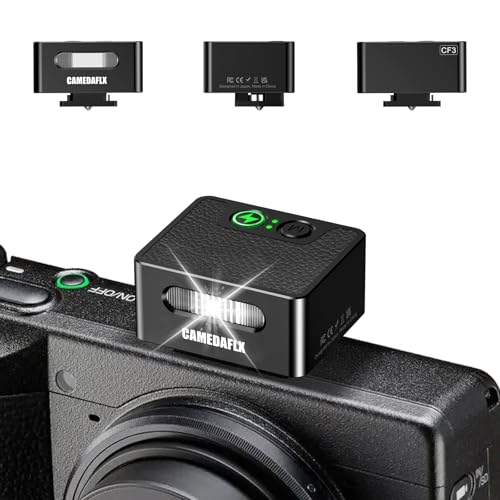
TL;DR: The Camedaflx CF3 is a pocket‑sized, USB‑C rechargeable flash that delivers up to 700 full‑power bursts, weighs about 25 g, and offers a 5 m guide number for street‑level lighting.
The standout spec is its ultra‑compact chassis – just 36 mm × 30 mm × 17 mm and roughly 25 g in weight – paired with a built‑in 190 mAh lithium‑ion cell that can fire up to 700 full‑power flashes before needing a recharge. A 4‑second recycle time at full power means you won’t miss a moment, and the 6200 K ± 400 K color temperature provides daylight‑balanced illumination.
Compared with the other 14 flashes in this budget roundup, the CF3 is markedly lighter than the Neewer Z120 SE (0.3125 pounds) and the Meike FC‑100 (0.7275 pounds), and even lighter than the Godox iM30 (0.1719 pounds). It also packs a higher flash‑per‑charge count than the Neewer’s 500 flashes, though its 190 mAh battery is smaller than the Neewer’s 2000 mAh pack and the Ulanzi SL03’s 300 mAh cell. In terms of power control, the CF3 offers only two manual levels (1/1 and 1/2) versus eight levels on the Neewer and the Powerextra DF‑400, which may matter for users who need finer exposure tweaks.
Reviewers consistently praise the CF3’s “grab‑and‑go” feel – the CNC‑machined aluminum body with a lychee‑patterned PU leather finish feels premium in the hand, and the USB‑C port makes topping up a breeze. Users love the up to 700‑flash count and the 4‑second recycle, but many note the limited power steps, lack of tilt or bounce, and the modest GN 5 m, which can feel short in larger indoor spaces. Compatibility is broad for cameras with a single hot‑shoe contact, yet the unit won’t work with Sony’s ZV‑1F or any body lacking that contact point.
Technically, the flash runs on a 3.7 V battery and accepts a 5 V, 500 mA input for a 1.5‑hour charge. Its guide number of 5 m (ISO 100) and 6200 K daylight balance make it suitable for filling shadows in street scenes or travel portraits. The lack of TTL, HSS, and a swivel head means it’s a strictly manual, direct‑light tool, which aligns with its positioning as a lightweight, on‑camera companion rather than a studio workhorse.
Pros
Cons
Best for: Street and travel photographers using compact cameras who value portability and quick recharge.
Avoid if: You need advanced features or professional‑grade performance such as TTL, high guide numbers, or bounce capabilities.
“Fits in my jeans pocket — I never leave home without it.”
“Perfect match for my Ricoh GR3 — finally a flash that doesn’t ruin the portability.”
Breakdown
Neewer Z120 SE
Pros
Powerextra DF-400
Pros
Based on scoring data and product specs
Personalized picks
Best Overall Pick
Neewer Z120 SE
Best Mid-Range PickBest for: Most users looking for a well-reviewed, reliable mainstream option
Godox TT520II
Best for: Buyers willing to invest in a proven, high-quality option
$48.60+$8.61 vs winner
Skip Camedaflx CF3 if…
You need advanced features or professional-grade performance
We’re naming the Neewer Z120 SE the clear winner of the budget flash showdown. At $29.99 it undercuts most competitors, yet it still packs a 12‑meter guide number at ISO 100 and offers 500 full‑power flashes on a single 2000 mAh charge. Reviewers have given it a solid 4.4 / 5 rating from 14,357 users, and its fastest recycle time of 0.1 seconds means you won’t miss a shot.
The Godox TT520II lands as the runner‑up, ideal if you need extra reach and wireless flexibility for indoor events. Its 33‑meter guide number dwarfs the Neewer’s, and the included RT wireless transmitter lets you trigger the flash from up to 15 meters away. With up to 1,500 flashes per charge and a 0.1‑second minimum recycle time, it’s ready for fast‑paced shoots, all for $48.60.
For those on a tighter budget, the Hersmay CY‑20 shines as the best value at $18.59, delivering basic flash capability at the lowest price point. If you prefer a premium‑class unit, the Godox TT520 II tops the list at $49.99, offering the highest guide number and built‑in wireless features for serious hobbyists.
Pick the Neewer Z120 SE today and get reliable power without breaking the bank.
The Neewer Z120 SE lists a fastest recycle time of 0.1 seconds, matching the Godox TT520II’s minimum of 0.1 seconds but the Z120 SE stays at that speed across its power range, making it the quickest for rapid outdoor shooting.
Please sign in to leave a review
No reviews yet. Be the first to review!
