⚡ Quick Answer
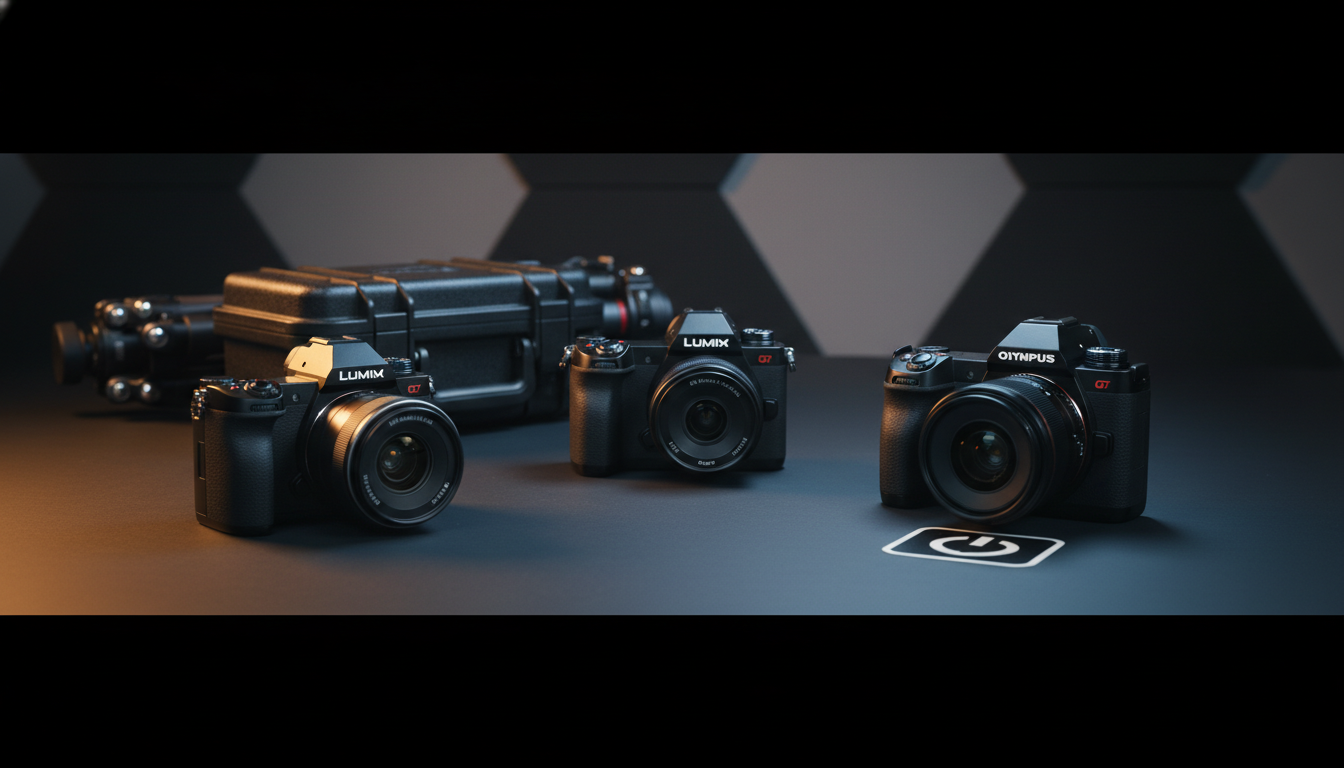
We’ve lined up five Micro Four Thirds mirrorless cameras that sit under $800, and the Panasonic LUMIX G95D immediately catches the eye. Priced at $799.00, it features a 20.3 MP sensor, 5.0‑stop Dual I.S. for handheld steadiness, and a 12‑stop V‑Log L dynamic range. With a 4.6/5 rating from 319 reviewers, it offers the most feature‑rich hybrid photo‑video toolkit in this price slice, positioning it as the premium‑tier pick.
The roundup spans the full price spectrum: the budget tier includes the Panasonic LUMIX G7 at $713.71 (4.6/5 from 1,998 reviews) with a lightning‑fast 0.07‑second AF and 16 MP sensor, and the Panasonic LUMIX G100 at $747.99 (4.4/5 from 173 reviews) offering a lightweight 1.30‑pound body and 10 fps continuous shooting. The Olympus OM‑D E‑M1 Mark III fills the mid‑range slot at $788.98 (4.5/5 from 220 reviews), featuring a 20.4 MP sensor, 580 g weight with battery, and 420‑shot battery life. Premium options round out the list with the G95D and the Panasonic LUMIX GH4 at $799.99 (4.4/5 from 249 reviews), the latter delivering 100 Mbps 4K video and a 12 fps burst rate.
Below we’ll break down each model’s strengths, so you can match the right camera to your shooting style and budget.

Panasonic LUMIX G95D
Its 5.0-stop Dual I.S. gives you rock‑steady shots, a standout feature that justifies the top spot.

Panasonic LUMIX G7
Ideal for budget‑conscious buyers, the G7 offers reliable entry‑level performance and comes in at $713.71—about $85 cheaper than the G95D.

Olympus OM-D E-M1 Mark III
Offers a larger 1720 mAh battery, extending shooting time beyond the G7 and G95D, perfect for longer outings.
Also considered
Score Analysis
Key score advantages vs. runner-up (Panasonic LUMIX G7)
Price Range
Panasonic LUMIX G95D
$799.00
Panasonic LUMIX G7
$664.99
Olympus OM-D E-M1 Mark III
$788.98

Panasonic LUMIX G100
$747.99

Panasonic LUMIX GH4
$799.99
Spec Comparison
TL;DR: The Panasonic LUMIX G95D packs a 20.3 MP sensor, 5‑stop Dual I.S. and 4K video with V‑Log L into a weather‑sealed, 1.64‑pound body for hybrid creators under $800.
The standout feature is the 5.0‑stop Dual Image Stabilization system, which Panasonic rates as equivalent to a 140 mm focal length on a full‑frame sensor. Coupled with a 20.3 MP Live MOS sensor and a 12‑stop V‑Log L dynamic range, the G95D delivers sharp stills at 20.3 MP and flexible 4K video (3840 × 2160) that can be color‑graded extensively.
Compared with the four other cameras in this roundup, the G95D is heavier than the Panasonic LUMIX G7 (0.9 pounds) and the Olympus OM‑D E‑M1 Mark III (1.28 pounds) but lighter than the Panasonic LUMIX GH4 (1.23 pounds). Its 290‑shot CIPA battery life sits below the GH4’s 590 shots and the Olympus’s 420 shots, yet it edges out the Panasonic LUMIX G100’s roughly 270‑shot rating. In megapixels, the G95D matches the Olympus’s 20.4 MP and outperforms the GH4’s 16.05 MP and the G7’s 16 MP, while sharing the same 3.0‑inch OLED touchscreen size as the Olympus and G7.
Everyday users appreciate the free‑angle touchscreen and the weather‑sealed magnesium chassis for travel shooting, noting that the camera feels “compact enough for a backpack but solid enough for the elements.” Professional reviewers highlight the V‑Log L profile and the 12‑stop dynamic range as valuable tools for creators who need grading flexibility. The most common criticism points to the kit lens’s modest f/3.5 maximum aperture, which together with the Micro Four Thirds sensor can limit low‑light performance despite an ISO range that tops out at 25 600.
Pros
Cons
Best for: Hybrid shooters, vloggers, and travel enthusiasts who need a compact, weather‑sealed camera with strong video features and solid image quality.
Avoid if: You prioritize low‑light performance or very shallow depth‑of‑field bokeh, as the sensor size and f/3.5 kit lens may fall short.
TL;DR: The Panasonic LUMIX G7 delivers 4K video, ultra‑fast 0.07‑second autofocus and a solid 16 MP sensor in a lightweight SLR‑style body for under $800.
The standout spec is the 0.07‑second autofocus speed, which lets you lock focus almost instantly, paired with 4K UHD recording at up to 30p and a 16 MP Live MOS sensor. It's 3‑inch vari‑angle touchscreen offers 1,040k‑dot resolution, while the OLED EVF provides 2.36 million dots and 0.7× magnification, giving you clear framing in bright or dim light.
Compared with the other four cameras in this budget roundup, the G7 is one of the lightest options at 0.9 lb (410 g), lighter than the Panasonic G95D (1.64 lb) and the Olympus OM‑D E‑M1 Mark III (1.28 lb). Its 1200 mAh battery capacity exceeds the G100’s 1025 mAh but falls short of the Olympus’s 1720 mAh. Continuous‑shooting speed tops out at 8 fps, which is slower than the G100’s 10 fps and the GH4’s 12 fps, but still adequate for most hobbyist bursts.
Reviewers consistently praise the G7’s hybrid capabilities: professional outlets note the crisp 4K footage and the responsive touchscreen, while everyday users love the flip‑out screen for vlogging and the built‑in Wi‑Fi for quick sharing. Common complaints focus on the camera’s bulkier body, the absence of in‑body image stabilization (it relies on lens‑based OIS), and a battery that delivers roughly 350‑360 CIPA shots—especially limiting during extended 4K shoots. Some users also mention occasional overheating on long video recordings and a menu system that can feel complex for beginners.
Pros
Cons
Best for: Budget-conscious buyers seeking a reliable entry-level option
Avoid if: You have limited desk space or need portability
TL;DR: The Olympus OM‑D E‑M1 Mark III packs a 20.4 MP sensor, 5‑axis IBIS up to 7.5 stops, and a high‑resolution EVF into a weather‑sealed body for under $800.
The standout feature is Olympus’s 5‑axis in‑body image stabilization that delivers up to 7.5 stops of shake reduction, a rare amount for a Micro Four Thirds camera. Paired with a 20.4 MP Live MOS sensor and a 1720 mAh battery that yields about 420 CIPA shots, the camera balances high‑resolution capability with solid endurance.
At 580 g (1.28 lb), the E‑M1 III is heavier than the Panasonic G7’s 0.9 lb body but lighter than the G95D’s 1.64 lb and the G100’s roughly 1.30 lb. Its 5‑axis IBIS also outperforms the G95D’s 5‑stop Dual I.S., while the other three Panasonic models don’t list stabilization at all. All five cameras share a 3.0‑inch screen, so size isn’t a differentiator here.
Reviewers consistently praise the rugged magnesium‑alloy chassis and the “professional‑grade” stabilization that lets users capture sharp handheld shots even in demanding conditions. Users also note the camera’s menu system can feel complex for newcomers, and the 580 g weight becomes noticeable on long hikes. Professional opinions highlight the ultra‑fast 60 fps burst with a 101‑frame RAW buffer, making it a solid choice for wildlife or sports photography.
Beyond stabilization, the camera offers a 2.36 million‑dot EVF with 120 fps refresh and a 6 ms lag, delivering near‑instant feedback. The 121‑point contrast‑detect AF system includes Starry Sky AF for astrophotography, and the high‑resolution mode can produce 50 MP handheld or 80 MP tripod images from the 20.4 MP sensor. A vari‑angle touchscreen and illuminated buttons round out the ergonomics.
Pros
Cons
Best for: Outdoor enthusiasts, hikers, wildlife shooters, and astrophotographers who need a weather‑sealed, highly stabilized Micro Four Thirds camera.
Avoid if: You need top‑tier low‑light performance, a larger full‑frame sensor, or a simpler interface for studio work.
“held off plenty of rain”
TL;DR: The Panasonic LUMIX G100 packs a 20.3 MP sensor, 4K video at 100 Mbps and directional OZO audio into a 590 g, fully articulating mirrorless body ideal for beginner vloggers.
The standout spec is its 20.3 MP Micro Four Thirds sensor paired with 4K video that records at 100 Mbps, delivering crisp footage for social‑media creators. It also includes Panasonic’s directional OZO Audio with a 3.5 mm mic jack, so you’ll capture clear sound without extra gear.
Compared with the other four cameras in this budget roundup, the G100 sits in the middle of the weight range—heavier than the G7’s 0.9 lb body but lighter than the G95D’s 1.64 lb kit. Its 1025 mAh (7.4 Wh) battery gives about 270 CIPA shots, which is lower than the Olympus OM‑D E‑M1 Mark III’s 420‑shot rating and the G7’s larger 1200 mAh pack. While the G7 offers a higher burst speed of 30 fps for 4K photos, the G100 provides a solid 10 fps for stills. The GH4 shares a 3‑in screen but has an older 16.05 MP sensor, and the G95D adds in‑body stabilization that the G100 lacks.
Professional reviewers praise the camera’s portability and the flip‑out 3‑in touchscreen (1,840k‑dot LCD) for easy selfie framing, plus the built‑in OZO Audio for vlog‑ready sound. Everyday users echo the sentiment, noting the fun of shooting 4K at 24/30p but repeatedly calling out the short battery life and the absence of in‑body image stabilization. The contrast‑detect AF, while offering many modes, can feel slower on fast‑moving subjects.
Additional technical notes: the G100 features 5‑axis Hybrid O.I.S. that works with the kit lens, a 1.46× EVF with 3,680k‑dot resolution, USB‑type 2.0 charging, and an ISO range of 200‑25,600 (expandable to 100). These specs make it a capable all‑rounder for creators who value compactness and video quality over rugged performance.
Pros
Cons
Best for: Entry‑level buyers or those on a tight budget
Avoid if: You need powerful performance or professional‑grade features
TL;DR: The Panasonic LUMIX GH4 offers 16 MP stills, 4K video at 100 Mbps, and a rugged weather‑sealed body for $799.99, making it a solid hybrid camera for creators willing to spend a bit more.
The GH4’s standout feature is its 16.05 MP Digital Live MOS sensor paired with a 100 Mbps 4K video bitrate, delivering sharp footage that professional reviewers call “pro‑level UHD.” Its 2.36‑million‑dot OLED EVF offers 1.34× magnification, while the 3‑inch OLED swivel touchscreen lets you frame from odd angles. Continuous shooting reaches 12 fps, and the camera can capture up to 590 CIPA‑rated shots on a single charge.
Compared with the other four contenders, the GH4 sits in the middle of the weight range—lighter than the Panasonic G95D (1.64 lb) and Olympus E‑M1 Mark III (1.28 lb) but heavier than the Panasonic G7 (0.9 lb). Its price of $799.99 places it at the higher end of the budget segment, while the G7 and G100 sit below that mark. Unlike the G95D, which lists a 5.0‑stop Dual I.S., the GH4 does not include in‑body image stabilization, so you’ll rely on lens‑based options. However, the GH4’s magnesium‑alloy, weather‑sealed chassis gives it a durability edge over the G7’s lighter plastic build.
Everyday users rave about the GH4’s 4K video quality and the intuitive DSLR‑style control layout, noting that the dedicated dials make exposure tweaks feel natural. Professional reviewers highlight the high‑resolution EVF and the Venus‑engine’s “dramatically better sensitivity and gradation.” On the flip side, both consumer feedback and expert notes point out that the contrast‑detect AF can feel slower in low‑light scenes, and the 590‑shot battery life may require a spare for long shoots.
Additional technical context includes 49 contrast‑detect autofocus points, built‑in Wi‑Fi and NFC for remote control, and a sturdy magnesium alloy body that tolerates humidity from 10‑80 % and temperatures between 0‑40 °C. The lockable mode dial and time‑lapse mode add flexibility for video creators.
Pros
Cons
Best for: Hybrid video/photo professionals, indie filmmakers, vloggers, and content creators who need reliable 4K video and durable build.
Avoid if: You need low‑light portrait performance, ultra‑fast phase‑detect AF for sports, or a tighter budget.
Breakdown
Panasonic LUMIX G95D
Pros
Panasonic LUMIX G7
Pros
Olympus OM-D E-M1 Mark III
Pros
Panasonic LUMIX G100
Pros
Cons
Based on scoring data and product specs
Personalized picks
Best Overall Pick
Panasonic LUMIX G95D
Best OverallBest for: Audiophiles and enthusiasts seeking premium sound quality and advanced features
Panasonic LUMIX G7
Best for: Budget-conscious buyers seeking a reliable entry-level option
$664.99-$134.01 vs winner
Skip Panasonic LUMIX GH4 if…
You're on a tight budget or only need basic functionality
Panasonic’s LUMIX G95D takes the top spot with its 20.3 MP Live MOS sensor, a 5.0‑stop Dual I.S. system and a weather‑sealed magnesium‑alloy body, delivering low‑light performance from an ISO range of 200‑25600. It records 4K video at 24/30 p, offers a 3.0‑inch free‑angle OLED touchscreen and scores a 4.6‑star rating from 319 reviewers, all for $799.00.
The runner‑up, the LUMIX G7, shines when you need 4K video on a tighter budget. Its 16 MP sensor and 3840 × 2160 (4K UHD) capture keep footage crisp, while the vari‑angle touchscreen makes self‑recording easy. With a battery life of roughly 350‑360 CIPA shots and a lightweight 0.9‑pound body, it’s an attractive option at $713.71.
For those looking at other price points, the best budget alternative remains the LUMIX G7 for its low price and 4K video at 24/30 p; the Olympus OM‑D E‑M1 Mark III offers a higher‑resolution sensor and sturdy build as the mid‑range pick at $788.98; and the LUMIX GH4 provides a premium video‑centric experience for $799.99.
Pick the LUMIX G95D now and get a weather‑ready, high‑performance Micro Four‑Thirds camera that fits under $800.
The Panasonic LUMIX G95D leads with a 20.3‑MP Live MOS sensor, 5‑stop Dual I.S., 4K video at 24/30 p, V‑Log L, a weather‑sealed magnesium alloy body, and a free‑angle OLED touchscreen, all while staying below $800.
No reviews yet — be the first to share your experience.
Please sign in to leave a review