Rankings
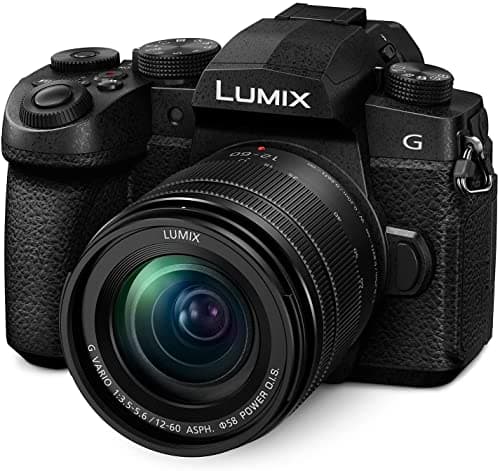
The Panasonic LUMIX G95D is a mid-priced Micro Four Thirds mirrorless camera featuring a 20.3 MP sensor, 4K video with V-Log L and robust Dual I.S., housed in a weather-sealed magnesium-alloy body. While its sensor size and kit lens aperture limit low-light performance, the camera excels as a versatile hybrid shooter for creators who need strong video tools and durability. Ideal for vloggers and travelers seeking a weather-sealed, feature-rich system.
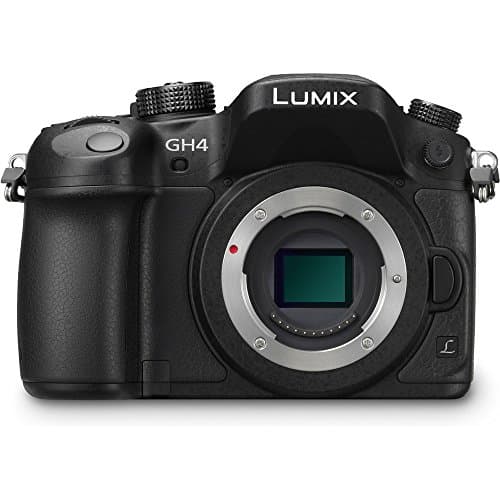
The Panasonic LUMIX GH4 offers a 16.05 MP Micro Four Thirds sensor, 4K 100 Mbps video and a weather-sealed magnesium body. Its contrast-detect AF and modest battery endurance can limit fast-action and long shoots. Best for indie filmmakers and vloggers seeking solid video specs in a compact package.
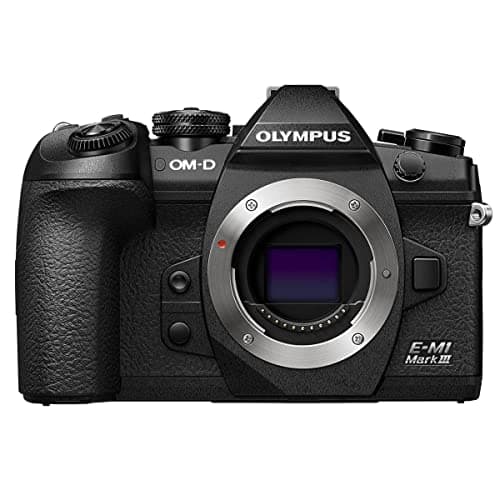
The E-M1 Mark III is a rugged Micro Four Thirds flagship offering industry-leading stabilization, ultra-fast 60 fps burst, and high-resolution EVF. Its drawbacks are a relatively heavy body, limited low-light capability, and aging firmware. It suits outdoor and action photographers who need robust build quality and speed over the absolute best sensor performance.
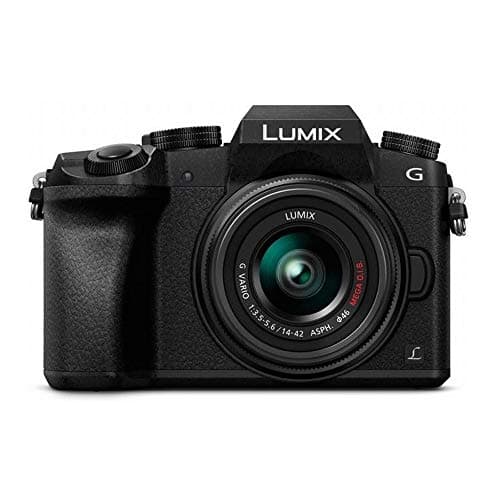
The Panasonic LUMIX G7 is a 2015 Micro Four Thirds mirrorless camera offering 16 MP resolution, 4K video and a fast 0.07-second autofocus in an ergonomic DSLR-style body. Its lack of in-body stabilization, heavier build and limited weather protection make it less ideal for demanding outdoor work. It suits hybrid shooters and vloggers who value 4K capability and robust controls at an affordable price.
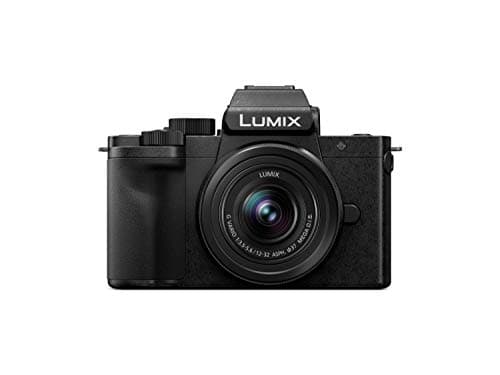
The Panasonic LUMIX G100 is a compact Micro Four Thirds mirrorless camera aimed at vloggers, offering a 20.3 MP sensor, 4K video and a fully articulating touchscreen. Its ultra-light design is offset by short battery life, no in-body stabilization and slower contrast-detect AF. It is best suited for beginner content creators who prioritize portability and built-in audio features.
| Attribute | | | | | |
|---|---|---|---|---|---|
20.3 MP | 16 MP | 20.4 MPbest | 20.3 MP | 16.05 MP | |
25,600best | 25,600best | 25,600best | 25,600best | 25,600best | |
290 shots | 350 shots | 420 shots | 270 shots | 590 shotsbest | |
30 fps | 8 fps | 60 fpsbest | 10 fps | 12 fps | |
| ↓ lower better | 482 g | 410 gbest | 580 g | 590 g | 560 g |
— | 1,200 mAh | 1,720 mAhbest | 1,025 mAh | — | |
3 inbest | 3 inbest | 3 inbest | 3 inbest | 3 inbest | |
1.04 MP | 1.04 MP | 1 MP | 1.84 MPbest | 1.04 MP |
Click an attribute name to sort · Green = best, red = worst (relative to this comparison)
| Attribute | | | | | |
|---|---|---|---|---|---|
Image Sensor(2) | |||||
Megapixels (MP) | 20.3 MP | 16 MP | 20.4 MP | 20.3 MP | 16.05 MP |
In‑Body Image Stabilization | true | false | true | false | — |
Battery & Power(2) | |||||
Battery Capacity (mAh) | — | 1200 mAh | 1720 mAh | 1025 mAh | — |
Battery Life (still images) (shots) | 290 shots | 350 shots | 420 shots | 270 shots | 590 shots |
Video(1) | |||||
Video Frame Rates | 24/30p, up to 120p | 24/25/30p | — | 24/30p, 60p | — |
Performance(1) | |||||
Continuous Shooting Speed (fps) | 30 fps | 8 fps | 60 fps | 10 fps | 12 fps |
Build & Design(3) | |||||
Body Weight (g) | 482 g | 410 g | 580 g | 590 g | 560 g |
Dimensions (W×H×D) (mm) | 130.4 x 93.5 x 77.4 mm mm | 124.9 x 86 x 77 mm mm | 91 x 134 x 69 mm mm | 54.1 x 115.5 x 82.6 mm mm | 132.9×93.4×83.9 mm mm |
Weather Sealing | true | false | true | false | true |
Display(3) | |||||
Screen Size (in) | 3.0 in | 3 in | 3.0 in | 3 in | 3 in |
Screen Resolution (MP) | 1.04 MP | 1.04 MP | 1.0 MP | 1.84 MP | 1.04 MP |
EVF Magnification (x) | 0.74 x | 0.7 x | 1.30 x | 1.46 x | 1.34 x |
Connectivity(2) | |||||
Wi‑Fi Connectivity | true | true | true | false | true |
Bluetooth Version | 4.2 | — | true | — | — |
Products in the top-left offer the best value (high score, low price).
Professional reviewers position the G95D as a strong hybrid shooter, emphasizing its 20.3 MP sensor, 4K video with V-Log L, robust Dual I.S., and weather-sealed build. They view it as a mid-range option that delivers video-centric features without sacrificing still-image quality, making it suitable for creators who need both high-quality footage and reliable stills performance.
Everyday users highlight the camera's portability, intuitive free-angle touchscreen, and seamless wireless sharing as major positives. While specific complaints are scarce, users note the modest kit lens aperture and occasional confusion over viewfinder availability, but overall sentiment is favorable toward its versatility for travel and vlogging.
“held off plenty of rain”
“"big misstep" for lacking advanced photo capabilities”
“"Lightweight and easy for one-handed vlogging/selfies"”
G7 is good for budget shooters who don't need the newer sensor; G100 offers better resolution and faster shooting.
Professional reviewers commend the G7 for its 4K video, high-resolution EVF and ergonomic controls, positioning it as a capable hybrid for creators. However, they note the modest sensor upgrade, lack of weather-sealing and the absence of in-body stabilization as drawbacks that keep it from being a premium offering.
Everyday users appreciate the affordable 4K capability, the flexible flip-out screen and the sharp kit lens, finding the camera easy for sharing images via Wi-Fi. Recurring frustrations center on short battery life during video, occasional autofocus hunting in dim light, overheating in long recordings, and a menu system that can overwhelm newcomers.
Professional reviewers commend the E-M1 Mark III for its industry-leading stabilization, blistering 60 fps burst, and high-resolution EVF, positioning it as a top-tier Micro Four Thirds flagship for outdoor and action photography. They also note that while the build quality and weather sealing are exemplary, the sensor technology and firmware are aging, and the menu complexity may deter newcomers.
Everyday users love the camera's ruggedness, battery endurance, and especially the IBIS that lets them shoot sharp handheld images in challenging weather. Common praise centers on the compact travel-friendly kit and high-res modes, while recurring complaints focus on the weight during extended hikes, a steep learning curve with menus, and less impressive low-light performance compared to larger-sensor rivals.
Professional reviewers commend the G100 for its ultra-light weight, vlog-centric screen and audio features, and solid 4K video, but they criticize the lack of in-body stabilization, slower contrast-detect AF, and limited photo performance, labeling it a misstep for serious photographers.
Everyday users appreciate the camera's portability, flip-out screen, and decent 4K video, finding it fun for beginners and social-media creators, while repeatedly noting short battery life, a plasticky feel, and sub-par low-light and autofocus performance as common pain points.
Professional reviewers and editors regard the GH4 as a breakthrough hybrid camera, emphasizing its pro-level 4K video bitrate, high-resolution EVF, and robust magnesium alloy construction. They commend the Venus engine's image quality and the ergonomic DSLR-style controls, while noting the slower contrast-detect AF and modest battery life as the main professional concerns.
Everyday users love the GH4's 4K video capabilities, lightweight weather-sealed body, and intuitive physical controls, often describing it as a game-changer for indie video work. Common frustrations revolve around limited battery endurance, noisy high-ISO images, and a steep learning curve due to a complex menu system.
