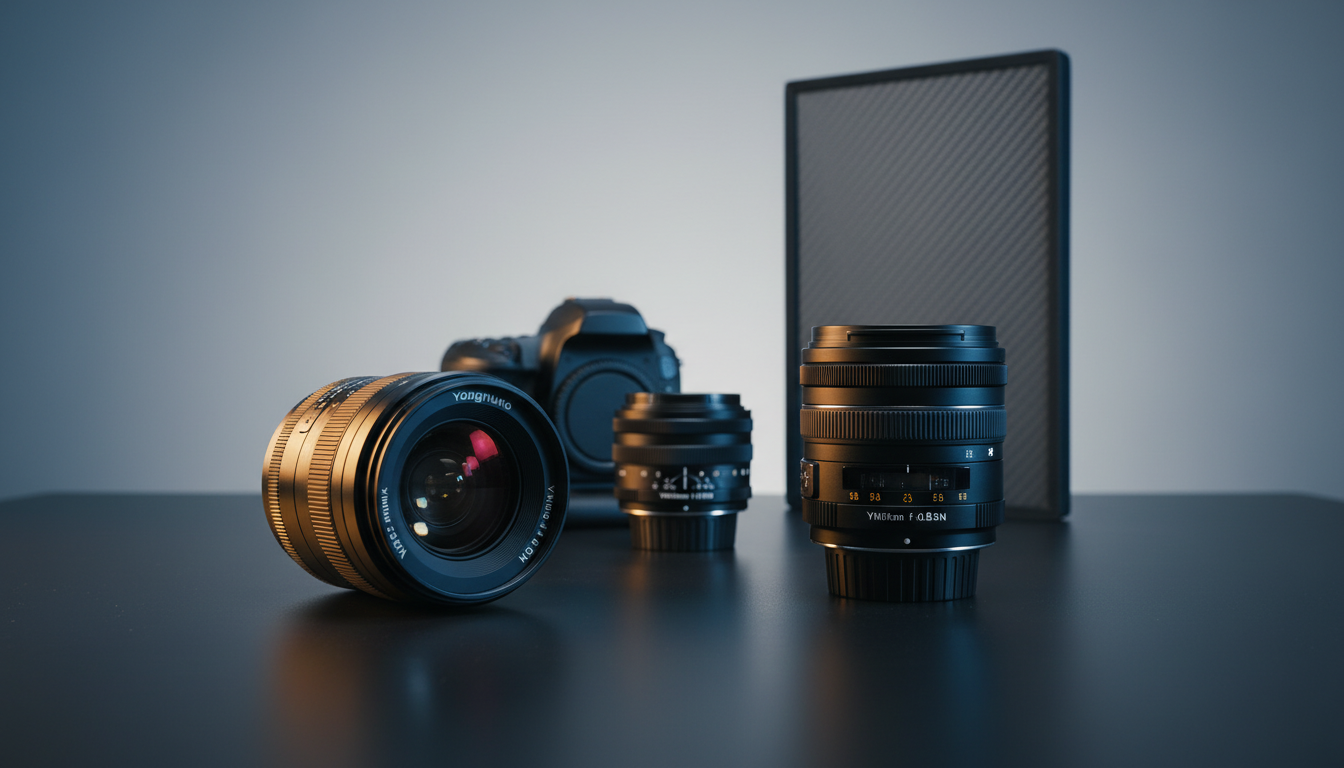
Choosing a Nikon F‑mount lens on a tight budget can feel overwhelming, so editors narrowed the list to 8 options under $300. Prices stretch from a $58.49 manual super‑telephoto to a $289 ultra‑wide zoom, and the lenses fall into three price tiers: budget, mid‑range and premium, as defined by the price map.
For portrait shooters, a fast 85 mm prime with an f/1.8 maximum aperture and a 4.3/5 rating at $179.99 offers flattering compression without breaking the bank. Street and travel photographers will appreciate a lightweight 50 mm f/1.8 at $102.00, boasting a 4.6/5 rating and a 7‑blade diaphragm for smooth bokeh. Those needing reach can look to a 55‑200 mm telephoto zoom priced at $149.00, featuring vibration reduction and the same 4.6/5 rating for steady handheld shots.
The article then breaks down each tier, compares specs and user feedback, and points out which lens best serves each shooting scenario. Any quirks that might affect the decision are also flagged.
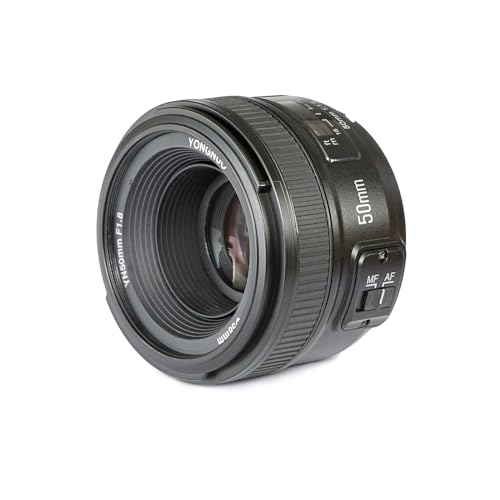
Yongnuo YN50mm f.8N
A 46° angle of view delivers a versatile field of view for everyday subjects, making it a solid value pick.

Meike 85mm Portrait Lens
Ideal for portrait enthusiasts who want tighter framing, it costs about $78 more than the $102 best‑budget pick.

Yongnuo YN35mm f
Its 63° angle of view and 52.5 mm crop‑sensor equivalent give a wider perspective, suiting tight indoor spaces where the 50 mm and 85 mm fall short.
Also considered
Score Analysis
Key score advantages vs. runner-up (Meike 85mm Portrait)
Price Range
Yongnuo YN50mm f.8N
$102.00
Meike 85mm Portrait Lens
$179.99
Yongnuo YN35mm f
$106.00

Nikon 55-200mm Zoom Lens
$149.00

Nikon 18-55mm VR Lens
$246.95

Yongnuo YN50mm f.8
$102.00

Tokina ATX-i 16mm
$289.00

Yanuoda 420-800mm
$58.49
Spec Comparison
TL;DR: The Yongnuo YN50mm f/1.8N delivers a bright f/1.8 aperture, 46° view and autofocus in a compact 0.45 lb package for $102, making it a solid budget prime for Nikon shooters.
This lens’s standout spec is its f/1.8 maximum aperture paired with a 46° angle of view and a minimum focus distance of 450 mm, letting you capture low‑light scenes and shallow depth‑of‑field portraits without hauling heavy gear. At 0.45 pounds (203 g) it stays light enough for all‑day street shooting, and the 58 mm filter thread lets you add polarizers or ND filters easily.
Compared with its peers, the YN50mm shares the same 46° view and 58 mm filter size as the Yongnuo YN50mm f.8, but its barrel is longer at 86 mm versus the YN50mm f.8’s 60 mm. It offers a longer minimum focus distance than the Yongnuo YN35mm f’s 250 mm, though the YN35mm provides a wider 63° view. The Nikon 55‑200mm zoom is noticeably larger and heavier at 335 g, while the Tokina ATX‑i 16mm is ultra‑light at 60 g, making the YN50mm a middle‑ground in size and weight. Unlike the manual‑focus Yanuoda 420‑800mm, the YN50mm includes a built‑in micro‑focus motor for reliable autofocus, and it avoids the vibration‑reduction system found on the Nikon 18‑55mm VR lens.
User sentiment highlights the fast f/1.8 aperture as a major win for portrait and street work, and many everyday photographers praise the lens’s lightweight feel and affordable price. Professional reviewers note the classic double‑Gaussian (Planar) optical formula delivers consistent sharpness across the frame, and the multi‑coated elements keep flare under control in back‑lit situations. The only recurring complaint is the lack of an included lens hood, which leaves the front element exposed.
Pros
Cons
Best for: Budget‑conscious buyers seeking a reliable entry‑level option
Avoid if: You need built‑in image stabilization or use a Nikon body without a focus motor
TL;DR: At $179.99, the Meike 85 mm f/1.8 delivers fast aperture and quiet STM autofocus in a compact 77 mm‑long, 369–386 g body, making it a solid budget portrait option for Nikon F‑mount users.
The standout spec is the f/1.8 maximum aperture on an 85 mm focal length, paired with a rounded diaphragm of 9 (or 11 on the Mark II) blades. This combination lets you isolate subjects with creamy bokeh while keeping the lens relatively lightweight at 369–386 g and a modest height of 80 mm.
Compared with the other seven lenses in this roundup, the Meike is heavier than the Tokina 16 mm (about 0.13 lb) but lighter than the Nikon 55‑200 mm zoom (around 0.74 lb). Its 85 mm focal length sits between the longer reach of the Nikon 55‑200 mm and the shorter primes like the Yongnuo 35 mm and 50 mm lenses, giving you a true portrait‑type field of view without the bulk of a zoom.
Users consistently praise the lens for sharp images at everyday apertures and the silent stepping‑motor focus, which is especially handy for video work. Professional reviewers note the pleasing bokeh rivals higher‑priced portrait optics. The trade‑off is a slower autofocus system that struggles with fast‑moving subjects, and the by‑wire manual focus lacks the tactile feel of mechanical rings. Additionally, the lens doesn't include a built‑in correction profile for chromatic aberration or distortion.
It also features a multi‑layer nano coating to curb flare, electronic aperture control that records EXIF data, and a Type‑C or Micro‑USB port for firmware upgrades. These details round out a lens that targets image quality and quiet operation over high‑speed performance.
Pros
Cons
Best for: Budget‑conscious portrait shooters, videographers who need silent focus, and APS‑C users seeking a 127.5 mm equivalent field of view.
Avoid if: You require fast autofocus for action photography or rely on built‑in correction profiles for chromatic aberration.
TL;DR: The Yongnuo YN35mm f/2N is a fast, lightweight 35 mm prime for Nikon F‑mount cameras, offering a bright f/2 aperture, 63° view, and solid reviews at a budget price.
The standout spec is its f/2.0 maximum aperture on a 35 mm focal length, giving you a bright opening for low‑light shooting and shallow depth‑of‑field. It also provides a 63° angle of view and weighs just 0.70 lb (155 g), making it easy to carry on a daily‑run camera bag.
Compared with the other lenses in this roundup, the YN35mm is heavier than the Yongnuo YN50mm f.8N (0.45 lb) but lighter than the Nikon 55‑200mm Zoom Lens (≈0.74 lb). Its 63° view is noticeably wider than the 46° view of both Yongnuo 50 mm options, and its minimum focus distance of 250 mm beats the 450 mm distance of those same 50 mm lenses. In terms of size, the barrel length is 59 mm, shorter than the 86 mm length of the Yongnuo YN50mm f.8N, giving it a more compact footprint than several peers.
Users praise the lens for its affordability and the fast f/2 aperture, noting that it delivers good center sharpness and a well‑controlled distortion profile for the price. Professional reviewers highlight the solid build quality and the bright aperture, while also pointing out that edge‑to‑edge sharpness softens at f/2, and you may notice chromatic aberration and vignetting without correction. A few owners have mentioned occasional autofocus dropouts that may require remounting the lens.
Technically, the lens features a 7‑element, 5‑group optical design and seven rounded diaphragm blades, paired with a built‑in micro focus motor for both autofocus and manual focus. The multi‑coated glass elements help reduce flare, and the 58 mm filter thread lets you attach common screw‑in filters.
Pros
Cons
Best for: Budget‑conscious photographers moving to full‑frame Nikon bodies, street shooters, and anyone needing a fast, compact prime for everyday use.
Avoid if: You need edge‑to‑edge sharpness for professional commercial work or true macro capability, or you require rock‑solid autofocus reliability.
“for the price, the Yongnuo is certainly no slouch.”
“Overall, the image quality of the Yongnuo 35mm f/2.0 is impressive - given it's only €100... If you like the 35mm look, go ahead! It's definitely worth its money!”
TL;DR: The Nikon 55‑200mm f/4‑5.6G ED VR II delivers a lightweight, retractable telephoto zoom with 4‑stop VR and a solid 4.6‑star rating for just $149, making it a strong budget option.
This lens packs a 4‑stop Vibration Reduction system and a Silent Wave Motor into a compact, retractable barrel that measures 68.6 mm in diameter, 73 mm in height and 100 mm in length. At a listed weight of 0.74 lb (335 g) it stays easy to carry, and the 1,100 mm minimum focus distance lets you get reasonably close to subjects without sacrificing the telephoto reach of 55‑200 mm.
Compared with the other seven lenses in this roundup, the Nikon sits on the heavier side—its 0.74 lb surpasses the ultra‑light Tokina 16 mm (about 0.13 lb) and the compact Yongnuo primes (around 0.45–0.70 lb). It’s also longer than the Meike 85 mm (77 mm length) but shares a similar width to that lens (around 80 mm). The overall dimensions exceed those of the tiny Yongnuo 35 mm (59 mm barrel length) yet remain far more portable than a full‑frame zoom.
Users consistently praise the lens’s value, noting the “wonderful” 4‑stop VR that lets them shoot handheld in lower light, and the quiet autofocus that’s handy for video. Professional reviewers echo the sharpness across most of the frame, especially when stopped down to f/8‑f/11. Common criticisms focus on softness that appears at the 200 mm end, noticeable chromatic aberration at both extremes of the zoom, and an autofocus speed that can lag behind faster‑moving subjects.
Pros
Cons
Best for: Most users looking for a well‑reviewed, reliable mainstream option
Avoid if: You're shopping on a tight budget — it's priced at $149.00
TL;DR: The Nikon AF‑P DX 18‑55mm f/3.5‑5.6G VR is a compact, 205 g kit zoom offering VR up to 4‑5 stops, silent AF‑P motor, and a 250 mm minimum focus distance.
This lens’s standout feature is its Vibration Reduction system, which Nikon claims can give you up to 4‑5 stops of handheld stability. At just 205 g (0.45 lb) and a short 62.5 mm length, it’s one of the lightest options in the lineup, and the 250 mm minimum focus distance lets you get close to subjects without sacrificing sharpness.
Compared with the other seven lenses, the Nikon sits in the middle of the weight range: it’s heavier than the ultra‑light Tokina ATX‑i 16mm (0.13 lb) but lighter than the Nikon 55‑200mm zoom (0.74 lb) and Yongnuo YN35mm (0.70 lb). Its 55 mm filter thread is smaller than Tokina’s 77 mm and Yongnuo’s 58 mm, meaning accessories are often cheaper. The 62.5 mm barrel is shorter than Tokina’s 84 mm and far shorter than Yongnuo’s 170 mm, making it easier to stash in a travel bag. In weight alone it matches the Yongnuo 50mm f/8 (0.45 lb), so you won’t notice a bulk difference when swapping lenses.
Everyday users praise how feather‑light the lens feels and how the silent AF‑P stepping motor makes video focusing smooth—ideal for vloggers on the go. Professional reviewers note that the central sharpness is solid, but they also point out that corners can get soft when shooting wide open, a common complaint for kit zooms. The plastic construction gets labeled as “basic,” which may concern photographers looking for a rugged build.
Beyond the VR and motor, the lens offers a 3.1× zoom ratio (18‑55 mm) with a maximum aperture of f/3.5 at the wide end and a maximum magnification of 0.38×, useful for close‑up shots of flowers or small objects. The rotary zoom ring provides a graduated scale for quick focal length changes, and the distance‑information output helps with full‑aperture metering on compatible Nikon bodies.
Pros
Cons
Best for: Beginners, travelers, and vloggers who need a lightweight, portable zoom with effective image stabilization on Nikon DX/APS‑C DSLRs.
Avoid if: You require professional‑grade edge sharpness, strong low‑light capability, or a rugged, metal‑body construction.
TL;DR: The Yongnuo YN50mm f/1.8 delivers a bright f/1.8 aperture, lightweight 203 g build, and solid 0.45 m minimum focus distance for just $102, making it a strong budget normal‑prime for Nikon F‑mount shooters.
This lens’s standout spec is its f/1.8 maximum aperture, which lets you shoot in low light and achieve shallow depth of field without paying a premium. At only 203 g, it’s one of the lightest normal primes in the lineup, and the 0.45 m minimum focus distance lets you get reasonably close to subjects for casual macro work.
Compared with the other seven lenses in the roundup, the YN50mm sits near the middle of the weight spectrum: it matches the weight of its sibling YN50mm f.8N, is lighter than the Yongnuo YN35mm f (0.701 lb) and the Nikon 55‑200mm zoom (0.739 lb), but is heavier than the Tokina 16mm (0.132 lb). Its 58 mm filter thread is common among the primes here, while its 46° angle of view is narrower than the wide‑angle YN35mm (63°) and much tighter than the super‑telephoto Yanuoda 420‑800mm. The focal length of 50 mm puts it squarely in the “normal” range, whereas the other options span from ultra‑wide to telephoto.
Users consistently praise the lens’s portability and the bright f/1.8 aperture for indoor and portrait shooting. Reviewers note the solid metal mount and reliable DC motor AF, and they appreciate the multi‑coated elements that keep flare under control. Most common complaints involve the occasional missing lens hood and the fact that it’s a bit heavier than some ultra‑light travel primes, which can matter on long handheld sessions.
Technically, the YN50mm uses a double‑Gaussian optical formula with six elements in five groups and seven diaphragm blades, delivering decent contrast and colour fidelity. The built‑in DC autofocus motor quickly focuses on modern Nikon bodies, and the lens includes face/eye recognition support for smarter AF. There’s no optical image stabilization, so you’ll rely on the wide aperture and steady hands for low‑light handheld work.
Pros
Cons
Best for: Entry-level buyers or those on a tight budget
Avoid if: You want the best value‑per‑dollar in its price range
TL;DR: The Tokina ATX‑i 11‑16mm f/2.8 delivers a constant ultra‑wide aperture in a rugged metal body, but its edge coma, modest sharpness and $289 price make it a niche choice for Nikon DX shooters.
This lens’s standout spec is its constant f/2.8 aperture across an 11‑16mm zoom range, paired with a relatively short minimum focusing distance of 300 mm. The 77 mm filter thread lets you attach standard screw‑in filters, and the whole assembly weighs just 0.1322773572 pounds (about 60 g), giving a solid yet portable feel.
Compared with the seven other lenses in this roundup, the Tokina sits on the pricier side and is heavier than the Yongnuo 50mm f.8 (0.45 pounds) but lighter than the Nikon 55‑200mm zoom (0.7385 pounds). Its 84 mm length stays fixed thanks to internal focusing, making it shorter than the Nikon 55‑200mm’s 100 mm barrel while longer than the Yongnuo 35mm’s 59 mm barrel. The Nikon 18‑55mm VR lens is lighter and more compact, but it offers a variable aperture and image stabilization that the Tokina lacks.
Users consistently praise the lens’s solid metal construction and the constant f/2.8 aperture, which professionals note provides reliable low‑light performance throughout the zoom. However, many reviewers point out pronounced edge coma and distortion, especially when shooting stars, and describe the overall resolution as under‑whelming for a premium ultra‑wide lens. The lack of built‑in image stabilization also shows up in handheld low‑light scenarios.
Additional technical details include a 9‑blade diaphragm for smoother bokeh, screw‑drive autofocus that relies on the camera body, and both distance and depth‑of‑field scales etched on the barrel for manual focusing confidence. The lens doesn't feature image stabilization, so a tripod's advisable for long exposures.
Pros
Cons
Best for: Enthusiasts and beginners using Nikon APS‑C/DX DSLRs who need a rugged ultra‑wide zoom for landscapes, interiors and creative perspectives.
Avoid if: You're a astrophotographer, need the lightest possible kit, or require built‑in stabilization; the lens is priced at $289.00.
“disappointing with poor coma distortion, low resolution, and lackluster images, preferring the Sigma 18-35mm f/1.8 for better results despite narrower angle”
TL;DR: The Yanuoda 420‑800mm manual‑focus super‑telephoto lens delivers extreme reach for under $60, but its f/8.3‑f/16 aperture and lack of stabilization make it a niche, tripod‑dependent option.
This lens packs a 420‑800mm focal range into a 2.6 × 2.6 × 9.4‑inch metal barrel, offering an APS‑C equivalent of roughly 672‑1280mm. The maximum aperture slides from f/8.3 at the short end to f/16 at the long end, and the optical design uses 4 elements in 2 groups with super HD multi‑coated glass. Manual aperture control's the only electronic link to the camera, and focus is entirely manual.
Compared with the seven other lenses in this roundup, the Yanuoda provides the longest reach—none of the primes or the Nikon 55‑200mm zoom come close to 800mm. Its all‑metal build feels heavier than the lightweight Yongnuo 50mm prime (about 0.45 lb) and the Nikon 55‑200mm (around 0.74 lb). While many of the peers include autofocus or image stabilization, this model relies on a 1/4‑inch tripod screw and manual focus, positioning it as the most budget‑focused, manual‑only telephoto option.
Everyday users praise the surprisingly solid construction and the smooth sliding zoom lock that holds the barrel steady during long exposures. Professional reviewers highlight the decent sharpness you can achieve at 420mm when you take the time to focus carefully. The common complaints revolve around the very slow f/8.3‑f/16 aperture, which forces you into bright daylight or a sturdy tripod, and the manual‑focus system that can feel unforgiving beyond the short end of the zoom.
Additional technical details include a T‑mount that ships with adapter rings for Canon EF/EF‑S, Nikon F, and Sony E mounts, a 12‑month warranty, and a set of accessories such as a lens pouch, protective caps, and a cleaning cloth. The sliding barrel with lock position lets you control zoom speed and lock the focal length, while the 1/4‑inch tripod mount's essential given the lens’s heavy, all‑metal construction.
Pros
Cons
Best for: Entry-level buyers or those on a tight budget who need extreme telephoto reach and already own a sturdy tripod.
Avoid if: You rely on autofocus, need image stabilization, or frequently shoot in low‑light or fast‑action situations.
Breakdown
Yongnuo YN50mm f.8N
Pros
Meike 85mm Portrait Lens
Pros
Yongnuo YN35mm f
Pros
Nikon 55-200mm Zoom Lens
Pros
Cons
Based on scoring data and product specs
Personalized picks
Best Overall Pick
Yongnuo YN50mm f.8N
Best Budget PickBest for: Budget-conscious buyers seeking a reliable entry-level option
Meike 85mm Portrait Lens
Best for: Audiophiles and enthusiasts seeking premium sound quality and advanced features
$179.99+$77.99 vs winner
Skip Yanuoda 420-800mm if…
Reliability and user satisfaction are your top concerns
The Yongnuo YN50mm f.8N takes the top spot as the best budget Nikon F‑mount lens. It delivers a bright f/1.8 maximum aperture on a compact 50 mm focal length, weighs just 0.45 pounds, and carries a solid 4.6‑out‑of‑5 rating from 2,127 reviews—all for $102.00.
The Meike 85mm Portrait Lens lands as the runner‑up, ideal if you need a dedicated portrait lens with a flattering 85 mm focal length and fast f/1.8 aperture. It sports a 9‑blade rounded diaphragm for smooth bokeh, holds a 4.3‑out‑of‑5 rating from 289 reviewers, and is priced at $179.99.
If you’re after a true bargain, the Yanuoda 420‑800mm at $58.49 offers the lowest entry price for niche telephoto work. For a solid mid‑range option, Yongnuo’s 35mm f at $106.00 balances price and versatility without overlapping the winner. Landscape shooters willing to stretch can consider the Tokina ATX‑i 16mm at $289.00 for its ultra‑wide view.
Grab the Yongnuo YN50mm f.8N now and get the best value for your Nikon F‑mount kit.
The Meike 85mm Portrait Lens offers a longer focal length and a fast f/1.8 aperture that is ideal for subject separation on APS‑C sensors. Its 9‑ or 11‑blade rounded diaphragm also helps produce smoother bokeh compared with the 50 mm options.
No reviews yet — be the first to share your experience.
Please sign in to leave a review
