Rankings
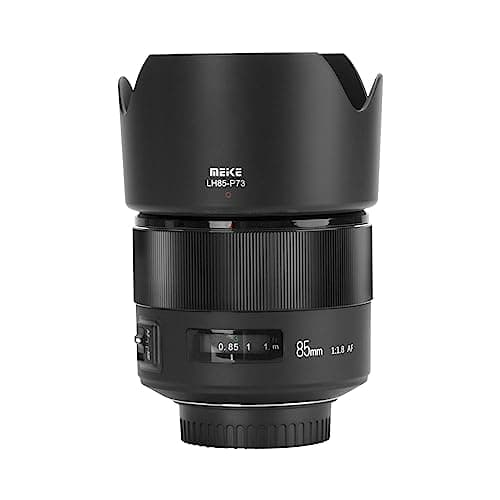
The Meike 85mm f/1.8 is a budget-friendly full-frame portrait prime offering a fast f/1.8 aperture and quiet STM autofocus. Its slower AF speed and lack of optical stabilization limit fast-action use. Ideal for portrait shooters seeking value and portability.
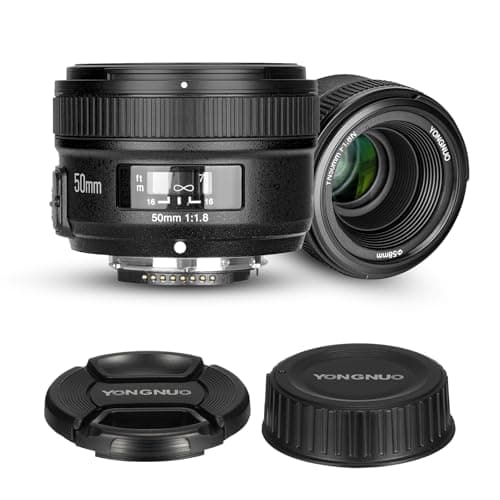
The Yongnuo YN50mm f/1.8 provides a bright f/1.8 aperture in a lightweight metal body for Nikon F-mount cameras, delivering good low-light performance at an affordable price. It lacks a consistently supplied hood and image stabilization, and its filter size may be inconvenient. Best suited for everyday shooters needing a normal prime.
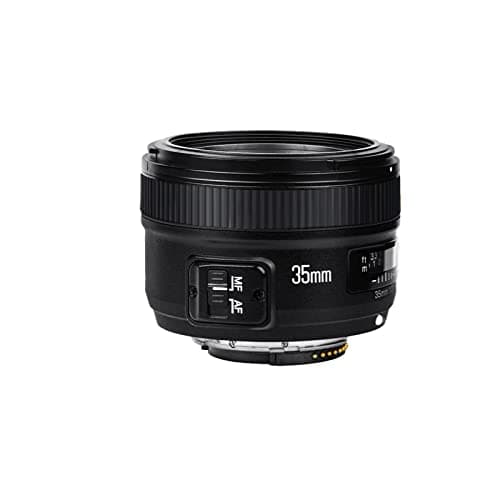
The Yongnuo YN35mm f/2N is a fast, compact prime lens for Nikon F-mount DSLRs offering a bright f/2 aperture and lightweight metal construction. Its edge sharpness and occasional autofocus reliability issues limit its suitability for demanding professional work. Ideal for budget-conscious photographers seeking a portable fast prime.
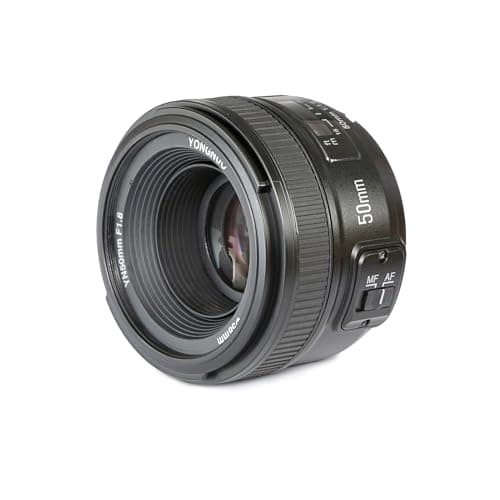
The Yongnuo YN50mm F1.8N is a budget-friendly, fast-aperture prime for Nikon F-mount DSLRs offering solid optical performance and a lightweight metal build. It lacks a supplied hood and built-in image stabilization, making it less convenient for demanding situations. Best for portrait and street photographers who need an affordable, motorized 50 mm lens on Nikon bodies.
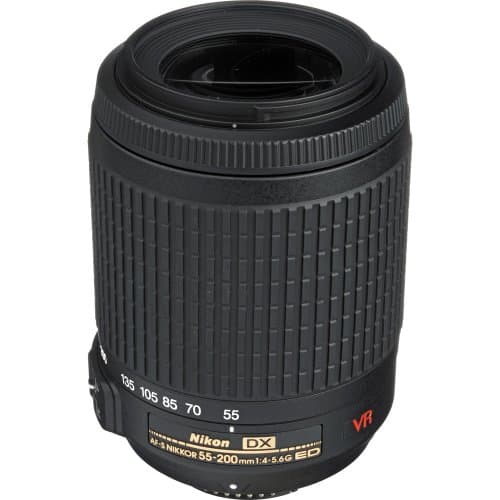
Nikon's 55-200 mm f/4-5.6G ED IF AF-S DX VR lens provides a versatile telephoto range with effective 4-stop vibration reduction in a compact, retractable design. Softness at the 200 mm end and a plastic build detract from its otherwise strong value. Ideal for budget-conscious DX users needing a lightweight zoom for travel and general photography.
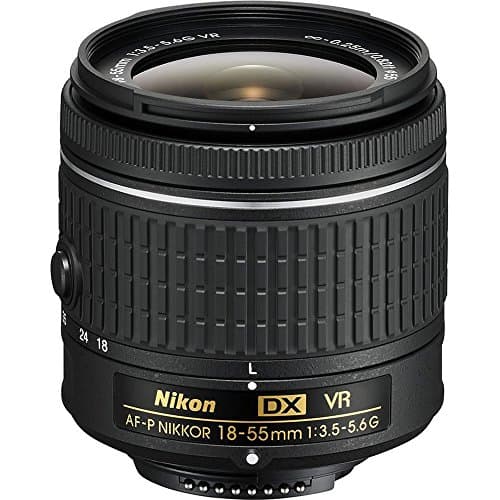
Nikon's AF-P DX 18-55 mm f/3.5-5.6G VR is a feather-light kit zoom offering silent AF-P stepping motor and up to 4-5 stops of VR for everyday shooting. The plastic construction and limited low-light capability are trade-offs for its portability and price. Suited for beginners and travelers needing a compact, versatile everyday lens.
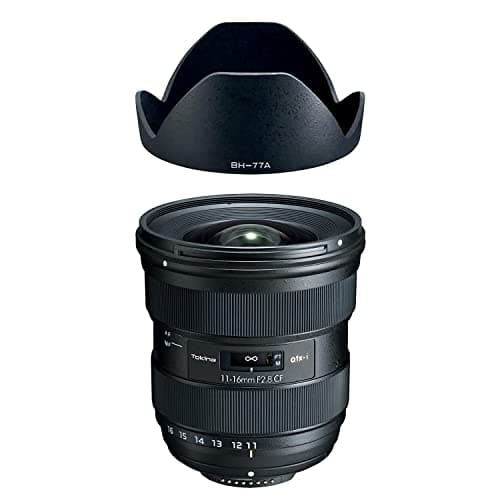
The Tokina ATX-i 11-16mm f/2.8 for Nikon APS-C offers a constant f/2.8 aperture and solid metal build, delivering ultra-wide coverage. However, its edge softness, coma, and lack of image stabilization limit low-light and astrophotography performance. It is best suited for landscape and interior shooters who prioritize aperture over ultimate sharpness.
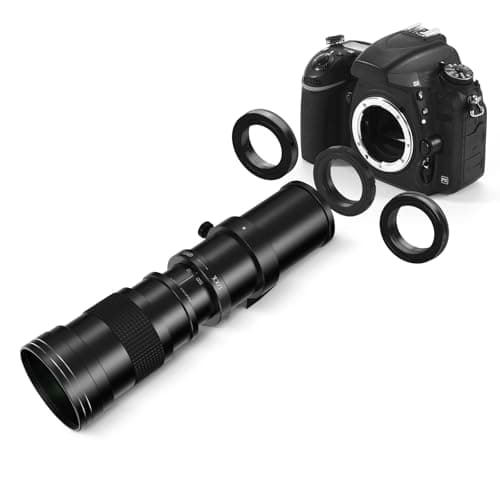
The Yanuoda 420-800mm f/8.3-16 is a budget manual-focus super-telephoto zoom offering extreme reach with an all-metal build and multi-mount adapters. Its very slow aperture, lack of stabilization, and manual focus make it challenging for handheld work. Suited for daylight wildlife or moon photography with a sturdy tripod.
| Attribute | | | | | | | | |
|---|---|---|---|---|---|---|---|---|
50 mm | 85 mmbest | 35 mm | — | — | 50 mm | — | — | |
1.8 | 1.8 | 2 | — | — | 1.8 | 2.8best | — | |
| ↓ lower better | 0.45 m | — | 0.25 mbest | 1.1 m | 0.25 mbest | 0.45 m | 0.3 m | — |
| ↓ lower better | 203 g | — | 155 g | 335 g | 205 g | 203 g | 60 gbest | — |
— | — | — | 3.6best | 3.1 | — | 1.5 | 1.9 | |
7 | 9best | 7 | — | 7 | 7 | 9best | — | |
0.2 | — | 0.2 | 0.3 | 0.4best | 0.2 | 0.1 | — | |
6 | 9 | 7 | — | 12best | 6 | — | 4 |
Click an attribute name to sort · Green = best, red = worst (relative to this comparison)
| Attribute | | | | | | | | |
|---|---|---|---|---|---|---|---|---|
Compatibility(2) | ||||||||
Lens Mount | Nikon F | Nikon F | Nikon F | Nikon F | Nikon F | Nikon F | Nikon F | T-mount |
Mount Compatibility | Full-Frame, APS-C | Nikon F, Sony E, Nikon Z, Fujifilm XF, Canon EF | D7100, D7200, D7000, D7300, D810, D800, D750, D700, D610, D600, D5200, D5300, D5400, D3100, D3200, D3300, D90, D80, D70s, D70, D60 | — | D7500, D5600, D5500, D5300, D3400, D3300, D500, D850, Df, D5, D810, D750, D7200, D7100, D4 Series, D3 Series, D2 Series, D1 Series, D800 Series, D700 | Nikon F (full-frame compatible) | Nikon APS-C/DX DSLRs | Canon EF/EF‑S, Nikon F, Sony E (full‑frame) |
Features(3) | ||||||||
Image Stabilization | false | — | — | true | true | — | false | false |
Autofocus Type | micro-focus motor | STM | Built-in micro focus motor | SWM | AF-P | DC motor | screw-drive | None |
Focus Type | Auto | autofocus | Autofocus, Manual Focus | auto/manual | auto/manual | Autofocus, Manual Focus | internal | Manual |
Optics(9) | ||||||||
Focal Length (mm) | 50 mm | 85 mm | 35 mm | 55-200 mm | 18-55 mm | 50 mm | 11-16 mm | 420-800 mm |
Maximum Aperture (f‑stop) | 1.8 | 1.8 | 2.0 | 4.0-5.6 | 3.5-5.6 | 1.8 | 2.8 | 8.3-16 |
Minimum Focus Distance (m) | 0.45 m | 0.65-0.9 m | 0.25 m | 1.1 m | 0.25 m | 0.45 m | 0.3 m | — |
Zoom Ratio | — | — | — | 3.64 | 3.06 | — | 1.45 | 1.9 |
Macro Ratio | 0.15 | — | 0.23 | 0.289 | 0.38 | 0.15 | 0.09 | — |
Number of Optical Elements | 6 | 9 | 7 | — | 12 | 6 | — | 4 |
Number of Optical Groups | 5 | 6 | 5 | — | 9 | 5 | — | 2 |
Diaphragm Blades | 7 | 9 | 7 | — | 7 | 7 | 9 | — |
Coating | Multi-coated | Multi-layer nano | Multi-coated | — | — | Multi-coated, nano | — | super HD multi-coated |
Build & Design(5) | ||||||||
Filter Thread Size (mm) | 58 mm | 67 mm | 58 mm | — | 55 mm | 58 mm | 77 mm | — |
Weight (g) | 203 g | 369-386 g | 155 g | 335 g | 205 g | 203 g | 60 g | — |
Length (mm) | 86 mm | 95-97 mm | 170 mm | 78.7 mm | 62.5 mm | 60 mm | 84 mm | 238.8 mm |
Maximum Diameter (mm) | 74 mm | 79.5 mm | 73 mm | 68.6 mm | 64.5 mm | 74 mm | 84 mm | 66.0 mm |
Construction Material | Metal | polymer | Metal | plastic | — | — | metal | Metal |
Products in the top-left offer the best value (high score, low price).
Professional reviewers consider the YN50mm F1.8N a solid value proposition, noting its classic double-Gaussian design, reliable built-in micro-focus motor, and effective multi-coating. While optical performance is respectable for the price, the lack of a supplied hood and absence of image stabilization are seen as notable shortcomings.
Everyday photographers consistently praise the lens for its fast f/1.8 aperture, lightweight build, and affordable price, especially for portrait, street, and low-light work. The most common complaints revolve around the occasional missing lens hood and the slightly heavier feel compared with Nikon's original 50 mm f/1.8.
“for the price, the Yongnuo is certainly no slouch.”
“Overall, the image quality of the Yongnuo 35mm f/2.0 is impressive - given it's only €100... If you like the 35mm look, go ahead! It's definitely worth its money!”
“"4-stop Vibration Reduction system enables handheld shooting at slow shutter speeds, improving low-light performance."”
Professional reviewers commend the Meike 85mm f/1.8 for delivering very good sharpness between f/2.8 and f/5.6, a fast f/1.8 aperture and silent STM autofocus at a fraction of the price of native brand lenses. However, they highlight its slower autofocus, lack of built-in correction profiles and by-wire manual focus as notable trade-offs compared to premium alternatives.
Everyday users praise the lens for its sharpness at common apertures, lightweight build, silent focusing and pleasing bokeh, describing it as an excellent value for portrait work. Recurring complaints focus on the slower autofocus, the electronic manual focus feel and the absence of optical stabilization or correction profiles.
Professional reviewers consider the Yongnuo YN35mm f/2N a surprisingly capable lens for its price, noting very good center sharpness, well-controlled distortion, and overall image quality that approaches Nikon's professional f/2D model. However, they also point out that chromatic aberration, vignetting, and edge sharpness fall short of premium lenses, and occasional AF reliability issues have been observed.
Everyday users overwhelmingly value the lens for its affordability, lightweight build, and fast aperture, describing it as a solid entry-level prime that delivers good results in everyday shooting. Common criticisms focus on softness at wide apertures, the need for post-processing to fix aberrations, and occasional autofocus hiccups.
Professional reviewers consistently highlight the lens's exceptional value, compact build, and effective 4-stop VR, noting very good sharpness through most of the zoom range. However, they point out a clear weakness at 200mm where sharpness falls off, as well as chromatic aberration at the extremes, slower autofocus, and a plastic construction that feels cheap. The lack of advanced VR modes is also mentioned as a limitation for demanding shooting scenarios.
Everyday users echo the professional praise for value, lightweight design, and VR performance, often calling the lens a great addition to kit setups for travel and general photography. Common praise centers on sharp center performance and portability. Recurring complaints mirror the expert critiques, focusing on softness at 200mm, plastic build quality, and sluggish autofocus, with several users noting the limited VR mode options.
Professional reviewers commend the lens for its portability, silent AF-P motor, and effective VR, noting that it delivers sharp central images and is well-suited for beginners and video work. However, they point out edge softness, basic plastic construction, average overall sharpness, and limited compatibility with older bodies as notable drawbacks.
Everyday users appreciate the lens's feather-light feel, quiet autofocus, and VR that lets them shoot handheld at slower shutter speeds. Common complaints focus on soft corners, limited low-light capability, plastic build quality, occasional zoom creep, and incompatibility with older Nikon cameras.
Professional editors describe the Yongnuo YN50mm f/1.8 as a solid, budget-friendly clone of Nikon's 50mm f/1.8G, commending its bright aperture, reliable built-in DC motor and effective multi-coating, while noting the lack of a consistently supplied hood, a modest weight penalty, and a simple optical formula that falls short of high-end sharpness or advanced element designs.
Everyday photographers generally view the lens positively, emphasizing its lightweight feel, low cost and fast f/1.8 speed for travel and indoor shooting; the main frustrations revolve around occasional missing hood and filter-size incompatibility, but no widespread performance complaints surface.
Professional reviewers acknowledge the lens's solid metal build and constant f/2.8 aperture, but criticize its high edge coma, noticeable distortion, and disappointing resolution. The lack of image stabilization and its relatively heavy weight further limit its appeal for demanding low-light or astrophotography work.
Everyday users praise the rugged construction and ultra-wide coverage, yet repeatedly complain about soft resolution and pronounced edge coma, often abandoning the lens for sharper alternatives like the Sigma 18-35mm f/1.8.
Professional reviewers acknowledge the Yanuoda's solid metal construction and smooth zoom lock, noting it can deliver decent sharpness at 420 mm when carefully focused. However, they uniformly criticize its very slow f/8.3-f/16 aperture, lack of image stabilization or autofocus, and the difficulty of manual focusing at longer focal lengths, labeling it the cheapest yet most demanding super-zoom on the market.
Everyday users love the low price and the surprising build quality, often using the lens for moon and distant wildlife shots with a tripod. Common complaints revolve around the arduous manual focus, inconsistent sharpness at the long end, and the inability to shoot handheld in anything but bright light.
