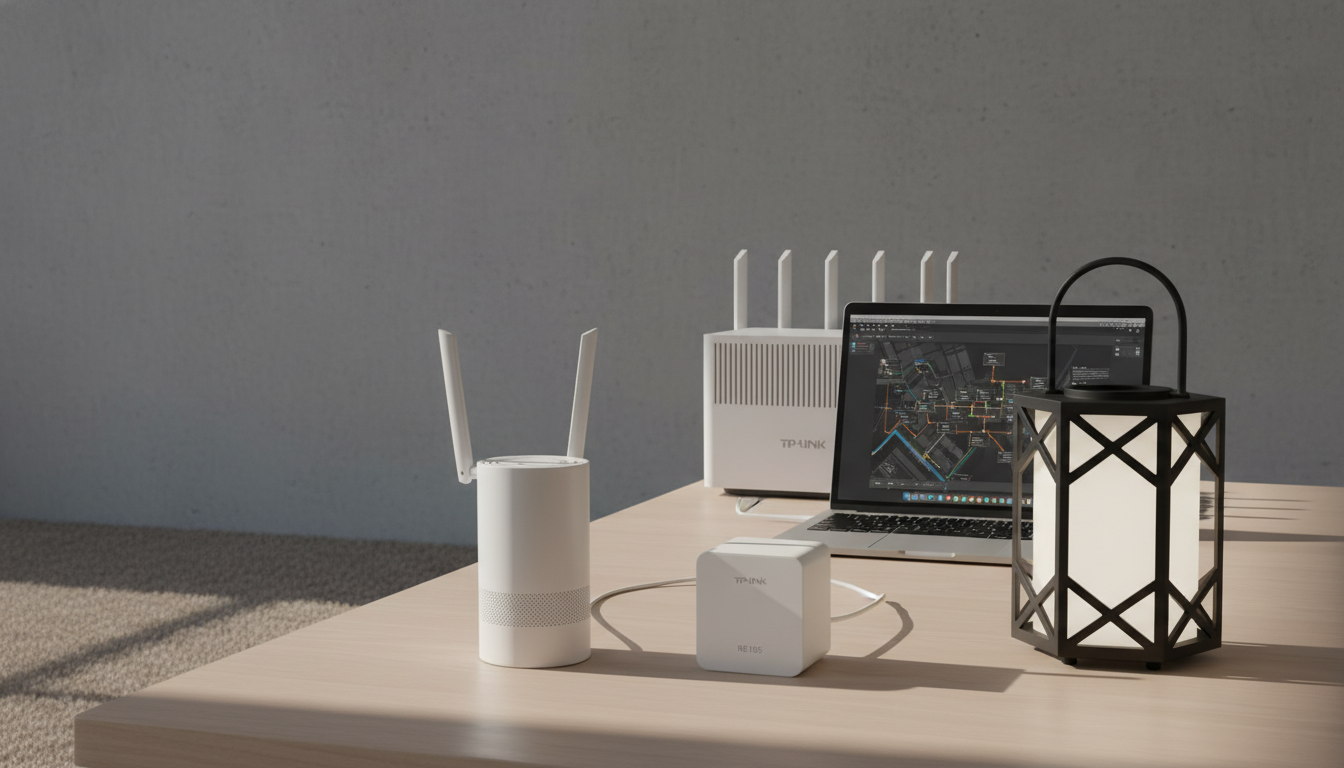
If your Wi‑Fi drops in the bedroom or the home office, a range extender under $25 can patch the gap without breaking the bank. We compared eight models that sit comfortably in the $9.99‑$24.99 price window, from plug‑in basics to dual‑band upgrades. We split the list into three price tiers – budget, mid‑range and premium – so you’ll spot the level that matches your needs.
Budget picks like the Tgdllf WiFi Extender at $9.99 and the Vanin WiFi Range Extender at $12.99 promise coverage of up to 5,000 sq ft and 120 ft respectively, while the Tenda AC1200 adds dual‑band speeds (867 Mbps on 5 GHz) for $15.99 and carries a strong 4.5/5 rating from 253 reviewers. Mid‑range options – the Xiaomi N300 ($16.59) and TP‑Link RE105 ($17.99) – keep the 300 Mbps ceiling but introduce features such as WPS buttons and external antennas. Premium choices, including the JoyLantern extender at $18.99 and the TP‑Link RE315 at $19.99, push coverage up to 1,500 sq ft and bundle OneMesh compatibility for smoother roaming.
Below, we break down each model’s specs, strengths and drawbacks so you’ll decide which extender fits your space, device count and budget.

TP-Link RE315
Its box depth of 156.5 mm reflects a sturdy form factor that helps maintain strong signal coverage throughout a home.
TP-Link RE105
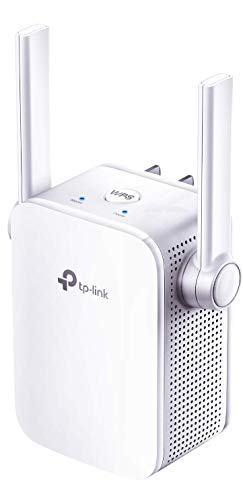
Ideal for budget‑conscious renters, the RE105 delivers solid performance at $17.99, which is $2 cheaper than the RE315.

JoyLantern WiFi Extender
The JoyLantern’s taller 169.7 mm profile offers a distinct design that can fit higher mounting spots, setting it apart from the flatter RE315 and RE105.
Also considered
Score Analysis
Key score advantages vs. runner-up (TP-Link RE105)
Price Range
TP-Link RE315
$19.99
TP-Link RE105
$17.99
JoyLantern WiFi Extender
$18.99

Tgdllf WiFi Extender
$9.99
Tenda AC1200
$15.99

D-Link DAP-1530-US
$24.99

Vanin WiFi Range Extender
$12.99

Xiaomi N300
$16.59
Spec Comparison
TL;DR: The TP‑Link RE315 offers dual‑band AC1200 Wi‑Fi, 1,500 sq ft coverage and a gigabit Ethernet port for $19.99, making it a solid budget extender for small‑to‑medium homes.
At its core the RE315 delivers up to 1.2 Gbps combined speed (AC1200) with a 300 Mbps rate on 2.4 GHz and 867 Mbps on 5 GHz, plus a dedicated 1 Gigabit Ethernet port for wired devices. It can blanket roughly 1,500 sq ft of floor space and support up to 30 simultaneous devices, all while drawing just 7.3 W from a 100‑240 V source. The three adjustable external antennas and two internal ones complement an intelligent signal‑light that helps you find the optimal outlet.
Compared with the other seven extenders in this budget roundup, the RE315 sits in the middle of the size and weight spectrum. It is heavier than the JoyLantern model (0.38125 lb vs 0.22 lb) and taller than the compact TP‑Link RE105 (124 mm vs 68.58 mm). Its 1,500 sq ft coverage is larger than the D‑Link DAP‑1530’s 1,300 sq ft but far smaller than JoyLantern’s 9,999 sq ft claim. Unlike several peers that lack a wired backhaul, the RE315 includes a gigabit Ethernet port, giving it an edge over the Xiaomi N300 and Vanin extender, which list only wireless speeds. The OneMesh compatibility also sets it apart from devices like the Tgdllf extender that rely on basic repeater mode.
Professional reviewers note the RE315’s “reliable dead‑zone elimination” and praise its mesh‑ready design for smooth roaming. Everyday users echo this sentiment, highlighting noticeably stronger signals and faster speeds in previously weak spots. The most common complaints revolve around speed variability as you move farther from the router and the need to manually switch between the separate 2.4 GHz and 5 GHz SSIDs when mesh isn’t active. Some owners also mention a bit of trial‑and‑error when choosing the best outlet placement.
The unit runs on a standard US plug, offers WPS and reset buttons for quick setup, and operates under Windows, macOS, Linux and other common OSes. With a two‑year manufacturer warranty and a modest 0.38125 lb weight, it’s easy to install and hard to move once you position it.
Pros
Cons
Best for: Those prioritizing quality and willing to pay for premium performance
Avoid if: You need advanced features or professional‑grade performance
TL;DR: The TP‑Link RE105 offers a compact, plug‑in design with 300 Mbps 2.4 GHz coverage, two external MIMO antennas, and one‑touch WPS for under $20.
The RE105’s standout spec is its 300 Mbps maximum throughput paired with a 10/100 Mbps Ethernet port, giving you a wired fallback without extra adapters. Its dimensions—68.58 mm high, 80.01 mm long, and 50.8 mm wide—make it one of the smallest units in this lineup, easily fitting into a crowded outlet.
At roughly 0.26 lb, the extender weighs a touch more than the Xiaomi N300 (0.13 lb) but noticeably less than the TP‑Link RE315 (0.38 lb). Its height of 68.58 mm also beats the JoyLantern’s 169.7 mm height, while still being taller than the Tgdllf’s 83.8 mm profile. Compared with the Tenda AC1200, which tips the scales at 0.44 lb, the RE105 feels more portable for apartment‑sized setups.
Reviewers consistently praise the one‑touch WPS button and the TP‑Link Tether app for a hassle‑free setup, noting that the two external antennas with MU‑MIMO deliver a steadier signal than older internal‑antenna models. Professional reviewers highlight the power‑scheduling feature that lets you turn the unit off during off‑peak hours, trimming the 3.6 W power draw. Critics point to its single‑band 2.4 GHz operation, which limits high‑bandwidth activities and omits a guest‑network option.
Pros
Cons
Best for: Budget‑conscious users who need basic 2.4 GHz coverage extension in small homes or apartments.
Avoid if: You rely on 5 GHz or Wi‑Fi 6 performance for high‑bandwidth tasks like 4K streaming or gaming.
TL;DR: The JoyLantern Wi‑Fi Extender costs $18.99, stretches a single 2.4 GHz signal to up to 9,999 sq ft, and supports 60+ devices, but caps throughput at 300 Mbps.
The standout spec is its advertised coverage area of 9,999 sq ft, which dwarfs the typical 1,500‑sq‑ft range of many budget extenders. Its compact dimensions—169.7 mm × 74.9 mm × 59.9 mm—and a weight of 0.22 lb (100 g) make it easy to slip into any room without clutter.
Compared with peers, the JoyLantern is lighter than the TP‑Link RE315 and the D‑Link DAP‑1530‑US, yet a bit heavier than the Xiaomi N300. Its 9,999‑sq‑ft coverage outpaces most competitors, many of which list 1,500‑sq‑ft or 1,300‑sq‑ft limits. Speed‑wise it matches the 300 Mbps ceiling of other 2.4 GHz models, but it lacks a 5 GHz band that higher‑priced units provide.
Users repeatedly praise the one‑touch WPS button for a hassle‑free setup, noting a noticeable lift in signal strength in previously dead zones. Reviewers also appreciate the Ethernet port for wired backhaul when you need a stable link. The main criticism centers on the single‑band design and the 300 Mbps ceiling, which some say feels modest for 4K streaming or heavy gaming.
Additional technical details include advanced encryption protocols for secure connections and an energy‑efficient operation mode that keeps power draw low. With support for over 60 simultaneous devices, the extender can handle a busy household of smartphones, tablets, and smart‑home gadgets without choking.
Pros
Cons
Best for: Busy households with many devices, homes with Wi‑Fi dead zones, and users who want a quick, plug‑and‑play extender.
Avoid if: You need high‑speed 5 GHz or tri‑band performance, or you run a large office that requires support for over 100 devices.
TL;DR: The Tgdllf XMT-001 stretches a 2.4 GHz network up to 5,000 sq.ft for $9.99, but its single‑band 300 Mbps ceiling and 3.8‑star rating mean it’s best for basic, budget‑focused setups.
This extender’s headline claim is a 5,000 sq.ft coverage area, backed by a maximum data rate of 300 Mbps. Its compact plug‑in form measures just 83.82 mm tall, 58.42 mm long and 53.34 mm wide, and it weighs only 0.29 lb (132 g), making it easy to slot into any outlet without crowding the space.
Compared with the seven other models in the roundup, the Tgdllf is the most affordable and the smallest in height and width. The Vanin unit, for example, is taller at 84 mm and considerably longer at 150 mm, while offering dual‑band speeds up to 867 Mbps on 5 GHz—a capability the Tgdllf lacks. The Tenda AC1200 and TP‑Link RE105 both list combined Wi‑Fi speeds well above 1 Gbps, and the Xiaomi N300 matches the same 300 Mbps 2.4 GHz rate but comes in a slightly larger footprint. Only the JoyLantern and D‑Link models tout larger coverage footprints (9,999 sq.ft and 1,300 sq.ft respectively), yet they also weigh more. All peers include an Ethernet port, so the Tgdllf’s wired option is on par with the competition.
Users consistently praise the plug‑and‑play setup via a WPS button or companion app, noting that even non‑techies can get a signal boost in minutes. Professional reviewers highlight the reliable N300‑class throughput for everyday browsing and streaming, and reviewers often call the Ethernet LAN port a solid fallback for stable wired devices. The downside that surfaces in both expert and consumer feedback is the single‑band design, which can choke under heavy traffic or in congested apartment buildings. Reviewers also mention that the advertised 5,000 sq.ft coverage sometimes falls short when the signal must pass through multiple walls, and occasional dropouts appear once the device nears its 50‑device limit.
Technically, the extender supports 802.11a/b/g/n/ac on the 2.4 GHz band, offers WEP and WPA/WPA2 security, and works with 99 % of routers, iOS, Android, PC, PlayStation and Alexa devices. It can operate in either Repeater or Access Point mode, giving you flexibility in placement. The 30‑day warranty provides a brief safety net, though it’s shorter than many competitors.
Pros
Cons
Best for: Shoppers on a tight budget who want the most for their money
Avoid if: You need 5 GHz performance, high‑speed gaming or 4K streaming, or coverage for a large multi‑story house with thick walls
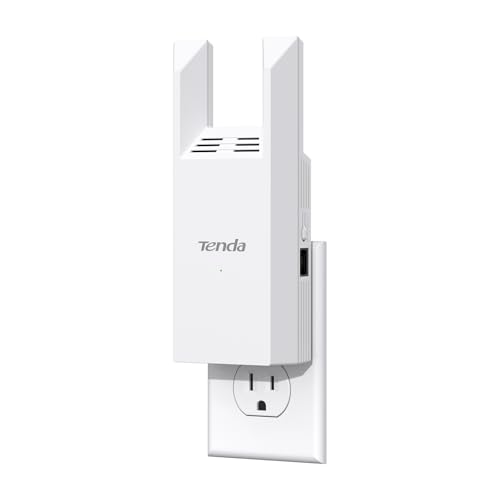
TL;DR: The Tenda AC1200 offers dual‑band Wi‑Fi up to 1167 Mbps, covers 1300 sq ft, supports 23 devices, and installs via an 8‑second WPS button for $15.99.
The standout figure is the combined Wi‑Fi speed of 1167 Mbps, with 867 Mbps on the 5 GHz band and 300 Mbps on 2.4 GHz. That throughput, paired with a coverage claim of 1300 sq ft, means the extender can blanket a typical apartment or small house while handling up to 23 devices simultaneously. Its two external omni‑directional antennas deliver a 3 dBi gain, and the unit measures a compact 6.2 in tall, 2.8 in wide, and 1.3 in deep, weighing just 0.44 lb.
Compared with the other seven extenders in this roundup, the Tenda sits on the heavier side – it outweighs the Xiaomi N300’s 0.125 lb and the TP‑Link RE315’s 0.38 lb – yet it remains lighter than many bulkier wall‑plug models. Its height of 6.2 in makes it taller than the TP‑Link RE105’s 2.7 in profile, but the overall footprint is still modest enough to blend into most wall outlets. While some rivals list a Gigabit Ethernet port, the Tenda’s single 10/100 Mbps Ethernet jack caps wired backhaul at 100 Mbps.
Users consistently praise the 8‑second WPS setup, calling it “plug‑and‑play” and noting that even non‑tech‑savvy household members can get it online without a mobile app. Professional reviewers echo the sentiment, highlighting the stable dual‑band performance for everyday browsing and streaming. The main criticism revolves around the required minimum installation height of 3 ft from floor, ceiling, or walls, which can be tricky in cramped rooms. Additionally, the lack of a Gigabit Ethernet port and advanced features like MU‑MIMO are noted as trade‑offs for the low price point.
Under the hood, the extender uses a dual‑FEM chip architecture and comes with a three‑year manufacturer warranty, offering peace of mind for budget‑focused shoppers. The 3 dBi external antennas improve 5 GHz wall penetration, a point experts emphasize and they've recommended it for fiber broadband users looking for a simple boost.
Pros
Cons
Best for: Entry-level buyers or those on a tight budget
Avoid if: You want the best value‑per‑dollar in its price range
TL;DR: The D‑Link DAP‑1530‑US extends Wi‑Fi up to 1300 sq ft with a 750 Mbps dual‑band link, fits into a wall outlet, and offers a Fast Ethernet port for wired devices, all for $24.99.
The standout spec is its combined 750 Mbps throughput—300 Mbps on 2.4 GHz and 433 Mbps on 5 GHz—paired with a 1300 sq ft coverage area. Its external foldable 2×2 antennas and wall‑plug form factor (28.7 mm depth, 98.6 mm height, 50.8 mm width) let it sit discreetly while delivering a solid dual‑band signal.
Compared with the seven other sub‑$25 extenders, the D‑Link sits at the higher end of the price range. It’s lighter than the TP‑Link RE315 (0.381 lb) and Tenda AC1200 (0.441 lb) but heavier than the JoyLantern (0.22 lb) and Xiaomi N300 (0.125 lb). Its 1300 sq ft coverage is smaller than the RE315’s 1500 sq ft and far below the JoyLantern’s 9,999 sq ft, yet larger than the Vanin’s 120‑ft range. Speed‑wise, the 750 Mbps combined rate outpaces the 300 Mbps ceiling of JoyLantern, TP‑Link RE105, and Xiaomi, though it trails the Tenda AC1200’s 1167 Mbps and Vanin’s 1200 Mbps total wireless speeds.
Users frequently mention the one‑touch WPS button and the QRS Mobile app as making setup almost painless, and the compact plug‑in design blends into any room. However, the 3.6/5 star rating from 1,438 reviews signals mixed satisfaction, with several reviewers calling out the Fast Ethernet port’s 100 Mbps limit as a bottleneck for high‑bandwidth wired devices. Professional reviewers note the inclusion of WPA3, Smart Roaming (802.11k/v), and MU‑MIMO support as solid security and performance features, while the standby draw of 3.54 W keeps power use modest.
Pros
Cons
Best for: Small homes or apartments where a compact, easy‑setup extender with up to 750 Mbps dual‑band speed is a priority.
Avoid if: You need gigabit wired ports, the absolute widest coverage, or the highest possible user satisfaction ratings.
TL;DR: The Vanin Wi‑Fi Range Extender adds up to 120 ft of dual‑band coverage for $12.99, delivering 1.2 Gbps total speed and two Gigabit Ethernet ports, though its plastic build and modest 3.7‑star rating may deter power users.
This extender’s headline figure is its 120 ft (≈36 m) coverage range, paired with a total wireless speed of 1200 Mbps—300 Mbps on 2.4 GHz and 867 Mbps on 5 GHz. It also packs two Gigabit Ethernet ports, letting you tether a gaming console or smart TV without throttling the wireless link. MU‑MIMO support and a 360° full‑coverage antenna pattern round out the feature set.
Compared with the seven other budget options, the Vanin unit is a bit larger—its 84 mm height, 150 mm length and 89 mm width give it a more substantial footprint than the compact Tgdllf model, which measures roughly 84 mm tall, 58 mm long and 53 mm wide. Speed‑wise, Vanin’s 1200 Mbps total tops the Xiaomi N300 and TP‑Link RE105, both capped at 300 Mbps, and sits just above the D‑Link DAP‑1530‑US’s 750 Mbps combined rate. It matches the Tenda AC1200’s 1167 Mbps combined speed while offering two Gigabit ports—a spec most peers don’t list.
Users repeatedly note that the extender reliably brings a stable signal into far‑flung rooms, garages or patios, and the manufacturer states outdoor performance up to 11 MB/s (88 Mbps). Professional reviewers praise the 120‑foot boost and the wired ports, but they also point out the low‑quality plastic housing and a setup process that can require a few tweaks. The device lacks Wi‑Fi 6 and other future‑proofing features, so it’s best viewed as a solid, budget‑friendly bridge rather than a high‑end solution.
Pros
Cons
Best for: Entry‑level buyers or those on a tight budget
Avoid if: You need powerful performance or professional‑grade features
“worthwhile pickup”
TL;DR: The Xiaomi N300 offers a compact 2.4 GHz range boost with up to 300 Mbps speed, supports 16 devices, and draws only 3.57 W, all for $16.59.
The standout spec is its ultra‑low power draw of 3.57 W, meaning the unit doesn't noticeably increase your electricity bill. Its physical footprint is tiny—just 50.8 mm high, 76.2 mm long and wide, and it weighs only about 0.13 lb (57 g)—so it slides neatly into any standard outlet without crowding the wall.
When you line it up against the seven other budget extenders in this roundup, the N300 is the lightest option; the Tenda AC1200 and TP‑Link RE105 tip the scales at roughly 0.44 lb and 0.26 lb respectively, and even the Tgdllf model sits near 0.29 lb. In terms of speed, its 300 Mbps ceiling matches the 2.4 GHz rate of the Tenda, TP‑Link RE105, and JoyLantern units, but it lacks the dual‑band 5 GHz capability that the Tenda and Vanin models advertise.
Reviewers repeatedly praise the N300’s energy efficiency and its unobtrusive design, noting that the two external 2×2 antennas deliver a stable signal for modest internet use. However, users also point out that the single‑band architecture can become a bottleneck for high‑bandwidth activities, and several comment that the $16.59 price tag feels a bit steep compared with peers that bundle dual‑band support for a similar cost.
Pros
Cons
Best for: Budget‑conscious users who need a simple Wi‑Fi boost in a small apartment or bedroom and appreciate ultra‑low power draw.
Avoid if: You require high‑bandwidth tasks like 4K streaming, online gaming, or have a large home where dual‑band coverage is essential.
Breakdown
TP-Link RE315
Pros
TP-Link RE105
Pros
JoyLantern WiFi Extender
Pros
Tgdllf WiFi Extender
Pros
Cons
Based on scoring data and product specs
Personalized picks
Best Overall Pick
TP-Link RE315
Best OverallBest for: Those prioritizing quality and willing to pay for premium performance
TP-Link RE105
Best for: Most users seeking a balanced, mainstream option
$17.99-$2.00 vs winner
Skip Xiaomi N300 if…
You have limited desk space or need portability
The TP‑Link RE315 wins the “Best Overall” title. It costs $19.99, carries a 4.2‑star rating from 40,456 reviews, and promises coverage of up to 1,500 sq ft. Dual‑band AC1200 speeds, three adjustable external antennas, and a gigabit Ethernet port give it the flexibility most homes need.
TP‑Link RE105 takes the runner‑up spot as a solid pick if you need a compact extender for a small apartment or a desk‑side boost. At $17.99 it weighs just 0.26 lb, measures 68.58 mm tall, and draws only 3.6 W. Its 300 Mbps maximum throughput and 10/100 Mbps Ethernet port keep basic streaming smooth without taking up much space.
For tighter budgets, the Tgdllf WiFi Extender at $9.99 offers the cheapest entry point under $25. If you want a balanced mid‑range option, the RE105 delivers its 300 Mbps throughput for $17.99. When you crave a premium feature set without exceeding the $25 ceiling, the D‑Link DAP‑1530‑US at $24.99 provides the most advanced specs among the sub‑$25 contenders.
Pick the TP‑Link RE315 today and give your Wi‑Fi the coverage it deserves.
The TP‑Link RE315 is a solid choice because it supports dual‑band operation (2.4 GHz / 5 GHz) and is rated for up to 1,500 sq ft of coverage, which comfortably covers a typical apartment. Its Gigabit Ethernet port also lets you hard‑wire a streaming device for a more stable connection.
No reviews yet — be the first to share your experience.
Please sign in to leave a review
