Rankings
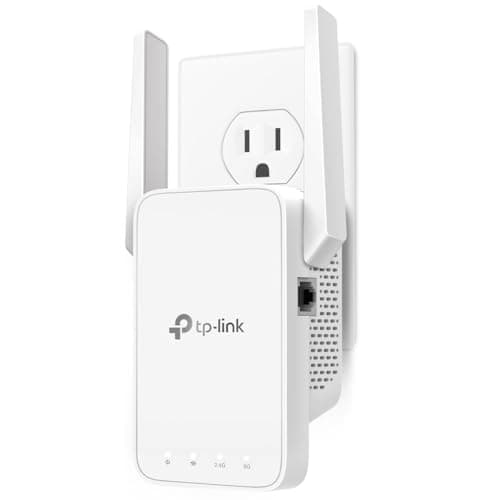
The TP-Link RE315 offers AC1200 dual-band speeds with OneMesh smart roaming and an intelligent signal light, providing a cost-effective way to extend Wi-Fi up to 12,000 sq ft. It is limited by the absence of multiple Ethernet ports and can experience signal loss at greater distances. Best suited for budget-conscious users in smaller homes seeking mesh compatibility.
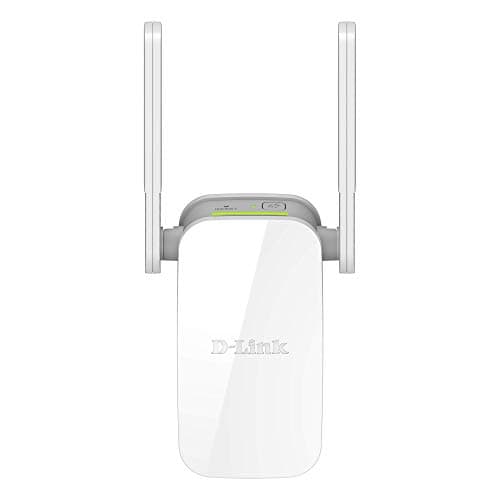
The D-Link DAP-1530-US is a plug-in AC750 extender featuring MU-MIMO, Smart Roaming and a mobile app for easy setup. Being discontinued and limited to a Fast Ethernet port reduces its long-term value. Best for users wanting a compact, mesh-ready extender for modest bandwidth needs.
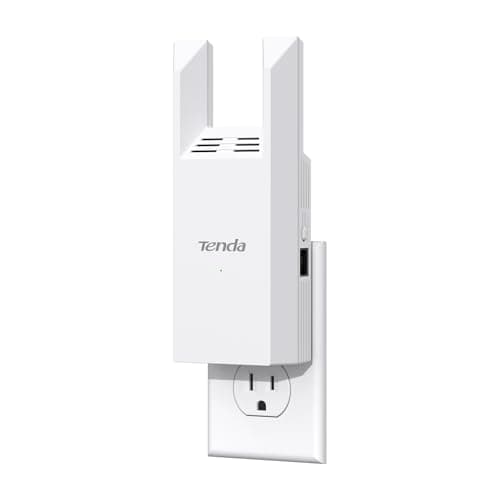
The Tenda A18 AC1200 offers a budget-friendly, plug-in solution with rapid 8-second WPS setup and external antennas for decent coverage. Its 10/100 Mbps Ethernet and absence of MU-MIMO restrict high-speed wired backhaul. Good for small-to-medium homes needing simple Wi-Fi extension.
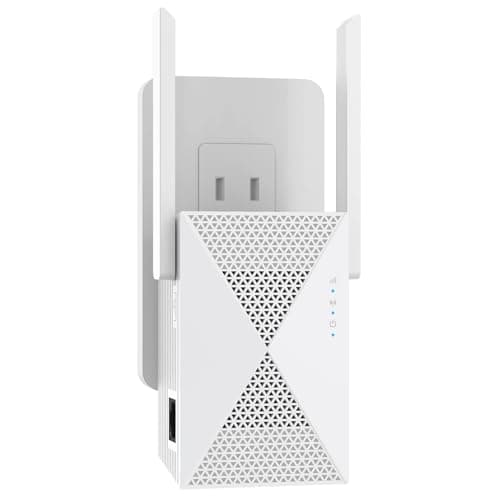
JoyLantern's M-A31 extender boasts an impressive 9,999 sq ft coverage area and supports over 60 devices on a 2.4 GHz band with 300 Mbps speed. However, its single-band design and modest speed cap limit performance for high-bandwidth tasks. It's aimed at large homes or small offices that prioritize extensive coverage over top speed.
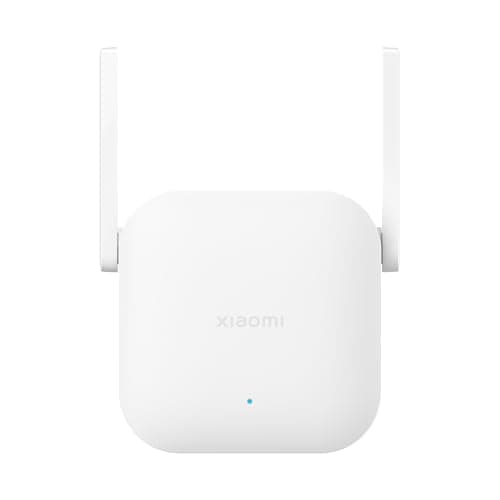
Xiaomi's N300 RD10M offers a compact, energy-efficient 2.4 GHz extender with 300 Mbps throughput and support for up to 16 devices. The absence of an Ethernet port and single-band limitation reduce its versatility for demanding networks. It fits well for budget-conscious users needing basic coverage in small spaces.
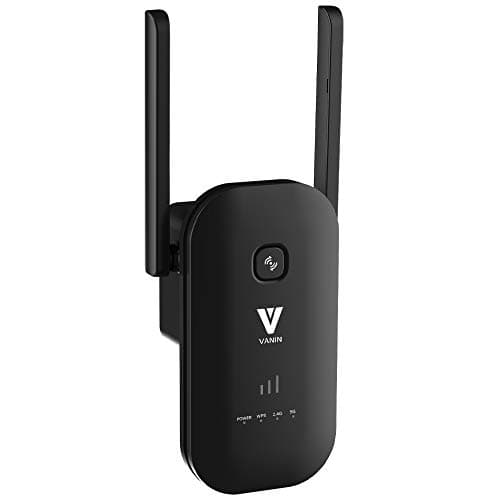
The Vanin EC4-1200 is a dual-band 1200 Mbps Wi-Fi range extender featuring two Gigabit Ethernet ports and MU-MIMO for solid indoor coverage. Its budget-friendly price comes with a cheap plastic build and lack of Wi-Fi 6, limiting future-proofing. Ideal for large homes needing extended 5 GHz reach without premium features.
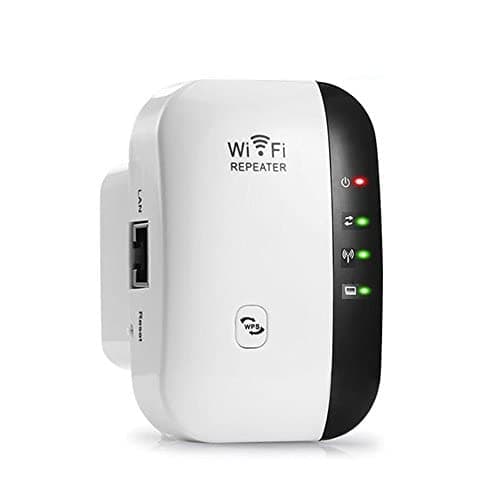
The TGDLLF XMT-001 is a single-band 2.4 GHz extender offering up to 300 Mbps and a claimed 5000 sq ft coverage, notable for its Ethernet port and support for up to 50 devices. However, its single-band operation and modest throughput make it less ideal for high-speed or multi-band needs. It fits well for basic budget extensions in small to medium spaces.
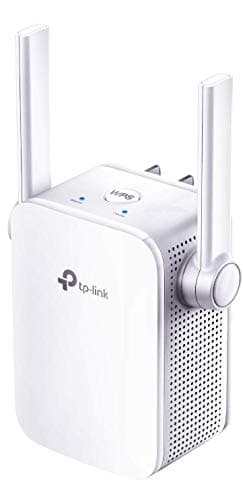
The TP-Link RE105 is a compact N300 range extender that boosts 2.4 GHz coverage using external antennas and MIMO. Its main trade-offs are the lack of 5 GHz support, modest 300 Mbps ceiling, and limited Ethernet speed. Best suited for budget-conscious users needing basic Wi-Fi extension for IoT devices.
| Attribute | | | | | | | | |
|---|---|---|---|---|---|---|---|---|
1,115 sqmbest | — | 929 sqm | 464.52 sqm | 121 sqm | 120.8 sqm | — | — | |
1,200 Mbpsbest | 300 Mbps | 300 Mbps | 300 Mbps | 1,167 Mbps | 750 Mbps | 1,200 Mbpsbest | 300 Mbps | |
1 | 1 | 1 | 1 | 1 | 1 | 2best | — | |
3best | 2 | — | — | 2 | 2 | — | 2 | |
| ↓ lower better | 7.3 W | 3.6 W | — | — | 5 W | 3.54 Wbest | — | 3.57 W |
| ↓ lower better | 0.173 kg | 0.12 kg | 0.1 kg | 0.132 kg | 0.2 kg | 0.118 kg | — | 0.057 kgbest |
2 years | 2 years | 1 years | 0.08 years | 3 yearsbest | — | 1 years | 1 years |
Click an attribute name to sort · Green = best, red = worst (relative to this comparison)
| Attribute | | | | | | | | |
|---|---|---|---|---|---|---|---|---|
Performance(2) | ||||||||
Coverage Area (sqm) | 1115 sqm | — | 9999 ft² sqm | 464.52 sqm | 121 sqm | 120.8 sqm | — | — |
Maximum Throughput (Mbps) | 1200 Mbps | 300 Mbps | 300 Mbps | 300 Mbps | 1167 Mbps | 750 Mbps | 1200 Mbps | 300 Mbps |
Ports(2) | ||||||||
Number of Ethernet Ports | 1 | 1 | 1 | 1 | 1 | 1 | 2 | — |
Ethernet Port Speed | Gigabit | 10/100 Mbps | — | — | 100 Mbps | Fast Ethernet | Gigabit | — |
Design(1) | ||||||||
Antenna Count | 3 | 2 | — | — | 2 | 2 | — | 2 |
Network(3) | ||||||||
Wi‑Fi Standard | 802.11ac | 802.11b/g/n | — | 802.11ac | 802.11ac | 802.11ac | — | 802.11b/g/n |
Supported Frequency Bands | 2.4 GHz,5 GHz | 2.4 GHz | 2.4GHz | 2.4 GHz | 2.4 GHz, 5 GHz | 2.4 GHz, 5 GHz | 2.4GHz,5GHz | 2.4GHz |
Security Protocols | — | WEP, WPA-PSK, WPA2-PSK | Advanced encryption protocols | WEP, WPA/WPA2 | — | WPA3, WPA, WPA2 | — | WPA-PSK/WPA2-PSK |
Power(1) | ||||||||
Power Consumption (W) | 7.3 W | 3.6 W | — | — | 5 W | 3.54 W | — | 3.57 W |
Build & Design(2) | ||||||||
Weight (kg) | 0.173 kg | 0.12 kg | 100 g kg | 0.132 kg | 0.20 kg | 0.118 kg | — | 57 g kg |
Dimensions (H × W × D) (mm) | 124x52x89 mm | 68.58×50.8×80.01 mm mm | H×W×D: 169.9×59.9×74.9 mm mm | 83.82 x 53.34 x 58.42 mm mm | 157 x 71 x 33 mm mm | 98.6 x 50.8 x 28.7 mm mm | 88.9×83.8×149.9 mm mm | H×W×D: 50.8×76.2×76.2 mm mm |
General(1) | ||||||||
Warranty (years) | 2 years | 2 years | 1 years | 0.08 years | 3 years | — | 1 years | 1 years |
Products in the top-left offer the best value (high score, low price).
Professional reviewers such as Engadget and Best Buy highlight the RE300 as a top-value choice for extending Wi-Fi coverage, emphasizing its OneMesh compatibility, easy plug-in setup, and solid dual-band speeds, while noting its compact design makes placement straightforward.
Everyday users consistently praise the extender for noticeably stronger signals and faster speeds in dead zones, easy installation via a wall outlet, and reliable performance for multiple devices, but they also report speed degradation with distance, the need to manually switch SSIDs when not in mesh mode, and some trial-and-error to locate the best outlet placement.
“worthwhile pickup”
Professional reviewers and editors note that the RE105 improves on older TP-Link extenders thanks to its external antennas and MIMO, delivering stronger and more reliable coverage. They appreciate the straightforward WPS/app setup and the added Access Point mode, while criticizing the lack of 5 GHz support, modest 300 Mbps ceiling, and the absence of a guest network.
Professional reviewers note the JoyLantern's user-friendly one-touch installation and solid coverage as strong points, but they criticize the absence of dual-band capability and the modest 300 Mbps ceiling, which may fall short for high-performance networking needs.
Consumer Sentiment: Everyday users consistently highlight the ease of setup and the noticeable improvement in coverage, especially in hard-to-reach areas. Positive remarks focus on stable performance for streaming and the ability to handle many devices, while the main criticisms revolve around the single-band limitation and modest speed.
Professional reviewers, such as YouTube tech channel Trafegon, commend the TGDLLF XMT-001 for its straightforward unboxing, easy AP/repeater mode configuration, reliable N300 performance, and the inclusion of an Ethernet port for wired stability. They also note its 360° coverage claim and high router compatibility, but criticize its single-band limitation, under-delivered coverage, and lack of advanced features like MU-MIMO or mesh support.
Everyday users appreciate the plug-and-play simplicity, noticeable signal improvement in small spaces, and the ability to connect many devices for streaming and gaming. Common complaints revolve around inconsistent range through walls, speeds that fall short of the advertised 300 Mbps under load, and occasional dropouts when a large number of devices are connected.
Professional reviewers and editors consider the Tenda A18 a reliable, budget‑friendly extender that offers stable dual‑band speeds, ultra‑quick WPS setup, and solid 5 GHz wall penetration thanks to its external antennas. However, they note the absence of gigabit Ethernet, MU‑MIMO, and app‑based controls, and they caution about the required minimum placement distance.
Everyday users praise the simplicity of the 8-second WPS setup, the ability to eliminate dead zones, and the unobtrusive wall-plug design that fits into home décor. Common complaints revolve around the need for precise placement, the limited 10/100 Mbps Ethernet speed, and occasional signal loss when positioned too close to the router.
Professional commentary is limited to manufacturer and retailer descriptions, which emphasize the DAP-1530's compact size, easy plug-and-play setup, dual-band capability, and mesh-ready features. However, reviewers note the modest Fast Ethernet port, lack of advanced Wi-Fi technologies like MU-MIMO, and the fact that the product is discontinued, suggesting it may not be ideal for users seeking long-term support or high-performance wired networking.
Professional reviewers consider the Vanin EC4-1200 a solid, cost-effective solution for extending Wi-Fi in large or multilevel homes. They commend its 120-foot range boost, dual Gigabit ports, and MU-MIMO performance, while noting the lack of premium build quality and the fact that it merely repeats the existing signal without increasing overall throughput.
Everyday users love the extender's ability to bring a stable Wi-Fi signal to far-flung rooms, garages and outdoor spaces, praising the noticeable speed improvements and the inclusion of wired ports at a low price.
Expert Opinion: Professional reviewers note the Xiaomi N300's low power consumption and compact design as strong points, but they highlight the lack of dual-band support and limited speed as drawbacks for modern households.
Consumer Sentiment: Users appreciate the low power draw and small form factor, but many note the single-band limitation and modest speed as constraints for heavier usage.
