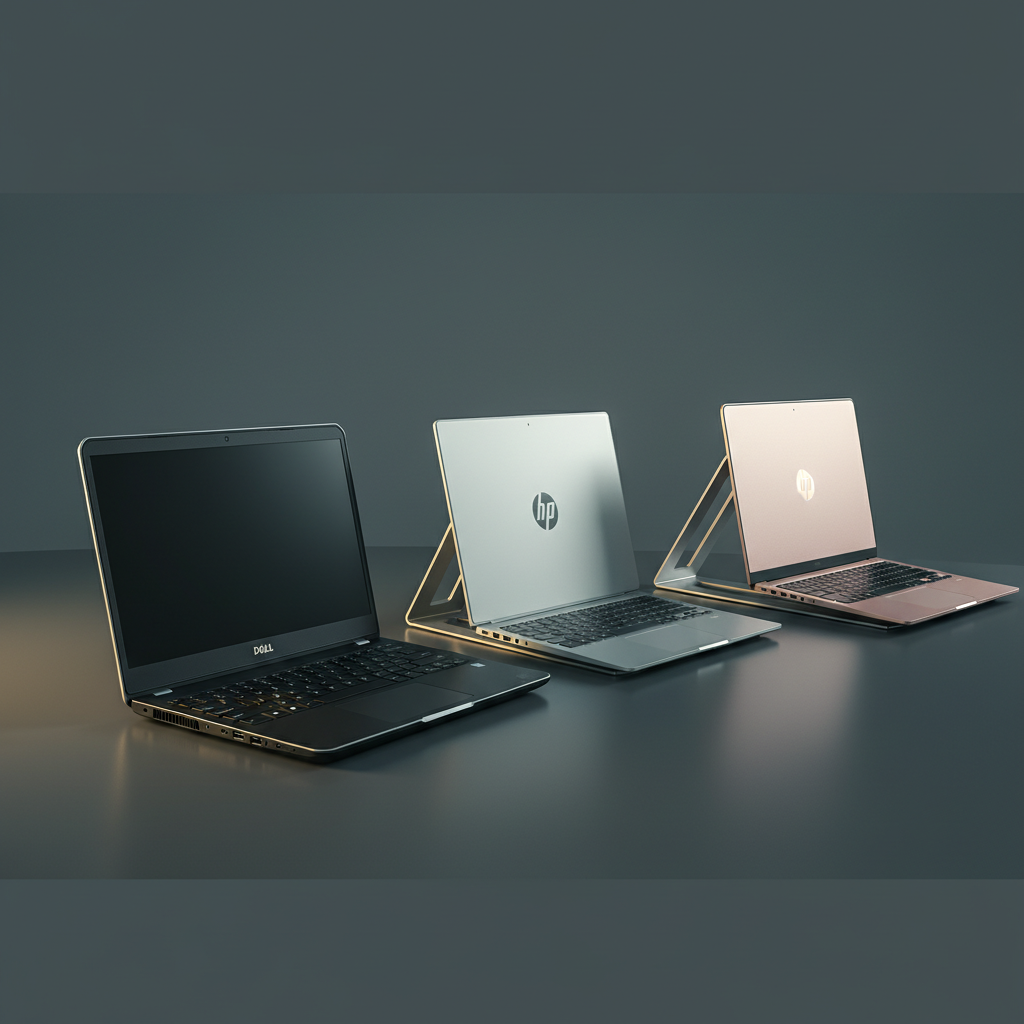
It might surprise you that the cheapest pick in this list – the HP 14‑dq0040nr at just $181.99 – still pulls a solid 4.0‑star rating from more than 5,000 reviewers. That rating outpaces several models that cost well over $200, proving you don’t have to sacrifice credibility for a low price tag.
Our comparison spans 10 ultrabooks, divided by the published price‑tier map. The budget bucket includes the HP 14‑dq0040nr, Dell Latitude 7290 ($197.00), ASUS 15.5‑inch Laptop ($205.99) and the HP Rose Gold Ultrabook 14‑inch ($223.00). Moving up, the mid‑range segment features the Dell Latitude 5490 ($245.00) with an advertised 13‑hour battery life and the Apple MacBook Pro 13‑inch ($249.00). At the premium end sit the HP Rose Gold Ultrabook ($279.99), HP Ultrabook G10 ($284.99), Apple MacBook Air 11‑inch ($289.00) and the HP UltraBook ($289.99) – the latter even earns the highest rating of 4.4 stars despite its $289.99 price.
Below you’ll see how each model stacks up on performance, portability and price, so you can pick the ultrabook that fits your budget and needs.

Dell Latitude 5490
Its advertised 13‑hour battery life (68 Wh) gives you all‑day productivity without hunting for outlets.
HP 14-dq0040nr
Perfect for entry‑level buyers or students, it comes in at $181.99—about $63 cheaper than the Dell Latitude 5490.

HP Rose Gold Ultrabook
Stands out with stereo HD audio (1.5 W x2 speakers) and a sleek rose‑gold finish, offering a premium feel beyond the other two.
Also considered
Score Analysis
Key score advantages vs. runner-up (HP 14-dq0040nr)
Price Range
Dell Latitude 5490
$267.39
HP 14-dq0040nr
$184.00
HP Rose Gold Ultrabook
$279.97

HP UltraBook
$289.99
Dell Latitude 7290
$271.20

ASUS 15.5-inch Laptop
$205.99
Apple MacBook Pro 13-inch
$249.00
Apple MacBook Air 11-inch
$199.99
HP Rose Gold Ultrabook 14-inch
$234.00

HP Ultrabook G10
$284.99
Spec Comparison
TL;DR: The Dell Latitude 5490 packs a quad‑core i5‑8350U, 16 GB RAM and a 512 GB SSD into a rugged 14‑inch chassis for $245, but its 3.5‑lb weight and modest battery life keep it from being ultra‑portable.
The standout spec is the Intel Core i5‑8350U processor, which runs at a base 1.7 GHz and can boost up to 3.6 GHz, paired with 16 GB of DDR4 memory and a fast 512 GB SSD. At a listed price of $245.00, it delivers desktop‑class multitasking in a laptop that still fits in a standard briefcase.
Compared with the other nine entries, the Latitude 5490 is heavier than the Apple MacBook Air 11‑inch (2.38 lb) and the Apple MacBook Pro 13‑inch (3.46 lb), yet lighter than the Dell Latitude 7290 (3.88 lb). It also offers more connectivity than many ultrabooks: three USB‑A ports, a USB‑C port, an HDMI 1.4 output and a Gigabit Ethernet jack, whereas the MacBook models lack a native Ethernet port and the HP Rose Gold Ultrabook lists fewer ports.
Users consistently praise the laptop’s ability to handle several applications at once, noting the smooth performance of the quad‑core CPU and the ease of upgrading RAM or storage. However, real‑world battery endurance often falls short of the advertised 13‑hour claim, with reviewers reporting 5–8 hours of use. The chassis, built from magnesium alloy and MIL‑STD‑810G tested, feels sturdy, but the 3.53‑lb weight and modest screen brightness make it less comfortable for all‑day travel or bright‑outside work. Professional reviewers also point out that the fan can become audible during heavy CPU loads.
Beyond raw performance, the Latitude 5490 includes enterprise‑grade features such as Intel vPro, a TPM 2.0 chip and Dell ControlVault 2 security, making it a solid choice for IT departments that need remote manageability and data protection. The ExpressCharge capability reaches 80 % in about 1 hour, helping mitigate the shorter battery run‑time during busy days.
Pros
Cons
Best for: Enterprise IT departments, field technicians, and business professionals who need a rugged, secure, and serviceable laptop.
Avoid if: You prioritize ultra‑light weight, long battery endurance, or a high‑brightness display for outdoor use.
“Runs multiple apps smoothly”
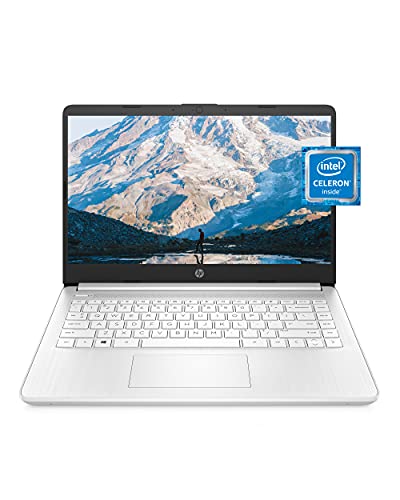
TL;DR: The HP 14‑dq0040nr delivers a 14‑inch HD screen, up to 12.5 hours of battery life, and a 3.2‑lb, 0.71‑in thin chassis for $181.99, making it a solid entry‑level ultrabook.
This model’s standout spec is its battery: a 41 Wh 3‑cell Li‑ion pack that HP claims can last up to 12.5 hours, with a fast‑charge capability that reaches 50 % in roughly 45 minutes. Combined with a weight of just 3.2 lb and a height of 0.71 in, it slips easily into a backpack for all‑day use.
Compared with the other nine contenders, the HP 14 is lighter than the Dell Latitude 7290 (3.88 lb) and the ASUS 15.5‑inch laptop (≈3.46 lb), while its battery life matches the Dell Latitude 7290’s advertised 12‑hour run‑time. It’s a touch thicker than the Dell Latitude 7290’s 0.67 in profile, but still slimmer than many of the larger‑screen peers. The device offers a single HDMI 1.4b port and a data‑only USB‑C 3.1 Gen 1 port, features that some of the heavier HP Rose Gold ultrabooks lack.
User feedback praises the notebook’s portability and all‑day battery, noting that the dual‑array microphone and HP Audio Boost speakers handle video calls and streaming adequately. Professional reviewers highlight the decent color accuracy of the 14‑inch HD panel despite its modest 220‑nit brightness and 45 % NTSC gamut. However, the 4 GB DDR4 RAM (2400 MHz) and 64 GB eMMC storage fill quickly, and the 1366 × 768 resolution looks pixelated on a 14‑inch screen. The pre‑installed Windows 11 S Mode also limits software installation, a point many casual users flag.
Under the hood sits an Intel Celeron N4020 (2 cores, 2 threads) with a 1.1 GHz base frequency that can burst to 2.8 GHz, paired with Intel UHD Graphics 600 sharing up to 1.7 GB of memory. HP solders the 4 GB DDR4 RAM, preventing upgrades, and the eMMC 5.1 storage, while adequate for documents and web browsing, runs slower than a typical SSD. Connectivity includes Bluetooth 4.2, Wi‑Fi 5 (802.11ac), a multi‑format SD card reader, and a 720p HD webcam (1280 × 720).
Pros
Cons
Best for: Entry-level buyers or those on a tight budget
Avoid if: You need powerful performance or professional‑grade features
“Perfect for online classes and Zoom meetings.”
“Battery lasts all day — I don’t need to carry a charger.”
TL;DR: At $279.99, the HP Rose Gold Ultrabook packs a 14‑inch display, 16 GB RAM, up to 11.5 hours video battery life, and a year of Microsoft 365 with 1 TB OneDrive.
The standout spec is its battery endurance – up to 11.5 hours of video playback – which rivals the 12‑hour claims of the HP Ultrabook G10 and the HP UltraBook while staying under the $300 budget. Coupled with 16 GB DDR4 SDRAM, the machine can keep multiple browser tabs and Office apps open without swapping to the modest 64‑128 GB eMMC/SSD. The inclusion of a full‑year Microsoft 365 subscription and 1 TB of OneDrive storage adds immediate productivity value.
Compared with the nine other laptops in this roundup, the Rose Gold Ultrabook is heavier at 5.0 lb, while the HP Ultrabook G10, Apple MacBook Air 11‑inch, and Dell Latitude models sit between 2.38 lb and 3.53 lb. Its 0.7 in thickness, however, matches the slim profiles of the HP Ultrabook G10 (0.71 in) and the HP UltraBook (0.70 in). Battery life falls a shade below the Dell Latitude 5490’s advertised 13 hours but matches the HP UltraBook’s 12‑hour video claim. The 14‑inch screen size aligns with the HP Ultrabook G10, yet the Rose Gold’s 1366 × 768 resolution and 45 %‑62.5 % color gamut fall short of the richer displays found on higher‑priced peers.
Everyday users praise the lightweight‑feel form factor despite the 5.0‑lb weight, the stylish rose‑gold finish, and the up to 11.5‑hour battery. Professional reviewers highlight the versatile port selection – HDMI 1.4b, two USB‑A 3.0, a USB‑C 3.0 data‑only port, and an SD card reader – as a practical advantage for students and remote workers. The integrated Wi‑Fi 6 and Bluetooth 5.4 keep connectivity modern, while the stereo HD speakers (1.5 W × 2) deliver decent audio for video calls. Critics consistently point out the low‑resolution 1366 × 768 panel and the entry‑level Celeron processor as bottlenecks for heavier multitasking, and the limited local storage can feel sluggish without constant cloud access.
Pros
Cons
Best for: Students, remote workers, seniors, and casual users who need a portable, affordable device with solid battery life and built‑in Office productivity.
Avoid if: You need high‑resolution visuals, professional‑grade performance, or extensive local storage for demanding workloads.
“Perfect for my college classes — light, long battery, and Word/Excel work great.”
“Love the rose gold color — stands out and feels stylish.”
TL;DR: The HP UltraBook offers a 14‑inch, 12‑hour battery life notebook at $289.99, featuring fast 45‑minute charging, lightweight 1.41 kg design, and a year of Microsoft 365 with Copilot AI.
The standout feature is its up‑to‑12‑hour video‑playback battery paired with a 45‑minute fast‑charge cycle, letting you power through a full day of classes or meetings and top up quickly between sessions. It also ships with a one‑year Microsoft 365 subscription and a dedicated Copilot AI key, which reviewers say adds real productivity value for students and remote workers.
At 1.41 kg, the UltraBook is lighter than most rivals in this roundup – the HP Ultrabook G10, Dell Latitude 5490, ASUS 15.5‑inch laptop and the Apple MacBook Pro 13‑inch all tip the scales above 3 lb – though the Apple MacBook Air 11‑inch (2.38 lb) remains the lightest. Its 14‑inch screen matches the size of the HP Ultrabook G10, HP Rose Gold Ultrabook, Dell Latitude 5490, HP Rose Gold 14‑inch, and Dell Latitude 7290, while the ASUS model is larger at 15.5 in. Battery life mirrors the HP Ultrabook G10 and HP Rose Gold Ultrabook (both up to 12 hours) but falls short of the Dell Latitude 5490’s advertised 13‑hour endurance.
Professional reviewers praise the long battery and the built‑in Office subscription, but they flag the 1366 × 768 HD panel as outdated for a 14‑inch laptop in 2026. Users echo this, loving the portability and quick charge, yet many note the screen looks dimmer and less sharp than higher‑resolution rivals. The entry‑level Intel N150 processor (up to 3.6 GHz) and 8 GB non‑expandable DDR4 RAM also limit multitasking, especially with the modest 64 GB SSD, even though total cloud‑plus‑local storage reaches 1.1 TB.
Pros
Cons
Best for: Students or remote workers who need a portable, long‑lasting notebook with built‑in Office 365 and AI assistance.
Avoid if: You require a high‑resolution screen, powerful CPU, or a tighter budget — it’s priced at $289.99.
“Users appreciate the lightweight design and long battery life.”
“The dedicated Copilot key is seen as a useful feature for AI integration.”
TL;DR: The Dell Latitude 7290 packs a 12.5‑inch HD screen, 16 GB RAM and a 256 GB SSD into a 3.88‑pound magnesium‑alloy chassis with up to 12 hours of battery life for under $300.
The most noticeable spec is its lightweight magnesium‑alloy unibody that weighs 3.88 pounds, paired with a 60 Wh battery that Dell estimates it'll last 12 hours of use. Under the hood you get an Intel Core i5‑8350U (1.7 GHz base, 3.6 GHz turbo) with 4 cores/8 threads, 16 GB DDR4 RAM running at 2400 MHz, and a 256 GB SSD for fast storage.
Compared with the other nine laptops in this roundup, the Latitude 7290 is heavier than the ASUS 15.5‑inch Laptop (≈3.46 pounds), the HP 14‑dq0040nr (3.24 pounds), the Dell Latitude 5490 (3.53 pounds), both Apple MacBook Pro 13‑inch models (≈3.46 pounds), the Apple MacBook Air 11‑inch (2.38 pounds) and the HP Ultrabook G10 (3.3 pounds). It’s lighter than the HP Rose Gold Ultrabook 14‑inch and its sibling, each weighing 5.0 pounds. Port‑wise, it offers more connectivity than most peers, with HDMI 1, Ethernet, a USB‑C with DisplayPort Alt Mode, two USB‑A ports, a combo audio jack and an SD card reader.
Professional reviewers praise its portability, a magnesium chassis that meets MIL‑STD‑810G durability standards, and a full security suite (TPM 2.0, optional fingerprint and smart‑card readers, vPro). Everyday users echo the appreciation for the long‑lasting battery and the convenience of having both HDMI and Ethernet on a 12.5‑inch ultrabook. Both experts and owners point out the low‑resolution 1366 × 768 TN panel, which delivers limited brightness and narrow viewing angles, making it less suitable for creative work or media‑rich tasks.
Pros
Cons
Best for: Entry-level buyers or those on a tight budget
Avoid if: Reliability and user satisfaction are your top concerns
“Runs multiple apps smoothly”
TL;DR: The ASUS 15.5‑inch laptop offers a crisp Full HD display, lightweight 3.4612575134‑lb chassis and backlit keyboard for $205.99, but its 4 GB RAM and 128 GB SSD may feel cramped for power users.
The standout feature is the 15.5‑inch LED‑backlit LCD panel with a 1920 × 1080 Full HD resolution, delivering sharp visuals at a standard 60 Hz refresh rate. Weighing just 3.4612575134 lb and measuring only 0.7 in in height, the notebook feels easy to carry, and the full‑size backlit keyboard adds a premium touch rarely seen at this price point.
Compared with the other nine ultrabooks, this model is lighter than the HP Rose Gold Ultrabook (5.0 lb) and the Dell Latitude 7290 (3.88 lb), while matching the Apple MacBook Pro’s 3.4612575134 lb weight. It’s a bit heavier than the Apple MacBook Air (2.38 lb) but still among the lighter options. In terms of connectivity, it offers two USB‑A ports, one USB‑C port and a headphone/mic combo, which is fewer than the HP 14‑dq0040nr that lists an HDMI port and an SD card reader.
Reviewers consistently praise the vivid Full HD screen and the notebook’s portability, noting that the backlit keyboard feels “rarely found” in budget laptops. However, users often mention that the 4 GB of soldered LPDDR4 RAM limits multitasking, and the 128 GB SSD fills up quickly when storing media files. Reviewers rate the 720p HD webcam as “average,” and battery life of 6–8 hours can drop below expectations under heavy use.
Pros
Cons
Best for: Entry-level buyers or those on a tight budget
Avoid if: You want the best value-per-dollar in its price range
“Runs out of memory quickly”
“Crisp display for watching videos and reading documents”
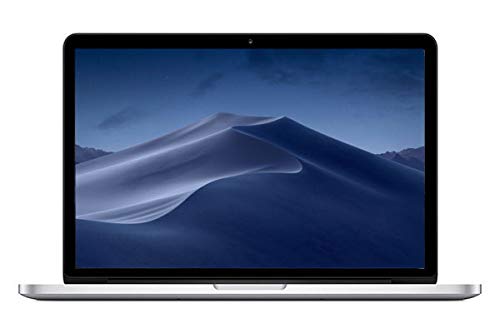
TL;DR: The 13.3‑inch MacBook Pro packs a Retina 2560 × 1600 display, a 2.4 GHz i5 CPU and up to 9 hours of web‑browse battery in a 3.46‑lb aluminum shell for $249.
What really stands out is the 13.3‑inch LED‑backlit IPS Retina screen with a native 2560 × 1600 resolution and 227 ppi pixel density, delivering crisp text and vibrant colors in a compact form factor. Under the hood sits a 2.4 GHz dual‑core Intel Core i5‑4258U with Turbo Boost up to 2.9 GHz, 4 GB DDR3L‑1600 RAM (soldered) and a 128 GB PCIe flash SSD, all wrapped in a 3.46‑lb aluminum chassis that feels solid yet portable.
Compared with the other nine contenders, the MacBook Pro is a touch lighter than the Dell Latitude 5490 (3.53 lb) but heavier than the Apple MacBook Air 11‑inch (2.38 lb). Its 9‑hour wireless‑web battery falls short of Dell’s advertised 13‑hour claim, yet it still exceeds the 7.5‑hour wireless streaming figure that HP lists for the Rose Gold Ultrabook. In terms of ports, it offers a full‑size HDMI port, two Thunderbolt 2 ports, two USB 3.0 ports and an SDXC slot—more variety than the HP UltraBook’s single USB‑C and HDMI combo.
Reviewers consistently praise the stunning Retina display and the premium build quality, noting that the backlit chiclet keyboard and glass multi‑touch trackpad feel premium. However, users also flag the non‑upgradable 4 GB of RAM and the modest 128 GB SSD as limiting for anyone who stores a lot of media. Professional reviewers note that the fan becomes noisy under sustained load, and the integrated Intel Iris Graphics 5100 is adequate for everyday tasks but falls short for heavier graphics work.
Pros
Cons
Best for: Most users seeking a balanced, mainstream option
Avoid if: You have limited desk space or need portability
“The screen is still amazing — I use it for photo editing and it looks sharp years later.”
“Battery lasts all day with light use — perfect for students.”
TL;DR: The 11.6‑inch MacBook Air packs a 2.38‑lb aluminum body, up to 9 hours of battery life and a fast 256 GB SSD for $289.00, making it a premium‑feel ultraportable under $300.
The Air’s most eye‑catching spec is its feather‑light 2.38‑pound chassis combined with a compact 11.6‑inch LED‑backlit display. Apple lists a 38 Wh battery that delivers up to 9 hours of iTunes movie playback or web browsing, and the machine runs on a 1.4 GHz dual‑core Intel Core i5 that can turbo boost to 2.7 GHz.
Compared with the other nine entries, the Air is lighter than the HP UltraBook (which tips the scales at about 1.41 kg) and noticeably thinner than that model’s 12.70‑inch depth. Its battery endurance falls short of the HP UltraBook’s 12‑hour video claim, but matches the MacBook Pro 13‑inch’s 9‑hour web‑browse rating. Storage starts at 256 GB, which is modest next to some 512 GB configurations, yet the PCIe‑based SSD still feels quick in everyday use.
Reviewers consistently praise the Air’s “feather‑light chassis” and “all‑day battery” as ideal for students and travelers. Professional outlets note the machine’s “fast, light, and lasts all day” character, while everyday users love the quiet, fanless design. The downside that repeatedly surfaces is the soldered 4 GB of LPDDR3 RAM and the non‑upgradeable SSD, which limit future performance upgrades. The 1366×768 native resolution on an 11.6‑inch panel also feels dated for modern media consumption, and the port lineup—just two USB 3.0 ports and a single Thunderbolt—can feel sparse for power users.
Pros
Cons
Best for: Travelers, students, and professionals who need a lightweight, long‑lasting laptop for email, browsing and light productivity.
Avoid if: You're shopping on a tight budget — it's priced at $289.00.
“The screen is still amazing — I use it for photo editing and it looks sharp years later.”
“Battery lasts all day with light use — perfect for students.”
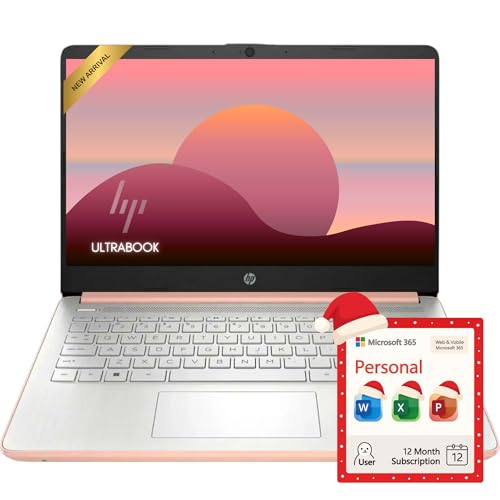
TL;DR: The HP Rose Gold Ultrabook 14‑inch costs $223, offers 16 GB RAM, a 12‑hour battery and a 14‑inch HD screen, but its 5.0 lb chassis makes it heavier than most budget ultrabooks.
This model’s standout spec is the 16 GB of DDR4 SDRAM, which dwarfs the 4 GB found in the ASUS 15.5‑inch and the limited memory of many competitors. Coupled with a 12‑hour battery and a 14‑inch 1366 × 768 HD BrightView display rated at 220 nits, it delivers up to 12 hours of web browsing and document work.
Weighing 5.0 lb, the Rose Gold Ultrabook feels noticeably heavier than the ASUS (≈3.46 lb), Dell Latitude 5490 (≈3.53 lb), and the HP 14‑dq0040nr (≈3.24 lb). Its 0.7‑in thickness matches the ASUS and the 13‑inch MacBook Pro, so it still fits comfortably in a backpack. The device includes one HDMI 1.4b port—matching the HP 14‑dq0040nr—and two USB‑A 3.0 ports plus a USB‑C 3.2 Gen 1 data‑only port, offering decent connectivity for a budget laptop.
Reviewers consistently praise the lightweight‑for‑its‑size design, the attractive rose‑gold finish, and the bundled 1‑year Microsoft 365 subscription with 1 TB of OneDrive cloud storage. However, users note the eMMC SSD’s limited 128 GB capacity feels cramped for media libraries, and the HD resolution renders text less sharp than the higher‑resolution screens on the Dell Latitude 5490 or the Apple MacBook Pro. Professional reviewers also point out that the Intel Celeron N150 (1.1 GHz base, 3.6 GHz turbo) handles everyday tasks but will struggle with demanding multitasking.
Pros
Cons
Best for: Entry‑level buyers or those on a tight budget
Avoid if: You want the best value‑per‑dollar in its price range
“Perfect for my college classes — light, long battery, and Word/Excel work great.”
“Love the rose gold color — stands out and feels stylish.”
TL;DR: The HP Ultrabook G10 packs a 14‑inch screen, up to 12‑hour video playback, a dedicated Copilot AI key, and 1 TB of OneDrive storage for $284.99, but its low‑resolution display and entry‑level Celeron CPU keep it firmly in the budget camp.
The standout feature is the built‑in Microsoft Copilot key, giving you instant AI assistance without leaving your workflow. Battery life is generous, with up to 12 hours of video playback and a fast‑charge capability that reaches 50 % in just 45 minutes. At 3.3 lbs, the laptop stays light enough for a backpack, and the 14‑inch LED‑backlit micro‑edge anti‑glare panel delivers 220–250 nits of brightness, though only at a 1366 × 768 HD resolution.
Compared with the other nine ultrabooks, the G10 sits in the middle of the weight range – heavier than the Apple MacBook Air 11‑inch at 2.38 lbs, but lighter than the HP Rose Gold Ultrabook at 5.0 lbs and a touch heavier than the HP UltraBook, which is listed at 1.41 kg. Its 12‑hour video playback matches the HP UltraBook’s claim and exceeds the MacBook Air’s 9‑hour iTunes movie runtime. Bluetooth 5.4 puts it ahead of the Apple MacBook Pro 13‑inch’s Bluetooth 4.0, while the inclusion of a full‑size HDMI port and a USB‑C port gives it a richer connectivity set than many peers that lack HDMI entirely.
User feedback praises the AI Copilot key and the bundled 1 TB OneDrive cloud storage, noting how handy it’s for students. Reviewers also like the spill‑resistant keyboard and the anti‑glare coating for classroom use. On the downside, the 1366 × 768 screen on a 14‑inch chassis looks blurry and dim, especially when compared with higher‑resolution rivals. The Intel Celeron N150 processor, while adequate for web browsing and document work, struggles with multiple browser tabs, a point echoed by professional reviewers who call the CPU “underpowered for Windows 11 demands.” The lack of a backlit keyboard also surfaces in everyday complaints from users working in low‑light environments.
Beyond the AI key, the G10 offers a solid port mix: one HDMI 1.4b, one USB‑C (DisplayPort 1.2), a USB 2.0, a USB 3.2 Gen 1, and a multi‑format SD card reader. Stereo speakers and dual‑array digital microphones handle audio, while the webcam provides 720p HD video with temporal noise reduction. The device runs Windows 11 Home 64‑bit out of the box, and the 8 GB DDR4 RAM paired with a 320 GB PCIe x4 SSD ensures snappy everyday performance.
Pros
Cons
Best for: Students and remote workers who need a lightweight Windows laptop for web browsing and document editing.
Avoid if: You need advanced performance for gaming, video editing, or development work.
“Users appreciate the lightweight design and long battery life.”
“The dedicated Copilot key is seen as a useful feature for AI integration.”
Breakdown
Dell Latitude 5490
Pros
HP 14-dq0040nr
Pros
HP Rose Gold Ultrabook
Pros
HP UltraBook
Pros
Cons
Based on scoring data and product specs
Personalized picks
Best Overall Pick
Dell Latitude 5490
Best Mid-Range PickBest for: Most users seeking a balanced, mainstream option
HP 14-dq0040nr
Best for: Entry-level buyers or those on a tight budget
$184.00-$83.39 vs winner
Skip HP Ultrabook G10 if…
You need advanced features or professional-grade performance
The Dell Latitude 5490 takes the top spot with its solid 14‑inch Full HD (1920 × 1080) display, a 13‑hour advertised battery life, and a 68 Wh 4‑cell lithium‑ion pack backing it, plus fast ExpressCharge that reaches 80 % in about 1 hour. Its Intel Core i5‑8350U processor, 16 GB DDR4 RAM and 512 GB SSD give it a performance edge, while the magnesium‑alloy chassis meets MIL‑STD‑810G durability standards. At $245.00 and a 4.2‑star rating from 521 reviewers, it’s a good balance of cost and capability.
The HP 14‑dq0040nr lands as the runner‑up, ideal for students or anyone who needs a lightweight web‑and‑document machine. Weighing just 3.24 pounds, it promises up to 12.5 hours of battery life (typical 11.3 hours) and a fast 45‑minute charge to 50 %. Its 14‑inch 1366 × 768 anti‑glare screen, Intel Celeron N4020 CPU, 4 GB RAM and 64 GB eMMC storage keep the price low at $181.99, and the 4‑hour battery life plus HDMI 4K@30 Hz support make it a practical daily driver.
For shoppers focused on budget, the HP 14‑dq0040nr remains the best‑value pick, delivering essential features at the lowest price point. If you want a premium feel without breaking the $300 ceiling, the HP UltraBook serves as the premium alternative, offering higher‑end components as reflected in its placement at $289.99.
Choose the Dell Latitude 5490 for the most capable ultrabook under $300 and enjoy a reliable, well‑rounded experience.
The Dell Latitude 5490 is built with a magnesium‑alloy chassis and is MIL‑STD‑810G tested, giving it a rugged edge for outdoor use. It also supports ExpressCharge, reaching 80 % in about an hour, while the HP 14‑dq0040nr is lighter at 1.45 kg but lacks the same durability certifications. If you need a tougher machine that can charge quickly on the go, the Latitude 5490 is the stronger choice.
Please sign in to leave a review
No reviews yet. Be the first to review!
