If you’re hunting for a Wi‑Fi access point that won’t bust your budget, the numbers speak for themselves. The TP‑Link TL‑WA1201 has amassed 4,327 reviews with an average rating of 4.2/5, while the Cudy AC1200 pushes the rating up to 4.6/5 from 478 reviewers. Both sit comfortably under $50, proving that solid dual‑band AC1200 performance can be cheap.
Our roundup compares six models that span the full price spectrum from $44.99 (the TL‑WA1201) up to $89.98 (the TP‑Link EAP720). The budget tier includes the TL‑WA1201 and Cudy AC1200, the mid‑range tier covers the Zyxel AX1800 and MikroTik hAP ac2, and the premium tier features the MikroTik cAP ac and TP‑Link EAP720. Across the board you’ll see 2.4 GHz speeds ranging from 300 Mbps to 688 Mbps and 5 GHz peaks from 867 Mbps up to 4,324 Mbps, so there’s a clear performance step‑up as you move up the tiers.
Below we break down each unit’s key specs, user sentiment, and real‑world fit, so you can match the right access point to your home office, apartment, or small‑business network.

MikroTik hAP ac2
Its 2.5 dBi antenna gain on 2.4 GHz delivers solid coverage while keeping price low.

MikroTik cAP ac
Ideal for audiophiles and enthusiasts who want premium sound quality, it costs about $10.26 more than the Top Choice.
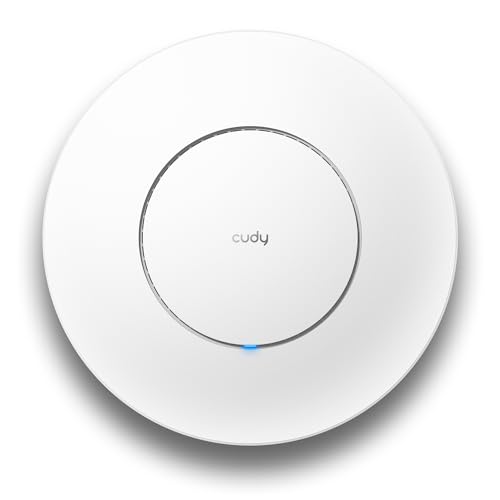
Cudy AC1200
Offers 100 m² coverage at just $49.99, making it the most affordable option for tight budgets while still delivering 300 Mbps on 2.4 GHz.
Also considered
Score Analysis
Key score advantages vs. runner-up (MikroTik cAP ac)
Price Range
MikroTik hAP ac2
$71.19
MikroTik cAP ac
$81.45
Cudy AC1200
$49.99
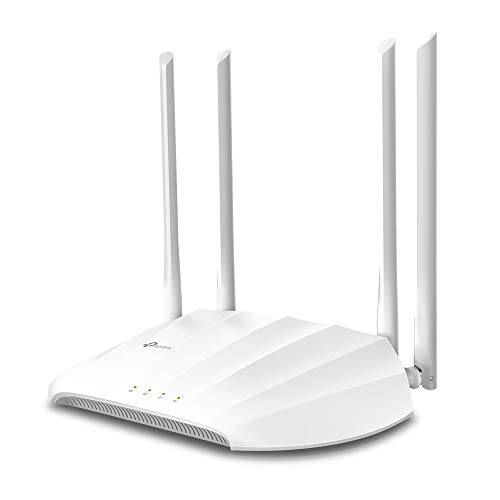
TP-Link TL-WA1201
$44.99

TP-Link EAP720
$89.98
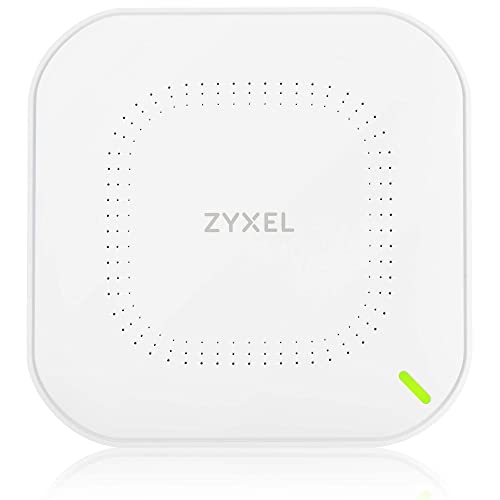
Zyxel WiFi 6 AX1800
$58.19
Spec Comparison
TL;DR: The MikroTik hAP ac² packs dual‑band AC1200 Wi‑Fi, five Gigabit Ethernet ports, and RouterOS features into a compact 0.66 lb unit for about $71, offering solid value for tech‑savvy homes or small offices.
The hAP ac²’s standout spec is its five Gigabit Ethernet ports combined with dual‑concurrent Wi‑Fi that reaches up to 1200 Mbps on the 5 GHz band and 300 Mbps on 2.4 GHz, all while weighing just 0.66 lb and drawing 15–21 W of power. Its 716 MHz quad‑core CPU and 128 MB of RAM give it enough headroom for typical SOHO traffic, and the built‑in USB 2.0 lets you attach a 3G/4G backup modem.
Compared with the other five contenders, the hAP ac² is lighter than the MikroTik cAP ac (1.48 lb) and about the same weight as the TP‑Link TL‑WA1201, while the Zyxel AX1800 tips the scales at 290 g, making it marginally lighter. Its 98 mm depth and 34 mm height are noticeably more compact than the Zyxel’s 140 mm side dimensions and 37.5 mm height, and it sits between the bulkier cAP ac (145 mm depth) and the slimmer TL‑WA1201 (225 mm depth). On the wireless front, its 5 GHz max rate of 1200 Mbps matches the Zyxel’s figure but falls short of the TP‑Link EAP720’s 4324 Mbps, while its 2.4 GHz speed of 300 Mbps is lower than the Zyxel’s 575 Mbps.
Reviewers consistently praise the device’s configurability and the richness of its wired ports, noting that the USB slot makes adding a cellular failover straightforward. However, users commonly complain about the 2.5 dBi antenna gain on both bands, reporting weaker coverage in larger homes. Professional reviewers also note that the modest CPU and memory can bottleneck performance under heavy traffic, and newcomers may find RouterOS’s learning curve steep.
Technical enthusiasts will appreciate the IPsec acceleration that delivers up to 424.5 Mbps per tunnel, and the dual‑concurrent radios let you run both bands simultaneously without sacrificing throughput. The device operates from –40 °C to +50 °C and supports passive PoE (18–28 V), giving flexibility for mounting in varied environments.
Pros
Cons
Best for: Home and office users seeking a balance of features and value
Avoid if: You have limited desk space or need portability
TL;DR: The MikroTik cAP ac delivers dual‑band AC1200 Wi‑Fi with a quad‑core CPU, PoE‑in/out and RouterOS L4, making it a flexible yet slightly heavier indoor AP for tech‑savvy users.
Its standout spec is the 716 MHz quad‑core IPQ‑4018 CPU paired with 128 MB of RAM, powering hardware‑accelerated IPsec encryption up to 424.5 Mbps. With 2 dBi (2.4 GHz) and 2.5 dBi (5 GHz) antenna gains, it offers solid indoor coverage while staying compact at 145 mm × 136 mm × 30 mm.
Compared with the five other APs in this roundup, the cAP ac's a bit heavier at 1.48 pounds, out‑weighing the TP‑Link TL‑WA1201 and MikroTik hAP ac2, but lighter than the bulkier TP‑Link EAP720. It provides two Gigabit Ethernet ports—more than the single‑port designs of some rivals—and its 13 W maximum power draw is modest against the 16.8 W consumption listed for the TP‑Link EAP720. While its antenna gains are lower than the higher‑gain designs found elsewhere, the device’s PoE‑in (802.3af/at) and passive PoE‑out give it an edge for powering downstream devices without extra cabling.
Reviewers appreciate the flexibility of RouterOS L4 and the enterprise‑grade IPsec throughput, noting that the AP can double as a reliable VPN endpoint. However, the same sources point out that the low antenna gains can limit range in larger spaces, and the advanced OS may be daunting for users without networking experience. The passive cooling design means the unit runs silently—it's a plus for quiet office or hotel rooms.
Pros
Cons
Best for: IT administrators, small‑business owners, or hotel setups that need customizable indoor Wi‑Fi with strong VPN capabilities.
Avoid if: You require a simple, plug‑and‑play AP, need extensive coverage in large‑area deployments, or prefer a lightweight ceiling‑mount solution.
TL;DR: The Cudy AC1200 delivers dual‑band Wi‑Fi 5 speeds up to 867 Mbps, supports 128 devices, and offers IP65‑rated outdoor‑ready hardware for just $49.99, making it a solid budget AP.
The standout spec is the 5 GHz max data rate of 867 Mbps paired with a 2.4 GHz rate of 300 Mbps, giving a combined AC1200 throughput that comfortably handles streaming and video calls. It also carries an IP65 rating, four internal antennas plus two detachable omni‑directional outdoor antennas, and supports 802.3af/at PoE, so you can mount it on a ceiling or wall without worrying about weather.
At roughly 1.06 lb, the unit is heavier than the 0.66 lb TP‑Link TL‑WA1201 and the 0.66 lb MikroTik hAP ac2, but lighter than the 1.48 lb MikroTik cAP ac. Its 280 mm height and 500 mm square footprint are also larger than the compact 37 mm‑tall TL‑WA1201 or the 34 mm‑tall hAP ac2, giving it a more substantial presence that suits outdoor or office installations where size isn’t a constraint.
Reviewers consistently praise the dual‑band speeds and the flexibility of PoE versus a DC adapter. A YouTube reviewer highlighted the “867 Mbps on 5 GHz” across multiple devices, while professional commentary notes the strong mesh and controller features for small‑business environments. Users appreciate the reliable multi‑device performance, though some note the recommended client limit of 50 devices could become a bottleneck in very busy networks.
Under the hood sits an 880 MHz dual‑core CPU, 128 MB DDR3 RAM and 16 MB NOR flash, delivering enough processing power for MU‑MIMO on the 5 GHz band and beamforming on both bands. The device covers about 100 m² and reaches a nominal range of 170 m, while drawing only 5 W at idle and up to 18 W at full load, keeping power costs low.
Pros
Cons
Best for: Entry-level buyers or those on a tight budget
Avoid if: You need advanced features or professional‑grade performance
“impressive dual-band speeds (867+300 Mbps) across multiple devices, handling over 100 connections seamlessly”
TL;DR: The TP‑Link TL‑WA1201 delivers dual‑band AC1200 speeds with MU‑MIMO and beamforming at a sub‑$50 price, making it a solid budget indoor access point for small offices.
The TL‑WA1201 packs four fixed high‑performance antennas and supports MU‑MIMO, which lets up to a dozen devices share the connection without a big speed drop. It tops out at 867 Mbps on the 5 GHz band and 300 Mbps on 2.4 GHz, giving a combined 1.2 Gbps ceiling while staying under a lightweight 0.66 lb (300 g) chassis that measures 225 mm × 145.5 mm × 37 mm.
At under $50, it’s cheaper than the Zyxel AX1800 and the MikroTik models, though the Cudy AC1200 sits in a similar price range. Compared with the MikroTik hAP ac2, the TL‑WA1201 is deeper (225 mm vs 98 mm) but shares the same 0.66 lb weight. It’s lighter than the Cudy (1.06 lb) and the MikroTik cAP ac (1.48 lb). While Zyxel’s unit weighs only 290 g, making it a tad lighter, the TL‑WA1201 offers more antennas than the Zyxel’s single‑band design and includes captive‑portal and multi‑SSID support that the Cudy does not list.
Professional reviewers note that the MU‑MIMO and beamforming features translate to smoother streams for up to 10‑20 clients, a common praise in user forums. The downside is the lack of Wi‑Fi 6 (802.11ax) support, which newer devices may expect, and the single Gigabit Ethernet port limits wired uplinks. The device runs on passive PoE with a 12 V / 1.5 A input and follows CE transmit‑power limits of <20 dBm (2.4 GHz) and <23 dBm (5.15‑5.25 GHz), suitable for typical indoor office layouts.
Pros
Cons
Best for: Shoppers on a tight budget who want the most for their money
Avoid if: You have limited desk space or need portability
TL;DR: The TP‑Link EAP720 delivers Wi‑Fi 7 speeds up to 5.0 Gbps on a compact 0.9‑lb ceiling‑mount design, but its $89.98 price and lack of an included power adapter keep it in the premium‑budget niche.
The headline spec is the 5.0 Gbps max aggregate speed – 4,324 Mbps on 5 GHz plus 688 Mbps on 2.4 GHz – thanks to Wi‑Fi 7, 3×3 MIMO on 5 GHz and 2×2 MIMO on 2.4 GHz. With four internal antennas (two 6 dBi on 5 GHz, two for 2.4 GHz and a 4 dBi Bluetooth antenna) it also supports Multi‑Link Operation, airtime fairness and seamless roaming, which serves dense office or classroom environments well.
Compared with the other five entries, the EAP720’s speed ceiling is far higher. The MikroTik cAP ac tops out at 300 Mbps on 2.4 GHz, while the MikroTik hAP ac2 reaches 1.2 Gbps combined (300 Mbps + 1,200 Mbps). Zyxel’s AX1800 and Cudy AC1200 sit around 1.7 Gbps and 1.2 Gbps combined, respectively, and the TL‑WA1201 uses older 802.11ac/n standards with no published max rates. Even the hAP ac2’s 1.2 Gbps 5 GHz speed is less than a third of the EAP720’s 4.3 Gbps. The EAP720 is also lighter (0.9 lb) than the MikroTik cAP ac (1.48 lb) and similar in size to the hAP ac2 (0.66 lb) while offering a dedicated 2.5 Gbps Ethernet port.
Reviewers highlight the “up to 5 Gbps” claim as a major strength for high‑density use, and they appreciate the integrated Bluetooth antenna for IoT devices. However, several notes mention that regional regulations can trim the 5 Gbps figure down to roughly 3.6 Gbps, and the package does not include a power adapter despite offering PoE or a 12 V/1.5 A DC option. The device draws 16.8 W under load and 6.7 W when idle, which is reasonable for its class.
Pros
Cons
Best for: Those prioritizing quality and willing to pay for premium performance
Avoid if: You need advanced features or professional‑grade performance
TL;DR: The Zyxel NWA50AX delivers AX1800 Wi‑Fi 6 speeds up to 1.8 Gbps in a compact 140 mm square form factor, with cloud‑managed features and a solid 4.3‑star rating for under $60.
The standout spec delivers a 1.8 Gbps maximum throughput, using a 5 GHz channel that tops out at 1200 Mbps and a 2.4 GHz channel at 575 Mbps. Paired with 2×2 MU‑MIMO and fast roaming support (802.11r/k/v), the unit targets dense indoor environments where seamless hand‑off matters.
Compared with the other five budget APs, the Zyxel weighs 290 g—lighter than the Cudy AC1200 (480 g) and the MikroTik cAP ac (671 g), and almost the same as the MikroTik hAP ac2 and TP‑Link TL‑WA1201 (both around 300 g). Its 140 × 140 × 37.5 mm footprint measures far smaller than the Cudy’s 280 mm height and 500 mm length, while the MikroTik hAP ac2 sits a bit lower at 34 mm. Speed‑wise, the Zyxel matches the MikroTik hAP ac2’s 5 GHz 1200 Mbps rate and exceeds the Cudy’s 867 Mbps, giving it a clear edge in raw wireless bandwidth.
Reviewers consistently note the ease of deployment via the Nebula cloud portal and the reliability of band steering and rogue AP detection. The 1,010,980‑hour MTBF figure reinforces the long‑term durability that users appreciate. However, a few users call out the lack of load‑balancing and the fact that only two spatial streams are available, which can feel limiting in larger multi‑AP setups.
Pros
Cons
Best for: Most users seeking a balanced, mainstream option
Avoid if: You prefer products with extensive real‑world feedback and proven track records
Breakdown
MikroTik hAP ac2
Pros
MikroTik cAP ac
Pros
Cudy AC1200
Pros
Cons
TP-Link TL-WA1201
Pros
Cons
Based on scoring data and product specs
Personalized picks
Best Overall Pick
MikroTik hAP ac2
Best OverallBest for: Home and office users seeking a balance of features and value
MikroTik cAP ac
Best for: Audiophiles and enthusiasts seeking premium sound quality and advanced features
$81.45+$10.26 vs winner
Skip Zyxel WiFi 6 AX1800 if…
You prefer products with extensive real-world feedback and proven track records
The MikroTik hAP ac2 wins the top award. It’s priced at $71.19, carries a 4.4‑star rating from 846 reviewers, and supports dual‑concurrent Wi‑Fi with a 5 GHz max data rate of 1200 Mbps. Its five gigabit Ethernet ports and a 716 MHz quad‑core CPU give you plenty of headroom for everyday networking tasks.
The runner‑up is the MikroTik cAP ac, ideal if you need a ceiling‑mounted access point for a larger office or classroom. It offers ceiling or wall mounting, PoE passthrough for easy power delivery, and two gigabit Ethernet ports, all in a compact 1.48‑lb unit.
Pick the MikroTik hAP ac2 for the most capable budget Wi‑Fi access point you can buy today.
The Cudy AC1200 is the most outdoor‑ready option, featuring an IP65 rating and two detachable omni‑directional high‑gain antennas that can be mounted outside. Its rugged enclosure and weather‑proof design make it ideal for exterior use.
No reviews yet — be the first to share your experience.
Please sign in to leave a review
