Rankings
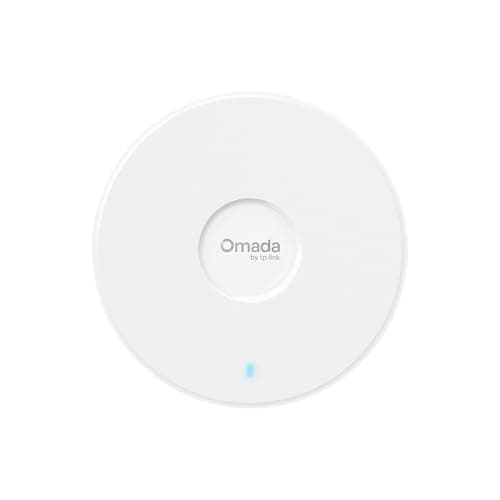
The TP-Link EAP720 (BE5000) brings Wi-Fi 7 performance with up to 5 Gbps aggregate speed, 2.5 Gbps PoE+ Ethernet, and comprehensive mesh and IoT features. Its higher power draw and newer technology may increase cost and power-budget requirements. Targeted at SMBs seeking cutting-edge wireless capacity.
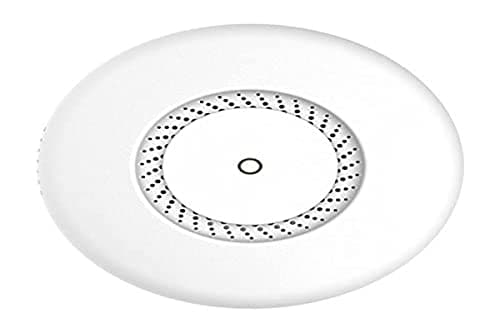
The MikroTik cAP ac is a dual-band AC1200 indoor access point featuring a quad-core CPU and integrated PoE-in/out for powering downstream devices. Its low-gain antennas and complex RouterOS configuration can limit range and ease of use. Ideal for small-business environments needing advanced VPN performance.
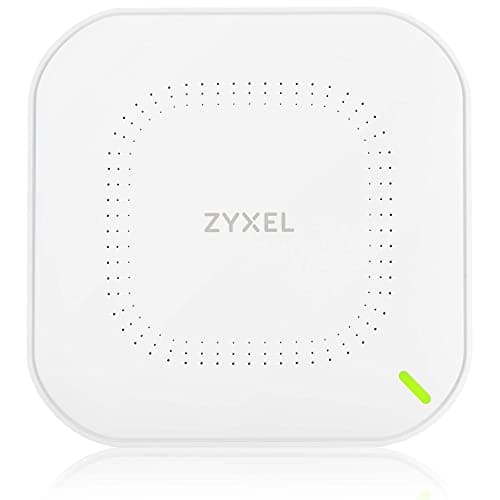
The Zyxel NWA50AX is an indoor AX1800 Wi-Fi 6 access point offering up to 1.8 Gbps aggregate speed and built-in mesh capability. Its absence of load-balancing and reliance on external power adapters limit flexibility for more demanding networks. Suited for small-to-medium offices or homes needing compact Wi-Fi 6 coverage.
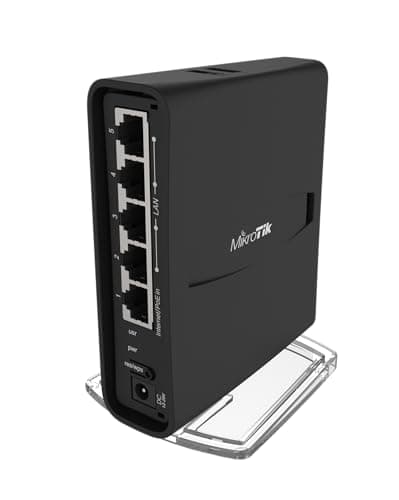
The MikroTik hAP ac² combines dual-band AC1200 Wi-Fi with five Gigabit Ethernet ports and USB support, providing a versatile router/AP solution. Its lack of Wi-Fi 6, low antenna gain, and modest hardware can restrict performance in demanding environments. Perfect for tech-savvy home or small-office setups requiring extensive wired connectivity.
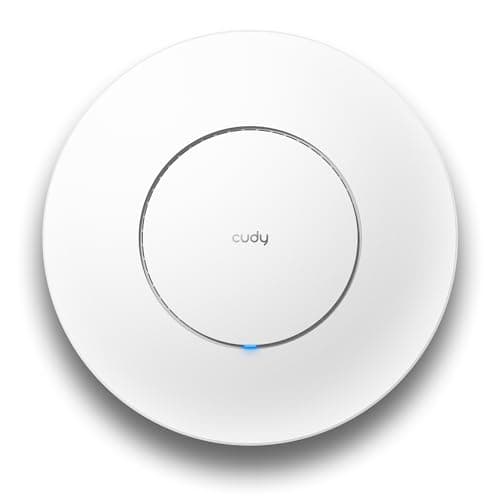
The Cudy AC1200 AP1300 is a dual-band Wi-Fi 5 access point delivering up to 867 Mbps on 5 GHz and 300 Mbps on 2.4 GHz, with MU-MIMO, beamforming and IP65 outdoor durability. Its reliance on Wi-Fi 5 and a single Ethernet port may limit performance in high-density or future-proof scenarios. Ideal for small-business or home deployments that need a rugged, budget-friendly AP with mesh capability.
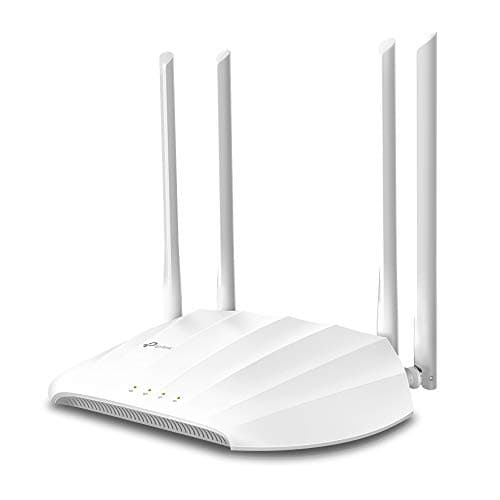
The TP-Link TL-WA1201 is a dual-band AC1200 access point featuring MU-MIMO, beamforming, and passive PoE for small-business indoor use. It lacks Wi-Fi 6 and mesh capabilities, and its single Ethernet port restricts network expansion. Suitable for modest environments with 10-20 concurrent devices.
| Attribute | | | | | | |
|---|---|---|---|---|---|---|
1,200 Mbps | 867 Mbps | 867 Mbps | 867 Mbps | 4,324 Mbpsbest | 1,200 Mbps | |
— | — | 100 sqmbest | — | — | — | |
300 Mbps | 300 Mbps | 300 Mbps | 300 Mbps | 688 Mbpsbest | 575 Mbps | |
5best | 2 | 1 | 1 | 1 | — | |
2 | 2 | — | — | 3best | 2 | |
| ↓ lower better | 16 W | — | 5 Wbest | — | 16.8 W | — |
| ↓ lower better | 21 W | 13 Wbest | 18 W | — | 17.8 W | — |
| ↓ lower better | 300 g | 671 g | 480 g | 300 g | 408 g | 290 gbest |
Click an attribute name to sort · Green = best, red = worst (relative to this comparison)
| Attribute | | | | | | |
|---|---|---|---|---|---|---|
Network(2) | ||||||
Wi‑Fi Standard | 802.11ac | 802.11ac | Wi‑Fi 5 (802.11ac) | Wi‑Fi 5 (802.11ac) | Wi‑Fi 7 (802.11be) | 802.11ax |
Frequency Bands | 2.4/5 GHz | 2.4/5 GHz | 2.4 GHz, 5 GHz | Dual-band (2.4 GHz & 5 GHz) | Dual-band (2.4 GHz & 5 GHz) | 2.4 GHz, 5 GHz |
Performance(3) | ||||||
Max Data Rate (5 GHz) (Mbps) | 1200 Mbps | 867 Mbps | 867 Mbps | 867 Mbps | 4324 Mbps | 1200 Mbps |
Max Data Rate (2.4 GHz) (Mbps) | 300 Mbps | 300 Mbps | 300 Mbps | 300 Mbps | 688 Mbps | 575 Mbps |
Spatial Streams | 2 | 2 | — | — | 3 | 2 |
Features(1) | ||||||
Security Protocols | — | — | — | WPA2 | WPA2‑PSK/ENT, WPA‑PSK, WPA3‑Personal/ENT | WPA3 |
Power & Power Supply(3) | ||||||
PoE Standard | Passive | 802.3af/at | 802.3af/at | Passive PoE | 802.3at | 802.3at |
Power Consumption (W) | 16 W | — | 5 W | — | 16.8 W | — |
Maximum Power Consumption (W) | 21 W | 13 W | 18 W | — | 17.8 W | — |
Design & Build(4) | ||||||
Ethernet Ports | 5 | 2 | 1 | 1 | 1 | — |
Mounting Options | Horizontal, vertical | Ceiling, wall | — | — | Ceiling or wall (kit included) | — |
Dimensions (L×W×H) (mm) | 34x119x98 mm | 136x145x145 mm | 500x280x500 mm mm | 145.5 x 225 x 37 mm mm | 35.6 x 160 mm mm | 140×140×37.5 mm mm |
Weight (g) | 300 g | 671 g | 480 g | 300 g | 408 g | 290 g |
Products in the top-left offer the best value (high score, low price).
Professional reviewers and editors commend the hAP ac² for its robust feature set at a low price, especially the hardware-accelerated IPsec engine and the flexibility of RouterOS Level 4. They also note its compact design, PoE capability, and USB modem support as strong points for small-office deployments, while calling out the modest CPU/RAM and lack of Wi-Fi 6 or SFP as limitations for more demanding scenarios.
Everyday users value the device's configurability, Ethernet richness, and ability to add a 3G/4G backup via USB, but many express frustration with the limited Wi-Fi range, the steep learning curve of RouterOS, and performance drops in congested wireless environments.
“impressive dual-band speeds (867+300 Mbps) across multiple devices, handling over 100 connections seamlessly”
Professional sources note that the cAP ac stands out for its enterprise-grade features, especially the high-performance hardware IPsec engine and the ability to pass PoE through to downstream devices. The OpenWrt community also commends the powerful quad-core CPU, making it attractive for users who want to run custom firmware or advanced routing services.
No direct user reviews were found in the research data, so everyday consumer sentiment cannot be summarized beyond the inference that the product is praised for flexibility but may be considered complex to set up.
Professional reviewers commend the Cudy AP1300 for delivering strong dual-band throughput, handling over 100 connections smoothly, and offering versatile power and mounting options. The inclusion of a centralized controller and Mesh capability is seen as a solid value proposition for small-business and home deployments, especially where outdoor coverage is needed.
User-generated feedback is scarce, but the limited comments that appear are generally positive, noting reliable multi-device performance and satisfaction with the outdoor-ready version. No major recurring complaints were identified in the available sources.
No professional reviews or editor quotes were found for the TL‑WA1201; manufacturer descriptions position it as an ideal indoor AP for small businesses, highlighting captive‑portal guest access, MU‑MIMO, beamforming, and passive PoE deployment.
User feedback is not available in the sources; there are no direct consumer reviews, praise, or complaints to summarize.
