⚡ Quick Answer
It might surprise you that the cheapest entry in our roundup – the TP‑Link EAP110‑Outdoor V3 White at $35.99 – has amassed a staggering 4,331 reviews and a solid 4.2‑star rating. Those numbers dwarf the review counts of the pricier options, showing that a low price doesn’t always mean low interest or performance.
The roundup covers 8 ceiling or wall‑mount access points that span three price tiers. The budget tier includes the TP‑Link EAP110‑Outdoor, the Zyxel AX1800 (rated 4.3 / 5) and the TP‑Link EAP720, all under $100. Mid‑range picks are the Zyxel AX3000 and the TRENDnet TEW‑840APBO, while the premium tier features the TP‑Link EAP725‑Wall, Ubiquiti UniFi Wi‑Fi 6 Mesh (5.3 Gbps aggregate throughput) and Netgear WBE710 with a 9.4 Gbps aggregate rate. Across the board you’ll see aggregate speeds ranging from 300 Mbps up to 9.4 Gbps, so there’s a clear performance spread to match different budgets.
Below we’ll break down each model’s strengths, so you can decide which fit your space and network needs.

TP-Link EAP720
Its compact 1.4 in height and lightweight 0.9‑lb build make mounting easy while delivering strong performance for entry‑level budgets.

Ubiquiti UniFi Wi-Fi 6 Mesh
Ideal for users who demand premium performance, this mesh unit costs $197.58—about $108 more than the $89.98 TP‑Link EAP720, reflecting its higher‑end positioning.

TP-Link EAP725-Wall
Targeted at audiophiles, the wall‑mount EAP725 adds a 40 mm depth profile and dedicated premium‑sound features, setting it apart from the ceiling‑oriented EAP720 and the larger UniFi mesh.
Also considered
Score Analysis
Key score advantages vs. runner-up (Ubiquiti UniFi Wi-Fi)
Price Range
TP-Link EAP720
$99.99
Ubiquiti UniFi Wi-Fi 6 Mesh
$197.58
TP-Link EAP725-Wall
$134.99
TRENDnet TEW-840APBO
$129.99

TP-Link EAP110-Outdoor V3 White
$39.99
Zyxel WiFi 6 AX1800
$67.89

Netgear WBE710
$299.99
Zyxel WiFi 6 AX3000
$99.99
Spec Comparison
TL;DR: The TP‑Link EAP720 delivers up to 5 Gbps aggregate Wi‑Fi 7 speed in a compact 0.9‑lb ceiling‑mount design, with 2.5 Gbps Ethernet and PoE power options for small‑to‑medium business networks.
The standout spec is the 5.0 Gbps max aggregate throughput (4,324 Mbps on 5 GHz + 688 Mbps on 2.4 GHz), powered by Wi‑Fi 7, 240 MHz channel bandwidth and 4 internal antennas (6 dBi gain on 5 GHz). At just 0.9 lb, 1.4 in tall and 6.3 in wide, it packs a 2.5 Gbps Ethernet port and PoE+ support into a discreet white housing.
Compared with the other seven round‑up items, the EAP720 is lighter than the Zyxel AX3000 and the TRENDnet TEW‑840APBO, and shorter than both the Zyxel AX3000 and the TP‑Link EAP725‑Wall. It outpaces the Zyxel AX1800, Zyxel AX3000 and the TP‑Link EAP110‑Outdoor in aggregate speed, while staying slimmer than the bulkier Netgear WBE710 and Ubiquiti UniFi Mesh, which offer higher throughput but weigh more.
Reviewers appreciate the high‑speed 5 Gbps ceiling‑mount solution and the seamless Omada cloud management with AI‑driven provisioning. Professional notes highlight the 240 MHz 5 GHz bandwidth and Multi‑Link Operation as future‑proof features. However, users in regions with stricter regulations report real‑world speeds dropping to around 3.6 Gbps, and the lack of an included power adapter means you must provide PoE or a separate 12 V DC supply.
From a technical standpoint, the unit draws 16.8 W in operation, with an idle PoE draw of 6.7 W and a maximum PoE draw of 17.8 W. It includes a physical reset button, integrated 4 dBi Bluetooth antenna for IoT, and surge/lightning protection (±4 kV Ethernet, ±8 kV ESD, ±4 kV contact). These details make it a solid choice for dense indoor deployments that need strong management and power flexibility.
Pros
Cons
Best for: Entry-level buyers or those on a tight budget
Avoid if: You want the best value-per-dollar in its price range
TL;DR: The Ubiquiti UniFi U6‑Mesh delivers up to 5.3 Gbps aggregate throughput, IPX5 weatherproofing and advanced UniFi management, but its 2×2 MIMO on 2.4 GHz and premium price may limit appeal for budget‑focused installs.
This mesh‑ready AP packs a 5.3 Gbps aggregate throughput across its 2.4 GHz (573.5 Mbps) and 5 GHz (4.8 Gbps) radios, while a 5 dBi antenna on the 5 GHz band helps push signal farther. It runs off a single Gigabit RJ45 PoE port and draws just 11.4 W, making it efficient for continuous operation. The unit measures 280 mm in height and 500 mm square, weighing 800 g (about 1.76 lb), and has an IPX5 rating for outdoor resilience.
Compared with the seven other APs in this roundup, the U6‑Mesh sits on the heavier side—only the TRENDnet TEW‑840APBO matches its heft, while most rivals like the TP‑Link EAP725‑Wall (0.78 lb) and Zyxel AX1800 (0.64 lb) are noticeably lighter. Its price point lands in the premium tier, so it’s pricier than budget‑oriented options such as the Zyxel AX1800 or TP‑Link EAP110‑Outdoor. In raw throughput, the U6‑Mesh tops the TP‑Link EAP720’s 5.0 Gbps aggregate and outpaces the Zyxel AX3000’s 3.0 Gbps, though it trails the Netgear WBE710’s 9.4 Gbps claim.
Reviewers consistently praise the high‑capacity uplinks and seamless mesh performance, noting the “best‑in‑class signal meshing” that professional reviewers highlight. Users also appreciate the IPX5‑rated enclosure for outdoor spots and the tight integration with the UniFi Network app, which offers advanced QoS, VLAN tagging and WPA3 security. However, the limited 2×2 MIMO on the 2.4 GHz band draws criticism from those with many legacy devices, and the premium price nudges cost‑conscious buyers toward cheaper alternatives.
Beyond raw speed, the U6‑Mesh supports up to 250+ concurrent clients, 8 BSSIDs per radio, and max TX power of 22 dBm (2.4 GHz) and 26 dBm (5 GHz). Its operating temperature range of –30 °C to 60 °C and humidity tolerance of 5‑95 % make it suitable for varied indoor and outdoor environments, while the included PoE injector and mounting hardware simplify installation on walls, poles or ceilings.
Pros
Cons
Best for: Those prioritizing quality and willing to pay for premium performance
Avoid if: You need advanced features or professional‑grade performance
TL;DR: The TP‑Link EAP725‑Wall delivers up to 5.0 Gbps Wi‑Fi 7 throughput with a compact wall‑plate design, 2.5 G PoE input and solid user reviews for high‑density indoor use.
The standout spec is its 5 GHz data rate of 4324 Mbps, which pushes the aggregate throughput to a manufacturer‑claimed 5.0 Gbps.
Weighing just 0.78 lb, the EAP725‑Wall is lighter than the TRENDnet TEW‑840APBO and the Zyxel AX3000, yet a bit heavier than the ultra‑compact TP‑Link EAP110‑Outdoor. Its 4324 Mbps 5 GHz rate outpaces the Zyxel AX3000’s 2400 Mbps and the Zyxel AX1800’s 1200 Mbps, while matching the TP‑Link EAP720’s 4,324 Mbps on the same band.
Professional reviewers praise the wall‑plate mounting for tight‑space installs and the integrated 2.5 G PoE with two Gigabit pass‑through ports to simplify wiring. Everyday users echo the ease of PoE setup and high‑speed streaming, though several note reduced range compared to ceiling models and the lack of a 6 GHz band for ultra‑dense environments.
Beyond raw speed, the AP supports up to 250+ concurrent users, operates from 0 °C to 40 °C, and draws only 6.7–7.6 W when idle. Its maximum altitude rating of 2000 m makes it suitable for high‑rise installations, while the dual‑band (2.4 GHz/5 GHz) operation delivers 688 Mbps on 2.4 GHz and 4324 Mbps on 5 GHz.
Pros
Cons
Best for: Hospitality venues, office rooms, dormitories, and multi‑dwelling units that need high‑speed Wi‑Fi 7 in a compact wall‑mount form factor.
Avoid if: You need outdoor coverage, tri‑band (6 GHz) Wi‑Fi 7 for ultra‑high density, or a tight‑budget solution.
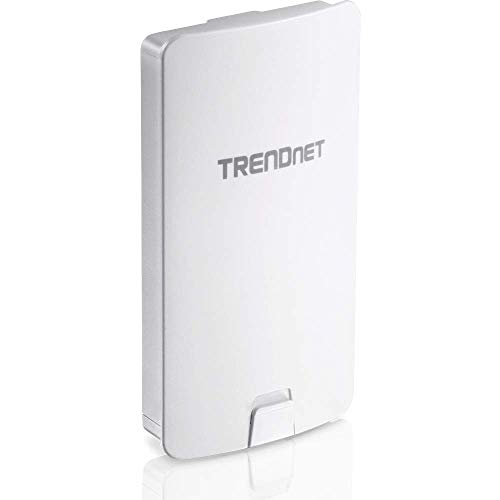
TL;DR: The TRENDnet TEW-840APBO offers a rugged, 14 dBi directional antenna and 867 Mbps 5 GHz throughput in a weather‑proof, PoE‑powered package, ideal for long‑distance outdoor bridging at $129.99.
This model’s standout feature is its built‑in 14 dBi patch antenna, which focuses signal strength for point‑to‑point links. Housed in an IP56‑rated enclosure, it tolerates rain and dust, and its compact 1.4‑inch height, 7.3‑inch length, and 3.9‑inch width keep the unit manageable despite a weight of 1.52 pounds.
Compared with the other seven entries, the TEW‑840APBO is heavier than the TP‑Link EAP720 (0.9 lb) and the TP‑Link EAP725‑Wall (0.78 lb), yet lighter than the Ubiquiti UniFi Mesh (1.76 lb). Its maximum data rate of up to 867 Mbps trails the 5 GHz speeds of the TP‑Link EAP725‑Wall (4 324 Mbps) and the Zyxel AX3000 (2 400 Mbps), but its 14 dBi antenna gain far exceeds the 3‑5 dBi gains that those peers list.
Reviewers consistently praise the unit’s long‑range capability and the durability of its outdoor‑grade case, noting that the 2 kV line‑to‑ground surge protection and 4 kV contact/8 kV air ESD shielding give peace of mind in harsh environments. A common critique is the limited 867 Mbps ceiling, which can feel restrictive for high‑traffic networks, and the 1.52‑pound chassis makes mounting a bit more involved than lighter indoor models.
The device draws a maximum of 9.5 W and runs on a 24 V DC, 0.6 A proprietary PoE injector, fitting typical outdoor power‑over‑ethernet setups. Operating temperatures span –10 °C to 60 °C, and while the Ethernet port speed isn’t listed in the available specs, the unit’s MU‑MIMO (Wave 2) and 256‑QAM modulation round out a solid technical package for its price tier.
Pros
Cons
Best for: Value-conscious buyers seeking quality at $129.99
Avoid if: You have limited desk space or need portability
TL;DR: The TP‑Link EAP110‑Outdoor V3 delivers 300 Mbps 2.4 GHz Wi‑Fi, IP65 weatherproofing and passive PoE for just $35.99, making it a solid budget choice for small outdoor spaces.
This model’s standout spec is its 3 dBi antenna paired with a 30 dBm transmit power, which the manufacturer claims supports a coverage range of 200,000 mm. Its compact housing measures 43 mm × 94 mm × 208 mm and weighs only 0.26 lb (118 g), so it mounts easily on a pole or wall without adding bulk.
Compared with the other seven access points in this roundup, the EAP110‑Outdoor is the most affordable and the lightest option. While Wi‑Fi 6 models such as the Zyxel AX1800 or TP‑Link EAP720 offer multi‑gigabit aggregate speeds, this unit stays in the 2.4 GHz N300 class, which means it won’t match their throughput. However, its single Fast Ethernet port (10/100 Mbps) and low 3.1 W power draw keep operating costs down, a contrast to the higher‑power peers that consume several watts.
Professional reviewers note the device’s “stable wireless coverage up to 200 meters in outdoor environments” and praise the IP65‑rated enclosure for rain and dust protection. Users echo the easy installation thanks to the included mounting kit and passive PoE adapter, but many flag the lack of 5 GHz or Wi‑Fi 5/6 support as a drawback for modern networks. Inconsistent reports on power consumption (some sources list 6.3 W) also appear in the community feedback.
Pros
Cons
Best for: Shoppers on a tight budget who want the most for their money
Avoid if: You need high‑density 5 GHz performance, Wi‑Fi 6 features, or a gigabit wired backhaul
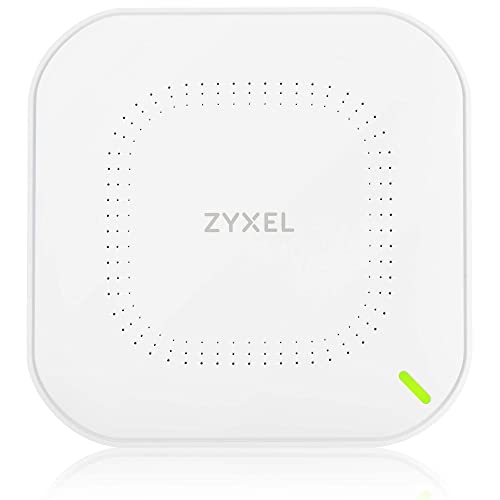
TL;DR: The Zyxel NWA50AX AX1800 delivers up to 1.8 Gbps throughput in a compact 140 × 140 × 37.5 mm form factor, making it a solid budget‑friendly indoor AP for small‑to‑medium spaces.
The standout spec is its maximum throughput of 1.8 Gbps, with a 5 GHz wireless speed of 1200 Mbps and a 2.4 GHz speed of 575 Mbps. Its white, square housing measures 140 × 140 × 37.5 mm and weighs 290 g, so the unit packs Wi‑Fi 6 (802.11ax) performance into a size that fits easily on a ceiling tile or wall mount.
Compared with the other seven APs in this roundup, the Zyxel is lighter than the TP‑Link EAP720 (about 408 g) but heavier than the TP‑Link EAP110‑Outdoor (118 g). It's also at the lower end of the price spectrum, making it more affordable than the higher‑priced models like the Ubiquiti UniFi Mesh or Netgear WBE710. Feature‑wise it offers band steering, fast roaming (802.11r/k/v), VLAN tagging and cloud‑based NebulaFlex management, yet it does not include load‑balancing—a capability listed for the TP‑Link EAP725‑Wall. The Ethernet port speed isn’t listed in the available specs.
User reviews repeatedly highlight the unit’s compact design and easy cloud setup as major pluses, noting that the “NebulaFlex” interface simplifies deployment for small offices or home networks. However, reviewers also point out the absence of load‑balancing and the limitation to 2×2 MU‑MIMO streams, which can feel restrictive in very dense environments. The manufacturer cites an MTBF of 1,010,980 hours, suggesting long‑term reliability, and the device supports WPA/WPA2/WPA3 Personal encryption for strong security.
Pros
Cons
Best for: Entry‑level buyers or those on a tight budget
Avoid if: You need powerful performance or professional‑grade features
TL;DR: The Netgear WBE710 is a compact Wi‑Fi 7 ceiling‑mount AP delivering up to 9.4 Gbps aggregate throughput, 2,500 sq ft coverage, and cloud‑managed features, but its premium price and 2×2 stream limit may deter budget‑focused buyers.
What really stands out is the 9.4 Gbps aggregate throughput, driven by a 5,765 Mbps 6 GHz band and 2,882 Mbps on 5 GHz. The unit packs a 2.5 GbE PoE+ uplink, 25 W power draw, and an internal fan to keep the 2 × 2 spatial‑stream radios cool. Antenna gain peaks at 5.49 dBi on the 6 GHz band, and the AP can support up to 256 client devices across a 2,500 sq ft coverage area.
At $299.99 it sits at the premium end of the eight‑product lineup, making it pricier than most of the other options. It’s heavier than the TP‑Link EAP720 (which weighs 0.9 lb) but far smaller than the Ubiquiti UniFi unit that stands 280 mm tall, so it fits easily in ceiling or wall mounts while still being a solid‑built device.
Users consistently praise the reliable high‑speed Wi‑Fi and the hassle‑free NETGEAR Insight cloud management, noting that setup feels “controller‑free.” The same reviewers flag the high purchase price and the audible fan in quiet rooms as drawbacks. Professional reviewers also point out the 2 × 2 stream limitation, which caps the device at the BE9400 class compared with 4 × 4 rivals.
From a technical standpoint, the WBE710 supports Multi‑Link Operation, 4K QAM, and 320 MHz channels on the 6 GHz band, giving it a future‑proof edge for dense environments. However, the lack of a 10 GbE uplink and the reliance on 802.3at PoE+ may limit its appeal in ultra‑high‑throughput deployments.
Pros
Cons
Best for: Small‑to‑medium businesses, retail locations, hotels, or offices that need future‑proof Wi‑Fi 7 performance and are comfortable with a premium price.
Avoid if: You need a budget‑friendly solution, lack PoE+ infrastructure, require a 10 GbE uplink, or are sensitive to fan noise in quiet spaces.
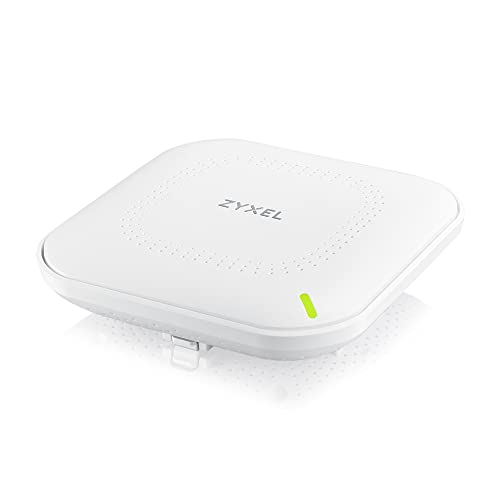
TL;DR: The Zyxel NWA90AX Pro offers AX3000 Wi‑Fi 6 speeds with up to 2400 Mbps on 5 GHz, a 2.5 Gbps PoE uplink, and enterprise‑grade security, but its price‑to‑performance ratio trails some rivals.
The unit’s headline spec is an aggregate max data rate of 3000 Mbps, broken down into 575 Mbps on 2.4 GHz and 2400 Mbps on 5 GHz, and it ships with a 2.5 Gbps Ethernet (PoE) port for multi‑gigabit backhaul.
Compared with the other seven APs, the Zyxel is heavier than the TP‑Link EAP720 (0.9 lb) and the TRENDnet TEW‑840APBO (1.52 lb) but lighter than the Netgear WBE710 (1.52 lb) and the Ubiquiti UniFi Mesh (1.76 lb). Its height of 58.42 mm stands taller than the ultra‑compact TP‑Link EAP110‑Outdoor (43 mm) but shorter than the Ubiquiti Mesh (280 mm). In raw speed, its 3000 Mbps aggregate falls short of the 5.0 Gbps offered by the TP‑Link EAP720 and EAP725‑Wall, and well below the 9.4 Gbps of the Netgear WBE710. Antenna gain peaks at 4 dBi on 5 GHz, which is lower than the 14 dBi on the TRENDnet model and the 5 dBi on the Ubiquiti Mesh.
Reviewers appreciate the AX3000 dual‑radio performance, the 2.5 Gbps PoE uplink, and the enterprise‑grade WPA3 plus IEEE 802.1X security suite. NebulaFlex cloud or standalone management simplifies deployment. However, users note the lack of load‑balancing across multiple APs and point to a modest 3.6‑star rating from six reviews, indicating mixed satisfaction.
Technical extras include 160 MHz channel support, band steering, fast roaming (802.11r/k/v), and MU‑MIMO (2x2:2 on 2.4 GHz, 3x3:2 on 5 GHz) that together support up to 300 concurrent connections. The unit draws 20.5 W via PoE, it's higher than some competitors that consume under 7 W.
Pros
Cons
Best for: Most users seeking a balanced, mainstream option
Avoid if: You need advanced features or professional‑grade performance
Breakdown
TP-Link EAP720
Pros
Cons
Ubiquiti UniFi Wi-Fi 6 Mesh
Pros
TP-Link EAP725-Wall
Pros
TRENDnet TEW-840APBO
Pros
Based on scoring data and product specs
Personalized picks
Best Overall Pick
TP-Link EAP720
Best OverallBest for: Entry-level buyers or those on a tight budget
Ubiquiti UniFi Wi-Fi 6 Mesh
Best for: Those prioritizing quality and willing to pay for premium performance
$197.58+$97.59 vs winner
Skip Zyxel WiFi 6 AX3000 if…
You need advanced features or professional-grade performance
TP‑Link’s EAP720 takes the top spot with a solid 4.4‑star rating from 118 reviews, Wi‑Fi 7 support and a maximum aggregate speed of 5.0 Gbps. It also offers a 2.5 Gbps PoE+ Ethernet port for high‑speed backhaul, and its compact 1.4‑in (35.6 mm) height makes ceiling or wall mounting a breeze.
The Ubiquiti UniFi Wi‑Fi 6 Mesh lands as the runner‑up, ideal if you need to blanket a larger area – it’s rated for up to 140 m² of coverage and can handle 250+ simultaneous clients while delivering 5.3 Gbps of aggregate throughput.
For tighter budgets, the TP‑Link EAP110‑Outdoor V3 White shines at $35.99, offering reliable outdoor performance at a low price. In the mid‑range, the TRENDnet TEW‑840APBO at $129.99 balances features and cost for most home or small‑office setups. If premium specs are your priority, the Netgear WBE710 at $299.99 delivers top‑tier performance for demanding environments.
Pick the TP‑Link EAP720 for the best ceiling or wall‑mount access point and enjoy fast, future‑proof Wi‑Fi today.
The TP‑Link EAP720 delivers Wi‑Fi 7 with up to 5 Gbps aggregate throughput and supports 250+ concurrent clients, making it ideal for dense office environments. At $89.98 it also offers the most advanced feature set for the lowest price in the list.
No reviews yet — be the first to share your experience.
Please sign in to leave a review