Rankings
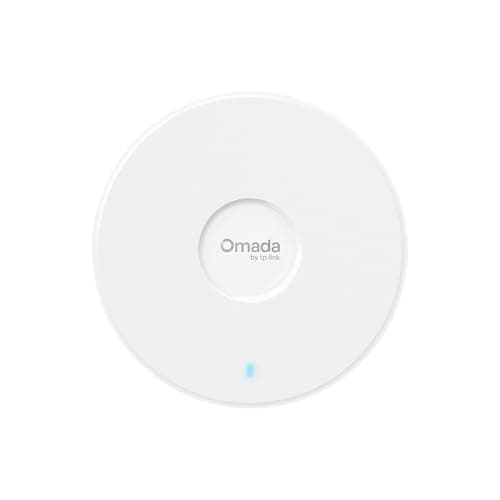
The TP-Link EAP720 (BE5000) brings Wi-Fi 7 performance with up to 5 Gbps aggregate speed, 2.5 Gbps PoE+ Ethernet, and comprehensive mesh and IoT features. Its higher power draw and newer technology may increase cost and power-budget requirements. Targeted at SMBs seeking cutting-edge wireless capacity.
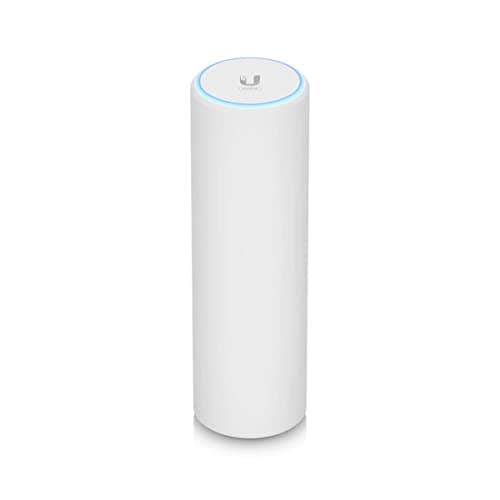
The Ubiquiti UniFi U6-Mesh is a Wi-Fi 6 mesh-capable AP providing up to 5.3 Gbps aggregate throughput and IPX5-rated weatherproofing for indoor and outdoor use. Its single 1 GbE uplink and limited 2.4 GHz MIMO may constrain very high-density scenarios. Perfect for deployments requiring robust mesh coverage and UniFi integration.
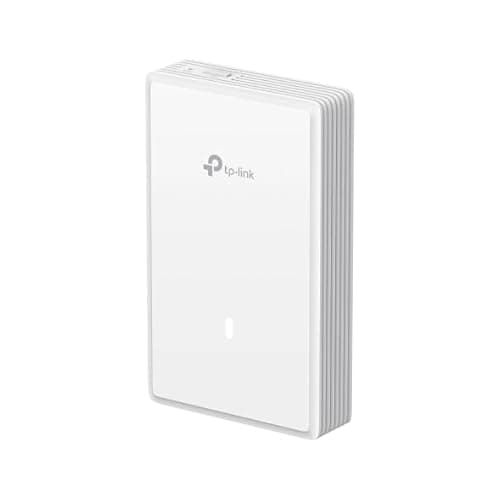
The TP-Link Omada EAP725-Wall is a compact Wi-Fi 7 wall-plate AP delivering up to 5 Gbps aggregate throughput and integrated 2.5 G PoE with dual Gigabit pass-through ports. Its dual-band only design and wall-mounted antennas limit range and capacity versus ceiling-mounted solutions. Best suited for hospitality, office rooms, and multi-dwelling units that need a space-saving wired-and-wireless outlet.
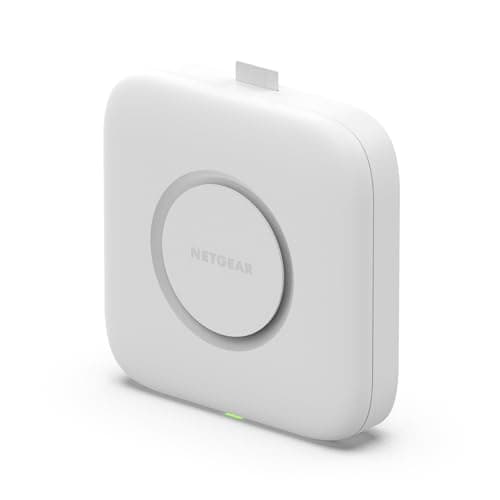
The NETGEAR WBE710 is a compact tri-band Wi-Fi 7 access point providing up to 9.4 Gbps aggregate throughput and advanced features such as Multi-Link Operation. Its 2x2 per-band streams and requirement for PoE+ limit peak performance and increase infrastructure cost. Targeted at future-proof SMBs needing high-density coverage and mesh expansion.
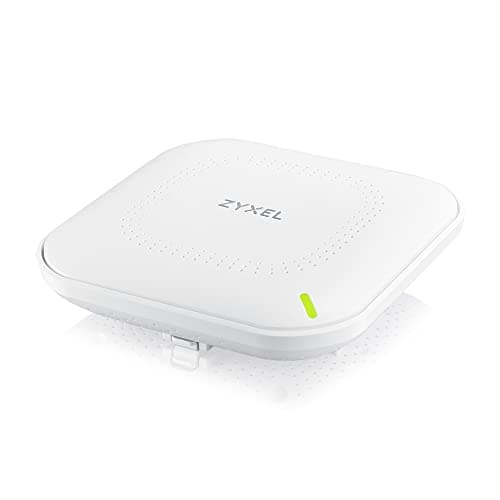
The Zyxel NWA90AX Pro is a Wi-Fi 6 dual-radio access point delivering up to 2400 Mbps on 5 GHz and 575 Mbps on 2.4 GHz with a 2.5 Gbps Ethernet uplink and mesh support. Its limitations include lack of load-balancing and support only for 802.3at/bt PoE. Ideal for small-business and SOHO environments needing high-throughput Wi-Fi 6.
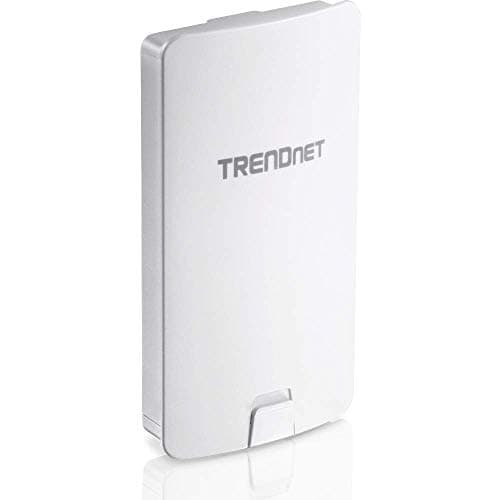
The TRENDnet TEW-840APBO is an outdoor-rated AC867 directional access point with a 14 dBi antenna for long-distance point-to-point links and IP56 protection. It operates only on 5 GHz, lacks Wi-Fi 6 and standard PoE, and offers modest throughput. Perfect for outdoor bridging scenarios where range outweighs speed.
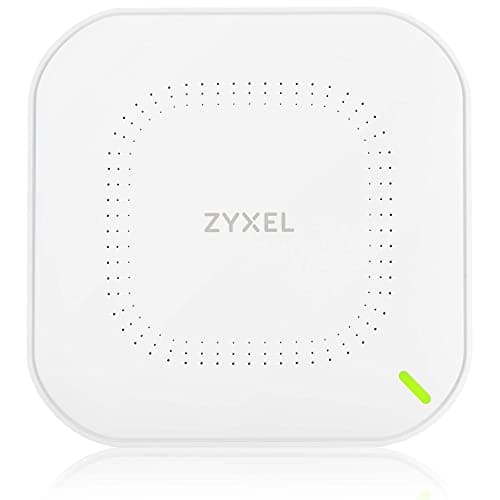
The Zyxel NWA50AX is an indoor AX1800 Wi-Fi 6 access point offering up to 1.8 Gbps aggregate speed and built-in mesh capability. Its absence of load-balancing and reliance on external power adapters limit flexibility for more demanding networks. Suited for small-to-medium offices or homes needing compact Wi-Fi 6 coverage.
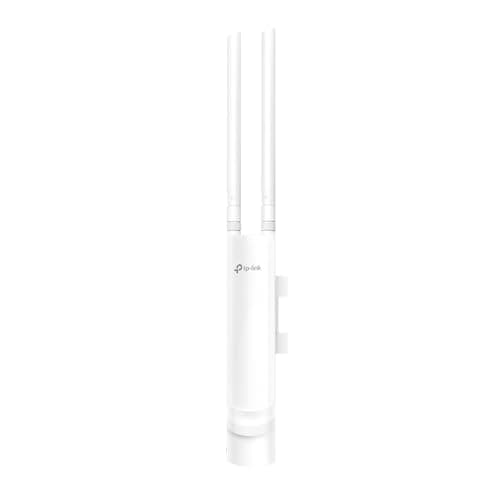
The TP-Link EAP110-Outdoor V3 provides rugged outdoor Wi-Fi N coverage up to 200 m with IP65 protection and passive PoE power. Its performance is confined to 2.4 GHz N300 speeds and a 10/100 Mbps Ethernet port. Suited for outdoor deployments where basic connectivity is sufficient.
| Attribute | | | | | | | | |
|---|---|---|---|---|---|---|---|---|
4,324 Mbps | 4,800 Mbpsbest | 4,324 Mbps | 867 Mbps | — | 1,200 Mbps | 2,882 Mbps | 2,400 Mbps | |
— | 140 sqm | — | — | — | — | 232.3 sqmbest | — | |
688 Mbpsbest | 573.5 Mbps | 688 Mbpsbest | — | 300 Mbps | 575 Mbps | 688 Mbpsbest | 575 Mbps | |
1 | 1 | 3best | — | 1 | — | 1 | 1 | |
3 | 4best | 2 | 2 | 2 | 2 | 2 | 4best | |
| ↓ lower better | 16.8 W | 11.4 W | — | — | 3.1 Wbest | — | 25 W | 20.5 W |
| ↓ lower better | 17.8 W | — | — | 9.5 W | 3.1 Wbest | — | — | 20.5 W |
| ↓ lower better | 408 g | 800 g | 354 g | 690 g | 118 gbest | 290 g | 690 g | 635 g |
Click an attribute name to sort · Green = best, red = worst (relative to this comparison)
| Attribute | | | | | | | | |
|---|---|---|---|---|---|---|---|---|
Network(2) | ||||||||
Wi‑Fi Standard | Wi‑Fi 7 (802.11be) | 802.11ax | Wi‑Fi 7 (802.11be) | 802.11ac | 802.11n | 802.11ax | 802.11be | Wi‑Fi 6 (802.11ax) |
Frequency Bands | Dual-band (2.4 GHz & 5 GHz) | 2.4 GHz,5 GHz | 2.4 GHz, 5 GHz | 5GHz | 2.4 GHz | 2.4 GHz, 5 GHz | 2.4 GHz,5 GHz,6 GHz | 2.4 GHz, 5 GHz |
Performance(4) | ||||||||
Max Data Rate (5 GHz) (Mbps) | 4324 Mbps | 4800 Mbps | 4324 Mbps | 867 Mbps | — | 1200 Mbps | 2882 Mbps | 2400 Mbps |
Max Data Rate (2.4 GHz) (Mbps) | 688 Mbps | 573.5 Mbps | 688 Mbps | — | 300 Mbps | 575 Mbps | 688 Mbps | 575 Mbps |
Coverage Area (sqm) | — | 140 sqm | — | — | — | — | 232.3 sqm | — |
Spatial Streams | 3 | 4 | 2 | 2 | 2 | 2 | 2 | 4 |
Features(1) | ||||||||
Security Protocols | WPA2‑PSK/ENT, WPA‑PSK, WPA3‑Personal/ENT | WPA3,WPA2,WPA | — | — | WPA2 | WPA3 | WPA2, WPA3, OWE | WPA3, IEEE 802.1X |
Power & Power Supply(4) | ||||||||
Power over Ethernet (PoE) | true | true | true | false | true | true | true | true |
PoE Standard | 802.3at | 802.3af | — | — | Passive | 802.3at | 802.3at | 802.3at/bt |
Power Consumption (W) | 16.8 W | 11.4 W | 6.7-7.6 W | — | 3.1 W | — | 25 W | 20.5 W |
Maximum Power Consumption (W) | 17.8 W | — | — | 9.5 W | 3.1 W | — | — | 20.5 W |
Design & Build(4) | ||||||||
Ethernet Ports | 1 | 1 | 3 | — | 1 | — | 1 | 1 |
Mounting Options | Ceiling or wall (kit included) | Wall, Pole, Desktop, Ceiling | Wall plate | Wall, Pole | Pole or wall | — | Wall,Ceiling | Wall, Ceiling |
Dimensions (L×W×H) (mm) | 35.6 x 160 mm mm | 500x280x500 mm | 143x86x40 mm mm | 99 x 36 x 185 mm mm | 8.2×1.7×3.7 in mm | 140×140×37.5 mm mm | 40x157x157 mm | 233.68×157.48×58.42 mm mm |
Weight (g) | 408 g | 800 g | 354 g | 690 g | 118 g | 290 g | 690 g | 635 g |
General(1) | ||||||||
Warranty (years) | 2 years | — | 5 years | 3 years | 2 years | 2 years | 5 years | — |
Products in the top-left offer the best value (high score, low price).
Professional commentary is limited to vendor-provided statements, which emphasize the U6-Mesh's best-in-class meshing capability, high-capacity 160 MHz uplinks, and deep integration with the UniFi management platform, positioning it as a strong choice for enterprise-grade mesh deployments.
Professional reviewers commend the EAP723-Wall for its forward-looking Wi-Fi 7 capabilities, compact wall-plate design and integrated 2.5 G PoE with gigabit pass-through, noting it simplifies cabling in dense deployments. However, they caution that the dual-band only configuration and wall-mounted antenna placement may limit coverage and capacity compared with ceiling-mounted or tri-band alternatives, and that early Wi-Fi 7 client support remains a concern.
Everyday users praise the ease of PoE installation, high throughput for multiple high-definition streams, and the space-saving wall-plate form factor. Recurring themes of criticism include a steeper learning curve when using the Omada controller, perceived reduced range versus ceiling APs, and the limited number of wired pass-through ports.
Professional sources and retailer descriptions portray the EAP110-Outdoor V3 as a reliable, easy‑to‑install outdoor AP that delivers solid 2.4 GHz coverage up to 200 m and integrates smoothly with TP‑Link's Omada SDN platform. However, they also note its outdated single‑band Wi‑Fi and modest wired speed limit as drawbacks for newer high‑bandwidth deployments.
Professional sources and retailer descriptions portray the EAP110-Outdoor V3 as a reliable, easy-to-install outdoor AP that delivers solid 2.4 GHz coverage up to 200 m and integrates smoothly with TP-Link's Omada SDN platform. However, they also note its outdated single-band Wi-Fi and modest wired speed limit as drawbacks for newer high-bandwidth deployments.
Professional reviewers describe the WBE710 as a speedy but pricey business Wi-Fi 7 AP, applauding its tiny footprint, 6 GHz performance with 320 MHz channels and fan-cooled design, while criticizing the 2x2 stream cap and premium price that may limit its value against higher-stream rivals.
Everyday users generally praise the device for delivering reliable high-speed Wi-Fi in dense environments, easy cloud-based setup and solid coverage, but repeatedly cite the high cost and the need for PoE+ infrastructure as notable drawbacks.
Professional product pages emphasize the NWA90AX Pro's enterprise-grade security, high-throughput 160 MHz operation, and flexible NebulaFlex management, positioning it as a robust Wi-Fi 6 solution for small-business and SOHO deployments that need multi-gig uplinks and mesh roaming without extensive cabling changes.
