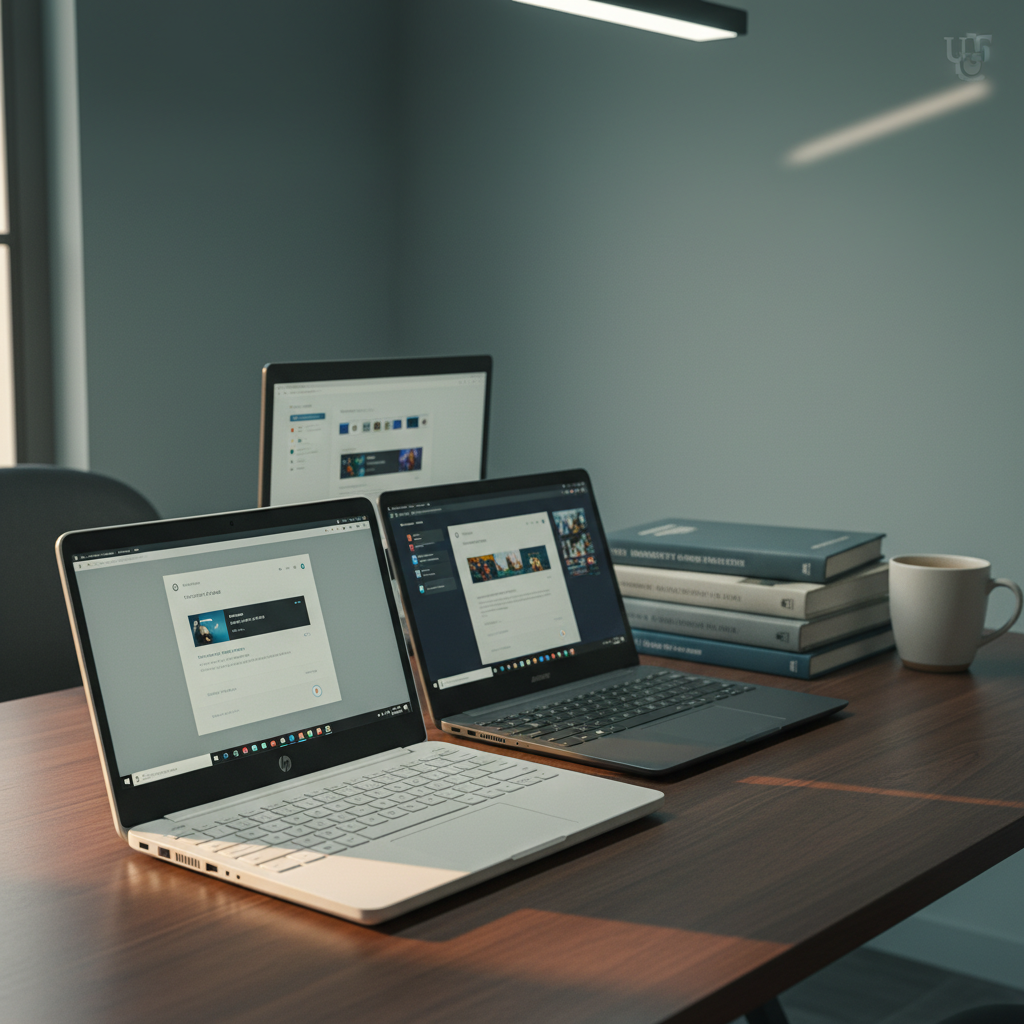
We’ve lined up 9 Chrome OS netbooks that aim to fit a student’s backpack and budget. The HP Chromebook 11 tops the list with a manufacturer‑claimed 15‑hour battery life and a solid 4.4‑star rating from 2,478 reviewers, while the Acer Chromebook 11 C732 starts at just $60.47. Prices span from $60.47 up to $243.49, giving you plenty of options.
Our selection covers every price tier. The budget corner includes the $60.47 Acer 11 C732, the $69.00 Dell 3180 and the $74.95 Lenovo 300e, each offering at least 10 hours of battery life and weights between 2.98 and 4.1 pounds. Mid‑range picks like the $89.99 Samsung Chromebook 4, the $74.95 Acer 311 and the $79.95 Lenovo 500e balance durability with a 4.2‑star rating or better. Premium choices – the $185.00 HP Chromebook 11, the $243.49 Samsung Chromebook Plus V2 and the $93.92 Dell 11.6‑inch – bring higher‑resolution screens or convertible designs for power‑users.
In practice, the right netbook will match your class schedule, commute and budget, so keep reading as we break down each model’s strengths and who they’re best suited for.

HP Chromebook 11
Its 15‑hour battery life lets you get through a full day of classes without hunting for an outlet.

Samsung Chromebook 4
Price‑sensitive students will find it at $89.99—about $95 less than the Best Overall model.

Acer Chromebook 11 C732
Equipped with a 45 W adapter and 3920 mAh battery, this $60.47 option handles occasional study bursts where cost matters most.
Also considered
Score Analysis
Key score advantages vs. runner-up (Samsung Chromebook 4)
Price Range
HP Chromebook 11
$185.00
Samsung Chromebook 4
$89.00
Acer Chromebook 11 C732
$60.47
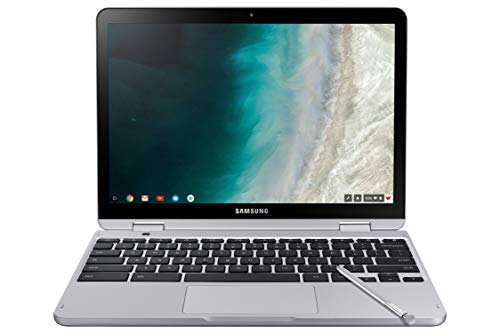
Samsung Chromebook Plus V2 12-inch
$243.49

Lenovo 300e Chromebook
$64.94

Lenovo 500e Chromebook
$54.99

Dell Chromebook 3180
$72.26

Acer Chromebook 311
$74.95

Dell 11.6-inch Chromebook
$93.92
Spec Comparison
TL;DR: The HP Chromebook 11 offers an 11.6‑inch anti‑glare IPS screen, 4 GB RAM, and a lightweight 2.36‑lb chassis, but its modest battery and processor make it a premium‑priced entry‑level option.
The standout feature is the 11.6‑inch IPS display with a 1366 × 768 resolution, 220 nits brightness and an anti‑glare finish, giving you clear visuals even in bright classrooms. Under the hood sits a MediaTek MT8183 octa‑core processor (2.0 GHz base) paired with 4 GB of LPDDR4 RAM and 32 GB of eMMC storage, while the 37 Wh battery, which HP states lasts 15 hours, shows about 9 hours in testing. Weighing just 2.36 pounds, the notebook slips easily into a backpack.
Compared with the other eight models in this roundup, the HP Chromebook 11 is lighter than the Samsung Chromebook Plus V2 (2.98 lb), Dell 11.6‑inch (4.45 lb), Samsung Chromebook 4 (3.7 lb) and the Lenovo 500e (3.0 lb), and it matches the weight of the Acer Chromebook 311, which lists its mass as 1.07 kg. Its 37 Wh battery, however, is smaller than most peers that report 39 Wh to 45 Wh, so you’ll see shorter unplugged sessions than, for example, the Dell 3180 or Lenovo 300e. The price point of $185.00 also sits above budget‑focused options like the Acer 311 or Lenovo 300e.
Users consistently praise the Chromebook’s portability and the clear, anti‑glare screen, noting that the dual speakers are adequate for video calls and streaming. Professional reviewers highlight the convenience of having both a USB‑C port (with Power Delivery and DisplayPort) and a traditional USB‑A port. On the downside, reviewers describe the MediaTek MT8183 processor as underpowered for heavy multitasking, and the 4 GB RAM plus 32 GB storage fill up quickly when running multiple Chrome tabs or Android apps. Battery life also falls short of the 15‑hour claim, with many reporting around 6‑8 hours in daily use.
Pros
Cons
Best for: Buyers willing to invest in a proven, high-quality option
Avoid if: You're shopping on a tight budget — it's priced at $185.00
“budget Chromebook with limitations.”
“It’s fine for light use, but not for students or professionals with heavy workloads.”
TL;DR: The Samsung Chromebook 4 delivers a 12.5‑hour battery, a lightweight 3.7‑lb chassis, and durable MIL‑STD‑810G testing for $89.99, making it a solid budget pick for students.
The standout spec is the up‑to‑12.5‑hour battery life, which lets you get through a full school day without hunting for an outlet. Combined with a fast ~10‑second boot and ~1‑second wake, the device feels ready the moment you open it.
Compared with the other eight netbooks, the Chromebook 4 is lighter than Dell’s 4.45‑lb model and sits in the same weight range as Lenovo’s 3‑lb offerings, while being heavier than the ultra‑light Acer 311 that tips the scales at about 2.36 lb. Its battery life also outpaces Dell’s 11‑hour claim, Lenovo’s 11‑hour claim, and the 10‑hour figures that several competitors list, falling just short of HP’s 15‑hour claim but edging out most budget options.
Users consistently praise the portability, all‑day battery, and spill‑resistant keyboard, noting that the device survives the hustle of classroom life. Professional reviewers highlight the Intel Celeron N4000 processor and the MIL‑STD‑810G durability testing as solid upgrades over older Exynos‑based Chromebooks. The main complaints revolve around the 4 GB of RAM, which can feel cramped with many tabs, the modest 32 GB eMMC storage that pushes users toward cloud services, and the TN LCD panel’s muted colors and limited viewing angles. The lack of a touchscreen also limits flexibility for note‑taking.
Technical details round out the picture: the 11.6‑inch 1366 × 768 anti‑reflective matte display, dual 1.5 W speakers, dual digital microphones, and a 720p HD webcam provide a functional media experience. Connectivity includes Bluetooth 4.0, Wi‑Fi 5, a USB‑C port for data and charging, a USB‑A 3.0 port, HDMI output, and a microSD slot that supports up to 512 GB. Security features such as a TPM 2.0 chip and a Kensington lock slot add peace of mind for school environments.
Pros
Cons
Best for: Value‑conscious buyers seeking quality at $89.99
Avoid if: You need heavy multitasking, video editing, or a high‑resolution touchscreen.
TL;DR: The Acer Chromebook 11 C732 offers a fanless, lightweight 2.98‑lb design with a 3920 mAh battery that can last up to 17.25 hours of light browsing, making it a budget‑friendly choice for students.
This model packs a 3920 mAh battery and advertises up to 17.25 hours of consumer‑light browsing, far exceeding the typical 10‑hour claims of many peers. At just 2.98 pounds, it’s easy to slip into a backpack, and the 11.6‑inch 1366 × 768 LED‑backlit ComfyView display keeps glare down in classroom lighting.
Compared with the Dell Chromebook 3180, which weighs 4.1 pounds, the Acer weighs noticeably less, while its 250 cd/m² brightness outshines Dell’s 200‑nit panel. It matches the Lenovo 300e’s weight (3.0 pounds) and beats the Acer 311, which lists its weight in kilograms. The 3920 mAh capacity also tops the 42 Wh batteries cited for Dell and Lenovo, giving it a clear endurance edge.
Professional reviewers praise the comfortable keyboard and the silent, fanless chassis, noting that students appreciate the all‑day battery for note‑taking and web research. However, users flag the modest 1366 × 768 resolution and narrow viewing angles as a drawback for media consumption, and the Intel HD Graphics 500 with 12 execution units can feel sluggish when many tabs are open. The device’s Auto Update Expiration ended in June 2024, so it won’t receive Chrome OS upgrades.
Pros
Cons
Best for: Entry-level buyers or those on a tight budget
Avoid if: You need advanced features or professional‑grade performance
“budget Chromebook with limitations.”
“It’s fine for light use, but not for students or professionals with heavy workloads.”
TL;DR: The Samsung Chromebook Plus V2 packs a 12.2‑inch 1920×1200 touchscreen, an integrated active stylus and up to 10 hours of advertised battery life in a lightweight 2.98‑lb convertible for $243.49.
The standout feature is the built‑in active stylus with pressure sensitivity and palm rejection, stored inside the chassis, paired with a 12.2‑inch glossy WUXGA LED display (1920 × 1200) that delivers sharp, vibrant visuals for note‑taking and media.
At 2.98 pounds, the Plus V2 is heavier than the HP Chromebook 11 (2.36 pounds) but considerably lighter than the Dell 11.6‑inch Chromebook (4.45 pounds). Its 39 Wh battery capacity sits just above the HP’s 37 Wh yet below Dell’s 42 Wh, translating to an advertised 10‑hour optimum runtime, though real‑world video playback drops to about 5.25 hours and light web browsing to 7.25 hours. Bluetooth 4.0 trails HP’s 4.2 version, and the 12.2‑inch screen outpaces most rivals’ 11.6‑inch panels.
Users consistently praise the responsive stylus and the crisp 1920×1200 screen for classroom work, while professional reviewers note the sturdy fanless build and solid web‑task performance. Common complaints focus on the shallow‑travel keyboard, a touchpad that feels cramped, and battery endurance that falls short of the 10‑hour claim under heavier use. The Intel Celeron 3965Y (1.5 GHz dual‑core) with 4 GB LPDDR3 RAM and 64 GB eMMC storage handles Chrome OS tasks comfortably, but it isn’t a powerhouse for demanding apps.
Additional context includes a 360° hinge that lets you switch between laptop, tent, stand or tablet modes, ENERGY STAR certification for efficiency, dual‑array microphones, stereo 1.5 W speakers and optional LTE connectivity. Expandable storage via microSD up to 400 GB gives flexibility for extra files, and the fanless design keeps the device quiet during long study sessions.
Pros
Cons
Best for: Buyers willing to invest in a proven, high-quality option
Avoid if: You're shopping on a tight budget — it's priced at $243.49
TL;DR: The Lenovo 300e Chromebook costs $74.95, offers a rugged 29.5‑inch drop rating, a 10‑hour battery and a 360° hinge, making it a budget‑friendly, classroom‑ready 2‑in‑1.
The standout spec is its durability: the chassis survives drops up to 29.5 inches, and the 360° hinge lets you switch between laptop, tablet, tent and stand modes. A 42 Wh lithium‑polymer battery promises up to 10 hours of use, while the 11.6‑inch IPS LCD delivers a 1366 × 768 HD picture at 250 nits. At 3.0 pounds, it’s a solid build with manageable heft for students.
Compared with the eight other Chromebooks in this roundup, the 300e sits in the middle of the weight spectrum—lighter than Dell’s 11.6‑inch model (over 4 pounds) and Dell 3180 (4.1 pounds), but heavier than the Acer 311 (about 1 kg) and HP 11 (2.36 pounds). Its 10‑hour battery life matches the Acer 311 and Dell 3180, yet falls short of Samsung’s 4‑inch model that lists 12.5 hours and the Dell 11.6‑inch that reaches 11 hours. Storage-wise, it provides 32 GB of eMMC flash and supports SD cards up to 512 GB, a larger expandable option than many peers that lack a card slot.
Users consistently praise the Chromebook’s ruggedness and day‑long battery endurance, noting that it survives the typical drops and spills of a busy classroom. However, reviewers also point out that the MediaTek MT8173C ARM processor can lag when many Chrome tabs are open, and the 32 GB internal storage fills quickly with apps and offline files. Professional reviewers highlight the spill‑resistant, mechanically anchored keyboard as a practical feature for shared devices.
The device runs Chrome OS with automatic updates, offers dual microphones, built‑in stereo speakers, a 720p HD webcam, and a full set of ports including HDMI, USB‑C (charging only), USB‑A, and an SD card reader. With 4 GB LPDDR3 RAM and a quad‑core CPU clocked up to 2.1 GHz, it handles typical web‑based school tasks comfortably, though power users may feel constrained.
Pros
Cons
Best for: K‑12 students and shared classroom devices where durability, long battery life, and touch‑enabled learning are key.
Avoid if: You need advanced features or professional‑grade performance such as heavy multitasking, large local storage, or Linux development.
“My kids drop it daily—still works perfectly after a year.”
“Battery lasts all day, even with YouTube and Google Docs.”
TL;DR: The Lenovo 500e Chromebook offers a rugged 360° convertible design with MIL‑STD‑810G certification, up to 11 hours of battery life, and a modest 11.6‑inch HD touchscreen for $79.95.
The standout feature is its semi‑rugged construction: it survives drops up to 29.5 in, carries a spill‑resistant keyboard that tolerates up to 11 oz of liquid, and meets MIL‑STD‑810G standards. At 3.0 lbs it feels solid yet portable, and the 42 Wh battery can run for up to 11 hours on a single charge, with a roughly 2‑hour USB‑C recharge.
Compared with the other eight devices, the 500e is heavier than the Acer Chromebook 311 (listed at 1.07 kg) but lighter than the Dell 3180, which tips the scales at 4.1 pounds. Its price point sits above the budget‑focused Acer 11 C732 and Dell 3180, while it's still under the premium HP Chromebook 11. In terms of durability, few peers mention drop protection, making the 500e one of the toughest options in the lineup.
Users consistently praise the device’s durability and the long‑lasting battery, noting it survives the rough handling common in classrooms. Professional reviewers highlight the 360° hinge and the spill‑resistant keyboard as strong points. The main criticisms focus on the low 1366 × 768 HD touchscreen resolution, which can look grainy, and the muffled bottom‑firing speakers that struggle in noisy environments. The Intel Celeron N3450U processor delivers basic performance but may feel sluggish with multiple tabs open.
Pros
Cons
Best for: K‑12 classrooms, shared student devices, and educators who need a rugged 2‑in‑1 for note‑taking and daily web tasks.
Avoid if: You need a high‑resolution display, strong audio, or high‑performance processing for gaming or media creation.
“Survived my kid dropping it daily.”
“Battery lasts all day at school.”
TL;DR: The Dell Chromebook 3180 costs $69.00, offers up to 10 hours of battery life on a 42 Wh pack, and packs a rugged 11.6‑inch HD screen in a 4.1‑lb, education‑focused chassis.
The standout spec is its 42 Wh battery that Dell says can last up to 10 hours on a single charge, paired with a lightweight 4.1‑pound (1860 g) frame that still feels solid thanks to reinforced corners and a spill‑resistant keyboard. Its 11.6‑inch display delivers a 1366 × 768 resolution and 200 nits of brightness, which is adequate for classroom lighting but not as bright as some rivals.
Compared with the other eight Chromebooks in this roundup, the 3180 is heavier than the Lenovo 300e Chromebook (about 3 pounds) but lighter than Dell’s own 11.6‑inch Chromebook that tips over 4.4 pounds. Its 200‑nit screen is dimmer than the Lenovo 300e’s 250 nits, yet its battery capacity matches the Lenovo and Acer 311 models, both also listing 42 Wh packs. In terms of ports, the 3180 offers HDMI, two USB‑C‑compatible USB 3.1 Gen 1 ports, a microSD slot, and a headphone/mic combo, a richer selection than many budget peers.
Professional reviewers praise the Chromebook’s sturdy build and instant boot times, noting that the sealed spill‑resistant keyboard and anti‑glare coating make it classroom‑ready. Everyday users echo this, highlighting durability and reliable battery life as top strengths. The most common complaints revolve around the modest 4 GB of soldered LPDDR3 RAM and the limited 16 GB eMMC storage, which can fill quickly with apps and offline files. Users also mention the screen’s lower brightness can be a challenge in bright rooms, and the Celeron N3060’s two‑core, 1.6 GHz (turbo to 2.48 GHz) processor shows lag when many Chrome tabs are open.
Additional technical context includes a 6 W TDP processor, 2 MB cache, and integrated Intel HD Graphics 400/500. The device ships with a 65 W Dell E4 series AC adapter and supports up to 128 GB via microSD, giving a modest expansion path for students who need more space. Dell backs the unit with a 90‑day limited warranty.
Pros
Cons
Best for: Entry‑level buyers or those on a tight budget
Avoid if: You need advanced features or professional‑grade performance
“My child uses it daily at school—survived drops and spills.”
“Boots up instantly and runs Google Classroom without issues.”
TL;DR: The Acer Chromebook 311 offers an 11.6‑inch IPS display, up to 10 hours of battery life, and dual USB‑C ports in a 1.07 kg, budget‑friendly package, though its 32 GB storage is limited.
The standout hardware feature is its dual USB‑C ports, each supporting data transfer, DisplayPort output, and charging—unusual for a device at $74.95. At 11.6 inches, the IPS CineCrystal panel delivers 1366 × 768 resolution, while the chassis weighs just 1.07 kg, so it’s easy to slip into a backpack.
Compared with peers, the Chromebook 311 is noticeably lighter than the Lenovo 300e (3.0 pounds) and the Dell 3180 (4.1 pounds). Its battery life of up to 10 hours matches the Lenovo 300e’s claim, giving it an edge over models that list shorter runtimes. Storage-wise, its 32 GB eMMC mirrors the Samsung Chromebook 4, but falls short of devices that offer larger internal capacities.
Users praise the quick boot and responsive performance for web‑based tasks, as well as the sturdy plastic body with a spill‑resistant keyboard. However, reviewers repeatedly note the muted colors from a display that covers only 58 % of the sRGB gamut and the cramped 32 GB storage that fills quickly. Professional reviewers also note that the Intel Celeron N4020 dual‑core processor (1.1 GHz base, 2.8 GHz burst) and Intel UHD Graphics 600 (200 MHz base, 650 MHz burst) are adequate for basic classroom work.
Pros
Cons
Best for: Entry‑level buyers or those on a tight budget
Avoid if: You need advanced features or professional‑grade performance
“Lasts all day”
“Reliable for Google Classroom”
TL;DR: Dell’s 11.6‑inch Chromebook offers a rugged MIL‑STD‑810G build, an anti‑glare touchscreen and up to 11 hours of battery life for $93.92, but its 16 GB storage and 4 GB RAM can feel cramped for power users.
The standout feature is its durability package: select models carry Corning Gorilla Glass NBT, MIL‑STD‑810G certification and a spill‑resistant keyboard, all wrapped in a chassis that weighs 4.45 lbs. The 10‑point capacitive touchscreen sits on an IPS LCD with a 1366 × 768 HD panel, making classroom interaction smooth and glare‑free.
Compared with the other eight netbooks, Dell is heavier than the Samsung Chromebook 4 (3.7 lb) and the Lenovo 500e and 300e (both 3.0 lb). It also tops the Acer Chromebook 311 at 1.07 kg, which translates to a lighter feel. Battery life of up to 11 hours matches the Lenovo 500e, exceeds the Lenovo 300e and Acer 311 (both around 10 hours), but falls short of Samsung’s 12.5‑hour claim. Internal storage is 16 GB eMMC, which is less than Samsung’s 32 GB eMMC offering, while other peers don’t list a specific capacity.
Reviewers consistently praise the instant boot (under 10 seconds) and the rugged design that survives classroom mishaps. However, users flag the modest 4 GB DDR3L RAM and 16 GB storage as bottlenecks when many Chrome tabs are open. Professional reviewers echo the sentiment, noting the Intel Celeron N‑series dual‑core processor (1.1 GHz base, 2.48 GHz turbo) feels under‑powered beyond basic web browsing.
Technical details round out the picture: the device ships with a 42 Wh battery, a USB‑C charging option on newer refurbished units, HDMI output, USB‑A 2.0 and 3.0 ports, and a microSD slot that supports up to 256 GB. The anti‑glare IPS screen and 10‑point touch make it suitable for interactive lessons, while the rubberized edges add extra shock protection.
Pros
Cons
Best for: K‑12 students, teachers, and schools that need a durable, easy‑to‑carry Chromebook for web‑based learning.
Avoid if: You require heavy multitasking, professional‑grade performance, or larger local storage for offline work.
Breakdown
HP Chromebook 11
Pros
Cons
Samsung Chromebook 4
Pros
Acer Chromebook 11 C732
Pros
Samsung Chromebook Plus V2 12-inch
Pros
Cons
Based on scoring data and product specs
Personalized picks
Best Overall Pick
HP Chromebook 11
Best OverallBest for: Buyers willing to invest in a proven, high-quality option
Samsung Chromebook 4
Best for: Value-conscious buyers seeking quality at $89.99
$89.00-$96.00 vs winner
Skip Dell 11.6-inch Chromebook if…
You need advanced features or professional-grade performance
The HP Chromebook 11 takes the top spot thanks to its solid 4.4‑star rating from 2,478 reviewers, a claimed 15‑hour battery that easily covers a full school day, and a lightweight 2.36‑pound chassis that slides into any backpack. Its 11.6‑inch IPS anti‑glare display with touchscreen support and 4 GB of LPDDR4 RAM give you a smooth, responsive experience for note‑taking and web‑based work, all for $185.00.
Samsung's Chromebook 4 lands as the runner‑up and shines if you need a budget‑friendly, rugged notebook for classroom labs. Priced at $89.99, it meets MIL‑STD‑810G durability standards, offers up to 12.5 hours of battery life, and packs an Intel Celeron N4000 processor with 4 GB of RAM—enough for everyday assignments and video streaming.
For tighter budgets, the Acer Chromebook 11 C732 delivers the best value at $60.47, providing basic Chrome OS functionality at a student‑friendly price. The Samsung Chromebook 4 also serves as the best mid‑range pick, balancing price and durability. If you’re willing to splurge for premium features, the Samsung Chromebook Plus V2 12‑inch stands out with its higher‑end specs at $243.49.
Pick the HP Chromebook 11 now and give yourself a reliable, all‑day companion for every class.
The HP Chromebook 11 uses an IPS panel with 220 nits of brightness, which is modest but better suited for bright environments than the Samsung Chromebook 4’s TN display that lacks a listed brightness figure. However, if you need the highest possible brightness, none of the listed models exceed 250 nits, so a shaded spot or a hood may still be needed.
Please sign in to leave a review
No reviews yet. Be the first to review!
