⚡ Quick Answer
Finding a tiny powerhouse for a cramped desk or a living‑room media nook can feel like hunting for a needle in a haystack. In this roundup we compared six compact mini gaming PCs, with prices ranging from $368.54 for the Lenovo ThinkCentre M700 SFF up to $1449.99 for the Computer Upgrade King Continuum Micro. Ratings span 4.1 to 4.5 stars, and the Kamrui Hyper H2 Mini holds a solid 4.5‑star score based on 200 reviews.
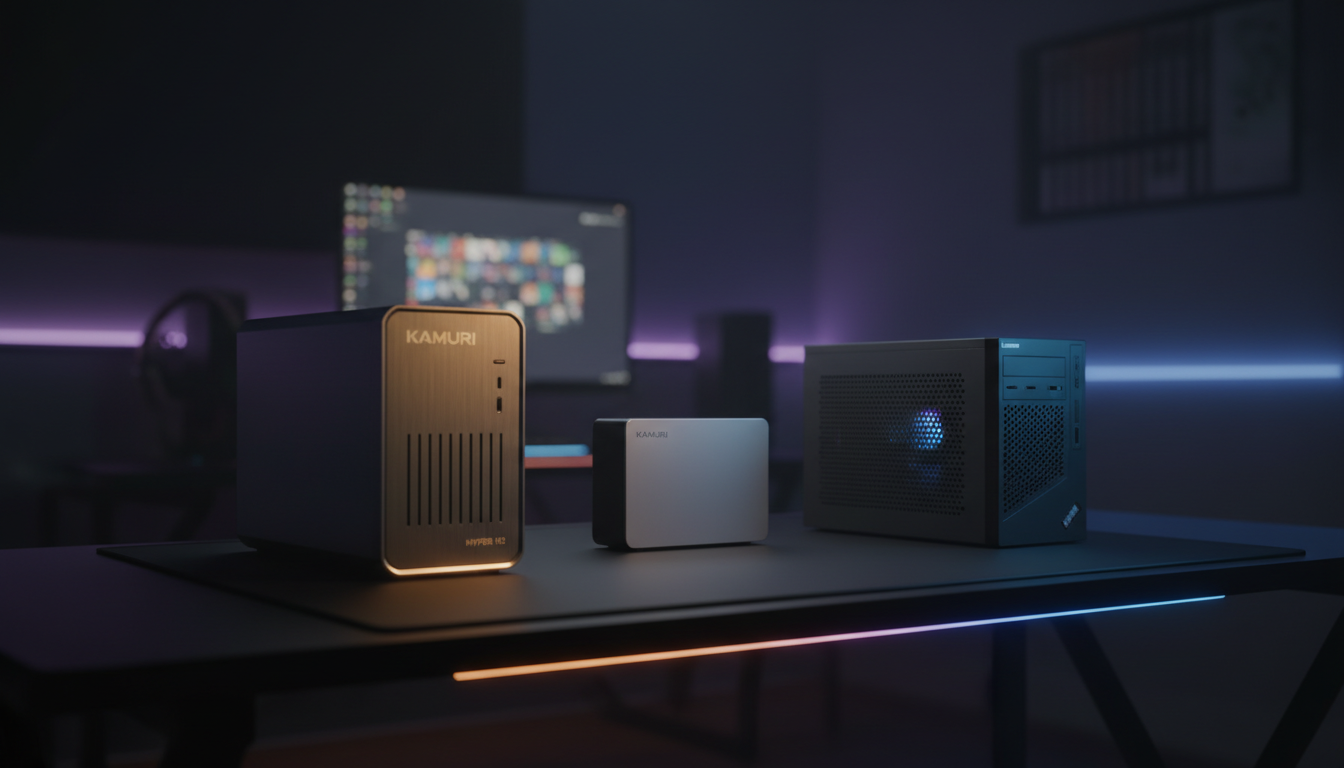
To help you navigate, we split the six models into three price tiers. Budget‑friendly picks include the Lenovo ThinkCentre M700 SFF ($368.54, 4.5‑star) and the Kamrui E3B Mini ($369.99, 4.2‑star). Mid‑range options include the Acemagic Mini PC Gaming – a 3.2 GHz base, 4.75 GHz turbo unit weighing 2.65 lb – and the Acemagician S3A Mini PC with a 1.8 GHz base, 4.3 GHz boost and 16 GB RAM. Premium choices include the Kamrui Hyper H2 Mini, a unit measuring 128 mm in length and width that supports up to 64 GB DDR4‑3200 and idles at 1.7 W, and the Continuum Micro, a 19‑lb tower that packs 32 GB RAM and a 1 TB NVMe drive. You can match one to a bedroom gaming setup, a compact office, or a high‑performance hobby rig.
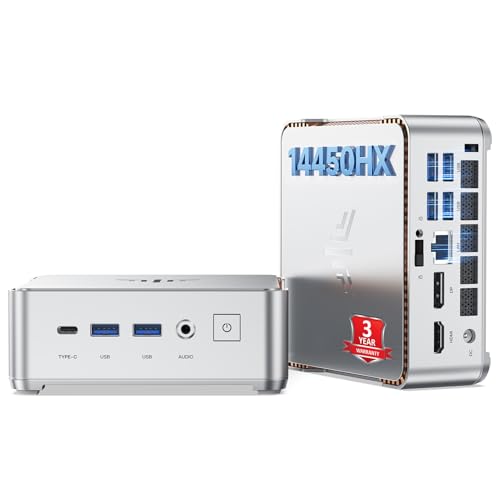
Kamrui Hyper H2 Mini
Its ultra‑compact 41.4 mm height lets you fit powerful gaming into the smallest space, delivering top value and a 4.5‑star rating.

Kamrui E3B Mini
Ideal for budget‑focused gamers, it offers solid performance at $369.99—about $160 less than the Hyper H2 Mini.
Lenovo ThinkCentre M700 SFF
Stands out with up to 32 GB DDR4‑2133 RAM, giving entry‑level users more memory headroom despite its larger 5.6 kg chassis.
Also considered
Score Analysis
Key score advantages vs. runner-up (Kamrui E3B Mini)
Price Range
Kamrui Hyper H2 Mini
$539.99
Kamrui E3B Mini
$379.90
Lenovo ThinkCentre M700 SFF
$395.65

Acemagic Mini PC Gaming
$489.99

Acemagician S3A Mini PC
Out of Stock

Computer Upgrade King Continuum Micro
$1,529.99
Spec Comparison
TL;DR: The Kamrui Hyper H2 Mini packs a 10‑core i5‑14450HX, 32 GB RAM and a 1 TB PCIe 4.0 SSD into a 41.4 mm‑tall cube, offering strong CPU power and triple‑4K support at a premium price.
A standout spec is the Intel Core i5‑14450HX, which runs at a 2.4 GHz base clock and can boost to 4.8 GHz. Coupled with 32 GB DDR4‑3200 RAM and a 1 TB PCIe 4.0 NVMe SSD, the system delivers fast boot‑ups and smooth multitasking inside a 41.4 mm‑high, 128 mm × 128 mm footprint.
Compared with the Acemagic Mini PC Gaming, the Hyper H2 Mini is much shorter (41.4 mm vs 128 mm) but slightly heavier (2.95 lb vs 2.65 lb). Its Ethernet runs at 1 Gbps, which is slower than Acemagic’s 2.5 Gbps, while Wi‑Fi 6 matches modern wireless expectations. Against the Acemagician S3A Mini PC, Kamrui’s 2.4 GHz base clock and 55 W TDP are higher than the S3A’s 1.8 GHz base and 20 W balanced mode, indicating stronger raw CPU capability.
Users praise the low 1.7 W idle draw and Quick Sync video transcoding for media‑server tasks. Reviewers note the tool‑free DDR/SSD slots and included VESA mount as practical upgrades. Criticisms focus on the integrated Intel UHD graphics, which struggle with demanding modern games, and occasional fan noise when the unit approaches its 94 W load power.
Professional reviewers also note the silent high‑speed centrifugal fan paired with two copper heat pipes, which keeps temperatures in check while still delivering the performance of a 10‑core mobile processor. Combining HDMI 2.0, DisplayPort 1.4b and USB‑C (DP Alt Mode) lets you drive three 4K displays at 60 Hz, a rare feature in a mini PC of this size.
Pros
Cons
Best for: Office workers, home‑lab enthusiasts, and casual gamers who need a compact PC with strong CPU power, ample RAM and multi‑monitor support.
Avoid if: You require a dedicated high‑end GPU for AAA gaming, need extensive internal storage bays, or demand a completely silent machine under heavy load.
“smooth multitasking, fast boot-ups, and compact media server use”
“Plex efficiency via Quick Sync”
TL;DR: The Kamrui E3B Mini packs a 6‑core Ryzen 5 CPU, 16 GB DDR4‑3200 RAM and three‑display 4K support into a 1.97‑in‑deep, 2.55‑lb chassis for budget‑friendly compact gaming.
The standout spec is its ability to drive up to three 4K (3840×2160) displays at 60 Hz, thanks to a HDMI 2.0 port, a DisplayPort 1.4 and USB‑C DP‑capable connections. Coupled with a 28 W TDP Ryzen 5 7430U and 16 GB of DDR4‑3200 memory, the E3B Mini delivers desktop‑class multitasking while staying under a $370 price tag.
Compared with the five other mini PCs in this roundup, the E3B Mini is notably lighter than the Lenovo ThinkCentre M700 SFF (which tips the scales at about 12 lb) and the heavyweight Computer Upgrade King Continuum Micro (around 19 lb). It also undercuts the Acemagic Mini PC Gaming’s 2.65‑lb mass and the Kamrui Hyper H2 Mini’s roughly 2.95 lb, making it one of the most portable options. In terms of memory, its maximum 64 GB capacity matches the Acemagician S3A and the Hyper H2, and far exceeds the Lenovo’s 32 GB ceiling. The storage flexibility matches the Hyper H2 with a 4 TB ceiling, while the Lenovo is limited to 512 GB.
User sentiment praises the abundant connectivity – six USB‑A ports, two USB‑C 3.2 Gen 2 ports, Gigabit Ethernet, Wi‑Fi 6 and Bluetooth 5.2 – and the compact 1.97‑in depth that fits easily on a desk. Reviewers highlight the Ryzen 5 CPU’s solid performance for office work and video editing, but they consistently note the integrated Radeon Vega 8 GPU struggles with demanding games, delivering low frame rates at 4K. Professionals also point out the triple‑display setup can become cable‑heavy, requiring three separate connections.
Additional technical context includes a cooling fan that spins at 2000+ RPM and a power adapter rated at 19 V / 3.42 A, ensuring stable operation within the 28 W TDP envelope. The machine ships with Windows 11 Pro pre‑installed, ready for productivity out of the box.
Pros
Cons
Best for: Shoppers on a tight budget who want the most for their money
Avoid if: Reliability and user satisfaction are your top concerns
TL;DR: The Lenovo ThinkCentre M700 SFF packs an i7‑6700, 16 GB RAM and a 512 GB SSD into a 338 mm × 357 mm × 88 mm chassis, but its older CPU and modest GPU keep it in the entry‑level gaming lane.
The standout spec is the Intel Core i7‑6700 processor paired with a discrete NVIDIA GeForce GT 1030 2 GB GPU, all housed in a compact 338 mm × 357 mm × 88 mm small‑form‑factor case that weighs 5600 g. A 512 GB SSD and 16 GB DDR4‑2133 memory give you quick boot times and smooth multitasking right out of the box.
Compared with the other five mini PCs, the ThinkCentre is noticeably heavier than the Kamrui E3B Mini’s 2.55 lb chassis and the Acemagic Mini PC Gaming’s 2.65 lb unit. Its maximum memory capacity of 32 GB DDR4‑2133 also falls short of the Kamrui’s 64 GB ceiling, and the footprint is larger than the Acemagic’s 128 mm height. On the plus side, it offers a full set of legacy ports—VGA, serial, PS/2—that many of the newer mini PCs omit.
Everyday users praise the rapid boot and quiet operation, noting the convenience of the legacy ports for older peripherals. Professional reviewers highlight the sturdy build, the toolless chassis for easy upgrades, and the broad port selection. However, the 6th‑gen Skylake CPU dates the system for modern multitasking, and the low‑power GT 1030 GPU struggles with graphics‑intensive games, a point echoed in several 2023 variant reviews that flagged thermal limits.
Under the hood, the system runs on an Intel H110 chipset and a 210 W power supply, delivering Gigabit Ethernet (10/100/1000) and a mix of front‑ and rear‑facing USB 2.0/3.0 ports, DisplayPort and HDMI options via the GPU. Optional Wi‑Fi/Bluetooth adapters let you add wireless connectivity if needed.
Pros
Cons
Best for: Entry-level buyers or those on a tight budget
Avoid if: You want the best value‑per‑dollar in its price range
“solid build, 256 GB SSD speed, and port variety (VGA/DP, PS/2, DVD‑RW), calling it reliable for business use.”
“fast i7-6700 boot times with SSD (e.g., 16 GB RAM configs)”
TL;DR: The Acemagic M1 Mini PC packs a 3.2‑liter chassis, 24 GB LPDDR5 RAM, a 1 TB PCIe SSD and a 2200 MHz GPU, delivering desktop‑level gaming in a truly compact form.
The standout spec is the AMD Ryzen 7 7735HS with a 3.2 GHz base clock and 4.75 GHz turbo, paired with 24 GB of LPDDR5 memory and a 1 TB SSD—all inside a 3.2‑liter (3200 cm³) chassis. It also supports triple 4K displays via HDMI 2.0, DisplayPort 1.4 and USB‑C, and offers Wi‑Fi 6 up to 1201 Mbps.
Compared with the other five mini PCs in this roundup, the Acemagic is lighter than the Kamrui Hyper H2 Mini (≈2.95 lb) but a touch heavier than the Kamrui E3B Mini (≈2.55 lb). Its 24 GB RAM sits between the Kamrui Hyper’s 32 GB and the Acemagician S3A’s 16 GB, while the CPU base clock of 3.2 GHz outpaces the Hyper’s 2.4 GHz and the S3A’s 1.8 GHz. Storage capacity of 1 TB exceeds the Lenovo ThinkCentre’s 512 GB and matches the Continuum Micro’s 1 TB, though the Continuum is far bulkier at 19 lb.
Reviewers consistently praise the device’s up‑to‑4.75 GHz turbo performance and silent operation thanks to its low‑noise cooling system. Users note the flexible power‑mode system—20‑30 W in Silent Mode, 30‑40 W in Auto, and 40‑54 W in Performance—lets them balance energy use with gaming demand. The extensive connectivity suite (four rear USB 3.2 Gen 1, two front USB 3.2 Gen 2, a USB‑C DP1.4, HDMI 2.0, and 2.5 Gbps Ethernet) also gets positive mentions for enabling complex multi‑monitor setups without lag.
Pros
Cons
Best for: Most users seeking a balanced, mainstream option
Avoid if: You need advanced features or professional‑grade performance
TL;DR: The Acemagician S3A Mini PC packs a Ryzen 7 5700U, 16 GB DDR4‑3200 RAM and a 512 GB NVMe SSD into a vertical chassis with quiet dual‑fan cooling and Wi‑Fi 6 up to 9.6 Gbps.
The standout spec is the Wi‑Fi 6 module that reaches up to 9.6 Gbps, giving you a fast wireless connection for streaming and gaming. Combined with a 2.5 Gb LAN port, the device stays well‑connected even in bandwidth‑hungry scenarios.
Compared with the other five mini PCs in this roundup, the S3A matches the Kamrui E3B Mini’s maximum 64 GB RAM capacity and 4 TB storage ceiling, while surpassing the Lenovo ThinkCentre M700 SFF’s 32 GB RAM ceiling. The Kamrui lists a weight of 1.1 lb and a depth of 1.97 in, but Acemagician doesn’t provide weight or dimensions, making a direct size comparison impossible. In terms of power, the S3A’s balanced‑mode TDP sits at 20 W, which is lower than the Kamrui’s 28 W TDP, suggesting a cooler, quieter operation.
User sentiment frequently praises the silent dual‑fan system, which registers 38 dB in silent mode, and the tool‑free magnetic cover that simplifies RAM or SSD upgrades. Professional reviewers also note the solid gaming performance of the Radeon Vega 8 iGPU, though they point out that the GPU lags behind newer RDNA 3 graphics, limiting frame rates in the latest titles. The inclusion of Windows 11 Pro and a wide port selection—including USB‑C with Power Delivery and DP 1.4—adds to its versatility for home‑office and casual gaming setups.
Pros
Cons
Best for: Most users seeking a balanced, mainstream option
Avoid if: You need advanced features or professional‑grade performance
TL;DR: The Continuum Micro packs a Ryzen 7 5700X and RTX 5060 Ti into a 415 mm tall, 19‑lb chassis, offering six ARGB fans, 32 GB RAM and 1 TB SSD for premium compact gaming.
The standout feature is its six ARGB Lotus fans with six color modes and an Infinity Mirror front panel, delivering high‑airflow cooling for a full‑size RTX 5060 Ti GPU that fits up to 315 mm in length. The system also supports a CPU cooler up to 140 mm tall, a 500W‑1200W 80+ Bronze‑Gold PSU range, and ships with a 32 GB DDR4‑3200 MHz memory kit and a 1 TB NVMe Gen4 SSD.
Compared with the other mini PCs in this roundup, the Continuum Micro is notably heavier at 19.0 lb and larger at 415 mm × 403 mm × 193 mm, making it heftier and bulkier than the Kamrui Hyper H2 Mini, Acemagic Mini PC Gaming, Kamrui E3B Mini and Lenovo ThinkCentre M700 SFF, all of which weigh under 6 lb and have much shorter dimensions. It's also pricier than those models, placing it in the premium segment.
Reviewers appreciate the compact micro‑ATX form factor that still accommodates high‑end components, noting the strong airflow and eye‑catching RGB lighting as major pluses. However, many users point out that base builds often omit a power supply, so you'll need to buy one to power the system and enable full RGB functionality. Professional reviewers also note the lack of published thermal or acoustic benchmark data, so noise and temperature performance remain unverified.
Pros
Cons
Best for: Those prioritizing quality and willing to pay for premium performance
Avoid if: You're on a tight budget or only need basic functionality
“the ultimate micro gaming PC”
“exceptional cooling, customizable RGB (6 modes), and tough glass door”
Breakdown
Kamrui Hyper H2 Mini
Pros
Kamrui E3B Mini
Pros
Cons
Lenovo ThinkCentre M700 SFF
Pros
Cons
Acemagic Mini PC Gaming
Pros
Cons
Based on scoring data and product specs
Personalized picks
Best Overall Pick
Kamrui Hyper H2 Mini
Best ValueBest for: Audiophiles and enthusiasts seeking premium sound quality and advanced features
Kamrui E3B Mini
Best for: Shoppers on a tight budget who want the most for their money
$379.90-$160.09 vs winner
Skip Computer Upgrade King Continuum Micro if…
You're on a tight budget or only need basic functionality
The Kamrui Hyper H2 Mini takes the top spot as the best compact mini gaming PC. It packs a 10‑core Intel i5‑14450HX (55 W TDP) with 32 GB DDR4‑3200 RAM and a 1 TB PCIe 4.0 NVMe SSD, delivering enough horsepower for modern titles while staying under a $530 price tag. Its 2.95‑lb chassis (1338 g) is sturdy yet portable, and a 4.5‑star rating from 200 reviewers underlines strong user satisfaction.
The runner‑up, the Kamrui E3B Mini, shines when you need a lighter, budget‑friendly machine for everyday work and casual gaming. Weighing just 1.1 lb, it costs $369.99 and scores 4.2 stars from 112 reviews. Its AMD Ryzen 5 7430U (6 cores, 28 W TDP) paired with 16 GB DDR4‑3200 RAM and a 512 GB M.2 NVMe SSD offers a capable, low‑power experience for home offices or on‑the‑go play.
For shoppers focused on price tiers, the Lenovo ThinkCentre M700 SFF stands out as the best budget pick, delivering solid performance at the lowest price point. The Acemagic Mini PC Gaming provides the most balanced mid‑range option, marrying decent specs with a $489.99 price. If premium power is your goal, the Computer Upgrade King Continuum Micro offers high‑end components for demanding workloads, albeit at a $1,449.99 price tag.
Pick the Kamrui Hyper H2 Mini today and enjoy top‑tier gaming in a compact form factor.
Both units can drive three 4K displays at 60 Hz, but the Acemagic Mini PC Gaming lists triple‑4K support via HDMI, DisplayPort and USB‑C, while the Hyper H2 Mini also cites triple 4K @60 Hz. The Acemagic adds a dedicated AMD Radeon 680M GPU, giving it a slight edge for graphically intensive titles across multiple screens.
No reviews yet — be the first to share your experience.
Please sign in to leave a review