
💚 Best Value
Dell Latitude 3190 11.6-inch
$140.00
Choosing a 2-in-1 laptop from Dell can feel like navigating a maze of specs, prices, and form‑factor quirks. In this roundup we’ve compared 8 models, spanning Dell’s budget, mid‑range and premium tiers. The budget lane includes the rugged Chromebook 3100 at $73.20, the ultra‑affordable Latitude 3190 for $140.00, and the no‑frills Latitude 5300 at $299.99. Mid‑range options are the Latitude 5300 13‑inch for $308.02 and the Latitude 7420 at $435.87, while the premium class features the Inspiron 14 2‑in‑1 ($819.00), the 16 Plus Ice Blue ($954.99) and the i5368 ($968.88).
If you need a classroom‑ready device, the Chromebook 3100’s claimed 14‑hour battery and MIL‑STD‑810G durability make it a solid pick, especially at just $73.20. For a portable workhorse that still feels premium, the Inspiron 14 2‑in‑1 balances a thin aluminum chassis with a 40‑Wh (or 53‑Wh) battery and a price under $820. Travelers who want the biggest screen without sacrificing weight will appreciate the 16 Plus Ice Blue’s 16‑inch 120 Hz panel and 64‑Wh battery, all for under $1,000. Below we examine the specs, strengths, and ideal scenarios for each model.
Dell Inspiron 14 2-in-1
Offers a 4‑cell 64 Wh lithium‑ion polymer battery, giving the most generous power option among the picks.
Dell Latitude 3190 11.6-inch
Ideal for entry‑level buyers or tight‑budget students, it’s $140, roughly $679 less than the Inspiron, delivering solid value without breaking the bank.
Dell i5368 13.3-inch
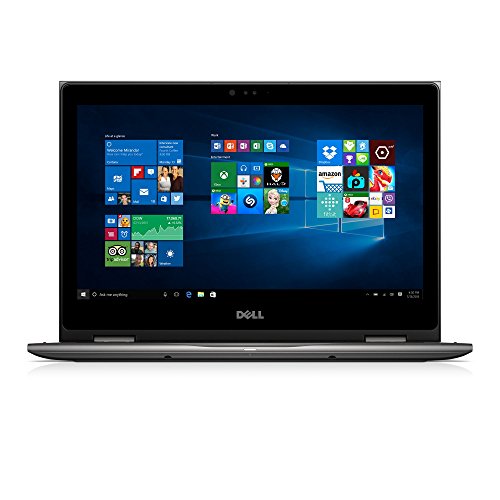
Stands out with a compact 13.3‑inch chassis and a 5‑hour average battery life, catering to users who prefer a premium, smaller‑footprint laptop over the larger, longer‑lasting alternatives.
Also considered
Score Analysis
Key score advantages vs. runner-up (Dell Latitude 3190)
Price Range
Dell Inspiron 14 2-in-1
$829.00
Dell Latitude 3190 11.6-inch
$140.00
Dell i5368 13.3-inch
$968.88

Dell 16 Plus Ice Blue
$954.99

Dell Latitude 7420
$435.99
Dell Latitude 5300 13-inch
$265.60

Dell Latitude 5300
$320.00
Dell Chromebook 3100
$73.20
Spec Comparison
TL;DR: The Dell Inspiron 14 2-in-1 blends a lightweight aluminum body, up to 64 Wh battery, and a bright 400‑nit QHD+ touchscreen for $819, making it a solid, portable choice for students and AI‑focused professionals.
The Snapdragon X Plus X1P‑42‑100 SoC, found in the 5441 configuration, stands out as the most distinctive hardware. It packs eight cores that run up to 3.2 GHz and an NPU rated at 45 TOPS, giving the laptop AI‑ready credentials that few 14‑inch competitors can claim.
At 1.531 kg, the Inspiron 14's lighter than the Dell 16 Plus Ice Blue and only a shade heavier than the Latitude 5300 13‑inch 2‑in‑1, while still offering a larger 14.0‑inch display. Its battery options top out at 64 Wh, matching the 64 Wh pack in the 16 Plus and outpacing the 60‑63 Wh cells in most Latitude models. The 400‑nit IPS panel also outshines the 300‑nit screens on the 16 Plus, Latitude 7420 and Latitude 5300 series.
Reviewers consistently praise the aluminum chassis, fast SSD storage (up to 2 TB PCIe NVMe) and the long‑lasting battery, while professional testers note the high build quality (rated 83 % by Notebookcheck) and note that the display quality only earned a 72 % score. Users love the lightweight feel and AI features, yet many flag the modest port selection, bottom‑firing speakers that can sound muffled, and occasional blue‑screen crashes after Windows updates.
Pros
Cons
Best for: Students, mobile professionals, and AI‑focused users who need a thin, light laptop with good battery life.
Avoid if: You need many ports, high‑end graphics for gaming or heavy content creation, or prefer products with extensive real‑world feedback and proven track records.
TL;DR: The Dell Latitude 3190 11.6‑inch 2‑in‑1 delivers a rugged, convertible design with an 8 GB DDR4 memory, 128 GB SSD and up to 11 hours of battery life for just $140.
This model’s standout feature is its 360° hinge that lets you flip between laptop, tent, stand and tablet modes, all while tapping a 10‑point multi‑touch screen protected by Corning Gorilla Glass. The 11.6‑inch display resolves at 1366 × 768 HD, and the device packs a 42 Wh (3‑cell) battery that the manufacturer claims can last up to 11 hours on a single charge.
At 2.0 pounds, the Latitude 3190's lighter than the Dell Latitude 5300 (5.0 pounds) but a bit heftier than the Dell Chromebook 3100, which weighs about 1.41 kg. It's smaller than the 60 Wh packs found in the Latitude 5300 and 7420, placing its endurance in the mid‑range for this lineup. The $140 price tag also positions it well below the $300‑plus price points of the other Dell 2‑in‑1s, making it the most budget‑friendly option in the roundup.
Professional reviewers praise the device’s durability – the spill‑resistant keyboard and sturdy chassis feel solid for classroom or field use – and note the SSD’s quick boot times. Everyday users echo the appreciation for the responsive touchscreen and long‑lasting battery, but many flag the low‑resolution HD panel as a visual compromise and point out that some configurations ship with only 4 GB of RAM, which reviewers say hampers multitasking. A handful of owners have reported power‑on failures and sticky keys on refurbished units, so reliability can be a mixed bag.
Pros
Cons
Best for: Entry‑level buyers or those on a tight budget who need a lightweight, durable convertible for basic tasks.
Avoid if: You need advanced features or professional‑grade performance such as high‑resolution screens, more than 4 GB RAM, or premium build reliability.
TL;DR: The Dell i5368 13.3‑inch 2‑in‑1 delivers a Full HD IPS touchscreen, Core i7‑6500U performance and a lightweight 3.4 lb chassis for about $969, but its 42 Wh battery and lack of USB‑C keep it from being a long‑haul workhorse.
The i5368’s standout feature is its 13.3‑inch Full HD (1920 × 1080) IPS touchscreen paired with a 6th‑gen Intel Core i7‑6500U that runs at 2.5 GHz (boosting to 3.1 GHz) and 8 GB DDR4‑2133 RAM, all backed by a 256 GB SATA SSD. This combination delivers responsive everyday performance in a sleek 18 mm‑thick package.
At 3.4 lb, the laptop's lighter than the 16‑inch Dell 16 Plus (4.52 lb) but heavier than the Latitude 7420 (2.9 lb). Its 42 Wh battery caps at 7 hours, which is lower than the 64 Wh pack in the 16 Plus and the 63 Wh pack in the Latitude 7420, and it falls short of the up‑to‑14‑hour claim on the Latitude 5300 models. The 13.3‑inch display sits between the 11.6‑inch screen of the Latitude 3190 and the 16‑inch panel of the 16 Plus, offering a sweet spot for portability without sacrificing workspace.
Users consistently praise the responsive touchscreen, backlit full‑size keyboard and the solid build quality, noting fast boot times and the convenience of the 360° hinge. Professional reviewers highlight the vibrant IPS panel and smooth convertible action. The most common complaints revolve around the absence of a USB‑C port, the soldered‑in RAM that limits future upgrades, and a battery that can lose capacity after a few years of use.
Additional technical details include integrated Intel HD Graphics 520, dual‑band 802.11ac Wi‑Fi, Bluetooth 4.0, stereo speakers with Waves MaxxAudio Pro, a 720p HD webcam with dual microphones, and a 45 W power adapter. Dell backs the machine with a 1‑year mail‑in warranty.
Pros
Cons
Best for: Those prioritizing quality and willing to pay for premium performance
Avoid if: Reliability and user satisfaction are your top concerns
“The backlit keyboard is appreciated for nighttime use.”
TL;DR: The Dell 16 Plus Ice Blue delivers a 16‑inch 120 Hz IPS display, 16 GB of fast LPDDR5X RAM, and a 64 Wh battery in a lightweight 4.52 lb chassis, but its premium price may limit budget shoppers.
What really sets this model apart is the 16‑inch 1920 × 1200 IPS panel that runs at 120 Hz and covers 100 % of the sRGB gamut, paired with 16 GB of LPDDR5X memory clocked at 8533 MHz. The 64 Wh lithium‑ion polymer battery and a 40 TOPS NPU give you all‑day productivity without hunting for an outlet, while the whole device weighs just 4.52 pounds.
Compared with the other seven Dell 2‑in‑1s in the roundup, the 16 Plus is larger than the 13.3‑inch i5368 and the 14‑inch Inspiron, and it carries a bigger battery than the i5368’s 42 Wh pack and the Chromebook’s unspecified capacity. It is heavier than the ultra‑light Latitude 7420 (2.9 pounds) and the 3190 (2.0 pounds), but lighter than the 5.0‑pound Latitude 5300. Its 64 Wh cell also exceeds the 60 Wh in the Latitude 5300 models and matches the highest‑capacity Inspiron variant.
Reviewers consistently praise the crisp 120 Hz screen and the efficient Lunar Lake V‑series CPU for delivering long battery life, yet they note the fans can become noisy under load and the touchpad click feels stiff. Professionals also point out the lack of a discrete GPU and the limited port selection—only one USB‑C Thunderbolt 4, one HDMI 2.1, and a single USB‑A—while the soldered RAM and single M.2 slot restrict future upgrades.
Pros
Cons
Best for: Those prioritizing quality and willing to pay for premium performance
Avoid if: You're shopping on a tight budget — it's priced at $954.99
TL;DR: The Dell Latitude 7420 2‑in‑1 packs a 14‑inch FHD touchscreen, 63 Wh battery and 16 GB of fast LPDDR4x RAM into a lightweight 2.9‑pound carbon‑fiber chassis for business mobility.
The standout spec is its 63 Wh battery, which the manufacturer claims can last up to 16 h 40 min of web browsing and reaches 80 % charge in just 60 minutes. Coupled with a 14.0‑inch 1920 × 1080 IPS display that supports an active pen, the laptop stays productive whether you’re typing or sketching. Under the hood sits an 11th‑gen Intel Core i7‑1185G7 (3.0 GHz base, up to 4.8 GHz turbo) and Intel Iris Xe Graphics G7, backed by 16 GB of LPDDR4x RAM running at 3733 MHz and a 512 GB PCIe NVMe SSD.
Compared with the other seven laptops in this roundup, the Latitude 7420 is lighter than the 5.0‑pound Dell Latitude 5300 and the 4.52‑pound Dell 16 Plus, yet a touch heavier than the 2.0‑pound Latitude 3190 and the 1.41‑kilogram Chromebook 3100. Its 63 Wh battery outstrips the 60 Wh cells found in both Latitude 5300 models and the 42 Wh packs in the 3190 and i5368, and it rivals the 64 Wh of the 16 Plus. Bluetooth 5.2 puts it a step ahead of the 5.0 found in the 5300 13‑inch. Storage is generous at 512 GB, far above the 8 GB RAM‑only i5368 and the modest capacities of the Chromebook series.
Professional reviewers praise the build quality, noting the carbon‑fiber chassis feels premium and the battery truly lasts through a full workday. Everyday users echo the appreciation for the long‑lasting battery and the convenience of the touchscreen with pen support for note‑taking. In practice, the laptop’s fan can become audible under sustained CPU load, and the stereo speakers deliver average sound with limited bass. Dell solders the RAM, so you can't upgrade it later.
Pros
Cons
Best for: Enterprise professionals, remote workers, and mobile business users who need a secure, lightweight convertible.
Avoid if: You're shopping on a tight budget — it's priced at $435.87
TL;DR: The Dell Latitude 5300 13‑inch 2‑in‑1 packs a 60 Wh battery, 14‑hour endurance and a lightweight carbon‑fiber chassis for $308.02, making it a solid, portable business choice.
What really stands out is the 60 Wh (4‑cell) battery paired with ExpressCharge that reaches 80 % in just 60 minutes, and Dell’s claim of up to 14 hours of run‑time. At 13.3 inches, the IPS anti‑glare panel delivers Full HD resolution with 300 nits brightness and 100 % sRGB coverage, while the optional touchscreen adds flexibility for convertible use. The standard model weighs 1240 g (2.73 lb), keeping it light enough for daily travel.
Compared with its siblings, the Latitude 5300 (B0FB5LFLBK) tips the scales at about 5.0 lb, making this model noticeably lighter. The newer Latitude 7420 is even slimmer and lighter at 2.9 lb, but both share the same 300‑nit brightness. The ultra‑compact Latitude 3190 is lighter still at 2.0 lb, though it sports an 11.6‑inch screen. The Chromebook 3100 matches the weight of the 2‑in‑1 version (about 1.41 kg) and also advertises a 14‑hour battery claim, but it lacks the full Windows 10 Pro environment and the premium build materials found here.
User feedback repeatedly praises the laptop’s portability, all‑day battery life, and the solid feel of its carbon‑fiber and magnesium‑alloy chassis. Professional reviewers highlight the fast ExpressCharge and the responsive touchscreen on convertible models, while noting that the integrated Intel UHD Graphics 620 (300 MHz base, 1.15 GHz boost) is fine for office tasks but falls short for graphics‑heavy workloads. The fan becomes audible under sustained CPU load, a point mentioned in several consumer comments.
Under the hood sits an 8th‑gen Intel Core i5‑8265U with a 1.6 GHz base clock, 3.9 GHz turbo, 4 cores and 8 threads, backed by 8 GB DDR4 SDRAM (2400 MHz) as standard and expandable to 32 GB via two SO‑DIMM slots. Storage starts at a 256 GB PCIe NVMe M.2 SSD, with room for up to a 1 TB NVMe drive or an optional 512 GB SATA III SSD. Connectivity includes Bluetooth 5.0, Wi‑Fi 5, a micro‑SD card reader, HDMI 1.4b, two USB‑A 3.1 Gen 1 ports (one with PowerShare) and a USB‑C 3.1 Gen 2 port that can support optional Thunderbolt 3.
Pros
Cons
Best for: Value-conscious buyers seeking quality at $308.02
Avoid if: You need advanced features or professional‑grade performance
TL;DR: The Dell Latitude 5300 is a 13.3‑inch business‑grade 2‑in‑1 with an 8th‑gen i7, 16 GB RAM, up to 14 hours of battery, and a durable magnesium chassis at $299.99.
This model packs an 8th‑generation Intel Core i7‑8665U that can turbo boost to 4.8 GHz, paired with 16 GB of DDR4‑2666 MHz RAM and a single‑slot M.2 PCIe NVMe SSD that can reach 1 TB. The 13.3‑inch IPS touchscreen delivers Full HD resolution at 166 PPI, 300 nits brightness, and a 60 Hz refresh rate, while the 2‑in‑1 360° hinge lets you switch between laptop, tablet, tent, or stand modes. A backlit keyboard, 2 × 2 W Dolby‑Audio speakers, and a 60 Whr battery promising up to 14 hours of use round out the core feature set.
Compared with the other seven Dell 2‑in‑1s in this roundup, the Latitude 5300 is on the heavier side—heavier than the Latitude 7420 and the compact Latitude 3190, yet comparable to the larger 16 Plus model. Its battery claim of up to 14 hours matches the similarly named Latitude 5300 13‑inch, and exceeds the 11‑hour office rating of the Latitude 7420. Brightness at 300 nits is on par with the Latitude 7420, while the 13.3‑inch screen is larger than the 11.6‑inch Latitude 3190 but similar to the i5368. Storage capacity of up to 1 TB NVMe is more generous than the modest storage typically found in the Chromebook 3100.
Users consistently praise the laptop’s solid magnesium‑alloy build and the flexibility of its convertible hinge, noting that the long‑lasting battery gets them through a full workday. Professional reviewers also highlight the extensive security suite—including vPro, TPM 2.0, and a fingerprint reader—as a strong point for enterprise environments. On the downside, reviewers view the integrated Intel UHD 620 graphics as a bottleneck for graphics‑intensive work, and the 300‑nit display can feel dim in bright sunlight. Users report thermal throttling and audible fan noise under sustained CPU loads, and at 5.0 lb, it outweighs many comparable ultrabooks in the lineup.
Pros
Cons
Best for: Entry-level buyers or those on a tight budget
Avoid if: You need advanced features or professional‑grade performance
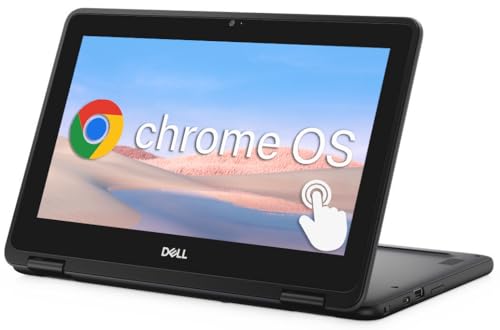
TL;DR: The Dell Chromebook 3100 2‑in‑1 packs an 11.6‑inch HD touchscreen, 14‑hour claimed battery, and MIL‑STD‑810G‑grade durability into a 1.41 kg, budget‑friendly package.
This Chromebook’s most eye‑catching spec is its rugged design: it exceeds MIL‑STD‑810G, survives 30‑inch drops, and its spill‑resistant keyboard tolerates up to 354 ml of liquid. Those numbers make it a solid choice for classrooms or field work where bumps are inevitable.
When you line it up against the other seven Dell models in this roundup, the 3100’s claimed 14‑hour battery life outpaces the Latitude 3190’s 11‑hour claim, while its weight of 1.41 kg is heavier than the 2.0‑lb Latitude 3190 but lighter than the 5.0‑lb Latitude 5300. Its 11.6‑inch screen is smaller than the 13‑inch Latitude 5300 2‑in‑1 and far smaller than the 16‑inch 16 Plus, yet it still offers a full HD‑class 1366 × 768 resolution.
Professional reviewers list the Chromebook’s durability among the most rugged Chromebooks, and everyday users echo that sentiment, praising the quick startup and USB‑C charging flexibility. The manufacturer rates battery life at about 9.43 hours, matching user reports of lasting a full school day. However, users frequently complain about the TN panel’s limited viewing angles and washed‑out colors, and the 4 GB of soldered RAM combined with only 16‑32 GB of eMMC storage can feel cramped when many browser tabs are open.
Pros
Cons
Best for: Entry‑level buyers or those on a tight budget
Avoid if: You need advanced features or professional‑grade performance
Breakdown
Dell Inspiron 14 2-in-1
Pros
Dell Latitude 3190 11.6-inch
Pros
Dell i5368 13.3-inch
Pros
Cons
Dell 16 Plus Ice Blue
Cons
Based on scoring data and product specs
Personalized picks
Best Overall Pick
Dell Inspiron 14 2-in-1
Best ValueBest for: Those prioritizing quality and willing to pay for premium performance
Dell Latitude 3190 11.6-inch
Best for: Entry-level buyers or those on a tight budget
$140.00-$689.00 vs winner
Skip Dell Chromebook 3100 if…
You need advanced features or professional-grade performance
The Dell Inspiron 14 2‑in‑1 takes the top spot thanks to its premium 14‑inch QHD+ (2560×1600) IPS display covering 100 % sRGB, a bright 400‑nit panel, and fast‑charging options up to a 64 Wh lithium‑ion polymer battery. It also offers the latest connectivity with Wi‑Fi 7 and Bluetooth 5.4, all for $819.00 and a manageable 1.53 kg weight.
Dell's Latitude 3190 11.6‑inch ranks as the runner‑up, ideal if you need an ultra‑affordable, rugged convertible for on‑the‑go work or classroom use. It sports a 360 ° hinge, spill‑resistant keyboard, and Dell Active Pen compatibility, while delivering up to 11 hours of battery life on a 42 Wh pack. At $140.00 and a 4.2/5 rating from 407 reviewers, it’s a solid value at just 2.0 lb.
For tighter budgets, the Dell Chromebook 3100 shines at $73.20 as a simple, web‑focused device. The Dell Latitude 7420 offers the best mid‑range balance at $435.87 with stronger performance and business features. If you crave top‑tier specs, the Dell i5368 13.3‑inch premium pick stands out at $968.88, delivering a high‑resolution display and premium build.
Pick the Dell Inspiron 14 2‑in‑1 today and get the most versatile 2‑in‑1 experience for your money.
The Dell Inspiron 14 2‑in‑1 features a 14‑inch IPS panel with a QHD+ resolution of 2560 × 1600 and 400 nits brightness, giving plenty of screen real‑estate for multitasking. At 1.53 kg it’s still portable, and its up‑to‑64 Wh battery supports a full workday. Competing models like the Latitude 3190 have an 11.6‑inch 1366 × 768 screen, which is smaller and lower‑resolution.
Please sign in to leave a review
No reviews yet. Be the first to review!
