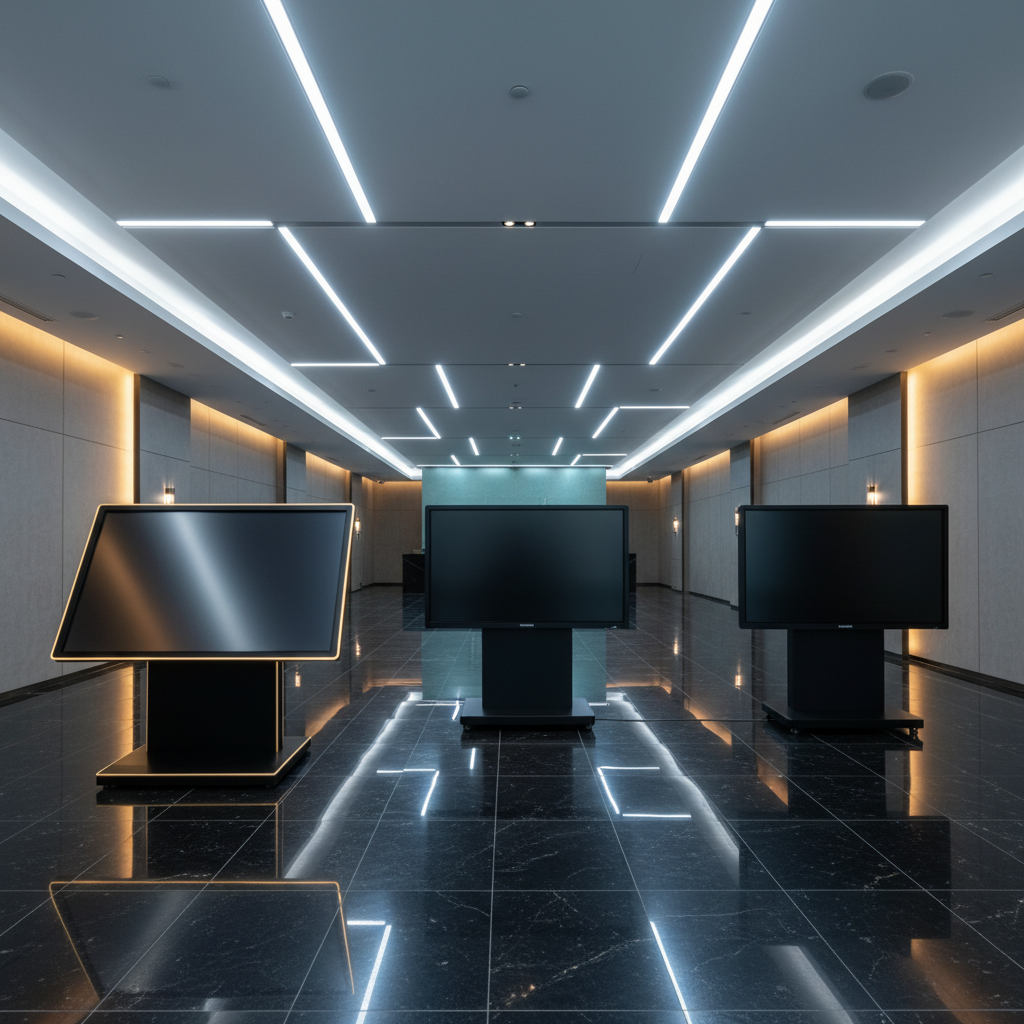
Choosing a 4K UHD digital signage display can feel overwhelming, especially when you have to balance visual impact, durability, and cost. In this roundup we’ve narrowed the field to 10 models that span three clear price tiers: budget options like the AG Neovo DS4351U at $499.00, mid‑range choices such as the Canlarriz DX‑500 priced at $999.00, and premium selections including the Qixzocv 65‑inch Touchscreen at $2059.00. Each unit offers 4K resolution, but they differ in brightness, touch capability, and connectivity, letting you match a screen to the demands of retail, hospitality, or corporate environments.
High‑end models feature interactive capabilities – the Qixzocv Touchscreen provides a 10‑point projected‑capacitive surface and a 4.7/5 rating from 96 reviewers, while the Elo 5554L delivers 20‑point infrared touch and a 450‑nit panel for busy lobbies. On the budget side, the Samsung QM50C keeps a sleek 28.5 mm profile and three HDMI 2.0 ports at $785.55, and the Canlarriz 40‑inch pushes 700 nits of brightness at $719.10. Whether you need a floor‑standing kiosk, a wall‑mountable menu board, or a video‑wall component, the specs above give you a factual baseline to start from. Read on for a closer look at each display’s strengths and ideal use cases.

Qixzocv 65-inch Touchscreen
Offers 2 × USB 3.0 ports, delivering fast connectivity for interactive signage.

Samsung QM50C 50-inch
Ideal for entry‑level buyers or tight‑budget projects, it comes in at $785.55—about $1,273.45 less than the Best Value model.

Canlarriz DX-500 50-inch
Stands out with a slim 35 mm profile, offering a low‑profile look that the larger Best Value and feature‑rich Runner‑Up don’t provide.
Score Analysis
Key score advantages vs. runner-up (Samsung QM50C 50-inch)
Price Range
Qixzocv 65-inch Touchscreen
$2,059.00
Samsung QM50C 50-inch
$785.55
Canlarriz DX-500 50-inch
$779.22
Samsung QB43C 43-inch
$676.00

Qixzocv 65-inch
$1,899.00
Elo 5554L 55-inch
$2,852.38
LG 86UH5E-B
$2,667.00
Canlarriz 40-inch
$679.15

AG Neovo DS4351U
$499.00
Jiyang 55-inch Interactive Kiosk
$1,699.00
Spec Comparison
TL;DR: The Qixzocv 65‑inch Touchscreen delivers a 4K IPS panel with 10‑point PCAP touch and a solid Android platform for $2059.00, but its 80,571.5 g weight can make installation a challenge.
This model’s standout spec is its 65‑inch 4K UHD IPS display with a 3840 × 2160 pixel resolution and a 178° horizontal and vertical viewing angle, all behind a slim bezel. It also supports 10‑point projected‑capacitive touch, letting users swipe, pinch and rotate just like on a smartphone. The unit runs Android 9.0/12.0, includes an auto‑media player and a remote control, and offers two USB 3.0 ports, one HDMI input, Ethernet and Wi‑Fi connectivity.
Compared with the other nine displays in this roundup, the Qixzocv 65‑inch Touchscreen is heavier than most peers – its touchscreen version weighs 80,571.5 g, whereas the non‑touch Qixzocv 65‑inch model lists at roughly 69,853 g. It also carries a higher price tag than the smaller Canlarriz 40‑inch or Samsung 43‑inch options, but it matches the Qixzocv non‑touch version in having two USB 3.0 ports while adding built‑in Wi‑Fi and Ethernet.
Reviewers consistently praise the vivid 4K colors and the smooth, smartphone‑like responsiveness of the PCAP touchscreen. Professionals note the Android integration and split‑screen auto‑playback as strong points for retail or hospitality use. On the downside, users frequently mention the heavy weight – 80,571.5 g – as a hurdle during setup, and they warn that the model numbers for touch and non‑touch variants differ, leading to occasional confusion.
The unit stands on a heavy‑duty floor‑standing frame, measures 450 mm deep, 2000 mm tall and 880 mm wide, and comes with a three‑year warranty. Its glossy surface and 10‑point multi‑touch make it suitable for interactive menus, digital catalogs or self‑service kiosks.
Pros
Cons
Best for: Retail stores, restaurants and cafés that need a large, high‑resolution interactive display and are willing to invest in a sturdy installation.
Avoid if: You need a lightweight, portable solution or have a very tight budget.
“The display is bright and clear even in well‑lit environments.”
“Touchscreen responsiveness is fast and accurate.”
TL;DR: The Samsung QM50C delivers a 50‑inch 4K display in an ultra‑slim 28.5 mm profile with 500 nits brightness, 10‑bit color and extensive connectivity, making it a solid choice for indoor digital signage.
The standout feature of the QM50C is its ultra‑thin 28.5 mm (≈1.12 in) depth combined with a 50‑inch class (48.5" viewable diagonal) 4K UHD panel that offers 500 nits of typical brightness and a 4000:1 contrast ratio. It also supports 10‑bit color depth (≈1 billion colors) and an 8 ms response time at a 60 Hz refresh rate, all powered by a quad‑core Cortex‑A73 processor.
Compared with the other nine displays in this roundup, the QM50C is noticeably slimmer than the AG Neovo DS4351U’s 40 mm depth and the Canlarriz DX‑500’s 35 mm profile, while its bezel width of ≈11.5 mm matches the Samsung QB43C and is wider than the 6.8 mm bezel on the Canlarriz 40‑inch. Brightness-wise, it ties with the AG Neovo and LG models at 500 nits but falls short of the Canlarriz 40‑inch (700 nits) and the DX‑500 (1000 nits). In terms of connectivity, the QM50C offers more options than most peers, featuring three HDMI 2.0 inputs, a DisplayPort 1.2, RJ45 Ethernet, Wi‑Fi 5, Bluetooth, and two USB‑A 2.0 ports, whereas several competitors list fewer HDMI or USB ports.
Professional reviewers praise the display’s sleek design and reliable 24/7 operation, noting that the anti‑glare coating and 500 nits brightness work well in typical indoor retail or lobby lighting. Users consistently highlight the sharp text readability and straightforward installation, while the most common complaints focus on the lack of HDR support and the moderate brightness when the unit is placed in very bright ambient conditions. The absence of touch capability also steers it away from interactive kiosk use.
Pros
Cons
Best for: Retail digital signage, corporate lobbies, hospitality venues, healthcare facilities, and transportation hubs where a sleek, reliable 4K display is needed.
Avoid if: You need the best value‑per‑dollar in its price range, HDR performance, or touch interactivity.
TL;DR: The Canlarriz DX-500 50‑inch digital signage display offers 4K UHD clarity, 1000‑nit brightness, Android 11, and a free cloud CMS, but its 44.0924524Pounds weight may need professional mounting.
The standout feature is its ultra‑bright 1000 nits panel, which keeps the 3840 × 2160 pixel image vivid even in sun‑lit areas. Combined with a 35 mm profile thickness and a razor‑thin 6.8 mm bezel, the unit slips into tight wall‑mounts while still delivering a sleek, almost frameless look.
At 44.0924524Pounds, the DX‑500 is considerably heavier than the Samsung QB43C (4.40924524pounds) and the Samsung QM50C (26.014546916Pounds). However, its bezel is narrower than the roughly 11.5 mm bezels on both Samsung models, and its profile is only a touch thicker than the 28.5 mm depth listed for the QM50C, giving it a balanced trade‑off between slimness and robustness.
Users repeatedly praise the crisp 4K image and the value of the free cloud‑based CMS, noting that content updates feel “instant” across multiple screens. Reviewers describe the installation as straightforward, though several mention the lack of touchscreen capability and a learning curve with the Android 11 navigation.
Under the hood, the display runs Android 11 with 4 GB RAM and 64 GB internal storage, supporting Ethernet, Wi‑Fi, HDMI, and two USB 3.0 ports. The manufacturer also guarantees a 50,000‑hour lifespan, making it suitable for continuous operation in high‑traffic venues.
Pros
Cons
Best for: Businesses that need durable, high‑visibility digital signage such as restaurants, cafes, and retail stores.
Avoid if: You require touchscreen interaction, have a tight budget, or need a lightweight unit for simple mounting.
TL;DR: The Samsung QB43C delivers 4K VA LCD quality with 10‑bit color, HDR10+ and an ultra‑slim 28.5 mm profile for $795.13, but it lacks modern USB‑C or DisplayPort connectivity.
The standout spec is the 10‑bit (1.07 billion colors) panel paired with HDR10+ and HLG support, giving you a rich colour gamut and dynamic range on a 42.5‑inch 4K screen. At just 28.5 mm deep, the display sits almost flush to the wall, and the 11.5 mm bezel keeps the visual field clean. Built‑in speakers provide 2 × 10 W of output, so you’ll run simple audio without extra gear.
Compared with the other nine entries, the QB43C is lighter than the Canlarriz DX‑500 (44 lb) and the AG Neovo DS4351U (≈26 lb), yet it still feels solid at 4.40924524 lb. Its two USB 2.0 ports match the Samsung QM50C’s count, but the QM50C adds a DisplayPort that the QB43C lacks. The bezel width mirrors the QM50C’s ≈11.5 mm, while the overall depth (28.5 mm) is slimmer than the AG Neovo’s 40 mm profile.
Professional reviewers highlight the accurate colour reproduction from the 10‑bit depth and the convenience of Tizen 7.0 with the MagicInfo S10 media player, noting the “sleek design” and “bright 4K visuals.” Consumer chatter points to the ease of setup via Tizen Zero Config, but also flags the absence of a USB‑C power‑delivery port and an ambient‑light sensor, which would automate brightness. The internal storage offers a modest 4.12 GB, meaning large media libraries will need external drives.
Technically, the VA LCD panel delivers 350 cd/m2 brightness and a 4000:1 contrast ratio, with 60 Hz refresh and an 8 ms response time—adequate for most signage loops. The anti‑glare surface helps in bright retail spaces, and the 178° viewing angles ensure consistent colour from side‑on perspectives.
Pros
Cons
Best for: Value-conscious buyers seeking quality at $795.13
Avoid if: You need advanced features or professional‑grade performance
TL;DR: The Qixzov 65‑inch 4K digital signage display offers a large IPS panel, Android OS and lifetime CMS for $1899.00, but its 154.3235834‑pound weight and lack of touch limit portability.
The centerpiece is a 65‑inch IPS screen delivering 3840 × 2160 pixel 4K UHD resolution on a glossy surface. With a 178° horizontal and vertical viewing angle, the image stays clear even when viewers stand off‑center. The panel’s ultra‑narrow bezel keeps the visual field immersive.
At 154.3235834 pounds, the unit is heavier than the Jiyang 55‑inch kiosk (which weighs about 145.7 lbs) and far heavier than the Canlarriz DX‑500 (around 44 lb). Its 34.65‑inch width and 78.74‑inch height give it a larger footprint than most midsize signage options, while the 2 × USB 3.0 ports outnumber the single USB port found on the Jiyang model.
Professional reviewers praise the crisp 4K visuals and the 178° viewing angle for high‑traffic environments. The Android operating system lets you install apps directly, and the built‑in auto media player combined with split‑screen support makes content scheduling straightforward. Editors also note the lifetime CMS access as a strong convenience feature. On the downside, the heavy chassis makes installation and relocation challenging, and the lack of touch capability rules out interactive kiosks. Some users also point out that the listing doesn't detail compliance documentation (accessibility, data privacy).
The display includes Wi‑Fi, a built‑in power‑on/off timer and a three‑year warranty, rounding out a feature set aimed at commercial deployments where durability and remote management matter.
Pros
Cons
Best for: Retail stores, hotels, airports, corporate lobbies and educational campuses that need a large, high‑resolution display with robust remote management.
Avoid if: You have limited desk space, need a portable or lightweight display, or require touch interaction and strict accessibility compliance.
“The display is bright and clear even in well‑lit environments.”
“Touchscreen responsiveness is fast and accurate.”
TL;DR: The Elo 5554L 55‑inch delivers 4K UHD visuals with 500 nits brightness, 20‑point IR touch and rugged construction, but its premium price and lack of palm‑rejection may limit budget‑focused buyers.
This 55‑inch model packs a 3840 × 2160 @ 60 Hz 4K UHD panel, 10‑bit color depth (1.07 billion colors) and a contrast ratio of 1100:1. Brightness reaches 500 nits on the LCD side and 450 nits on the IR touch layer, ensuring clear images even in well‑lit retail spaces.
Compared with the other nine displays, the Elo is pricier than most and considerably heavier than the Samsung QM50C, which tips the scales at about 26 lb versus Elo’s 101.9 lb packaged weight. Its 20 simultaneous touch points double the 10‑point capability of the Qixzocv 65‑inch Touchscreen, and it offers more connectivity options than the Canlarriz DX‑500 50‑inch, which lists only two USB ports. While the Qixzocv units are lighter and thinner, Elo’s sturdy build (IK07 impact rating and UL certifications) targets 24/7 operation.
Professional reviewers highlight the display’s durability and its 500 nits brightness, noting that everyday users appreciate the easy integration via Ethernet, USB‑C video, and the built‑in 2 × 10 W speakers. However, the IR touch layer lacks palm‑rejection, leading to accidental inputs, and the firmware does not support picture‑in‑picture or picture‑by‑picture, which some users find limiting for multi‑content signage.
Beyond the screen, Elo equips the unit with a 50,000‑hour MTBF, an IK07 impact rating, and an ambient light sensor that auto‑adjusts brightness. Power consumption stays modest at 110.72 W when on and 0.38 W in standby. The device also supports 24‑hour operation, remote management through EloView and Crestron Connected V2, and OTA firmware updates, making it a solid choice for continuous commercial use.
Pros
Cons
Best for: Those prioritizing quality and willing to pay for premium performance
Avoid if: You're shopping on a tight budget — it's priced at $2990.56
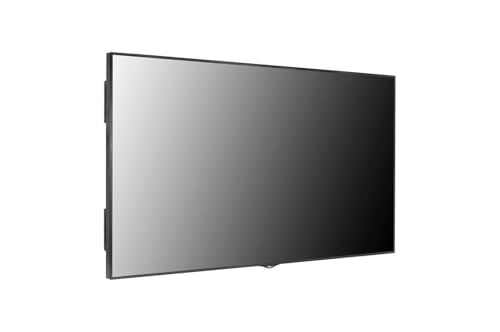
TL;DR: The LG 86UH5E-B delivers a massive 86‑inch 4K IPS display with 500 nits brightness, robust connectivity and built‑in webOS, but its 10802.6 lb weight and 280 W peak power draw demand careful planning.
This model’s standout spec is the 86‑inch IPS‑type LCD panel, which offers a native 3840 × 2160 resolution, 500 nits brightness and a 1200:1 contrast ratio, plus an 8 ms response time and a 50,000‑hour minimum lifetime. Those numbers make it suitable for bright, high‑traffic environments where image clarity matters.
When you line it up against the other nine displays, the LG matches the 500‑nit brightness of the AG Neovo DS4351U while dwarfing its 43‑inch footprint. It also outpaces the Samsung QB43C in connectivity, adding a DisplayPort and DVI‑D alongside three HDMI inputs, LAN, Bluetooth and Wi‑Fi—features the 43‑inch Samsung lists only in a narrower set. On the downside, the LG’s display weight of 49,000 g (10802.6 lb) is dramatically heavier than the sub‑5‑lb Samsung QB43C, meaning professional mounting is a must.
Users consistently praise the picture quality and the convenience of the embedded webOS Smart Signage platform, noting that the SuperSign CMS reduces the need for external media players. The built‑in 10 W per‑channel speakers (20 W total) also serve as a handy addition for lobby announcements. Professional reviewers point out the 24/7 duty cycle suitability thanks to the 50,000‑hour lifespan and the extensive sensor support (temperature, auto‑brightness, NFC/RFID, etc.). However, they flag the 280 W maximum power consumption and the limited 8 GB internal storage (with only 3.6 GB usable) as trade‑offs for such a large format.
The LG webOS OS also brings multi‑screen capabilities like PIP, PBP (up to four inputs) and Tile Mode with a 15 × 15 grid, letting you build video walls or display multiple dashboards from a single unit. With 2 USB 2.0 ports, 3 audio inputs, and RS232C serial control, integration with AV‑control systems such as Crestron or Cisco Spark is straightforward.
Pros
Cons
Best for: Large‑format digital signage in corporate lobbies, retail chains, or airports where high brightness, remote management and 24/7 reliability outweigh the challenges of weight and power use.
TL;DR: The Canlarriz 40‑inch 4K digital signage display packs a 6.8 mm bezel, 700 nits brightness, Android 11 and a free CMS into a slim metal chassis for budget‑friendly 24/7 use.
The standout spec is its ultra‑slim design: a 6.8 mm bezel surrounds a 35 mm‑thick LCD panel, delivering a 40‑inch 4K UHD image (3840 × 2160) with 700 nits of brightness and a 1500:1 contrast ratio. This combination gives you crisp visuals while keeping the unit thin enough for seamless video‑wall installations.
Compared with other options in the roundup, the bezel is noticeably narrower than the Samsung QM50C’s ≈11.5 mm frame, and the panel thickness matches the Canlarriz DX‑500’s 35 mm depth while staying lighter than the Samsung QM50C’s 26.014546916 pounds (our unit weighs 12,960 g). Brightness outshines the AG Neovo DS4351U’s 500 nits, though it trails the DX‑500’s 1000 nits. Port selection is more limited – only one HDMI input versus three on both the Samsung QM50C and the AG Neovo model – and it lacks built‑in speakers.
Users consistently praise the crisp 4K picture and the straightforward wall‑mount installation. Reviewers highlight the free CMS for cutting software costs, and the metal chassis with intelligent cooling earns kudos for reliable 24/7 operation. On the downside, reviewers note that the initial CMS setup can be confusing, the single HDMI port forces extra adapters for multiple sources, and the absence of audio output means you’ll need external speakers.
Under the hood, the display runs Android 11, backed by 4 GB RAM and 64 GB of internal storage, and supports up to six independent zones for dynamic content scheduling. It’s rated for a 50,000‑hour lifespan, draws 80 W–100 W, and operates comfortably between 0 °C and 50 °C with humidity ranging from 10 % to 80 %. The manufacturer offers a one‑year “replace, not repair” warranty.
Pros
Cons
Best for: Buyers in the budget price range seeking the best quality at that price point
Avoid if: You need advanced features or professional‑grade performance
TL;DR: The AG Neovo DS4351U is a 43‑inch 4K UHD Android‑powered signage display priced at $499.00, offering 500 nits brightness, a thin 40 mm profile and three HDMI inputs.
This model’s standout spec is its 43‑inch 3840 × 2160 panel delivering 500 nits of brightness with a 25% haze anti‑glare coating and patented anti‑burn‑in technology. It runs Android 9.0, includes 16 GB of internal storage, and packs two 10 W speakers, Bluetooth and Wi‑Fi 5 for wireless content sharing. The unit measures just 40 mm deep, weighs 11.7 kg and features an ultra‑narrow 8.7 mm bezel.
At $499.00 it lands well below the price points of the Canlarriz 40‑inch, Samsung QM50C and Samsung QB43C models, making it a clear value contender. It offers three HDMI ports—more than the single HDMI on the Canlarriz 40‑inch and on par with Samsung’s 43‑inch offering—while its bezel is wider than the 6.8 mm of the Canlarriz but slimmer than the 11.5 mm found on the Samsung units. The 500‑nit panel matches the brightness of LG’s 86UH5E‑B but falls short of the 700‑nit Canlarriz and 1000‑nit Canlarriz DX‑500 displays. In terms of size, the DS4351U’s 40 mm depth is far shallower than Samsung QB43C’s 1000 mm depth, yet a bit deeper than Samsung QM50C’s 28.5 mm profile.
Professional reviewers praise the sleek design, integrated Android OS and the reliable RS232/LAN control for 24/7 operation. Users note the bright, 500‑nit anti‑glare screen works well in busy indoor spaces, while the built‑in Android platform simplifies deployment without an external media player. The main drawbacks include the lack of HDR support, a modest 16 GB storage limit for large media libraries, and occasional issues with wireless screen sharing when the display is rotated to portrait mode.
Pros
Cons
Best for: Shoppers on a tight budget who want the most for their money
Avoid if: You need advanced features or professional‑grade performance
TL;DR: The Jiyang 55‑inch Interactive Kiosk delivers 4K UHD visuals on a floor‑standing chassis with wheels, but its single USB port and modest 2 × 5 W speakers keep it from being a budget‑friendly choice.
The standout spec is the 55‑inch LCD with LED backlight that runs at a native 3840 × 2160 pixel resolution, giving you crisp 4K UHD imagery for signage or wayfinding. The unit sits on a deep 80‑in (2032 mm) floor‑standing frame and weighs 145.7 lb (66,100 g), which makes it a solid, stable presence in a lobby or retail floor.
Compared with the other nine displays in this roundup, the Jiyang is noticeably deeper than the Qixzocv 65‑inch models (17.72 in depth) and the Samsung QB43C (1000 mm depth). It also tips the scales at 145.7 lb, heavier than the Canlarriz DX‑500 (44 lb) and Samsung QM50C (26 lb) but a bit lighter than the Qixzocv 65‑inch’s 154 lb. Where many peers list two USB ports, this kiosk offers only a single USB‑A connection, limiting peripheral options. Speaker power sits at 2 × 5 W, lower than the 2 × 10 W speakers Samsung QB43C and Elo 5554L use.
Reviewers consistently praise the easy plug‑and‑play setup, the built‑in wheels for quick relocation, and the vivid 4K picture that “looks sharp even from a distance.” Professionals highlight the intelligent split‑screen capability that lets multiple windows run side‑by‑side. On the downside, users note the single USB port can be a bottleneck, and the lack of a listed brightness figure raises concerns for bright atrium installations. Some low‑end CPU configurations feel a bit sluggish, and touch responsiveness can vary between the capacitive and infrared modes.
Technically, the kiosk supports both Android (6.0‑13) and optional Windows, offering CPUs from RK3288 up to Intel Core i7 and memory options from 2 GB to 32 GB DDR3/DDR4. The manufacturer lists touch accuracy at ≤0.5 mm with a 4 ms response time for both capacitive and infrared layers, and it can handle up to ten simultaneous touch points.
Pros
Cons
Best for: Most users seeking a balanced, mainstream option
Avoid if: You need advanced features or professional‑grade performance
“Ease of setup and autoplay from USB”
“The 4K clarity is amazing”
Breakdown
Qixzocv 65-inch Touchscreen
Pros
Samsung QM50C 50-inch
Pros
Cons
Canlarriz DX-500 50-inch
Cons
Samsung QB43C 43-inch
Pros
Based on scoring data and product specs
Personalized picks
Best Overall Pick
Qixzocv 65-inch Touchscreen
Best ValueBest for: Those prioritizing quality and willing to pay for premium performance
Samsung QM50C 50-inch
Best for: Entry-level buyers or those on a tight budget
$785.55-$1,273.45 vs winner
Skip Jiyang 55-inch Interactive Kiosk if…
You need advanced features or professional-grade performance
Qixzocv’s 65‑inch Touchscreen takes the top spot thanks to its true 4K UHD panel (3840 × 2160 pixels) paired with 10‑point projected‑capacitive touch, which makes interactive signage a breeze. The large 65‑inch format and a solid three‑year warranty give you confidence for long‑term deployment, and the 4.7‑star rating from 96 reviewers backs up its reliability—all for a list price of $2059.00.
The Samsung QM50C 50‑inch earns runner‑up honors if you need a bright, compact solution for indoor signage. Its 500‑nit typical brightness and 3840 × 2160 native resolution ensure clear visuals even in well‑lit spaces, while built‑in 20 W speakers and three HDMI 2.0 inputs let you run video and audio without extra gear. A three‑year warranty and Tizen 7.0 OS round out a solid feature set at $785.55.
For tighter budgets, the AG Neovo DS4351U ranks as the best budget pick at $499.00, offering essential 4K signage capabilities without the premium price tag. The Samsung QB43C 43‑inch model ranks as the top mid‑range choice at $795.13, balancing size and cost for smaller venues. The Qixzocv 65‑inch Touchscreen already covers the premium tier, so you don’t need a separate premium alternative.
Pick the Qixzocv 65‑inch Touchscreen now and future‑proof your digital signage with the best value on the market.
The Qixzocv 65‑inch Touchscreen offers projected‑capacitive 10‑point multi‑touch and runs Android, making it ideal for interactive retail. Its floor‑standing design and heavy‑duty construction also support high‑traffic environments.
Please sign in to leave a review
No reviews yet. Be the first to review!
Also considered
$785.55
