Choosing a DJI quadcopter can feel overwhelming, so we cut through the hype by rating six models that span DJI’s full price spectrum. From the ultra‑light DJI Neo at $199.00 to the feature‑rich DJI Mini 5 Pro Fly More Combo priced at $1099.00, the lineup covers budget, mid‑range and premium options, each with its own sweet spot.
On the budget end, the Neo’s 0.2976240537‑pound weight and 18‑minute flight time make it a pocket‑friendly starter, while the Mini 4K Combo adds a 31‑minute endurance and true 4K video for just $389.00. Mid‑range buyers get the Flip Fly More Combo’s 31‑minute max flight time and 4× digital zoom, or the Avata 2 Fly Smart Combo’s immersive FPV experience with 23‑minute flights, both hovering around $779.00–$789.00. Premium users can choose the Mini 5 Pro Fly More Combo with a 52‑minute flight time and 50 MP sensor ($1090.00) or the Mini 5 Pro Plus Combo with 45‑minute flights and a 48 MP camera ($1159.00).
Below is a breakdown of how each drone performs in real‑world scenarios so you can match the right machine to your flying style.

DJI Mini 5 Pro Fly More Combo
It delivers up to 52 minutes of max flight time, giving you far longer sessions than most entry‑level drones.

DJI Mini 4K Combo
Ideal for budget‑conscious flyers who want a reliable starter, it’s $389—about $710 less than the Mini 5 Pro Fly More Combo.
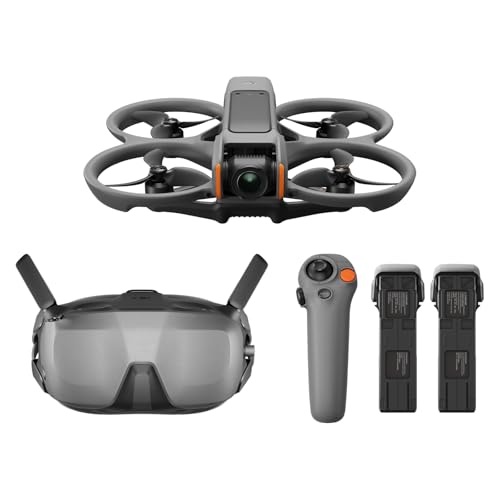
DJI Avata 2 Fly Smart Combo
Stands out with a feather‑light 145 g battery, delivering agile handling that the Mini models can’t match, perfect for immersive FPV experiences.
Also considered
Score Analysis
Key score advantages vs. runner-up (DJI Mini 4K)
Price Range
DJI Mini 5 Pro Fly More Combo
$1,099.00
DJI Mini 4K Combo
$389.00
DJI Avata 2 Fly Smart Combo
$789.00

DJI Mini 5 Pro Plus Combo
$1,159.00

DJI Flip Fly More Combo
$779.00

DJI Neo
$199.00
Spec Comparison
TL;DR: The DJI Mini 5 Pro Fly More Combo packs a 1‑inch 50 MP sensor, up to 52 minutes of flight and a built‑in 7‑inch screen into a sub‑300 g, pocket‑sized drone for serious creators.
The standout spec is the 1‑inch CMOS sensor delivering 50 MP stills and 4K 120 fps video, featuring an f/1.8 aperture and 84° field of view. Combined with 4× digital zoom, the camera easily handles detailed aerial shots while the 42 GB internal storage lets you capture without swapping cards.
Compared with the other five drones, the Mini 5 Pro shares its 0.54895103238 pounds weight with the Mini 5 Pro Plus, but it’s considerably lighter than the Avata 2 (3.4392112872 pounds) and the Flip (2.9541943108 pounds). Its 52‑minute maximum flight time outlasts the Avata 2’s 23 minutes, the Flip’s 31 minutes, the Neo’s 18 minutes and the Mini 4K’s 31‑minute single‑battery runtime, though the Mini 4K can reach up to 93 minutes with three batteries.
Early owners rave about the image quality, noting the 1‑inch sensor’s low‑light performance down to 1 lux and the HDR video modes. Reviewers also appreciate the built‑in DJI RC 2 screen, which eliminates the need for a phone, and the fast‑charging system that refills three batteries in just 115 minutes. The omnidirectional LiDAR‑enhanced obstacle sensing adds confidence for night flights; professional reviewers highlighted this point.
Technical extras include up to 1 TB microSD expandability, a 4680 mAh standard battery, 10 m/s maximum ascent speed, 12 m/s wind resistance, and OcuSync 4.0 delivering a 20 km operating distance. The drone’s compact folded dimensions (90.4 mm × 180.8 mm × 255.0 mm) make it truly pocket‑friendly.
Pros
Cons
Best for: Buyers willing to invest in a proven, high‑quality option
Avoid if: You're on a tight budget or only need basic functionality
TL;DR: The DJI Mini 4K Combo packs true 4K video, a 31‑minute flight window and a 10 km O2 link into a 0.54‑lb, sub‑250 g drone that’s built for beginners and travel creators.
The standout spec delivers 4K video capability – 3840 × 2160 at up to 30 fps – paired with a 12 MP 1/2.3‑inch sensor and a 3‑axis mechanical gimbal, delivering cinematic footage from a platform that weighs only 0.54233716452 pounds (246 g takeoff weight). Its 2250 mAh battery provides a maximum flight time of 31 minutes, which is notably longer than the 18‑minute runtime of the DJI Neo and matches the 31‑minute claim of the DJI Flip Fly More Combo.
Compared with the five peers, the Mini 4K weighs more than the ultra‑light Neo but far less than the Flip (about three times heavier) and the Avata (significantly lighter than the 3.44‑lb model). It lacks the obstacle‑avoidance sensors that some higher‑priced rivals feature, yet it still offers GPS Return‑to‑Home, one‑tap takeoff/landing and a strong 10 km (FCC) transmission range—far beyond the 6 km CE limit listed for the same drone. The Mini 5 Pro models push resolution to 48 MP and offer larger batteries, but they also sit at a higher price tier.
Everyday users rave about how quickly they can get airborne; the one‑tap controls and stable hovering receive repeated praise in reviews. Professional reviewers highlight the reliable DJI O2 transmission and the 100 Mbps video bitrate as key strengths for clear, low‑latency streaming. However, the f/2.8 aperture and small sensor draw consistent comments about limited low‑light performance, and the absence of internal storage forces a microSD card for any shooting.
Technical notes worth remembering: the drone resists winds up to 10.7 m/s (≈38 kph) and climbs at 5 m/s, while the remote controller’s transmitter power stays below 26 dBm on FCC bands. The package includes two spare batteries, extending total airtime to 62 minutes if you swap them, and the microSD slot supports up to 256 GB.
Pros
Cons
Best for: Budget‑conscious buyers seeking a reliable entry‑level option
Avoid if: Professional cinematographers or low‑light photographers needing advanced sensor performance
TL;DR: The DJI Avata 2 Fly Smart Combo delivers immersive FPV flight with 4K/100 fps video, 24 ms latency, and three 2150 mAh batteries, but its 23‑minute flight time and 10.7 m/s wind limit keep it in the mid‑range.
A standout spec is the ultra‑wide 155° lens paired with a 12 MP 1/1.3‑inch sensor, letting you capture 4K footage at up to 100 fps while the O4 transmission system holds latency as low as 24 ms. Internally, the drone packs 46 GB of storage, so you can start shooting right out of the box without a microSD card.
At 3.4392112872 pounds, the Avata 2 is noticeably heavier than the Flip Fly More Combo, the Mini 5 Pro series, the Mini 4K Combo, and the Neo, all of which weigh under one pound. Its 23‑minute maximum flight time sits between the Neo’s 18‑minute endurance and the longer 31‑minute to 52‑minute times of the other models. The 2150 mAh battery capacity also falls short of the Flip’s 3110 mAh and the Mini 5 Pro’s 4680 mAh cells, but exceeds the Neo’s 1435 mAh pack.
Reviewers love the intuitive hand‑gesture control of the DJI RC Motion 3 and the built‑in propeller guards that let you fly in tighter spaces. Professionals praise the 4K/100 fps D‑Log M profile for color grading. However, users repeatedly note the limited wind resistance of 10.7 m/s and the absence of a manual FPV mode when using the motion controller, which can be a deal‑breaker for more advanced pilots.
Technical highlights also include a max ascent speed of 9 m/s in sport mode, a manual‑mode horizontal speed of 27 m/s, and a transmission range of up to 13 km under FCC regulations. The drone operates from sea level up to 5000 m altitude and can resist winds up to 10.7 m/s, making it suitable for most recreational environments.
Pros
Cons
Best for: Most users looking for a well-reviewed, reliable mainstream option
Avoid if: Reliability and user satisfaction are your top concerns
TL;DR: The DJI Mini 5 Pro Plus Combo packs a 48 MP 1/1.3″ sensor, 4K 60 fps HDR video and up to 45 minutes of flight with a compact, pocket‑sized design, though it sits at a premium $1159 price.
The standout spec is the 48 MP camera with an f/1.7 aperture and 82.1° field of view, capable of 4K 60 fps HDR video and 10‑bit D‑Log M/HLG color modes. Paired with the Intelligent Flight Battery Plus, it can stay aloft for 45 minutes, while the standard battery still offers 34 minutes of flight.
At 0.54895103238 lb it matches the Mini 5 Pro Fly More Combo and is a touch heavier than the Mini 4K Combo’s 0.54233716452 lb, while the Neo is considerably lighter at 0.2976240537 lb. Its 2590 mAh aircraft battery is smaller than the 4680 mAh pack in the Mini 5 Pro Fly More Combo but larger than the Neo’s 1435 mAh cell. The 45‑minute flight time outpaces the Mini 4K Combo’s 31‑minute single‑battery endurance and the Avata’s 23‑minute runtime. Expandable storage up to 512 GB beats the Neo’s lack of a slot and sits below the Mini 5 Pro Fly More’s 1 TB limit. With a top horizontal speed of 58 km/h, it also moves faster than the Neo’s sport‑mode ascent speed of 5 m/s.
User sentiment highlights the crisp 48 MP stills and smooth 4K HDR footage, and professional reviewers note the O4 transmission’s reliable 20 km range with a 1080p/60 fps live feed. Everyday owners love the built‑in 5.5‑inch 700‑nit RC 2 screen, but the Plus battery pushes the take‑off weight over the 249 g threshold, meaning you must register with the FAA. Reviewers also point out that Sport Mode disables obstacle sensing and that the sequential charging hub can slow multi‑battery workflows.
The RC 2 remote includes a 6200 mAh controller battery, letting you fly without a phone, while omnidirectional obstacle detection covers 0.5–18 m forward and similar ranges on all other sides. The transmission system O4 (OcuSync 4.0) delivers a stable live view up to 20 km, and the drone’s 225° gimbal rotation adds creative flexibility.
Pros
Cons
Best for: Content creators and hobbyists who need high‑resolution 4K video, long flight time, and a portable all‑in‑one drone package.
Avoid if: You’re on a tight budget or want to avoid FAA registration due to weight, as this model costs $1159.00.
TL;DR: The DJI Flip Fly More Combo packs a 48 MP 1/1.3‑inch sensor, 4K 60 fps HDR video, and up to 31 minutes of flight per battery in a sub‑250 g, pocket‑friendly package.
The standout feature is its 48 MP 1/1.3‑inch CMOS sensor paired with an f/1.7 aperture, delivering detailed stills and 4K 60 fps HDR video. DJI lists the drone as regulation‑friendly under 249 g, yet the drone weighs 2.9541943108 lb (≈1339 g) with battery, and it comes with three 3110 mAh aircraft batteries that together enable a maximum flight time of 31 minutes and a hover time of 28 minutes.
Compared with the other five drones in this roundup, the Flip sits in the middle of the weight range—lighter than the DJI Avata 2 but heavier than the ultra‑light Neo. Its 31‑minute flight time outlasts the Avata 2’s 23 minutes and the Neo’s 18 minutes, though it falls short of the Mini 5 Pro’s 52 minutes and the Mini 5 Pro Plus’s 45 minutes. Internal storage is modest at 2 GB, noticeably less than the 42 GB offered by the Mini 5 Pro Plus and Mini 4K models, but the Flip supports microSD cards up to 512 GB, giving you plenty of expansion room.
Reviewers love the Flip’s portability and the bright 5‑inch, 700‑nit display on the RC 2 controller, which makes framing shots easy even in bright sunlight. Users also appreciate the three‑battery bundle and parallel charging hub that keep the drone aloft for longer sessions. On the downside, the remote lacks a touchscreen, and the DJI Fly app’s removal from Google Play has caused Android‑only users frustration. Professional reviewers note the forward‑facing infrared obstacle sensor as the only avoidance system, which may limit confidence in tight spaces.
Additional technical highlights include a 4× digital zoom, an 82.1° field of view, and a reliable transmission range of 13 km via OcuSync 4.0. The drone can ascend and descend at 5 m/s and cruise horizontally at 16 m/s, while tolerating winds up to 10.7 m/s. Operating temperatures span –10 °C to 40 °C, and the built‑in controller battery holds 3100 mAh, matching the aircraft’s 3110 mAh cells.
Pros
Cons
Best for: Content creators and hobbyists who need a highly portable drone with professional‑grade imaging and solid flight endurance.
Avoid if: You need full obstacle avoidance, a touchscreen remote, or a more professional‑grade performance platform.
TL;DR: The DJI Neo delivers 4K video from a 135 g, pocket‑sized drone that launches from your palm, but its 18‑minute battery and lack of a mechanical gimbal keep it in the entry‑level camp.
Its ultra‑light weight stands out: at just 135 g (0.2976240537 lb) the Neo falls below the 250 g registration threshold, so you can fly it without filing paperwork. It packs a 12 MP sensor with an f/2.2 aperture and records 4K UHD video at 30 fps, giving casual creators crisp footage from a truly portable platform.
Compared with the other five drones, the Neo is the lightest—significantly lighter than the Mini 4K Combo (0.54233716452 lb) and far lighter than the Flip Fly More Combo (2.9541943108 lb). It also offers the most budget‑friendly price, costing $199 versus the six‑figure price tags of the Mini 5 Pro Plus and Mini 5 Pro. However, its 1,435 mAh battery holds less energy than the Mini 4K’s 2,250 mAh cell and the Flip’s 3,110 mAh pack, resulting in a maximum flight time of 18 minutes, which is shorter than the 31‑minute times of the Mini 4K and Flip, and well below the 52‑minute endurance of the Mini 5 Pro.
Reviewers consistently praise the Neo’s palm‑takeoff and full‑coverage prop‑guard design, calling it “pocket‑size” and “ready to go” for hikes or BBQs. Tom’s Guide highlighted the lightweight portability and 4K QuickShot modes as major wins for social‑media creators. On the downside, PCMag noted the absence of a mechanical gimbal, leading to shakier clips in breezy conditions, and pointed out that the standard package does not include a dedicated remote, which some users miss.
Pros
Cons
Best for: Budget-conscious buyers seeking a reliable entry-level option
Avoid if: You need advanced features or professional‑grade performance
Breakdown
DJI Mini 5 Pro Fly More Combo
Pros
DJI Mini 4K Combo
Cons
DJI Avata 2 Fly Smart Combo
Pros
Cons
DJI Mini 5 Pro Plus Combo
Pros
Cons
Based on scoring data and product specs
Personalized picks
Best Overall Pick
DJI Mini 5 Pro Fly More Combo
Best ValueBest for: Buyers willing to invest in a proven, high-quality option
DJI Mini 4K Combo
Best for: Budget-conscious buyers seeking a reliable entry-level option
$389.00-$710.00 vs winner
Skip DJI Neo if…
You need advanced features or professional-grade performance
The DJI Mini 5 Pro Fly More Combo takes the top spot. With a 1‑inch sensor delivering 50 MP stills and 4K video at up to 120 fps, it out‑classes the competition. Its 52‑minute maximum flight time and fast‑charging of three batteries in about 115 minutes keep you in the air longer. At 0.54895103238 pounds it remains ultra‑light, and a 4.6‑star rating from 897 reviewers shows strong user approval.
Coming in second, the DJI Mini 4K Combo is ideal if you need a sub‑250 g drone that avoids registration and offers interchangeable batteries for extended outings. It weighs 0.54233716452 pounds, flies up to 31 minutes on a single charge and up to 62 minutes with two batteries, and its 12 MP 1/2.3‑inch sensor records 4K at 30 fps. The $389 price makes it a solid value for casual travelers.
For tighter budgets, the DJI Neo delivers basic flight capability at $199. The mid‑range DJI Avata 2 Fly Smart Combo at $789 adds immersive FPV flying for creators who want a more cinematic feel. If you crave every premium feature, the DJI Mini 5 Pro Plus Combo at $1159 tops the line with the same sensor plus extra accessories.
Pick the Mini 5 Pro Fly More Combo now and get the most capable DJI drone for your money.
The DJI Mini 5 Pro Fly More Combo is a strong choice because it weighs just 249 g, fits in a pocket, and includes a built‑in 5.5‑inch display so you don’t need a phone. Its 1‑inch sensor and 50 MP camera also give plenty of headroom as you learn.
Please sign in to leave a review
No reviews yet. Be the first to review!
