Rankings
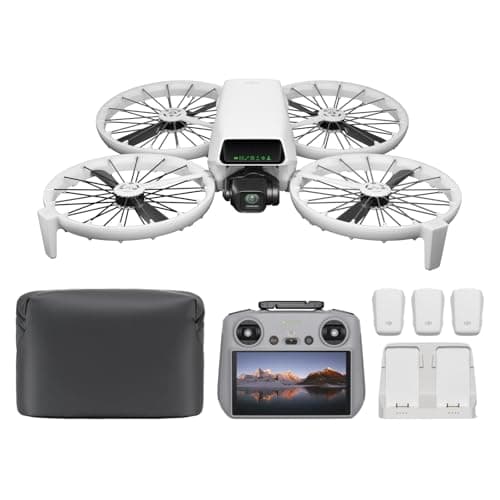
The DJI Flip Fly More Combo packs a large 1/1.3-inch sensor, 48 MP stills and 4K 60 fps video into a sub-250 g chassis with a bright built-in controller screen and up to 31 minutes of flight per battery. It excels in image quality and intelligent modes but falls short on obstacle coverage and remote ergonomics.
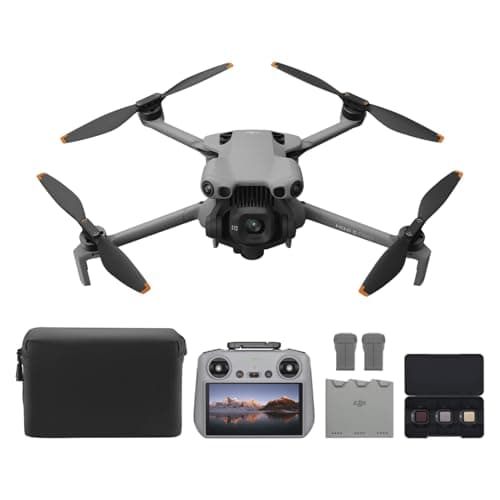
The Mini 5 Pro Fly More Combo offers a high-resolution 48 MP camera, O4 transmission up to 20 km and omnidirectional obstacle avoidance in a sub-250 g package, making it ideal for creators on the go. Flight time can reach 45 minutes with the Plus batteries, though the added weight then requires registration.
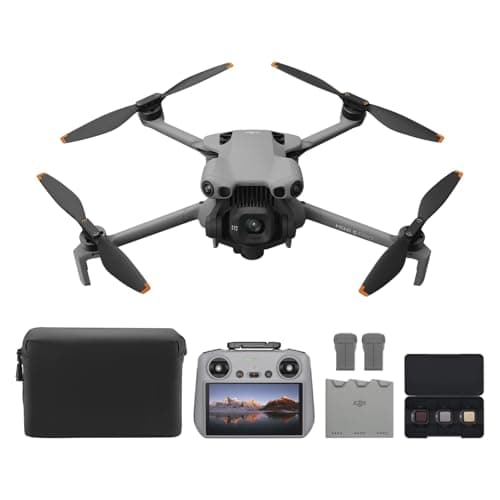
The DJI Mini 5 Pro Fly More Combo pairs a large-sensor 50 MP camera with 52 minutes of flight time and advanced obstacle avoidance, targeting creators who want professional-grade imaging in a portable package. The built-in screen controller and long transmission range make it very user-friendly, though the weight pushes it out of the ultra-light category.
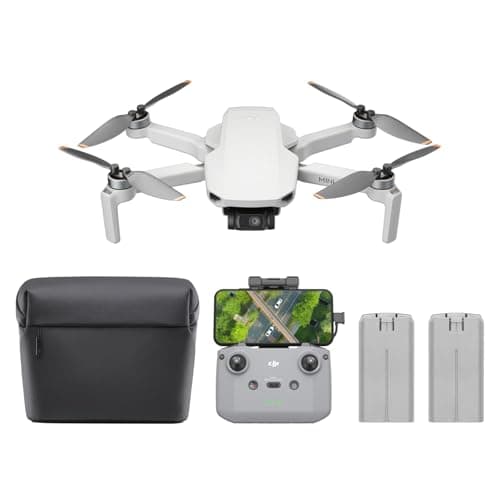
The DJI Mini 4K Combo offers a sub-250 g platform with true 4K video, a 3-axis gimbal and up to 62 minutes of flight time using two batteries, plus a reliable 10 km O2 transmission link. It's beginner-friendly but lacks obstacle avoidance and higher-frame-rate video.
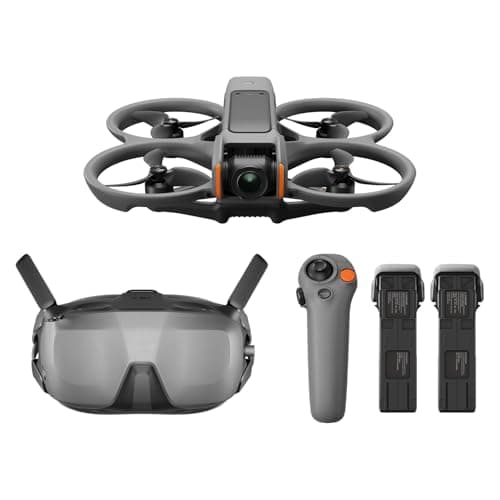
The Avata 2 Fly Smart Combo pairs a compact FPV drone with a motion-based controller, offering cinematic 4K/100 fps video and ultra-low latency O4 transmission for immersive flying. While its built-in propeller guards and 46 GB internal storage add convenience, the modest 12 MP sensor and lack of obstacle sensors limit its utility in demanding environments.
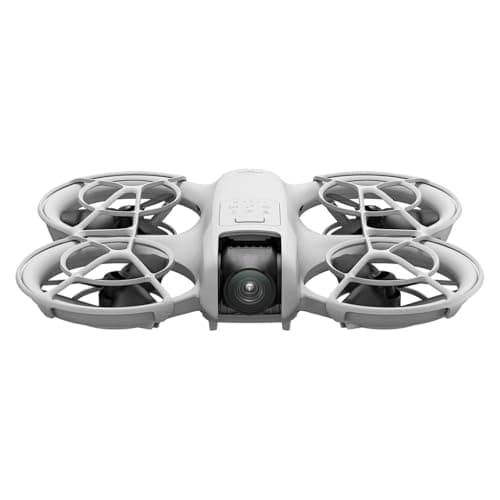
The DJI Neo is a pocket-sized, ultra-light drone that delivers 4K video and AI-driven tracking for casual creators. Its portability and controller-free operation are offset by a modest battery life and the absence of a mechanical gimbal.
| Attribute | | | | | | |
|---|---|---|---|---|---|---|
52 minutes | 62 minutesbest | 23 minutes | 34 minutes | 31 minutes | 18 minutes | |
50 MPbest | 12 MP | 12 MP | 48 MP | 48 MP | 12 MP | |
4,680 mAhbest | 2,250 mAh | 2,150 mAh | 2,590 mAh | 3,110 mAh | 1,435 mAh | |
— | — | — | — | 3,840 pbest | — | |
| ↓ lower better | 295 g | 246 g | 377 g | 249 g | 1,339 g | 135 gbest |
20,000 mbest | 10,000 m | 13,000 m | 20,000 mbest | 13,000 m | 10,000 m | |
| ↓ lower better | 115 minutes | — | 45 minutesbest | — | — | — |
120 fpsbest | 30 fps | 100 fps | 60 fps | 60 fps | 30 fps |
Click an attribute name to sort · Green = best, red = worst (relative to this comparison)
| Attribute | | | | | | |
|---|---|---|---|---|---|---|
Battery & Power(3) | ||||||
Battery Capacity (mAh) | 4680 mAh | 2250 mAh | 2150 mAh | 2590 mAh | 3110 mAh | 1435 mAh |
Battery Voltage (V) | — | 7.7 V | 14.76 V | 7.32 V | — | — |
Charging Time (minutes) | 115 minutes | — | 45 minutes | — | — | — |
Gimbal & Stabilization(1) | ||||||
Gimbal Type | mechanical | 3-axis mechanical | single-axis mechanical tilt | 3-axis motorized | 3-axis | none |
Flight Performance(3) | ||||||
Flight Time (minutes) | 52 minutes | 62 minutes | 23 minutes | 34 minutes | 31 minutes | 18 minutes |
Maximum Speed (km/h) | 68.4 km/h | 57.6 km/h | 57.6 km/h | 58 km/h | 57.6 km/h | 43.2 km/h |
Maximum Altitude (m) | 6000 m | 4000 m | 5000 m | — | 3000 m | 2000 m |
Camera(4) | ||||||
Camera Megapixels (MP) | 50 MP | 12 MP | 12 MP | 48 MP | 48 MP | 12 MP |
Maximum Video Resolution (p) | 4K p | 3840x2160 p | 3840x2160 p | 3840x2160 p | 3840 p | 4K p |
Video Frame Rate (fps) | 120 fps | 30 fps | 100 fps | 60 fps | 60 fps | 30 fps |
Field of View (°) | 84 ° | 83 ° | 155 ° | 82.1 ° | 82.1 ° | — |
Build & Design(1) | ||||||
Weight (empty) (g) | 295 g | 246 g | 377 g | 249 g | 1339 g | 135 g |
Transmission & Connectivity(2) | ||||||
Control Range (m) | 20000 m | 10000 m | 13000 m | 20000 m | 13000 m | 10000 m |
Transmission System | OcuSync 4.0 | DJI O2 | O4 | O4 | OcuSync 4.0 | Wi‑Fi/Bluetooth |
Performance(1) | ||||||
Wind Resistance Level | 12 | Level 5 | 10.7 m/s | 10.7 m/s | — | Level 4 |
Accessories(1) | ||||||
Number of Included Accessories (items) | 7 items | — | 5 items | 11 items | 10 items | 5 items |
Products in the top-left offer the best value (high score, low price).
Professional reviewers praise the Mini 5 Pro for bringing a large-sensor, high-resolution camera and advanced obstacle-avoidance to an ultralight platform, noting the impressive 52-minute endurance and the convenience of the RC 2's built-in screen.
Early user feedback highlights the drone's excellent image quality and long flight time, with many owners appreciating the built-in screen that removes the need for a phone.
Mini 4 Pro is the better value for creators needing a lightweight drone with a built-in display, while Mini 5 Pro may suit those seeking the latest sensor technology and are willing to pay a premium.
Choose the Neo for ultra-light, pocket-friendly use; choose Mini 4K if you need a gimbal and more robust stabilization.
Professional reviewers praise the Mini 4K for its leap to the DJI O2 transmission system, noting the jump to a 100 Mbps bitrate that markedly improves video detail and color fidelity.
Professional reviewers praise the Avata 2 Fly Smart Combo for its cinematic 4K/100 fps capability, industry-leading low-latency O4 link, and sophisticated RockSteady 3.0+ stabilization, while noting the limitation of the motion controller that omits a true manual FPV mode and the modest wind-resistance compared with larger UAVs.
Everyday users appreciate the intuitive motion controller, the three-battery package that extends flight sessions, and the rugged design with prop guards, but many express frustration over the lack of a front-facing obstacle sensor, the inconvenient microSD slot, and the absence of an included protective case.
Professional reviewers hail the Mini 4 Pro as the best ultralight drone on the market, highlighting its 4K/60 fps HDR video, 10-bit color depth, O4 transmission range, and the innovative RC 2 remote with a high-brightness screen. They commend the comprehensive sensor suite and advanced AI features like ActiveTrack 360°, while noting the lack of obstacle sensing in Sport mode and the sequential charging hub as minor drawbacks.
Everyday users consistently praise the camera performance, extended flight time, and the convenience of the RC 2's built-in display. Common themes include appreciation for the lightweight design that avoids registration and the safety provided by omnidirectional obstacle avoidance, while recurring complaints focus on the extra weight of Plus batteries, limited obstacle detection in high-speed mode, and the slower charging hub.
Professional reviewers praise the Flip for packing a large 1/1.3-inch sensor and 31-minute endurance into a sub-250 g chassis, noting its bright built-in controller and rich suite of intelligent shooting modes. Main criticisms focus on the lack of a touchscreen remote and limited forward-only obstacle sensing.
Everyday users appreciate the drone's portability, long flight time with the extra batteries, and the ease of capturing cinematic shots using the built-in intelligent modes. Recurring complaints center on the Android app issue, the non-touchscreen remote, and the desire for more comprehensive obstacle avoidance.
Professional reviewers commend the Neo for democratizing aerial content creation with its ultra-light weight, 4K video, and intuitive QuickShot modes, but they caution that the absence of a mechanical gimbal and the short battery life limit its suitability for more demanding shoots.
Everyday users appreciate the Neo's pocketability, palm launch, and easy AI tracking, often praising its ability to produce Instagram-ready clips. Common frustrations revolve around shaky footage in wind, the brief 18-minute flight time, and the lack of an included remote.
