
If you’re looking to add fast, reliable storage to a PS5, Xbox Series X|S or a Steam Deck, an external SSD can shave load times and give you room for a growing game library. In this roundup we evaluated 14 external SSDs that promise console‑grade performance, from pocket‑sized drives to rugged, high‑capacity models. Prices stretch from $69.99 for a 500 GB unit up to $649.99 for a 4 TB powerhouse, so there’s something for every budget.
The budget tier includes Buffalo’s SSD‑PUT500U3B at $69.99 with a 4.4‑star rating from 4,003 reviewers, and the similarly priced Buffalo USB‑C 1TB at $92.99, both measuring under 20 mm thick and weighing under 18 g. Mid‑range choices like the Lexar ES3 1TB and Transcend Portable SSD 500GB sit around $144.99 and $149.99 and deliver read speeds above 1,000 MB/s. Premium options such as the WD P40 Game Drive 1TB ($219.72, 4.6‑star rating) and SanDisk Extreme PRO 4TB USB4 ($649.99) push up to 3,800 MB/s and include rugged features.
Below we break down each model’s performance, durability and console compatibility so you can match the right SSD to your gaming setup.

Buffalo SSD-PUT500U3B
Its 614 MB/s sequential read speed delivers solid performance while staying under $70, making it the most value‑packed SSD for console gamers.

WD P40 Game Drive 1TB
Ideal for serious gamers who want a proven, high‑quality drive, the WD P40’s 2,000 MB/s read speed justifies its $219.72 price—about $150 more than the budget option.

Crucial X6 1TB
The Crucial X6’s ultra‑slim 11 mm height and included 23 cm cable let it slip into cramped console bays, a convenience the other picks don’t provide.
Also considered
Score Analysis
Key score advantages vs. runner-up (WD P40 Game)
Price Range
Buffalo SSD-PUT500U3B
$69.99
WD P40 Game Drive 1TB
$196.73
Crucial X6 1TB
$144.99

Transcend ESD410 2TB SSD
$489.99
Buffalo External SSD USB-A 1TB
$119.99

Lexar ES3 1TB
$144.99

SanDisk Extreme PRO 4TB USB4
$758.81

Transcend Portable SSD 500GB
$267.99
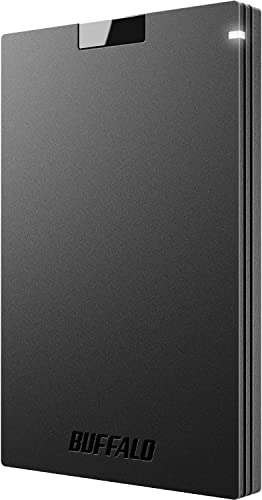
Buffalo External SSD USB-C 1TB
$104.99

UGREEN 1TB SSD
$209.99

Transcend 2TB External SSD
$397.99

SSK 256GB SSD
$43.99

Fikwot 1TB SSD
$115.99
Buffalo SSD-SAO2.0U3B
$239.99
Spec Comparison
TL;DR: The Buffalo 0.5 TB SSD‑PUT500U3B packs pen‑drive dimensions, weighs 17 g, and delivers up to 600 MB/s read and 500 MB/s write via USB 3.2 Gen 2, all for $69.99.
What really sets this drive apart is its ultra‑compact pen‑drive form factor—just 10.2 mm tall, 22.9 mm wide and 68.6 mm long, and only 17 g. Despite its size, it offers 0.5 TB of storage and sequential read speeds of up to 600 MB/s with write speeds of 500 MB/s over a USB 3.2 Gen 2 (10 Gbps) interface.
Compared with the other 13 entries, the SSD‑PUT500U3B is among the lightest, matching the weight of the Buffalo 1 TB USB‑C model and beating the SSK 256 GB unit, which tips the scales at 27 g. Its length of 68.6 mm is shorter than the 1 TB USB‑C drive’s 116.84 mm but a touch longer than the SSK’s 67.6 mm. In terms of speed, its 600 MB/s read matches the Buffalo 1 TB USB‑A model and outpaces the SSK’s 550 MB/s, though it falls behind the Lexar ES3’s 1050 MB/s and the Fikwot’s 2000 MB/s claims. Price‑wise, it lands in the budget tier, undercutting the higher‑capacity 1 TB options.
User feedback repeatedly praises the drive’s pocket‑size convenience and the steady white LED that signals activity, while many note the dual USB‑A/C connectivity as a console‑friendly perk. Professional reviewers highlight the miniaturization achievement—bringing NVMe performance into a thumb‑drive chassis—and commend the included USB‑A to USB‑C adapter. On the downside, several owners mention the retractable USB‑A connector feels a bit flimsy, and you must register online before the three‑year warranty activates.
The drive runs on a Phison PS2251‑17 controller and uses an NVMe‑over‑UASP architecture, which enables the advertised 600 MB/s read after a firmware update that unlocks full USB 3.2 Gen 2 performance. Its PCMark 10 storage score of 495 signals that while file transfers are swift, heavy application loading may lag behind faster‑scoring SSDs.
Pros
Cons
Best for: Budget-conscious buyers seeking a reliable entry-level option
Avoid if: You need advanced features or professional-grade performance
“Fits in my pocket like a flash drive but performs like an SSD.”
“Transfers large video files in seconds—way faster than my old HDD.”
TL;DR: The WD_BLACK P40 Game Drive 1TB delivers up to 2,000 MB/s speeds in a rugged aluminum case with customizable RGB, backed by a 5‑year warranty and strong user approval.
The drive’s headline spec delivers up to 2,000 MB/s sequential read and write, a USB 3.2 Gen 2x2 (20 Gbps) interface and a PCIe 3.0 x4 NVMe controller enable this speed. At 13 mm thick, 107 mm long and 50.8 mm wide, it packs a full terabyte of TLC 3D NAND into a compact 78.5‑gram chassis. The durable aluminum shell survives a 2‑meter drop, and you can customize the integrated under‑glow RGB strip via the Windows‑only WD_BLACK Dashboard.
Compared with the other 13 contenders, the P40 sits in the mid‑weight range: it’s lighter than the UGREEN 1TB SSD (90 g) but noticeably heavier than the ultra‑light Buffalo model (17 g) and the Transcend 500 GB SSD (31 g). Its 5‑year limited warranty outlasts the 3‑year warranty on the UGREEN drive and the 2‑year coverage on Buffalo, giving it a longevity edge. Pricing places it above the budget‑friendly Fikwot 1TB SSD, yet its feature set and brand confidence keep it competitive in the premium tier.
Reviewers consistently praise the lightning‑fast transfers, noting that large game libraries move in minutes. The rugged aluminum build and 2‑meter shock resistance also earn frequent mentions for surviving accidental drops. On the flip side, professional reviewers flag thermal throttling: sustained loads can push the drive’s temperature toward 60 °C and cause speeds to dip to around 527 MB/s. RGB control limits itself to Windows, leaving macOS users without a way to tweak the lighting, and many gamers report that the full 2,000 MB/s isn’t reachable on Xbox Series X|S or PlayStation 5 due to console USB bandwidth limits.
Under the hood, the drive uses a WD SN560E controller and TLC 3D NAND without a DRAM cache, which helps keep the price in check while still delivering strong random write performance. It operates from 0 °C to 45 °C, and the device can endure storage temperatures down to –20 °C and up to 65 °C, making it suitable for both indoor gaming rigs and on‑the‑go use.
Pros
Cons
Best for: Buyers willing to invest in a proven, high‑quality option
Avoid if: You need advanced features or professional‑grade performance
“Transfers my Steam library in minutes”
“Looks amazing on my desk with the RGB”
TL;DR: The Crucial X6 1TB packs a 1 TB capacity, 540 MB/s sequential read speed and a 2 m drop‑resistance rating into a feather‑light 0.0881849048‑pound shell for $144.99.
The standout spec is its 540 MB/s sequential read speed, which matches the listed max read speed, and a 1 TB capacity that fits easily into a console’s storage pool. At just 0.0881849048 pounds (40 g) and only 11 mm thick, it’s one of the most portable SSDs you can slip onto a PS5 or Xbox controller dock. It also survives drops up to 2 m, adding confidence for on‑the‑go gamers.
Compared with the other 13 SSDs in this roundup, the X6 is lighter than the Lexar ES3 1TB (≈0.099 lb) but a touch heavier than the ultra‑light Buffalo USB‑C 1TB at 17 g. Its 540 MB/s read speed trails the Lexar and Transcend models that list 1050 MB/s reads, yet it outpaces the Buffalo USB‑A 1TB’s 600 MB/s ceiling. The included 23 cm USB‑C‑to‑USB‑C cable keeps the setup tidy, whereas some rivals ship with longer cables or extra adapters.
Everyday users rave about the X6’s pocket‑size convenience and the value‑for‑money price point. Reviewers note the drive feels solid and the drop‑resistance rating holds up in real life. The common gripe is that advertised speeds can feel optimistic; most owners see reads hovering around 540 MB/s and writes dropping to about 212 MB/s once the dynamic SLC cache is exhausted. Professionals also point out the lack of hardware AES‑256 encryption, no activity LED, and the absence of a USB‑A adapter.
It uses Micron 96‑layer QLC 3D NAND paired with a Silicon Motion SM2259XT controller that operates without DRAM, relying on a dynamic SLC cache to boost short bursts. An ASMedia ASM235CM bridge chip translates the SATA internals to a USB 3.2 Gen 2 (10 Gbps) Type‑C interface, which explains the ceiling at 540 MB/s despite the faster USB link.
Pros
Cons
Best for: Most users looking for a well‑reviewed, reliable mainstream option
Avoid if: You need advanced features or professional‑grade performance
“smaller than car keys”
“perfect for travel”
TL;DR: The Transcend ESD410 2TB SSD packs 2 TB of storage and up to 2000 MB/s read/write speeds into a compact, IPX5‑rated case that can survive a 3‑meter drop.
This drive’s headline spec is its 2 TB (2048 GB) capacity paired with a USB 3.2 Gen 2x2 interface that delivers a maximum read speed of 2000 MB/s and a maximum write speed of 2000 MB/s. A 64 GB pSLC cache helps keep sustained writes near 1128 MB/s, and the 14.5 mm height houses a rugged chassis rated IPX5 and MIL‑STD‑810G drop resistance up to 3 meters.
Compared with the other 13 SSDs in the roundup, the Transcend is lighter than both the WD P40 Game Drive (0.17 lb) and the UGREEN 1TB SSD (0.198 lb), while its 14.5 mm height is taller than the 13 mm profile of the WD P40 and the ultra‑thin 7.9 mm UGREEN. Its 3‑meter drop rating matches the top‑rated Transcend 2TB External SSD and exceeds the 2‑meter drops listed for the SanDisk Extreme PRO and WD P40. Speed‑wise, it sits alongside the WD P40 and Transcend 2TB External SSD, all offering up to 2000 MB/s sequential performance, but it carries a premium price tag of $489.99, making it pricier than most peers.
Reviewers consistently highlight the SSD’s “lightning‑quick” file transfers and the confidence the rugged build provides for on‑the‑go gaming or field shooting. Professional reviewers note the near‑maximum USB 3.2 Gen 2x2 throughput (≈1910 MB/s read, ≈1687 MB/s write) and the reliable sustained write speed after the cache fills. The main complaints revolve around noticeable heat during long, high‑speed transfers and the requirement for a USB‑C‑to‑USB‑C cable to unlock full performance; users with only USB‑A ports see slower speeds.
Pros
Cons
Best for: Gamers and content creators who need fast, rugged external storage for consoles, PC, and 4K/8K footage off‑loading.
Avoid if: You're shopping on a tight budget — it's priced at $489.99
TL;DR: The Buffalo External SSD USB‑A 1TB packs a full‑size terabyte into a thumb‑drive‑sized, 68 g case, delivering up to 600 MB/s read speeds and MIL‑STD‑810G shock resistance for console gamers on a budget.
The drive’s most distinctive trait is its ultra‑compact form factor: a retractable USB‑A male connector sits in a stick that measures just 0.4 in (10 mm) high, 2.7 in (69 mm) long and 0.9 in (23 mm) wide, and it weighs only 68 g. Despite its size, it delivers up to 600 MB/s read and 500 MB/s write over a USB 3.2 Gen 2 (10 Gbps) interface, and it meets MIL‑STD‑810G standards, surviving drops of up to 1.2 m.
Compared with the other 13 SSDs in this roundup, the Buffalo USB‑A model is lighter than the Fikwot 1TB (which tips the scales at 130.4 g) but heavier than the Buffalo USB‑C 1TB that weighs only 17 g. Its thumb‑drive shape makes it shorter than the Fikwot’s 99.9 mm length, though it lacks the native USB‑C port that the Buffalo USB‑C version provides, relying instead on a small USB‑A‑to‑USB‑C adapter. Speed‑wise, its 600 MB/s read rate matches the Buffalo USB‑C model but falls short of the Lexar ES3’s 1050 MB/s, positioning it solidly in the budget tier rather than the high‑end segment.
Users repeatedly praise the drive’s tiny size, quick file transfers and rugged durability, especially when using it with PlayStation 4/5 or Xbox consoles. A common complaint is the need for a firmware update to unlock the advertised 600 MB/s performance, and the adapter can be easy to misplace. Professional reviewers list a modest PCMark 10 storage score of 495, which may limit load‑times for demanding games, but they also highlight the convenience of the built‑in status LED and the pre‑formatted exFAT file system.
Pros
Cons
Best for: Gamers who need extra console storage without breaking the bank, and travelers who value a lightweight, rugged drive.
Avoid if: You demand the fastest possible transfers or a native USB‑C connection for newer devices.
“So small and fast!”
“Works perfectly with PS5”
TL;DR: The Lexar ES3 1TB delivers 1050 MB/s reads, 1000 MB/s writes, a feather‑light 45 g metal body, and 2 m drop resistance, making it a solid mid‑range SSD for console gamers.
Lexar’s ES3 packs a 1 TB capacity behind a sleek silver metal shell that weighs just 45 g (0.0992080179 pounds) and measures 10 mm in height and 10.5 mm in thickness. The drive uses a USB 3.2 Gen 2 (10 Gbps) interface, delivering up to 1050 MB/s sequential read and 1000 MB/s write speeds, which lets it load large game assets and transfer high‑resolution footage at up to 1050 MB/s.
When you line it up with the other 13 SSDs in this roundup, the ES3’s speed stands out. The Crucial X6 1TB tops out at 540 MB/s read and 212 MB/s write, while the Buffalo USB‑C 1TB reaches only 600 MB/s. Even the Transcend 500 GB model, which shares the same 1050 MB/s read rating, lags slightly on writes at 950 MB/s. In terms of heft, the ES3 is a bit heavier than the Crucial X6’s 40 g and the Transcend’s 31 g, but still lighter than the Buffalo SSD‑SAO2.0U3B’s 17 g (which is very light but offers lower performance). All three of those drives list a 2 m drop resistance, matching the ES3’s durability claim.
Reviewers consistently praise the drive’s plug‑and‑play simplicity, the built‑in Lexar DataShield™ 256‑bit AES encryption, and the double‑layer graphite heat‑dissipation sheets that keep it cool during long transfers. Users love the included 2‑in‑1 USB‑C to USB‑C cable with a Type‑A adapter, noting the convenience of a single cable for both consoles and PCs. A few complaints surface around the lack of MagSafe support and the fact that the encryption software must be installed separately, plus a limitation to iPhone 15 series and newer devices.
Pros
Cons
Best for: Most users looking for a well‑reviewed, reliable mainstream option
Avoid if: You need advanced features or professional‑grade performance
TL;DR: The SanDisk Extreme PRO 4TB USB4 delivers up to 3800 MB/s read, 3700 MB/s write in a rugged IP65‑rated aluminum‑silicone case, but its $649.99 price and larger size make it a premium‑only choice.
The drive’s headline spec is its USB4 interface that supports 40 Gbps bandwidth, translating to a manufacturer‑claimed maximum read speed of 3800 MB/s and write speed of 3700 MB/s. At 4 TB of storage, it offers a sizable capacity for game libraries, while the forged aluminum chassis with a textured silicone shell meets an IP65 rating and survives drops from 2 meters.
Compared with the other 13 SSDs in this roundup, the Extreme PRO sits at the top end of both performance and price. It outpaces the UGREEN 1TB SSD’s 2000 MB/s limit and the Transcend 2TB External SSD’s 2000 MB/s ceiling, yet it weighs 0.38 lb—heavier than the Transcend ESD410’s 0.143 lb and the WD P40 Game Drive’s 0.17 lb. Its price tag of $649.99 is also higher than the sub‑$220 price of the WD P40 and the $398 price of the Transcend 2TB model, placing it firmly in the premium tier.
Reviewers consistently praise the drive’s “near‑internal SSD performance” and the durability of its IP65‑rated enclosure, noting that the hardware‑encrypted 256‑bit AES protection adds peace of mind for gamers who store large game files. However, professional reviewers also flag that the advertised speeds only materialize on a true USB4 or Thunderbolt 4 host; on older USB‑C ports the drive defaults to lower bandwidth, which some users found disappointing until BIOS updates were applied.
Beyond speed, the SSD is bus‑powered, so you don’t need an external power brick, and the 12‑inch USB‑C cable keeps the setup tidy. Compatibility spans any USB‑C device, including Xbox Series X|S and PlayStation 5, and it works with Windows 10+ and macOS 14+. The included SanDisk Memory Zone app provides a simple way to manage storage and enable encryption.
Pros
Cons
Best for: Those prioritizing quality and willing to pay for premium performance
Avoid if: You're shopping on a tight budget — it's priced at $649.99 and not ideal for older computers lacking full USB4/Thunderbolt 4 support
“Great SSD for the price”
“sustained 3000 MB/s speeds on a MacBook Pro”
TL;DR: The Transcend 0.5 TB Portable SSD offers up to 1050 MB/s read, 950 MB/s write, weighs just 31 g, and includes both USB‑A and USB‑C cables in a sleek aluminum case.
Transcend’s 0.5 TB drive packs a maximum read speed of 1050 MB/s and a write speed of 950 MB/s, delivering data over a USB 3.2 Gen 2 (10 Gbps) interface. The aluminum enclosure keeps the unit thin at 7.5 mm high, 81.4 mm long and 33.6 mm wide, while it weighs only 31 g, making it easy to slip into a backpack or console dock.
Compared with the other SSDs in this roundup, the Transcend is lighter than the Crucial X6 (40 g) and Lexar ES3 (45 g), and dramatically lighter than the Fikwot 1TB (130.4 g). Its 1050 MB/s read speed matches the Lexar ES3 and far exceeds the Crucial X6’s 540 MB/s and the Buffalo USB‑C 1TB’s 600 MB/s, putting it among the fastest options for console storage.
User feedback highlights the drive’s “lightning‑fast” transfers and the premium feel of the aluminum shell. Reviewers praise the inclusion of both USB‑A and USB‑C cables, noting the convenience for PlayStation and Xbox owners. A few owners mention the unit can become warm during long, heavy transfers, and some find the supplied carrying case a bit flimsy. Professional reviewers also point out the solid 256‑bit AES encryption and disk‑lock feature for added data security.
Beyond speed, the SSD uses 3D NAND flash, supports operating temperatures from 0 °C to 60 °C, and runs on a 5 V supply. Transcend backs the product with a 5‑year limited warranty, underscoring confidence in its durability.
Pros
Cons
Best for: Most users looking for a well‑reviewed, reliable mainstream option
Avoid if: You need advanced features or professional‑grade performance
“a 10 GB video file transfers in under 15 seconds”
TL;DR: The Buffalo 1 TB USB‑C SSD packs 600 MB/s read speeds into a 17‑gram, credit‑card‑sized drive, offering solid PS4/PS5 compatibility at a budget‑friendly price, though its plastic build feels flimsy.
The drive’s standout spec is its 600 MB/s sequential read speed, which Buffalo advertises for fast game loading and file transfers. It stores a full 1 TB of data in a chassis that measures just 12.7 mm in height, 116.84 mm in length and 76.2 mm in width, and it weighs only 17 g.
At 17 g, the SSD matches the weight of the Buffalo SSD‑PUT500U3B (0.0375006307662 lb) and is considerably lighter than the Buffalo USB‑A 1 TB model (about 0.14991433816 lb). However, its 12.7 mm thickness and 116.84 mm length make it bulkier than the USB‑A version (0.4 in / 10 mm tall, 2.7 in / 69 mm long) and the Fikwot 1 TB (7.9 mm × 99.9 mm × 49.9 mm). Its 600 MB/s read speed matches the USB‑A Buffalo drive but falls behind faster USB‑C options such as the Lexar ES3 (1050 MB/s) and the Fikwot (up to 2000 MB/s).
Reviewers praise the plug‑and‑play setup – the drive ships with a USB 3.2 Gen 2 cable and a USB‑C‑to‑USB‑A adapter, so you can connect to PS4, PS5, Windows or macOS without installing drivers. Professional reviewers note the high compatibility rate (around 95 % with PS5/PS4) and the noticeable reduction in game load times. On the downside, users frequently mention the plastic housing feels cheap and can feel fragile, and a minority report speed drops after extended use. Some competitors offer water‑ and dust‑resistance, but the drive lacks those protections.
Beyond speed, the SSD carries a military‑spec shock‑resistance rating and comes with a three‑year warranty when you register it, adding a layer of confidence for portable gamers and travelers.
Pros
Cons
Best for: Budget‑conscious gamers who need a lightweight, high‑speed external SSD for PS4/PS5 or portable PC use.
Avoid if: You need a rugged, waterproof drive or sustained high‑speed writes for professional video editing.
“So small and fast!”
“Works perfectly with PS5”
TL;DR: The UGREEN 1TB SSD delivers up to 2,000 MB/s via USB 3.2 Gen 2x2 in a slim 7.9 mm aluminum case, but its premium $209.99 price makes it a higher‑end choice.
What really sets this drive apart is the advertised maximum transfer speed of 2,000 MB/s, achieved through a USB 3.2 Gen 2x2 (USB‑C) interface and the SM2320G controller. The aluminum enclosure with a built‑in thermal pad provides dual‑cooling, keeping the surface under <45°C even under heavy load. At just 7.9 mm tall, 74.9 mm long, 46.0 mm wide and weighing 90 g (0.1984160358 pounds), it feels solid yet pocket‑sized.
Compared with the other 13 SSDs in this roundup, the UGREEN is slimmer than the WD P40 Game Drive (13 mm vs 7.9 mm) and longer than the Buffalo SSD‑SAO2.0U3B (68.6 mm vs 74.9 mm) while weighing more than the Buffalo’s feather‑light 17 g. It’s also heavier than the Lexar ES3 (45 g) but shares the same 7.9 mm height as the Fikwot 1TB SSD, which is considerably bulkier at 130.4 g. In price terms it sits above the budget‑oriented models, making it a pricier option for gamers who want top‑tier speed.
User sentiment consistently praises the “lightning‑fast” transfers and the hassle‑free plug‑and‑play experience across PCs, consoles and even iPhone 16. Reviewers note that the full 2,000 MB/s throughput only appears on hosts that support USB 3.2 Gen 2x2, and some users miss an included protective transport pouch. Professional reviewers highlight the dual‑cooling aluminum case and the combination of NANDXtend ECC plus CRC path protection as strong safeguards for valuable game libraries.
Beyond speed, the drive offers broad compatibility – it supports Windows, macOS, Linux, Xbox Series X/S, PS5, PS4 and iPhone 16. It comes with a USB‑C cable (length not specified) and carries a three‑year warranty, reinforcing UGREEN’s confidence in durability.
Pros
Cons
Best for: Those prioritizing quality and willing to pay for premium performance.
Avoid if: You need advanced rugged features, a protective pouch, or a drive that hits top speed on older USB ports.
TL;DR: The Transcend 2TB External SSD delivers up to 2000 MB/s read/write speeds in a rugged, water‑resistant 180 g package, but its $397.99 price puts it in the premium tier.
What really stands out is the advertised sequential performance of up to 2000 MB/s for both reads and writes, paired with a 2 TB capacity that fits comfortably on any gaming console’s storage shelf. The drive measures 53.6 mm deep, 96.5 mm high and 12.5 mm wide, and it weighs 0.3968320716pounds (180 g), making it light enough to slip into a backpack yet sturdy enough for on‑the‑go use.
Compared with the other 13 SSDs in this roundup, the Transcend sits on the heavier side of the spectrum—heavier than the Transcend ESD410 (0.1433004703pounds) and the WD P40 (0.17Pounds) but lighter than the SanDisk Extreme PRO (0.38pounds). Its IPX5 water‑resistance and MIL‑STD‑810G drop rating (3 meters) also out‑match several peers that only list basic shock protection or lack any water rating.
Users consistently praise the “blazing‑fast transfers” and the ability to record Apple ProRes 4K 60 fps directly from an iPhone, noting the lightweight feel and the convenience of the included USB‑C to USB‑C cable. On the flip side, reviewers point out the lack of built‑in 256‑bit AES hardware encryption—relying instead on software OTP—and the absence of a protective case, which some feel it's a missed opportunity given the rugged claims.
Technical notes worth mentioning: the drive runs on a bus‑powered USB 3.2 Gen 2 (20 Gbps) interface, uses exFAT out of the box, and comes with Transcend Elite software for OTP encryption. The five‑year warranty adds peace of mind for gamers and creators who expect heavy daily use.
Pros
Cons
Best for: Those prioritizing quality and willing to pay for premium performance
Avoid if: You need advanced features or professional‑grade performance
“So small and fast!”
“Works perfectly with PS5”
TL;DR: At $40.99, the SSK 256 GB Portable SSD delivers up to 550 MB/s reads, a lightweight aluminum body, and plug‑and‑play USB‑C connectivity, making it the most affordable option for casual gaming storage.
The drive packs a 256 GB (≈232 GB usable) 3D NAND module into a 67.6 mm × 67.3 mm footprint and a thin 9.9 mm profile, while weighing just 27 g. Manufacturer‑claimed sequential performance reaches up to 550 MB/s read and 500 MB/s write, and the aluminum alloy case helps keep the operating temperature around ≈42.5 °C under load.
Compared with the other entries in this roundup, the SSK is heavier than the 17 g Buffalo SSD‑PUT500U3B but a touch shorter than its 68.6 mm length. Its 550 MB/s read speed sits below the 600 MB/s figures listed for several Buffalo models and far under the 1050 MB/s read speed of the Lexar ES3 or the 2000 MB/s read speed advertised by the Fikwot 1TB SSD. In exchange for those higher numbers, the SSK’s $40.99 price point is markedly lower than the multi‑hundred‑dollar price tags of the larger‑capacity peers.
Everyday users praise the drive’s plug‑and‑play simplicity—thanks to the included USB‑C to USB‑C cable and USB‑A adapter—and its compact, sturdy feel. However, review threads frequently mention early hardware failures, occasional overheating during long transfers, and isolated cases of data loss or corruption. Professional reviewers note the lack of third‑party benchmark validation, which means the speed claims remain unverified outside the manufacturer’s literature.
Pros
Cons
Best for: Shoppers on a tight budget who want the most for their money
Avoid if: You need advanced features or professional‑grade performance
“handy”
“lightweight”
TL;DR: The Fikwot 1TB FP80 delivers up to 2000 MB/s read speeds via USB‑C, packs a durable aluminum case, and offers wide console compatibility, but it’s heavier than many rivals and caps at ~1000 MB/s on the included USB‑A cable.
What really sets this drive apart is its USB 3.2 Gen 2x2 interface that can push read performance up to 2000 MB/s when you pair the USB‑C to USB‑C cable with a compatible host. The aluminum‑alloy enclosure adds dust resistance and shock protection while helping to keep the drive cool during long gaming sessions. At 7.9 mm thick, 99.9 mm long and 49.9 mm wide, it fits comfortably in a console’s storage bay.
Compared with the other 13 SSDs in the roundup, the Fikwot outruns every listed peer in raw read speed – the Buffalo USB‑A and USB‑C models top out at 600 MB/s, the Lexar ES3 reaches 1050 MB/s, and the Transcend 500 GB hits 1050 MB/s. However, it feels noticeably heavier than the sub‑20‑gram Buffalo USB‑C and the 17‑gram Buffalo PUT500U3B, and its 130.4 g mass exceeds the 40‑g Crucial X6 and 45‑g Lexar ES3. Its dimensions match the Lexar (about 100 mm long) but exceed the compact Buffalo USB‑A (69 mm). The drive also offers a longer warranty (5 years) compared with the 3‑year coverage on the Buffalo USB‑C model.
Users consistently praise the “blazing” transfer speeds when the drive connects via USB‑C, noting smooth plug‑and‑play operation on PS5, Xbox Series X/S, and even iPhone 15/16. Reviewers highlight the sturdy aluminum body and the five‑year warranty as confidence‑boosting features. On the downside, several owners mention that the included USB‑A to USB‑C cable limits performance to around 1000 MB/s, and the lack of built‑in encryption or a protective case leaves security‑focused users wanting more. The bright LED indicator also draws criticism for being too intense in dark rooms.
Pros
Cons
Best for: Gamers expanding console storage who want top USB‑C speeds and a rugged, long‑warranty drive.
Avoid if: You rely on USB‑A ports exclusively, need built‑in encryption, or require Thunderbolt‑optimized performance.
TL;DR: The Buffalo SSD‑SAO2.0U3B offers 2.0 TB of rugged, stick‑form storage with up to 600 MB/s USB 3.2 Gen 2 speeds, but its $159.99 price and USB‑A‑only interface place it above many competing SSDs.
This drive’s standout spec is the 2.0 TB capacity packed into a 22.9 mm × 68.6 mm × 10.2 mm chassis that weighs just 17 g. It delivers up to 600 MB/s read and write performance over a USB 3.2 Gen 2 Type‑A connection, and the bus powers it directly, so no external adapter is needed.
When you line it up against the other 13 SSDs, the Buffalo is lighter than the Transcend (31 g) and Crucial (40 g) models, but its 600 MB/s ceiling falls short of the 1,050 MB/s read speeds advertised by both Lexar and Transcend. Its price tag of $159.99 also sits above many of the alternatives, making it a pricier option in the mid‑range segment.
Reviewers consistently praise the stick‑form factor for fitting easily into cramped console bays and applaud the AES‑256‑bit hardware encryption for added security. The IP55 rating and MIL‑STD 810G 4‑foot drop test give it a rugged edge, yet users note that the drive can become warm during long gaming sessions and that real‑world speeds sometimes dip below the advertised 600 MB/s. Professional reviewers highlight the official PlayStation licensing as a reliability bonus.
Pros
Cons
Best for: PS5/PS4 gamers who want a compact, rugged, plug‑and‑play storage boost with built‑in encryption.
Avoid if: You need top‑tier sequential speeds, a USB‑C interface, or a lower‑priced solution for massive game libraries.
“Game changer for PS5 storage!”
“Incredibly fast loading”
Breakdown
Buffalo SSD-PUT500U3B
Pros
WD P40 Game Drive 1TB
Pros
Crucial X6 1TB
Pros
Transcend ESD410 2TB SSD
Pros
Cons
Based on scoring data and product specs
Personalized picks
Best Overall Pick
Buffalo SSD-PUT500U3B
Best Budget PickBest for: Budget-conscious buyers seeking a reliable entry-level option
WD P40 Game Drive 1TB
Best for: Buyers willing to invest in a proven, high-quality option
$196.73+$126.74 vs winner
Skip Buffalo SSD-SAO2.0U3B if…
You need advanced features or professional-grade performance
Buffalo’s SSD‑PUT500U3B takes the top spot thanks to its ultra‑low price of $69.99, a solid 4.4‑star rating from over 4,000 reviewers, and console‑ready speeds of about 600 MB/s read and 500 MB/s write. At just 0.0375 lb (17 g) it’s light enough to slip into any gaming setup, and the built‑in MIL‑STD‑810G certification means it can survive drops from four feet. Plus, the included USB‑A to USB‑C adapter and native PlayStation and Xbox compatibility make plug‑and‑play a breeze.
The WD P40 Game Drive 1TB lands as the runner‑up, ideal for top‑tier performance with massive game libraries. Its advertised 2,000 MB/s read and write rates dwarf most rivals, and the rugged aluminum chassis keeps it cool under heavy loads. A five‑year limited warranty and customizable RGB underglow add extra peace of mind for serious gamers who want both speed and style.
For those on a tighter budget, the SSK 256 GB SSD at $40.99 offers the cheapest entry point for portable storage. If you prefer a balanced mid‑range choice, the Crucial X6 1TB at $144.99 is the most popular pick, delivering reliable performance without breaking the bank. And for the ultimate premium experience, the SanDisk Extreme PRO 4TB USB4 at $649.99 provides 4 TB capacity and USB4 connectivity for future‑proof gaming rigs.
Pick the Buffalo SSD‑PUT500U3B today and get the best value for your console gaming needs.
The Buffalo SSD‑PUT500U3B stands out at $69.99, providing 600 MB/s read and 500 MB/s write speeds over a USB 3.2 Gen 2 (10 Gbps) interface. Its MIL‑STD‑810G certification, lightweight 17 g design, and 500 GB capacity make it a solid, affordable choice for console gaming.
Please sign in to leave a review
No reviews yet. Be the first to review!
