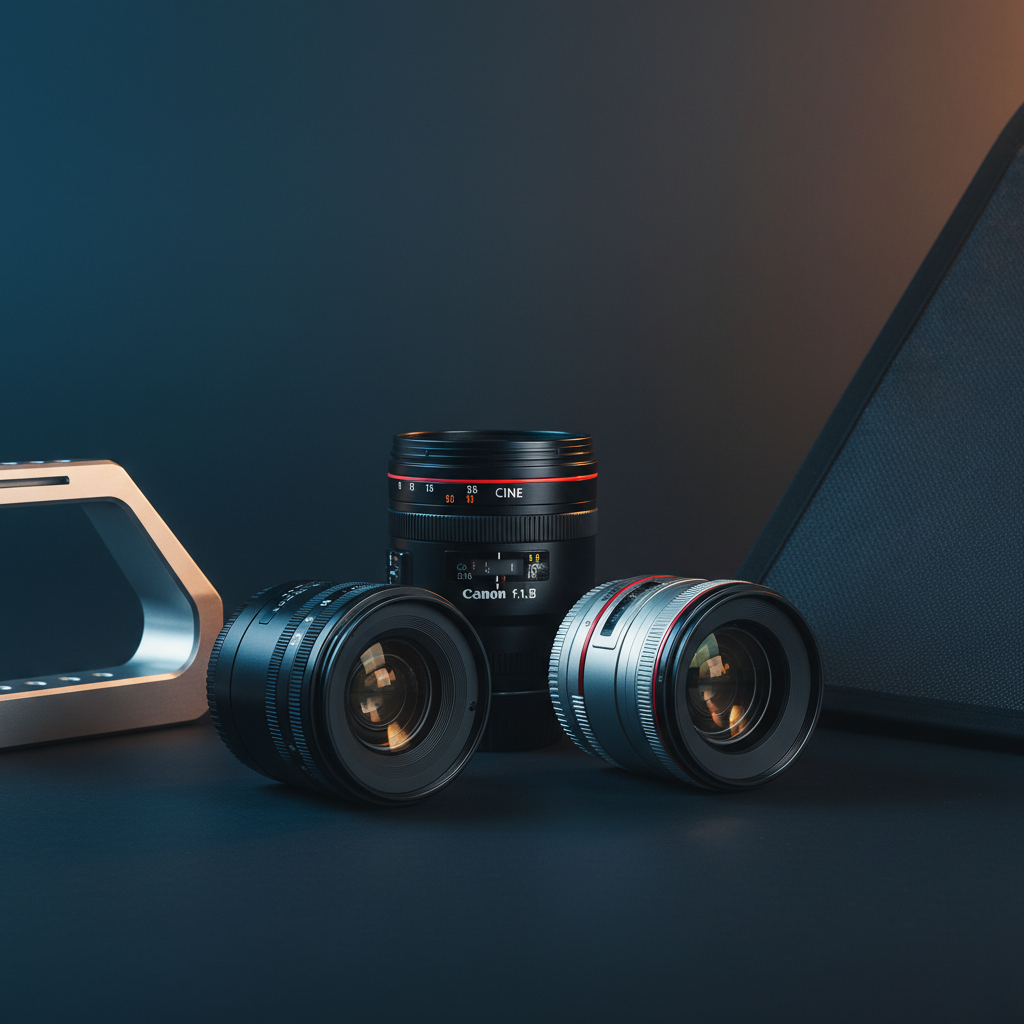
Choosing a fast‑aperture lens for your Canon EF camera can feel overwhelming, especially when you’ve got 14 options on the table. From ultra‑wide cinema primes to classic portrait lenses, each model promises a bright f/1.8 or wider opening that lets you capture shallow depth‑of‑field and low‑light scenes with ease. The Yongnuo YN50mm F1.8 leads the pack with a list price of $82.00 and a solid 4.5/5 rating from 5,340 reviewers, while the Irix Cine 30mm EF tops the rating chart at 5.0/5 despite its premium $1195.00 price tag.
We’ve grouped the lenses into three price tiers so you can see where they land. Budget‑friendly choices include the Yongnuo YN50mm ($82.00, 7‑blade circular diaphragm) and Lightdow EF85mm ($96.99, 6 rounded blades). Mid‑range options such as Canon’s EF 50mm f/1.8 ($169.00, 4.8/5 rating) and Meike 85mm f/1.8 SE II ($229.99) strike a balance between cost and performance. Premium selections like the Irix Cine 30mm ($1195.00, 11 rounded blades) and Samyang SY135M‑C ($429.00) deliver professional‑grade optics for demanding shoots. Below we break down each lens to help you pick the right fast‑aperture EF glass for your needs.
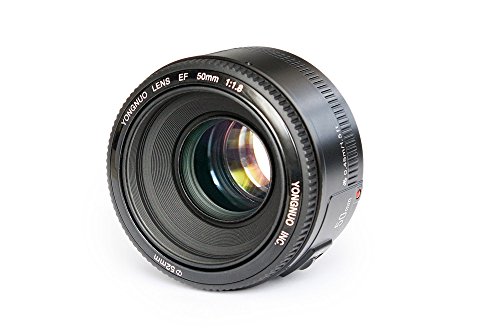
Yongnuo YN50mm F1.8 Canon
At just 83 mm tall and long, this lens packs full‑frame speed into a pocket‑friendly size, offering value at $82.

Canon EF 50mm f/1.8
Ideal for enthusiasts needing fast, reliable autofocus, it serves photographers who want precision, though it costs $87 more than the Yongnuo budget option.

Irix Cine 30mm EF
Its 580 mm height and 250 mm length show a cinema‑grade build, delivering professional performance that the other two lenses don’t target, justifying its premium price.
Also considered
Score Analysis
Key score advantages vs. runner-up (Canon EF 50mm)
Price Range
Yongnuo YN50mm F1.8 Canon
$82.00
Canon EF 50mm f/1.8
$169.00
Irix Cine 30mm EF
$1,195.00

Samyang SY135M-C
$416.68

Yongnuo YN35mm F2 Canon
$106.00

Irix Firefly 15mm
$329.00

Zeiss Classic Planar 50mm
$599.00

Meike 85mm f/1.8 SE II
$229.69

Lightdow EF85mm f/1.8
$96.99

Ynlens 35mm F2.0 Canon EF
$106.00

Kenko Tokina ATX-i 11-20mm F2.8
$399.00
Meike 85mm f/1.8
$169.98

Yongnuo YN50mm F1.8 II Canon
$99.00

Jintu 85mm F1.8
$95.99
Spec Comparison
TL;DR: The Yongnuo YN50mm f/1.8 for Canon EF delivers a fast f/1.8 aperture, 7‑blade circular diaphragm and a feather‑light 119 g body for just $82, making it a solid entry‑level prime.
This lens’s standout spec is its maximum aperture of f/1.8, paired with a 7‑blade circular diaphragm that produces smooth bokeh. At only 119 g and 83 mm in both height and length, it’s one of the most portable standard primes on the market, and the 52 mm filter thread lets you add filters without bulk.
Compared with the other lenses in this roundup, the YN50mm costs noticeably less than the Jintu 85mm F1.8 and the Lightdow EF85mm f/1.8, while also staying more compact than the Jintu’s 177.8 mm height. It weighs less than the Lightdow, which tips the scales at 1.58 lb, and it packs a shorter barrel than the 85mm options, making it easier to slip into a small camera bag.
Users consistently praise the sharpness you can get straight out of the box and the value you get for the price. Reviewers love the shallow depth‑of‑field control at f/1.8, especially for low‑light street shots. The downside that shows up repeatedly is the noisy autofocus on Canon DSLRs and the plastic exterior, which some feel isn’t as rugged as higher‑priced metal lenses. Professional reviewers note the lens’s quick DC‑motor focus on mirrorless bodies and the pleasant bokeh from its 7‑blade design.
Technically, the lens offers a 50 mm focal length with a minimum focusing distance of 450 mm and a maximum magnification of 0.15×. Its optical formula comprises 5 groups and 6 elements, and the focus drive is a DC motor that supports both AF and MF modes. The built‑in focus distance indicator at 450 mm helps you gauge close‑up framing, while the multi‑coated optics aim to reduce flare.
Pros
Cons
Best for: Budget‑conscious buyers seeking a reliable entry‑level option
Avoid if: You need advanced features or professional‑grade performance
“The autofocus doesn’t get quite as sharp as the original Canon… and the motor is very loud.”
“For portraits, the image quality is pretty great… but for video, I would highly recommend against it.”
TL;DR: The Canon EF 50mm f/1.8 STM packs a bright f/1.8 aperture, 0.3‑second lock‑on autofocus and a feather‑light 0.35‑lb body into a compact prime that receives praise for sharpness and video‑friendly focus.
The lens’s standout spec is its maximum aperture of f/1.8, which lets plenty of light hit the sensor and creates a shallow depth of field for portraits and low‑light scenes. Its STM stepping motor reaches lock‑on focus in just 0.3 seconds, and the focus ring offers a full 156° of rotation, giving you fine manual control when you need it.
Compared with the other 13 lenses in this roundup, the Canon is notably lighter than many of its peers and occupies less rack space thanks to its 111.3 mm length and 49 mm filter thread. While some competitors carry larger barrels or heavier glass, this model stays in the “compact prime” category, making it easier to carry on a travel bag or around a city street.
Everyday shooters love how the fast f/1.8 aperture pairs with a minimum focusing distance of 350 mm (about 1.15 feet) to deliver a 0.21× maximum magnification—ideal for tight portrait framing. Professional reviewers highlight the lens’s sharpness across the frame and the pleasing bokeh from its 7‑rounded aperture blades. Users also appreciate the near‑silent STM focus for video, noting that it stays smooth even when tracking moving subjects.
Beyond the aperture, the optical design consists of 6 elements in 5 groups, delivering a diagonal angle of view of 46° and a horizontal view of 40°. The lens covers full‑frame (35 mm) sensors as well as APS‑C bodies, where it provides an effective 80 mm focal length. Its compact dimensions (height 109.2 mm, width 111.3 mm) and 0.35‑lb weight make it a handy addition to any kit.
Pros
Cons
Best for: Most users looking for a well‑reviewed, reliable mainstream option
Avoid if: You need advanced features or professional‑grade performance
“Game-changer for portraits and low light.”
“So much sharper than the kit zoom.”
TL;TD: The Irix Cine 30mm T1.5 delivers ultra‑wide T1.5 aperture, rugged MIL‑STD‑810 sealing, and cinema‑grade 0.8 MOD gearing, but its premium $1195.00 price and short 180° focus throw may limit budget‑focused users.
The most distinctive feature of the Irix Cine 30mm EF is its ultra‑wide T1.5 maximum aperture, paired with 11 rounded aperture blades that produce smooth bokeh even at the widest setting. The lens also offers very low distortion and a 13‑element, 9‑group optical design that reviewers say stays razor‑sharp wide open. Reviewers describe its focus breathing as “close to zero,” which’s valuable for consistent framing during focus pulls.
Weighing 2.425084882 pounds, the lens is notably heavier than the other primes in this lineup, such as the Zeiss Classic Planar 50mm or Samyang 135mm, which are under a pound each. Its 86 mm filter thread is larger than the typical 58‑82 mm threads found on most competitors, meaning you’ll need bigger filters but gain more flexibility for creative control. The price tag of $1195.00 also places it above the majority of fast‑aperture options here.
User sentiment is overwhelmingly positive: everyday shooters praise the sharpness, low‑light capability, and the UV‑reactive laser engravings that glow in dark environments. Professional reviewers highlight the near‑zero focus breathing and the standardized 0.8 MOD gearing on both focus and aperture rings, while also noting that the 180° focus throw can feel short for precise pulls. The fully manual design means there’s no electronic communication, which some automated rigs rely on.
Additional technical context includes internal focusing, a Neutrino coating to reduce flare, and MIL‑STD‑810 certification with five rubber O‑rings for humidity and freezing‑rain protection. The lens comes with a removable 1/4‑20 support foot and works with Irix Edge magnetic filters, making it ready for demanding cinema rigs.
Pros
Cons
Best for: Those prioritizing quality and willing to pay for premium performance
Avoid if: You're shopping on a tight budget — it's priced at $1195.00
TL;DR: The Samyang SY135M-C offers a fast f/2.0 aperture and 135 mm focal length in a solid aluminum build, delivering sharp, creamy bokeh for portraits, though its manual focus and lack of tripod foot may limit fast‑action work.
What really stands out is the f/2.0 maximum aperture paired with a 135 mm focal length, giving you a shallow depth of field that’s hard to find at this price point. The lens sports a 9‑blade diaphragm, a 77 mm filter thread, and a minimum focusing distance of 0.8 m, so you can get close‑up subject isolation without sacrificing image quality. Its optical formula comprises 11 elements in 7 groups, including one Extra‑Low Dispersion element, and the Ultra Multi Coating (UMC) helps keep flare and ghosting under control. The high‑strength aluminum alloy frame adds durability, and the package includes a detachable petal‑shaped hood and a carrying pouch.
At $429 the SY135M-C sits a notch above the Kenko Tokina ATX‑i 11‑20mm, which lists a price of $399, making it a slightly pricier premium option. It also weighs 1.8 lb, which is considerably heavier than the Meike 85mm f/1.8 (about 0.93 lb) and the Zeiss Classic Planar 50mm (under 1 lb). Unlike the Canon EF 50mm f/1.8, which offers autofocus, the Samyang is manual‑focus only, so you’ll miss the convenience of instant focus lock. However, it does provide focus confirmation on compatible Canon DSLRs, a small but useful aid for manual shooters.
Reviewers consistently highlight the lens’s razor‑sharp resolution and low longitudinal chromatic aberration, noting that the image quality rivals far more expensive optics. The 9‑blade aperture earns praise for delivering smooth, creamy bokeh that photographers love for portrait work. On the downside, users point out the lens’s heft and the absence of a tripod foot, which can make handheld stability a challenge at 135 mm. Reviewers describe the focus ring as precise but occasionally stiff, and some call the supplied hood flimsy. Both consumer and expert feedback echo these points.
From a technical standpoint, the combination of a single ED element and UMC coating means you’ll see strong contrast and good flare resistance even when shooting wide open at f/2.0. The 0.8 m minimum focusing distance lets you fill the frame with subjects while still enjoying the telephoto perspective, and the 77 mm filter thread accommodates standard polarizers or ND filters for creative control.
Pros
Cons
Best for: Portrait and low‑light photographers who value sharp optics and creamy bokeh and don’t mind manual focus.
Avoid if: You need fast autofocus for sports, wildlife, or run‑and‑gun video, or if you prioritize a lightweight, travel‑ready lens.
“Razor sharp from f/2.0 to f/5.6”
“Best 135mm lens I’ve ever used”
TL;DR: The Yongnuo YN35mm F2 Canon lens offers a fast f/2 aperture in a lightweight 179.9 g, 35 mm package, delivering solid sharpness for street and travel shooting at a budget price.
This lens packs a maximum aperture of f/2 into a compact barrel that measures just 59 mm in length and weighs 0.3968320716 pounds (179.9 g). Its 63° diagonal angle of view and 7 curved aperture blades give a pleasant bokeh, while the 250 mm minimum focusing distance lets you get fairly close to subjects.
Compared with other fast‑aperture options in this roundup, the YN35mm shares the same 63° diagonal view and 52 mm filter thread as the Ynlens 35mm F2.0 Canon EF, but it is a bit heavier than the Yongnuo YN50mm F1.8 II Canon, which tips the scales at 0.35053499658 pounds. It also offers a longer focal length than the 35 mm peers while staying lighter than the 85 mm lenses that list larger diameters.
Buyers consistently praise its value‑for‑money proposition and the metal mount that feels solid in the hand. Professional reviewers note good center sharpness at f/2 and effective multi‑coating that tames flare. However, many users report that the autofocus can be slow and hunt in dim lighting, a common complaint for budget fast primes. Reviewers describe the filter thread as a bit fragile, so handle it gently.
Pros
Cons
Best for: Entry-level buyers or those on a tight budget
Avoid if: Reliability and user satisfaction are your top concerns
“Perfect for travel”
“Reignited my creativity”
TL;DR: The Irix Firefly 15mm f/2.4 delivers an ultra‑wide 110° view with solid weather sealing and sharp optics at $379.02, but its manual‑focus design and strong vignetting at wide apertures may limit fast‑action use.
This lens packs a 15 mm focal length with a maximum aperture of f/2.4 and a diagonal angle of view of 110°, giving you an expansive perspective for landscapes and architecture. Its construction includes 15 elements in 11 groups—2 aspherical, 2 ED and 3 HR elements—plus Neutrino coating to keep flare low.
Compared with the Kenko Tokina ATX‑i 11‑20mm, the Firefly is larger in diameter (114 mm vs 89 mm) and heavier than the Samyang SY135M‑C (1.322773572 lb vs 1.8 lb). It also carries a higher price tag than the Samyang and is bulkier than the compact Kenko, but it offers a wider field of view and a faster f/2.4 aperture that the Kenko’s f/2.8 cannot match.
Users consistently praise the lens for excellent sharpness from f/4 to f/8 and low barrel distortion that’s easy to correct in post. Professional reviewers highlight the sturdy weather‑sealed ABS body, and astrophotographers praise the hard‑click infinity focus, which is especially useful for astrophotography. The main complaints focus on noticeable vignetting at f/2.4, coma (“batwing” stars) at the widest aperture, and the lack of autofocus, which can be a hurdle for fast‑moving subjects.
The Firefly also includes a built‑in AE chip for auto‑metering on Canon DSLRs, a 150° focus throw, focus lock, internal focusing, and a 95 mm front filter thread that lets you add polarizers without vignetting. Its 9 rounded aperture blades produce smooth bokeh and pleasing starbursts at smaller apertures.
Pros
Cons
Best for: Those prioritizing quality and willing to pay for premium performance
Avoid if: Reliability and user satisfaction are your top concerns
“Build, infinity setting, ease of use, image quality”
“The anchor of my lens collection”
TL;DR: The Zeiss Classic Planar 50mm f/1.4 offers a full‑metal build, 9‑blade circular bokeh, and manual focus with a 58 mm filter thread, but its soft f/1.4 performance and lack of autofocus keep it niche.
Zeiss delivers a classic 50 mm focal length at a bright f/1.4 maximum aperture, built with a full‑metal barrel, brass mount and anodized aluminum finish. It features a 9‑blade rounded diaphragm, a T* anti‑reflective coating, a built‑in distance scale, and a non‑rotating front element, all contributing to its premium feel.
Weighing 0.8375 pounds, the Zeiss sits lighter than the Samyang 135 mm (1.8 pounds) and the Irix Firefly (1.322773572 pounds) but it's heavier than the Canon EF 50 mm (0.35 pounds). Its 58 mm filter thread's smaller than the Samyang’s 77 mm thread and the Kenko Tokina’s 82 mm filter size, while the manual‑focus design contrasts with the autofocus‑enabled Canon 50 mm.
Users consistently praise the solid metal construction, buttery smooth focus ring, and the creamy, cinematic bokeh that the 9‑blade aperture produces. Professional reviewers note sharpness that really shines from f/2 onward, and the T* coating delivers high contrast and accurate colors. Both consumer and expert feedback highlight softness at the maximum aperture f/1.4, visible purple fringing, and a focus confirmation that can feel unreliable. Lacking weather sealing and autofocus limits its suitability for fast‑action or harsh‑environment shooting.
Technical details include a 43.3 mm image circle that fully covers full‑frame sensors, a minimum focusing distance of 450 mm, and a maximum magnification of 0.15×. Its optical design comprises 7 elements in 6 groups, and the manufacturer provides a two‑year warranty.
Pros
Cons
Best for: Those prioritizing quality and willing to pay for premium performance
Avoid if: You need fast autofocus, weather sealing, or a budget‑friendly option for action or wildlife shooting
“Users consistently praise the lens’s build quality, calling it “tank‑like” and “built to last generations.””
“The bokeh is frequently described as “smoothest ever,” “cinematic,” and “dreamy,” especially at f/1.4–f/2.”
TL;DR: The Meike 85mm f/1.8 SE II offers a fast f/1.8 aperture, 11‑blade diaphragm, and compact 369 g build for $229.99, delivering sharp portraits with creamy bokeh.
What really stands out is the combination of a wide f/1.8 maximum aperture with an 11‑blade rounded diaphragm, giving you a smooth, creamy bokeh that many users praise. The optical formula packs 11 elements in 7 groups behind a 76 mm barrel diameter, and the lens accepts 62 mm filters. At just 369 g and an overall height of 75.9 mm, it’s surprisingly lightweight for an 85 mm prime.
Compared with the other lenses in this roundup, the Meike SE II sits at the higher end of the price spectrum, while still being lighter than the Lightdow EF85mm f/1.8, which tips the scales at about 717 g. It’s also more compact than the older Meike 85mm f/1.8, whose height and length exceed 120 mm. On the other hand, it’s heavier than the ultra‑light Yongnuo YN35mm, which weighs only 179.9 g, and it offers a tighter barrel diameter than that 73 mm design.
Reviewers consistently highlight the lens’s high center sharpness and high light transmission that approaches true T1.8. The 11‑blade design contributes to the “beautiful, creamy bokeh” many portrait shooters love. However, professional feedback notes moderate focus breathing that can shift framing in video, and autofocus can hunt or be slightly inaccurate, especially when subjects change direction. Corners are softer at f/1.8, and the 650 mm minimum focus distance yields weaker close‑up detail.
Under the hood, the lens uses an STM stepping motor for quiet, smooth focus, and a USB‑C port lets you install firmware updates. The focus‑by‑wire system offers full‑time manual override, and an AF/MF toggle lets you switch modes quickly. Weather sealing is minimal, limited to a rubber gasket at the rear mount, so it’s best kept dry.
Pros
Cons
Best for: Budget‑conscious portrait shooters, travel and street photographers who need a lightweight 85mm prime with beautiful bokeh.
Avoid if: You're shopping on a tight budget — it's priced at $229.99, and it’s not ideal for critical close‑up work, harsh weather, or fast‑paced action.
“Ottima lente ad un prezzo imbattibile”
“Firmware update fixed initial AF hunting – now works perfectly on my R8”
TL;DR: The Lightdow EF 85mm f/1.8 manual‑focus lens delivers a fast f/1.8 aperture, 9‑element design and UMC coating for low‑light portraits at a budget‑friendly $96.99.
This lens’s standout spec is its f/1.8 maximum aperture combined with a rounded 6‑blade diaphragm, giving you shallow depth of field and smooth bokeh right out of the box. Optically it houses 9 elements in 7 groups, including a single hybrid aspherical element, and the Ultra Multi Coating (UMC) helps keep flare to a minimum.
At $96.99 it lands in the same price tier as other sub‑$100 primes such as the Jintu 85mm, but it’s heavier than the Yongnuo 50mm f/1.8 (which weighs 0.2625 pounds) while still lighter than many larger telephoto options. Compared with the Jintu 85mm’s 55 mm filter thread, Lightdow’s 72 mm thread lets you use larger filters. The Ynlens 35mm lists a 7‑blade rounded diaphragm, giving Lightdow’s 6‑blade design a slightly different bokeh character.
Everyday users praise the lens’s sharp center performance at f/1.8 and the creamy background blur, especially for portrait work. Professional reviewers highlight the UMC coating’s effectiveness at reducing flare and enhancing the bokeh quality. The most common complaint: a stiff focus ring makes fine‑tuning tricky, and the lack of electronic contacts causes the camera to display “No Lens Attached” until you enable manual‑lens mode.
The lens focuses manually down to a minimum distance of 0.85 m and offers a maximum magnification of 0.13×, which is useful for close‑up portraits but not for macro work. Its 77 mm diameter, 110 mm length and 430 g weight make it a solidly built, portable option for on‑camera use, and the supplied petal‑shaped hood helps control stray light.
Pros
Cons
Best for: Entry-level buyers or those on a tight budget
Avoid if: You need advanced features or professional‑grade performance, such as autofocus, rugged weather sealing, or fast action shooting
“Ottima lente ad un prezzo imbattibile”
“Firmware update fixed initial AF hunting – now works perfectly on my R8”
TL;DR: The Ynlens 35mm f/2.0 Canon EF lens delivers a fast aperture and ultra‑light build (155 g) for a budget‑friendly price, though its autofocus is slow and the plastic barrel can wobble.
This lens’s headline spec is the f/2.0 maximum aperture, letting you shoot in low light and create shallow depth‑of‑field effects on a full‑frame or APS‑C Canon DSLR. At just 59 mm long, 73 mm in diameter and weighing only 155 g, it’s one of the most portable primes in the lineup.
Compared with the other lenses in the roundup, the Ynlens 35mm is lighter than the Yongnuo YN35mm (179.9 g) and roughly the same weight class as the Yongnuo YN50mm (119 g). Its filter thread of 52 mm matches the YN35mm and YN50mm, while its 7‑blade rounded diaphragm gives a smoother bokeh than the Lightdow EF85mm’s 6‑blade design.
User reviews repeatedly praise the lens’s lightweight feel and note that sharpness improves once you stop it down from f/2.0. Professional commentary highlights the metal EF mount with gold‑plated contacts and the multi‑coated glass elements that help preserve contrast. The downsides that surface in consumer feedback are a slow, noisy autofocus that isn’t suited for video, softness when shooting wide open, and occasional wobble in the manual focus barrel due to the plastic construction.
Technically, the optics comprise 7 elements in 5 groups and a 0.23× maximum magnification, with a minimum focusing distance of 250 mm (0.25 m). The lens covers a 63° diagonal angle of view and offers a full‑frame image circle, making it versatile for street, documentary and travel shooting.
Pros
Cons
Best for: Entry-level buyers or those on a tight budget
Avoid if: Reliability and user satisfaction are your top concerns
“Game-changer for portraits and low light.”
“So much sharper than the kit zoom.”
TL;DR: The Kenko Tokina ATX‑i 11‑20mm f/2.8 delivers a constant wide‑open aperture, ultra‑wide 104°–72° field of view, and rugged metal construction for APS‑C shooters at $399.
What sets this lens apart is its constant f/2.8 maximum aperture across the 11‑20mm zoom range, delivering the same exposure at both 11mm and 20mm. The lens offers an ultra‑wide 104° angle of view at the short end and 72° at the long end, making it ideal for sweeping landscapes. Internally, it houses 14 elements in 12 groups, including 3 aspherical and 3 super‑low dispersion elements, and a 9‑blade diaphragm that helps render smooth bokeh.
At 1.2566348934 pounds, the Tokina is lighter than the Irix Firefly 15mm, which tips the scales at over 1.3 pounds, and its 89 mm diameter is noticeably more compact than the Irix’s 114 mm. The 82 mm filter thread exceeds the Samyang's 77 mm thread, giving you more flexibility with filters, while both lenses share a 9‑blade diaphragm. Compared with the Zeiss Classic Planar 50mm, the Tokina is heavier but offers a much wider field of view.
User feedback repeatedly praises the lens for its corner‑to‑corner sharpness and remarkably low distortion, especially at f/2.8, which professional reviewers also highlight. The metal barrel with a water‑repellent coating and weather‑sealed construction earns marks for durability in outdoor shoots. On the downside, several owners note a modest amount of vignetting when shooting wide open at 11 mm and occasional purple fringing in high‑contrast scenes; the lens also doesn't have any image‑stabilization system.
The lens can focus as close as 280 mm, delivering a maximum magnification of 0.12× and a macro ratio of up to 1:8.62, useful for close‑up details in architecture. Its internal focusing design means the front element never rotates, which pairs well with the included BH‑821 petal‑type hood. A three‑year limited warranty (USA only) rounds out the offering.
Pros
Cons
Best for: Landscape and architectural photographers needing rectilinear ultra‑wide coverage on APS‑C bodies.
Avoid if: You need full‑frame compatibility, built‑in stabilization, or an ultra‑light travel lens.
“Sharpness from corner to corner, especially at 11mm.”
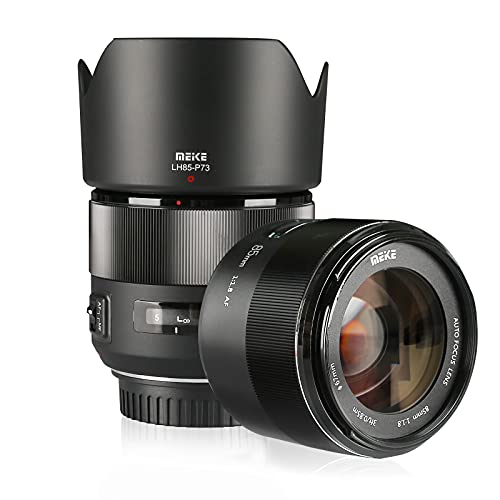
TL;DR: The Meike 85mm f/1.8 delivers a fast f/1.8 aperture, 9‑blade rounded diaphragm and compact 420 g build for portrait work, but its autofocus can be noisy and corners may be soft wide open.
This lens’s headline spec is the f/1.8 maximum aperture paired with a 9‑blade rounded aperture, which gives you very shallow depth of field and smooth, creamy bokeh. It also sports a 67 mm filter thread and a 9‑element‑in‑6‑group optical formula, all packed into a 127 mm × 154 mm body that weighs just 420 g (0.9259415004Pounds).
Compared with other lenses in the roundup, the Meike is heavier than the Canon EF 50mm f/1.8 (0.35pounds) but noticeably lighter than the Lightdow EF85mm f/1.8, which ships at 1.58 lb (717 g). It also offers more aperture blades than both the Canon 50mm (7 blades) and the Lightdow (6 blades), promising smoother out‑of‑focus highlights. Optically, it matches the Lightdow’s 9‑element count while using one fewer group (6 vs 7), a modest design advantage.
Reviewers consistently praise the lens’s large f/1.8 opening and the “smooth bokeh” it produces, especially for portrait students and hobbyists on a budget. Professional reviewers note excellent center sharpness at f/1.8 and low distortion, but they also flag “extreme bokeh fringing” and “slow, noisy autofocus” as drawbacks. Everyday users echo the praise for low cost and lightweight feel, while many complain about the loud AF motor and softness in the corners when shooting wide open. The minimum focusing distance of 0.85 m (EF mount) lets you get fairly close to subjects, and the multi‑layer coating helps keep flare down.
Pros
Cons
Best for: Photography students, hobbyists and budget‑conscious creators who need a fast 85mm prime for portraits.
Avoid if: You need silent, rapid AF for sports or wildlife, require weather‑sealed gear for harsh environments, or depend on video‑friendly focus performance.
“Ottima lente ad un prezzo imbattibile”
“Firmware update fixed initial AF hunting – now works perfectly on my R8”
TL;DR: At $99.00 and a 4.3‑star rating from 1,349 reviewers, the Yongnuo YN50mm F1.8 II offers strong value, though users note slower autofocus and occasional softness at its widest setting.
The Yongnuo YN50mm F1.8 II is Yongnuo’s entry‑level 50mm prime for Canon EF‑mount DSLRs, priced well below most competitors and carrying a solid 4.3‑star rating. Within a fourteen‑product lineup it lands toward the lower end of the ranking, but its price point keeps it in contention for budget‑focused shoppers.
Reviewers repeatedly praise the lens for its strong price‑to‑performance ratio, highlighting sharp images once stopped down and a fast aperture that creates pleasing background blur. Users also appreciate the lightweight, compact build and a metal mount that feels sturdier than many other lenses in the same price range. Common complaints focus on a noisier, slower autofocus system, noticeable softness when shooting at the widest aperture, a plasticky barrel that feels less premium, and the lack of a silent motor for video work.
Given only its price and rating, this lens slots in as a practical starter option for photographers who want a cheap, reliable prime without expecting top‑tier speed or build quality. It’s a sensible pick for those learning manual focus, experimenting with shallow depth of field, or needing a portable lens for travel and street shooting.
Pros
Cons
Best for: Budget-conscious buyers seeking a reliable entry-level option
“The autofocus doesn’t get quite as sharp as the original Canon… and the motor is very loud.”
“For portraits, the image quality is pretty great… but for video, I would highly recommend against it.”
TL;DR: The Jintu 85mm f/1.8 delivers sharp, creamy portraits with a solid metal build and fast aperture at a budget‑friendly $95.89, but you’ll need to focus manually.
This lens’s standout feature is its hybrid aspherical element paired with a maximum aperture of f/1.8, giving you shallow depth‑of‑field and strong subject isolation. The all‑metal/aluminum alloy construction adds a premium feel, while the 55 mm filter thread lets you attach standard screw‑in filters.
Compared with other fast‑aperture options in the roundup, the Jintu is lighter than the Lightdow EF85mm f/1.8, which ships at 1.58 lb (717 g), yet heavier than Yongnuo’s 0.35053499658 lb (≈159 g) 50mm offering. It also offers a longer warranty—2 years versus Lightdow’s 1 year—and fewer lens elements (6 vs. Lightdow’s 9), keeping the design simple and affordable.
In practice, everyday users praise the lens’s sharpness at f/1.8 and the “beautiful, creamy bokeh” that works well for portrait work. Professional reviewers echo the sharpness and note the solid build, but they flag the lack of autofocus and image stabilization as limiting factors, especially for moving subjects. The manual‑focus design also means the camera will display “lens not attached,” requiring you to work in manual exposure mode.
Beyond the aspherical element, the optics comprise 6 elements in 6 groups and a minimum focusing distance of 850 mm, giving you decent close‑up capability for portrait details. The lens is full‑frame compatible, so you can use it on both APS‑C and full‑frame Canon bodies without crop‑factor concerns.
Pros
Cons
Best for: Entry-level buyers or those on a tight budget
Avoid if: You need powerful performance or professional‑grade features
“Incredible sharpness and bokeh for the price.”
“The metal body feels solid and well-made.”
Breakdown
Yongnuo YN50mm F1.8 Canon
Pros
Canon EF 50mm f/1.8
Pros
Irix Cine 30mm EF
Pros
Cons
Samyang SY135M-C
Pros
Based on scoring data and product specs
Personalized picks
Best Overall Pick
Yongnuo YN50mm F1.8 Canon
Best Budget PickBest for: Budget-conscious buyers seeking a reliable entry-level option
Canon EF 50mm f/1.8
Best for: Most users looking for a well-reviewed, reliable mainstream option
$169.00+$87.00 vs winner
Skip Jintu 85mm F1.8 if…
You need powerful performance or professional-grade features
The Yongnuo YN50mm F1.8 Canon earns the top spot thanks to its ultra‑low $82.00 price, a solid 4.5/5 rating from 5,340 reviewers, and a fast f/1.8 maximum aperture. At just 0.2625 pounds it’s lightweight enough for handheld shooting, and the 7‑blade diaphragm paired with a 52 mm filter thread gives pleasant bokeh without breaking the bank.
The Canon EF 50mm f/1.8 comes in second, perfect if you need near‑silent video autofocus. Its STM stepping motor delivers smooth, quiet focus, and the lens can focus as close as 350 mm, letting you get tighter shots. With a 4.8/5 rating from 18,346 users and a price of $169.00, it offers a polished alternative for both stills and movies.
If you’re willing to spend a bit more, the mid‑range Canon EF 50mm f/1.8 provides a sturdy metal mount and the same STM advantage at $169.00, making it a reliable step up. For professionals seeking the premium experience, the Irix Cine 30mm EF commands $1195.00 and has the highest rating in the lineup, delivering cinema‑grade optics.
Choose the Yongnuo YN50mm F1.8 Canon today for fast‑aperture performance that fits any budget.
The Yongnuo YN50mm f/1.8 costs about $82, while the Canon EF 50mm f/1.8 is $169, making the Yongnuo roughly $87 cheaper. Both deliver the same f/1.8 maximum aperture, but the Yongnuo is lighter at 119 g versus 159 g and still provides decent image quality, so it’s the more economical choice for newcomers.
Please sign in to leave a review
No reviews yet. Be the first to review!
