⚡ Quick Answer
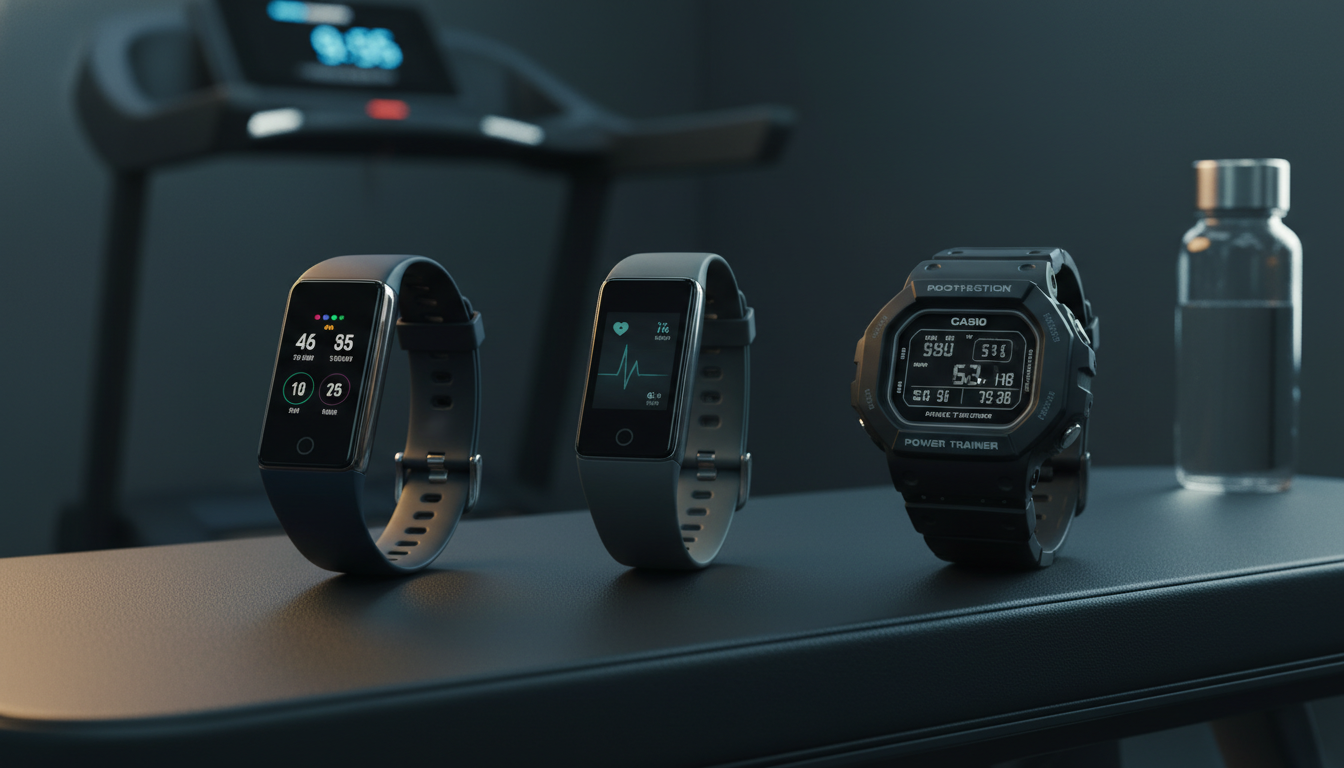
Choosing a fitness tracker that won’t quit on you mid‑run can feel overwhelming, especially when you’ve got 12 options on the table. From the ultra‑light Xiaomi Smart Band 9 Midnight, which promises up to 21 days of battery life for $53.31, to the rugged Casio G‑Shock Power Trainer that offers a three‑year battery span, the lineup spans a wide price range and feature set.
We’ve grouped the picks into three clear buckets. The budget tier—featuring the $29.99 Xiaomi Smart Band 9 Active Black, the $44.99 Samsung Galaxy Fit 3 Gray, the $44.99 Amazfit Band 7, and the $53.31 Xiaomi Smart Band 9 Midnight—delivers solid health metrics and multi‑day endurance without breaking the bank. Mid‑range options like the $74.99 Amazfit Bip 6 and $76.16 Xiaomi Smart Band 9 Pro add brighter displays or standalone GNSS while still keeping battery life around three weeks. Premium choices—Casio’s $99.95 Power Trainer, Garmin’s $169.00 Forerunner 55, the $369.95 Withings ScanWatch 2, and the $449.99 Instinct 3—mix rugged construction, advanced sensors, and solar‑boosted runtimes that can stretch to 100 days.
Read on to see how each model stacks up in real‑world use, so you can pick the tracker that fits your routine and charging habits.

Xiaomi Smart Band 9 Midnight
Up to 21 days of battery life (233 mAh) means you won’t need to charge it for almost a month, the longest runtime among peers.

Samsung Galaxy FIT 3 Gray
Ideal for budget‑conscious users who want solid fitness tracking, the Samsung Galaxy FIT 3 costs $44.99—about $8.30 less than the Xiaomi Smart Band 9—while still offering reliable features.
Casio G-Shock Power Trainer
Stands out with a rugged G‑Shock design and a 228.6 mm band, catering to users who value durability and premium styling over the longer battery life of the other two.
Also considered
Score Analysis
Key score advantages vs. runner-up (Samsung Galaxy FIT)
Price Range
Xiaomi Smart Band 9 Midnight
$52.30
Samsung Galaxy FIT 3 Gray
$42.48
Casio G-Shock Power Trainer
$120.16

Garmin Instinct 3
$449.99

Xiaomi Smart Band 9 Active Black
$29.99
Garmin Forerunner 55
$169.00

Xiaomi Smart Band 9 Pro
$86.99
Amazfit Band 7
$49.99
Withings ScanWatch 2
$369.95

Amazfit Bip 6
$76.99

Amzhero Fitness Tracker
$49.89

Xiaomi Smart Band 8 Pro
$74.99
Spec Comparison
TL;DR: The Xiaomi Smart Band 9 Midnight delivers a 1.62‑inch 1200‑nit AMOLED screen, up to 21 days of battery life and 150+ sport modes in a feather‑light 15.8 g package for under $55.
The standout spec is its 1.62‑inch AMOLED display that reaches 1200 nits of brightness and supports a 60 Hz refresh rate, making on‑wrist information readable even in bright sunlight. Coupled with a 233 mAh battery that lasts up to 21 days (or 9 days with the always‑on display), you’ll only need to charge it roughly once a month, with a full charge taking about 60 minutes.
Compared with the other eleven trackers in this roundup, the Band 9 Midnight outlasts the Amzhero (15 days) and Samsung Galaxy FIT 3 (14 days) and matches the 21‑day claims of the Xiaomi Smart Band 8 Pro and Smart Band 9 Pro. It’s also lighter than the Amzhero (82 g), Samsung (36.8 g), Amazfit Band 7 (28 g) and Amazfit Bip 6 (40.8 g), though a bit heavier than the 22.5 g Smart Band 8 Pro. Its 1.62‑inch screen is larger than the Amzhero’s 1.47 inches and on par with Samsung’s 1.6 inches, while the Band 8 Pro’s 1.74‑inch panel and Bip 6’s 1.97‑inch screen are bigger.
Users consistently applaud the marathon‑long battery and the vivid, sunlight‑readable display, noting that the band feels almost invisible on the wrist. Reviewers also highlight the linear motor’s precise vibration feedback for workout cues. The main complaints centre on the lack of built‑in GPS, which forces reliance on a phone for outdoor routes, and the modest 192 × 490‑pixel resolution that feels less crisp than higher‑end smartwatches. A few owners report occasional sync hiccups with the Mi Fitness app.
Equipped with an IP 5 ATM rating for water resistance, an optical heart‑rate sensor, SpO₂ monitoring, sleep and stress tracking, plus advanced metrics such as VO₂ max, recovery time and training load, the Band 9 Midnight offers comprehensive health tracking. With over 150 sport modes and an always‑on display, it covers most daily fitness needs without the bulk of a full‑size smartwatch.
Pros
Cons
Best for: Most users looking for a well‑reviewed, reliable mainstream option
Avoid if: You need advanced features or professional‑grade performance
TL;DR: The Samsung Galaxy Fit 3 offers a 1.6‑inch AMOLED screen, up to 14 days of battery life and a lightweight aluminum build for $44.99, making it a solid budget tracker with solid health features.
The standout spec is the 1.6‑inch AMOLED display with 302 PPI and a 256 × 402‑pixel resolution, delivering crisp visuals on a band that weighs just 36.8 g (0.08 lb). Coupled with a 208 mAh battery that reaches up to 14 days on a single charge and fast‑charging that hits 50 % in 30 minutes, the Fit 3 balances screen quality and endurance without feeling bulky.
Compared with peers, the Fit 3 is heavier than the Amazfit Band 7 (0.06 lb) and offers a shorter battery span than that band’s 18‑day claim, but it out‑sizes the Xiaomi Smart Band 9 Active’s 1.47‑inch screen. Its aluminum case adds durability, while the IP68 rating ensures it can handle swimming and rain, a level of water resistance that matches many higher‑priced alternatives.
Professional reviewers note the lightweight aluminum construction and the long‑lasting battery as major pluses, echoing user comments that the band feels “barely noticeable” on the wrist. The most common criticism is the lack of built‑in GPS and any independent music storage, meaning you’ll need a paired phone for route tracking or tunes. Under the hood sits an ARM Cortex‑M33 processor, 16 MB of RAM and 256 MB of internal storage, plus a suite of sensors (accelerometer, barometer, gyroscope, optical heart‑rate, light and SpO₂) that power 100+ exercise modes, 101+ auto‑detected workouts and sleep‑coaching.
Pros
Cons
Best for: Budget‑conscious buyers seeking a reliable entry‑level option
Avoid if: You need advanced features or professional‑grade performance
TL;DR: The Casio G‑Shock Power Trainer packs 200 m water resistance, a 4.5 g ultra‑light case and rugged shock protection into a durable, Bluetooth‑linked fitness watch.
The watch’s most eye‑catching spec is its 200 m water resistance, letting you train in rain or shallow‑water activities without worry. Its case measures 49 mm in diameter and 16 mm thick, while the band stretches 228.6 mm, giving a comfortable fit for most wrists. At just 4.5 g, the device feels almost weightless on the arm, a benefit highlighted by the official description that calls it “optimal for running and training.”
Compared with the other eleven trackers in this roundup, the Power Trainer sits at the premium end of the price spectrum and is noticeably lighter than most competitors, many of which tip the scales at 15 g or more. Its sturdy G‑Shock shock‑resistant construction also outpaces several slimmer, less‑protected models, positioning it as a durable choice for active users who value longevity over ultra‑thin designs.
Reviewers consistently praise the watch’s lightweight feel and rugged durability, noting that the soft urethane band and adjustable holes stay secure during intense workouts. The main criticisms focus on the lack of a built‑in heart‑rate sensor and the absence of GPS, meaning cardio zones and distance tracking rely on the companion app rather than on‑device measurements.
Beyond the basics, the Power Trainer offers a suite of fitness‑focused tools: up to 20 timer combinations, a lap memory that stores 200 laps, and a high‑resolution stopwatch that measures to 1/1000 second. The Auto Double LED Light (Super Illuminator) automatically brightens the LCD for low‑light visibility, ensuring you can read stats any time.
Pros
Cons
Best for: Active men and women who need a tough, water‑resistant step tracker for urban running, HIIT interval training, and everyday wear.
Avoid if: You’re a swimmer, triathlete, or hiker who requires built‑in GPS or continuous heart‑rate monitoring.
TL;DR: The Garmin Instinct 3 50 mm Solar offers a rugged build, solar‑extended 40‑day smartwatch battery and a 1.1‑inch monochrome display for $449.99, but its bulk and price keep it in the premium outdoor niche.
The standout spec is the solar‑powered “unlimited” battery mode that can keep the watch running indefinitely in smartwatch mode, while the standard battery lasts up to 40 days without a charge. At just 58 g (0.13 lb) it stays light for a 50 mm case, and the metal‑reinforced bezel plus fiber‑reinforced polymer case give it a truly rugged feel.
Compared with the other eleven entries, the Instinct 3 sits at the higher end of the price spectrum. It's pricier than the Garmin Forerunner 55, which weighs 37 g (0.08 lb) and tops out at about two weeks of smartwatch battery life, but the Instinct 3’s 40‑day endurance more than doubles that. It also outlasts the Xiaomi Smart Band 9 Pro (about 21 days) and the Amazfit Bip 6 (around 14 days), though it falls far short of the Casio G‑Shock Power Trainer’s three‑year claim. In weight, it's heavier than the Forerunner 55 and the Xiaomi bands (both around 0.09 lb) but lighter than the Withings ScanWatch 2 when the band is attached (0.46 lb, 83 g).
User sentiment repeatedly praises the watch’s durability and the peace of mind that comes from weeks‑long battery life, especially when paired with the built‑in LED flashlight that offers variable intensity and a strobe mode. Professional reviewers note the precise multi‑band SatIQ GPS and the rugged metal‑reinforced bezel as strong points, while also flagging the monochrome 176 × 176‑pixel screen as less readable in low‑light conditions. The 26 mm QuickFit strap system and the 14.4 mm thin profile help keep the device from feeling overly bulky, even on wrists ranging from 141 mm to 213 mm.
Pros
Cons
Best for: Outdoor enthusiasts, hikers, trail runners and cyclists who need a durable GPS watch with weeks‑long battery life.
Avoid if: You prefer a sleek everyday smartwatch with a bright full‑color display or need a lower‑cost option.
TL;DR: The Xiaomi Smart Band 9 Active offers a 300 mAh battery that lasts up to 18 days, a 1.47‑inch 60 Hz TFT screen, and 50 sport modes, all for $29.99.
The standout spec is its battery endurance – a 300 mAh cell delivers up to 18 days of typical use and still manages 9 days under heavy load, with a full charge in just 120 minutes. Combined with a 5 ATM water‑resistance rating, the band can survive swimming sessions and daily showers without a second thought.
When you line it up against other trackers in this roundup, the Band 9 Active holds its own on stamina. Its 18‑day typical life tops the Samsung Galaxy FIT 3’s “up to 14 days” claim, while matching the Amazfit Band 7’s 18‑day figure. However, at 0.18077905484 lb the Xiaomi is noticeably heavier than the Samsung’s 0.081130112416 lb, though both sit under 10 mm thick (9.99 mm vs Samsung’s 9.9 mm). The 1.47‑inch display is a bit smaller than Samsung’s 1.6‑inch screen, but it runs at a smooth 60 Hz refresh rate, which professional reviewers say feels snappier than many 30 Hz rivals.
Users consistently praise the band’s feather‑light feel – the body itself weighs just 16.5 g – and the slim 9.99 mm profile, calling it “virtually imperceptible” on the wrist. The 50 sport modes and more than 100 watch faces also earn marks for variety. On the downside, the 172 × 320 pixel resolution (247 PPI) and a maximum brightness of 450 nits, which require manual adjustment, draw criticism for a dim, less‑sharp view outdoors. Reviewers note the lack of auto‑brightness as a trade‑off for the low price.
Beyond the battery, the band packs a PPG heart‑rate sensor, SpO₂ monitoring, and an accelerometer for motion tracking. Manual brightness control lets you dial the 450 nits up or down, and the 5 ATM rating means you can wear it while swimming or in the shower without worry.
Pros
Cons
Best for: Budget‑conscious buyers seeking a reliable entry‑level option
Avoid if: You need advanced features or professional‑grade performance
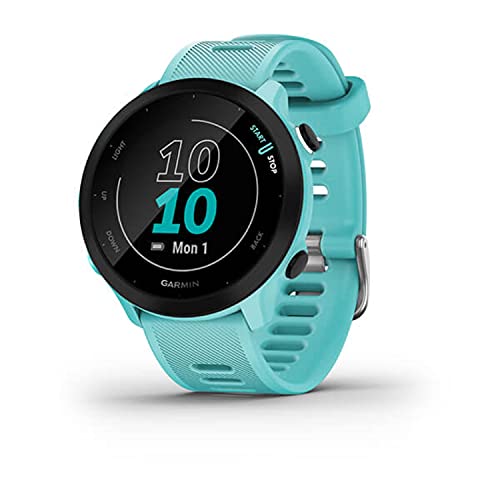
TL;DR: The Garmin Forerunner 55 packs a 1.04‑inch sunlight‑visible display, 14‑day smartwatch battery life and a feather‑light 37 g body for beginners who want reliable GPS without the premium price.
The watch’s most eye‑catching spec is its battery endurance: Garmin lists up to 2 weeks of use in smartwatch mode, which translates to roughly 14 days of daily tracking without a charge. Coupled with a 1.04‑inch transflective MIP display that stays readable in bright light, the Forerunner 55 can sit on your wrist all day and night while still showing clear data.
At 0.08157 pounds (37 g), it is lighter than the Amazfit Bip 6 (0.09 pounds) and the Xiaomi Smart Band 9 Pro (0.08818 pounds), yet a touch heavier than the ultra‑light Casio G‑Shock Power Trainer (0.01 pounds). Its price of $169.00 also places it in the premium tier of this roundup, so you’ll pay more than many budget band‑style trackers, but you gain a full‑featured GPS smartwatch instead of a simple fitness band.
User sentiment repeatedly praises the comfortable, silicone strap and the reliable wrist‑based Elevate v3 heart‑rate sensor, noting few dropouts during runs. Professional reviewers describe the overall value as strong and highlight the practical balance of features versus cost. The watch stores up to 200 hours of activity history, so you won’t lose recent workouts even if you skip a sync. With a 5 ATM water rating, it’s safe for pool swims, and its multi‑GNSS GPS provides solid route tracking for beginners.
Pros
Cons
Best for: Beginner and recreational runners who want a lightweight, comfortable watch with solid GPS tracking.
Avoid if: You need advanced features such as pulse‑ox monitoring, extensive data screens, or music playback.
TL;DR: The Xiaomi Smart Band 9 Pro offers a 1.74‑inch AMOLED screen at 1200 nits, standalone GPS across five satellite systems, and up to 21 days of battery life, but its premium price and larger size set it apart.
The standout feature is the 1.74‑inch AMOLED display that can reach 1200 nits of brightness, making it easy to read in bright sunlight. It also includes independent GNSS support for GPS, GLONASS, BeiDou, Galileo and QZSS, so you'll track routes without a phone. Under the hood, a 350 mAh battery promises up to 21 days of use and refuels in just 75 minutes via magnetic charging.
Compared with other trackers in this roundup, the Band 9 Pro is heavier than the Xiaomi Smart Band 8 Pro’s 22.5 g chassis and roughly the same weight as the Amazfit Bip 6 at 40.8 g. Its battery life outlasts the Amazfit Bip 6’s typical 14‑day span, matching the 21‑day claim of the Band 8 Pro. While many peers sit at lower price points, the Band 9 Pro sits at a premium tier.
Users consistently praise the bright screen and reliable GPS for outdoor runs, noting that the large display feels “useful” for notifications. Professional reviewers highlight the combination of a bright 1200‑nit panel and five‑satellite GNSS as a major advantage for fitness enthusiasts. A recurring complaint is that the automatic brightness adjustment can be a bit sluggish when moving from indoor lighting to direct sunlight, which can momentarily affect readability.
The tracker runs on Bluetooth 5.4, carries an IP5ATM water‑resistance rating, refreshes at 60 Hz, and offers more than 150 sport modes. Sensors include an accelerometer, gyroscope, electronic compass, optical heart‑rate monitor, pulse oximeter and ambient light sensor.
Pros
Cons
Best for: Outdoor fitness enthusiasts who need a bright, large display and reliable standalone GPS tracking.
Avoid if: You require an ultra‑thin, ultra‑light wearable, built‑in music controls, or NFC payment capabilities.
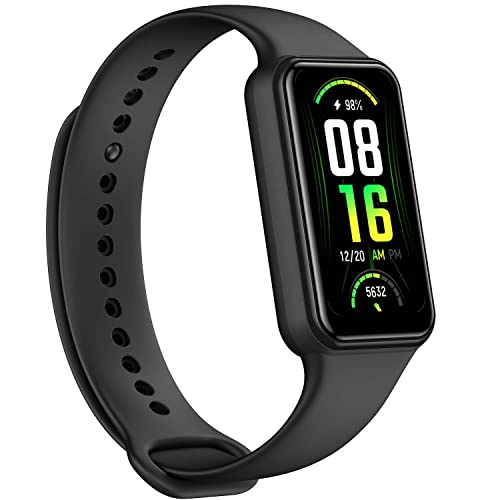
TL;DR: The Amazfit Band 7 delivers a 1.47‑inch AMOLED screen, up to 18 days of typical battery life (28 days in saver mode), and a full suite of health sensors for $44.99.
The standout spec is its battery endurance: a typical 18‑day life stretches to a notable 28 days when you enable battery‑saver mode, all powered by a 232 mAh cell and a charging time of about 120 minutes.
Compared with other trackers in this roundup, the Band 7’s 18‑day typical life sits between the Samsung Galaxy FIT 3’s up‑to‑14‑day claim and the Xiaomi Smart Band 9 Midnight’s up‑to‑21‑day claim. Its 232 mAh battery also exceeds the Samsung’s 208 mAh capacity while falling short of the Xiaomi 9 Active’s 300 mAh. At 28 g, it’s lighter than Samsung’s 36.8 g and far lighter than the Amzhero’s 82 g, though a few rivals such as the Xiaomi 9 Midnight tip the scales at just 15.8 g. The 1.47‑inch AMOLED panel is smaller than Samsung’s 1.6‑inch screen but matches the size of the Amzhero and Xiaomi 9 Active, and its 282 ppi density offers sharp readability.
Users consistently praise the long‑lasting battery and the vibrant, anti‑fingerprint tempered glass display, noting that the band stays comfortable on the wrist even during long workdays. Common complaints focus on the lack of built‑in GPS, which forces outdoor tracking to rely on a paired phone, and occasional hiccups with the companion app’s sync reliability. Reviewers also point out that the band’s length can feel a bit generous for smaller wrists, despite the adjustable strap.
Beyond the core specs, the Band 7 packs 120 sport modes, Alexa voice integration, a 5 ATM dust‑proof rating, and a 45‑second PAI health assessment that blends heart‑rate, SpO₂, and stress data. It also offers continuous heart‑rate monitoring, SpO₂ tracking, sleep and nap analysis, menstrual cycle logging, and vibration alerts, all managed through Android 7.0+ or iOS 12.0+ compatible apps.
Pros
Cons
Best for: Entry-level buyers or those on a tight budget
Avoid if: Reliability and user satisfaction are your top concerns
“Fitbit aesthetics for under $50”
“nice 1.47-inch HD AMOLED”
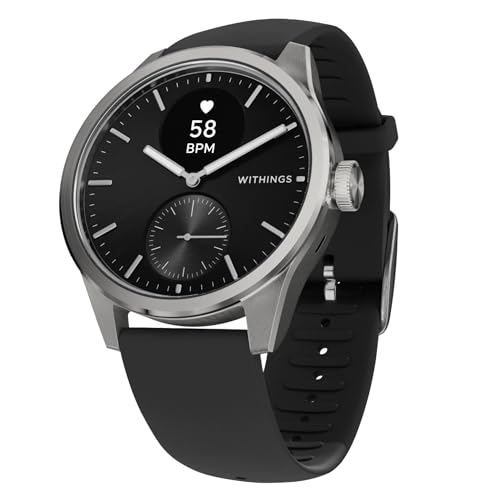
TL;DR: The Withings ScanWatch 2 blends a stainless‑steel analog look with a 30‑day battery and medical‑grade health sensors, but its 83 g weight and tiny OLED screen may feel bulky for some.
The standout spec is its 30‑day battery life, letting you wear the watch for a full month without recharging. It comes in a 42 mm stainless‑steel case protected by sapphire glass, and the hybrid design keeps analog hands visible while a 16 mm grayscale OLED shows health data.
Compared with the other eleven trackers, the ScanWatch 2 is heavier than the Garmin Instinct 3 (58 g) and the Garmin Forerunner 55 (37 g), but lighter than the Casio G‑Shock Power Trainer’s ultra‑light band‑only design. Its battery outlasts most band‑style options—lasting longer than the Xiaomi Smart Band 9 Pro (up to 21 days) and the Amazfit Bip 6 (up to 14 days)—yet it falls short of the Instinct 3’s 40‑day smartwatch mode and the Casio’s three‑year claim.
Reviewers consistently praise the month‑long battery as a major convenience for continuous health monitoring. Professionals note the premium stainless‑steel case and sapphire glass give the watch a “luxurious look and durability.” Users, however, point out that the 83 g weight with the band feels bulkier than earlier ScanWatch models, and the 0.63‑inch OLED screen offers only minimal on‑watch information, making quick glances less satisfying.
Beyond the battery and build, the ScanWatch 2 packs a suite of sensors: ECG, SpO₂, temperature, HRV, a 3‑axis accelerometer and altimeter. It tracks 24/7 heart rate, sleep stages, steps, calories, and auto‑detects activity. The device is rated 5 ATM for water resistance and runs on HealthSense OS, syncing with the Withings app on iOS 16+ and Android 9.0+.
Pros
Cons
Best for: Health‑focused professionals, athletes who need medical‑grade tracking, and anyone who values a month‑long battery without sacrificing a classic watch look.
Avoid if: You prioritize ultra‑light weight, a large bright display, or a budget‑friendly fitness tracker.
“Gadgetoid highlights the 52.6 g (42 mm without band) as "svelte" compared to the original ScanWatch's 83 g.”
TL;DR: The Amazfit Bip 6 offers a 1.97‑inch 2,000‑nit AMOLED screen, 14‑day battery and 140+ sport modes in a lightweight 0.09‑lb aluminum body, making it a solid mid‑range fitness tracker.
The standout feature is its peak brightness of up to 2,000 nits on a 1.97‑inch AMOLED display, which makes outdoor reading easy even in bright sunlight. Powered by a 340 mAh battery, the watch delivers up to 14 days of typical use, and the whole device weighs just 0.09 lb (40.8 g), so it feels barely there on the wrist.
Compared with the other eleven trackers, the Bip 6 is heavier than the Xiaomi Smart Band 8 Pro (≈0.05 lb) and the Samsung Galaxy FIT 3 (≈0.08 lb), and also tops the Casio G‑Shock Power Trainer (≈0.01 lb). Its battery life of 14 days falls short of the Xiaomi bands, which promise up to 21 days, but matches the Galaxy FIT 3 and is only a day shy of the Amzhero’s 15‑day claim. Brightness, however, is a clear advantage: the Bip 6’s 2,000‑nit peak outshines the 1,200‑nit displays listed for the Xiaomi models and the Samsung band.
Professional reviewers praise the ultra‑bright screen and the lightweight aluminum alloy frame, noting that the manufacturer states the heart‑rate and sleep tracking are accurate. Everyday users echo the battery longevity and comfort, though several mention occasional Bluetooth drops during calls. The watch runs Zepp OS, offers AI coaching, Bluetooth calling, a microphone, speaker, and vibration motor, and it's rated 5 ATM for water resistance, ready for swims and showers.
Pros
Cons
Best for: Most users looking for a well‑reviewed, reliable mainstream option
Avoid if: You need advanced features or professional‑grade performance
TL;DR: The Amzhero D26 offers a 15‑day battery life, 1.47‑inch touchscreen and basic health sensors for $48.96, making it a budget‑friendly entry‑level tracker that feels comfortable but leans on the GloryFit app.
The standout spec is its 15‑day battery life powered by a 2 Ah lithium‑polymer cell, and it tops up in about 120 minutes. At 82 g, the rectangular watch stays light on the wrist while still packing a 1.47‑inch HD bright color touchscreen.
Compared with the other 11 trackers in this roundup, the Amzhero sits in the middle of the battery‑life spectrum – longer than the Samsung Galaxy FIT 3’s “up to 14 days” but shorter than the Xiaomi Smart Band 9’s “up to 21 days.” It weighs noticeably more than the Samsung (36.8 g), Amazfit Band 7 (28 g) and Xiaomi Band 8 Pro (22.5 g), yet its size of 25.4 × 7.87 × 1.52 cm keeps it from feeling bulky.
User feedback repeatedly mentions the flat‑back design and the comfortable fit despite the 82 g weight. Professional reviewers praised the readability of the 1.47‑inch screen and the ease of pin‑charging. Most owners appreciate the 14 sport modes, 5 ATM water resistance and the suite of health sensors (heart‑rate, SpO₂, blood‑pressure, stress). Common complaints focus on the need for the GloryFit app to sync data, occasional synchronization hiccups, and the limited OS compatibility (Android 6.0+ / iOS 9+).
Pros
Cons
Best for: Entry‑level buyers or those on a tight budget
Avoid if: Reliability and user satisfaction are your top concerns
“Exactly as described”
“Great fitness tracker at excellent value”
TL;DR: The Xiaomi Smart Band 8 Pro offers a 1.74‑inch AMOLED screen at 1200 nits, 350 mAh battery lasting up to 21 days, and built‑in GNSS, all for $74.99.
The standout spec's 1.74‑inch AMOLED display can reach 1200 nits of brightness, making outdoor read‑outs easy even in bright sunlight. Powered by a 350 mAh battery, the band promises up to 21 days of use and recharges fully in just 75 minutes.
Compared with the other 11 trackers, the Band 8 Pro is lighter than the Amazfit Bip 6 and offers a longer battery life than that model’s typical 14‑day span. Its brightness falls short of the Bip 6’s 2000‑nit peak, but the price point sits in the same range. The Band 8 Pro also outlasts the Samsung Galaxy FIT 3, which tops out at 14 days.
Reviewers consistently praise the vivid screen and reliable five‑satellite GNSS (BeiDou, GPS, GLONASS, Galileo, QZSS) for outdoor runs. Users note the comfortable aluminum alloy frame with a high‑strength fiber polymer shell, and the linear‑motor haptic feedback feels precise. The only recurring gripe is that the box includes only a limited strap selection.
Pros
Cons
Best for: Most users looking for a well‑reviewed, reliable mainstream option
Avoid if: You need an ultra‑light band under 20 g or want a wide variety of straps straight out of the box
Breakdown
Xiaomi Smart Band 9 Midnight
Pros
Samsung Galaxy FIT 3 Gray
Pros
Cons
Casio G-Shock Power Trainer
Pros
Garmin Instinct 3
Pros
Cons
Based on scoring data and product specs
Personalized picks
Best Overall Pick
Xiaomi Smart Band 9 Midnight
Best OverallBest for: Most users looking for a well-reviewed, reliable mainstream option
Samsung Galaxy FIT 3 Gray
Best for: Budget-conscious buyers seeking a reliable entry-level option
$42.48-$9.82 vs winner
Skip Xiaomi Smart Band 8 Pro if…
You have limited desk space or need portability
The Xiaomi Smart Band 9 Midnight takes the top spot with its 21‑day battery life, a bright 1200‑nit AMOLED screen, and over 150 sports modes. Its 4.4‑star rating from 5,142 reviewers backs up the specs, and the quick 1‑hour magnetic charge keeps it ready for the next workout.
Samsung’s Galaxy FIT 3 in Gray lands as the runner‑up, ideal if you need fast charging and solid daily tracking. It reaches 14 days on a single charge and hits 50 % in just 30 minutes, while offering more than 100 exercise modes and a 4.4‑star rating from 2,931 users.
For tighter budgets, the Xiaomi Smart Band 9 Active Black at $29.99 delivers reliable health monitoring without breaking the bank. If you’re willing to invest for rugged durability and premium features, the Garmin Instinct 3 at $449.99 provides a sturdy design and top‑tier ratings.
Pick the Xiaomi Smart Band 9 Midnight now and enjoy long‑lasting tracking without compromise.
The Casio G‑Shock Power Trainer boasts a battery life of three years thanks to its CR2025 coin cell, while the Xiaomi Smart Band 9 Midnight lasts up to 21 days on a single charge. For users who want a set‑and‑forget device, the G‑Shock’s multi‑year endurance is unmatched.
No reviews yet — be the first to share your experience.
Please sign in to leave a review