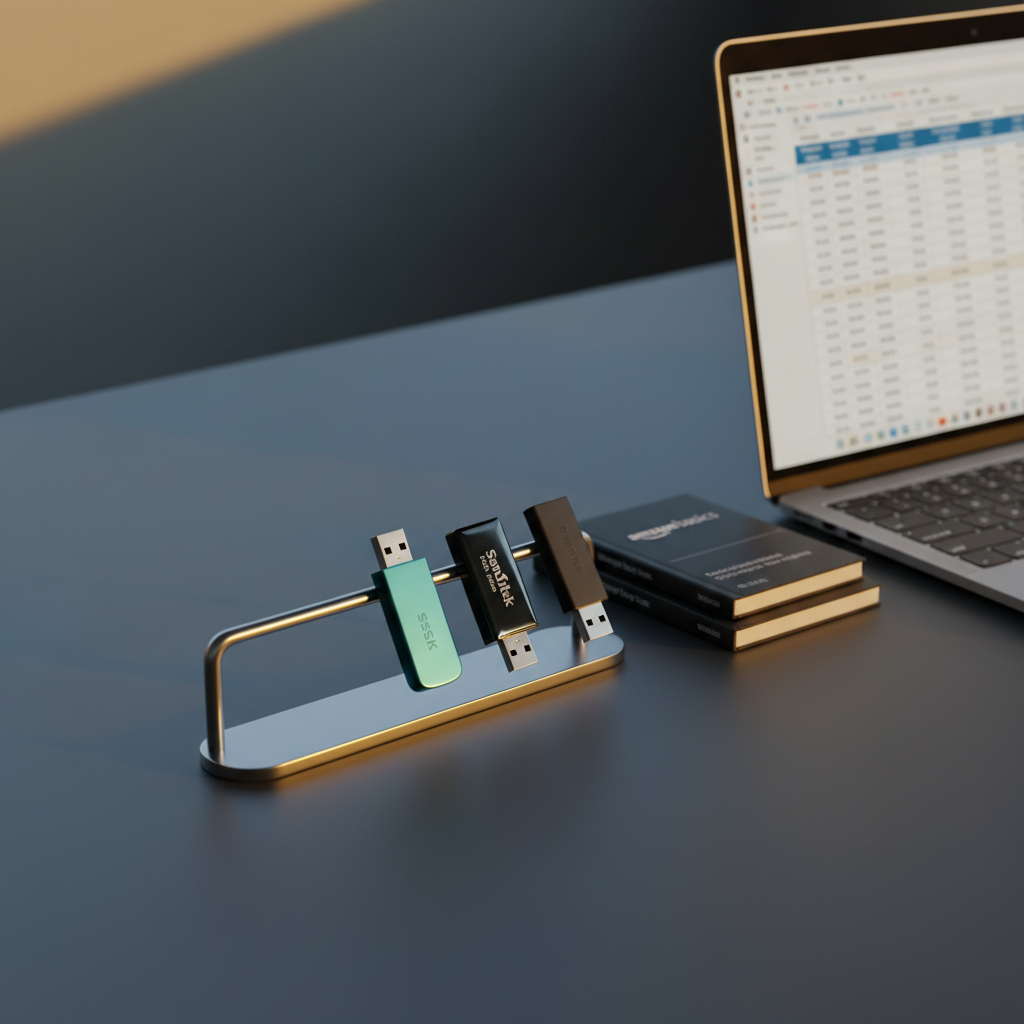
Finding a flash drive that works with both USB‑C laptops and older USB‑A PCs used to mean carrying adapters. This roundup lines up 14 dual‑connector sticks, and the SSK Dual USB‑C 128GB emerges as the strongest all‑rounder. It carries a 4.5‑star rating from 6,435 reviewers, costs $32.99, and pushes read speeds up to 550 MB/s, making it feel like a tiny SSD in a pocket‑sized zinc‑alloy shell.
If you’re watching your budget, the SanDisk Ultra Dual Drive Luxe (128 GB, $21.87, 4.3‑star rating) and Lexar D400 (128 GB, $24.99, 4.6‑star rating) give solid metal builds and read speeds around 130 MB/s. Mid‑range buyers can step up to the Amazon Basics Dual‑Port 512 GB for $78.84 with 4.6‑star reviews and 400 MB/s reads, or stay with the SSK 128 GB model we just highlighted. Premium seekers who need massive capacity or SSD‑class performance can look at the SSK 2 TB Dual USB‑C at $190.99 (4.5‑star) or the SanDisk Extreme PRO 512 GB at $129.99 (4.6‑star), both deliver up to 1000 MB/s transfers.
Below we break down each tier, compare read/write claims, and point out which models shine in durability or size, so you can match a drive to your workflow.

SSK Dual USB-C 128GB
Its 78.0 mm length balances a sizable 128 GB capacity with a slim 8.6 mm profile, delivering solid value and reliability for most users.

SanDisk Ultra Dual Drive Luxe 128GB
Ideal for budget‑conscious shoppers, this 128 GB drive costs $21.87—about $11 cheaper than the SSK option—while still offering a compact 44.5 mm length and strong brand confidence.
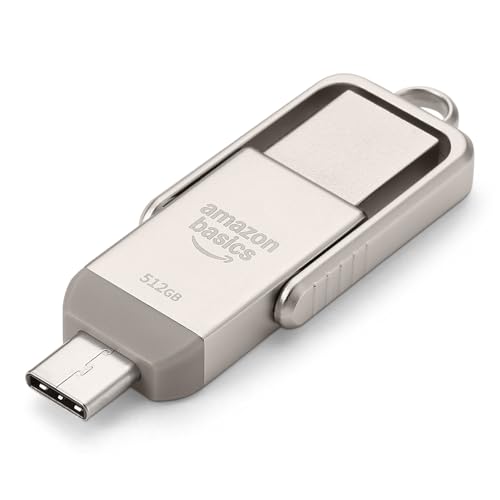
Amazon Basics Dual-Port 512GB
Stands out with a massive 512 GB capacity in a 17.0 mm‑deep, 71.9 mm‑high body, catering to users who need high‑volume storage despite a bulkier form factor.
Also considered
Score Analysis
Key score advantages vs. runner-up (SanDisk Ultra Dual)
Price Range
SSK Dual USB-C 128GB
$36.99
SanDisk Ultra Dual Drive Luxe 128GB
$21.87
Amazon Basics Dual-Port 512GB
$74.09

SSK 2TB Dual USB-C
$235.99

Lexar D400 128GB
$21.28

SanDisk Extreme PRO 512GB Dual
$132.99

Amazon Basics Dual-Port 256GB
-$0.01

Corsair Flash Voyager GTX 512GB
$124.99

SanDisk Phone Drive 256GB
$39.99
SanDisk Phone Drive 128GB
$25.99

Orico EB05 64GB
$15.99
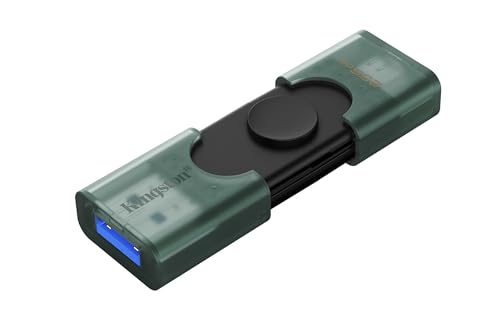
Kingston DataTraveler DuoG2 256GB
$31.99
Orico EB05 128GB
$19.99

Gnaseet Photo Stick 256GB
$22.99
Spec Comparison
TL;DR: The SSK Dual USB‑C 128 GB flash drive delivers SSD‑level 550 MB/s read and 520 MB/s write speeds in a sturdy metal case for $32.99, earning a 4.5‑star rating from over 6 000 users.
What really sets this stick apart is its advertised “up to 550 MB/s” read and “up to 520 MB/s” write performance, which rivals many external SSDs while staying in a tiny 8.6 mm‑high, 78.0 mm‑long, 20.5 mm‑wide form factor. At 128 GB of capacity, it gives you enough room for high‑resolution photos, 4K video clips, or a full project library without the bulk of a larger drive.
When you line it up against the other 13 dual‑connector drives, the speed gap is obvious. The SanDisk Phone Drive 128 GB tops out at 100 MB/s read, the Lexar D400 128 GB reaches 130 MB/s, and the SanDisk Ultra Dual Drive Luxe 128 GB offers up to 150 MB/s—each well below SSK’s 550 MB/s. Even the Kingston DataTraveler DuoG2, which advertises a 5 Gbps (≈625 MB/s) theoretical max, lists a 1 mm height and a 64 mm length, making it slimmer and lighter (10 g) than SSK’s 37 g, 78.0 mm‑long metal body. In short, SSK trades a bit of slimness for a premium metal shell and far higher real‑world transfer rates.
Users consistently praise the drive’s “blazing fast transfers” and “sturdy feel,” noting it’s especially handy for video editing on the go. Professional reviewers note the SSD‑level performance is unusual at this price point and commend the zinc‑alloy casing for durability. Reviews note the downside: the bulkier metal design can block neighboring USB ports, and write speed noticeably dips when the drive nears full capacity. The lack of a Lightning connector also means older iPhones need an adapter.
Pros
Cons
Best for: Most users looking for a well-reviewed, reliable mainstream option
Avoid if: You have limited desk space or need portability
“Fast transfer speeds”
“Great build quality”
TL;DR: The SanDisk Ultra Dual Drive Luxe packs 128 GB of storage into an all‑metal, swivel‑design flash drive with USB‑C and USB‑A connectors, delivering up to 150 MB/s read speed for $21.87.
This drive’s standout feature is its premium aluminum alloy housing and 180° swivel mechanism that protects both connectors. At 8.6 mm × 44.5 mm × 12.2 mm and weighing 18 g (0.03968320716 lb), it’s compact enough to slip onto a keyring while still feeling solid. The dual‑connector design lets you move files between a USB‑C smartphone, tablet, or Mac and any USB‑A PC without adapters, and the 5‑year limited warranty adds peace of mind.
Compared with the other 13 sticks in this roundup, the Ultra Dual Drive Luxe is a touch heavier than the Lexar D400 (which weighs 0.039242282636 lb) but noticeably lighter than the Orico EB05 (0.0661386786 lb). Its $21.87 price point lands it in the budget tier, making it more affordable than many metal‑cased competitors while still offering a full 128 GB capacity. Like most peers, it supports USB 3.0 and USB 2.0 for backward compatibility.
Users consistently praise the drive’s sturdy build and the convenience of the built‑in keyring hole for on‑the‑go photo backups. Professional reviewers highlight the premium metal feel and the seamless cross‑device workflow. The main criticisms focus on the write side, where real‑world speeds range from 22–68 MB/s, and on occasional heat buildup during large transfers. The drive also lacks hardware encryption, which business users may find limiting.
Pros
Cons
Best for: Mobile photographers and content creators who need fast read access and a rugged, dual‑connector drive for quick backups.
Avoid if: You require built‑in encryption or regularly perform heavy write‑intensive tasks such as video editing.
TL;DR: The Amazon Basics Dual‑Port 512 GB flash drive offers a metal rotating case, USB‑A & USB‑C connectors, up to 400 MB/s read speed and >460 GB usable space for $78.84.
The standout feature is its dual‑port design that lets you plug into either a USB‑A laptop or a USB‑C phone without adapters, all sit in a rotating metal shell. Amazon lists a nominal 512 GB capacity with more than 460 GB usable, and it advertises read speeds of up to 400 MB/s via a USB 3.2 Gen 1 interface.
Compared with the other 13 sticks in this roundup, the Amazon Basics unit carries the highest capacity—most competitors top out at 256 GB or 128 GB. Its 400 MB/s read rate outpaces the SanDisk Phone Drive’s 100 MB/s but sits below the SSK Dual USB‑C’s 550 MB/s and the Corsair Flash Voyager GTX’s 440 MB/s. At 18 g, it's heavier than the SanDisk Phone Drive (0.03 lb) and Kingston DataTraveler DuoG2 (0.022 lb) but considerably lighter than the Corsair model (0.114 lb). The package dimensions (17.0 mm depth, 71.9 mm height, 66.0 mm width) are bulkier than the ultra‑thin Kingston (1 mm height) yet comparable to the bulkier Corsair (77.98 mm height).
User feedback highlights the fast read performance and the sturdy metal housing as major positives, especially for photographers and videographers who need quick access to 4K footage. Professional reviewers also note the dual‑port convenience as a key advantage. However, the lack of a specified write speed leaves many users uncertain about large file transfers, and the drive’s incompatibility with Lightning ports means iPhone or iPad owners will need an extra adapter.
Pros
Cons
Best for: Buyers willing to invest in a proven, high‑quality option
Avoid if: You're on a tight budget or only need basic functionality
“25GB in 25 minutes”
“really good”
TL;DR: The SSK 2TB Dual USB‑C flash drive packs 2 TB of storage and up to 1000 MB/s read/write speeds into a zinc‑alloy body with dual USB‑C/USB‑A ports, but it carries a premium $190.99 price tag.
This drive’s headline spec is its 2 TB (2000 GB) advertised capacity paired with a maximum read and write speed of 1000 MB/s, advertised under a USB 3.2 Gen 2 dual‑port interface. The zinc‑alloy casing adds a keyring hole and a leather protective case, making it both rugged and portable. Power draw stays under <5 W, with typical consumption around ~4 W, and it supports S.M.A.R.T. and TRIM for SSD‑level reliability.
Compared with the other 13 sticks in this roundup, the SSK stands out for capacity: most peers top out at 512 GB, so the 2 TB size is a clear advantage. Its dual‑port design also beats single‑port rivals, eliminating the need for adapters. On the weight front, at 0.14991433816 lb it weighs more than the SanDisk Extreme PRO (0.05 lb) and the Amazon Basics model (18 g), but the robust build justifies the extra heft for many users.
Reviewers consistently praise the “flash‑drive on steroids” feel, noting the fast transfers and solid construction, especially for creators moving 4K ProRes footage from iPhone 15‑Pro series devices. Common complaints focus on the lack of an LED activity indicator, occasional warmth during long transfers, and Windows reports a usable capacity of ~1907 GB, which can confuse less‑technical users.
Additional technical notes include TLC NAND flash, exFAT pre‑formatting, and the ability to reformat to NTFS, APFS, or ext4. The included USB‑C and USB‑A cables, plus the double‑head protective cover, round out a feature set that feels more like a pocket SSD than a traditional thumb drive.
Pros
Cons
Best for: Buyers willing to invest in a proven, high‑quality option
Avoid if: You're shopping on a tight budget — it's priced at $190.99
“Fast transfer speeds”
“Great build quality”
TL;DR: The Lexar D400 128 GB offers a metal‑cased, dual USB‑A/C flash drive with 130 MB/s read speed, 5‑year warranty, and solid 4.6‑star rating, making it a reliable, portable solution for everyday transfers.
The standout feature is its dual‑connector design: a USB‑A male plug on one side and a USB‑C male plug on the other, both housed in a swivel‑cap metal case. It ships with 128 GB of storage and a manufacturer‑claimed maximum read speed of 130 MB/s. At 0.039242282636 pounds (17.35 g) it’s light enough for a keyring loop, yet the metal housing adds durability for on‑the‑go use.
Compared with other sticks in this roundup, the Lexar is slightly heavier than the SanDisk Phone Drive (0.03 pounds) but far taller than its 11 mm height, giving it a more substantial feel. Its 130 MB/s read speed outpaces the SanDisk Phone Drive’s up‑to‑100 MB/s, though it sits below the SanDisk Ultra Dual Drive Luxe’s up‑to‑150 MB/s. The Lexar’s 9.7 mm length makes it more compact than the Orico EB05’s 68.3 mm length, and its 16.2 mm width is narrower than the Orico’s 22.8 mm, positioning it as a fairly slim option among the peers.
Users consistently praise the dual‑connector convenience and the sturdy metal body, noting that the drive works straight out of the box with Android phones, Windows PCs, and macOS machines. Professional reviewers highlight the swivel mechanism as a protective feature that keeps the connectors safe. Common complaints focus on the USB‑A side feeling tight in some ports and the write speed being noticeably slower than the advertised read speed, with a few reports of occasional USB 2.0‑level performance.
The drive includes Lexar’s DataShield software, offering 256‑bit AES encryption, password protection, and secure deletion—all software‑based. It operates over USB 3.2 Gen 1 and supports temperatures from 0 °C to 50 °C during use, with storage tolerances down to –10 °C and up to 70 °C. The five‑year limited warranty adds peace of mind for frequent travelers.
Pros
Cons
Best for: Mobile professionals, students, and travelers who need a compact, durable dual‑connector flash drive with solid read performance and built‑in encryption.
Avoid if: You require Lightning compatibility, hardware‑based encryption, or consistently high write speeds for large video files.
“"coolest USB flash drive"”
“"is 2.0"”
TL;DR: The SanDisk Extreme PRO 512 GB Dual delivers up to 1000 MB/s read and 900 MB/s write in a rugged metal case, but its premium $129.99 price and modest random‑4K performance may limit its appeal to budget‑focused users.
The standout feature is its advertised sequential performance: up to 1000 MB/s read and 900 MB/s write, paired with a 512 GB capacity that fits comfortably on a keyring thanks to a swivel USB‑C/USB‑A design. Its full‑metal enclosure adds a premium feel and helps dissipate heat during heavy transfers.
Compared with the other 13 drives, this model is heavier than the 18 g Amazon Basics Dual‑Port 512 GB but lighter than the 52 g Corsair Flash Voyager GTX 512 GB. Its 10.7 mm height sits far shorter than the Corsair’s 77.98 mm height, making it more pocket‑friendly than some bulkier competitors. At $129.99 it occupies the higher‑end of the price spectrum, so it’s pricier than many of the lineup’s budget options.
Reviewers consistently praise the ability to zip large 4K video files between a USB‑C laptop and a legacy USB‑A desktop in seconds, and they value the built‑in 128‑bit AES hardware encryption for protecting sensitive footage. Professional reviewers note the drive’s metal body and dual‑interface convenience, while also pointing out that random 4K read speeds hover around 16 MB/s and write speeds around 63 MB/s, which feels modest under multitasking loads. Users also mention the swivel mechanism feels tight at first and that the drive can become warm during extended high‑speed transfers.
Technical details include an access time of 0.204 ms for reads and 0.292 ms for writes, random 4K 64‑thread read/write speeds of 141.45 MB/s and 165.19 MB/s respectively, and IOPS figures of 13,144 read and 8,361 write. The package ships with the SanDisk app and RescuePRO Deluxe for backup management.
Pros
Cons
Best for: Buyers willing to invest in a proven, high‑quality option
Avoid if: You're shopping on a tight budget — it's priced at $129.99
“Users appreciate the seamless transfer between MacBook (USB-C) and older Windows PCs (USB-A).”
“One user mentioned confusion about software setup for encryption, requiring a visit to SanDisk’s support site.”
TL;DR: The Amazon Basics Dual-Port 256 GB flash drive packs a metal swivel body, USB‑A & USB‑C connectors, >230 GB usable space and up to 400 MB/s read speed, earning a 4.6‑star rating from 1,399 reviewers.
This stick’s most eye‑catching feature is the rotating metal casing that lets you flip between a USB‑A and a USB‑C port without adapters. It carries a nominal 256 GB capacity, offers more than 230 GB usable space per the manufacturer, and advertises read speeds of up to 400 MB/s. The exFAT‑formatted drive works with Android devices that support OTG, macOS 10.10 and later, and Windows 7 and later.
Compared with the other 13 drives in this roundup, the Amazon Basics model is physically larger – its 71.9 mm length and 17.0 mm thickness exceed the 57 mm length and 12 mm thickness of the Orico EB05 64 GB, and it’s thicker than the SanDisk Ultra Dual Drive Luxe (8.6 mm). At 18.0 g it’s heavier than the 2.8 g Orico 64 GB but on par with the 18 g SanDisk Ultra. Capacity-wise it jumps to 256 GB, dwarfing the 64‑128 GB range of the listed peers, and its advertised read speed (up to 400 MB/s) outpaces the 150 MB/s ceiling of Orico and SanDisk models and the 130 MB/s of the Lexar D400.
Users consistently praise the convenience of having both ports on one stick and the sturdy metal feel. Professional reviewers note that the performance “rivals higher‑priced brands” and call the swivel design handy for hybrid workflows. The most common complaints target real‑world transfer speeds that often fall short of the 400 MB/s claim, a lack of built‑in hardware encryption, and a rotating mechanism that can feel a bit tight for some fingers.
Pros
Cons
Best for: Buyers who prioritize user satisfaction — rated 4.6/5 with 1,399 reviews
Avoid if: You need advanced security features or professional‑grade performance
“25GB in 25 minutes”
“really good”
TL;DR: The Corsair Flash Voyager GTX 512 GB offers SSD‑class 440 MB/s read/write speeds in a rugged zinc‑alloy case with dual USB‑A/C connectors, but its premium $124.99 price and metal heft set it apart.
This drive’s standout feature is its advertised 440 MB/s read and write speeds, matching the performance of many entry‑level SSDs while fitting in a pocket‑sized form factor. The rugged zinc‑alloy housing with aluminum accents adds durability, and the integrated LED lets you see activity at a glance. At 0.114 pounds (52 g) and dimensions of 77.98 mm × 10.67 mm × 26.41 mm, it feels solid without being overly bulky.
Compared with the other flash drives in this roundup, the Voyager GTX is heavier than the SanDisk Extreme PRO 512 GB, which weighs 0.05 pounds, and also heavier than the ultra‑light SanDisk Phone Drive at 0.03 pounds. It is lighter than the high‑capacity SSK 2TB dual‑USB‑C model that tips the scales at roughly 0.15 pounds. In terms of length, the Corsair’s 10.67 mm profile is shorter than the SanDisk Extreme PRO’s 80 mm length, yet longer than the ultra‑slim SSK Dual USB‑C 128 GB’s 78 mm length. The metal build also makes it bulkier than many plastic‑capped competitors, but its dual‑sided USB‑A and USB‑C connectors give it flexibility that single‑port drives lack.
Reviewers consistently highlight the lightning‑fast transfers of large files, praising the SSD‑like speed and the sturdy construction that survives rough handling. Professional reviewers note the inclusion of Corsair’s SSD Toolbox for health monitoring and firmware updates. The most common complaints revolve around a noticeable speed drop to around 30–40 MB/s when you plug the drive into a USB 2.0 port, and a slight warmth after extended transfers. Some users also mention that the metal body feels heavier than typical flash drives, which can be a consideration for those who prioritize featherweight portability.
Pros
Cons
Best for: Buyers willing to invest in a proven, high-quality option
Avoid if: You're shopping on a tight budget — it's priced at $124.99
TL;DR: The SanDisk Phone Drive 256 GB offers dual USB‑C/USB‑A connectivity, 256 GB of storage, and up to 100 MB/s read speed in a compact 11 mm‑high, 13.6 g stick for Android users.
What really stands out is the 256 GB capacity packed into a tiny 11 mm × 70 mm × 18 mm form factor, while the reversible USB‑C connector pairs with a standard USB‑A plug for seamless swapping between Android phones and legacy computers. The drive advertises a maximum read speed of 100 MB/s and an estimated write speed of 30–50 MB/s, giving you quick access to large photo libraries on the go.
Compared with the other 13 sticks in this roundup, the SanDisk is a bit heavier than the Kingston DataTraveler DuoG2, which weighs 10 g, but still lighter than the SSK Dual USB‑C 128 GB at 37 g. Its 11 mm height is far shorter than the Lexar D400’s 60.6 mm height, making it easier to slip into a pocket. However, its 100 MB/s read speed trails the SSK Dual’s 550 MB/s and the Lexar D400’s 130 MB/s, positioning it as a solid mid‑range option rather than a speed champion.
Users consistently praise the drive’s plug‑and‑play simplicity and the handy RescuePRO Deluxe recovery software that comes bundled. Professional reviewers note its reliable communication with Android OS and the confidence of a 2‑year limited warranty. The most common criticisms focus on the slower write performance, lack of built‑in encryption, and occasional hiccups with the companion Memory Zone app on newer Android releases. In practice, the drive shines for backing up photos and videos, but it isn’t designed for heavy video editing transfers.
Pros
Cons
Best for: Android smartphone owners who need a portable way to offload photos, videos, and files without relying on cloud storage.
Avoid if: You require high write speeds, iOS compatibility, or a tighter budget.
“Perfect for freeing up space on my Samsung Galaxy.”
“Love the keyring — I always have it with me.”
TL;DR: The SanDisk Phone Drive 128 GB offers dual USB‑C/USB‑A connectors, 128 GB of storage, and up to 100 MB/s read speed in a lightweight plastic body for $25.99.
This drive’s standout feature is its built‑in dual‑connector design—USB‑C for modern Android phones and USB‑A for legacy computers—paired with a solid 128 GB NAND flash capacity. It advertises read speeds of up to 100 MB/s and write speeds up to 80 MB/s, while weighing just 0.03 pounds (13.6 g) and measuring 11 mm × 70 mm × 18 mm, making it easy to slip onto a keyring.
Compared with other sticks in the roundup, the Phone Drive is lighter than the Lexar D400 (0.039 lb) and the SanDisk Ultra Dual Luxe (0.039 lb), but it trails their read speeds—Lexar reaches 130 MB/s and the Ultra Luxe up to 150 MB/s. Its 2‑year limited warranty is shorter than Lexar’s and Kingston’s 5‑year coverage. The drive is also bulkier than the Ultra Luxe’s 8.6 mm height, yet slimmer than the SSK Dual USB‑C’s 78 mm length. While Kingston lists a maximum transfer rate of 5 Gbps, the Phone Drive’s 100 MB/s read ceiling is modest in comparison.
Users consistently praise the ease of shuttling photos, videos, and apps between Android phones and PCs, especially thanks to the automatic backup feature that fires when the drive's plugged in and the SanDisk Memory Zone app's installed. Reviewers note the plastic construction feels less premium than metal alternatives, and the exposed connector end can collect dust. Many complain about the lack of built‑in encryption for handling sensitive files.
Technically, the drive supports USB 3.2 Gen 1 on the Type‑C side and backward‑compatible USB 2.0/3.0 on the Type‑A side, operating between 0 °C and 45 °C. It also bundles RescuePRO Deluxe for data recovery, adding a safety net for accidental deletions.
Pros
Cons
Best for: Android smartphone owners who want a simple way to expand storage and back up media on the go.
Avoid if: You need hardware encryption, a metal‑body design, or professional‑grade transfer speeds.
“Perfect for freeing up space on my Samsung Galaxy.”
“Love the keyring — I always have it with me.”
TL;DR: The Orico EB05 64GB offers a sleek metal body, dual USB‑C/USB‑A connectors, and up to 150 MB/s read speed at a budget‑friendly $13.99, making it a solid everyday carry.
What really stands out is the 64 GB capacity packed into a 57 mm × 14 mm × 12 mm, 2.8 g metal stick that supports both USB‑A and USB‑C via a 360° swivel cover. The drive advertises a 5 Gbps (625 MB/s theoretical) protocol speed, with a maximum read speed of 150 MB/s and write speed of 70 MB/s, and it works with Windows XP‑11, macOS, Linux, iPadOS and Android.
Compared with its peers, the EB05 64GB is noticeably lighter than the Orico EB05 128GB, which weighs about 30 g and measures 68.3 mm in length and 22.8 mm in width. It also beats the SanDisk Ultra Dual Drive Luxe in weight (the Luxe is 18 g) while offering the same 150 MB/s read speed. The Lexar D400 and Amazon Basics Dual‑Port sticks are both heavier (around 17 g) and bulkier, so the Orico stick feels the most pocket‑friendly of the lot.
Everyday users praise the drive’s rugged zinc‑alloy housing and the convenience of not needing a dongle for either connector type. Professional reviewers note the swivel mechanism protects the ports and the dual‑OTG support works on Android and iOS devices. Some users have reported the USB‑C side feels slower than the USB‑A side on certain hosts, and the drive can get warm during long transfers—issues that echo the “USB‑C performance can be slower” and “drive becomes warm” points from expert feedback.
Pros
Cons
Best for: Entry-level buyers or those on a tight budget
Avoid if: You need advanced features or professional‑grade performance
“Durable and professional feel”
“Fast transfer”
TL;DR: The Kingston DataTraveler DuoG2 packs 256 GB in a slim 1 mm‑high plastic stick with dual USB‑A/C connectors and a sliding cap, ideal for mixed‑device workflows.
What really stands out is the combination of 256 GB of storage and a USB 3.2 Gen 1 interface that tops out at 5 Gbps, all housed in a 1 mm‑high, 64 mm‑long, 21.2 mm‑wide plastic shell that weighs just 10 g. The sliding dual‑cap mechanism eliminates the annoyance of lost caps while protecting both connectors.
Compared with the other 13 drives in this roundup, Kingston offers the largest capacity – double the 128 GB found in the SSK Dual USB‑C, Lexar D400, and SanDisk Phone Drive 128 GB models. At 0.022 lb (10 g) it’s noticeably lighter than the SSK’s 0.082 lb (37 g) and the SanDisk Phone Drive 256 GB’s 0.03 lb (13.6 g), making it easy to slip into a pocket or laptop bag. While several rivals list explicit read speeds up to 550 MB/s, Kingston only advertises the 5 Gbps interface speed, and user feedback often notes slower real‑world transfers.
Professional reviewers highlight the convenience of having both USB‑A and USB‑C on the same drive, calling the sliding cap “a major usability upgrade.” Everyday users echo this, praising the hassle‑free plug‑and‑play experience across Windows 11, macOS 13.7.6+, Linux, and Chrome OS. The main criticisms focus on the lack of hardware encryption, the plastic housing feeling less rugged than metal‑cased competitors, and occasional complaints about the cap becoming stiff after extended use.
Additional technical details include a five‑year warranty, operation between 0 °C and 60 °C, and storage tolerance from –20 °C to 85 °C. The drive’s USB 3.2 Gen 1 interface ensures compatibility with older USB 2.0/3.0 ports, while the dual‑connector design removes the need for separate adapters.
Pros
Cons
Best for: Most users seeking a balanced, mainstream option
Avoid if: You’ve limited desk space or need portability
TL;DR: The Orico EB05 128 GB flash drive packs dual USB‑C/USB‑A connectors, an aluminum alloy body and up to 150 MB/s read speed into a compact 68.3 mm stick for $17.99.
What really stands out is the dual‑head design: a USB‑A 3.0 port and a USB‑C 3.2 Gen 1 port share a single retractable connector, so you can move files between laptops, smartphones and tablets without an adapter. The drive holds 128 GB of data and advertises read speeds of up to 150 MB/s, while the manufacturer estimates write speeds between 100 MB/s and 130 MB/s. Its 30‑gram, aluminum‑alloy shell and 360° rotating protective cap give it a premium feel despite the modest price.
Compared with the other 13 sticks in this roundup, the EB05 is heavier than the SanDisk Ultra Dual Drive Luxe (0.03968 lb) and the Kingston DataTraveler DuoG2 (0.0220 lb), but it’s still under a tenth of a pound. At 68.3 mm long it exceeds the SanDisk Ultra’s 44.5 mm length, while its 22.8 mm width is broader than the SanDisk’s 12.2 mm. The capacity matches the Lexar D400’s 128 GB, yet the EB05’s read speed of 150 MB/s is faster than the Lexar’s listed 130 MB/s.
Users consistently praise the drive’s durability and the convenience of having both connectors on one stick. Reviewers note the plug‑and‑play setup works across Windows, macOS, Linux, Android and iPadOS without drivers. However, several owners mention the write speed feels slower than the advertised maximum, and a few report the rotating cap can loosen after frequent use. The lanyard hole exists, but they don’t supply a keyring, which some portable‑focused buyers find inconvenient.
From a technical standpoint, the EB05 uses the USB 3.2 Gen 1 transfer protocol (formerly USB 3.0) and supports OTG, making it ready for modern smartphones and dashcams. Its aluminum housing helps with thermal management during long transfers, professional reviewers highlight the build as solid for a budget‑tier device.
Pros
Cons
Best for: Entry-level buyers or those on a tight budget
Avoid if: You need advanced features or professional‑grade performance
“Durable and professional feel”
“Fast transfer”
TL;DR: The Gnaseet Photo Stick offers 256 GB of storage in a 4‑in‑1 design with USB‑A, USB‑C, Lightning and Micro‑USB, but its slower non‑USB‑3.0 speeds and fragile connectors make it a budget‑focused option.
The standout feature is its 256 GB capacity combined with four interchangeable connectors—USB 3.0 Type‑A, USB‑C, Lightning and Micro‑USB—so you can plug directly into phones, tablets, PCs and even cars.
Compared with the other 13 sticks in this roundup, the Gnaseet drive provides double the storage of the 128 GB models such as the SanDisk Ultra Dual Drive Luxe, Lexar D400 and Orico EB05. However, its USB 3.0 read speed of up to 80 MB/s trails the 150 MB/s that several competitors advertise, and its write speed falls short of the 80 MB/s that the SanDisk Phone Drive offers. Pricing's in the same ballpark as the SanDisk Ultra Dual Drive Luxe, yet it delivers far more capacity for a similar cost.
Users appreciate the convenience of the 4‑in‑1 design and the one‑click photo backup that the LUV‑Share and EASYFLASH PRO apps provide. Professional reviewers note the versatile port selection as a clear advantage, but both reviewers and everyday buyers flag the Lightning and Micro‑USB connectors as fragile after repeated use. The drive’s average rating of 4.2 out of 5 reflects generally positive sentiment, though the 4.1/5 star rating and reports of slower speeds on secondary ports keep some users cautious.
Additional technical details include an iOS minimum version requirement of 8.2 and the need for OTG support on Android devices. Security's handled through password protection and optional Touch ID encryption via the companion app, adding a layer of privacy for your photos and videos.
Pros
Cons
Best for: Entry-level buyers or those on a tight budget
Avoid if: Reliability and user satisfaction are your top concerns
“game‑changer for travelers and photographers”
“One‑click backup feature quickly frees up phone storage”
Breakdown
SSK Dual USB-C 128GB
Pros
SanDisk Ultra Dual Drive Luxe 128GB
Pros
Amazon Basics Dual-Port 512GB
Pros
SSK 2TB Dual USB-C
Pros
Cons
Based on scoring data and product specs
Personalized picks
Best Overall Pick
SSK Dual USB-C 128GB
Best Mid-Range PickBest for: Most users looking for a well-reviewed, reliable mainstream option
SanDisk Ultra Dual Drive Luxe 128GB
Best for: Budget-conscious buyers seeking a reliable entry-level option
$21.87-$15.12 vs winner
Skip Gnaseet Photo Stick 256GB if…
Reliability and user satisfaction are your top concerns
SSK’s Dual USB‑C 128 GB flash drive takes the top spot thanks to its fast performance and sturdy build. It clocks read speeds of up to 550 MB/s and write speeds of up to 520 MB/s, while the USB‑A side runs on USB 3.2 Gen 2. The drive also carries a 4.5‑star rating from 6,435 reviews and a metal zinc‑alloy casing that’s dust‑, shock‑ and waterproof.
The runner‑up, SanDisk Ultra Dual Drive Luxe 128 GB, shines when you need a compact, everyday‑carry solution. Priced at $21.87, it’s lighter at 0.03968320716 pounds and slimmer (44.5 mm long, 8.6 mm high) with an aluminum‑alloy body and a 180° swivel keyring hole. Its 4.3‑star rating from 24,491 reviewers and read speed of up to 150 MB/s make it a solid, budget‑friendly choice for quick photo backups on the go.
For shoppers on a tighter budget, the Orico EB05 64 GB model stands out as the most affordable option at $13.99, offering basic dual‑port functionality for occasional transfers. If you’re chasing premium capacity, the SSK 2TB Dual USB‑C delivers massive storage at $190.99, pairing the same rugged metal design with the high‑speed specs of the 128 GB winner.
Pick the SSK Dual USB‑C 128 GB for the best mix of speed, durability, and value.
The SSK Dual USB‑C 128 GB stands out with its zinc‑alloy metal casing, dustproof, shockproof and waterproof ratings, making it ideal for harsh environments. Its 37 g weight and protective caps also help keep the drive safe while on the move.
Please sign in to leave a review
No reviews yet. Be the first to review!
