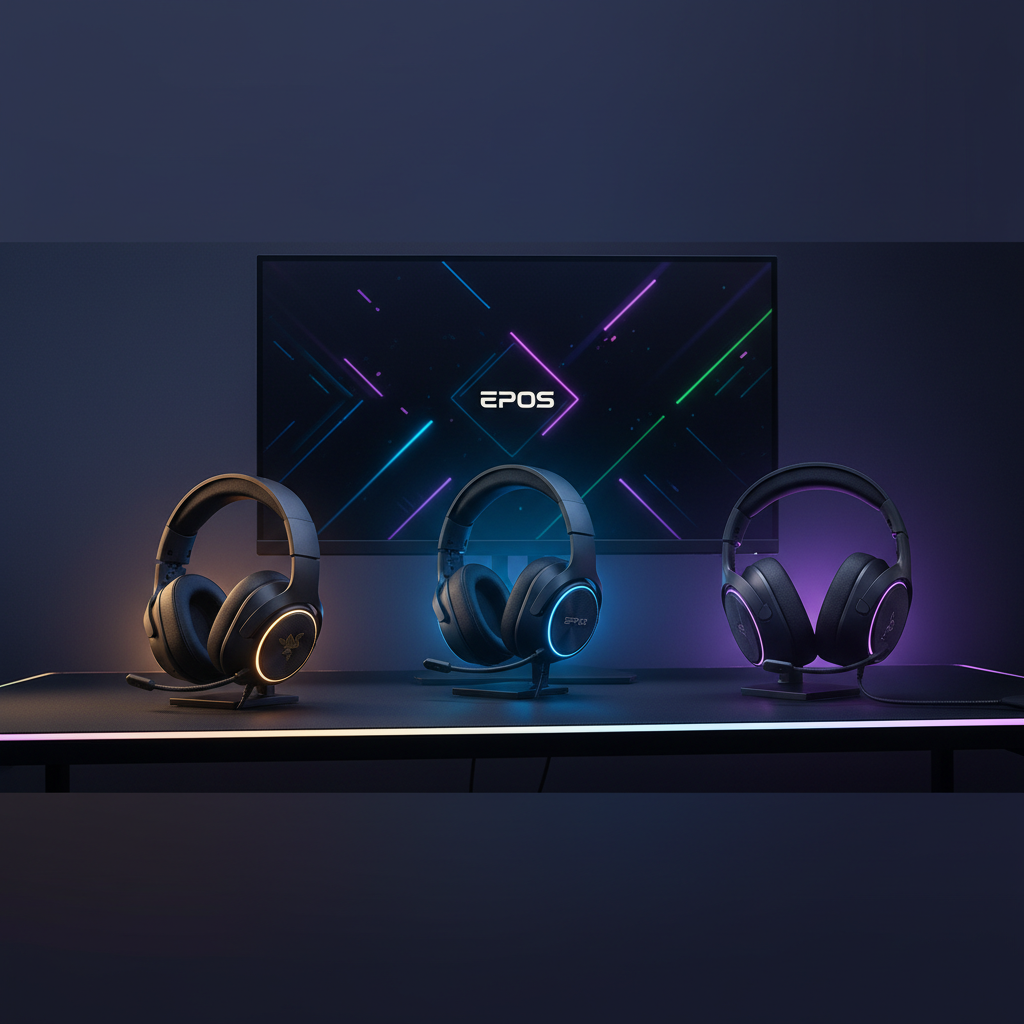
If you need a headset that lets you pull the mic out for a quick chat or a quiet study session, we’ve lined up 12 detachable‑mic gaming headsets. The list spans everything from the $32.98 Redragon H350, which holds a 4.3/5 rating from 716 reviewers, up to the $149.00 EPOS H6Pro that earned a 4.4/5 rating from 2,178 voices. Even the Razer Kraken V3 X packs a 40 mm driver and a 4.3/5 score from 2,667 reviews for just $44.99, showing that price isn’t the only factor affecting quality.
To make shopping easier, we grouped the models into three price tiers that match the market. The budget bucket contains the Redragon H350, Fifine H9, Razer Kraken V3 X and Redragon H510 PRO, all under $65. Mid‑range options like the Redragon H510 Zeus‑X ($63.99) and HyperX Cloud III Black ($69.00) add larger 53 mm drivers and extra comfort features. Premium contenders – Razer BlackShark V3 X, Cooler Master MH‑650, MH‑670 and EPOS H6Pro – sit between $100 and $150 and bring 42–53 mm drivers, low‑latency wireless or high‑fidelity wired designs.
Below we break down each headset’s strengths, weaknesses and ideal use‑cases so you can pick the detachable‑mic model that fits your setup.

Razer Kraken V3 X
40 mm drivers give clear, immersive sound that outshines many entry‑level headsets, supporting solid gaming audio without breaking the bank.

EPOS H6Pro
Best for dedicated PC or console gamers who demand premium sound and durability, even though it costs about $104 more than the $44.99 Kraken V3 X.

Fifine H9
Stands out with 50 mm drivers and 32 Ω impedance, delivering a fuller sound signature that the other two don’t emphasize, while staying at $37.99.
Also considered
Score Analysis
Key score advantages vs. runner-up (EPOS H6Pro)
Price Range
Razer Kraken V3 X
$44.99
EPOS H6Pro
$149.00
Fifine H9
$37.99

Redragon H510 PRO
$62.97

HyperX Cloud III Black
$69.99

Cooler Master MH-670
$132.86

Razer BlackShark V3 X
$74.99

Cooler Master MH-650
$99.99

Redragon H510 Zeus-X
$63.99

Redragon H350
$34.99
Skullcandy SLYR
$37.85

Audeze Maxwell
$289.97
Spec Comparison
TL;DR: The Razer Kraken V3 X delivers a lightweight 0.62‑lb build, 40 mm TriForce drivers, a detachable HyperClear mic and 7.1 virtual surround for $44.99, though its RGB lighting and surround work only on Windows.
This headset’s standout feature is the detachable Razer HyperClear cardioid microphone, which users praise for clear voice transmission. Coupled with 40 mm TriForce dynamic drivers and a sensitivity of 103 dB SPL ±3 dB/mW, it offers balanced mids and punchy bass while staying under 300 g (281 g). The chassis weighs 0.62 pounds, making marathon sessions comfortable, and the synthetic‑leather headband pads for added support.
Compared with its peers, the Kraken V3 X is lighter than the Fifine H9 (0.73 lb) but a touch heavier than the Skullcandy S6SYY‑P003 (0.58 lb). Its 40 mm drivers are smaller than the Fifine’s 50 mm and the Redragon models’ 53 mm units, which can affect perceived bass depth. The 1300 mm USB‑A cable is shorter than the Fifine’s 3150 mm cable, keeping your desk tidy but offering less reach. All three competitors list a 32 Ω impedance, matching the Kraken’s 32 Ω rating, so any standard PC audio output will drive them equally well.
Reviewers repeatedly highlight the headset’s comfort thanks to hybrid fabric and memory‑foam ear cushions, and they love the 16.8 million‑color Razer Chroma RGB that syncs with other Razer gear. Professional reviewers note the clear mic performance and the tactile volume wheel on the left earcup. Common complaints focus on the lack of an ear‑cup swivel, the Windows‑only 7.1 virtual surround, and the absence of THX Spatial Audio or active noise cancellation. The headset provides passive noise isolation, but it doesn’t block louder environments.
Pros
Cons
Best for: Budget-conscious buyers seeking a reliable entry-level option
Avoid if: You want the best value‑per‑dollar in its price range
TL;DR: The EPOS H6Pro delivers closed‑back, high‑fidelity sound with a lightweight 322 g frame, detachable mic and solid comfort, but its analog‑only connection and modest max volume may limit very loud or wireless setups.
The headset’s most distinctive hardware is its modular design: a detachable, bidirectional boom mic that lifts to mute, plus interchangeable cables and ear cushions. At 322 g the unit feels light on the head, while the 42 mm dynamic drivers promise clear mids and treble, and the 0.7% THD at 1 kHz suggests low distortion.
Compared with the other eleven contenders, the H6Pro sits in the middle of the weight range—lighter than the Redragon H510 Zeus‑X (over 2 lb) but a touch heavier than the Cooler Master MH‑650 (about 0.62 lb). Its driver diameter of 42 mm is smaller than the 50‑53 mm drivers found on most peers, and its 28 Ω impedance is lower than the 32‑64 Ω typical of the competition, making it easy to drive from consoles and PCs. Cable lengths of 1.5 m for consoles and 2 m for PCs match the Cooler Master MH‑670’s 1.5 m audio lead and exceed the HyperX Cloud III’s 1.2 m cable, giving you enough slack for most gaming stations.
Professional reviewers repeatedly highlight the headset’s comfort—TechGearLab gave it a 9/10 for wearability—and its clear, accurate sound signature. Users echo this praise, noting the memory‑foam earpads and variable‑softness headband reduce fatigue during marathon sessions. However, several reviewers point out that the maximum volume feels capped in noisy rooms, and some users report the EPOS Gaming Suite software is unstable, which can be a nuisance for those who rely on its binaural surround features.
Additional technical notes: the closed‑back acoustic design helps isolate external noise, the 28 Ω impedance works well with most gaming consoles’ built‑in amps, and the headset offers both dual 3.5 mm and single TRRS connectors for flexible mic/audio routing. The mic’s frequency response spans 10–10,000 Hz with a sensitivity of –35 dBV/Pa at 1 kHz, delivering clear voice pickup for team chat.
Pros
Cons
Best for: Buyers willing to invest in a proven, high‑quality option
Avoid if: You're on a tight budget or only need basic functionality
“awesome but "bogged down by endless bugs."”
TL;DR: The Fifine H9 offers a 50 mm driver, 32 Ω impedance and detachable omnidirectional mic at a budget‑friendly $37.99, making it a solid multi‑platform choice for casual gamers.
The headset’s standout spec is its 50 mm driver paired with a 32 Ω ±15% impedance, delivering clear audio that many reviewers describe as “consistent across PC, PS5, Switch and tablets.” It also includes virtual 7.1 surround sound, but only when you plug in via the USB connection.
Compared with the other eleven entries, the H9 sits in the middle of the weight range – it’s heavier than the Skullcandy S6SYY‑P003 (0.5842249943Pounds) but far lighter than the Redragon H350 (2.20462262pounds). Its driver size matches the Skullcandy and Redragon H350 at 50 mm, while the Razer Kraken V3 X uses a smaller 40 mm unit. Both the Skullcandy and the Razer Kraken V3 X share the same 32 Ω impedance, so the H9 works well with typical gaming rigs. The H9’s 10 ft (3.15 m) cable is longer than the Skullcandy’s 5 ft AUX lead and the Razer Kraken’s 1300 mm cable, giving you more reach for larger setups.
User sentiment repeatedly praises the comfort of the soft leatherette ear cushions and the flexibility of the self‑stretching headband. Professional reviewers also note the clear mic performance that filters keyboard noise, and the sturdy USB control box with a volume wheel and 7.1 toggle. However, several users point out the lack of bass‑enhancement presets and the absence of software‑based EQ controls, which limits fine‑tuning options.
Pros
Cons
Best for: Gamers who need a versatile, multi‑platform headset without breaking the bank.
Avoid if: You require software EQ, bass‑boost options, or the lightest possible headset for travel.
“One user spent 30 minutes untangling the cable, which re-tangled quickly.”
TL;DR: The Redragon H510 PRO offers 53 mm drivers, 3‑mode connectivity and a detachable mic for $62.98, earning 4.3‑star ratings from over 5,000 users.
At the heart of the H510 PRO is a pair of 53 mm drivers delivering 110 dB (±3 dB) sensitivity and a virtual 7.1 surround sound experience. The headset switches between 2.4 GHz wireless, Bluetooth 5.0, and USB‑C wired modes, and it ships with a detachable omnidirectional noise‑cancelling microphone, memory‑foam ear pads and RGB lighting.
Compared with its peers, the H510 PRO is lighter than the Redragon H510 Zeus‑X (2.2046 lb) but heavier than the HyperX Cloud III (0.679 lb). Its driver size matches the HyperX Cloud III’s 53 mm units, while the Razer BlackShark V3 X sports smaller 50 mm drivers. Battery life sits at 20 hours, which is modest compared with the BlackShark V3 X’s 70‑hour claim, and its Bluetooth 5.0 trails the BlackShark’s Bluetooth 5.3.
Reviewers consistently praise the headset’s immersive audio and reliable wireless link, noting that the large drivers and 7.1 software give a wide soundstage. Users also like the affordable price point and the convenience of on‑ear buttons for volume, mic mute and mode switching. On the downside, several owners report ear‑pad discomfort after long gaming sessions, occasional Bluetooth pairing hiccups, and a plastic feel that seems less premium. The RGB lighting offers only a fixed pattern, limiting customization.
Pros
Cons
Best for: Most users looking for a well‑reviewed, reliable mainstream option
Avoid if: You need premium build quality, active noise cancellation, or marathon‑level comfort
“My ears hurt, but the headset with the best quality of this price”
TL;DR: The HyperX Cloud III delivers 53 mm angled drivers, a 64 Ω impedance and a 100 dB SPL/mW (1 kHz) sensitivity in a lightweight, metal‑framed headset that earns praise for comfort and mic clarity, all for $69.
What really sets the Cloud III apart is its 53 mm angled drivers paired with a 64 Ω impedance and a sensitivity of 100 dB SPL/mW at 1 kHz, giving you clear, detailed audio across the 10 Hz‑21 kHz frequency range. The headset weighs just 0.67902376696 pounds (320 g with the mic) and sits only 7.48 in tall, making it comfortable for long sessions.
Compared with the other eleven contenders, the Cloud III sits in the mid‑range price tier and feels lighter than the Redragon H510 Zeus‑X (over 2 pounds) while still heavier than the Razer Kraken V3 X (about 0.62 pounds). Its full metal frame (aluminum and steel) offers more durability than many plastic‑based rivals, and the included detachable microphone adds flexibility that some wired competitors lack.
Reviewers consistently highlight the plush HyperX signature memory‑foam ear cushions and the studio‑like, noise‑cancelling 10 mm microphone as major wins. Professional reviewers note the angled driver design improves spatial awareness for competitive play, and the lifetime activation of DTS Headphone:X adds value for PC gamers. The most common complaint is the non‑detachable headset cable, which limits portability, and a few users find the neutral sound tuning less exciting for music or movies.
Beyond the drivers, the Cloud III supports 16‑bit and 24‑bit audio, three sampling rates up to 96 kHz, and a USB‑C/USB‑A connection (USB 2.0). The headset also features a uni‑directional, noise‑cancelling electret condenser mic with an LED mute indicator, and it comes with a USB‑to‑3.5 mm cable and a USB‑C to USB‑A adapter for cross‑platform use.
Pros
Cons
Best for: Most users looking for a well‑reviewed, reliable mainstream option
Avoid if: You need advanced features or professional‑grade performance
“Best HyperX build yet”
“Mic quality is incredible”
TL;DR: The Cooler Master MH‑670 delivers low‑latency 2.4 GHz wireless audio with 1 ms latency, virtual 7.1 surround (wireless only), a 50 mm driver, and a detachable mic, all packaged in a premium steel‑reinforced frame for about 0.76 lb.
What really sets the MH‑670 apart is its 2.4 GHz RF wireless mode that promises just 1 ms of latency, making it one of the fastest wireless gaming headsets you can buy. It also offers virtual 7.1 surround sound, but only when you’re on wireless, and it houses a 50 mm dynamic driver with a 32 Ω impedance, which matches the driver size of the EPOS H6Pro and Razer BlackShark V3 X.
In a lineup that includes the EPOS H6Pro, Cooler Master MH‑650, Razer BlackShark V3 X, HyperX Cloud III, and two Redragon models, the MH‑670 is a bit heavier than the EPOS H6Pro (which weighs about 0.71 lb) but considerably lighter than the Redragon H510 Zeus‑X (over 2 lb). Its 1.5 m audio cable is shorter than the 2 m cable found on the EPOS H6Pro’s PC configuration, while the charging cable is 1.2 m, matching many competitors. The headset’s driver diameter and 32 Ω impedance are identical to the MH‑650, and its overall dimensions (191.5 mm × 192 mm × 85.5 mm) sit between the compact Razer BlackShark V3 X and the taller HyperX Cloud III.
Reviewers consistently praise the MH‑670’s solid build – a steel‑reinforced headband paired with PU‑leather cushions – and its strong bass response, which many attribute to the tight air seal of the ear cups. Professional outlets like Tom’s Hardware note the “premium build and dual connectivity” as major strengths. On the downside, reviewers describe the detachable boom mic as average and prone to picking up background noise, and the PU‑leather pads can become warm after long sessions. The headset also relies on a micro‑USB charging port rather than the newer USB‑C standard.
Technical details round out the picture: the microphone’s sensitivity is –40 dB ± 3 dB at 1 kHz with a signal‑to‑noise ratio of ≥50 dB, and the headphones can handle up to 150 mW of input power. The unit weighs 0.76390173783 lb (about 346.5 g without cable) and ships with a faux‑leather carrying case, a 2.4 GHz dongle, and both wired (3.5 mm) and Bluetooth options.
Pros
Cons
Best for: PC and hybrid gamers who switch between PC, Switch, and mobile devices and want low‑latency wireless with virtual surround sound.
Avoid if: You’re a console‑only gamer needing full 7.1 on Xbox/PlayStation, or you need a budget‑friendly headset.
TL;DR: The Razer BlackShark V3 X delivers 70 hours of wireless play, ultra‑low 10 ms latency and THX Spatial Audio 7.1.4 in a lightweight 270 g package, but its price sits at $74.99.
The headset’s standout spec is its 70‑hour 2.4 GHz wireless battery life, paired with a latency as low as 10 ms—features that professional reviewers flag as “competitive‑gaming grade.” Its 50 mm TriForce Titanium drivers cover a 12 Hz‑28 kHz frequency range and push 106 dB sensitivity, giving a clear, positional soundstage for FPS titles.
At 270 g, the BlackShark V3 X is lighter than the HyperX Cloud III’s 320 g and considerably lighter than the Redragon H510 Zeus‑X, which weighs over 2 pounds. Its ≈32 Ω impedance matches the Cooler Master MH‑650 and Kraken V3 X, making it easier to drive than the 64 Ω models from HyperX and Redragon. Battery longevity also outpaces the Redragon H510 PRO’s 20‑hour claim, while Bluetooth 5.3 tops the 5.0 version found on that same Redragon model.
Users repeatedly praise the 70‑hour battery and the convenience of simultaneous 2.4 GHz gaming plus Bluetooth audio, noting the detachable HyperClear mic stays clear in most chats. However, many mention that the treble can feel sharp out of the box and that the mic picks up some sibilance, especially on noisy keyboards. Professional reviewers also point out the lack of active noise cancellation compared with higher‑end Razer models.
Pros
Cons
Best for: Most users seeking a balanced, mainstream option
Avoid if: You're shopping on a tight budget — it's priced at $74.99
TL;DR: The Cooler Master MH‑650 delivers 50 mm neodymium drivers, virtual 7.1 surround and RGB lighting at $99.99, but its mic and software quirks may bother voice‑chat heavy gamers.
The headset’s standout spec is its 50 mm dynamic neodymium drivers paired with a sensitivity of 107 dB ±3 dB measured at 1 kHz, promising clear mids and punchy bass. It adds software‑enabled virtual 7.1 surround and a single‑zone RGB strip, while the detachable 2.2 m USB‑A cable keeps the setup tidy. At 0.62170357884 lb the unit feels light enough for long sessions, and the mesh‑fabric ear cushions help keep heat down.
Compared with other contenders, the MH‑650 is heavier than the Razer BlackShark V3 X (270 g) and a touch heavier than the HyperX Cloud III (≈308 g), but it’s far lighter than the Redragon H510 Zeus‑X, which tips the scales at over 2 lb. Its dimensions match the Cooler Master MH‑670, so you won’t notice a size jump if you’ve used that model. The EPOS H6Pro sits in a similar weight range, while the Razer and HyperX models are a bit more portable.
Everyday users praise the headset’s comfortable fit, strong bass response, and immersive virtual surround, especially for casual PC or console gaming. Professional reviewers note the “crisp audio with clear mids/highs” and the sturdy steel‑reinforced headband. The most common complaints focus on the omnidirectional boom mic, which many describe as muffled, and a persistent hissing noise at low volumes. Additionally, users report that the Cooler Master Plus RGB software forgets custom lighting presets.
From a technical standpoint, the MH‑650 presents a 32 Ω impedance and a maximum input power of 80 mW, making it easy to drive from most gaming rigs and consoles. The detachable microphone offers a –40 dB ±3 dB sensitivity and ≥ 50 dB signal‑to‑noise ratio, though real‑world use suggests it falls short of expectations. Weighing 322.5 g with the cable and 282 g without, the headset balances durability with portability, and the 2‑year warranty adds peace of mind.
Pros
Cons
Best for: Casual to mid‑tier PC or console gamers who value immersive audio and RGB aesthetics over high‑end voice‑chat performance.
Avoid if: You need a premium microphone for streaming, require flawless RGB customization, or are an audiophile seeking studio‑grade sound.
TL;DR: The Redragon H510 Zeus‑X offers 53 mm drivers, virtual 7.1 USB surround and a detachable noise‑cancelling mic for $63.99, making it a solid mid‑range choice for budget‑focused gamers.
The headset’s most eye‑catching spec is its 53 mm dynamic drivers paired with a sensitivity of 110 dB ±3 dB (measured at 1 kHz) and an impedance of 64 Ω ±15 % at 1 kHz. Those numbers give it a full‑range frequency response of 20 Hz‑20 kHz, which reviewers say translates into “rich bass and clear mids/highs.” The overall package weighs 2.20462262 pounds and measures 193 mm tall, 640 mm long and 640 mm wide, giving it a sturdy feel without being overly bulky.
Compared with the other 11 headsets in this roundup, the Zeus‑X shares the same 53 mm driver size as the HyperX Cloud III and the Redragon H510 PRO, but it is heavier than the HyperX (which is about 0.68 pounds) and lighter than the Redragon PRO (about 1.52 pounds). Unlike the Razer BlackShark V3 X and Razer Kraken V3 X, which both list lower impedances around 32 Ω, the Zeus‑X’s 64 Ω rating suggests it pairs best with a dedicated sound card or a PC’s USB audio output. It also lacks the wireless or Bluetooth options that the Redragon PRO and Razer BlackShark V3 X provide, staying firmly in the wired camp.
Everyday users love the fabric‑covered, memory‑foam earpads and lightweight steel‑reinforced headband because they let them game for hours without overheating. Professional reviewers highlight the detachable omnidirectional mic’s active noise cancellation, calling it “loud and clear.” The most common complaints revolve around low volume when the headset is used on consoles or mobile devices, and the fact that RGB lighting and the virtual 7.1 surround mode only work when the USB cable is connected.
Pros
Cons
Best for: Budget‑conscious PC and console gamers who want virtual 7.1 surround, RGB lighting and a clear, detachable mic.
Avoid if: You need high volume on consoles or mobile without an amp, or you want RGB lighting to work without a USB connection.
“My ears hurt, but the headset with the best quality of this price”
TL;DR: The Redragon H350 delivers 50 mm dynamic drivers, detachable boom mic and full‑ear ARGB lighting at a budget‑friendly $32.98, though its plastic build feels cheap.
The headset’s standout spec is its 50 mm dynamic drivers paired with a 4 mm thick microphone foam, delivering a sensitivity of 92 dB ± 3 (Amazon.ca) and stereo (2.0 channel) sound. At 2.20462262 pounds, it feels noticeably heavier than the Skullcandy S6SYY‑P003 (≈0.58 lb) and the Fifine H9 (≈0.73 lb), yet matches the weight of Redragon’s own H510 Zeus‑X. Its 2000 mm cable outpaces the Razer Kraken V3 X’s 1300 mm length, giving you more freedom to move around your gaming station.
Reviewers consistently highlight the eye‑catching ARGB lighting and the comfort of the 2 cm memory‑foam earpads, noting that long sessions feel pleasant. Professional reviewers also point out that the headset feels “plastic‑y” and lacks a software interface for lighting tweaks, which some users find limiting. The detachable boom mic earns praise for clear voice capture, while gamers seeking immersive positional audio commonly criticize the lack of true 7.1 surround hardware.
Beyond aesthetics, the H350 offers passive sound isolation, an adjustable steel‑reinforced headband, and compatibility with PC, PS 4, Xbox One, Switch and Mac. The USB‑powered RGB and inline controls mean you won’t need a separate battery, and the included 3.5 mm splitter lets you separate mic and audio if desired.
Pros
Cons
Best for: Budget‑conscious buyers seeking a reliable entry‑level option
Avoid if: You need advanced features or professional‑grade performance
“The RGB looks amazing on my white-themed PC build.”
“Comfortable even after 4-hour gaming sessions.”
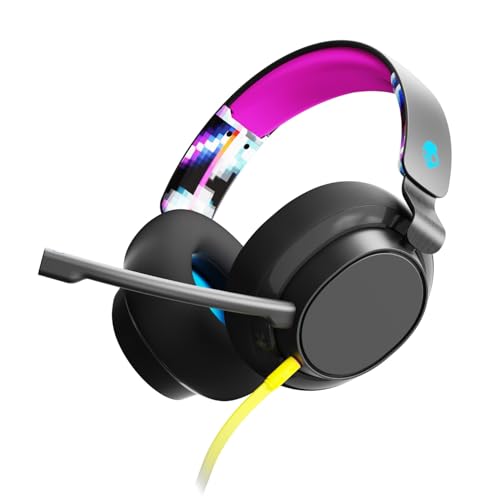
TL;DR: The Skullcandy SLYR offers 50 mm drivers, a detachable mic and lightweight 0.5842249943 lb construction for under $38, delivering solid sound and comfort for budget‑focused gamers across multiple platforms.
The headset’s 50 mm dynamic drivers pair with a 32 Ω impedance and a measured SPL of 95 ± 3 dB, giving you clear highs and punchy bass without needing a high‑end amp. At just 0.5842249943 pounds (265 g), it stays comfortable during marathon sessions, and the ultra‑soft memory‑foam ear cushions add passive sound isolation.
Compared with the other eleven contenders, the SLYR is the lightest option – it weighs less than the Fifine H9, Redragon H350, Razer Kraken V3 X, Redragon H510 PRO, Redragon H510 Zeus‑X and HyperX Cloud III. Its 50 mm drivers match the driver size of the Fifine H9 and Redragon H350, while offering a larger aperture than the Razer Kraken V3 X’s 40 mm drivers. The 5 ft (1.524 m) AUX cable sits between the Razer’s shorter 1.3 m lead and the longer 3.15 m cable on the Fifine H9.
Reviewers consistently praise the headset’s “excellent audio clarity with strong bass” and note that the removable boom mic with an LED mute indicator reliably works for voice chat. Users also highlight the plug‑and‑play simplicity across PC, PlayStation, Xbox and mobile devices. The main criticisms focus on the rigid plastic headband that lacks an adjustable mesh strap, which can feel tight on larger heads, and the non‑retractable cable that tends to tangle.
Pros
Cons
Best for: Entry‑level buyers or those on a tight budget
Avoid if: You need powerful performance or professional‑grade features
TL;DR: The Audeze Maxwell Wireless packs 90 mm planar‑magnetic drivers, over 80 hours of battery life and a detachable boom mic, but its premium $289.97 price and front‑heavy feel may deter budget‑focused gamers.
The headset’s standout feature is its 90 mm planar‑magnetic drivers, delivering a frequency response of 10 Hz – 50 kHz, a maximum SPL of >120 dB, and THD below 0.1 % @ 1 kHz. Audeze lists sensitivity at 111.4 dB SPL/mW at 1 kHz, giving a level of detail that audiophiles and competitive shooters appreciate.
Compared with the other eleven models, the Maxwell is considerably larger and heavier. At 490 g it outweighs the EPOS H6Pro’s 322 g driver unit and the Cooler Master MH‑670, which tips the scales at 0.76390173783 pounds. Its driver size of 90 mm also dwarfs the EPOS 42 mm and Cooler Master 50 mm drivers, while the price tag sits above most of the lineup, making it a premium‑tier choice.
Users repeatedly praise the headset’s “unmatched sound quality” and the marathon‑length battery life—80+ hours (4800 minutes) on a single charge, with a 20‑minute fast charge that restores roughly a quarter of capacity. Professional reviewers highlight the precise soundstage and the game‑specific EQ presets in the Audeze HQ app. The common downsides include the front‑heavy feel during long sessions, the lack of active noise cancellation, and the non‑foldable design that limits travel convenience.
Beyond the drivers, the Maxwell supports Bluetooth 5.3 with ultra‑low‑latency mode, multipoint connections, LE Audio, LC3plus, LDAC and AAC codecs, and a 10‑meter Bluetooth range. The 1800 mAh lithium‑polymer battery pairs with a 2‑hour (120 minute) full recharge time. The detachable hypercardioid boom mic features AI‑powered noise filtering, and the included accessories cover both wireless (USB‑C dongle) and wired (3.5 mm TRRS) options.
Pros
Cons
Best for: Those prioritizing quality and willing to pay for premium performance
Avoid if: You need a lightweight, portable headset with active noise cancellation
Breakdown
Razer Kraken V3 X
Pros
Cons
EPOS H6Pro
Pros
Fifine H9
Pros
Redragon H510 PRO
Pros
Based on scoring data and product specs
Personalized picks
Best Overall Pick
Razer Kraken V3 X
Best OverallBest for: Budget-conscious buyers seeking a reliable entry-level option
EPOS H6Pro
Best for: Buyers willing to invest in a proven, high-quality option
$149.00+$104.01 vs winner
Skip Audeze Maxwell if…
Reliability and user satisfaction are your top concerns
Razer’s Kraken V3 X takes the top spot thanks to its solid 4.3‑star rating from 2,667 reviewers, a lightweight 0.62 lb build, and a 40 mm Razer TriForce driver that covers a wide 12 Hz‑28 kHz frequency range. The headset also ships with a detachable HyperClear cardioid mic and offers 7.1 virtual surround sound, giving you immersive gaming audio without breaking the $44.99 price tag.
The EPOS H6Pro lands as the runner‑up, ideal if you need a closed‑back, multi‑platform solution for serious voice clarity. Its 42 mm drivers deliver detailed sound, while the detachable bidirectional boom mic features a lift‑to‑mute arm for quick silence. With a 4.4‑star rating from 2,178 users and compatibility across PC, consoles and mobile devices, the H6Pro justifies its $149.00 price for gamers who prioritize mic performance and cross‑system flexibility.
For those on a tighter budget, the Redragon H350 offers the lowest entry price at $32.98, making it the most affordable option. If you want a step up without splurging, the Redragon H510 PRO at $62.98 balances performance and price in the mid‑range. And for a premium wireless experience, the Audeze Maxwell Wireless stands out at $289.97, delivering high‑end audio for those willing to invest.
Pick the Razer Kraken V3 X for the best value and start your next gaming session with confidence.
The EPOS H6Pro’s closed acoustic design and bidirectional lift‑to‑mute boom mic give strong noise isolation for noisy environments, while the Razer Kraken V3 X offers lighter weight (281 g) and passive noise cancellation at a much lower price. If you value comfort over absolute isolation, the Kraken’s hybrid fabric ear pads and 40 mm drivers are a solid choice.
Please sign in to leave a review
No reviews yet. Be the first to review!
