If you want the extra directional punch of Dolby Atmos or Dolby 3D Audio without spending a fortune, you’ve come to the right place. We’ve lined up 10 headsets that promise immersive sound, then sorted them into budget, mid‑range and premium buckets so you can see where each one lands.
On the budget end you’ll find the Logitech G435 at $49.99, a 0.3625‑pound wireless model that earned a 4.2/5 rating and promises up to 18 hours of playtime. The mid‑range tier features the Corsair Void v2 MAX, which advertises up to 130‑hour Bluetooth battery life and Dolby Atmos support. Premium choices like the Logitech G Astro A30 cost $187.92, deliver 27 hours of battery, and include simultaneous 2.4 GHz and Bluetooth connectivity for console‑to‑PC flexibility. All ten units support the spatial audio formats that power modern titles like Call of Duty and Apex Legends.
Below you’ll see how each model measures up on sound quality, comfort and feature set, so you can match a headset to your gaming setup.
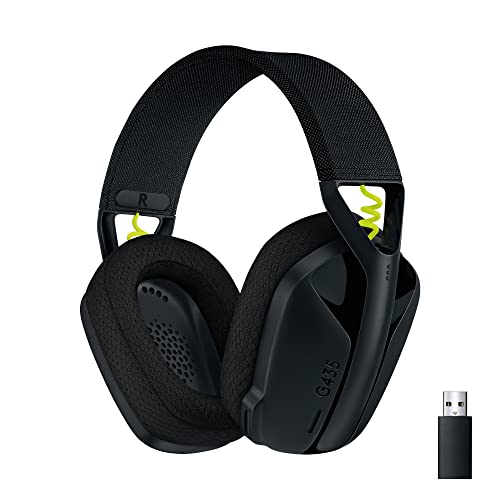
Logitech G435
Its 40 mm drivers deliver solid sound for just $49.99, making it the most value‑packed headset for entry‑level gamers.
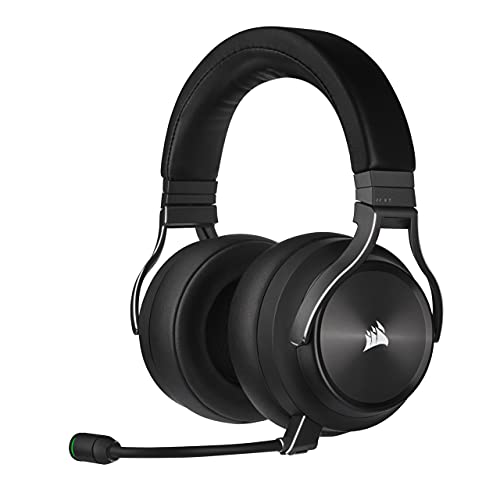
Corsair Virtuoso RGB Wireless XT
Ideal for value‑conscious gamers who want wireless freedom, it costs $169.99—about $120 more than the Logitech G435, but adds premium RGB and 50 mm high‑density drivers.
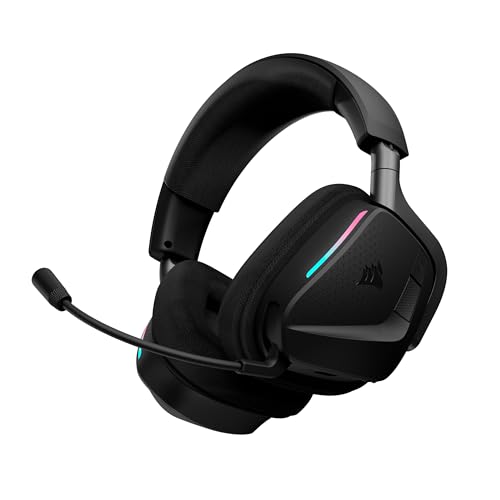
Corsair Void v2 MAX
Stands out with a 32 kΩ impedance and 50 mm drivers, catering to users who prefer a high‑impedance, studio‑style sound signature the other picks lack.
Also considered
Score Analysis
Key score advantages vs. runner-up (Corsair Virtuoso RGB)
Price Range
Logitech G435
$49.99
Corsair Virtuoso RGB Wireless XT
$199.99
Corsair Void v2 MAX
$119.99

Corsair Void v2
$89.99

Corsair HS65 Surround Carbon
$69.99
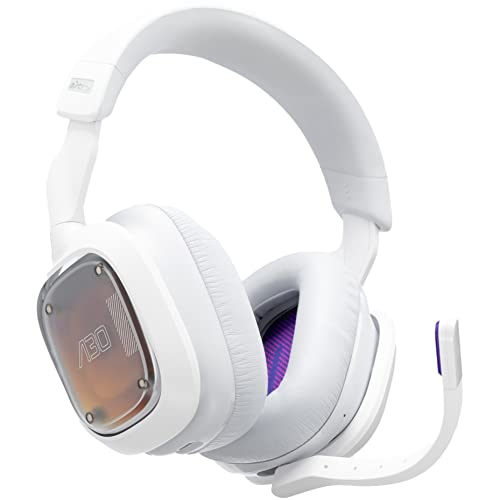
Logitech G Astro A30
$188.10

Corsair HS80 MAX
$119.99

Corsair Virtuoso MAX
$329.99
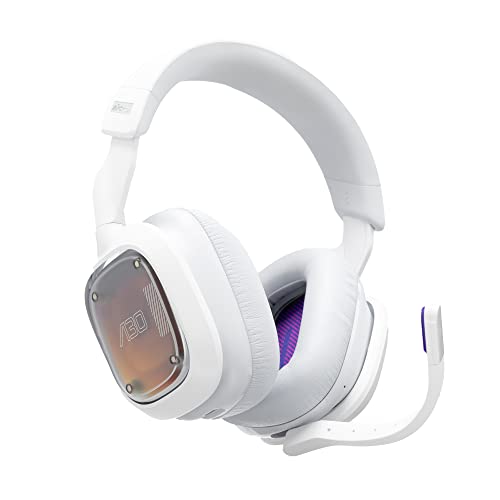
ASTRO A30
$219.45
Plantronics RIG 400LX
$128.00
Spec Comparison
TL;DR: The Logitech G435 offers ultra‑lightweight comfort, dual‑mode wireless (LIGHTSPEED + Bluetooth 5.0) and Dolby Atmos support at $49.99, making it a solid budget choice for casual gamers.
What really sets the G435 apart is its feather‑light construction – it weighs just 0.3625 pounds (165 g) and packs a 40 mm driver with a 45 Ω impedance and 83.1 dB/mW sensitivity. The headset also adds a volume limiter below <85 dB, which is a rare safety feature in this price range.
Compared with the other nine headsets in this roundup, the G435 is noticeably lighter than the Corsair HS65 Carbon (≈0.62 lb) and the Corsair Void v2 (≈0.67 lb). Its 18‑hour battery life is shorter than the 70‑hour (2.4 GHz) and 130‑hour (Bluetooth) runtimes listed for the Void v2, but still outlasts many budget models that often top out around 10 hours. The 10‑meter LIGHTSPEED range lands between the 9‑meter Bluetooth range of the Void v2 and the 15‑meter 2.4 GHz range of the same model. Finally, the G435’s 40 mm drivers are smaller than the 50 mm drivers found in the Corsair HS65 Carbon and Void series, and its 45 Ω impedance is a bit higher than the 32 Ω common to those competitors.
Professional reviewers applaud the headset’s comfort and the low‑latency feel of both wireless modes, while everyday users love the long‑lasting battery and the eco‑friendly build that includes 22 % post‑consumer recycled plastic and FSC‑certified paper packaging. The open‑back ear cups, however, let sound leak out and let external noise in; many gamers echo this point, preferring tighter isolation. Reviewers describe the bass response as modest, and the built‑in dual‑beamforming microphone can pick up background chatter, which may be distracting in noisy rooms.
Pros
Cons
Best for: Entry‑level buyers or those on a tight budget
Avoid if: You need powerful performance or professional‑grade features
TL;DR: The Corsair Virtuoso RGB Wireless XT delivers premium 50 mm drivers, Dolby Atmos support, and dual wireless connectivity at $169.99, though its 382 g weight can feel heavy during long sessions.
The headset packs 50mm high‑density neodymium dynamic drivers, a 32 Ω impedance and 109 dB sensitivity, giving a wide 20 Hz – 40 kHz frequency response that reviewers praise for rich bass and clear highs. Dolby Atmos for Headphones adds immersive spatial audio, while the 2.4 GHz SLIPSTREAM link reaches up to 60 ft (18.3 m) and Bluetooth covers 10 m, so you can game on PC and take calls on a phone simultaneously. Battery life clocks in at 22 hours 27 minutes in an independent test, and a full charge takes approximately 15 hours; you can even stay wired while it charges.
Compared with the Logitech G Astro A30, the Virtuoso XT’s 50mm drivers are larger than the A30’s 40 mm drivers, and it’s significantly lighter than the A30’s 2.11 lb weight. It matches the driver size of the Corsair Void v2 MAX, which weighs 0.67 lb, making the Virtuoso XT sit between those two in heft. Its Bluetooth range mirrors the A30’s 10 m range, while the dual‑wireless capability gives it an edge over models that only support a single wireless protocol.
Users consistently highlight the headset’s sound fidelity and the clarity of its detachable 9.5 mm omnidirectional boom microphone. The premium aluminum headband and memory‑foam earcups earn compliments for build quality and comfort, yet several reviewers note that the 382 g weight can lead to fatigue after a few hours and that the shallow earcup design may press against larger ears. A few owners have reported the wireless signal dropping near the edge of the 60 ft range, and some mention early hardware issues that require iCUE software for firmware updates and EQ adjustments.
Pros
Cons
Best for: Value-conscious buyers seeking quality at $169.99
Avoid if: You have limited desk space or need portability
“Great sound and mic — best I’ve used.”
“Love being able to game on PC and take calls on my phone without switching.”
TL;DR: The Corsair Void v2 MAX delivers up to 130 hours of Bluetooth battery life, 50 mm drivers, and dual‑connectivity in a lightweight 0.67 lb package, backed by Dolby Atmos support.
The headline feature is its marathon‑level battery life: 70 hours on the 2.4 GHz link and a staggering 130 hours when paired via Bluetooth. Both modes charge fully in about 1.5 hours, and a 15‑minute quick‑charge adds another 6 hours of playtime. The headset also houses custom 50 mm neodymium drivers with 32 kΩ impedance and 116 dB ±3 dB sensitivity, delivering up to 116 dB sensitivity for ample volume and detail in game soundscapes.
At 0.67 lb, the Void v2 MAX is lighter than the Virtuoso RGB Wireless XT (≈0.84 lb) and the HS80 MAX (≈0.78 lb), yet a touch heavier than the ultra‑light HS65 (≈0.62 lb). Its 50 mm drivers match those in the Virtuoso MAX and HS80 MAX, and are larger than the 40 mm units found in the Plantronics RIG 400LX and Logitech G Astro A30, giving it a clear size advantage over those competitors.
Reviewers consistently praise the headset’s comfort and the convenience of having both 2.4 GHz and Bluetooth active simultaneously, calling the dual‑connectivity a real boost for multitasking. Users love the fast‑charging trick that gets you back into a session after a coffee break. Professional feedback highlights the integrated Sonarworks SoundID EQ and Dolby Atmos support on PC as strong audio‑enhancement tools. The main complaints revolve around the fixed, non‑detachable omnidirectional mic and the lack of a wired 3.5 mm fallback, which can be a pain if the battery runs out.
Running on Bluetooth 5.3, the Void v2 MAX reaches roughly 30 ft (≈9 m) on that band, while its 2.4 GHz dongle claims a 50‑ft (≈15 m) range. The iCUE software lets you tweak EQ, control RGB strips on the ear cups, and monitor battery health, though you can't turn off the lighting without the app. The microphone offers a 2.2 kΩ impedance and –40 dB ±3 dB sensitivity, but it's built‑in and you can't swap it out.
Pros
Cons
Best for: Multiplatform gamers who move between PC, PS5, Switch or mobile and want a single wireless solution.
Avoid if: You want the best value‑per‑dollar in its price range.
“Most comfortable headset I’ve owned”
“Battery life lasts a week”
TL;DR: The Corsair Void v2 delivers 70‑hour wireless playtime, Dolby Atmos spatial sound and a comfortable 50 mm driver design, making it a solid budget pick for PC and PS5 gamers.
The headset’s standout spec is its marathon battery life – up to 70 hours on the 2.4 GHz dongle and a massive 130 hours when paired via Bluetooth. A quick‑charge burst of 15 minutes adds six more hours of play, and the full charge completes in just two hours. Dolby Atmos support and a V‑shaped sound signature give you immersive directional cues without needing an external sound card.
Compared with the other nine entries, the Void v2 sits in the mid‑weight range at 0.66800065386 lb, heavier than the ultra‑light Logitech G435 (0.3625 lb) and Corsair HS65 Carbon (0.6172943336 lb) but lighter than most premium models such as the Virtuoso MAX (0.91932763254 lb) and HS80 MAX (0.77602716224 lb). Its 50 mm drivers match the size of the HS65, Void v2 MAX, Virtuoso series and HS80, and are larger than the 40 mm drivers found in the G435, RIG 400LX and G Astro A30. Impedance at 32 Ω @ 1 kHz aligns with the HS65 and RIG 400LX, while the G435’s 45 Ω is a bit higher. Battery longevity rivals the Void v2 MAX and outlasts the G435’s 18‑hour claim, though the HS80 MAX edges slightly ahead with 65 hours on 2.4 GHz. Charging time is longer than the Void v2 MAX’s 90‑minute full charge but still faster than many wired‑only options.
Reviewers consistently applaud the headset’s comfort: breathable memory‑foam ear pads and a swivel‑adjustable headband make long sessions painless. Reviewers frequently highlight the Dolby Atmos license as a boost for spatial awareness in shooters. On the downside, users note the boom mic sounds muffled and lacks a detachable design, and the iCUE EQ presets don’t retain changes after power‑off. Professional reviewers also point out the absence of a wired fallback, which can be a drawback for competitive play.
Pros
Cons
Best for: Entry‑level buyers or those on a tight budget
Avoid if: You need advanced features or professional‑grade performance
“Most comfortable headset I’ve owned”
“Battery life lasts a week”
TL;TD: The Corsair HS65 Carbon offers 50 mm neodymium drivers with 111 dB sensitivity, Dolby Atmos via iCUE, and a clear omnidirectional mic at a $69.99 price point, weighing just 0.6172943336 lb for comfortable gaming.
The headset’s standout feature is its 50 mm dynamic drivers that push a sensitivity of 111 dB (+/-3 dB), delivering detailed sound across the full 20 – 20,000 Hz range. The CORSAIR iCUE software unlocks Dolby Atmos virtual 7.1 surround on PC and Mac, giving you positional audio without a separate sound card.
At 0.6172943336 lb, the HS65 Carbon is lighter than the Corsair Void v2 (0.66800065386 lb) but heavier than the Logitech G435 (0.3625 lb). Its 50 mm driver matches the Void v2’s size while exceeding the 40 mm drivers in the Logitech G435 and Plantronics RIG 400LX. Sensitivity sits below the Void v2’s 116 dB but well above the G435’s 83.1 dB/mW, and the 1.8 m cable length mirrors the Void v2’s length and outpaces the RIG 400LX’s 1300 mm cable.
Reviewers consistently praise the headset’s clear, noise‑reduced microphone (‑40 dB sensitivity, 2.2 kΩ impedance) and its lightweight comfort for marathon sessions. However, users note that passive noise isolation is modest, letting ambient sounds leak in, and that Dolby Atmos requires iCUE software with no onboard toggle, making it unavailable on consoles.
Technical details include a dynamic driver design, a 32 Ω @ 1 kHz impedance, a 1.8 m retractable cable with a 3.5 mm TRRS connector plus a USB‑A adapter, and a two‑year manufacturer warranty. The package includes spare ear cushions and a USB audio adapter for added convenience.
Pros
Cons
Best for: Entry-level buyers or those on a tight budget
Avoid if: You want the best value‑per‑dollar in its price range
“lightweight, dependable gaming headset”
“the microphone is the standout feature”
TL;DR: The Logitech G Astro A30 offers 27‑hour battery life, Dolby Atmos support, and simultaneous 2.4 GHz and Bluetooth connectivity for $187.92, though its 2.11‑pound weight and harsh highs may deter some.
The headset’s standout spec is a 27‑hour battery that recharges in just 2–3 hours via its USB‑C port, letting you game all day without hunting for an outlet. It also supports Dolby Atmos for Headphones, Windows Sonic and DTS:X, and its 40 mm dynamic drivers cover the full 20 Hz–20 kHz range. Bluetooth 5.0 gives a 10‑meter wireless range, while the LIGHTSPEED 2.4 GHz RF link adds a low‑latency gaming channel.
At 2.11 pounds, the A30 is heavier than most rivals – it outweighs the Corsair Virtuoso MAX (≈0.92 lb), HS80 MAX (≈0.78 lb) and the Void v2 series (≈0.67 lb) – and its 40 mm drivers are smaller than the 50 mm units found on those same models. Battery life matches the other Astro A30 variant (27 hours) but falls short of the Virtuoso MAX’s 60 hours and the Void v2 MAX’s 70 hours. Its Bluetooth range of 10 meters edges out the Virtuoso MAX’s 9.1 meters and is comparable to the Void v2’s 9 meters, while the Virtuoso MAX lists an 18‑meter 2.4 GHz range that exceeds the A30’s unspecified RF range.
Consumers frequently note the headset’s tight headband and earpads that can warm up during long sessions, and reviewers describe the mobile app’s EQ options as limited. Users praise the marathon‑length battery and the ability to mix game audio with Bluetooth music, noting the sound is crisp and vocal detail is strong. Professional reviewers echo the “crisp, clear sound” and the flexible connectivity, but they also flag the “harsh treble” and “weak bass at high volumes.”
The Astro app lets you tweak EQ, enable a noise gate and adjust sidetone, while magnetic, translucent back panels let you personalize the look. A hard‑shell carrying case (300 g) protects the headset on the go, and the included LIGHTSPEED USB‑A dongle ensures a plug‑and‑play wireless experience. The 1.5 m USB‑C to USB‑A cable offers a handy wired fallback, and the detachable 2.5 mm boom mic adds a voice channel for calls.
Pros
Cons
Best for: Those prioritizing quality and willing to pay for premium performance
Avoid if: Reliability, user satisfaction, or marathon‑session comfort are your top concerns
“Battery lasts forever – I use it all week without charging.”
“Love being able to hear my Discord call and game audio at the same time.”
TL;DR: The Corsair HS80 MAX delivers 24‑bit/192 kHz high‑resolution sound, 130 hours of Bluetooth playtime and a comfortable floating headband, but its premium price and lack of dual‑device streaming may deter budget‑focused gamers.
The headset’s standout spec is the 50 mm driver paired with 24‑bit/192 kHz wireless audio, which lets you hear game cues and movie details with high fidelity. Its 32 kΩ headphone impedance and 119 dB ±3 dB sensitivity further ensure clear, detailed sound, while the flip‑to‑mute omnidirectional mic offers -38 dB ±3 dB sensitivity for crisp voice chat.
In the lineup, the HS80 MAX is lighter than the Logitech G Astro A30 (2.11 lb) and the Corsair Virtuoso MAX (0.919 lb), yet a touch heavier than the ultra‑light Corsair Void v2 MAX (0.67 lb). Battery life lasts up to 130 hours on Bluetooth, matching the Void v2 MAX and far outlasting the Virtuoso MAX’s 60 hours. Its 15.2 m (50 ft) wireless range equals the Void v2 MAX and sits between the Virtuoso MAX’s 18 m 2.4 GHz reach and its shorter 9.1 m Bluetooth span. The Bluetooth 5.2 version trails the Void v2 MAX’s 5.3, but remains modern enough for stable connections.
Users consistently praise the headset’s comfort – the floating aluminum‑reinforced frame and memory‑foam ear pads feel breathable during marathon sessions. Professional reviewers highlight the crystal‑clear 2.4 GHz audio and Dolby Atmos integration for immersive spatial cues. However, several owners note occasional audio cutouts at low in‑game volumes and find the 1.8 m USB‑C charging cable cumbersome when trying to play while charging.
Pros
Cons
Best for: PC and PS5 gamers who need long battery life, high‑resolution audio and immersive spatial sound.
Avoid if: You’re on a tight budget, need ultra‑lightweight comfort, or require true dual‑device streaming.
“Great sound for gaming and music”
“Incredible battery life”
TL;DR: The Corsair Virtuoso MAX delivers 7.1‑virtual surround with Dolby Atmos, a 50 mm graphene driver and 60 hour battery life, but its shallow ear cushions and rigid headband can feel tight during marathon sessions.
The headset’s standout spec is its 50 mm graphene‑coated dynamic drivers, rated at 118 dB ± 3 dB sensitivity and 32 Ω impedance, which give a clear, detailed soundstage for Dolby Atmos and Windows Sonic. Its 7.1 virtual surround and dual‑mode wireless (18 m 2.4 GHz and 9.1 m Bluetooth) let you switch between PC and mobile without missing a beat. Battery life hits 60 hours with the RGB lighting off, and a full charge takes just 1.5 hours.
Compared with the nine other headsets in this roundup, the Virtuoso MAX sits near the top of the weight range at 417 g (0.92 lb), making it heavier than the Void v2 MAX, Void v2, HS65 Carbon and HS80 MAX, but lighter than the Logitech G Astro A30. Its 60‑hour battery life outlasts many rivals—longer than the Logitech G Astro A30’s 27 hours and the HS65’s 70‑hour claim on 2.4 GHz—but falls just short of the Void v2 MAX’s 70‑hour runtime. The 18‑meter 2.4 GHz range matches the higher‑end models, while its 9.1‑meter Bluetooth reach is a shade below the 10‑meter range listed for the Logitech G Astro A30 and ASTRO A30.
Professional reviewers consistently praise the headset’s audio clarity and the detachable omnidirectional boom mic (‑38 dB ± 3 dB sensitivity, 2.2 kΩ impedance). Users love the ability to hop between a PC and a phone thanks to the dual‑volume dials. However, the 6.35 mm ear‑cushion depth and a stiff aluminum‑plastic headband have drawn complaints about pressure after an hour of play, and many describe the iCUE software’s interface as unintuitive. The lack of a 3.5 mm aux input means you can’t use it wired.
Pros
Cons
Best for: Those prioritizing audio fidelity, Dolby Atmos support, and a high‑quality detachable mic, and who don’t mind a premium price.
Avoid if: Comfort is your top concern or you need a straightforward wired connection.
“Great sound and mic — best I’ve used.”
“Love being able to game on PC and take calls on my phone without switching.”
TL;DR: The ASTRO A30 offers a 40 mm driver, 27‑hour battery life and simultaneous 2.4 GHz + Bluetooth connectivity, but its premium $219.45 price and comfort issues may limit appeal for marathon gamers.
The headset’s 40 mm dynamic drivers pair with device‑level Dolby Atmos support, and the built‑in 27‑hour battery lasts through long sessions while charging in roughly 2–3 hours. Bluetooth reaches up to 10 meters, and you can keep the LIGHTSPEED 2.4 GHz link active at the same time, letting you stream music from a phone while gaming on a console.
At 0.75398093604 pounds (342 g), the A30 sits in the middle of the weight range: it’s heavier than the Corsair Void v2 MAX’s roughly 0.67 pounds but lighter than the Corsair HS80 MAX’s about 0.78 pounds. Its $219.45 price tag places it in the premium tier, and the 3.8/5‑star rating from 1,247 reviews sits below the higher scores of several rivals.
Reviewers consistently praise the multi‑platform flexibility, long battery life and the clear, dual‑mic setup that includes a detachable boom. However, many note that the high‑frequency response can sound harsh, the bass feels thin at louder volumes, and the clamping pressure becomes uncomfortable during extended play, especially for glasses wearers. Professional reviewers also highlight the headset’s strong vocal clarity and the ability to tweak sound with a five‑band EQ in the Logitech G app.
Pros
Cons
Best for: Those prioritizing quality and willing to pay for premium performance
Avoid if: You're shopping on a tight budget — it's priced at $219.45, and the comfort trade‑off may not suit marathon sessions
“Battery lasts forever – I use it all week without charging.”
“Love being able to hear my Discord call and game audio at the same time.”
TL;DR: The Plantronics RIG 400LX delivers Dolby Atmos‑enhanced sound and a controller‑mounted amp at a modest $128 price, though its all‑plastic build and short 1300 mm cable may limit durability and reach.
The headset’s standout feature is Dolby Atmos for Headphones, which creates a 3‑D soundstage on a wired stereo platform. It ships with an LX1 amp module that mounts on the Xbox controller, giving you on‑the‑fly volume and game‑chat balance control. Internally, the RIG 400LX uses 40 mm dynamic drivers with a 32 Ohm impedance, and the whole unit weighs 0.99 Pounds (449 g).
Compared with the other nine headsets in this roundup, the RIG 400LX is heavier than the Corsair Void v2 (about 0.668 Pounds) but noticeably lighter than the Logitech G Astro A30 at 2.11 Pounds. Its 40 mm drivers are smaller than the 50 mm drivers most peers use, and the 1300 mm cable is shorter than the 1.8 m cables many competitors list, which may require an extension for larger desk setups.
Users consistently praise the immersive Dolby Atmos experience and the convenience of the controller‑mounted amp, calling the headset “great” for its price. Professional reviewers highlight the warm audio signature, distinct highs and solid bass, while also noting that the all‑plastic construction feels less premium than higher‑end models. A recurring complaint is a scratchy feel on the volume knobs, and some gamers find the mic needs careful positioning for clear voice capture.
Pros
Cons
Best for: Entry‑level Xbox gamers who want Dolby Atmos 3D sound without a high‑end price.
Avoid if: You need a rugged premium‑feel build, a longer cable, or wireless connectivity.
“Amazing sound”
“real Dolby Atmos in your ears”
Breakdown
Logitech G435
Pros
Corsair Virtuoso RGB Wireless XT
Pros
Corsair Void v2 MAX
Pros
Cons
Corsair Void v2
Pros
Cons
Based on scoring data and product specs
Personalized picks
Best Overall Pick
Logitech G435
Best Budget PickBest for: Entry-level buyers or those on a tight budget
Corsair Virtuoso RGB Wireless XT
Best for: Value-conscious buyers seeking quality at $169.99
$199.99+$150.00 vs winner
Skip Plantronics RIG 400LX if…
You need powerful performance or professional-grade features
The Logitech G435 is the best‑budget Dolby Atmos gaming headset. At just $49.99 it’s the most affordable option, yet it still packs 40 mm drivers, Dolby Atmos and Windows Sonic support, and an 18‑hour battery life that lasts through a full day of gaming. Its 4.2‑star rating from 11,025 reviews and feather‑light 0.3625‑pound chassis make it both well‑liked and comfortable for long sessions.
The runner‑up, Corsair Virtuoso RGB Wireless XT, shines when you need a premium wireless experience with extra features. Priced at $169.99, it offers 50 mm high‑density neodymium drivers and Dolby Atmos for Headphones on PC, plus a dual‑wireless setup (2.4 GHz SLIPSTREAM dongle and Bluetooth 5.0). Manufacturer lists a battery life of 22 hours 27 minutes, so you won’t be tethered to a charger during marathon play.
For those looking beyond the winner, the mid‑range pick is the Corsair Void v2 MAX at $149.99, delivering solid Dolby Atmos support without breaking the bank. The premium alternative is the ASTRO A30 at $219.45, offering top‑shelf audio quality and build for enthusiasts who want the best possible immersion.
Choose the Logitech G435 today and enjoy Dolby Atmos gaming without overspending.
The Logitech G435 is the lightest at 165 g and offers up to 18 hours of battery life, making it comfortable for long trips. Its Bluetooth 5.0 and LIGHTSPEED 2.4 GHz modes give flexible, low‑latency connections without the bulk of larger headsets.
Please sign in to leave a review
No reviews yet. Be the first to review!
