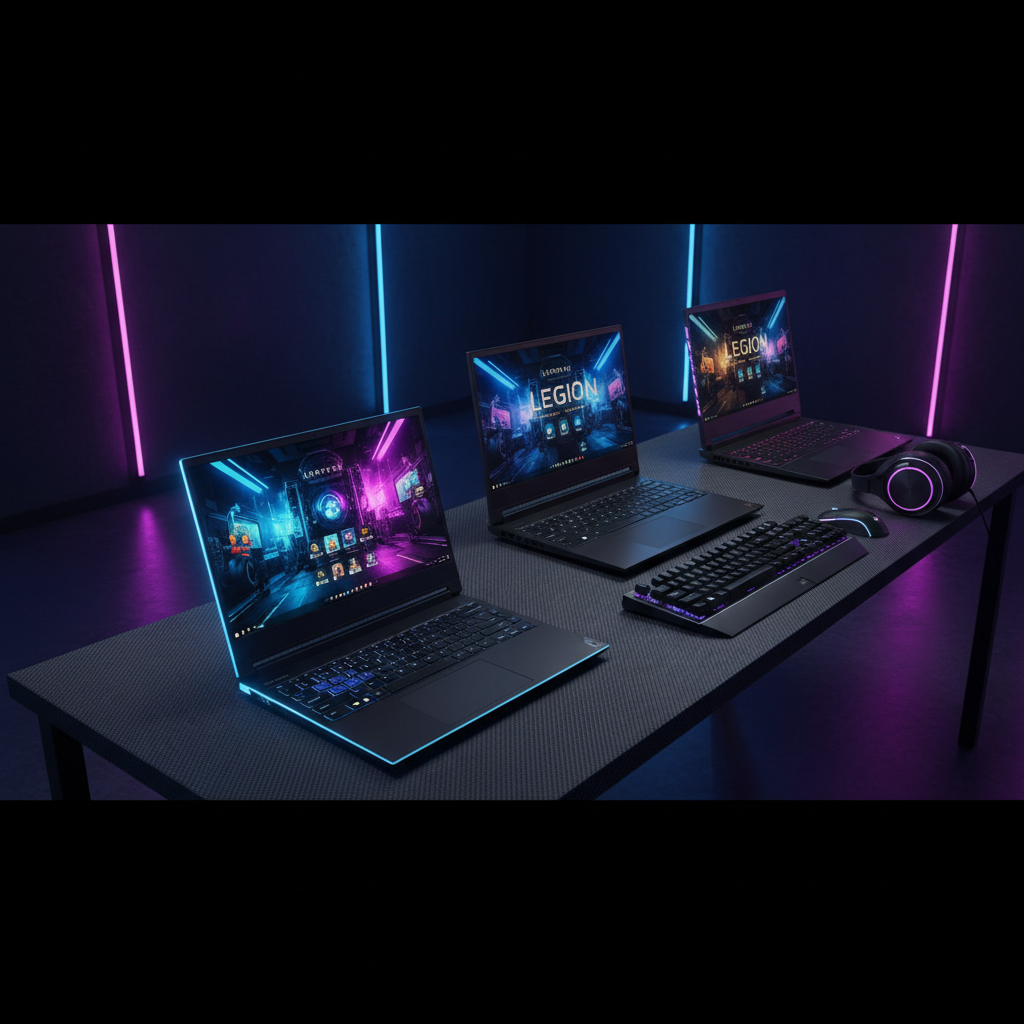
Even though the Razer Blade 14 2025 commands a $2299.99 price tag, it’s the only laptop in our pool that actually shows a user rating—4.0 / 5 from 87 reviews. That makes the premium option the most “voted‑for” model, a surprising twist when you consider most of the OLED contenders keep their scores under wraps.
Thirteen OLED gaming laptops span three price tiers. The budget corner holds the Lenovo Legion 5 15AHP10 at $1513.99 and the Legion 5i i7‑14700HX at $1599.99, both featuring 500‑nit SDR panels and 100 % DCI‑P3 coverage. Mid‑range picks include the Legion 7i at $1799.99 with up to 240 Hz refresh and an 84 Wh battery, and the Legion Pro 7i at $2006.25 offering a 99.9 Whr pack and 240 Hz OLED. Premium choices are the Razer Blade 14 (72 Wh battery, 11.5 hours typical life, 15.7 mm thickness) and the Legion Pro 7i 5070 Ti at $2099.99, featuring a 1100‑nit OLED and a 99.9 Wh battery.
The following sections examine each model’s display quality, performance punch, and portability, helping you match the right OLED laptop to your gaming setup.

Razer Blade 14 2025
Its AI NPU delivers 50 TOPS of performance, giving premium power for demanding games.

Lenovo Legion 5 15IRX10
Ideal for users needing a large 80 Wh battery and nine‑hour video endurance, it fits those prioritizing long sessions over a premium price tag.
Lenovo Legion 7i
Stands out with an 84 Wh battery and 30‑minute 50 % rapid charge, delivering solid endurance at $1799.99— it's a clear value step down from the $2299.99 flagship.
Also considered
Score Analysis
Key score advantages vs. runner-up (Lenovo Legion 5)
Price Range
Razer Blade 14 2025
$2,299.99
Lenovo Legion 5 15IRX10
$1,799.00
Lenovo Legion 7i
$1,799.99

Lenovo Legion 7i RTX 5070
$0.00

Lenovo Legion Pro 7i
$1,891.38
Lenovo Legion 5 15AHP10
$1,549.00

Lenovo Legion 5 RTX 5060
$1,471.74

Lenovo Legion Pro 7 5070 Ti
-$0.01

Lenovo Legion 5i i7-14700HX
$1,539.00
Lenovo Legion Pro 7i 5070 Ti
$2,199.99

Lenovo Legion Pro 7i RTX 5090
$0.00
Lenovo Legion 5i
$1,549.99
Lenovo Legion Pro 7i RTX 5080
$2,549.00
Spec Comparison
TL;DR: The Razer Blade 14 (2025) delivers a 14‑inch 2.8K OLED screen, desktop‑class Ryzen AI 9 and RTX 5060 performance, and 11.5 hours of battery life in a thin aluminum chassis, but it comes at a premium price and has non‑upgradable RAM.
What really sets this laptop apart is its 14‑inch OLED panel with a native 2880×1800 resolution, 120 Hz refresh rate, 243 ppi density and 100 % DCI‑P3 colour coverage. At 400–450 nits peak brightness and a 1,000,000:1 contrast ratio, the display can hit HDR10 highlights while keeping black levels deep, making it one of the most vivid screens in a 14‑inch gaming notebook.
Compared with the Lenovo Legion Pro 7i 5070 Ti, the Blade is heavier at 7.8043640748 pounds versus the Legion’s 5.65 pounds, but it’s considerably slimmer at 15.7 mm thickness against the Legion’s 26.6 mm. Its 72 Wh battery is also smaller than the 99.9 Wh packs found in several Legion models, which translates to a lower capacity despite the Blade’s impressive 11.5‑hour typical runtime. The Blade lacks Thunderbolt support that some competitors list, and it soldered the RAM, preventing upgrades beyond the factory‑installed configuration.
Professional reviewers commend the Blade’s solid build quality and vivid OLED display, while everyday users highlight the solid feel of the aluminum chassis and the per‑key RGB Chroma keyboard. The dual‑fan vapor‑chamber cooling system keeps temperatures in check, but fans can climb to a maximum noise level of 54.6 dB under sustained load. Users also note the non‑upgradable RAM and the high price as trade‑offs, though many consider the 50 TOPS AI NPU, 8 GB GDDR7 VRAM and 8,000 MHz LPDDR5X memory speed worth the cost.
Pros
Cons
Best for: Those prioritizing quality and willing to pay for premium performance
Avoid if: You're on a tight budget or only need basic functionality
“The OLED screen is breathtaking—perfect for gaming and movies”
“Surprisingly quiet fans even during intense gaming”
TL;DR: The Lenovo Legion 5 15IRX10 packs a 15.1″ 2560×1600 OLED panel with 165 Hz refresh, an i9‑14900HX CPU and RTX 5070 GPU, all in a 1.9 kg chassis.
What really stands out is the 15.1‑inch OLED screen. It delivers a WQXGA resolution of 2560 × 1600, a peak HDR brightness of 1000 nits, 500 nits SDR, a 1,000,000:1 contrast ratio and 100% DCI‑P3 coverage, all refreshed at 165 Hz. That combination gives vivid colors and ultra‑smooth motion for fast‑paced titles.
Against the other Legion models in this roundup, the 5 15IRX10 is noticeably lighter. It weighs 1.9 kg (about 4.19 lb), which is lighter than the Legion Pro 7 5070 Ti at 5.64 lb and also lighter than the Legion 5i at roughly 4.2 lb. Its 80 Wh battery matches the RTX 5060 variant, but the Super Rapid Charge (0–70 % in 30 min, 0–100 % in 80 min) is a step ahead of the RTX 5060’s 0–80 % in 30 min claim.
Reviewers praise the OLED’s punchy colors and the laptop’s ability to run DLSS 4 and DirectX 12 Ultimate without stutter, thanks to the i9‑14900HX (24 cores, 32 threads, 36 MB cache) teaming with the RTX 5070’s 8 GB GDDR7 memory, 798 AI TOPS and a 2347 MHz boost clock. However, the 9‑hour video playback drops to just 4.2 hours in a MobileMark 30 test, so power‑hungry sessions will tap the battery quickly. The fast‑charging feature helps mitigate that downside.
Beyond the display and performance, the machine packs 32 GB DDR5‑5600 RAM, a 1 TB PCIe Gen4 x4 NVMe SSD, Wi‑Fi 7 (802.11be) with 2×2 MIMO, Bluetooth 5.4 and a Gigabit RJ‑45 Ethernet port. The USB‑C PD can deliver up to 100 W, and the 245 W adapter ensures the high‑end CPU and GPU stay fed under load.
Pros
Cons
Best for: Gamers who want a portable 15‑inch laptop with a high‑refresh OLED display and top‑tier CPU/GPU power for demanding titles.
TL;DR: The Lenovo Legion 7i delivers a 16‑inch 240 Hz OLED panel with 1060‑nit HDR brightness, sub‑2 kg aluminum chassis, and up to 64 GB DDR5, all for $1799.99.
The standout feature is its 16.0‑inch glossy OLED screen, offering a 2560 × 1600 resolution, 100% DCI‑P3 color gamut, Dolby Vision, and HDR‑peak brightness of up to 1,060 nits. Coupled with G‑Sync and a refresh rate that can reach 240 Hz, the display delivers fluid, color‑accurate gaming and content creation.
In the context of the other twelve laptops, the Legion 7i’s 84 Wh battery sits between the 80 Wh of the Legion 5i i7‑14700HX and the 99.9 Wh of the Legion Pro 7i, giving it a respectable middle ground. Its sub‑2 kg weight roughly matches the 1.93 kg Legion 5i, yet it’s considerably lighter than the 5.65‑pound (2,560 g) Pro 7i. At a thickness of 15.9–17.9 mm, it’s noticeably slimmer than the Pro 7i’s 26.7 mm chassis and comparable to the Razer Blade 14’s 15.7 mm profile. Brightness also outshines the typical 500‑nit panels of the Legion 5i and Pro 7i, while its 240 Hz refresh matches the Pro 7i’s high‑rate display.
Professional reviewers praise the full‑aluminum build for its rigidity and the OLED panel for its vividness, but users note a few trade‑offs: the only color option is Glacier White, the GPU tops out at an RTX 5070 Ti (no RTX 5080/5090), and battery life under heavy load feels short. The large power brick and relatively modest speaker output also draw criticism, and the glossy screen can produce reflections in bright environments.
Under the hood, the machine houses an Intel Core Ultra 9 275HX CPU that can boost up to 5.4 GHz, paired with up to 64 GB DDR5 RAM running at 6,400 MT/s. GPU power can reach 115 W, and storage starts at a 1 TB PCIe 4.0 NVMe SSD, configurable to 2 TB. Rapid charging restores 50 % of the battery in just 30 minutes, while connectivity includes Wi‑Fi 7, Bluetooth 5.4, two USB‑A 3.2 Gen 1 ports, a Thunderbolt 4/USB4 combo, and an additional USB‑C 10 Gbps port.
Pros
Cons
Best for: Value-conscious buyers seeking quality at $1799.99
Avoid if: You prefer products with extensive real-world feedback and proven track records
TL;DR: The Lenovo Legion 7i RTX 5070 pairs a 16‑inch 1,060‑nit OLED panel with an Intel Core Ultra 9 275HX and RTX 5070 GPU, all in a sub‑2 kg, 0.7‑inch‑thin chassis.
The standout feature is the 16‑inch OLED screen that hits a 1,060 nits HDR peak, 486 nits SDR, and a ΔE of 0.88, delivering almost perfect color accuracy across 100 % sRGB, 99.9 % DCI‑P3 and 94.1 % Adobe RGB. It refreshes at up to 240 Hz with a 1 ms response time, making fast‑paced games look fluid. The chassis weighs between 1.99 kg and 2.0 kg and measures 15.9–17.9 mm thick, giving the laptop a premium, portable feel.
Compared with the other Legion models in this roundup, the 7i is noticeably lighter than the Pro 7 5070 Ti, which tips the scales at 5.64 lb, and thinner than the Legion 5 15IRX10 whose chassis is 19.95–21.54 mm thick. Its 84 Wh battery sits between the 80 Wh packs found in the Legion 5 15IRX10, Legion 5 RTX 5060 and Legion 5i, and the larger 99.9 Wh unit in the Pro 7 5070 Ti. The OLED’s brightness also exceeds the 500‑nit SDR panels on those rivals, while still offering a matte coating for reduced glare.
Professional reviewers praise the OLED’s vividness and the laptop’s minimal flex, but they flag the roughly 4.5‑hour light‑video battery life as a drawback for a device meant to travel. The HARMAN‑tuned stereo speakers deliver only 2 W per channel, so most users end up plugging in headphones for immersive sound. The 5 MP IR webcam functions for Windows Hello, yet users report over‑exposure in dim lighting, making video calls less reliable.
Under the hood, the Core Ultra 9 275HX (2.4 GHz base, up to 5.40 GHz on P‑cores) teams with an RTX 5070 GPU (8 GB GDDR7, 115 W TGP) and up to 32 GB DDR5 RAM at 6400 MHz. Storage is flexible with two M.2 PCIe 4.0 x4 slots, defaulting to 2 TB. Connectivity includes Wi‑Fi 7, Bluetooth 5.4, one HDMI 2.1 port, three USB‑A 3.2 Gen 1, and two USB‑C/Thunderbolt 4 ports that support up to 100 W Power Delivery. A 30‑minute fast‑charge gets you to 50 % capacity, and a full charge takes about 1.5 hours.
Pros
Cons
Best for: Users who prioritize a premium OLED display and lightweight portability over marathon battery life.
TL;DR: The Lenovo Legion Pro 7i offers a 16‑inch 240 Hz OLED panel, a 24‑core Intel Core Ultra 9 CPU and RTX 5080 GPU, delivering desktop‑level power in a 5.65‑lb chassis for $2006.25.
The standout feature is its 16 in PureSight OLED display with a 2560 × 1600 resolution, 240 Hz refresh rate and 500 nits typical brightness, plus DisplayHDR True Black 1000 support. Coupled with a 175 W GPU TGP and 32 GB DDR5‑6400 MHz memory, the machine targets high‑frame‑rate gaming at QHD+.
At 5.65 pounds, it is heavier than the Lenovo Legion 5i i7‑14700HX (which weighs around 4.1–4.4 lbs) but matches the weight of the Lenovo Legion Pro 7i 5070 Ti. Its $2006.25 price places it above many mid‑range options in this roundup, while still offering a richer OLED experience than the non‑OLED rivals.
Professional reviewers say the 24‑core Intel Core Ultra 9 275HX delivers elite performance, and the Legion Coldfront 5.0 cooling system proves effective. Users rave about the vivid OLED screen and smooth 240 Hz gameplay, but repeatedly note the chassis heft, a large power brick that feels as heavy as the laptop, and a limited hinge opening that restricts the screen angle.
Beyond the display, the laptop ships with Wi‑Fi 7, two Thunderbolt 4 ports, HDMI 2.1, a 3.5 mm combo jack, and 2 × 1 TB NVMe SSDs for a total of 2 TB storage. An AI‑dedicated NPU delivers 13 TOPS for real‑time optimization, and the battery packs 99.9 Whr, giving an average of 7.5 hours of light‑use endurance and 8.07 hours in a PCMag test.
Pros
Cons
Best for: Most users seeking a balanced, mainstream option
Avoid if: You're shopping on a tight budget — it's priced at $2006.25
TL;DR: The Lenovo Legion 5 15AHP10 delivers a vivid 15.1″ OLED panel at 165 Hz, solid RTX 5060 performance and fast charging, all for $1513.99 in a relatively lightweight chassis.
The standout feature is its 15.1‑inch OLED screen with a 2560 × 1600 resolution, 500 nits SDR brightness and more than 1000 nits HDR peak. Coupled with a 165 Hz refresh rate and near‑instantaneous response, the display offers deep blacks and vibrant colors that professional reviewers praised for “perfect blacks and vivid colors.”
At $1513.99 the Legion 5 sits in the same price band as the Lenovo Legion 5i and is a touch pricier than that model, while remaining cheaper than the higher‑tier Legion 5i i7‑14700HX. Weighing 4.1 pounds, it's lighter than the Legion Pro 7i (5.65 pounds) and considerably lighter than the Razer Blade 14, yet a shade lighter than the Legion 5i’s 4.2 pounds. This makes it a portable option for a 15‑inch gaming laptop.
User feedback highlights the OLED panel as a major win, with everyday owners loving the vivid visuals and high frame‑rate gaming. The same reviewers note that fan noise climbs to around 60 dB in Turbo mode and that the keyboard area gets warm during long sessions. A few configurations also miss a Windows Hello IR camera, and the lack of VRR/G‑Sync on the OLED panel disappoints competitive gamers.
Under the hood, the laptop packs an AMD Ryzen 7 260 CPU (3.8 GHz base, 5.1 GHz boost, 8 cores/16 threads) and an NVIDIA RTX 5060 GPU running at a 115 W TGP with 8 GB GDDR7 VRAM. Memory comes as 32 GB DDR5 at 4800 MHz, expandable to 64 GB, and storage starts at a 1 TB PCIe Gen4 NVMe SSD with a second M.2 slot for up to 4 TB total. The Legion Coldfront cooling system, fast‑charging battery (80 Wh, 80 % in 30 minutes) and Dolby Atmos stereo speakers round out a well‑balanced package.
Pros
Cons
Best for: Enthusiast gamers who want a high‑fidelity 1440p OLED experience without flagship pricing.
Avoid if: You need built‑in biometric authentication, require VRR/G‑Sync for competitive play, or are sensitive to fan noise.
TL;DR: The Lenovo Legion 5 RTX 5060 packs a 15.1‑inch 2560×1600 OLED screen with >1000 nits HDR, a Ryzen 7 260 CPU and RTX 5060 GPU, delivering high‑refresh gaming in a thin 22 mm chassis.
The standout feature is the 15.1‑inch OLED panel that offers a 2560×1600 resolution, >1000 nits HDR peak, 500 nits SDR brightness, 100% DCI‑P3 color gamut and a 165 Hz refresh rate with G‑SYNC. Those numbers make it one of the brightest and most color‑accurate displays in a gaming laptop.
Compared with the other Legion models in this roundup, the battery capacity matches the Legion 5i and the 5 15IRX10 at 80 Wh, but the chassis is slimmer at 22 mm versus the 5i’s 25.4 mm. At 1950 g it is a touch heavier than the 5i (1905 g) yet considerably lighter than the Pro 7 5070 Ti (2555 g). Its HDR brightness (>1000 nits) exceeds the 5 15IRX10’s 1000‑nits spec, while the 5 15AHP10 shares the same 500‑nit SDR level and 100% DCI‑P3 gamut.
Reviewers love the OLED’s perfect blacks and the RTX 5060’s DLSS 4 efficiency, and they note performance that approaches a desktop RTX 4070. Professional testers note that Legion Coldfront cooling keeps the CPU around 88 °C and the GPU near 82 °C, though the fans can reach roughly 60 dB in Turbo mode. Users also point out that the panel lacks native VRR support and that the base model’s 16 GB of DDR5 RAM may feel limiting for heavy multitasking.
Under the hood sits an AMD Ryzen 7 260 processor (8 cores, 16 threads, 3.8 GHz base, up to 5.1 GHz boost) paired with an NVIDIA GeForce RTX 5060 GPU (115 W TGP, 8 GB GDDR7). Memory runs at 4800 MHz (up to 5600 MHz) and can be expanded to 32 GB across two slots. Storage is a 1 TB PCIe Gen 4 NVMe SSD with a second slot for expansion. Connectivity includes Wi‑Fi 7, Bluetooth 5.4, an HDMI 2.1 port, two USB‑C ports, three USB‑A ports, an RJ‑45 Ethernet jack and a 5 MP webcam with an e‑shutter privacy switch.
Pros
Cons
Best for: Enthusiast gamers and content creators who want a high‑refresh OLED display with strong GPU performance.
TL;DR: The Lenovo Legion Pro 7 5070 Ti packs a Ryzen 9 9955HX and RTX 5070 Ti into a 16‑inch 1100‑nit OLED display, delivering desktop‑level performance but at a 5.64‑lb weight and modest battery life.
The standout feature is the 16‑inch WQXGA OLED panel that hits 1100 nits of peak brightness and a 240 Hz refresh rate, paired with 100% DCI‑P3 color coverage and DisplayHDR True Black 1000 certification. Under the hood, a 2.5 GHz base (5.4 GHz boost) 16‑core Ryzen 9 9955HX works with an NVIDIA GeForce RTX 5070 Ti equipped with 12 GB GDDR7, while 64 GB DDR5 RAM and a 4 TB NVMe PCIe SSD keep multitasking and storage lightning‑fast.
Compared with the other 12 laptops in this OLED roundup, the Pro 7 is heavier at 5.64 lbs versus the roughly 4.2‑lb range of the Legion 5i and the 4.1‑lb Legion 5 15AHP10. Its screen is larger—16 inches versus the 15.1‑inch display on the Legion 5 15IRX10—and brighter, offering 1100 nits versus the 1000‑nit HDR peaks listed for several peers. Battery capacity sits at 99.9 Wh, outpacing the 80‑84 Wh cells found in most competitors, though the estimated 4–6 hour life still trails the longer‑lasting light‑use figures of the Legion 7i RTX 5070.
User sentiment praises the ultra‑smooth 240 Hz OLED experience and the massive 64 GB of RAM for demanding creative workflows, while professional reviewers highlight the CPU’s position among the most powerful mobile chips and the RTX 5070 Ti’s ~20 % DLSS boost over older GPUs. The laptop also includes Wi‑Fi 7, a 2.5 Gb Ethernet port, one HDMI 2.1 output, three USB‑A 3.2 ports, two USB‑C 3.2 ports (one with up to 100 W PD), and a 5 MP privacy camera with IR, making it a well‑rounded workstation.
Pros
Cons
Best for: Hardcore gamers and creators who need a large, ultra‑bright OLED display and desktop‑class CPU/GPU power.
Avoid if: You have limited desk space or need ultra‑light portability, or you prioritize all‑day battery endurance.
TL;DR: The Lenovo Legion 5i packs a 15.1‑inch 2560×1600 OLED panel at 165 Hz and a 20‑core i7‑14700HX, delivering vivid visuals and strong performance for $1,599.99, though its gaming battery lasts under two hours.
The standout feature is its OLED screen: a 15.1‑inch panel with a 2560×1600 resolution, 10‑bit color, 500 nits HDR peak brightness, 100% DCI‑P3 gamut, Dolby Vision and a 165 Hz refresh rate. That combination gives games and media a punchy, color‑accurate look that many competing laptops in this roundup lack.
At roughly 4.1–4.4 lb, the Legion 5i’s weight is similar to the Lenovo Legion 5 15AHP10, which also tips the scales at 4.1 pounds. Its 80 Wh battery matches the capacity of the other Legion 5i model in the list, but it falls short of the 99.9 Wh cells used in the Legion Pro 7i, meaning you’ll see less runtime compared with those higher‑capacity peers.
Users consistently praise the vivid OLED display and the fluid 165 Hz experience, while professional reviewers highlight the CPU’s ability to boost up to 5.0 GHz and the panel’s 500 nits brightness. The common complaint is the short gaming battery life—under 2 hours—largely due to the OLED’s power draw. Some owners also note occasional fan noise under load and the plastic base material, which feels less premium than an all‑metal chassis.
Under the hood, the i7‑14700HX offers 20 cores (8 Performance + 12 Efficient) and 28 threads, backed by DDR5‑5600 MHz memory (16 GB standard, up to 64 GB). Storage is flexible with a PCIe Gen4 NVMe primary SSD (512 GB‑2 TB) and a secondary M.2 slot. Connectivity includes Wi‑Fi 7, Bluetooth 5.4, a 245 W AC adapter, HDMI 2.1, two USB‑C ports (one Thunderbolt 4 with 140 W PD), three USB‑A 3.2, Ethernet, and an SD card reader.
Pros
Cons
Best for: Enthusiast gamers and creators who want a vibrant OLED screen and solid CPU power without a premium price tag.
Avoid if: You need long battery life, a fully metal premium build, or the highest‑end GPU performance for 4K gaming.
TL;DR: The Lenovo Legion Pro 7i 5070 Ti packs a 16‑inch 240 Hz OLED panel, 24‑core Core Ultra 9 CPU and RTX 5070 Ti GPU for $2099.99, but its 5.65 lb chassis and ~7‑hour battery keep it firmly a desktop‑replacement.
The standout feature is the 16‑inch OLED screen with a 2560 × 1600 resolution, 240 Hz refresh rate, sub‑3 ms response time and a peak brightness of 600 nits for HDR content. It also supports DisplayHDR True Black 500, Dolby Vision and G‑SYNC, delivering vivid colors and deep blacks for both gaming and creative work.
At $2099.99 the laptop sits in the premium price tier but offers more raw horsepower than many rivals. It weighs 5.65 lb, which is heavier than the Legion 5i i7‑14700HX (around 4.1–4.4 lb) and the Legion 5 15AHP10 (4.1 lb), yet matches the weight of the similarly‑named Legion Pro 7i. Its 99.9 Whr battery provides roughly 7 hours of light use—on par with the Legion Pro 7i’s 99.9 Whr but noticeably less than the Razer Blade 14’s 72 Wh that lasts 11.5 hours.
Professional reviewers highlight the machine’s “fastest gaming laptop of this generation” status, thanks to the 24‑core Intel Core Ultra 9 275HX (8 P‑cores, 16 E‑cores) and the RTX 5070 Ti GPU with a sustained 175 W TGP. The dual‑fan vapor chamber and large underslung thermal hood keep temperatures in check, though users say fans can get noisy under heavy loads. The glossy chassis draws attention for its premium look but also attracts fingerprints, which everyday owners note.
The laptop also offers an extensive I/O suite: one HDMI 2.1 port, a 2.5 GbE LAN jack, three Thunderbolt 5 ports delivering up to 120 W PD each, and USB 3.2 Gen 2 ports. Four stereo speakers with Dolby Atmos and dual‑array far‑field microphones with AI noise suppression handle the audio, making it suitable for both immersive gaming and video calls.
Pros
Cons
Best for: Those prioritizing quality and willing to pay for premium performance
Avoid if: You have limited desk space or need portability
TL;DR: The Lenovo Legion Pro 7i RTX 5090 delivers flagship performance with a 16‑inch 240 Hz OLED display, an Intel Ultra 9 CPU and RTX 5090 GPU, housed in a premium but heavy chassis.
The standout feature is its 16.0‑inch glossy OLED panel that offers a 240 Hz refresh rate, 1 ms GTG response, 500 nits SDR brightness and a peak of 1000 nits in HDR, covering 100% DCI‑P3 and 94.4% Adobe RGB. Coupled with a 99.9 Whr battery that delivers roughly 6.5 hours of mixed‑use time and a 400 W proprietary charger that tops up in about 1.5 hours, the laptop balances visual fidelity with rapid recharging.
Compared with its peers, the Pro 7i is heavier than most—its 2.57–2.72 kg chassis outweighs the Legion 5i (4.2 lb) and Legion 5 15AHP10 (4.1 lb) but matches the battery capacity of the Legion Pro 7 5070 Ti (99.9 Wh). It also outshines the Legion 5 15IRX10’s 15.1‑inch, 165 Hz panel and the Legion 5 RTX 5060’s “>1000 nits” HDR claim by delivering a true 1000‑nits HDR peak and a higher refresh rate. The 2.5 Gbps Ethernet and 140 W USB‑C PD give it a richer connectivity suite than the 2 Gbps LAN of the 5 IRX10 and the 100 W USB‑C limit of the 7i RTX 5070.
Professional reviewers applaud the laptop’s raw power—driven by an Intel Core Ultra 9 275HX (2.7 GHz base, 5.4 GHz boost) and an RTX 5090 GPU with a 175 W TGP and 24 GB GDDR7 VRAM—while everyday users rave about the vivid OLED colors and per‑key RGB keyboard. The same reviews note that the CPU can run hot under sustained workloads, the glossy screen reflects brightly lit rooms, and the chassis feels bulky for frequent travel.
Pros
Cons
Best for: Enthusiast gamers and content creators who demand the highest GPU performance and a premium OLED visual experience.
Avoid if: You need long battery life, travel frequently, or prefer a matte, non‑reflective display.
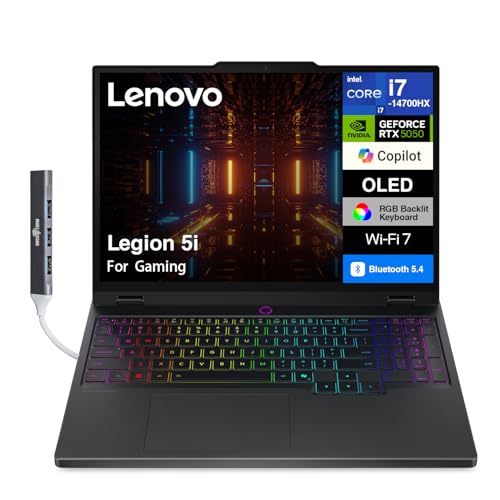
TL;DR: The Lenovo Legion 5i delivers a 15.1″ OLED 2560×1600 panel at 165 Hz, an i7‑14700HX with 20 cores, RTX 5050 graphics and 32 GB DDR5 for $1499.99, though its battery lasts only about five hours.
The standout feature is the 15.1‑inch OLED screen with a WQXGA resolution of 2560 × 1600, a 165 Hz refresh rate, 100% DCI‑P3 color gamut, 500 nits typical brightness and a 1000‑nit HDR peak. Under the hood sits an Intel Core i7‑14700HX that clocks 2.1 GHz base and can boost to 5.5 GHz, paired with an NVIDIA GeForce RTX 5050‑8 GB GDDR6 GPU. Memory comes as 32 GB DDR5 running at 5600 MT/s, and storage is a 1 TB PCIe NVMe SSD.
At $1499.99 the Legion 5i lands near the lower end of the price spectrum in this 13‑model roundup, making it cheaper than many premium entries such as the Legion Pro 7i or the Razer Blade 14, yet it still offers a full‑size OLED panel that several competitors lack. Its weight of 4.2 lb is comparable to the Legion 5i i7‑14700HX (around 4.1–4.4 lb) and a bit lighter than the Legion 7i, which is listed as under 2.0 kg. The connectivity suite—HDMI 2.1, Thunderbolt 4, three USB‑A 3.2 Gen 1 ports, an RJ‑45 Ethernet jack and a headphone/mic combo—outpaces many rivals that only provide limited USB‑C options.
Reviewers consistently praise the vibrant OLED display and the value‑driven performance, noting that the laptop feels like a desktop replacement for a modest budget. However, users also flag the modest battery life of roughly five hours in light use, audible fan noise under load, and a keyboard that feels shallow and mushy. Professional reviewers highlight the excellent port selection and recommend using DLSS to keep frame rates smooth in demanding titles. The OLED panel, while gorgeous, carries the usual burn‑in risk that some owners mention.
Beyond the core specs, the Legion 5i packs an 80 Wh 4‑cell battery paired with a 240 W AC adapter for rapid charging. Connectivity includes Wi‑Fi 7 (802.11be) and Bluetooth 5.4, while the 5 MP webcam supports Windows Hello facial recognition. The keyboard features 24‑zone RGB backlighting, and AI‑driven software like AI Copilot+ and ICP Hub adds a layer of convenience for power users.
Pros
Cons
Best for: Enthusiast gamers and creators who want a high‑refresh OLED display and strong performance without a premium price tag.
Avoid if: You need long battery endurance, a deep‑travel mechanical keyboard, or want to avoid potential OLED burn‑in.
TL;DR: The Lenovo Legion Pro 7i RTX 5080 delivers a 16‑inch 240 Hz OLED panel with 1000‑nit HDR and a Core Ultra 9 CPU paired with an RTX 5080 GPU, offering desktop‑class power at a premium $2799 price.
What really sets this laptop apart is its display and graphics combo. It houses a 16.0‑inch Samsung OLED panel (2560 × 1600 resolution) that hits a 240 Hz refresh rate, 500 nits SDR brightness and a VESA DisplayHDR True Black 1000 peak, while the RTX 5080 GPU runs at a 2287 MHz boost clock with a 175 W TGP. Under the hood, the Intel Core Ultra 9 275HX delivers a 2.7 GHz base and 5.4 GHz turbo frequency, giving you 24 cores for heavy multitasking.
At $2799 it lands at the top end of the OLED lineup, making it pricier than most of the other twelve contenders. Weighing 5.67 pounds, it is lighter than the Razer Blade 14’s 7.8 pounds but still heavier than the sub‑2 kg Legion 7i. Its 99.9 Wh battery provides roughly 6.5 hours of mixed‑use endurance, outlasting the 72 Wh pack that the Razer Blade 14 uses, yet it doesn’t match the longer life of some lower‑powered rivals. Bluetooth 5.4 matches the connectivity of the Lenovo Legion Pro 7i 5070 Ti, while the maximum fan noise of 53.9 dB is slightly quieter than the 54.6 dB the Razer Blade 14 recorded.
Professional reviewers praise the raw performance, noting that the tri‑fan cooling system with dual heatsinks, vapor chamber and optional liquid‑metal interface keeps the RTX 5080 and Core Ultra 9 running at high clocks for extended sessions. Users echo the admiration for the buttery‑smooth 240 Hz experience and the color‑accurate OLED panel, but they also flag the glossy screen’s reflectivity in bright rooms, the chassis’s heft for on‑the‑go use, and the tendency of the CPU to run hot under sustained loads. The 32 GB DDR5‑6400 RAM and 1 TB PCIe Gen5 SSD give ample headroom for gaming and content creation, while the 400 W proprietary adapter and up to 140 W USB‑C charging keep the machine powered for demanding workloads.
Pros
Cons
Best for: Enthusiast gamers, streamers, and content creators who demand desktop‑class GPU power and a top‑tier OLED display.
Avoid if: You need a lightweight, budget‑friendly laptop or prioritize quiet operation and extended battery life for travel.
Breakdown
Razer Blade 14 2025
Pros
Lenovo Legion 5 15IRX10
Pros
Lenovo Legion 7i
Pros
Lenovo Legion 7i RTX 5070
Pros
Based on scoring data and product specs
Personalized picks
Best Overall Pick
Razer Blade 14 2025
Best OverallBest for: Those prioritizing quality and willing to pay for premium performance
Lenovo Legion 5 15IRX10
Best for: Users with specific technical requirements or compatibility needs
$1,799.00-$500.99 vs winner
Skip Lenovo Legion Pro 7i RTX 5080 if…
You need advanced features or professional-grade performance
The Razer Blade 14 2025 takes the top spot thanks to its sleek 14‑inch OLED panel that delivers 400–450 nits of peak brightness, a 1,000,000:1 contrast ratio and a rapid 0.2–1 ms response time, making fast‑paced games look stunning. It pairs that visual punch with a solid 4.0/5 rating from 87 reviewers and a respectable $2299.99 price tag, while it’s still offering 11.5 hours of typical battery life and a 200 W charger for quick top‑ups.
The Lenovo Legion 5 15IRX10 lands as runner‑up, ideal if you need a larger 15.1‑inch OLED screen for immersive play or creative work. Its 165 Hz refresh rate, 1000 nits HDR peak brightness and 1,000,000:1 contrast give vivid detail, and the Intel Core i9‑14900HX with an RTX 5070 GPU provides flagship‑level performance. At roughly 1.9 kg and with an 80 Wh battery that reaches 0‑70 % in 30 minutes, it balances power and portability—check the current price.
For tighter budgets, the Lenovo Legion 5i at $1499.99 offers the best value with a capable spec set for mainstream gaming. If you want a step up without breaking the bank, the Lenovo Legion 7i at $1799.99 delivers a solid mid‑range experience with strong performance and a premium feel. For those chasing top‑tier luxury, the Lenovo Legion Pro 7i RTX 5080 at $2799.00 stands out as the premium pick, featuring the highest‑end GPU and display options.
Pick the Razer Blade 14 2025 today for the most balanced OLED gaming laptop experience.
The Razer Blade 14 2025 leads with a premium aluminum unibody, 100 % DCI‑P3 and Adobe RGB coverage, 400–450 nits peak brightness, a 1,000,000:1 contrast ratio, and a crisp 14‑inch 2880 × 1800 OLED panel at 120 Hz. Priced at $2,299.99, it delivers a dominant quality advantage over the other OLED options in this segment.
Please sign in to leave a review
No reviews yet. Be the first to review!
