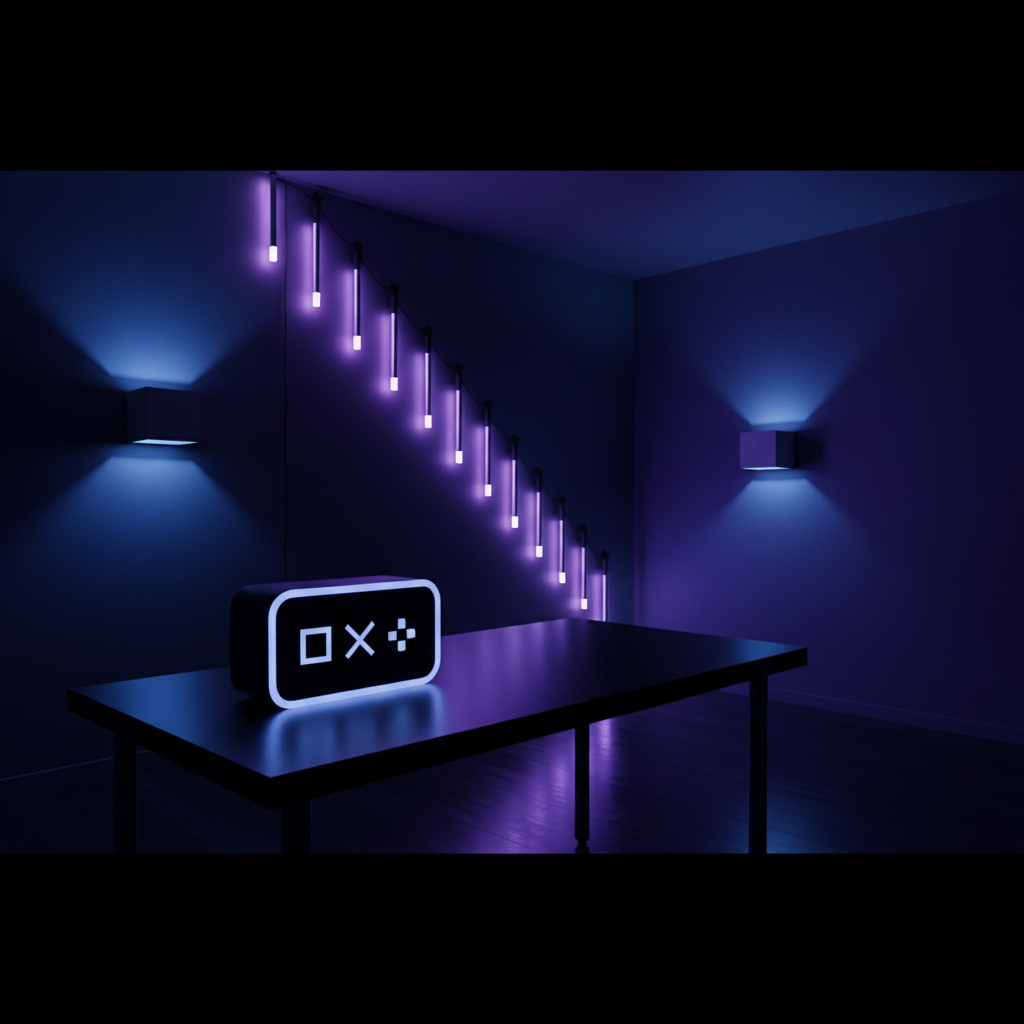
We compared 14 lighting solutions that promise to sync your game’s pulse with the beat of your soundtrack. At the low end, the Paladone PP4140PS stands out with a $24.49 price tag, a 4.7/5 rating from 36,547 reviewers, and a featherlight 0.21875 pounds, making it a plug‑and‑play desk accent for PlayStation fans.
Moving up, the budget tier also includes the Govee TV Backlight ($34.19) and the Govee Light Bars H6047 ($79.99) plus the String Downlights at $89.99 with a 4.5/5 score from 671 reviews. Mid‑range picks are the Govee Light Bars Pro and Cube Wall Sconces, while the premium camp features the Philips Hue Play Gradient 55, the Govee Glide Y ($239.99, 4.7/5 from 327 reviews), the Hue Light Tube and the Hue Light Strip 75, each delivering high‑end color fidelity and ecosystem integration.
All models offer music‑reactive modes, but they differ in power source, LED count and smart‑home compatibility. We'll break down which option fits a tight desk, a gamer‑cave wall or a full‑size home‑theater setup.
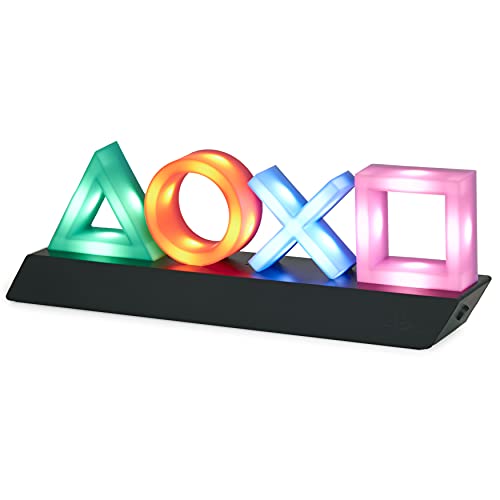
Paladone PP4140PS
Its compact 69.85 mm depth lets you fit powerful lighting into tight gaming setups without sacrificing sync features.

Govee String Downlights
Ideal for gamers who want a more expansive light display, the Govee String Downlights cost $89.99, about $65.50 more than the Paladone but deliver broader coverage.

Govee Cube Wall Sconces
Stands out with its 180 mm tall, 18 mm thin cube design, offering a sleek wall‑mounted look that the Paladone and String Downlights can't replicate.
Also considered
Score Analysis
Key score advantages vs. runner-up (Govee String Downlights)
Price Range
Paladone PP4140PS
$24.47
Govee String Downlights
$109.99
Govee Cube Wall Sconces
$159.99

Govee Glide Y
$239.99

Govee Light Bars H6047
$79.89

Govee Light Bars Pro
$84.99

Philips Hue Light Strip 75
$247.49

Philips Hue Light Tube
$217.77

Govee TV Backlight
$34.19

Philips Hue Play Gradient 55
$149.00

Nanoleaf Shapes Triangles
$44.99
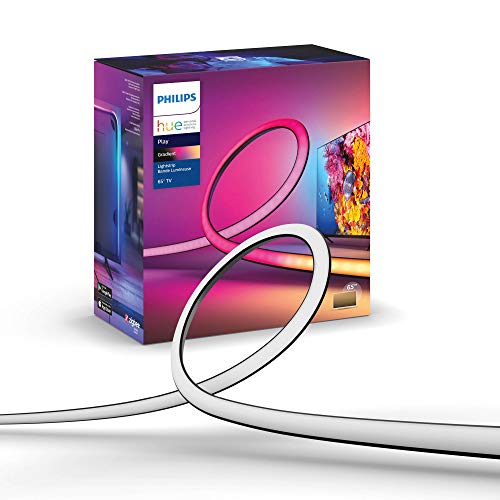
Philips Hue Play Gradient 65
$157.40

Govee Neon Rope 10ft
$74.99

Neewer GL1C Key Light
$151.49
Spec Comparison
TL;DR: The Paladone PP4140PS is a $24.49 Sony‑licensed tabletop lamp that blends PlayStation icon design with sound‑reactive LED glow, offering dual USB or AAA power for budget‑friendly gaming ambience.
Its iconic PlayStation button layout glows with LED neon‑style light, and the compact frame measures 304.8 mm wide, 101.6 mm high and 69.85 mm deep. A built‑in microphone powers the sound‑reactive mode, letting the lamp pulse to music or game audio without extra hardware.
At $24.49 this lamp sits at the low‑end of the price spectrum compared with the other thirteen contenders, and its 99.2 g (0.21875 lb) weight makes it one of the lighter tabletop options. While many rivals rely on Bluetooth or larger strip systems, the Paladone uses a simple 1.5 m Micro‑USB cable or three AAA batteries, keeping the setup straightforward and budget‑friendly.
Reviewers love the authentic Sony licensing and the nostalgic icon colors that instantly brighten a gaming shelf. Professional reviewers highlight the music‑reactive lighting as a standout, noting that the built‑in microphone syncs well with game soundtracks. Everyday users appreciate the solid ABS construction and the ability to run the lamp off USB or batteries, but they also point out that the LED output can appear dim in bright daylight and that you must turn the unit on manually each session. The battery compartment requires a screwdriver to open, which many users cite as a frequent complaint.
Beyond aesthetics, the lamp offers practical flexibility: a touch‑sensitive button cycles through static, dynamic phasing and sound‑reactive modes, and the 5 V USB input means you can power it from a PC, wall adapter or power bank. The matte black base with rubberized non‑slip feet keeps it stable on desks or shelves, and the lack of an IP rating shows it’s intended for indoor use only.
Pros
Cons
Best for: PlayStation fans, gaming collectors, and anyone wanting a budget‑friendly, Sony‑branded ambient light for a desk or shelf.
Avoid if: You need bright illumination in daylight, automatic power‑on, or a larger, more powerful lighting system.
“These lights are amazing!!!”
“Sets off my shelf perfectly”
TL;DR: The Govee String Downlights offer 16 million RGBIC colors, music‑sync, and cut‑to‑size design for $89.99, backed by a 4.5‑star rating from 671 reviewers.
What sets this strip apart is the combination of 16 million customizable colors and RGBIC technology that lets each of the 15 LEDs be addressed individually. The strip reaches a lighting‑effect depth of 100 cm and reacts to music in real time, while the cuttable design lets you trim it at marked points to fit corners or curves. At 180 mm tall, 200 mm long and 160 mm wide, the housing weighs just 0.03968320716 pounds (18 g), so it's easy to mount discreetly.
Compared with other options in the roundup, the String Downlights are dramatically lighter than the Govee Light Bars H6047, which tip the scales at 2.91 lb, and also lighter than the Light Bars Pro’s 1610 g chassis. The strip’s 9.8‑ft overall length exceeds the Light Bars H6047’s 17.28 in package length, giving you more coverage with fewer LEDs—15 versus the Light Bars H6047’s 62. It also weighs less than the Neon Rope 10ft’s 2.1 lb and far under the Cube Wall Sconces’ 5.28 lb, while still delivering comparable color breadth.
Users consistently praise the vibrant, accurate colors and the seamless Matter integration that lets voice assistants control the lights without a hub. Professional reviewers highlight the music‑sync mode as a visual spectacle that adds energy to gaming sessions. The main drawbacks include the requirement to place the 12 V/2 A power adapter on the right side of the strip, the indoor‑only rating, and the absence of lumen specifications, which makes brightness comparisons tricky.
Technically, the strip runs on a 12 V AC power adapter delivering 2 A, and the LEDs have a 25,000‑hour lifespan rating. You can create custom zones in DIY mode, select from scene presets, or let the app sync lighting to any audio source. Voice control works through Alexa, Google Assistant, and Matter‑compatible devices, giving you hands‑free adjustment during gameplay.
Pros
Cons
Best for: Gamers, streamers and smart‑home fans who want music‑sync lighting that integrates with Alexa, Google Assistant and Matter.
Avoid if: You need outdoor lighting, require guaranteed brightness specs, or cannot accommodate the right‑side power‑supply placement.
TL;DR: The Govee Cube Wall Sconces kit delivers 150 lm per cube (900 lm total) with RGBIC colors, 4 music‑sync modes, and easy adhesive mounting for a vibrant mid‑range gaming ambiance.
The standout spec is the six‑piece RGBIC system, each cube putting out 150 lm and together reaching 900 lm of total luminous flux. With 50 preset lighting effects and four music‑reactive modes, the kit lets you sync beats to the room without extra hardware. The cubes are thin—18 mm thick—and the adjustable cable length ranges from 27 cm to 90 cm, giving you flexibility for different wall layouts.
Compared with the other 13 contenders, the Govee set weighs more than the Philips Hue Play Gradient 55 (1,310 g) and the Govee Light Bars H6047 (2.91 lb), but weighs less than the Neewer GL1C Key Light (2,943 g). Its price puts it in the mid‑range tier, a step above the budget‑friendly Govee Light Bars Pro and Govee String Downlights, while it offers more fixtures and richer RGBIC effects than those single‑strip options.
Users consistently praise the vivid colors and the plug‑and‑play installation—peel‑and‑stick tape plus optional brackets make mounting a breeze. Reviewers also love the music sync that reacts to room sound, noting that the app’s scheduling and voice‑assistant integration (Alexa, Google Assistant) feel “intuitive.” Professional reviewers highlight the segment‑level control that RGBIC provides, delivering smoother transitions than basic LEDs. On the downside, several owners report occasional 2.4 GHz Wi‑Fi hiccups and the limitation that only one Govee account can manage the system, which can be frustrating for shared households. LED failures can't be replaced, meaning a faulty cube forces a full kit replacement.
Technically, the lights run on a 12 V DC adapter (3 A) and support Bluetooth initial pairing plus 2.4 GHz Wi‑Fi (no 5 GHz). The lights set the color temperature to 2700 K for warm white, and the wall‑washing distance reaches 2000 mm, helping spread light across larger surfaces. Safety certifications include FCC, IC, CE, and UKCA, and the kit comes with a 12‑month warranty.
Pros
Cons
Best for: Buyers in the mid price range seeking the best quality at that price point
Avoid if: You have limited desk space or need portability
TL;DR: The Govee Glide Y delivers 800 lumens of RGBIC light, 16 million colors and music‑sync across a modular 3‑section strip, but its premium $239.99 price and adhesive‑only mounting may limit budget‑focused builds.
What really sets the Glide Y apart is its 800‑lumen output paired with 16 million color options and independent segment control (RGBIC). Govee ships the system as a 3‑section set (376 mm per section) with 288 LEDs, plus a 6‑piece variant that uses 171 LEDs, and it supports 40+ scene modes plus 11 music‑sync modes—all managed through the Govee Home app, Wi‑Fi, Bluetooth and Matter.
Compared with the other lights in this roundup, the Glide Y weighs more than the Philips Hue Light Tube (about 1.87 lb) and the Hue Play Gradient 65 (≈1.9 lb), but weighs less than the Neewer GL1C Key Light’s 6.49 lb chassis. In terms of brightness, the Hue Light Tube lists 1,840 lm and the Hue Play Gradient models list 1,100 lm, so the Glide Y’s 800 lm sits below those premium strips but far above the Govee Cube Wall Sconces, which emit only 150 lm per unit.
Users consistently praise the vivid color range and the responsive music sync, noting that the app feels more intuitive than competing ecosystems. Professional reviewers also highlight the solid smart‑home integration with Alexa, Google Assistant and Matter. The most common gripe is the adhesive‑backed mounting: the tape can lose its grip on textured walls and may need replacement, and some owners hear a high‑pitched buzz from the control box.
Here are some technical notes: the 3‑section model runs at 36 V and draws 72 W, while the 6‑piece set operates at 12 V with 36 W consumption, delivering an efficiency of 11.11 lumens per watt. The full‑set measures 30 mm high, 45 mm wide and 370 mm long, and the entire 3‑section kit weighs 4.0 pounds (1666 g). You only need the supplied adhesive strips or Velcro—no drilling.
Pros
Cons
Best for: Gamers and streamers who want high‑brightness, color‑rich lighting with robust smart‑home support.
Avoid if: You have a tight budget or plan to mount lights on textured walls — the $239.99 price and adhesive‑only mounting may be limiting.
“beats the competition for less”
“elegant and affordable solution to light requirements”
TL;DR: The Govee H6047 Light Bars deliver 62 RGBIC LEDs, 24 W power draw and responsive audio sync, all controlled by a handy desktop dial for an immersive gaming vibe.
What sets the H6047 apart is its RGBIC technology that lets each of the 62 LEDs show independent colors, offering the full 16.8 million‑color palette. The bars consume 24 W when the whole system is active but drop to just 3 W for the LEDs alone, keeping your power bill modest while still producing vibrant effects. A built‑in physical dial lets you tweak brightness, mode and color without opening an app, and the system reacts to speaker or headphone audio through the Govee Home app.
At 2.91 lb, the H6047's heavier than the Govee Neon Rope (2.1 lb) and far heavier than the ultra‑light Govee String Downlights (≈0.04 lb), yet it sits below the Govee Cube Wall Sconces (5.28 lb). Its LED count of 62 outpaces the String Downlights’ 15 LEDs and matches the Neon Rope’s 42 controllable segments, giving it more granular lighting control than many peers. Compared with the Light Bars Pro, which weighs around 3.55 lb, the H6047 feels a bit lighter while still offering a comparable floor‑mount footprint.
Buyers consistently award the bar a 4.7‑star rating across 1,737 reviews, highlighting the “highly responsive audio sync” and the convenience of the tactile dial. Professional reviewers note the RGBIC upgrade as a clear advantage over standard RGB strips and praise the low 3 W LED‑only draw. The most common complaints involve occasional Wi‑Fi drops and the Govee Home app lagging on older smartphones, plus a moderate brightness level that may fall short in very large rooms.
Under the hood, the bars use a 12 V, 24 W corded adapter and support Bluetooth, Wi‑Fi, Alexa and Google Assistant. Razer Synapse 3 compatibility makes them a natural fit for PC gamers, while the floor‑mount design and painted dark‑grey ABS housing blend into most setups without demanding wall space.
Pros
Cons
Best for: Gamers and streamers who want immersive, music‑sync lighting with quick tactile control.
Avoid if: You want the best value‑per‑dollar in its price range or need a wall‑mountable, screen‑color‑matching solution.
“Transformed my gaming setup”
“The dial is genius”
TL;DR: The Govee Light Bars Pro delivers 3‑side RGBIC illumination with 900 lumens, 24 W power draw, and Windows‑only DreamView sync, making it a top pick for immersive PC gaming setups.
The standout spec is its triple‑sided RGBIC lighting – three illumination sides each packed with 63 LED beads per bar, totalling 126 beads and 900 lumens of output. At 24 watts, 12 volts and 2 amps, it balances brightness with modest power consumption while fitting into a compact 80 mm × 80 mm × 400 mm footprint (8 cm × 8 cm × 40 cm).
Compared with the other 13 entries, the Light Bars Pro is heavier than the ultra‑light Govee String Downlights (18 g) but lighter than the bulkier Govee Cube Wall Sconces (2395 g). It also sits above the Govee Light Bars H6047 in price, yet offers more immersive lighting with three‑sided illumination versus a single‑sided design on many rivals. Its 60+ scene modes and eight music‑sync modes outnumber the 62 preset scenes on the H6047, giving many creative options.
Users consistently rave about the “sick” ambience and vivid colour accuracy, praising the solid build and easy Bluetooth‑BLE connection. Professional reviewers highlight the industry‑first triple‑sided RGBIC effect and the ultra‑responsive DreamView screen sync, though they note the need for a 2.4 GHz Wi‑Fi network and that the desktop sync software runs only on Windows. Everyday sentiment also mentions the lack of built‑in colour‑matching, meaning you’ll rely on external apps for precise hue matching.
Beyond the lighting, the unit integrates with Alexa, Google Home and Matter, and can be controlled via the Govee Home app on iOS and Android. The included accessories – a clean cloth, control box, power adapter and user manual – make initial setup straightforward. With a 1‑year warranty and a 4.8‑star rating from 175 reviewers, it shows strong brand confidence.
Pros
Cons
Best for: Gamers on Windows PCs seeking screen‑synced, 3‑D ambient lighting with robust smart‑home integration.
Avoid if: You rely on a 5 GHz‑only Wi‑Fi network, use macOS/Linux, or need built‑in colour‑matching.
“Transformed my gaming setup”
“The dial is genius”
TL;DR: The Philips Hue Light Strip 75 delivers 1,200 lm of color‑rich, sync‑ready lighting for 75‑inch TVs, but you’ll need a Hue Bridge and Sync Box, and it sits at $289.99.
This strip spans an installed length of 85.2 in, giving you coverage that wraps around a typical 75‑inch screen. With a total fixture output of 1,200 lm at 4000 K and a CRI > 80, the colors stay vivid and accurate, while the 20 W wattage keeps power draw modest. The silicone‑backed, 0.63‑in high, 0.67‑in wide profile lets it bend around corners without visible seams.
At 3.15 lb, the Light Strip 75 is heavier than the Philips Hue Play Gradient 65 (≈1.9 lb) and the Hue Light Tube (≈1.87 lb), yet lighter than the Govee Glide Y (4.0 lb). Its raw strip length of 119.75 in exceeds the Play Gradient 65’s 11.4‑in listed length, giving you more coverage out of the box, while still fitting the same mounting brackets. Compared with the other 13 entries, it lands toward the premium end of the price spectrum and offers a richer feature set than many non‑Hue competitors.
Reviewers rave about the “dramatic immersion” the gradient lighting creates, noting that the included brackets make installation straightforward and that voice control via Alexa or Google Assistant works reliably. Professional reviewers note the smooth color transitions and the high CRI, which together produce realistic on‑screen ambience. The most common complaint is the extra cost of the required Hue Bridge and Sync Box, plus the fact the strip can’t be cut or extended, limiting flexibility for non‑standard TV sizes.
Beyond the visual appeal, Philips built the strip for indoor use (IP20) and tolerates temperatures from –20 °C to 45 °C, with a humidity range of 5 %–95 % (non‑condensing). Its 25,000‑hour rated lifetime and 0.5 W standby draw mean it’ll stay lit for years without noticeable wear. The 120 V–100 V input range matches standard North American outlets, and the 20 W draw keeps energy use low for a device of this size.
Pros
Cons
Best for: Buyers willing to invest in a proven, high‑quality option
Avoid if: You're on a tight budget or only need basic functionality
TL;DR: The Philips Hue Light Tube delivers up to 2,600 lm of RGBW light, rotates 340°, and syncs with Hue Bridge for immersive gaming atmospheres, but its $241.99 price and track‑only mounting keep it premium.
This tube packs a maximum output of 2,600 lm at 4000 K while drawing 29.5 W, and its 54.21 in length lets you span a full wall of light. The full RGBW color engine covers a 2,000–6,500 K temperature range, and the unit can rotate up to 340° for precise direction.
Compared with the other 13 entries, the Hue Light Tube is longer than the Govee Glide Y’s 370 mm full‑set length and the Play Gradient 65’s 11.4 in length, yet shorter than the Hue Light Strip 75’s 85.2 in installed length. At 1.874 lb it’s lighter than the 4.0‑lb Govee Glide Y and the 6.49‑lb Neewer GL1C, and roughly matches the 1.896‑lb Play Gradient 65.
Reviewers rave about the vivid colors and the strong brightness that fill living rooms and home‑theater setups, noting the smooth gradient transitions during game sessions. The main friction points are the need for a separate Hue Bridge and the optional Sync Box, which add to the total cost, and the fact that the tube fits only the Perifo track system.
Technical details include an efficacy of ≈90 lm/W, a Color Rendering Index of 80, and a rated lamp lifetime of 25,000 hours. The unit meets IP20 for dry indoor use, supports Bluetooth, Zigbee, and major voice assistants, and includes a 2‑year warranty.
Pros
Cons
Best for: Those prioritizing quality and willing to pay for premium performance
Avoid if: You're shopping on a tight budget — it's priced at $241.99
TL;DR: The Govee TV Backlight offers a 15‑ft RGBIC strip with Bluetooth 5.0, 138 lamp beads and 11 music modes for $34.19, delivering immersive lighting that users praise for ease of setup but that can struggle with skin‑tone accuracy.
The system features a 15 ft (4570 mm) strip that fits 70–80‑inch TVs, 138 RGBIC lamp beads and an LED density of up to 60 LEDs per meter, all driven by a 12 V DC power supply. Built‑in camera and microphone enable real‑time color matching and music sync across 11 dedicated modes, while voice control works with Amazon Alexa and Google Assistant.
At 1.14 lb (517 g), the backlight sits between the ultra‑light Paladone PP4140PS (0.21875Pounds) and the heavier Govee Light Bars H6047 (2.91pounds), giving it a solid yet manageable feel. Its Bluetooth 5.0 connectivity and 2.4 GHz Wi‑Fi set it apart from peers that lack wireless control, and the 99+ preset scenes provide more variety than many budget alternatives.
Users love the immersive ambience for movies and gaming, noting the easy tool‑free installation with magnetic/adhesive camera mounts. Professional reviewers highlight the dual‑camera edge detection and the “best‑in‑class” 60 LEDs/m density for under $150. Common complaints include occasional color‑matching inaccuracy—especially with skin tones—occasional app lag, and the need for 2.4 GHz Wi‑Fi, which can be limiting for households that rely on 5 GHz networks.
Pros
Cons
Best for: Budget-conscious buyers seeking a reliable entry-level option
“Transformed my living room into a mini cinema.”
“The music sync mode is incredible during parties.”
TL;DR: The Philips Hue Play Gradient 55 delivers 7‑zone, 16‑million‑color ambient lighting with 1,100 lumens output for $153.95, but you’ll need a Hue Bridge and Sync Box for full sync.
The strip packs seven independently controllable zones, 16 million colors, and a luminous flux of 1,100 lumens while drawing just 20 W of power. At 16 mm high, 17 mm wide and 290 mm long, the flexible silicone‑based strip bends easily around TV corners, and it offers a color temperature range from 2,000 K to 6,500 K.
At 1,310 g, it’s heavier than the Philips Hue Play Gradient 65, which weighs 1.9 pounds (860 g), yet its length of 290 mm matches the Gradient 65’s 289.6 mm almost exactly. Its weight is comparable to the Govee Light Bars H6047 at 2.91 lb (1,320 g). Like the Gradient 65, it shares the same 16 million‑color range, 1,100‑lumen brightness, and seven‑segment architecture, placing it solidly among the premium options in this roundup.
Reviewers love the “awesome, immersive, cinematic” effect that reduces eye strain during long gaming sessions, praising the smooth gradient blending and high color accuracy. Professional reviewers highlight the premium color quality and dynamic response to on‑screen content. The main complaints focus on the lack of bottom‑edge illumination, a fixed 55‑inch length that can’t be extended, and occasional adhesive‑bond issues on textured TV backs. Full content sync also demands a separate Hue Bridge and optional Sync Box, increasing the total cost.
Power‑wise the strip runs on a 120 V corded adapter, consuming 20 W and promising a lifespan of 25,000 hours. Its wide color temperature range lets you shift from warm 2,000 K tones to cool 6,500 K daylight, while the seven zones create dynamic, content‑driven lighting that can be customized through the Philips Hue app or voice assistants.
Pros
Cons
Best for: Buyers willing to invest in a proven, high‑quality option
Avoid if: You're on a tight budget or only need basic functionality
TL;DR: Nanoleaf Shapes Triangles cost $44.99, offer over 16 million colors, music sync, and Thread support, delivering customizable lighting that reacts to game audio and screen content.
What really sets this kit apart is its Connect+ technology, which lets you attach up to 21 panels to a single 42 W power supply and scale to 500 panels under one controller. Each panel draws only 2 W, so a 9‑panel pack consumes 13.5 W while delivering 720 lumens total. The package also includes a 42 W power supply, double‑sided tape, and linkers for quick assembly.
Compared with other options in the roundup, Nanoleaf Shapes Triangles are lighter than the Govee Light Bars H6047 but heavier than the Paladone PP4140PS. Unlike the Govee TV Backlight, which lists Bluetooth 5.0, Nanoleaf relies on 2.4 GHz Wi‑Fi and adds Thread support—a feature not mentioned for the other peers. It also offers far more smart‑home integrations than the Govee Neon Rope, which lists only basic color control.
Reviewers love the way the panels turn any wall into a reactive light show; the music‑sync and screen‑mirror functions get frequent praise from gamers who want their room to pulse with in‑game action. However, users frequently note that the supplied tape can lose adhesion over time and that the non‑locking linkers may detach if the panels are bumped. Professional reviewers also point out that the brightness is modest, making it better for ambience than for task lighting.
Technically, each panel measures 196.85 mm in height and 228.6 mm in width, with an edge thickness of 6.1 mm and a mounted thickness of 9.9 mm. The panels have a Color Rendering Index of 80 and an efficiency of 53.33 lumens per watt, while the LED modules are rated for 25,000 hours of use. The system supports over 16 million colors via an RGBW channel configuration and can be controlled through the Nanoleaf app, touch, voice assistants, or the Razer Synapse integration.
Pros
Cons
Best for: Gamers and streamers who want music‑reactive, customizable lighting with broad smart‑home integration.
Avoid if: You need the brightest task lighting or the highest value‑per‑dollar compared to other budget options.
“Looks amazing on the wall — like a futuristic art piece”
“Music sync is perfect for parties and gaming”
TL;DR: The Philips Hue Play Gradient 65 delivers 16 million colors and 1,100 lumens across seven segments for immersive, sync‑driven lighting, but it needs a Hue Bridge and Sync Box and leaves the TV’s bottom edge dark.
The strip’s standout spec is its seven independently controllable segments that blend 16 million colors, delivering up to 1,100 lumens of brightness while drawing just 20 watts of power. Its matte silicone sleeve spreads light evenly across a 0.67‑inch (17 mm) thickness, and the built‑in LED source lasts 25,000 hours.
Compared with other options in this roundup, the Gradient 65 is lighter than the Philips Hue Play Gradient 55 and noticeably lighter than the Govee Light Bars H6047, while matching the 1,100‑lumen output of the Hue 55. Its $154.95 price point sits above many budget‑oriented strips, yet it offers a premium feature set that many lower‑priced competitors lack.
Reviewers love the “Ambilight‑style” glow that reacts to on‑screen action, music, or games via the Hue Sync Box, noting the effect feels natural and fluid. Professional reviewers highlight the smooth color blending and the durability of the flexible silicone construction. Common complaints focus on the missing illumination at the TV’s bottom edge, the need for an extra Hue Bridge and Sync Box, and the fact the strip can’t be cut or expanded, so it only fits exact 65‑inch models.
Additional technical details include a 2‑year manufacturer warranty, IP20 indoor rating, and voice‑control support through Alexa or Google Assistant. The strip connects via Zigbee through a Hue Bridge, and setup uses adhesive brackets that let you bend the strip around corners for a clean installation.
Pros
Cons
Best for: Buyers willing to invest in a proven, high‑quality option that syncs lighting to content and smart‑home assistants.
Avoid if: You're on a tight budget, need full 360° TV illumination, or lack an existing Hue Bridge.
TL;DR: The Govee 10‑ft Neon Rope offers 42 RGBIC segments, 16 million colors and music‑sync via a 36 W, Bluetooth‑enabled strip that’s easy to install and works with Razer Chroma, though a separate sync box is needed for full game integration.
The strip measures 10 ft (3048 mm) and packs 84 LEDs per meter, totaling 252 LED beads. With 42 independently controllable RGBIC segments and 16 million color options, it delivers smooth, gap‑free illumination that many users describe as “cinematic.” It runs on 24 V DC at 36 W, and the softer neon silicone material keeps the rope flexible for desk‑edge draping.
At 2.1 lb, the Neon Rope is lighter than the Govee Light Bars H6047 (2.91 lb) but noticeably heavier than the ultra‑light Govee String Downlights (0.03968 lb). Compared with other entries in this roundup, it offers a higher segment count than most RGB strips, giving it an edge for detailed lighting patterns without inflating the overall size.
Reviewers love the vibrant lighting and the intuitive Govee Home app, especially the music‑sync feature that reacts to in‑room sound. Voice control through Amazon Alexa or Google Assistant adds hands‑free convenience. However, several users note that full game‑sync requires the optional AI Gaming Sync Box, and occasional drops on the 2.4 GHz Wi‑Fi can be frustrating in congested networks. Cutting the rope is straightforward at the 12 marked points, though precise cuts are important to keep segment integrity.
Pros
Cons
Best for: Gamers and streamers who want a flexible, color‑rich lighting strip that integrates with Razer Chroma and music sync, without needing a premium‑priced system.
Avoid if: You need out‑of‑the‑box game‑sync or rely on 5 GHz Wi‑Fi for a crowded network.
TL;DR: The Neewer GL1C Key Light offers a 48 W edge‑lit panel with 4300 lux output, 97+ CRI, music sync and Stream Deck support for $152.29, making it a premium yet feature‑rich choice for creators.
The standout spec is its 48 W edge‑lit LED array delivering up to 4300 lux at 0.5 m, backed by 144 LEDs and a 97+ CRI rating that renders skin tones naturally. You can dial hue across the full 0‑360° range, adjust intensity and saturation from 0‑100%, and choose from 18 built‑in FX scenes, giving you a studio‑grade lighting toolkit in a compact 79 mm × 220 mm × 146 mm panel.
Compared with the other 13 lights in this roundup, the GL1C is heavier at 2,943 g (6.49 lb), so it feels more solid than the 1,610 g Govee Light Bars Pro or the 2,395 g Govee Cube Wall Sconces, but its slim 79 mm depth is far slimmer than the 400 mm‑tall Govee Light Bars Pro. Its 36 000‑color palette is smaller than the 16 million colors advertised for the Philips Hue Play Gradient strips, yet the GL1C adds music‑sync and Stream Deck compatibility—features that competitors don’t list. In practice, the richer control set (up to 10 channels, group control, Bluetooth, Wi‑Fi, and a 2.4 GHz wireless dongle) puts it ahead of many peers that only offer basic color mixing.
User sentiment highlights the panel’s silent, fanless design and the natural look from its high CRI, which professional reviewers praise as “studio‑quality illumination.” Reviewers also note the touch‑bar interface feels intuitive once mastered, though the control software can have a learning curve on older phones. Common complaints mention the separate 2.4 GHz dongle being easy to misplace and the lack of physical buttons for on‑the‑fly adjustments. The device ships with a 1‑year manufacturer warranty and carries the 2024 iF Design Award for its aluminum‑alloy construction and passive cooling.
Pros
Cons
Best for: Content creators and streamers who want high‑CRI, bright lighting with music‑sync and Stream Deck integration.
Avoid if: You need a portable, battery‑powered light or prefer simple hardware knobs over app‑based control.
“Perfect for YouTube and Zoom—light is soft and natural.”
“Music sync mode is a hit during live streams.”
Breakdown
Paladone PP4140PS
Pros
Govee String Downlights
Pros
Govee Cube Wall Sconces
Pros
Govee Glide Y
Pros
Cons
Based on scoring data and product specs
Personalized picks
Best Overall Pick
Paladone PP4140PS
Best OverallBest for: Budget-conscious buyers seeking a reliable entry-level option
Govee String Downlights
Best for: Most users looking for a well-reviewed, reliable mainstream option
$109.99+$85.52 vs winner
Skip Neewer GL1C Key Light if…
Reliability and user satisfaction are your top concerns
Paladone’s PP4140PS takes the top spot as the best gaming lighting with music sync. It scores a 4.7 / 5 rating from 36,547 reviewers, and at just $24.49 it’s the most affordable option in the field. The built‑in microphone lets the neon‑style LEDs pulse to any soundtrack, and the unit runs on three AAA batteries or a 5 V USB source, giving you flexible power choices.
The runner‑up, Govee’s String Downlights, shines when you need a customizable length and voice‑assistant integration. Its cuttable design lets you trim the 9.8‑ft strip to fit any setup, while Alexa and Google Assistant support let you trigger music‑sync modes hands‑free. At $89.99 it also offers a solid 4.5 / 5 rating from 671 users.
For those looking beyond the winner, the mid‑range pick is the Govee String Downlights at $89.99, which has earned praise for its DIY‑friendly cuttable strip and smart‑home compatibility. If you’re ready to splurge, the Philips Hue Light Strip 75 serves as the premium option at $289.99, acting as the high‑end contender for expansive smart‑lighting ecosystems.
Pick the Paladone PP4140PS today and upgrade your gaming ambience with instant music‑responsive glow.
The Paladone PP4140PS is a free‑standing tabletop unit that reacts to audio with its built‑in microphone and can run on three AAA batteries or a 5 V USB source. The Govee Light Bars Pro, while also music‑reactive with eight modes, requires a 12 V AC adapter and a weighted base, making it larger and less portable for tight desk spaces.
Please sign in to leave a review
No reviews yet. Be the first to review!
