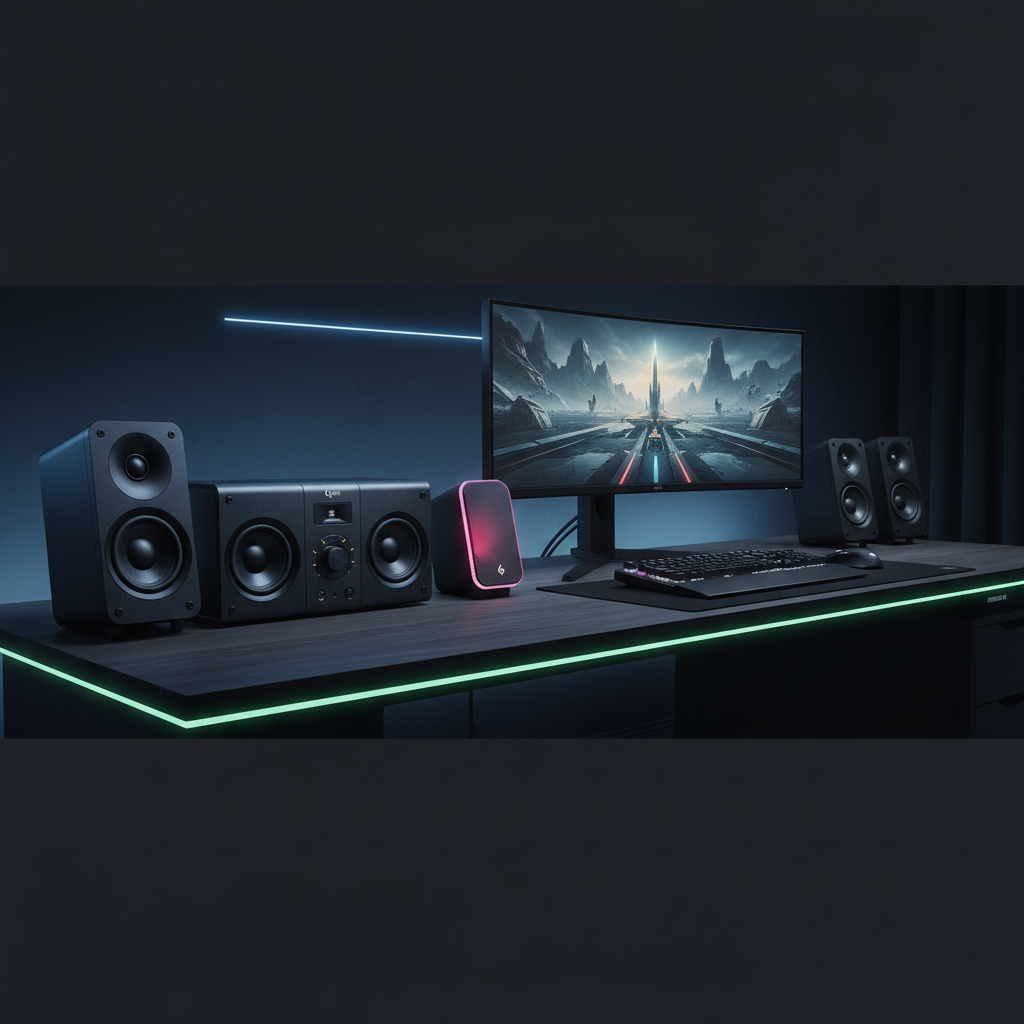
If you want a full‑blown surround experience without breaking the bank, the Logitech Z906 leads the pack. At $410.99 it packs a THX‑certified 5.1 system with 500 W RMS power and a 1000 W peak output, and its 4.5‑star rating from 5,951 reviewers shows it satisfies most gamers and movie buffs. The five satellite speakers and a dedicated subwoofer deliver room‑filling sound, while the console offers optical, coaxial and RCA inputs for hassle‑free setup.
The roundup covers 11 speakers across three price tiers. Budget‑friendly choices like the Klipsch ProMedia 2.1 ($159.99) and the Fifine A22 ($72.99) still crank out respectable volume, while mid‑range contenders such as the Logitech G560 ($249.99) add DTS:X Ultra virtual surround and RGB lighting. Premium picks—including the SteelSeries Arena 9 ($543.99) and the Razer Nommo V2 ($299.99)—bring wireless rear speakers or THX Spatial Audio for the ultimate immersion. Read on to see which model fits your desk, room size and style.
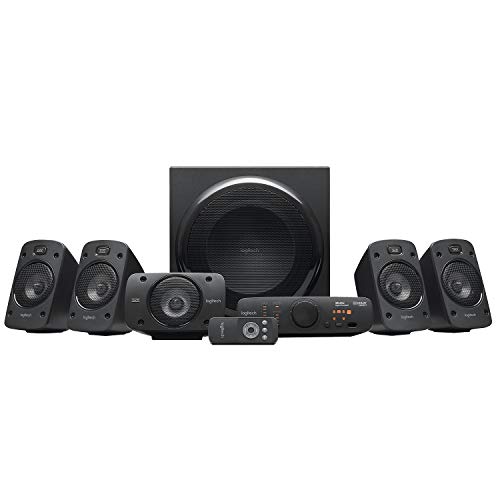
Logitech Z906
It's lightweight 0.5 kg control console keeps setup easy, contributing to its strong value rating.

Logitech G560
Ideal for mainstream gamers who want solid sound without breaking the bank, it comes in at $249.99—about $161 cheaper than the Z906.

SteelSeries Arena 9
With a 100 dB maximum SPL, it delivers louder peaks than the Z906 and G560, giving audiophiles a distinct head‑room advantage.
Also considered
Score Analysis
Key score advantages vs. runner-up (Logitech G560)
Price Range
Logitech Z906
$410.99
Logitech G560
$249.99
SteelSeries Arena 9
$543.99

Klipsch ProMedia 2.1
$159.99

Fifine A22
$72.99

Klipsch ProMedia Lumina
$319.99

SteelSeries Arena 7
$299.99

Razer Nommo V2
$299.99
AmpliGame Gaming Speakers
$49.99
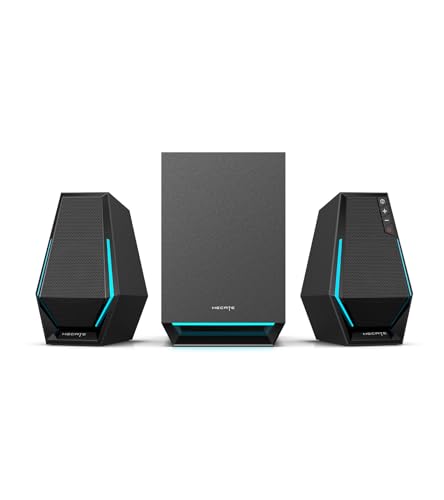
Edifier G1500 MAX
$119.99

Klipsch ProMedia Heritage
$669.99
Spec Comparison
TL;DR: The Logitech Z906 delivers THX‑certified 5.1 surround with 500 W RMS power, deep 35 Hz bass, and a suite of wired inputs, offering theater‑grade immersion for gamers and movie fans alike.
The system’s core is a THX‑certified 5.1 layout that pushes 500 W RMS through five satellites (67 W RMS each) and a 165 W subwoofer, covering a frequency response of 35 Hz – 20 kHz. Its signal‑to‑noise ratio exceeds 95 dB, so dialogue stays clear even at high volumes.
Weighing 19.6026445342182 pounds, the Z906 is substantially heavier than the Klipsch ProMedia 2.1 (2.1 pounds) but lighter than the SteelSeries Arena 9 (33.2 pounds). Its 500 W RMS output dwarfs the 150 W RMS of the Logitech G560 and the 120 W RMS of the same model’s total rating, positioning it at the top end of power among the eleven contenders.
Everyday users rave about the theater‑like loudness and deep bass, calling the plug‑and‑play setup “straightforward.” Professional reviewers note the distortion‑free performance that the high RMS rating enables. The most common complaints involve the fragile control console—often a single point of failure with no replacement parts—and the subwoofer’s tendency to warm up during marathon gaming sessions. Because the system relies solely on wired connections, it isn’t suited for those who need Bluetooth or Wi‑Fi streaming.
Beyond raw power, the Z906 packs a rare six‑channel direct (DB‑15) input for PC sound cards, dual digital optical inputs, a coaxial input, RCA, and a 3.5 mm auxiliary jack. Front/center satellite cables run 4.6 m, while rear satellite cables reach 7.6 m, giving you flexibility to position speakers in larger rooms without sacrificing signal quality.
Pros
Cons
Best for: Audiophiles and enthusiasts seeking premium sound quality and advanced features
Avoid if: You're on a tight budget or only need basic functionality
“"Loud and Clear" Sound”
“Control console is a single point of failure; Logitech does not sell replacement units, rendering the system unusable if it fails”
TL;DR: The Logitech G560 delivers 120 W RMS power, DTS:X Ultra virtual 7.1 surround and 16.8 million‑color LIGHTSYNC RGB, but its always‑on subwoofer can be too boomy for quiet rooms.
The standout spec is its 120 W RMS output backed by a 240 W peak rating, paired with DTS:X Ultra virtual 7.1 surround sound and LIGHTSYNC RGB that can display roughly 16.8 million colors. At 7.27 kg total system weight, it’s solid enough to stay put while still fitting on a typical desk.
Compared with the other ten speakers, the G560 is lighter than the SteelSeries Arena 7 (≈23.95 lb) and the Logitech Z906 (≈19.60 lb) but heavier than the Klipsch ProMedia 2.1 (≈2.1 lb). Its 120 W RMS power sits below SteelSeries’ 150 W RMS and above the Razer Nommo V2’s 65 W RMS, while its Bluetooth 4.1 range of 25 m outmatches the 5 m range of SteelSeries and the 10 m range of Razer and Edifier. Cable lengths of 2.2 m for power and satellite‑to‑subwoofer connections are comparable to the 2 m speaker‑to‑subwoofer cable of SteelSeries.
Reviewers consistently praise the “booming sound” and “rich bass” that the 60 W RMS subwoofer provides, along with the eye‑catching LIGHTSYNC lighting that reacts to game audio. Professional reviewers highlight the high power output and well‑designed Logitech G Hub software for EQ and lighting tweaks. On the downside, users note that the subwoofer cannot be turned off, which can cause unwanted vibrations in quieter environments, and the screen‑sampling lighting mode can feel overly aggressive.
Pros
Cons
Best for: PC gamers who want immersive audio with virtual 7.1 surround and dynamic RGB lighting, plus Bluetooth flexibility.
Avoid if: You have limited desk space, need portability, or share a quiet environment where the constant subwoofer rumble is a problem.
“solid for gaming”
“great for use when not using a headset”
TL;DR: The SteelSeries Arena 9 delivers true 5.1 surround with a 300 W system, 100 dB peak SPL, 35–20 kHz response, and a 15.1 kg package, but its premium price may deter budget gamers.
The Arena 9 stands out with a full‑size 6.5‑inch (165.1 mm) down‑firing subwoofer and a total output of 300 W, pushing a maximum SPL of 100 dB. Its frequency response spans 35–20,000 Hz, and the front tweeter (19.05 mm) and woofer (69.85 mm) aim for clear highs and solid mids. Wireless rear speakers connect via 2.4 GHz, keeping your desk tidy, while the OLED control pod offers a monochrome display and a touch‑sensitive rotating bezel for quick tweaks.
Compared with the other ten speakers in this roundup, the Arena 9 is pricier and heavier than many compact options, but it also packs more power and a larger sub‑woofer driver than several rivals. While some competitors list lighter builds, the Arena 9’s 15.1 kg total package weight reflects its premium build quality and the inclusion of a ported subwoofer enclosure.
Everyday users praise the immersive, room‑filling audio and the deep bass the 165.1 mm driver delivers, often noting the convenience of the OLED control pod and the clutter‑free wireless rear speakers. Professional reviewers highlight the substantial speaker build quality with organic‑fiber woofers and silk tweeters, noting excellent spatial accuracy in games. The system also features 4 lighting zones with 16.8 million color options, though the RGB reacts only on PC and is limited to the front speakers.
Pros
Cons
Best for: PC gamers seeking true 5.1 positional audio, streamers and content creators who want high‑quality sound and extensive customization.
Avoid if: You've got a very small desk, prioritize high‑resolution Bluetooth audio, or rely exclusively on console gaming without PC support.
“The sound is bombastic and pleasing, with strong mids and highs ideal for gaming and music.”
“The system’s substantial speaker build and immersive soundstage really set it apart.”
TL;DR: The Klipsch ProMedia 2.1 delivers THX‑certified 2.1‑channel sound with 100 W RMS power, a 6.5 in side‑firing subwoofer, and a max SPL of 110 dB, all for $159.99.
The system’s standout spec is its THX certification paired with a 100 W RMS amplifier and a 200 W peak output, giving a measured maximum SPL of 110 dB in‑room. A 6.5 in side‑firing subwoofer and MicroTractrix® horn on the two 3 in satellites provide the classic Klipsch efficiency that lets each watt move a lot of air. The crossover sits at 3.5 kHz, while the signal‑to‑noise ratio hits 106 dB and total harmonic distortion stays under 0.05%.
Compared with the other ten speakers in this roundup, the ProMedia’s 100 W RMS sits just below the Logitech G560’s 120 W RMS but well above the Edifier G1500’s 30 W RMS. Its 6.5 in subwoofer driver is larger than the Edifier’s 4 in unit and matches the SteelSeries Arena 7’s 6.5 in driver, giving it more low‑frequency punch than many budget options. At 2.1 lb the whole system is far lighter than the 12.1 lb Logitech G560 and also lighter than the 23.95 lb SteelSeries Arena 7, making desk placement easier.
Users consistently praise the loud, clear audio and the “tight” bass that you can feel during gaming explosions, noting the plug‑and‑play simplicity of the 3.5 mm inputs and the control pod’s volume and bass knobs. Professional reviewers highlight the THX‑certified response and low distortion as reasons the speakers handle whispers and explosions without clipping. The most common complaints revolve around the 3.5 kHz crossover letting mid‑bass bleed into the satellites, which can make the enclosures sound a bit boxy, and the lack of adjustable EQ or separate treble control.
Technical details worth noting include two 9.5 ft (2896 mm) speaker‑to‑subwoofer cables, a sealed ABS satellite enclosure, and a ported MDF subwoofer enclosure that provides efficient bass reflex. The control pod offers a main volume knob and a subwoofer gain knob, while a dedicated power switch lets you mute the subwoofer completely. With a frequency response of 31 Hz – 22 kHz, the system covers the full audible range for most gaming and movie content.
Pros
Cons
Best for: Budget-conscious buyers seeking a reliable entry-level option
Avoid if: You want the best value-per-dollar in its price range
“Loud and clear sound even at high volumes”
“Bass is powerful and tight, not muddy”
TL;DR: The Fifine A22 delivers 10 W of 2.1‑channel sound with a 4.5‑inch subwoofer, Bluetooth and optical inputs, and 18 RGB lighting modes for just $72.99.
The system packs a 4.5‑inch (114.3 mm) subwoofer and a total output power of 10 Watts, while its frequency response reaches up to 18 kHz. Three preset EQ modes—Game, Movie, and Music—let you tailor the sound without fiddling with sliders.
At 2.3 kg (5.06 lb), the A22's heavier than the Klipsch ProMedia 2.1’s 2.1‑pound subwoofer package but far lighter than the SteelSeries Arena 7’s 23.95102‑pound setup. Its subwoofer's smaller than SteelSeries’s 6.5‑inch woofer yet matches the Edifier G1500 MAX’s 4‑inch driver size. Unlike some peers, the A22 adds optical input (cable not included) and Bluetooth, putting it ahead of models that rely solely on 3.5 mm AUX.
Reviewers consistently praise the deep bass that the 4.5‑inch subwoofer delivers and note the stable Bluetooth pairing. The 18 music‑synchronized RGB lighting draws positive comments for adding a gamer‑friendly vibe. On the downside, users find the long‑press track‑skip function confusing in Bluetooth or USB mode, and the lack of an included optical cable or remote control is a frequent complaint.
Pros
Cons
Best for: Shoppers on a tight budget who want the most for their money.
Avoid if: You prefer products with extensive real‑world feedback and proven track records.
TL;DR: The Klipsch ProMedia Lumina offers a 2.1 system with a 1‑in horn‑loaded tweeter, 3‑in midrange woofer, 6.5‑in sub, 100 W RMS power, Bluetooth 5.3 and RGB lighting for $379.99.
The Lumina’s standout hardware includes a 1 in Mylar tweeter with a MicroTractrix horn and a 3 in long‑throw midrange woofer, both feeding a 6.5 in side‑firing subwoofer that crosses over at 150 Hz. The satellite crossover sits at 3.5 kHz, and the system delivers a continuous 100 W RMS output, enough to fill a typical gaming desk area.
At 13.1 pounds, it’s lighter than the Logitech Z906’s 19.6 pounds and the SteelSeries Arena 7’s 23.9 pounds, yet a touch heavier than the Logitech G560’s 12.1 pounds. Power‑wise, its 100 W RMS sits between the Logitech Z906’s 500 W total RMS and the Razer Nommo V2’s 65 W RMS, giving it a balanced middle ground. Bluetooth 5.3 places it ahead of the Arena 7’s 5.0 and Arena 9’s 4.2, while the USB‑C audio + charging port (5 V / 2 A) is a feature most peers lack.
Professional reviewers praise the crystal‑clear mids and highs, noting the horn‑loaded tweeter and precise imaging for near‑field gaming. Users echo the appreciation for the app‑controlled 6‑band EQ and the three‑level RGB lighting that reacts to music and game audio. The most common complaint is a weak, uneven bass response below the 150 Hz crossover, and the proprietary thick cable linking the satellites to the subwoofer appears as a visual and upgrade limitation. The digital gain knob on the subwoofer also feels less tactile than a traditional stepped control.
Pros
Cons
Best for: Content creators and gamers who prioritize accurate mids, clear highs, and customizable lighting, and are willing to invest in a premium desktop audio solution.
Avoid if: You need deep, tight bass, modular cabling, or advanced inputs such as HDMI or optical.
“Loud and clear sound even at high volumes”
“Bass is powerful and tight, not muddy”
TL;DR: The SteelSeries Arena 7 packs 150 W RMS, a 6.5‑inch down‑firing subwoofer and 4‑zone PrismSync RGB into a 2.1‑channel system that shines on PC and PlayStation but feels heavy for tight desks.
The headline spec is the 150 watts RMS power paired with a 6.5‑inch down‑firing subwoofer, delivering a deep 35 Hz – 20,000 Hz frequency range that professional reviewers call “punchy” and “balanced”. The system also sports a 10‑band parametric equalizer and a 0.75‑inch silk‑dome tweeter plus a 3‑inch organic‑fiber woofer, giving mids and highs plenty of clarity.
Compared with the other speakers in this roundup, the Arena 7 offers more RMS power than the Razer Nommo V2’s 65 W and the Logitech G560’s 120 W total, while its subwoofer is larger than the Razer’s 5.5‑inch driver and the Edifier’s 4‑inch driver. Its Bluetooth range of 5 meters is shorter than the Razer’s 10 meter range, and the total system weight of 23.95102 pounds makes it considerably heavier than the lightweight Klipsch ProMedia 2.1 (about 2.1 pounds) and the Logitech G560 (12.1 pounds). On the visual side, the Arena 7’s PrismSync RGB delivers 16.8 million colors across four zones, a feature the other models lack.
Users highlight the “balanced sound” and “punchy bass” that don’t drown dialogue, plus the “easy Bluetooth pairing” many appreciate. However, owners report a learning curve with the SteelSeries Sonar software, occasional power‑button mishits on the right satellite, and a lack of official Xbox Series X/S support that can lead to connection hiccups. The large footprint and 23.95102‑pound weight mean the system suits a dedicated gaming or streaming desk rather than a minimalist setup.
Pros
Cons
Best for: Most users seeking a balanced, mainstream option
Avoid if: Reliability and user satisfaction are your top concerns
“The sound is bombastic and pleasing, with strong mids and highs ideal for gaming and music.”
“The system’s substantial speaker build and immersive soundstage really set it apart.”
TL;DR: The Razer Nommo V2 delivers immersive THX Spatial Audio, a 5.5‑inch down‑firing subwoofer and 65 W RMS power in a sleek RGB‑lit 2.1 system, but its premium price and large footprint may limit its appeal for tight spaces.
The standout feature of the Nommo V2 is its THX Spatial Audio virtual 7.1 surround, paired with a 5.5 inch down‑firing subwoofer and two 3 inch full‑range satellite drivers. The system pushes 65 W RMS and offers a 98 dB signal‑to‑noise ratio, promising clear mids, crisp highs and room‑filling bass. Its Bluetooth 5.3 connection reaches up to 10 meters, and the rear‑projection Razer Chroma RGB adds a visual punch for gaming rigs.
Compared with the other ten speakers in this roundup, the Nommo V2 sits toward the higher end of the price band and is notably heavier than the Logitech G560 (12.1 lb) and SteelSeries Arena 7 (23.95 lb). Its 65 W RMS output is lower than the Logitech G560’s combined RMS power (30 W per satellite plus 60 W subwoofer) and the SteelSeries Arena 7’s 150 W total RMS, but it offers a newer Bluetooth 5.3 standard versus SteelSeries’ Bluetooth 5.0. While the Nommo V2’s total weight of 11.8 kg (≈26 lb) makes it a solid‑mid‑range option, the larger footprint may be a drawback for compact desks.
Reviewers consistently praise the crisp, powerful mids and the punchy bass that the 5.5 inch subwoofer delivers, especially when THX Spatial Audio is enabled for single‑player games or movies. Professional reviewers highlight the high‑quality aluminum base and the depth of customization through Razer Synapse, noting the clear separation of audio channels. On the downside, users point out the lack of an auto‑power‑off feature, the absence of a built‑in headphone jack, and the tangle of power, USB and speaker cables that can clutter a workstation.
Pros
Cons
Best for: PC gamers who want immersive THX Spatial Audio, deep bass and customizable RGB lighting in a solid‑mid‑range 2.1 speaker package.
Avoid if: You have a cramped desk, need ultra‑precise positional audio for competitive shooters, or prefer a system with auto‑power‑off and fewer cables.
“The 5.5” subwoofer is described as “room‑thumping” and capable of delivering physical feedback.”
TL;DR: The AmpliGame Gaming Speakers deliver 4.5‑inch sub‑woofer punch, Bluetooth 5.1 connectivity up to 10 m, and 18‑mode RGB lighting for just $49.99, making them a solid budget‑friendly 2.1‑system.
What really stands out is the 4.5" (114.3 mm) woofer paired with three EQ presets—Game, Movie, and Music—so you can dial in the sound profile you need without extra software. The speakers also support Bluetooth 5.1 with a claimed range of up to 10 m, letting you stream from a laptop or phone across the room. On the visual side, 18 RGB lighting modes add a gamer‑friendly glow that syncs to music.
When you line it up against the other ten contenders, the AmpliGame set is noticeably more affordable than the higher‑priced options such as the Klipsch ProMedia or Logitech G560. It also weighs in lighter than many of the bulkier systems; the total system weight is 934 g (about 2 lb), which is less than the heft of the SteelSeries Arena 7 and far lighter than the Razer Nommo V2. While some rivals list more detailed power or driver specs, the AmpliGame still offers a full suite of inputs—including USB‑C, 3.5 mm AUX, optical, and OTG—giving it broader connectivity than several of its peers.
Professional reviewers praise the speakers for a “rich, balanced sound” and “deep, punchy bass” that exceeds expectations at this price point. Users echo the sentiment, noting the noticeable upgrade over typical laptop speakers and the ease of plug‑and‑play setup. The most common complaint is the lack of a dedicated subwoofer volume knob, which can leave the bass feeling a bit overpowering. Additionally, several users report that Bluetooth audio quality degrades once the volume climbs past 90 %.
Beyond the big‑picture features, the system is compact: each satellite measures 95 mm × 123 mm × 83 mm, and the subwoofer sits at 130 mm high, 97 mm deep, and 381 mm wide. The satellites weigh 424 g each, and the whole package ships at 1.2 kg, making it easy to fit on a desk or move between rooms. Power comes from an AC adapter, with USB‑C providing auxiliary power when needed.
Pros
Cons
Best for: Shoppers on a tight budget who want the most for their money
Avoid if: You prefer products with extensive real‑world feedback and proven track records, or need ultra‑neutral audiophile‑grade sound.
“The RGB lights look amazing with my setup.”
“Sound is way better than my old laptop speakers—great for gaming and YouTube.”
TL;DR: The Edifier G1500 MAX packs a 30 W RMS 2.1‑channel system, Bluetooth 5.3, and vibrant RGB lighting into a compact desktop package for budget‑friendly gaming.
The system’s most eye‑catching spec is its 30 W RMS output paired with a 4 in (101.6 mm) wooden subwoofer, which professional reviewers note delivers “powerful bass for a compact system.” Its Bluetooth 5.3 connection delivers low‑latency audio within a 10 m (33 ft) range, and the built‑in DSP offers three sound modes—Game, Music, and Movie—so you can toggle presets without extra software.
Compared with the other ten speakers in this roundup, the G1500 MAX sits in a lower price tier than the Logitech G560 and offers a lighter footprint than the SteelSeries Arena 7, which weighs over 23 lb. While the Arena 7 lists Bluetooth 5.0, Edifier’s newer Bluetooth 5.3 gives it a slight edge in wireless stability. The system also includes more RGB options than the Fifine A22, which relies on 18 music‑synchronized modes but lacks the 16.8 million‑color palette and ten preset lighting cycles that Edifier provides.
User feedback repeatedly praises the loud, distortion‑free performance in small rooms, the deep bass punch, and the “rock‑solid” Bluetooth link. However, the downward‑firing bass port loses impact on carpeted floors, and the lack of a dedicated subwoofer volume knob means you have to adjust the level from the satellite speakers or your source device. The RGB lighting, while striking, can't be customized through an app, limiting personalization for those who like to sync lights with game events.
Additional technical details reinforce its value: the system’s noise level sits at ≤25 dB(A), and signal‑to‑noise ratios are ≥80 dBA for the satellites and ≥85 dBA for the subwoofer, ensuring clean playback. The satellite drivers are 2.5 in (63.5 mm) full‑range units housed in a metal‑grilled plastic enclosure, while the subwoofer’s MDF cabinet adds a sturdy aesthetic. With a net weight of 5.7 lb (2,586 g) and a footprint of 9.8 in × 11.4 in × 16.7 in, the set fits comfortably on most desks without crowding the workspace.
Pros
Cons
Best for: Entry-level buyers or those on a tight budget
Avoid if: You need advanced features or professional‑grade performance
“Perfect for small rooms – loud and clear without distortion”
“Bass is surprisingly deep for such a small subwoofer”
TL;DR: The Klipsch ProMedia Heritage delivers rich, warm sound with a powerful 150 W 8‑in subwoofer, retro matte‑black styling, and Bluetooth 5.0, but its $669.99 price and limited remote range may deter budget‑focused gamers.
At the heart of the Heritage system is a rear‑firing 8‑in subwoofer rated at 150 W RMS and a peak power of 220 W, paired with 35 W per satellite (70 W total). The frequency response spans 29 Hz – 20 kHz, and the 1‑in soft‑dome tweeters sit behind a Tractrix horn for clear treble. Bluetooth 5.0, USB‑A, RCA and 3.5 mm inputs give you multiple ways to plug in a PC or console, while the matte‑black, vinyl‑wrapped MDF cabinet adds a vintage vibe to any desk.
Compared with the other ten speakers in this roundup, the Heritage is lighter than the SteelSeries Arena 9 (33.2 pounds) but heavier than the Logitech G560 (12.1 pounds). Its 220 W peak power sits below the Arena 9’s 300 W total output and just shy of the G560’s 240 W peak, while matching the Bluetooth version of the SteelSeries Arena 7 (5.0). The system’s 10 m wireless range matches the Razer Nommo V2’s 10 m Bluetooth range, giving it solid but not class‑leading connectivity.
Reviewers consistently praise the Heritage’s “rich, warm sound” and “strong bass presence,” crediting the 150 W subwoofer and low‑frequency reach down to 29 Hz. Professional reviewers also highlight the “excellent treble clarity” from the Tractrix horn‑loaded tweeters. On the downside, users note that the included remote only works reliably within a few feet, and the limited input selection (no Wi‑Fi or app control) can feel restrictive for a premium‑priced system.
Technically, the Heritage is a powered 2.1 desktop system with a 3‑in long‑throw satellite woofer and a rear‑firing port tube for bass reflex. The combination of a front‑firing 8‑in subwoofer and Tractrix‑horn tweeters aims to balance deep lows with crisp highs, making it a solid fit for gaming rigs or home‑office setups where space is at a premium.
Pros
Cons
Best for: Gamers and home‑office users who value deep bass, clear highs, and a vintage aesthetic and are comfortable paying a premium.
Avoid if: You need Wi‑Fi, multi‑room audio, or a lower‑priced system with broader connectivity options.
“Loud and clear sound even at high volumes”
“Bass is powerful and tight, not muddy”
Breakdown
Logitech Z906
Pros
Logitech G560
Pros
SteelSeries Arena 9
Pros
Cons
Klipsch ProMedia 2.1
Pros
Cons
Based on scoring data and product specs
Personalized picks
Best Overall Pick
Logitech Z906
Best ValueBest for: Audiophiles and enthusiasts seeking premium sound quality and advanced features
Logitech G560
Best for: Most users looking for a well-reviewed, reliable mainstream option
$249.99-$161.00 vs winner
Skip Klipsch ProMedia Heritage if…
Reliability and user satisfaction are your top concerns
Logitech’s Z906 takes the top spot as the best‑value gaming speaker system. It delivers a massive 1000 W peak output and 500 W total RMS power, and is THX Certified while supporting both Dolby Digital 5.1 and DTS Digital Surround decoding. The 5.1‑channel layout, backed by a 4.5‑star rating from 5,951 reviewers, gives you immersive sound without breaking the bank at $410.99.
The runner‑up is the Logitech G560, ideal if you want a compact 2.1‑channel setup with eye‑catching RGB lighting. It pushes 240 W peak (120 W RMS) and features DTS:X Ultra virtual 7.1 surround for precise positional audio. With Bluetooth 4.1 (25 m range) and roughly 16.8 million color options, it makes a great desk‑side gaming rig that also doubles as a media hub, priced at $249.99.
For tighter budgets, the AmpliGame Gaming Speakers at $49.99 give you entry‑level sound without extra frills. If you need a mid‑range option with richer features, the G560 (already highlighted) offers RGB and surround tech at a reasonable $249.99. For a premium experience, the Klipsch ProMedia Heritage at $669.99 provides high‑end audio fidelity for audiophiles willing to spend more.
The Logitech Z906 offers cinema‑grade gaming sound right out of the box.
The Klipsch ProMedia 2.1 system is relatively compact, with satellite dimensions of 107 mm W × 216 mm H and a subwoofer that measures 259 mm W × 241 mm H × 249 mm D, weighing about 7.7 kg. In contrast, the Logitech Z906’s subwoofer is larger at 280 mm W × 292 mm H × 350 mm D and weighs roughly 8.9 kg, making the Klipsch pair a better fit for tighter spaces.
Please sign in to leave a review
No reviews yet. Be the first to review!
