💚 Best Value
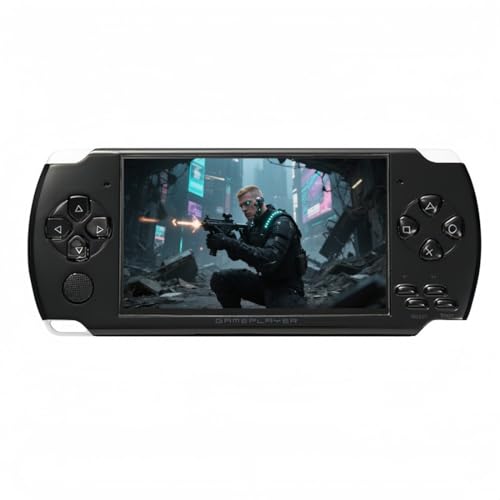
JXD S6
$45.80
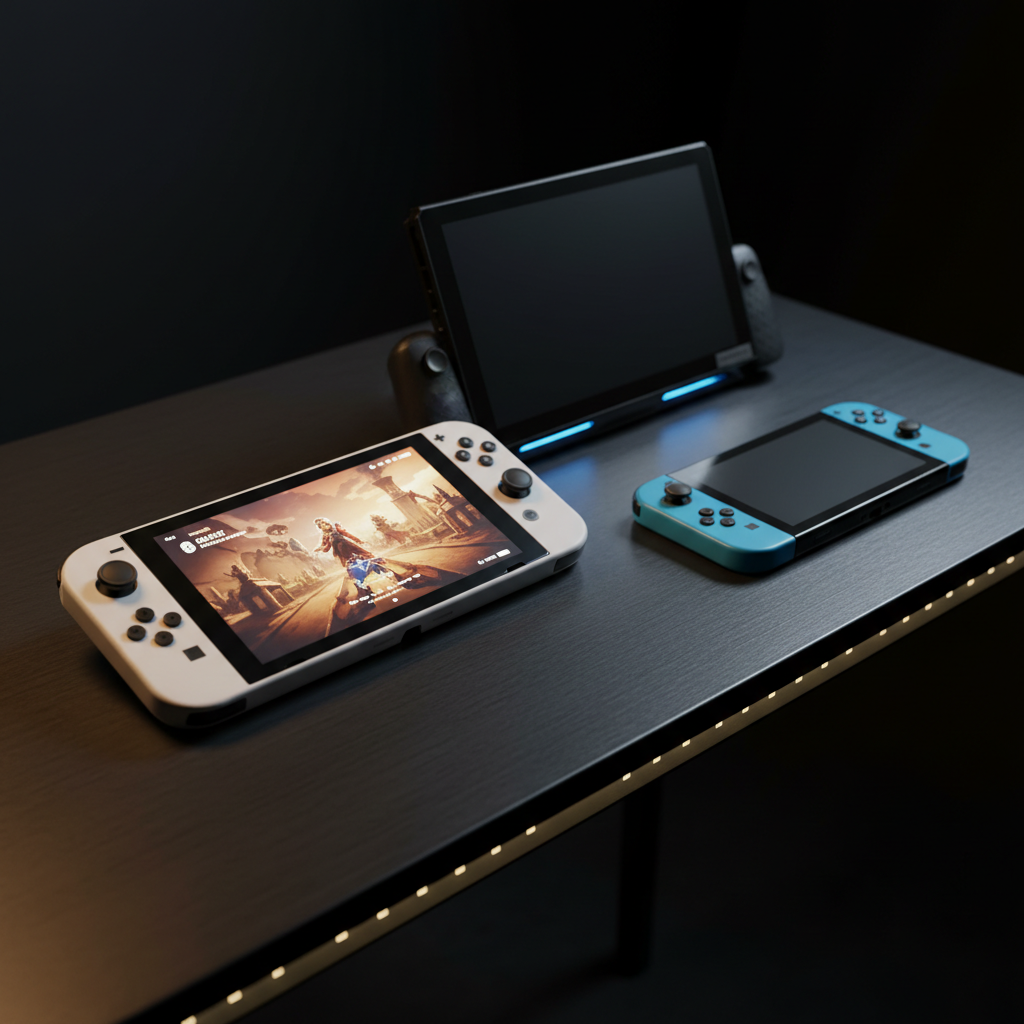
We’ve lined up 15 handheld consoles, from the $45.80 JXD S6 at the budget end to the $714.96 Lenovo Legion Go at the premium end. The list follows the official price‑tier map – budget (JXD S6, Sony PSP 3000, Switch Lite), mid‑range (Switch OLED, Steam Deck), and premium (Legion Go, ASUS ROG Ally, MSI Claw).
If you want a family‑friendly, on‑the‑go Nintendo experience, the Switch OLED stands out with its vivid 7‑inch OLED screen, a 4.7‑star rating from over 39 k reviewers and a solid 5.5‑hour battery life in games like Zelda. For pure portability and a low‑price entry point, the Switch Lite’s 5.5‑inch LCD, a 4.8‑star rating from 58 k users and a 1.54‑pound weight make it the best‑value handheld. Hardcore PC gamers will gravitate toward the Legion Go, whose 8.8‑inch 500‑nit display and 65 W USB‑C charging deliver a premium Windows experience.
We break down each model’s strengths, weaknesses, and ideal scenarios so you can match the right device to your gaming style.

Nintendo Switch OLED
Its 4310 mAh battery delivers about 5.5 hours of play, balancing endurance and price.

Nintendo Switch Lite Blue
Ideal for budget‑conscious gamers, it costs $229 versus $364.90 for the Switch OLED, saving roughly $136 while still delivering Nintendo’s core experience.

Lenovo Legion Go 8.8-inch
Stands out with a 65 W USB‑C charger and dual 2 W stereo speakers, delivering faster power‑up and richer audio that the Switch models don’t provide.
Also considered
Score Analysis
Key score advantages vs. runner-up (Nintendo Switch Lite)
Price Range
Nintendo Switch OLED
$364.64
Nintendo Switch Lite Blue
$218.99
Lenovo Legion Go 8.8-inch
$742.48

ASUS ROG Ally White
$549.99

MSI Claw
$699.00
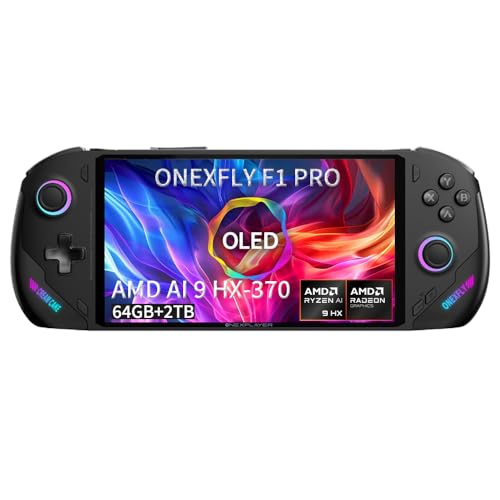
ONE XPLAYER F1 PRO 64GB
$1,639.99
Sony PSP 3000 Blue
$229.95

Valve Steam Deck 256GB
$486.97
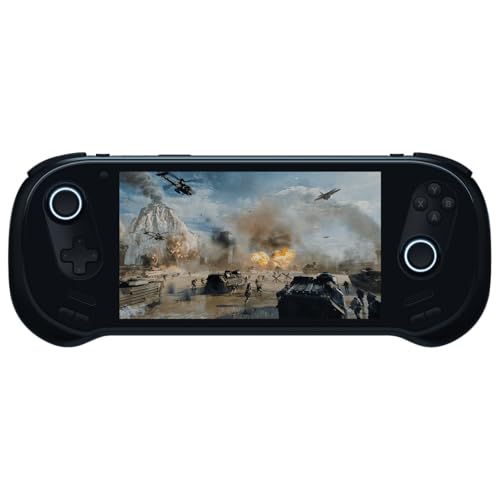
AYA NEO 3
$1,254.95
JXD S6
$45.80
PSP 3000 Black
$209.98
ASUS ROG Ally
$939.99
GPD WIN Mini 2025
$1,689.95

Generic Premium Shipment PSP 3000 Blue
$184.94
Valve Steam Deck LCD 256GB
$469.99
Spec Comparison
TL;DR: The Nintendo Switch OLED offers a vivid 7.0‑inch OLED screen, 4310 mAh battery and 64 GB storage for $364.90, making it a well‑reviewed hybrid console for families and casual gamers.
The standout feature is the 7.0‑inch OLED display, delivering 1280 × 720 pixels with deep blacks and bright colors that reviewers say “bring games to life.” Coupled with enhanced stereo speakers, the handheld experience feels richer than the original model.
Compared with the other 14 devices in this roundup, the OLED sits in the middle of the weight spectrum: at 3.00049138582 pounds it’s lighter than the Valve Steam Deck LCD (3.57 pounds) but noticeably heavier than the Nintendo Switch Lite (1.54 pounds). Its 4310 mAh battery capacity outpaces the Switch Lite’s 3570 mAh and the PSP 3000’s 1200 mAh, giving a usable range of roughly 4.5–9 hours depending on the game. Screen size matches the Steam Deck’s 7‑inch panel, yet reviewers praise the OLED’s colour performance as superior.
Consumer sentiment highlights the bright OLED screen, the sturdy wide kickstand and the louder speakers as clear wins. Professional reviewers also note the kickstand’s stability for tabletop play. On the downside, the hardware core hasn’t changed, so performance feels identical to the original Switch, and some users report Joy‑Con drift issues. The price point of $364.90 is higher than the Switch Lite, reflecting the upgraded display and storage.
Pros
Cons
Best for: New Switch buyers, families, casual gamers and travelers who value a premium screen and solid handheld experience.
Avoid if: You already own a Switch and are satisfied with its hardware, or you need the highest frame rates and resolution for demanding games.
“The screen is amazing—much brighter and more colorful.”
“Great mobile gaming device.”
TL;DR: The Nintendo Switch Lite Blue packs a 5.5‑inch LCD, 3570 mAh battery and a 1.54 lb lightweight chassis into a $229 handheld that scores 4.8/5 from nearly 60 k reviewers.
The standout spec is its 3570 mAh lithium‑ion battery, which the manufacturer pairs with a charging time of about three hours and a handheld power draw of roughly 4 W. Coupled with a 5.5‑inch capacitive touch LCD, the console delivers a solid on‑the‑go experience while staying under 2 lb (1.54 pounds) and fitting comfortably in most hands.
Compared with the other fourteen entries, the Switch Lite is heavier than the PSP 3000 Blue (189 g) but far lighter than the Nintendo Switch OLED, which tips the scales at roughly 3 lb. Its battery capacity outstrips the PSP’s 1200 mAh, yet sits below the OLED’s 4310 mAh. The 5.5‑inch screen also eclipses the PSP’s 4.3‑inch display, giving you more visual real‑estate while still being more portable than larger handhelds like the ONE XPLAYER F1 PRO.
Users consistently praise the device’s portability, noting the “compact, lightweight” feel and the responsive D‑pad that shines in 2D indie titles. Professional reviewers highlight the solid build quality and the longer battery life versus the original Switch. On the flip side, several owners report occasional analog‑stick drift and lament the lack of a built‑in kickstand or TV docking, which limits tabletop or couch‑play options.
Beyond the core specs, the Lite supports NFC for amiibo, Bluetooth 4.1 for wireless accessories, and Wi‑Fi 802.11 a/b/g/n/ac for online play. Storage can be expanded up to 2 TB via microSD, and the internal 32 GB gives ample room for digital titles before you add a card.
Pros
Cons
Best for: Casual and portable gamers who want a reliable handheld without the need for TV docking.
Avoid if: You're relying on motion controls, HD Rumble, or need a built‑in kickstand for tabletop sessions.
“The screen is amazing—much brighter and more colorful.”
“Great mobile gaming device.”
TL;DR: The Lenovo Legion Go packs an 8.8‑inch 144 Hz WQXGA screen, a Ryzen Z1 Extreme CPU, and detachable Hall‑effect controllers for a premium Windows‑based handheld experience.
The handheld’s standout feature is its 8.8‑inch IPS LCD with a 2560 × 1600 resolution, up to 144 Hz refresh and a peak brightness of 500 nits, covering 97% of the DCI‑P3 color gamut. Under the hood sits an AMD Ryzen Z1 Extreme APU clocked at 3.30 GHz (boost up to 5.10 GHz) and 16 GB of LPDDR5X memory, which delivers desktop‑class performance with its 3.30 GHz (up to 5.10 GHz) Ryzen Z1 Extreme APU in a pocket‑sized chassis.
At 0.88125 pounds the device's lighter than the MSI Claw’s 1.49 pounds but heavier than the ASUS ROG Ally’s 907.18 g, and with controllers attached it weighs 854 g. Its 49.2 Whr battery sits just below the MSI’s 53 Wh pack and above the ASUS’s 40 Wh, translating to roughly six hours of moderate gaming—shorter than many larger‑screen competitors but typical for high‑performance handhelds. The 500‑nit brightness matches the MSI and ASUS rivals, while the 144 Hz refresh outpaces the Valve Steam Deck’s 60 Hz panel.
Professional reviewers praise the Legion Go’s large, vibrant screen and the durability of its Hall‑effect analog sticks, noting that the detachable controllers feel more like a mini‑PC setup than a traditional handheld. Users appreciate the ability to dock the unit for AAA titles and the inclusion of eGPU support, though the same reviews flag the six‑hour battery life and the 854 g weight as limiting factors for marathon handheld sessions. The right‑hand controller’s vertical‑mouse mode in FPS mode also draws mixed reactions, with some finding it useful and others calling it awkward.
Pros
Cons
Best for: Buyers willing to invest in a proven, high‑quality option
Avoid if: You need ultra‑long battery life or a lightweight handheld for extended on‑the‑go play
TL;DR: The ASUS ROG Ally White offers a 7‑inch 120 Hz touchscreen, 16 GB LPDDR5 RAM and a 512 GB SSD in a lightweight 1.5‑lb chassis for $549.99, delivering premium handheld performance.
The standout feature is its 120 Hz refresh‑rate display on a 7‑inch touchscreen, which promises smoother motion than the 60 Hz panels found on the Valve Steam Deck models. Coupled with 16 GB of LPDDR5 memory and a roomy 512 GB SSD, the device is ready for modern Windows 11 gaming and productivity tasks.
At 1.5 pounds, the Ally is lighter than the Valve Steam Deck LCD (3.57 pounds) and only marginally lighter than the standard Steam Deck (≈1.54 pounds), while matching the MSI Claw’s weight of about 1.49 pounds. Its 512 GB storage outpaces the 256 GB SSDs in both Steam Deck variants, giving you more room for games without an external drive. The 120 Hz panel also puts it ahead of the 60 Hz screens on the Steam Deck and other peers, though it remains heavier than the ultra‑light Lenovo Legion Go, which tips the scales at roughly 0.88 pounds.
User feedback averages 4.2 out of 5 stars from 239 reviews, indicating solid satisfaction. Reviewers frequently praise the inclusion of a 3‑month Xbox Game Pass Premium subscription, noting it adds immediate value for Xbox Game Pass subscribers. However, several comments point out that manufacturers haven’t widely documented the model number, leaving some buyers wishing for more detailed official specifications.
Running Windows 11, the Ally functions as a full PC in a handheld form factor, letting you install any compatible software. The 16 GB of LPDDR5 RAM and the fast SSD combine for quick load times, while the 1‑year warranty offers peace of mind for a premium device.
Pros
Cons
Best for: Those prioritizing quality and willing to pay for premium performance
Avoid if: You're on a tight budget or only need basic functionality
TL;DR: The MSI Claw packs a 7.0‑inch 1080p 120 Hz IPS screen, Thunder‑bolt 4 port and 16 GB of LPDDR5‑6400 RAM, but its heavy chassis and roughly 2‑hour gaming battery keep it in the premium niche.
The standout feature is the 7.0‑inch IPS LCD that delivers a full‑HD 1920 × 1080 resolution at a buttery‑smooth 120 Hz refresh rate, with typical brightness of 500 nits and a full 100 % sRGB color gamut. Coupled with Intel’s XeSS AI upscaling and an integrated Arc GPU clocked at 2.25 GHz, the display promises vivid visuals and fluid frame rates for Windows 11 titles.
When you line it up against the other handhelds in this roundup, the Claw feels noticeably heavier than the sub‑one‑pound Lenovo Legion Go, yet it’s still lighter than the two‑pound ASUS ROG Ally. Its $699.00 list price also places it above most budget‑friendly options, and several rivals claim longer endurance than the Claw’s up‑to‑2‑hour battery runtime under heavy gaming.
Users consistently praise the Hall‑Effect analog sticks and triggers for being drift‑resistant, and they love the flexibility of a full Windows 11 environment that runs Android apps via BlueStacks. On the flip side, reviewers flag the brief battery life and note occasional software hiccups such as input lag or crashes. Professional reviewers also point out that the higher power draw leads to noticeable heat and occasional throttling during long sessions.
Pros
Cons
Best for: Those who need full Windows compatibility, value a high‑refresh, color‑accurate screen, and want Thunderbolt 4 connectivity for docking or eGPU setups.
Avoid if: You're shopping on a tight budget — it's priced at $699.00 and its short battery life makes it less suited for long trips.
“Battery life is consistently cited as the biggest drawback—users report 1.5 hours in AAA titles.”
TL;DR: The OneXPlayer F1 Pro packs a 12,600 mAh battery, a 7‑inch 144 Hz OLED screen and a desktop‑grade AMD Ryzen AI 9 HX 370 CPU with 64 GB RAM for handheld PC gaming.
The handheld draws power from a 12,600 mAh battery and a 65 W USB‑C PD charger, giving you a sizable power reserve for long sessions. Its 7.0‑inch OLED panel delivers 800 nits peak brightness, 144 Hz refresh, 0.6 ms response time and 315 PPI, while the 64 GB of LPDDR5X RAM runs at 7500 MT/s.
Compared with the other 14 entries, the F1 Pro’s battery dwarfs the 1,200 mAh cells found in the PSP line and the 3,570 mAh pack of the Nintendo Switch Lite. At 599 g it’s lighter than the AYA NEO 3’s 690 g chassis yet substantially heavier than the ultra‑light JXD S6 (152 g). Its 800‑nit OLED outshines the 500‑nit display of the AYA NEO 3, and the 144 Hz panel tops the 120 Hz ceiling offered by that same competitor.
Professional reviewers praise the desktop‑class performance of the 12‑core, 24‑thread AMD Ryzen AI 9 HX 370 (4 nm, 2.0 GHz base, 5.1 GHz turbo) paired with the Radeon 890M GPU (16 compute units, 2.9 GHz). Users love the vivid colors, deep blacks and the Harman‑tuned stereo speakers, while noting that the device feels ergonomic for extended play. The main trade‑off is a relatively short battery life when the CPU is pushed hard, and the lack of variable refresh rate on an already fast panel.
The F1 Pro also packs 80 TOPS of AI computing power, a 2 TB PCIe 4.0 NVMe SSD, and dual USB‑C 4.0 ports that support DP, eGPU and charging. With Wi‑Fi 6E, Bluetooth 5.2 and a 10‑point capacitive touch layer, the handheld offers a full‑featured Windows 11 Home experience in a compact form factor.
Pros
Cons
Best for: Hardcore PC gamers and emulation enthusiasts who need desktop‑level power and a premium OLED display in a portable handheld.
“the best PC gaming handheld I've used”
“breathtaking”
TL;DR: The Sony PSP 3000 Blue offers a bright 4.3‑inch LCD, 1200 mAh battery and a full library of PSP and PS1 games for $158.39, making it a solid budget handheld.
The standout feature is its 4.3‑inch full‑transparent TFT LCD with a pixel density of 128 PPI, delivering clearer images than earlier PSP models. Under the hood, a 333 MHz dual‑core CPU and 64 MB of RAM give the system enough power for classic titles, while the 1200 mAh lithium‑ion battery promises 4–6 hours of gameplay on a single charge.
At $158.39 the PSP 3000 Blue is more affordable than the Generic Premium Shipment PSP 3000 Blue and far cheaper than the Nintendo Switch Lite Blue, yet it carries a higher price than the budget‑focused JXD S6. At 189 g with battery, it weighs considerably less than the Switch Lite’s 699 g, though a touch more than the JXD S6’s 152 g. Its 128 PPI screen matches the PSP 3000 Black’s 128.3 ppi, offering comparable sharpness across the lineup.
Reviewers consistently praise the built‑in stereo speakers and microphone, noting that they enable voice chat without extra gear. Professional reviewers also highlight the improved screen brightness and color accuracy over earlier PSP revisions. On the downside, users report the mechanical UMD drive can become unreliable over time, the lack of Bluetooth limits wireless audio options, and the TFT panel’s viewing angles fall short of modern IPS displays.
Beyond gaming, the console includes IEEE 802.11b Wi‑Fi, a high‑speed USB 2.0 mini‑B port, and a Memory Stick Duo slot for expandable storage. Its compact dimensions of 169 mm × 74 mm × 18 mm make it easy to slip into a pocket or small bag, while the 3.5 mm headphone jack and built‑in speakers cover most audio needs.
Pros
Cons
Best for: Retro gaming fans on a budget who want to play PSP and PS1 titles on the go.
“I’ve had this for about a year now and I take it everywhere I go.”
TL;DR: The Valve Steam Deck 256 GB packs a 7‑inch 400‑nit IPS display, 16 GB LPDDR5 RAM, and a 3.5 GHz Zen 2 CPU in a 1.54‑lb handheld for portable PC gaming.
The standout hardware is its 256 GB NVMe SSD paired with 16 GB of LPDDR5 memory running at 5500 MT/s, giving you fast load times and plenty of headroom for modern titles. Under the hood sits a custom AMD Zen 2 processor that boosts to 3.5 GHz and an RDNA 2 GPU with 8 compute units, delivering solid performance for a handheld.
At 1.543235834 pounds, the Deck is considerably lighter than the Valve Steam Deck LCD 256GB, which tips the scales at 3.57 pounds, yet it’s a touch heavier than the ultra‑light Lenovo Legion Go at 0.88125 pounds. The 400‑nit screen delivers bright visuals, though the MSI Claw and Legion Go both list 500‑nit panels, so you’ll see a bit less punch in very bright environments. The 60 Hz refresh rate also trails the ASUS ROG Ally’s 120 Hz panel, meaning fast‑action titles won’t feel as silky as on that competitor.
Reviewers consistently praise the ergonomic feel of the dual analog sticks, haptic‑enabled trackpads, and the ability to run the full Steam library on Linux‑based SteamOS 3.0. Users love the flexibility of adding a microSD card for extra storage and the convenience of a 45 W USB‑C PD 3.0 charger that refills the 40 Whr battery quickly, though actual playtime can swing between 2 and 8 hours depending on the game.
Pros
Cons
Best for: PC gamers who want to play their Steam library on the go, indie and retro game fans, Linux‑savvy users.
Avoid if: You need advanced features or professional‑grade performance, such as OLED contrast, ultra‑long battery life, or a higher‑refresh display.
TL;DR: The AYANEO 3 packs a 7‑inch OLED panel up to 144 Hz, modular Hall‑effect controls and up to 64 GB LPDDR5X RAM into a 690 g handheld that runs Windows 11.
The standout feature is its swappable controller modules, letting you switch between Xbox‑style sticks and Switch‑style pads without tools, while the Hall‑effect joysticks stay drift‑free. The OLED screen can run at 144 Hz, shines at 500 nits and delivers 315 PPI on a 7‑inch panel, making fast action look crisp.
At 690 g, the AYANEO 3 is heavier than the ONE XPLAYER F1 PRO’s 599 g and noticeably bulkier than the 152 g JXD S6, but its 49 Wh battery edges the ONE XPLAYER’s 48.5 Wh capacity. Its 289.8 mm height dwarfs the ONE XPLAYER’s 98.3 mm and far exceeds the 4.3‑inch screens of the PSP 3000 and JXD S6, giving you a true tablet‑sized display.
Manufacturer lists battery life at roughly 57 minutes under a Cinebench stress test, which is short for on‑the‑go sessions, and some note that performance trails slightly behind other HX 370‑based handhelds.
Under the hood you can choose between an AMD Ryzen 7 8840U (8 C/16 T, 3.30 GHz base) or an AMD Ryzen AI 9 HX 370 (12 C/24 T, 2.00 GHz base), both boosting to 5.10 GHz. GPU options run at 2700 MHz or 2900 MHz, paired with 32 GB or 64 GB of LPDDR5X RAM at 7500 MT/s. Connectivity includes Wi‑Fi 6E, Bluetooth 5.3, dual USB4‑C ports, an OCuLink slot for eGPU and a 3.5 mm headphone jack.
Pros
Cons
Best for: Enthusiasts who want a premium OLED handheld with modular controls and desktop‑grade specs.
Avoid if: you need maximum battery endurance, rugged travel durability, or a fully open system without proprietary software.
TL;DR: The JXD S6 offers a 4.3‑inch LCD with 2000 preloaded retro titles, 8 GB internal storage (expandable to 64 GB), and up to 8 hours of audio playback for just $45.80.
The console’s 4.3‑inch LCD screen delivers a 480 × 272 pixel resolution, and the device ships with 8 GB of built‑in storage plus a microSD slot that supports up to 64 GB. It also comes preloaded with as many as 2000 classic games and can run emulators for systems such as GBA, GB, SFC, FC, and Sega Genesis.
At 152 g (0.335 lb) the S6 is far lighter than the ONE XPLAYER F1 PRO’s 599 g chassis, yet it sits in the same weight range as the PSP 3000 models (132 g base, 189 g with battery). Its 1000‑1500 mAh battery is modest compared with the ONE XPLAYER’s 12600 mAh pack, yet it matches the PSP 3000’s 1200 mAh cells, delivering about 8 hours of audio playback and 4 hours of video.
Buyers consistently praise the low price and the sheer volume of games, noting that adding new ROMs via the USB‑linked “GAME” folder is straightforward. Professional reviewers point out that the built‑in microphone, headphone jack, and AV output let the S6 double as a simple media player, though many users say the screen appears dim and blurry at off‑axis angles and that the TV‑out cable isn’t supplied.
Pros
Cons
Best for: Shoppers on a tight budget who want the most for their money.
Avoid if: You need a high‑quality display, reliable analog controls, or premium build quality.
“Great value for the price”
“Lots of games”
TL;DR: The black PSP‑3000 offers a bright 4.3‑inch anti‑glare screen, built‑in mic and 1200 mAh battery for under $180, but its modest 6‑hour life and lack of Bluetooth keep it in the budget lane.
At the heart of the PSP‑3000 is a 4.3‑inch LCD that resolves 480 × 272 pixels with a pixel density of 128.3 ppi. Sony’s anti‑reflective coating and a contrast ratio touted as five times higher than the PSP‑2000 give the display a noticeably clearer view, especially in bright rooms. The device also packs a Dual‑core MIPS R4000 CPU running at 333 MHz, a custom GPU at 166 MHz, and 64 MB of shared RAM, all powered by a 1200 mAh battery that the manufacturer says lasts up to 6 hours.
In practice, the PSP‑3000 sits on the same weight‑and‑size footing as its blue counterpart, which also weighs 189 g with battery installed and shares the 1200 mAh cell. It's a bit heavier than the blue PSP’s base weight of 132 g, and noticeably bulkier than the JXD S6’s 152 g frame, yet far lighter than the Nintendo Switch Lite’s 699 g build. Screen size and battery capacity match the other PSP‑3000 variants, while the Switch Lite’s 5.5‑inch panel and 3570 mAh battery put it in a different class altogether.
Professional reviewers have highlighted the brighter screen and anti‑glare layer as worthwhile upgrades over the earlier model, and users frequently commend the comfortable ergonomics and the added built‑in microphone for voice chat. On the flip side, early production units sometimes show visible scan‑line artifacts, the glass is prone to scratches without a protective case, and the lack of Bluetooth means you can’t pair wireless headsets. Battery endurance also drops noticeably when Wi‑Fi is active, which aligns with the “up to 6 hours” claim.
Pros
Cons
Best for: Entry-level buyers or those on a tight budget
Avoid if: Reliability and user satisfaction are your top concerns
“I’ve had this for about a year now and I take it everywhere I go.”
TL;DR: The ASUS ROG Ally packs a 7‑inch 1080p 120 Hz screen, a Zen 4 CPU and RDNA 3 GPU delivering 8.6 TFLOPs, but its heavy chassis and short gaming battery life keep it in the enthusiast niche.
At the heart of the ROG Ally is a 7.0‑inch IPS‑level glossy display that hits the full 1920 × 1080 resolution and a 120 Hz refresh rate, while reaching a peak brightness of 500 nits and supporting Dolby Vision HDR. Under the hood sits an AMD Ryzen Z1 Extreme Zen 4 processor that can boost to 5.10 GHz, paired with an AMD Radeon RDNA 3 GPU capable of 8.6 TFLOPs of FP32 performance. The device weighs 2.0 pounds, making it noticeably heavier than the Lenovo Legion Go (≈0.88 lb) and the MSI Claw (≈1.49 lb).
In the broader handheld field, the Ally’s 500‑nit peak brightness matches the Legion Go and MSI Claw, but its 65 W USB‑C PD charger fills the battery in about 80 minutes, matching those models. Its 512 GB PCIe 4.0 NVMe SSD provides ample space for a Windows 11 library, while the 16 GB of LPDDR5 RAM running at 6400 MT/s ensures smooth multitasking. Compared with the Steam Deck’s 40 Wh battery and 45 W charger, it’s a clear advantage that the Ally’s charger is faster, though the battery capacity (listed only in Wh) is smaller than the Legion Go’s 49.2 Wh pack.
Professional reviewers praise the crystal‑clear, high‑refresh screen and the “steady performance” that feels smoother than many competing Windows handhelds. Users love the Dolby Atmos audio and the comfortable grip, but they repeatedly flag the 1–2 hour gaming battery life and the fan’s noise when the CPU pushes toward its 5.10 GHz boost. Navigation through Windows 11 with a controller also feels clunky, a point echoed by several consumer comments.
Technical enthusiasts will appreciate the full Windows 11 Home environment, the built‑in fingerprint sensor, and Aura Sync lighting around the analog sticks. The device also supports a UHS‑II microSD card reader for storage expansion, and its 65 W USB‑C port handles video output via DisplayPort 1.4, charging, and data transfer in a single connector.
Pros
Cons
Best for: Enthusiast gamers who want a portable Windows PC with top‑tier performance and a high‑refresh 1080p screen.
Avoid if: You need long battery endurance, a lightweight travel companion, or a seamless console‑style UI without Windows navigation quirks.
TL;DR: The GPD WIN Mini 2025 packs a Zen 5‑based Ryzen AI 9 HX 370 CPU and Radeon 890M GPU into a 7‑inch, 555 g clamshell, delivering desktop‑class power but limited battery life at high loads.
The standout hardware features a 12‑core, 24‑thread Ryzen AI 9 HX 370 that boosts up to 5.1 GHz and pairs with a Radeon 890M offering 23.76 TFLOPS of FP16 performance. GPD includes 32 GB LPDDR5x memory running at 7500 MT/s, and a 2 TB PCIe 4.0 x4 SSD. Visually, the 7‑inch LTPS panel delivers a full‑HD 1920 × 1080 resolution at a variable 60‑120 Hz refresh rate and a crisp 314 PPI, protected by 6th‑gen Corning Gorilla Glass.
At 555 g, the Mini weighs less than the ASUS ROG Ally (around 907 g) but it's heavier than the Lenovo Legion Go, which tips the scales at roughly 0.88 lb. Its 65 W PD charger matches the power bricks of the ROG Ally, Legion Go, and MSI Claw, yet heavy‑use battery life of about 3 hours trails the Ally’s roughly 8‑hour general use and sits alongside the Claw’s 2‑hour heavy‑gaming claim. The 120 Hz capable screen puts it on par with the Ally’s refresh rate, while the Steam Deck’s 60 Hz panel lags behind.
Professional reviewers praise the Mini’s “excellent 7‑inch 1080p 120 Hz LTPS panel with vibrant colors and smooth motion,” noting that the USB‑4 port unlocks eGPU potential for demanding titles. Users repeatedly mention the cramped QWERTY keyboard and a touchpad that lacks a physical click, which forces reliance on shoulder buttons for mouse clicks. Battery endurance also drops sharply when the CPU runs at full boost, confirming the short‑battery‑life complaint.
The device offers a USB‑4 (40 Gbps) port, a USB‑C charging‑only port, a USB‑A 10 Gbps port, and a microSD UHS‑I slot (max read 160 MB/s, write 120 MB/s). DTS:X Ultra 7.1‑simulated sound powers two hyper‑linear speakers and a 3.5 mm combo jack. An active fan and heat pipe cool the device, reaching a maximum of 64 dB under load, while the chassis stays below 55 °C. GPD backs the Mini with a two‑year warranty.
Pros
Cons
Best for: Enthusiasts who want high‑end PC gaming on the go, emulation fans targeting PS3/Vita titles, and users willing to pay for premium performance.
Avoid if: You need long battery life at high performance, or a comfortable full‑size keyboard for extended typing.
TL;DR: The Valve Steam Deck LCD 256 GB packs a 7‑inch 400‑nit LCD, 16 GB LPDDR5 memory and a 256 GB NVMe SSD into a 3.57‑lb handheld that runs the full Steam library on Linux.
The Deck’s most eye‑catching spec is the 256 GB NVMe SSD, which pairs with 16 GB of unified LPDDR5 memory running at 5500 MT/s; together they give fast load times and plenty of room for a large game library. Its 7‑inch IPS LCD delivers 400 nits of typical brightness and a pixel density of 215 PPI, refreshes at 60 Hz. Weighing in at 3.57 lb, the unit feels solid but noticeably heavier than many rivals.
Compared with the other handhelds in this roundup, the Deck is considerably heavier than the ASUS ROG Ally (1.5 lb) and the Valve Steam Deck 256 GB (about 1.54 lb). Its 400‑nit screen matches the older Valve model but falls short of the MSI Claw’s 500‑nit display, and the 60 Hz refresh rate is half of the ASUS Ally’s 120 Hz panel. The manufacturer lists battery capacity only in watt‑hours (40 Wh) and omits the mAh rating, making a direct comparison tricky.
Reviewers consistently highlight the Deck’s ability to run the entire Steam catalog via Proton, calling the open‑platform approach “a revelation for hybrid gameplay.” Users love the dual capacitive sticks and the haptic trackpads for precise control, and they appreciate the built‑in Linux desktop for productivity. The most common complaints revolve around a short battery life of 2–8 hours depending on the game, a dimmer LCD that can feel washed‑out in bright environments, and the bulkiness that can cause hand fatigue during long sessions.
Under the hood sits a custom 6 nm AMD Zen 2 APU with four cores and eight threads clocked between 2.4 GHz and 3.5 GHz, coupled with an 8‑unit RDNA 2 GPU that can reach 1.6 GHz and 1.6 TFLOPs. Power draw ranges from 4 W to 15 W, and a 45 W USB‑C charger refills the battery quickly. Connectivity includes Bluetooth 5.0, Wi‑Fi 5 (dual‑band), a USB‑C 3.2 Gen 2 port with DisplayPort 1.4, and a 3.5 mm headphone jack, while sensors cover a 6‑axis IMU and ambient light.
Pros
Cons
Best for: PC gamers who want portable access to their Steam library, Linux enthusiasts and tinkerers who value an open, desktop‑capable handheld.
Avoid if: You need long battery endurance, a lightweight form factor, or an OLED display with higher brightness.
Breakdown
Nintendo Switch OLED
Pros
Nintendo Switch Lite Blue
Pros
Lenovo Legion Go 8.8-inch
Pros
ASUS ROG Ally White
Pros
Based on scoring data and product specs
Personalized picks
Best Overall Pick
Nintendo Switch OLED
Best Mid-Range PickBest for: Most users looking for a well-reviewed, reliable mainstream option
Nintendo Switch Lite Blue
Best for: Budget-conscious buyers seeking a reliable entry-level option
$218.99-$145.65 vs winner
Skip Valve Steam Deck LCD 256GB if…
You need advanced features or professional-grade performance
The Nintendo Switch OLED takes the top spot with its vivid 7.0‑inch OLED screen, a solid 4.7/5 rating from 39,612 reviewers, and a comfortable price of $364.90. Its 4,310 mAh battery delivers 5.5 hours of play in demanding titles and up to 9 hours on lighter use, while 64 GB of internal storage (expandable to 2 TB) gives plenty of room for your library.
Coming in second, the Nintendo Switch Lite in Blue is the ideal choice if you need a lightweight, on‑the‑go handheld. At just 1.54 pounds and a price of $229.00, it offers a 5.5‑inch LCD, 3–7 hours of battery life, and 32 GB of internal storage—perfect for commuters or short travel sessions.
For those on a tighter budget, the JXD S6 offers the best value at $45.80, delivering basic handheld functionality at a fraction of the cost. If you’re after top‑shelf performance, the GPD WIN Mini 2025 commands attention at $1,509.95, offering premium specs for power‑hungry gamers.
Pick the Nintendo Switch OLED today and enjoy a balanced handheld experience.
The Nintendo Switch OLED offers a vibrant OLED panel, but its specifications don’t list peak brightness. Devices like the ONE XPLAYER F1 PRO, which lists a peak brightness of 800 nits, and the Lenovo Legion Go with 500 nits, are easier to see under direct sun. If you need the brightest screen possible, the ONE XPLAYER is the clear choice.
Please sign in to leave a review
No reviews yet. Be the first to review!