It might surprise you that the cheapest headset in our lineup – the Poly Blackwire 3210 at $32.95 – carries the highest user rating, a solid 4.5 / 5 from 2,384 reviews. That standout score sits alongside 10 other USB‑C‑ready options, giving you a total of 11 models to compare, from ultra‑light on‑ear designs to full‑size gaming rigs.
We’ve grouped the picks into the three price tiers the brand uses: budget contenders include the Poly Blackwire 3210, Skullcandy Riff Wireless 2, Poly Blackwire 3320 and HyperX Cloud Jet; mid‑range offers the Corsair HS65 Wireless White and Poly Blackwire 5220; premium selections feature the Turtle Beach Stealth 600 Xbox, SteelSeries Arctis Nova 5X, HyperX Cloud III S Red and Turtle Beach Stealth 700 Gen 3. Each tier balances price against specs like driver size, battery life and Bluetooth version, so you can spot the sweet spot for your budget and usage.
Below we’ll break down each headset so you can match the right USB‑C model to your needs.

Turtle Beach Stealth 600 Xbox
Its 50 mm Nanoclear™ neodymium drivers deliver spacious sound, supporting its value‑focused reputation.
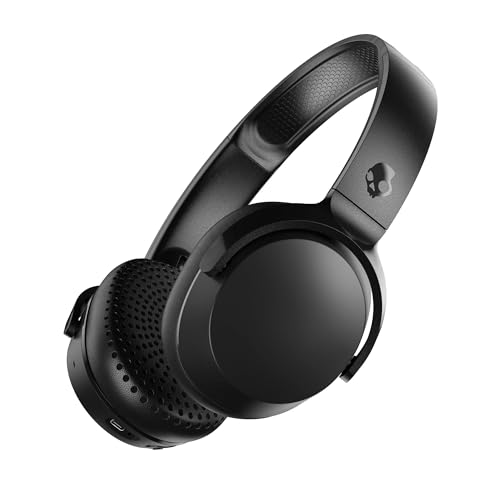
Skullcandy Riff Wireless 2
Ideal for budget‑conscious gamers, the Skullcandy Riff Wireless 2 offers solid sound at $48.71—roughly $60 less than the Turtle Beach Stealth 600, making entry‑level play affordable.

Poly Blackwire 5220
Stands out with its compact 28 mm drivers, targeting home and office users who prioritize clear voice chat over big‑game sound, a trade‑off the larger gaming‑focused models don’t make.
Also considered
Score Analysis
Key score advantages vs. runner-up (Skullcandy Riff Wireless)
Price Range
Turtle Beach Stealth 600 Xbox
$109.00
Skullcandy Riff Wireless 2
$48.12
Poly Blackwire 5220
$108.66

Poly Blackwire 3210
$32.00

Poly Blackwire 3320
$48.99

HyperX Cloud III S Red
$129.99

HyperX Cloud Jet
$59.99

Corsair HS65 Wireless White
$99.08

SteelSeries Arctis Nova 5X
$149.99

Turtle Beach Stealth 700 Gen 3
$199.00
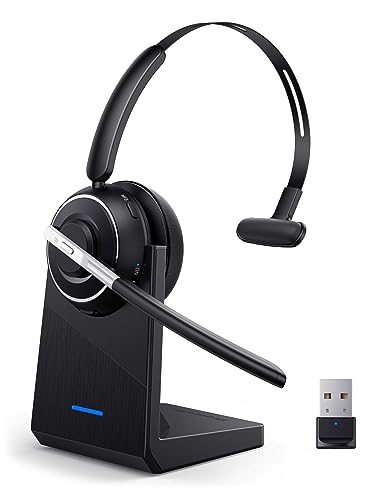
PrancyBt KH122M
$59.99
Spec Comparison
TL;DR: The Turtle Beach Stealth 600 Xbox delivers 80‑hour wireless play, 50 mm drivers, and USB‑C dual‑connectivity, all in a comfortable glasses‑friendly design for under $110.
The headset’s standout spec is its 80‑hour battery life, letting you game for days without hunting an outlet. It packs 50 mm Nanoclear™ neodymium drivers and a 32 Ω impedance, and charges via a 2 m USB‑C cable. Dual connectivity lets you toggle between low‑latency 2.4 GHz mode and Bluetooth 5.2, with an on‑board on/off switch.
Compared with the other ten entries, the Stealth 600’s driver size outmatches the 28 mm drivers of the Poly Blackwire 5220 and the 32 mm units in the Poly Blackwire 3320, while matching the 50 mm drivers of the Corsair HS65. Its 80‑hour battery eclipses the 24‑hour claim of the Corsair, the 50‑hour (2.4 GHz) and 60‑hour (Bluetooth) of the SteelSeries, the 20‑hour of the HyperX, and the 45‑hour of the PrancyBt. At 0.7055 lb, it’s heavier than the Poly Blackwire 5220 (0.304 lb) but comparable to the SteelSeries (0.617 lb) and slightly heavier than the HyperX (0.657 lb). Bluetooth range sits at roughly 9 m, a bit shorter than HyperX’s 15 m, while its maximum 2.4 GHz range of about 18.3 m beats the Corsair’s 15.2 m.
Reviewers consistently praise the 80‑hour battery and the glasses‑friendly memory‑foam cushions, noting the headset stays comfortable during long sessions. Professional reviewers highlight the AI‑based flip‑to‑mute mic and the extensive Swarm II app controls, including a 10‑band EQ. The main criticisms are the lack of active noise cancellation, a 15‑hour charge time, and Bluetooth audio that sounds compressed compared with the 2.4 GHz mode.
Pros
Cons
Best for: Buyers willing to invest in a proven, high‑quality option
Avoid if: You need advanced features or professional‑grade performance
TL;DR: The Skullcandy Riff Wireless 2 offers a 40 mm driver, 34‑hour battery life and USB‑C rapid charging at a budget‑friendly $48.71, making it a solid on‑ear option for commuters.
What really stands out is the 40 mm driver paired with a 94 dB SPL rating and a bass‑forward sound profile, delivering punchy low‑end for everyday listening. The headset also supports a rapid‑charge feature: a 10‑minute charge gives you 240 minutes (4 hours) of playback, and a full charge takes 120 minutes. Bluetooth 5.2 provides a 10‑meter range, while the built‑in Tile technology helps you locate the headphones if they go missing.
At roughly 0.34 pounds (153 g), the Riff Wireless 2 is lighter than the HyperX Cloud Jet (about 0.66 pounds) but a touch heavier than the Poly Blackwire 3320 (around 0.29 pounds). Its driver size matches the HyperX Cloud Jet’s 40 mm unit, yet the impedance of 32 ohms aligns with the Poly Blackwire 3320 and Poly Blackwire 5220, giving it a comparable electrical load to those models. The Bluetooth version sits just below the Cloud Jet’s 5.3, but still offers the latest 5.2 standard, and its multipoint pairing keeps it competitive against peers that list fewer connectivity options.
Reviewers consistently praise the 34‑hour battery life and the convenience of USB‑C fast charging, noting that the long playback window is rare at this price point. Reviewers also highlight the inclusion of Tile™ locating and a low‑latency gaming mode as premium‑grade touches. On the downside, users mention the on‑ear plastic build can feel flimsy after extended wear, and the bass‑forward tuning may mask mids for critical listeners. The lack of any IP rating means it isn’t suited for sweaty workouts or rainy commutes.
Pros
Cons
Best for: Commuters and travelers who need a foldable, long‑lasting headphone with fast charging and handy locating features.
Avoid if: You plan to use them for intense gym sessions, running, or any activity requiring water/sweat resistance.
TL;DR: The Poly Blackwire 5220 offers a 28 mm driver, 32 Ω impedance, and a noise‑canceling boom mic in a lightweight 0.30423792156‑pound USB‑C wired headset, perfect for professional calls.
The headset’s standout spec is its 28 mm driver paired with 32 Ω impedance and 90 dB sensitivity, delivering clear stereo sound across a 20 Hz – 20 kHz range. It also features a digital SoundGuard peak limit of 102 dBA and a maximum SPL of 118 dB, so sudden volume spikes won’t startle you. The built‑in omnidirectional microphone sports a –38 dBV/Pa sensitivity and active noise cancellation, making voice pick‑up crisp even in busy environments.
Compared with the other ten contenders, the Blackwire 5220 is notably lighter than the Turtle Beach Stealth 600 Xbox (0.7054792384 lb) and the Corsair HS65 Wireless (0.6 lb), yet only a shade heavier than the Poly Blackwire 3320 (0.2866009406 lb). Its 28 mm driver is smaller than the 50 mm drivers in the Turtle Beach and Corsair models, and also smaller than the 40 mm units in the SteelSeries Arctis Nova 5X and HyperX Cloud Jet. While many rivals rely on wireless connectivity, the Blackwire 5220 stays strictly wired, offering a 2.17 m non‑detachable cable and a USB‑C connector plus a 3.5 mm jack for universal device compatibility.
Professional reviewers highlight the headset’s “crisp, clear voice pickup” and “excellent compatibility with Teams and Zoom,” echoing everyday users who praise the mute button, inline volume controls, and the soft leatherette ear cushions. However, users also note the lack of active noise cancellation and that the on‑ear cups can become warm after long sessions. People frequently mention the straight, non‑detachable cable as a tangle‑prone drawback, and the boom mic’s fixed position can feel stiff to some.
Pros
Cons
Best for: Home and office users seeking a balance of features and value
Avoid if: You're shopping on a tight budget — it's priced at $108.66
“Crystal-clear mic—coworkers say I sound like I’m in the office.”
“So comfortable I forget I’m wearing it after hours.”
TL;DR: The Poly Blackwire 3210 delivers clear, mono USB‑C audio for $32.95, with 118 dBA acoustic protection, a lightweight 0.31‑lb design, and strong 4.5‑star ratings.
The headset’s standout spec is its 118 dBA Acoustic Protection (SoundGuard) paired with a -38 dBV/Pa ±4 dB sensitivity, ensuring clear voice transmission on Teams or Zoom. At just 0.31085178942 pounds (141 g) and a compact 28 mm driver, it stays comfortable for marathon calls while keeping the price at $32.95.
Compared with the other ten entries, the Blackwire 3210 is lighter than the HyperX Cloud Jet and PrancyBt KH122M, yet a touch heavier than its sibling, the Poly Blackwire 3320. Its 1609 mm cable is shorter than the 3320’s total 2179.3 mm run, and unlike the wireless Skullcandy Riff 2, HyperX Cloud Jet, PrancyBt KH122M, and Corsair HS65, it offers no Bluetooth connectivity—making it a straightforward wired choice at a lower price point.
Reviewers consistently praise the headset’s crystal‑clear microphone and feather‑light feel, noting the built‑in Teams button as a real productivity boost. The trade‑off is its mono audio output and the absence of active noise cancellation, which some users flag when they try to use it for music or in very noisy environments. The fixed, non‑detachable cable also limits on‑the‑go flexibility.
Technical details round out the picture: a dynamic driver delivers a 20 Hz – 20 kHz frequency response, 32 ohms impedance, and passive noise isolation. Microsoft certifies the headset for Teams and Zoom; it plugs into any USB‑C port (adapter included for USB‑A) and carries a two‑year manufacturer warranty.
Pros
Cons
Best for: Budget‑conscious buyers seeking a reliable entry‑level option
Avoid if: You have limited desk space or need portability
“Crystal-clear mic—coworkers say I sound like I’m in the office.”
“So comfortable I forget I’m wearing it after hours.”
TL;DR: The Poly Blackwire 3320 is a $48.99 wired USB‑C headset with a 32 mm driver, 130 g lightweight design, and a noise‑canceling boom mic, delivering professional‑grade sound for remote work.
The headset’s standout spec is its 32 mm dynamic driver that pushes a nominal 118 dB SPL and offers a signal‑to‑noise ratio greater than 118 dB, giving you clear, crisp voice and music. At just 0.2866009406 pounds (130 g), it feels feather‑light on the head, while the 658 mm inline cable keeps the USB‑C connection tidy without a retractable mechanism.
Compared with the other ten entries in this roundup, the Blackwire 3320 is one of the lightest options—lighter than the HyperX Cloud Jet (0.657 lb), the PrancyBt KH122M (0.95 lb), and even the Skullcandy Riff Wireless 2 (0.337 lb). Its driver size sits between the 28 mm units of the Poly Blackwire 3210 and 5220 and the larger 40 mm drivers found in the Skullcandy and HyperX models, offering a balanced sound profile without the bulk of a 50 mm driver like the Corsair HS65.
Professional reviewers praise the “rich sound only found on far more expensive headsets,” noting the dynamic EQ and DSP‑enhanced voice clarity. Everyday users echo this sentiment, highlighting the headset’s clear call quality and all‑day comfort, though several mention that the on‑ear faux‑leather cushions can get warm during marathon meetings. The built‑in SoundGuard technology limits sudden loud spikes to under 118 dBA, and the dedicated Teams button on the certified variant streamlines virtual collaboration.
Pros
Cons
Best for: Budget-conscious buyers seeking a reliable entry-level option
Avoid if: You want the best value‑per‑dollar in its price range
“Crystal-clear mic—coworkers say I sound like I’m in the office.”
“So comfortable I forget I’m wearing it after hours.”
TL;DR: The HyperX Cloud III S Red offers a massive 120‑hour 2.4 GHz battery, 53 mm drivers with 111.94 dB sensitivity, and a detachable mic, but its premium $179.99 price may deter budget shoppers.
What really sets this headset apart is its 120‑hour battery life in 2.4 GHz mode, letting you game for days without hunting for a charger. The 53 mm dynamic neodymium drivers deliver 111.94 dB SPL/mW at 1 kHz, and the built‑in DTS Headphone:X spatial audio adds positional cues for competitive play.
At 0.78484565272 pounds (356 g overall), the Cloud III S Red sits heavier than the SteelSeries Arctis Nova 5X (0.6172943336 pounds) but lighter than the Turtle Beach Stealth 700 Gen 3 (0.9 pounds). Its driver size of 53 mm outmatches the 40 mm units in the HyperX Cloud Jet and Arctis Nova 5X, while its 120‑hour 2.4 GHz battery dwarfs the 80‑hour life of the Stealth 700 Gen 3 and the 50‑hour life of the Arctis Nova 5X. Bluetooth range is 10 m, comparable to the 9 m range of the Stealth 600 Xbox, and it shares Bluetooth 5.2 with several rivals.
Reviewers consistently praise the 120‑hour battery and the plush memory‑foam leatherette cushions that keep ears comfortable during long sessions. Professional outlets note the clear, noise‑cancelling detachable microphone (‑21.5 dBV sensitivity) and the low 25 ms latency for competitive gaming. On the downside, users mention a flat bass response and a narrower soundstage than some high‑end competitors, and the NGenuity software is limited to PC, leaving console users without a dedicated app.
Pros
Cons
Best for: Buyers willing to invest in a proven, high-quality option
Avoid if: You're shopping on a tight budget — it's priced at $179.99
TL;DR: The HyperX Cloud Jet offers dual‑wireless (2.4 GHz + Bluetooth 5.3) with a 40 mm driver, 25 h of battery life and a lightweight 0.65697754076‑lb design for budget‑friendly gamers.
Its dual‑wireless connectivity stands out: a low‑latency 2.4 GHz dongle for PC/console play and Bluetooth 5.3 for mobile devices, letting you hop between platforms without unplugging. It packs a 40 mm dynamic driver and a sensitivity of 103 dB, which is typical for entry‑level gaming headsets.
Compared with the other ten contenders, the Cloud Jet is lighter than the PrancyBt KH122M (which weighs 0.95019234922 lb) but heavier than the Poly Blackwire 3320 (0.2866009406 lb). Its 25‑hour Bluetooth battery life trails the PrancyBt’s 45‑hour claim, yet it still outlasts many wired‑only models. The 15 m Bluetooth range exceeds the 10 m range listed for both PrancyBt and the Skullcandy Riff Wireless 2, giving you a bit more freedom to move around your desk.
Reviewers consistently praise the headset’s comfort: the breathable mesh fabric over foam cushions feels light on the ears, and the swivel boom mic with always‑on sidetone helps you mute quickly. Professional reviewers note that both 2.4 GHz and Bluetooth options come in a single budget package. On the flip side, users say the cheap‑feel plastic chassis creaks under pressure, and the passive noise isolation isn’t enough for noisy rooms. The microphone can sound muffled, and a 4.5‑hour charging time feels slow compared with faster‑charging rivals.
Pros
Cons
Best for: Budget-conscious buyers seeking a reliable entry-level option
Avoid if: You want the best value‑per‑dollar in its price range
TL;DR: The Corsair HS65 Wireless delivers 50 mm drivers, up to 35 hours of battery, and dual 2.4 GHz/Bluetooth connectivity, but its bass‑heavy tuning and tight clamp may limit marathon comfort.
The headset’s standout spec is its 50 mm dynamic drivers paired with a sensitivity of 114 dB, giving a pronounced soundstage for gaming. It offers up to 35 hours of real‑world battery life on a single charge and reaches a 2.4 GHz wireless range of 15.2 m, while Bluetooth 5.2 covers about 9.1 m.
At 0.6 lb, the HS65 sits heavier than the Poly Blackwire 3320 (0.2866009406Pounds) and the Poly Blackwire 5220 (0.30423792156pounds) but lighter than the Turtle Beach Stealth 600 Xbox (0.7054792384Pounds) and the PrancyBt KH122M (0.95019234922pounds). Its 50 mm driver matches the Turtle Beach model, out‑sizing the HyperX Cloud Jet (40 mm) and Poly Blackwire 5220 (28 mm). Battery‑wise, the HS65’s 35‑hour runtime surpasses the HyperX Cloud Jet’s 20‑hour claim yet falls short of Turtle Beach’s 80‑hour endurance.
Professional reviewers praise the immersive 7.1 Dolby and Sony Tempest 3D audio, as well as the long‑range low‑latency 2.4 GHz link. Everyday users love the marathon‑length battery and the convenience of both dongle and Bluetooth connections, but many note a clamping force that becomes uncomfortable after a few hours and a bass‑heavy tuning that can mask higher frequencies. The headset relies on a USB‑C cable for charging only, offering no wired audio path.
Technical extras include CORSAIR iCUE software with Sonarworks SoundID and a 10‑band EQ, NVIDIA Broadcast AI noise removal for the omnidirectional boom mic, and memory‑foam ear cushions wrapped in faux leather for a premium feel.
Pros
Cons
Best for: Gamers who want a wireless headset with long battery life, dual‑mode connectivity, and customizable sound.
Avoid if: You need ultra‑light weight, balanced audiophile sound, or a wired fallback for extended comfort.
“Battery lasts for days — I game all weekend without charging.”
“Love the Bluetooth + dongle combo — I can stay connected to my phone while gaming.”
TL;DR: The SteelSeries Arctis Nova 5X offers 40 mm neodymium drivers, up to 60 hours of battery life, and USB‑C wireless connectivity at $149.99, making it a lightweight, cross‑platform gaming headset.
The headset’s standout spec is its 40 mm neodymium drivers paired with a frequency response of 20 Hz – 22 kHz, delivering detailed positional audio for competitive play. Battery endurance also impresses, with 50 hours in 2.4 GHz mode and 60 hours on Bluetooth, plus a 15‑minute fast‑charge that grants six hours of playback.
Compared with peers, the Nova 5X is lighter than the HyperX Cloud III S Red (0.78484565272 lb) and the Turtle Beach Stealth 600 Xbox (0.7054792384 lb), though it’s heavier than the Poly Blackwire 5220 (0.30423792156 lb). Its 50‑hour wireless runtime sits below the HyperX Cloud III S Red’s 120‑hour claim but exceeds the Turtle Beach Stealth 600 Xbox’s 80‑hour battery life. The headset also carries more game‑specific EQ presets (100+) than many rivals, and its USB‑C dongle lets you switch smoothly between Xbox, PlayStation, PC, and mobile devices.
Reviewers consistently praise the Nova 5X’s comfort—its memory‑foam ear cups and soft‑touch fabric headband keep it feeling light at 0.6172943336 lb (280 g) during marathon sessions. Users also love the quick Bluetooth 5.3 pairing and the ClearCast Gen 2.X bidirectional mic, which delivers clear voice chat. Professional reviewers note the headset’s strong positional accuracy, but they flag a thinner bass response and a headband that may feel tight on larger heads. The fast‑charging feature—15 minutes for six hours of play—gets frequent mentions as a real‑world convenience.
Pros
Cons
Best for: Multi‑platform gamers who switch between Xbox, PlayStation, PC, and Switch; mobile users needing a versatile, long‑lasting wireless headset.
Avoid if: You're on a tight budget or prioritize deep bass and a looser fit for larger heads.
TL;DR: The Turtle Beach Stealth 700 Gen 3 offers 80 hours of wireless playtime, 60 mm dynamic drivers and dual‑wireless (2.4 GHz + Bluetooth) connectivity, but its 0.9 lb weight and $199 price place it at the premium end of the USB‑C headset market.
The headline spec that sets the Stealth 700 Gen 3 apart is its marathon‑level battery life – the headset can run for up to 80 hours on a single charge, and a 15‑minute quick‑charge boost gives you about 3 hours of play. Combined with a 60 mm Eclipse dual‑driver unit, the audio delivers deep‑bass‑rich sound with clear spatial imaging, and the 10‑band EQ in Turtle Beach Swarm II lets you fine‑tune both music and mic output.
When you line it up against the other ten contenders, the Stealth 700 is heavier at 0.9 pounds (408 g) than the HyperX Cloud III S Red (≈0.78 pounds) and the SteelSeries Arctis Nova 5X (≈0.62 pounds). Its driver size of 60 mm also outstrips the 53 mm drivers in the HyperX Cloud III S Red and the 40 mm units in the Arctis Nova 5X and HyperX Cloud Jet. Battery life, however, falls short of the HyperX Cloud III S Red’s 120‑hour (2.4 GHz) and 200‑hour (Bluetooth) claims, and the Arctis Nova 5X’s 50‑hour (2.4 GHz) runtime. The Stealth 700 does win on connectivity, offering two transmitters for simultaneous 2.4 GHz and Bluetooth links, a feature not listed for most peers.
User sentiment highlights the headset’s “marathon‑level” battery and immersive sound as major wins, especially for gamers who hop between PC, console and mobile devices. Professional reviewers praise the steel‑reinforced headband and the dual‑wireless flexibility, but they also note that the Swarm II software can feel cumbersome and that the clamp force is tight, which some users say leads to pressure after long sessions. The lack of an included carrying case and the relatively high $199 price tag are also noted as drawbacks for travelers.
Pros
Cons
Best for: Buyers willing to invest in a proven, high‑quality option
Avoid if: You're on a tight budget or only need basic functionality
TL;DR: The PrancyBt KH122M offers a 45‑hour battery, AI‑powered noise cancellation and a USB‑C dongle for stable PC use, but its mute button is phone‑only and it feels heavier than many rivals.
The headline feature is the 45‑hour battery life, which lets you work all week without hunting for a charger. Charging tops out in just 2 hours via the included USB‑C cable or magnetic base, so a short plug‑in gets you back to full power fast. The headset also sports AI‑driven active noise cancellation on the boom mic and a Bluetooth 5.2 radio that reaches up to 10 m, while the proprietary USB dongle provides a lag‑free link for desktop calls.
Compared with the other ten models in this roundup, the KH122M sits in the same price tier as the HyperX Cloud Jet but carries a higher listed weight of 0.95019234922 lb, making it noticeably heavier than the HyperX (0.65697754076 lb) and the ultra‑light Poly Blackwire 3320 (0.2866009406 lb). Its Bluetooth range of 10 m is shorter than the HyperX’s 15 m, yet the built‑in dongle gives it an edge over purely Bluetooth‑only headsets like the Skullcandy Riff Wireless 2. The comfort rating of 4.9 and sound‑quality rating of 4.9 place it near the top of the user‑scored metrics, outpacing many budget options that lack such high marks.
Reviewers consistently applaud the long battery and the convenience of the charging base that also stores the dongle. Professional reviewers note the stable dongle connection as a big plus for remote‑work video calls. On the downside, users report that the mute button only functions on smartphones, so PC‑based mute control is missing. Several commenters also mention that the microphone does not auto‑select as the default input on Windows, requiring a manual tweak.
Additional technical context includes a 270° rotatable boom mic, AI‑powered active noise control, and a comfort rating of 4.9, indicating the ear cushions stay comfortable during marathon sessions. The headset ships with a charging base, USB Bluetooth dongle and USB‑C cable, so you've got all the accessories needed for a plug‑and‑play setup without driver installation.
Pros
Cons
Best for: Remote workers, hybrid employees, call‑center agents, freelancers and students who need long battery life and reliable PC connectivity.
Avoid if: You require PC‑level mute control via hardware button, need a lightweight ultra‑portable headset, or plan to use the device in high‑humidity or outdoor environments.
Breakdown
Turtle Beach Stealth 600 Xbox
Pros
Skullcandy Riff Wireless 2
Pros
Poly Blackwire 5220
Pros
Cons
Poly Blackwire 3210
Pros
Based on scoring data and product specs
Personalized picks
Best Overall Pick
Turtle Beach Stealth 600 Xbox
Best ValueBest for: Buyers willing to invest in a proven, high-quality option
Skullcandy Riff Wireless 2
Best for: Budget-conscious buyers seeking a reliable entry-level option
$48.12-$60.88 vs winner
Skip PrancyBt KH122M if…
You need advanced features or professional-grade performance
The Turtle Beach Stealth 600 Xbox takes the top spot thanks to its solid 4.4/5 rating from 5,466 reviews, a massive 80‑hour (4,800 minute) battery life, and fast USB‑C charging. Its 50 mm Nanoclear™ drivers and high‑resolution audio support give clear sound, while the 2.4 GHz low‑latency RF link and dual‑connectivity option let you hop between consoles and PC without missing a beat—all for $109.00.
The Skullcandy Riff Wireless 2 lands as runner‑up, especially if you need a lightweight on‑ear headset for casual gaming or streaming. Weighing just 0.3373 lb, it offers 2,040 minutes of playtime and a rapid‑charge feature that gives 240 minutes of listening after only 10 minutes on the charger. Its Bluetooth 5.2, USB‑C charging and low‑latency gaming mode make it a handy, budget‑friendly choice at $48.71.
For shoppers with different budgets, the alternatives round out the lineup:
Consider the Turtle Beach Stealth 600 Xbox for a strong mix of performance, versatility, and value.
The Turtle Beach Stealth 600 Xbox offers up to 80 hours of playtime on a single charge and a maximum wireless range of about 60 ft, which is among the longest in the list. Its 2 m USB‑C charging cable and fast‑charging support also let you top up quickly between sessions. The headset’s over‑ear design with memory‑foam cushions adds comfort for extended wear.
Please sign in to leave a review
No reviews yet. Be the first to review!
