We dug into 13 external portable SSDs to find the fastest, most reliable options for every workflow. From ultra‑rugged drives that survive 3‑meter drops to sleek, feather‑light models that slip into a laptop bag, the roundup spans budget, mid‑range and premium tiers. Prices range from $76.99 for the SSK 500 GB model up to $709.18 for Samsung’s 4 TB T9, giving you clear price‑point choices.
If you’re a field photographer or video journalist who needs rock‑solid durability, the SanDisk Extreme 2 TB stands out with a 4.6‑star rating from 88,158 reviewers, 256‑bit AES encryption, and a 5‑year warranty—all for $284.99. Travelers on a tighter budget can still transfer large files at up to 1050 MB/s with the $76.99 SSK 500 GB drive, which offers up to 1050 MB/s read speeds. For creators who want premium speed without the top‑tier price, the Samsung T7 1 TB delivers 1,050 MB/s reads, weighs just 0.13 lb, and costs $189.99.
Below, we break down each model’s strengths, so you can match the right SSD to your performance needs and budget.
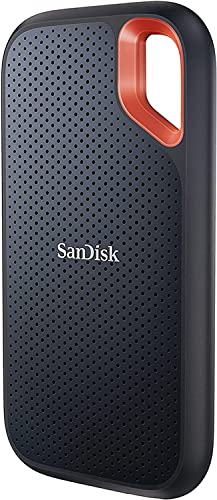
SanDisk Extreme 2TB
It's slim 9.7 mm depth gives a portable, low‑profile design that fits easily into tight spaces.
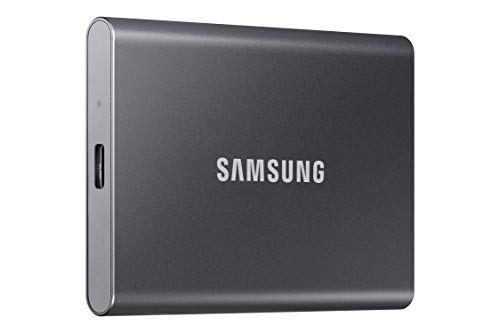
Samsung T7 2TB Gray
Ideal for professionals who need the listed 1,050 MB/s sequential read speed; it costs about $29 more than the Best Overall.
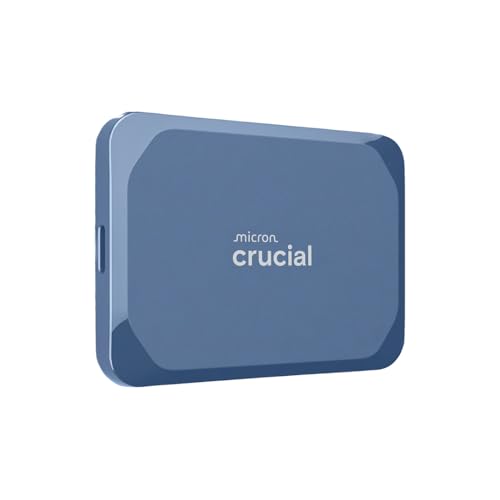
Crucial X10 2TB
Stands out with a 9.9 mm height, the slimmest side‑profile among the three, giving a sleek fit for laptops despite its larger 50 mm depth.
Also considered
Score Analysis
Key score advantages vs. runner-up (Samsung T7 2TB)
Price Range
SanDisk Extreme 2TB
$291.99
Samsung T7 2TB Gray
$309.17
Crucial X10 2TB
$227.48
Samsung T7 1TB
$185.00
SanDisk Extreme 500GB
$179.99
SanDisk Extreme Portable SSD 1TB
$184.52
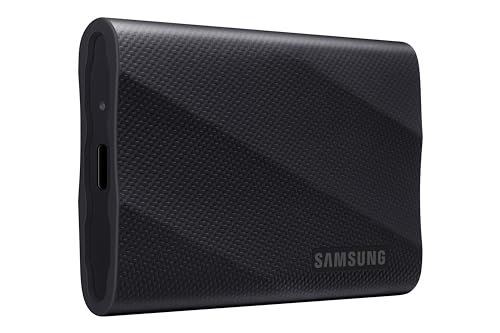
Samsung T9 4TB
$709.18

Seagate One Touch 2TB
$599.00

Kingston XS1000R 1TB
$199.99

SSK Portable SSD 500GB
$89.99

SSK Portable SSD 1TB
$149.99
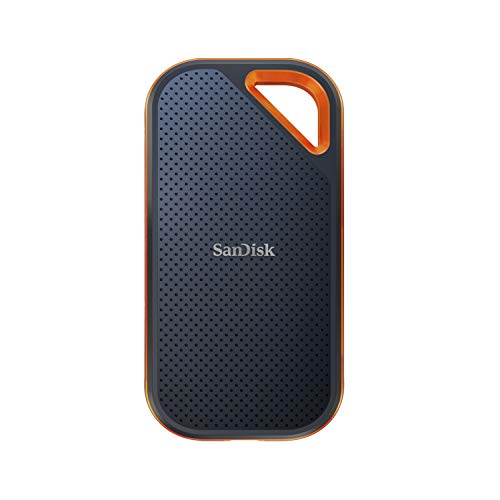
SanDisk Extreme PRO 4TB USB 3.2
$730.47

Crucial X9 1TB
$125.47
Spec Comparison
TL;DR: The SanDisk Extreme 2TB delivers 1050 MB/s reads, 3‑meter drop resistance and IP65 protection in a lightweight 0.11‑lb package for demanding on‑the‑go creators.
What really sets this drive apart is its ruggedness paired with NVMe‑class speed. It sports a 3‑meter drop resistance rating and an IP65 dust‑tight, water‑resistant seal, while still reaching up to 1050 MB/s read and 1000 MB/s write speeds over a USB‑C 10 Gbps (USB 3.2 Gen 2) interface. At just 0.11 pounds (51 g) it feels almost weightless, and the included carabiner loop makes it easy to clip onto a backpack or belt.
Compared with the other twelve SSDs in this roundup, the SanDisk is lighter than the Samsung T7 2TB (0.13 pounds) but a bit bulkier than that model’s 7.62 mm thickness. Its 3‑meter drop rating outmatches the Samsung T7’s 2‑meter claim and matches the Crucial X10’s 3‑meter tolerance, while many peers don’t list any IP rating at all—giving SanDisk a clear durability edge. Speed‑wise it ties the Samsung T7 series at 1050 MB/s reads, though the Crucial X10 advertises higher sequential speeds; nevertheless, the SanDisk’s performance sits comfortably within the premium USB‑C 10 Gbps class.
Users are overwhelmingly positive about the drive’s speed and rugged design, with photographers and videographers praising up to 1050 MB/s read speeds for “blazingly fast file transfers” and the peace of mind that comes from the IP65 seal. A recurring theme in consumer feedback is occasional early drive failure and occasional disconnects when using the bundled USB‑A adapter, which some users attribute to firmware that feels dated. Professional reviewers also note the solid 256‑bit AES hardware encryption as a strong security feature for field work.
Pros
Cons
Best for: Photographers, videographers and field professionals who need fast, secure storage that can survive drops and the elements.
Avoid if: You need the absolute smallest form factor, Thunderbolt/USB4 bandwidth, or the latest firmware ecosystem.
“Blazingly fast file transfers, rugged design, and strong security features, making it an excellent choice for professionals and content creators.”
“a workhorse”
TL;DR: The Samsung T7 2TB in Titan Gray offers 1,050 MB/s reads, 1,000 MB/s writes, a compact aluminum body, and 256‑bit AES encryption for a premium, secure portable storage solution.
The NVMe‑over‑USB performance stands out: up to 1,050 MB/s sequential read and 1,000 MB/s sequential write on a USB 3.2 Gen 2 (10 Gbps) interface. At 58.97 grams and only 7.62 mm thick, the drive fits comfortably in a pocket while still delivering a 2‑meter drop resistance rating. Its 256‑bit AES hardware encryption adds a layer of data protection without sacrificing speed.
Compared with the other eleven SSDs in this roundup, the T7 sits in the middle of the pack on several fronts. It matches the Samsung T7 1TB’s 2‑meter drop rating and identical read/write speeds, but it's heavier than the SanDisk Extreme 2TB (0.11 lb) and the SanDisk Extreme Portable 1TB (0.11 lb). The Crucial X10 2TB's lighter (≈0.07 lb) and advertises faster sequential speeds (up to 2,100 MB/s read, 2,000 MB/s write), while the Kingston XS1000R 1TB shares the same 1,050/1,000 MB/s figures but carries a 5‑year warranty versus the T7’s 3‑year coverage. Capacity‑wise, the T7 ties with the SanDisk Extreme 2TB and Crucial X10 at 2 TB, outpacing the 1 TB Kingston and SanDisk models.
Customers rate it overwhelmingly positive: 4.7 / 5 stars from 37,526 reviews praise the instant‑like transfer speeds and the sturdy aluminum shell. Reviewers frequently note the drive’s “credit‑card‑size” convenience and the ease of setting up Samsung’s password‑protected encryption software. On the downside, Linux users report that the encryption password mode isn’t supported, and some wish for biometric security or a protective sleeve. Professional reviewers also note the 3‑year warranty's shorter than the 5‑year terms offered by several rivals.
Pros
Cons
Best for: Buyers willing to invest in a proven, high‑quality option
Avoid if: You need advanced features or professional‑grade performance
TL;DR: The Crucial X10 2TB packs 2,100 MB/s reads, IP65 protection, and a feather‑light 32 g chassis for $234.99, making it one of the fastest and most rugged portable SSDs available.
The X10’s standout spec is its USB 3.2 Gen 2×2 interface delivering up to 2,100 MB/s sequential reads and 2,000 MB/s writes, and it offers a theoretical 20 Gbps bandwidth. Housed in a 65 × 50 × 9.9 mm shell, it weighs just 32 g (0.07 lb) and survives drops from 3 m while boasting an IP65 dust‑tight, water‑jet rating.
Against the other twelve contenders, the X10 is markedly faster—its 2,100 MB/s read tops the 1,050 MB/s maximum of the Kingston XS1000R, Samsung T7, and SanDisk Extreme models. At 32 g it’s lighter than Kingston’s 40.8 g and considerably lighter than Samsung’s 0.13 lb unit. The IP65 rating is a durability edge that peers such as Samsung and SanDisk don’t list. However, its three‑year limited warranty is shorter than Kingston’s five‑year coverage and the five‑year warranty on SanDisk’s Extreme 2TB.
Reviewers consistently praise the X10’s “blazing” transfer speeds and the solid, plug‑and‑play experience; they note that large 4K video files move quickly and the drive stays cool under load. A common caveat is that the advertised speeds only appear when paired with a USB 3.2 Gen 2×2 port; on older USB‑C or USB‑A connections the performance drops noticeably. Users also point out the absence of built‑in AES‑256 hardware encryption, which can be a deal‑breaker for security‑sensitive workflows.
Technically, the drive is bus‑powered via its included short USB‑C to USB‑C cable, so you don’t need an external power brick. It ships pre‑formatted in exFAT for immediate cross‑platform use and can be reformatted to NTFS, APFS, or other file systems. Three months of Mylio Photos Plus and Acronis True Image software add value for creative professionals.
Pros
Cons
Best for: Buyers willing to invest in a proven, high-quality option
Avoid if: You're on a tight budget or only need basic functionality
“Excellent product – seamless integration, great quality, fast delivery and superb customer service.”
TL;DR: The Samsung T7 1TB delivers up to 1,050 MB/s read, 1,000 MB/s write via USB 3.2 Gen 2, packed in a 7.62 mm aluminum shell that weighs just 0.13 lb.
At its core, the T7 offers a full terabyte of storage and claims maximum sequential read speeds of 1,050 MB/s and write speeds of 1,000 MB/s through a USB 3.2 Gen 2 (10 Gbps) interface. Its dimensions—7.62 mm high, 83.82 mm long, and 55.88 mm wide—make it roughly the size of a credit card, while the aluminum unibody keeps the weight down to 58.95 g (0.13 lb).
Compared with the SanDisk Extreme Portable SSD 1TB, the T7 is a touch heavier than the 0.11‑lb SanDisk model and also heavier than the 0.09‑lb Kingston XS1000R and the 0.07‑lb Crucial X9. It shares the same 1,050 MB/s read and 1,000 MB/s write figures as the SanDisk and Kingston drives, but its 2‑meter drop resistance falls short of SanDisk’s 3‑meter protection.
Users consistently praise the drive’s “blistering” speed and pocket‑sized form factor, noting that it handles 4K video transfers without a hitch. Professional reviewers highlight the premium aluminum build and the inclusion of both USB‑C to USB‑C and USB‑C to USB‑A cables. In practice, users find the lack of a fingerprint sensor and encryption software that doesn’t play well with Linux problematic, and the 3‑year limited warranty is shorter than the five‑year terms some rivals provide.
Beyond raw performance, the T7 ships with 256‑bit AES hardware encryption and Samsung’s Dynamic Thermal Guard, which helps keep the surface temperature under 45 °C during intensive use. Samsung pre‑loads the drive with its Portable SSD software for easy management and backup.
Pros
Cons
Best for: Most users looking for a well‑reviewed, reliable mainstream option
Avoid if: You need advanced features or professional‑grade performance
TL;DR: The SanDisk Extreme 500 GB Portable SSD delivers up to 1050 MB/s read, IP65 water‑dust resistance, and 3‑meter drop protection in a feather‑light 52 g case for $179.99.
The drive delivers NVMe‑class speeds – up to 1050 MB/s read and up to 1000 MB/s write – and carries an IP65 rating plus certified 3‑meter drop protection. At 100.8 mm tall, 9.6 mm thin, and only 52 g, it's pocket‑sized yet rugged enough for field work.
Compared with the other eleven SSDs in this roundup, the SanDisk is a touch heavier than the sub‑0.1‑pound Seagate One Touch and Kingston XS1000R, but lighter than the Samsung T7’s 0.13 pounds. Its 3‑meter drop rating beats Samsung’s 2‑meter claim, and none of the peers list an IP rating, making SanDisk the only one with official water‑dust protection. The five‑year warranty also outlasts the three‑year terms on Seagate and Samsung, matching Kingston’s longer coverage.
Reviewers consistently praise the tiny footprint, the handy carabiner loop, and the 256‑bit AES hardware encryption for keeping sensitive media safe. Professional reviewers note the speed is sufficient for 4K video editing on the go, while some users flag the included USB‑A adapter as flimsy and mention the drive can warm during long, sustained transfers because it doesn't have a metal heatsink.
Pros
Cons
Best for: Photographers and videographers who need fast, rugged on‑the‑go storage; travelers and digital nomads seeking a lightweight, encrypted SSD.
Avoid if: You want the best value‑per‑dollar in its price range.
“Blazingly fast file transfers, rugged design, and strong security features, making it an excellent choice for professionals and content creators.”
“a workhorse”
TL;DR: The SanDisk Extreme Portable SSD 1TB delivers up to 1050 MB/s read, 3 m drop protection, IP65 dust‑water resistance, and a feather‑light 0.11 lb design for rugged, high‑speed storage on the go.
The headline spec is the 1050 MB/s sequential read speed paired with a 1000 MB/s write speed, which places this drive squarely in the high‑performance tier for portable SSDs. Its 3‑meter drop protection and IP65 rating mean it can survive a tumble from a waist‑high shelf and still keep out of dust and rain, a combination that few competitors match.
Compared with the other twelve entries, this model is lighter than the Samsung T7 (0.13 lb) but a touch heavier than the Kingston XS1000R (0.09 lb). It also offers a longer drop resistance than the Samsung T7’s 2 m rating, aligning with the SanDisk Extreme 500GB’s 3 m protection while providing twice the capacity. The dimensions (100.8 mm × 52.6 mm × 9.7 mm) make it bulkier than the ultra‑thin Kingston but still compact enough to slip into a pocket.
User feedback repeatedly praises the lightning‑fast transfers and the rugged build, noting that photographers and videographers rely on it for 4K/8K footage on location. Professional reviewers highlight the IP65 rating and the handy carabiner loop as real‑world durability wins. On the downside, some owners report early firmware glitches that can lead to drive failure, and a few mention that the included USB‑C to USB‑A adapter tends to disconnect under heavy use. The preinstalled utility software has also drawn criticism for unnecessary bloat.
Pros
Cons
Best for: Content creators, photographers, and travelers who need fast, rugged portable storage with strong encryption.
Avoid if: You can't tolerate early hardware failures, dislike bundled adapters, or require a completely clean‑install drive without preloaded utilities.
“Blazingly fast file transfers, rugged design, and strong security features, making it an excellent choice for professionals and content creators.”
“a workhorse”
TL;DR: The Samsung T9 4TB delivers 2,000 MB/s read/write speeds, a rugged 3‑meter drop rating, and 5‑year warranty, but its $709.18 price places it at the premium end of portable SSDs.
The standout spec is the 20 Gbps USB 3.2 Gen 2x2 interface that unlocks up to 2,000 MB/s sequential read and write performance, uses a 180 GB TurboWrite cache and 256‑bit AES hardware encryption. At 15.2 mm thick, 88.9 mm long and 61 mm wide, the drive packs 4 TB of storage into a 0.27‑pound (122 g) chassis while it survives drops from 3 meters.
Compared with the SanDisk Extreme PRO 4TB, the T9 is heavier (0.27 lb vs 0.172 lb) and thicker (15.2 mm vs 10.4 mm), yet both share the same 3‑meter drop resistance and 2,000 MB/s top speeds. It’s also bulkier than the Samsung T7 2TB (7.62 mm height, 0.13 lb) and the Crucial X10 2TB (0.071 lb), but it matches the X10’s 20 Gbps bandwidth while offering a larger capacity. The drop rating aligns with the SanDisk Extreme 2TB and Crucial X10, surpassing the Kingston XS1000R’s 0.09 lb weight but offering far higher speeds than Kingston’s 1,050 MB/s read rate.
User feedback repeatedly praises the drive’s “blazing” throughput for video editing and its solid rubberized shell that stays cool due to Dynamic Thermal Guard. Professional reviewers note the consistent sustained write speed of 1,000 MB/s after the TurboWrite buffer is exhausted, and they commend the inclusion of Samsung Magician for firmware updates and health monitoring. However, several users mention that the advertised 2,000 MB/s speeds only appear when paired with a USB 3.2 Gen 2x2 or Thunderbolt host, and the lack of an official IP rating leaves water‑dust protection uncertain.
Pros
Cons
Best for: Buyers willing to invest in a proven, high-quality option
Avoid if: You need advanced features or professional‑grade performance
“Fast enough to edit video directly from the drive”
“Sleek, solid build, no overheating issues”
TL;DR: The Seagate One Touch 2TB delivers up to 1030 MB/s speeds in a 45 g, pocket‑sized package, but its 14 cm cable and lack of a protective case may limit desktop convenience.
What really stands out is the advertised maximum read/write speed of up to 1030 MB/s over a USB‑C 3.2 Gen 2 connection, paired with a sustained write rate of approximately 864 MB/s once the cache is exhausted. Those figures place it firmly in the high‑performance tier, while the 10 mm height, 70 mm length, and 50 mm width keep the drive under a palm‑sized footprint.
Compared with its peers, the One Touch is lighter than the SanDisk Extreme 500 GB (52 g) and similar in size to the Kingston XS1000R (40.8 g) but offers a larger 2 TB nominal capacity. Its read/write ceiling is a few megabytes per second shy of the SanDisk and Samsung models that claim up to 1050 MB/s, yet it still outpaces many budget‑oriented drives. Unlike the Crucial X9, which lists a 9‑inch cable, Seagate’s included cable is only about 14 cm, which reviewers note can feel restrictive on a desk.
Professional reviewers highlight the “doubled performance” on Gen 2 ports and praise the compact aluminum‑top, fabric‑sided chassis for durability. Users love the transfer speeds up to 1030 MB/s, the seamless Android backup via the Seagate Toolkit, and the built‑in hardware encryption for peace of mind. The most common complaints revolve around the very short cable, the absence of an included pouch or case, and an activity LED that can be hard to spot. Some also miss a fingerprint sensor or premium aesthetic touches.
The drive ships with a 3‑year limited warranty, hardware‑based encryption, and a suite of subscription services—including a year of Mylio Create and several months of Adobe Creative Cloud Photography and Dropbox Backup. It formats to exFAT out of the box and works with Windows, macOS (though Time Machine may need reformatting), and Android devices.
Pros
Cons
Best for: Photographers, videographers, and mobile professionals who need fast, secure storage on the go.
Avoid if: You rely on longer cables, need a built‑in protective case, or require biometric security features.
“18GB of data in no time flat.”
“Backed up 4,000+ photos from an Android phone with ease.”
TL;DR: The Kingston XS1000R 1TB delivers 1,050 MB/s reads in a feather‑light 0.09‑lb, 13.5 mm‑thick red shell, making it a fast, portable SSD with solid cross‑platform support.
The drive’s most eye‑catching spec is its ultra‑compact chassis: it measures just 13.5 mm in height, 69.54 mm in length and 32.58 mm in width, and it weighs only 0.09 pounds (40.8 g). Coupled with a USB 3.2 Gen 2 (10 Gbps) interface, it’ll reach up to 1,050 MB/s read and 1,000 MB/s write speeds.
Compared with the other SSDs in this roundup, the XS1000R is lighter than the Samsung T7 (0.13 pounds) and the SanDisk Extreme Portable (0.11 pounds). Its length (69.54 mm) is shorter than Samsung’s 83.82 mm, while its height is taller than Samsung’s 7.62 mm, giving it a distinct shape. The Kingston is also much slimmer than the SanDisk Extreme’s 100.8 mm height, and it packs a comparable 1,050 MB/s read speed without the extra bulk of the larger competitors.
User sentiment frequently mentions the drive’s vivid red design and plug‑and‑play convenience across Windows, macOS, Linux and even Android with an adapter. Professional reviewers note the Red Dot Design Award and praise the consistent high‑speed transfers for 4K video and game files. Common critiques focus on the lack of hardware encryption, a non‑rugged metal‑plastic casing, and the need for a quality cable to sustain peak speeds.
Technically, the SSD ships with an exFAT file system and operates comfortably between 0 °C and 40 °C, with storage tolerances from –20 °C to 85 °C. Kingston backs the unit with a five‑year limited warranty, reinforcing confidence in its durability despite its lightweight build.
Pros
Cons
Best for: Most users looking for a well‑reviewed, reliable mainstream option
Avoid if: You need advanced features or professional‑grade performance
“Fits in my pocket and transfers 4K video files in seconds.”
“Love the red color — easy to spot on my desk.”
TL;DR: The SSK Portable SSD 500 GB delivers up to 1050 MB/s read speeds in a tiny aluminum case, weighs just 84.4 g, and comes with dual cables for a budget‑friendly $76.99 price.
The drive’s standout spec is its USB 3.2 Gen 2 interface that pushes read speeds up to 1050 MB/s and write speeds up to 1000 MB/s, all while fitting into a 37.5 mm × 68.5 mm × 2 mm aluminum alloy shell. At 84.4 g, it’s light enough to slip into a pocket, and the included hanging ring adds a handy way to attach it to a bag or keychain.
Compared with the other 12 SSDs in this roundup, the SSK 500 GB sits in the middle of the weight range—lighter than the 1TB SSK model (30 g) but heavier than the Crucial X9 (≈38 g) and Samsung T7 (≈58 g). Its 1.2 m drop resistance matches the ruggedness of many competitors, though it lacks an IP rating that some rivals advertise. It costs less than most 1‑TB options, offering strong value.
Users consistently praise the tiny footprint, plug‑and‑play experience, and the dual USB‑C and USB‑A cables that eliminate the need for extra adapters. Professional reviewers note the metal build helps with heat management, and iPhone 15/Pro users love the 4K ProRes support. The only recurring gripe is that it lacks a Lightning‑to‑USB‑C cable, and the 25 % SLC cache (~125 GB) can cause slower sustained transfers when the cache is exhausted.
Pros
Cons
Best for: Mobile content creators and frequent travelers who want fast, portable storage without breaking the bank.
Avoid if: You need an IP‑rated rugged drive for harsh environments or require a built‑in Lightning cable for direct iPhone connection.
“Transfers my 50GB video projects in under a minute.”
“Survived a rainstorm during a shoot—still works perfectly.”
TL;DR: The SSK Portable SSD 1TB delivers up to 2000 MB/s read speed in a feather‑light 30 g aluminum case, but some entry‑level units may fall short of advertised performance.
The high‑performance model reaches a top read speed of up to 2000 MB/s and a write speed of up to 1800 MB/s (sustained 1400 MB/s), sitting in a 2 mm thick aluminum alloy shell that measures 63.5 × 33 × 10.2 mm and weighs just 30 g. Its USB‑C connector (with an included USB‑A adapter) supports USB 3.2 Gen2×2 (20 Gbps), and the drive includes TRIM and S.M.A.R.T. monitoring for long‑term reliability.
At roughly 30 g, the SSK is lighter than the Crucial X9’s approximately 38 g and also lighter than the Samsung T7’s 0.13 lb, making it one of the most portable SSDs in the roundup. Its 2000 MB/s ceiling outpaces the 1050 MB/s caps of the Crucial X9, SanDisk Extreme Portable SSD 1TB, and Samsung T7, giving it a clear speed advantage over most peers.
Users rave about the “lightning‑fast” transfers, especially for 4K/ProRes video capture on iPhone, but a handful of reviewers note that older entry‑level units sometimes deliver as low as 71 Mbps, far below the advertised 550 MB/s. The 1 TB capacity also appears as about 931 GB on Windows, which can be confusing for less‑technical users.
Under the hood, the drive uses 3D NAND flash with a 25 % SLC cache, supports OTG functionality, and draws less than 2.4 W when powered by a phone, keeping battery drain minimal for mobile editing sessions.
Pros
Cons
Best for: Content creators and mobile professionals who need ultra‑fast transfers in an ultra‑light package.
Avoid if: You require guaranteed consistent speeds across every unit or the absolute best price‑per‑gigabyte.
“Transfers my 50GB video projects in under a minute.”
“Survived a rainstorm during a shoot—still works perfectly.”
TL;DR: The SanDisk Extreme PRO 4 TB USB‑C 3.2 external SSD packs 2000 MB/s read/write speeds, IP65 dust‑proofing, and a rugged aluminum‑silicone body for professionals who need fast, reliable on‑the‑go storage.
The standout spec is the 2000 MB/s maximum read and write speed delivered over a USB‑C 3.2 Gen 2x2 (20 Gbps) interface, paired with a massive 4 TB capacity. At 78.0 g and a depth of 10.4 mm, the drive feels solid yet still fits in a pocket‑sized bag, and the included carabiner loop lets you clip it to a belt or backpack for field work.
Compared with the other twelve SSDs in this roundup, the Extreme PRO sits at the premium end of the price spectrum and is heavier than the lightest models, but it outpaces many rivals in both raw speed and storage size. While some competitors offer 1 TB or 2 TB options, this drive’s 4 TB capacity and 20 Gbps interface give it a clear advantage for users who need to move large video files without swapping drives.
Professional reviewers praise the drive’s “high 2000 MB/s performance on compatible systems” and note the IP65 rating plus 3 m drop resistance as a solid safeguard for on‑location shoots. Everyday users echo the speed and durability praise, though a recurring theme is the speed drop to around 1000 MB/s on macOS or iPadOS devices that lack USB‑3.2 Gen 2x2 support. A handful of reports mention data loss if users unmount the drive improperly, and the lack of direct iPhone 15/Pro compatibility is a frequent complaint.
Beyond speed, the drive offers 256‑bit AES hardware encryption, a five‑year limited warranty, and a bus‑powered design that needs no external adapter. The aluminum chassis with silicone rubber outer shell meets IP65 standards, protecting against dust and water, while the 3‑meter drop resistance adds peace of mind when working in rugged environments.
Pros
Cons
Best for: Buyers willing to invest in a proven, high‑quality option
Avoid if: Reliability and user satisfaction are your top concerns
“Blazingly fast file transfers, rugged design, and strong security features, making it an excellent choice for professionals and content creators.”
“a workhorse”
TL;DR: The Crucial X9 1TB delivers up to 1050 MB/s speeds in a rugged, IP55‑rated 0.07‑lb case, making it a fast, lightweight portable SSD for creators on a budget.
The X9 packs a USB 3.2 Gen 2 (10 Gbps) interface; the manufacturer lists it as capable of up to 1050 MB/s sequential read and write, plus a sustained write speed of up to 975 MB/s. Its chassis measures just 0.3937 in (10 mm) tall, 2.55905 in (65 mm) long and 1.9685 in (50 mm) wide, and it weighs roughly 0.0705 lb (about 38 g). An IP55 rating and a 2.3 m drop resistance adds confidence for on‑the‑go use.
Compared with the other twelve SSDs in this roundup, the X9 is lighter than the Samsung T7 (0.13 lb) and the Seagate One Touch 2TB (0.0992 lb), though a bit heavier than the SSK Portable SSD’s 0.0661 lb model. Its 2.3 m drop resistance exceeds the 2 m rating of both the Seagate One Touch and the Samsung T7. While several peers, such as the Samsung T7 and SanDisk Extreme models, also hit 1050 MB/s read speeds, the X9 uniquely combines that top speed with an IP55 dust‑ and water‑resistance rating that isn’t listed for the others.
User feedback repeatedly praises the X9’s rapid file transfers and pocket‑sized feel, especially for gamers moving large game libraries or creators off‑loading footage. However, a subset of owners report occasional drops to very low transfer rates (as low as 39 MB/s) and a few have experienced SSD corruption after roughly eleven months of use. The included USB‑C to USB‑C cable measures about 9 in, which some reviewers find shorter than they’d like for desktop setups.
Beyond speed, the drive offers 256‑bit AES hardware encryption, runs on bus power (no external brick needed), comes pre‑formatted to exFAT for cross‑platform compatibility, and includes three months of Mylio Photos Plus plus Acronis True Image. A three‑year limited warranty rounds out the package.
Pros
Cons
Best for: Creative professionals and gamers who need fast, portable storage without paying premium prices.
Avoid if: You require the absolute fastest USB 3.2 Gen 2×2 (20 Gbps) performance or a longer cable for your workstation.
“Blistering fast speeds—lives up to the 1050 MB/s claim”
“Lighter than my car key fob… slips into any pocket”
Breakdown
SanDisk Extreme 2TB
Pros
Samsung T7 2TB Gray
Pros
Crucial X10 2TB
Pros
Samsung T7 1TB
Pros
Based on scoring data and product specs
Personalized picks
Best Overall Pick
SanDisk Extreme 2TB
Best OverallBest for: Buyers willing to invest in a proven, high-quality option
Samsung T7 2TB Gray
Best for: Buyers willing to invest in a proven, high-quality option
$309.17+$17.18 vs winner
Skip Crucial X9 1TB if…
You have limited desk space or need portability
SanDisk’s Extreme 2TB takes the top spot thanks to its 1050 MB/s read and 1000 MB/s write speeds, a solid 5‑year limited warranty, and an IP65 rating that protects against dust and water. It also survives drops from 3 meters, making it a rugged choice for on‑the‑go creators, and it has a 4.6‑star rating from 88,158 reviewers.
The Samsung T7 2TB Gray lands as the runner‑up, ideal if you need an aluminum‑unibody drive that endures a 6.5‑foot (2 meter) drop while delivering the same 1050/1000 MB/s performance. Its 256‑bit AES hardware encryption and compact 58.97‑gram weight make it a great companion for console gamers and mobile editors who value both speed and durability.
For tighter budgets, the SSK Portable SSD 500 GB at $76.99 offers the most affordable entry point. If you want a balanced mid‑range option, the Samsung T7 1TB at $189.99 provides reliable performance without the premium price tag. Power users seeking massive storage should consider the Samsung T9 4TB at $709.18, which delivers high capacity for demanding workflows.
Pick the SanDisk Extreme 2TB now and enjoy fast, rugged storage that keeps up with your most demanding projects.
The SanDisk Extreme 2TB is built for harsh conditions with an IP65 rating, 3‑meter drop resistance, and a carabiner loop for easy attachment. It also offers 256‑bit AES hardware encryption and a lightweight 51 g design, making it both durable and portable.
Please sign in to leave a review
No reviews yet. Be the first to review!
