⚡ Quick Answer
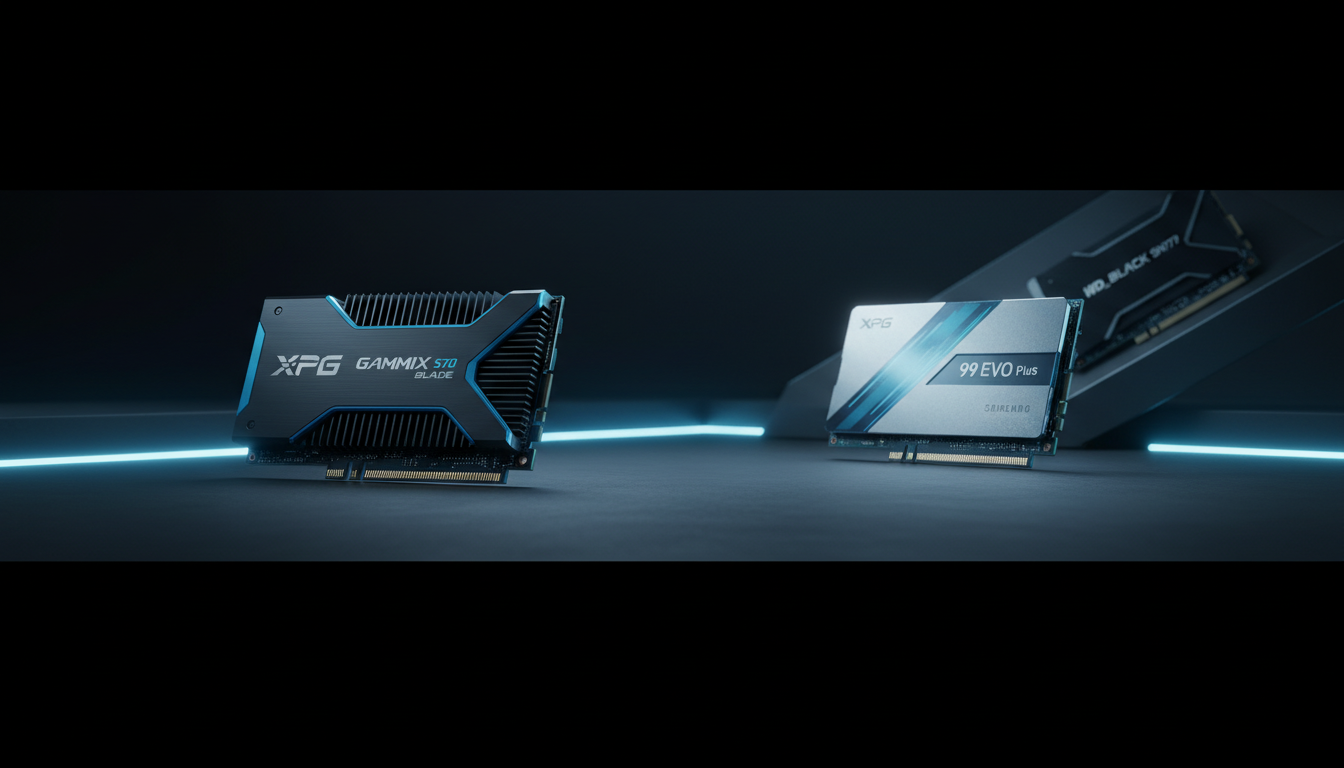
When you’re hunting for a PCIe Gen4 or Gen5 SSD that can keep up with modern games, 4K video edits, or AI‑heavy workloads, the numbers matter. Across 11 drives, the fastest sequential read tops out at 14,900 MB/s on the Crucial T710 4TB, while the XPG GAMMIX S70 Blade delivers 7,400 MB/s read and 6,800 MB/s write at a listed price of $179.99. Ratings are strong across the board, with most models hovering around 4.8/5 and the Samsung 990 EVO Plus even hitting 4.8/5 from 6,095 reviews.
The picks are grouped into three price tiers. The budget segment includes the $85 MSI SPATIUM M480 PRO, the $159.99 WD Blue SN5000, the $164.99 Kingston NV3, and the $179.99 XPG GAMMIX S70 Blade. Mid‑range options sit at $199.99 for the Samsung 990 PRO and $225.88 for the Crucial P310. Premium choices—like the $319.99 Corsair MP600 Elite, the $329.99 Samsung 990 EVO Plus, the $399.99 WD BLACK SN770, and the $554.97 Crucial T710—push the envelope on speed and endurance.
Below you’ll find a deeper look at each drive’s performance, endurance, and ideal use cases, so you can match the right SSD to your build.

XPG GAMMIX S70 BLADE
Lightweight design at just 7 g without heatsink delivers high performance without adding bulk.

Samsung 990 EVO Plus
Ideal for power users who want a proven, high‑quality drive and are willing to spend about $150 more than the Top Pick option.
WD_BLACK SN770
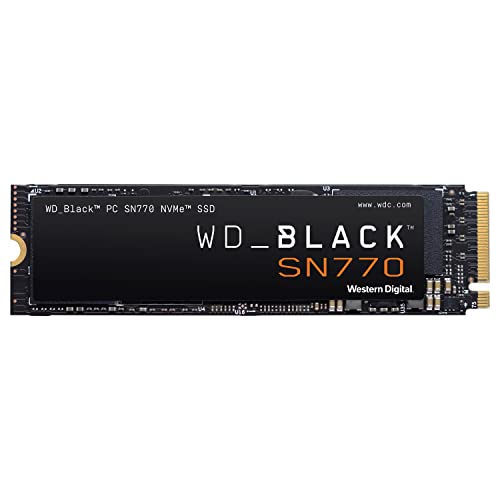
Stands out with an ultra‑slim 2.38 mm height and 80 mm length, perfect for the tightest M.2 slots where the other picks may not fit.
Also considered
Score Analysis
Key score advantages vs. runner-up (Samsung 990 EVO)
Price Range
XPG GAMMIX S70 BLADE
$179.99
Samsung 990 EVO Plus
$375.73
WD_BLACK SN770
$379.99

MSI SPATIUM M480 PRO 1TB
$269.99
Samsung 990 PRO
$319.99

Corsair MP600 Elite 2TB
Out of Stock

Kingston NV3
$164.99

Western Digital WD Blue SN5000
$309.99

Crucial T710 4TB
$639.99

Crucial P310 2TB
$242.86
Silicon Power 1TB SSD
$159.97
Spec Comparison
TL;DR: The XPG GAMMIX S70 Blade delivers up to 7400 MB/s reads and 6800 MB/s writes, offers up to 8 TB capacity and a 5‑year warranty, but may need extra cooling under heavy loads.
What really stands out is its sequential read speed of 7400 MB/s and write speed of 6800 MB/s, putting it at the top of the PCIe Gen4 performance curve. The drive is available in capacities from 512 GB to 8 TB, with endurance reaching 5920 TB (8 TB model) and an MTBF of 2,000,000 hours, promising long‑term reliability.
Compared with the other ten SSDs in this roundup, the S70 Blade reads faster than the Silicon Power (5,000 MB/s) and Kingston NV3 (6,000 MB/s), and it matches the MSI SPATIUM’s 7,400 MB/s read while keeping a higher endurance than the MSI’s 700 TB. Its 740 TB endurance for the 1 TB version exceeds the Silicon Power’s 600 TB and far surpasses the Kingston’s 320 TB. At 0.025 pounds (11 g with heatsink) it’s heavier than the ultra‑light MSI (1 g) and Kingston (6.57 g) but still slimmer than the WD Blue’s 20.32 mm height, and its 4.3 mm thickness (with heatsink) is thicker than the 2.3 mm profiles of many peers.
Customers consistently praise the instant boot and game‑load times, and professional reviewers highlight the Innogrit IG5236 controller delivering Phison‑class performance at a lower price point. Both users and reviewers note that performance can dip during sustained writes once the DRAM cache is exhausted, and that the drive may thermally throttle without adequate cooling. Power consumption also runs higher than on some competing models, which can affect system thermals.
Beyond raw speed, the S70 Blade packs DDR4 DRAM and SLC caching, supports AES‑256‑bit hardware encryption, LDPC ECC, end‑to‑end data protection, and an integrated RAID engine for added data integrity. Its 1500 G shock resistance and operating temperature range of 0 °C‑70 °C makes it a solid choice for gaming rigs or PS5 upgrades.
Pros
Cons
Best for: Avid gamers, overclockers, PC enthusiasts, and PS5 owners who need high‑capacity, high‑speed storage.
Avoid if: You need ultra‑low power draw, ultra‑compact builds, or the absolute highest random IOPS.
TL;DR: The Samsung 990 EVO Plus 2 TB delivers up to 7,250 MB/s reads, 6,300 MB/s writes, and a 1,200 TBW endurance in a feather‑light 9 g M.2 form factor, ideal for power‑efficient high‑performance PCs.
The standout spec is its advertised sequential performance: up to 7,250 MB/s read and 6,300 MB/s write speeds, with a TurboWrite cache of up to 216 GB. Even without on‑board DRAM, the Host Memory Buffer and Samsung’s 5 nm Piccolo controller keep random I/O strong, reaching up to 1,000,000 IOPS read and 1,350,000 IOPS write.
Compared with the other ten entries, the 990 EVO Plus is lighter than the WD_BLACK SN770 (0.012 lb vs 0.02 lb) but still heavier than the ultra‑light Corsair MP600 Elite, which tips the scales at 0.066 lb. Its sequential read speed edges past the Corsair MP600 Elite’s 7,000 MB/s, while matching its 1,200 TBW endurance. The drive also consumes modest power—4.6 W on active reads, 4.2 W on writes, and just 5 mW in sleep mode—making it a good fit for laptops and compact builds.
Reviewers like the fast boot times and the fact that the SSD stays cool without a heatsink, thanks to the nickel‑coated controller. However, the DRAM‑less design can cause a noticeable dip in sustained write speeds once the 216 GB TurboWrite cache is depleted, a point echoed by both consumer feedback and professional reviewers. The drive also offers AES‑256‑bit encryption, TCG/Opal v2.0 support, and a 1.5 million‑hour MTBF, underscoring its reliability for everyday use.
Pros
Cons
Best for: Buyers willing to invest in a proven, high‑quality option
Avoid if: You need advanced features or professional‑grade performance
TL;DR: The WD_BLACK SN770 2 TB PCIe Gen4 SSD packs up to 5,150 MB/s read, 4,850 MB/s write and 1,200 TBW endurance in a feather‑light, DRAM‑less package, ideal for gamers who value speed without a heatsink.
What really stands out is the drive’s sequential performance: up to 5,150 MB/s read and 4,850 MB/s write, powered by a proprietary WD/SanDisk controller that uses Host Memory Buffer instead of onboard DRAM. At 5.5 g, the SN770 is also one of the lightest 2 TB M.2 2280 SSDs you’ll find, with a slim 2.38 mm profile that fits easily into tight builds.
Compared with the other ten entries in this roundup, the SN770 sits in the middle of the speed band – its 5,150 MB/s read ceiling trails the Samsung 990 EVO Plus’s 7,250 MB/s and the Corsair MP600 Elite’s 7,000 MB/s, but it still outpaces many older Gen3 drives. It is considerably lighter than the Corsair MP600 Elite, which weighs 30 g, and it’s also lighter than the Samsung 990 PRO at 9.1 g. In endurance, its 1,200 TBW matches the Samsung 990 EVO Plus and exceeds the Crucial P310’s 440 TBW, placing it solidly in the mid‑range of durability.
Reviewers consistently praise the SN770 for delivering “flagship‑class” game load times at a lower price point, noting its 5,150 MB/s read and 4,850 MB/s write speeds and the low 3.3 mW sleep power. Professional reviewers also note the clever use of HMB to squeeze performance out of a DRAM‑less design. The main criticisms focus on the lack of an included heatsink, which can cause thermal throttling under sustained heavy loads, and the occasional dip in write performance when the drive is pushed for extended periods.
Pros
Cons
Best for: Gamers and mainstream PC builders who want high sequential speeds and solid endurance without the extra cost of a DRAM‑equipped drive.
Avoid if: You need professional‑grade sustained write throughput, a built‑in heatsink, or the absolute top‑tier performance of premium Gen4 SSDs.
“Fast game loading and smooth performance in PCs/PlayStation 5”
TL;DR: The MSI SPATIUM M480 PRO 1TB delivers up to 7400 MB/s reads, 6000 MB/s writes, and 1 TB capacity in an ultra‑thin 2.15 mm M.2 form factor for just $85, though real‑world speeds may dip slightly below the specs.
The drive’s headline numbers deliver sequential read speeds of 7400 MB/s, sequential writes of 6000 MB/s, and random 4K reads and writes of 750,000 IOPS and 1,000,000 IOPS respectively. A 1 GB DDR4 cache backs the 1 TB capacity, while an endurance rating of 700 TBW and an MTBF of 1,825,000 hours promise long‑term reliability.
At 2.15 mm tall, it's far slimmer than the Western Digital WD Blue SN5000’s 20.32 mm height and also thinner than the Silicon Power 1TB SSD’s 3.56 mm profile. Its 1 g weight makes it lighter than every peer, which range from about 5.7 g to nearly 10 g. The 700 TBW endurance sits between XPG GAMMIX S70 BLADE’s 740 TBW and Samsung 990 PRO’s 600 TBW, giving it solid durability without the bulk.
Reviewers consistently praise the drive’s lightning‑fast loading times and the ease of installation in desktops or notebooks. Manufacturer lists real‑world sequential performance about 300 MB/s below the advertised peak, and the 1 TB model caps write speeds around 6000 MB/s rather than the higher figures some listings suggest. Data‑protection features such as TRIM, SMART, LDPC ECC, APST, and AES‑256 encryption add an extra layer of confidence for gamers and creators alike.
Pros
Cons
Best for: Gamers, video editors, and professionals who need PCIe 4.0 speeds for large file transfers.
Avoid if: You have older PCIe 3.0 or 2.0 systems that can’t leverage Gen4 bandwidth, or you require guaranteed 7000 MB/s write performance.
TL;DR: The Samsung 990 PRO 1TB delivers up to 7,450 MB/s sequential read and 6,900 MB/s write, packs a 1 GB LPDDR4 cache, and offers a 5‑year warranty for high‑end PC and console builds.
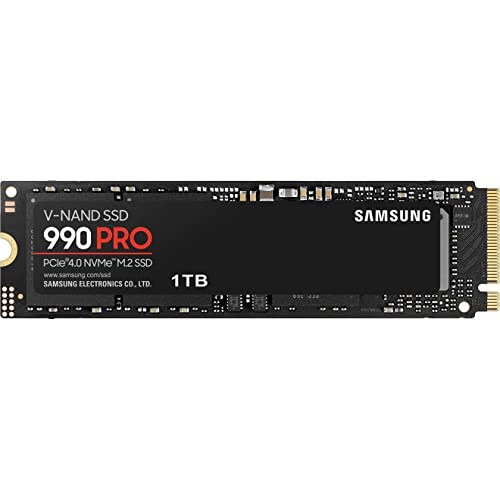
What really stands out is the advertised sequential performance: 7,450 MB/s read and 6,900 MB/s write on a PCIe 4.0 x4 interface. Coupled with a 1 GB LPDDR4 DRAM cache and a Samsung Pascal controller, the drive targets enthusiast workloads that need raw bandwidth, such as DirectStorage‑enabled gaming or 4K video editing.
At 0.02 pounds, the 990 PRO's lighter than the XPG GAMMIX S70 BLADE’s 0.025‑pound version and the Crucial P310’s 0.022‑pound unit, yet a bit heavier than the Kingston NV3 (0.01448 pounds) and the ultra‑light MSI SPATIUM M480 PRO (0.0022 pounds). Its $199.99 list price sits above the MSI’s $85.00 offering but below the higher‑priced Crucial P310 at $225.88, placing it in the mid‑range premium tier of this roundup.
User feedback consistently praises the drive’s high speed for loading games and moving large media files, noting that the 50 % power‑efficiency improvement over the 980 PRO feels noticeable in laptops. However, reviewers also flag the single‑gigabyte DRAM cache as a limitation for sustained random workloads, and the base model’s lack of an integrated heatsink can be a concern on cramped, low‑airflow builds.
Pros
Cons
Best for: Most users looking for a well‑reviewed, reliable mainstream option
Avoid if: You need advanced features or professional‑grade performance
TL;DR: The Corsair MP600 Elite 2TB delivers 7,000 MB/s reads and 6,500 MB/s writes in a DRAM‑less M.2 2280 package, with a 1,200 TBW endurance and a five‑year warranty.
The drive’s headline spec is its sequential performance: up to 7,000 MB/s read and 6,500 MB/s write on a PCIe 4.0 x4 interface, backed by a 2 TB capacity and a low‑profile aluminium heatsink. It weighs 30 g (0.066 lb) and measures 0.417 in × 0.95 in × 3.165 in, fitting easily into compact builds. AES‑256 hardware encryption, SMART and TRIM support, and a 5‑year warranty round out the feature set.
Compared with the other ten SSDs in this roundup, the MP600 Elite sits near the top for raw speed—its 7,000 MB/s read is just shy of the Samsung 990 EVO Plus’s 7,250 MB/s but far ahead of the WD_BLACK SN770’s 5,150 MB/s. Its endurance of 1,200 TBW matches the Samsung 990 EVO Plus and exceeds the Crucial P310’s 440 TBW. At 30 g, it's heavier than the Samsung 990 EVO Plus (9 g) and the WD_BLACK SN770 (5.5 g), yet still light enough for most laptop and desktop slots.
Reviewers praise the drive’s high sequential throughput and its efficient power draw—idle power stays under 5 mW thanks to DEVSLP. The included Corsair SSD Toolbox makes firmware updates and secure erase simple. However, professional reviews note the DRAM‑less design and a relatively small pSLC cache, which can cause sustained write speeds to dip after the cache fills. Users who run large, continuous transfers have reported slower performance in those scenarios.
Additional technical details include a 3.3 V ±5 % operating voltage, a shock rating of 1,500 G, and operating temperatures from 0 °C to 65 °C (storage range –40 °C to 85 °C). The drive also carries PS5 compatibility, making it a solid choice for console upgrades.
Pros
Cons
Best for: Budget‑conscious gamers and PC upgraders who want PCIe 4.0 speeds, strong endurance, and a solid warranty.
Avoid if: You need sustained heavy‑write performance for content creation or prefer a DRAM‑equipped drive for maximum write consistency.
TL;DR: The Kingston NV3 1 TB PCIe 4.0 SSD delivers up to 6,000 MB/s read and 4,000 MB/s write in a slim single‑sided M.2 2280 package, offering solid value for budget‑focused gamers and creators.
The drive’s headline spec is a sequential read speed of 6,000 MB/s and a sequential write speed of 4,000 MB/s, both advertised for the PCIe 4.0 x4 interface. It ships as a single‑sided M.2 2280 module, measures 2.3 mm in height, 80 mm long, 22 mm wide, and weighs just 0.01448 lb (6.57 g). Kingston lists a 1 TB capacity, a 320 TBW endurance rating, and a 2,000,000‑hour MTBF, and includes a three‑year warranty.
Compared with the other ten SSDs in this roundup, the NV3 sits between the budget and premium tiers. Its 0.01448 lb weight makes it slightly heavier than the WD Blue SN5000 (0.01256 lb) but lighter than the Silicon Power 1 TB model (0.01764 lb). In raw speed, its 6,000 MB/s read outpaces the WD Blue SN5000’s 5,150 MB/s and the Silicon Power’s 5,000 MB/s, yet it trails the XPG GAMMIX S70 BLADE’s 7,400 MB/s and Samsung 990 PRO’s 7,450 MB/s. The 320 TBW endurance is lower than most competitors, which range from 440 TBW (Crucial P310) up to 900 TBW (WD Blue SN5000).
Reviewers note that the DRAM‑less design, which relies on Host Memory Buffer, keeps power draw and heat low—it's good for thin laptops and small‑form‑factor PCs. However, the same architecture can cause variable performance across production batches, and random IOPS fall short of drives that include dedicated DRAM. Users consistently praise the noticeable boot‑time boost and the ease of installing a single‑sided M.2 module, while some report occasional throttling under sustained heavy writes.
Pros
Cons
Best for: Budget-conscious buyers seeking a reliable entry-level option
Avoid if: You need top‑tier random IOPS, sustained heavy write workloads, or guaranteed consistent performance for professional workloads
TL;DR: The WD Blue SN5000 2 TB delivers up to 5,150 MB/s read, 4,850‑4,900 MB/s write and 900 TBW endurance in a DRAM‑less, 5.70 g M.2 2280 form factor, making it a solid creator‑focused SSD at $159.99.
Western Digital’s WD Blue SN5000 stands out with its advertised sequential read speed of up to 5,150 MB/s and sequential write speed of up to 4,850‑4,900 MB/s, backed by a 900 TBW endurance rating. The drive is DRAM‑less but uses nCache 4.0 and a pSLC cache larger than 300 GB to keep file transfers brisk. It ships in a compact M.2 2280 package measuring 20.32 mm × 129.54 mm × 101.6 mm and weighs just 5.70 g (0.012566348934 pounds).
Compared with the other ten SSDs in this roundup, the SN5000 is lighter than Kingston’s NV3 (6.57 g) and shorter than the bulkier XPG GAMMIX S70 BLADE (which adds a heatsink). Its 900 TBW endurance outpaces Kingston’s 320 TBW and Silicon Power’s 600 TBW, though its 5,150 MB/s read ceiling sits below the 6,000 MB/s of the NV3 and the 7,400 MB/s of the XPG model. The drive also trails the Samsung 990 PRO’s 7,450 MB/s read, but it undercuts the premium price of those higher‑end options.
Professional reviewers note the large pSLC cache and nCache 4.0 “enable fast file copies,” and they praise the sustained mixed I/O performance that stays above 4,500 MB/s on average. However, the DRAM‑less design can lead to “occasional random I/O performance drops when cache is exhausted,” and user reviews echo that point, mentioning slower random writes under heavy workloads. The SSD doesn’t tout any special power‑efficiency tricks, which some reviewers see as a missed opportunity.
Beyond speed, the SN5000 carries a suite of certifications (BSMI, CE, FCC, TUV, UL, etc.) and meets a shock resistance of 1,500 G @ 0.5 ms half sine. Its Polaris 3 controller and PCIe Gen4 x4 (NVMe 1.4) interface keep it compatible with modern motherboards, while features like TCG Pyrite 2.0 and ATA Security Passthrough add layers of data protection for professional workflows.
Pros
Cons
Best for: Creators, video editors, photographers, and AI‑workflow users who need solid sequential performance and high endurance without breaking the bank.
Avoid if: You need the absolute highest random I/O performance or are building an ultra‑high‑performance gaming rig that demands DRAM‑backed SSDs.
TL;DR: The Crucial T710 4TB is a PCIe Gen5 SSD that hits up to 14,900 MB/s read, 13,800 MB/s write, and offers strong endurance, but it carries a premium price and needs a Gen5 slot to shine.
The T710 packs a Silicon Motion SM2508 controller behind a PCIe Gen5 x4 interface, delivering up to 14,900 MB/s sequential reads and up to 13,800 MB/s sequential writes while staying just 2.30 mm thick. Its LPDDR4 DRAM cache (1 GB per TB) and random performance of up to 2.2M/2.3M IOPS keep multitasking snappy, and the optional integrated heatsink helps manage heat.
At $554.97 the drive's pricier than the $399.99 WD_BLACK SN770 and the $329.99 Samsung 990 EVO Plus, and it also sits above the $319.99 Corsair MP600 Elite, $225.88 Crucial P310, $199.99 Samsung 990 PRO, and $179.99 XPG GAMMIX S70 BLADE. However, its sequential speeds dwarf the SN770’s 5,150 MB/s read and the 990 EVO Plus’s 7,250 MB/s, while even the high‑end MP600 Elite caps at 7,000 MB/s. Endurance stands out: 2,400 TBW far exceeds the 1,200 TBW of the SN770 and the 440 TBW of the P310. Weighing about 0.02 lb (7.3 g), the T710 is lighter than the 0.07 lb Corsair and comparable to the 0.02 lb Samsung 990 PRO.
Reviewers love the dramatic cut in game load times and the quick file moves, especially when DirectStorage is enabled. Laptop users note the drive runs cool in everyday use, though several point out it can get noticeably hot under sustained workloads without the heatsink. A frequent criticism is that the advertised speeds taper off on PCIe Gen4 boards, so a Gen5 platform is essential for full performance.
Beyond raw speed, the T710 runs NVMe 2.0 with L1.2 low‑power mode, offers AES‑256‑bit hardware encryption (TCG Opal 2.01+), and carries an MTTF of 1.5 million hours. The five‑year limited warranty and the optional heatsink round out a package aimed at power users who need both speed and data security.
Pros
Cons
Best for: Gamers seeking DirectStorage‑enabled ultra‑fast load times and content creators handling 4K‑plus video.
Avoid if: Your system only supports PCIe Gen4/Gen3, you lack adequate cooling, or you need capacities beyond 4 TB.
“low-power PCIe Gen 5 speed demon”
“modern Gen5 SSD”
TL;DR: The Crucial P310 2TB delivers up to 7,100 MB/s reads and 6,000 MB/s writes in a lightweight, single‑sided M.2 2280 package, but its QLC endurance of 440 TB's lower than many TLC rivals.
The standout figure for the P310 is its advertised sequential read speed of 7,100 MB/s and write speed of 6,000 MB/s, putting it in the same league as premium Gen4 drives. It packs 2 TB of 232‑layer QLC NAND into a 2.3 mm‑high, 80 mm‑long, 21.8 mm‑wide module that weighs just 0.02 lb (9.92 g), a single‑sided design that helps keep power draw low.
When you line it up against the other ten SSDs in this roundup, the P310 sits between the ultra‑fast Samsung 990 PRO (7,450 MB/s read, 6,900 MB/s write) and the Corsair MP600 Elite (7,000 MB/s read, 6,500 MB/s write). Its 6,000 MB/s write rate outpaces the Kingston NV3’s 4,000 MB/s and the WD Blue SN5000’s 5,150 MB/s, yet it trails the Samsung and XPG GAMMIX S70 BLADE (6,800–6,900 MB/s writes). In weight, it matches Samsung’s 0.02 lb but is heavier than the Kingston NV3 (≈0.01 lb) and the WD Blue (≈0.01 lb), and far lighter than the Corsair MP600 Elite’s 0.07 lb. Endurance‑wise, its 440 TBW is lower than Samsung’s 600 TBW and XPG’s 740 TBW for the 1 TB model, reflecting the QLC trade‑off.
Reviewers consistently praise the drive’s “blazing fast” boot and file‑transfer times, noting the strong power efficiency of its single‑sided layout. Professional sites such as Tom’s Hardware point out the solid all‑around performance for a QLC part, while StorageReview warns that the 400 GB pSLC cache can empty quickly, causing a noticeable dip in sustained writes. Users also appreciate the included Acronis Data Recovery software and the TCG Pyrite security feature, but several mention that warranty handling through third‑party sellers can be a hassle.
Pros
Cons
Best for: Budget‑conscious gamers, handheld PC owners, and laptop upgraders who want high sequential speeds without a TLC price tag.
Avoid if: You need professional‑grade endurance or sustained write performance for heavy content‑creation workloads.
“blazing fast performance and value”
TL;DR: The Silicon Power 1 TB SSD offers 5 000 MB/s read, 4 800 MB/s write, a 69 GB SLC cache and 600 TB endurance in a lightweight, single‑sided M.2 package for budget‑focused builds.
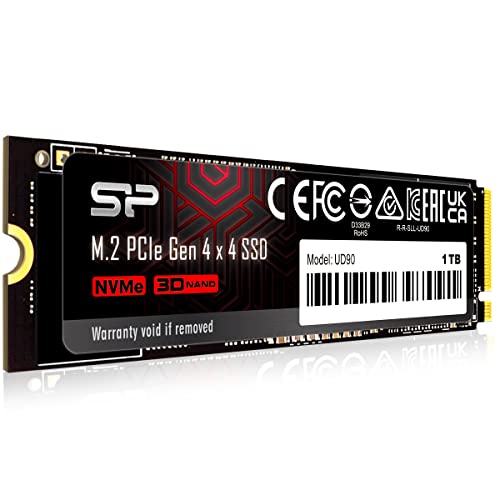
What really stands out is the advertised sequential performance of up to 5 000 MB/s read and 4 800 MB/s write, backed by a 69 GB SLC cache that can burst at 4.6 GB/s. The drive packs these specs into a 3.56 mm thick, 22.10 mm wide, 80.01 mm long module that weighs just 8 g, and it carries a 5‑year limited warranty.
Compared with the other ten SSDs in this roundup, the Silicon Power sits in the middle of the speed lane—faster than the Western Digital WD Blue SN5000’s 5 150 MB/s read but slower than the XPG GAMMIX S70’s 7 400 MB/s and Kingston NV3’s 6 000 MB/s. Its 600 TB endurance matches Samsung’s 990 PRO and exceeds Kingston’s 320 TB, yet it falls short of WD’s 900 TB. At 8 g, it’s heavier than the ultra‑light MSI SPATIUM M480 PRO’s 1 g design but a gram lighter than the XPG’s 7 g version without a heatsink. The 3.56 mm profile is a touch thicker than Kingston’s 2.3 mm and Samsung’s 2.3 mm, which may matter for ultra‑thin laptops.
Reviewers consistently praise the drive’s quick boot and game‑load times, noting the large SLC cache smooths everyday multitasking. However, users also report a noticeable drop in sustained write speed once the cache empties—mid‑range speeds fall to about 1.8 GB/s and can dip to 275 MB/s over longer periods. The DRAM‑less architecture, while keeping power draw low, causes this throttling, and the lack of an integrated heatsink can let temperatures climb under heavy use.
From a technical standpoint, the SSD relies on Host Memory Buffer support to compensate for the DRAM‑less design, and LDPC coding helps maintain data integrity. The included SP Toolbox software provides health monitoring and temperature tracking, and the drive’s MTBF of 1.5 million hours underscores its long‑term reliability.
Pros
Cons
Best for: Budget‑conscious buyers seeking a reliable entry‑level option
Avoid if: You need sustained high write performance for heavy workloads such as video editing or 3D rendering
Breakdown
XPG GAMMIX S70 BLADE
Pros
Samsung 990 EVO Plus
Pros
WD_BLACK SN770
Pros
MSI SPATIUM M480 PRO 1TB
Pros
Based on scoring data and product specs
Personalized picks
Best Overall Pick
XPG GAMMIX S70 BLADE
Best OverallBest for: Home and office users seeking a balance of features and value
Samsung 990 EVO Plus
Best for: Buyers willing to invest in a proven, high-quality option
$375.73+$195.74 vs winner
Skip Silicon Power 1TB SSD if…
Reliability and user satisfaction are your top concerns
The XPG GAMMIX S70 BLADE takes the top spot with a 4.6/5 rating from 11,084 reviewers, a five‑year warranty, and raw speed that still beats most rivals: it delivers up to 7,400 MB/s sequential reads and 750 K IOPS on 4 KB random reads. Its 5‑year, 740 TB endurance rating for the 1 TB model shows it can handle heavy workloads without breaking the bank.
The Samsung 990 EVO Plus lands as the runner‑up, especially if you need blister‑fast random writes for content creation or large‑file transfers. It pushes up to 1,350,000 IOPS on random writes and hits 7,250 MB/s sequential reads, while its AES 256‑bit encryption and 2 TB capacity make it a secure, spacious choice for power users.
For tighter budgets, the MSI SPATIUM M480 PRO 1TB stands out at $85.00, offering solid PCIe Gen4 performance at a fraction of the cost. If you crave massive storage, the Crucial T710 4TB at $554.97 provides a premium‑grade capacity and endurance package for demanding workflows.
Pick the XPG GAMMIX S70 BLADE for the best high‑performance PCIe Gen4/Gen5 SSD experience.
The XPG GAMMIX S70 BLADE is listed as PS5 compatible and comes with a low‑profile heatsink option, while the Corsair MP600 Elite also notes PS5 compatibility. At $179.99, the XPG drive is the more budget‑friendly PS5‑ready choice.
No reviews yet — be the first to share your experience.
Please sign in to leave a review